




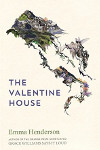
Emma Henderson – The Valentine House
Posted 26th April 2017
Category: Reviews Genres: 2010s, Angst, Domestic, Drama, Historical
Comments Off on Emma Henderson – The Valentine House
Houses, history, family, and secrets.
Publisher: Sceptre (Hodder)
Pages: 335
Type: Fiction
Age: Adult
ISBN: 978-1-444-70402-0
First Published: 6th April 2017
Date Reviewed: 26th April 2017
Rating: 3/5
The Valentines own a house in the French Alps and summer there each year. The house remains in the family for decades and so in the nearby village there is a lot of knowledge and rumour spread and over time many residents employed; if female, the mistress of the house looks for very plain, ugly women so that her husband won’t be led astray. Mathilde is one of those employed and ends up spending most of her summers working at Arete. But there is more than meets the eye in Lady C’s wish for plainness and there are more tales behind the elusive Margaret and younger Daisy than people will know.
The Valentine House is a dual plotline book of family issues, history, and climbing, set in France. It switches between Mathilde – both in her early and later years – and a Valentine descendant called George.
This book is an easy read. Full of the colloquial language of the times, it can be fun and often poetic. Many sentences ultimately rhyme; it’s not that the book is written in verse, but there are enough rhymes here to believe that it may have been a stylistic choice.
It is hard to say whether the book is a success from an objective viewpoint – The Valentine House does not have much of a story arc, and depending on what you were hoping for or were thinking might happen, the reveals near the end may not be satisfying. There is a point roughly two-thirds of the way through where Henderson deliberately turns away from giving away an important detail (think the ‘I didn’t want to listen to what the person was saying’ device), which does mean you get to enjoy more of the atmosphere (which is great) but may cause some frustration. At the beginning of the book the idea of ‘uglies’ seems to be very important on a larger scale than the English family’s hiring practises, however as the novel continues it ceases to be looked into. This may well have been a case of nothing from the start, so to speak, but with a nod towards disfigurement, rather than plain looks, in several people, and given Henderson’s previous book, it does seem as though something has been left out.
Beyond this, apart from times of confusion, it’s an enjoyable read. The writing, as said, is rather lovely, especially so at times, and there is a lot to love about the aspects of climbing and general Alps history. You wouldn’t necessarily call this a book about climbing, and not a book about families and climbing, either, but nevertheless the sort of detailing Henderson has included about climbing means it’s likely to satisfy those who enjoy the sport as well as those simply interested in the idea of it. The people might be fictional but the delights as well as the sorrows, the dangers, are very true to history and life, so there is an element of learning here to be had. Nods are given to the Alpine Club and the experiences of individuals, and as the sections about mountaineering occur in both the the early twentieth century as well as the later twentieth century narratives, you get more than one slice of how the sport has changed. And you get the benefit of learning not just how much safety improved but inevitably, as the book’s ‘present day’ narrative is in the 1970s, how much further we have come now.
Read the book for the family saga aspect of it and you’ll find yourself a happy – for you if not for the characters – afternoon. It’s in the family that the idea of the story arc can take a back-seat – if you are reading for the saga, you may well be happy with the arc as it is. As the book isn’t very long compared to other sagas the generations are written both linearly and muddled together (in a carefully considered way) meaning that it does bridge the divide between genres. This said, you are highly likely to prefer one narrative to the other which may affect this. Mathilde’s is the one most likely to inspire as it has a lot more going on than George’s, which for most of the time can seem more a device for Mathilde than a story in itself.
And the family is most definitely a dysfunctional one. Henderson has stuck firmly to the concept of the rich family holiday; she has gone to town with it and done it with aplomb. The characters are stereotypical insofar as literature goes which in this case is a great aid rather than a drawback. There’s an interesting semblance of cut-out along with fine development, with Henderson leaning a little on the stereotypes so that she can spend more time on the not-so-stereotypical, a sort of ‘these are the basics, now let me give you the specific details’. Whilst the characters may not all stay in mind beyond the book – some definitely will do – together they make the book what it is in terms of theme.
In the case of the reveal and how satisfying it may or may not be, it’s worth noting that Henderson takes a very different fork in the road than you might expect. For some it may come out of left field, for others it will be a wonderful difference – this is where personal opinion must trump any talk of objectivity.
It’s hard to place The Valentine House. It’s easy to get through and a good read, but it does seem a missed opportunity for various reasons. Nevertheless there will be some readers who find much to like about it and it must be said the location and atmosphere is lovely. This is a book to read up on before trying yourself to see how you’ll likely fare.
I received this book for review.
Related Books

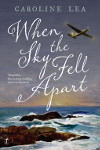
Caroline Lea – When The Sky Fell Apart
Posted 8th March 2017
Category: Reviews Genres: 2010s, Historical, Political, Social
3 Comments
And the ground and the people too.
Publisher: Text Publishing
Pages: 363
Type: Fiction
Age: Adult
ISBN: 978-1-911-23107-3
First Published: 24th February 2017
Date Reviewed: 8th March 2017
Rating: 4.5/5
When Britain leaves the Channel Islands to fend for themselves and the Nazis order surrender or else, the people of Jersey must make their decisions – evacuate or remain? Maurice feels he has no choice at this time – his wife is too ill to travel. Edith, a healer, feels the need to stay in her homeland and tend to those who require help. Claudine has no choice – her mother will not leave. Dr Carter, an Englishman, should leave but feels similarly to Edith. As the Nazis swarm in those residents who chose to remain try to make the best of the situation whilst staying low and staying safe, but, as they know from news of France, it will be nigh on impossible.
When The Sky Fell Apart is an extremely harrowing, brutal tale of Nazi occupation, a book that offers a few laughs to keep you going but stays true to its (assumed) objective of showing just how bad the war was in places not often considered. It’s a book that is impossible to say you enjoyed but is important.
On that ‘assumed’ objective it is best to comment further – whilst this is fiction, you can see Lea’s mission throughout. This book is a very, very, well crafted, structured, tale that shows what life was like. If The Guernsey Literary And Potato Peel Pie Society showed the aftermath of life in Guernsey, then When The Sky Fell Apart looks at the occupation – yes, a different island but similar location – at the time. Indeed if you’re at all interested in the effects of World War II on the Channel Islands, you should look at both books as each provide something different.
It’s important to remember the objective when considering the elements of writing Lea has included. This book uses many devices, in particular one near the end that is very frustrating because although Lea has provided the necessary background to allude to the possibility that the character would do such a thing – to use a vague example – you want it to be different. It’s a case that in real life it may or may not have happened but Lea has chosen the possibility that it would in order to take her story where she wants it to be. The characters are manipulated but with good reason, and it’s never a sweeping change, never not believable, just frustrating.
Of this particular plot point, the good reason is that Lea wants to demonstrate just how far people might go to save themselves and implicate others. She puts in place a couple whose lives have previously literally been saved by two other characters – those saved do not have any qualms about gaining information and harming those who saved them. There is also an element of straight out hatred.
Lea never holds back on the horrors of war, delving into it enough that it’s traumatic. There are, as said, a few laughs – very much laugh out loud, in fact – that remind you of the daily life the people were still living. They aren’t quite enough to make you feel comfortable again but they do help character development – almost all Lea’s characters feel very real. The focus on this little group of people means that you may well forget that they are living on a populated island – it’s easy to picture an almost barren land (aside from the effects of occupation) – which is unfortunate but not necessarily a drawback – to focus on a larger group or the population in general would have just diluted the horrors, made individuals into numbers, an element of war that Lea comments on.
The book does not follow the path you may have expected. It remains horrific to the end – given the subject matter it’s worth saying that this book does not follow any sort of positive outcome. We all know the eventual outcome of the war and so Lea sticks firmly to the events during.
The author stays objective when detailing troops; the horrors are numerous but like authors before her – Irène Némirovsky comes to mind on this point – she includes good people, or, more specifically one person to demonstrate, who get caught up in it. In this case there is a focus on disability among the ranks.
The text itself is solid. The book is written in the third person and whilst there are narrative sections that use very modern wording, the dialogue is authentic – instead of being jarring, the book simply reminds you that it’s historical fiction. There are times when things are repeated unnecessarily – the author’s choice of metaphors in particular – that are noticeable and there are a few times when things are explained that aren’t needed, but these don’t impact the story enough to change your overall experience.
When The Sky Fell Apart is exceptional. Its lasting images, in particular, may well haunt you for a number of days. It’s one of those books that is difficult but nevertheless important. Do not go into this when you are needing to escape, don’t read it when you’re down. This book should be approached with an attitude to study, learning, rather than any sort of literary enjoyment.
But you should most definitely read it.
I received this book for review.
Related Books

Nicola Cornick – The Phantom Tree
Posted 8th February 2017
Category: Reviews Genres: 2010s, Domestic, Fantasy, Historical, Mystery, Paranormal, Romance
2 Comments

Those of both history and the present.
Publisher: Harlequin
Pages: 420
Type: Fiction
Age: Adult
ISBN: 978-1-848-45504-7
First Published: 29th December 2016
Date Reviewed: 22nd January 2017
Rating: 4/5
When Alison ran away from her abusive cousin she had no idea that opening the inn door would whisk her away from the 1500s and straight onto a 21st century street. But that it did; when her cousin, now father of her child, sends her away, she returns to the present but though she adapts well to modern life she yearns to return to her son. Meanwhile, Mary Seymour deals with continuous accusations of witchcraft and a house that doesn’t want her. And forefront in her mind is the promise she made to Alison to somehow leave word of baby Arthur.
The Phantom Tree is a time travel book in a similar vein but different voice to Cornick’s previous novel, House Of Shadows. This different voice is one of the stand-out elements – Mary Seymour’s narrative, in particular, is very different from Cornick’s previous narrator, yet the author keeps her writing itself the same. It’s an interesting element that speaks highly of Cornick’s ability to develop characters whilst not changing her style too much.
Interesting, too, is the basic plot and the way the time travel has been included. There is one particular plot point that’s very predictable – the character really should have put two and two together earlier – but other than that it’s well done. Cornick hasn’t created anything new in the way that the time travelling happens but it’s the detail that’s good, the way she’s used a well-used device and just got on with the story – with time travel used so much, there’s little need for basics.
The characters are well drawn. We aren’t given much of Alison’s first days in the present, more of a quick nod, as the focus is on her search to get back. It is easy to wonder every now and then how she could have learned so much in a fairly short time but not unbelievable considering her personality. Throughout Alison is the stronger of the two heroines, and although it is true she’s mostly a modern-day character anyway, reading about her in the past shows a person who could fit in anywhere.
In Mary Seymour’s case it’s very intriguing; Cornick has exploited the lack of knowledge we have about Mary, Catherine Parr and Thomas Seymour’s daughter, and really gone to town with it, making Mary not just accused of witchcraft but actually able to see the future. Mary’s magic does contribute to an ending that some may find a bit far-fetched given our collective lack of knowledge (not far-fetched in the concept of fantasy!) and there’s something she shares with another that’s very fantastical. Thus this book goes beyond the sub-genre of time travel – it’s a full on historical fantasy with some hearty romance included.
Speaking of far-fetched, the clues left for Alison by Mary are very vague to the point that unless you trust in their relationship, and the continued significance of it despite the years apart, you may find it hard to believe. This element does stretch the imagination somewhat, though it’s more due to the way less time is spent on the sleuthing and because of the requirement for word and symbol association.
The two heroines are obviously distanced so there’s not as much room for development there as you might have hoped – this is a dual narrative that may never cross paths – but the other relationships in the book are very good. Adam, Alison’s ex-boyfriend of the modern day, is a TV historian, a role which turns out to be as excellent as you would hope in the context, and Mary gets a romance too. Cornick spends time on Alison’s search for Arthur and this thread has a very poignant ending.
There is one issue with this book as a product that unfortunately affects the reading – somewhere towards the middle the proofreading disappears. Cornick’s good writing remains throughout but the editing errors are numerous.
The Phantom Tree has a fair story, strong characterisation and great writing, and a fast pace and attention keeper even during the too-fantastical parts, but more time needed to be spent checking it over before printing.
I received this book for review.
Related Books


Speaking to Nicola Cornick about House Of Shadows, The Phantom Tree, and The Woman In The Lake (spoilers included)
Tune in as book blogger Charlie Place and author Nicola Cornick discuss burning down your place of work in fiction, every day objects of ill repute, and solving Tudor mysteries yet to be solved.
If you’re unable to use the media player above, this page has various other options for listening.
Samantha Sotto – Love & Gravity
Posted 30th January 2017
Category: Reviews Genres: 2010s, Fantasy, Historical, Romance, Spiritual
3 Comments

The apple sometimes falls very far from the tree.
Publisher: Ballantine (Random House)
Pages: 284
Type: Fiction
Age: Adult
ISBN: 978-0-399-59324-6
First Published: 7th February 2017
Date Reviewed: 18th December 2016
Rating: 4.5/5
When Andrea sees a boy seemingly inside her wall whilst she plays the cello, she knows he’s real, but a resent loss in her family’s life means her explanation is not taken well. In time she starts to push the event out of her mind but one day it happens again and it’s impossible to ignore. As Andrea becomes an adult she tries to work out what’s happening and who the boy is. At the same time 400 years in the past, a young Issac Newton attempts to use science to understand the girl who he realises is from the future.
Love & Gravity is a story of time slip and travel that takes the idea of an undiscovered box of papers and crafts a bold tale from it.
Sotto has based her story on a factual person, inviting interest because her tale is fantastical and ascribes the person with a purely fictional romance. However despite the obvious implausibility of it, Sotto has surely chosen the right person for the job. Using Issac Newton works well; it’s hard to dispute the thought that Newton could have been interested in time travel, a subject of scientific interest.
And beyond the travel, as much as it may sound an oxymoron, Sotto has stuck to reality. The amount of research and the effort to get things correct is evident – though the author doesn’t info-dump. Sotto has woven all her ideas around and in between Newton’s own, always defaulting to a mathematical or scientific reason or method for what she creates. She incorporates Newton’s theories and discoveries in such a way that even a person who dislikes fantasy may be interested in the book.
The writing is at times overly descriptive. There is a lot of use of that construction wherein a reference is made to something and then the next paragraph re-describes the item in other terms – think ‘cake’ and ‘the pink sugary confection’. A few contemporary phrases have crept into the historical sections. But the writing does the job and isn’t bad at all.
The mystery surrounding the ‘postman’ could be considered predictable – there’s a good chance you’ll guess correctly immediately and there’s also a chance, no matter whether you guessed or not, that you won’t like this particular element.
But, and this is a big ‘but’, this book is very difficult to put down. The readability of it doesn’t excuse the flaws, nor will you gloss over them, but the novel is enough of a page-turner that you’ll want to keep reading regardless. Sotto has upped her time travel game – this, her second book, has a lot less going on which means that whilst a lot going on wasn’t a bad thing in the first, this new book is more refined. Suffice to say that if you like time travel novels, it’s very likely you’ll like this one.
There’s a lot of romance towards the end; at times it seems the whole atmosphere of the book might get taken over by it but this is not the case. Sotto is always aware – it’s evident as you read – that a balance must be struck between providing a satisfactory time travel experience and sticking to the concepts we as a society have come to see as important were time travel possible, namely that one shouldn’t change history, should be wary of changing themselves, should consider doing things that would have a very minor impact.
Of note is the fact that the characters may not be forever memorable – they may be, they may not be – but that it doesn’t matter. The focus here is on the fantasy, the history, the possibilities of science and the power of music, and these objectives hold the novel together and keep it going. This is a book steeped in time and cultural history and references, very aware of it, using them openly and to good effect.
It works very well.
Love & Gravity is that rare book – it may have flaws but you may well find you can forget them. Recommended? Yes!
I received this book for review.
Related Books


Speaking to Samantha Sotto about Before Ever After, Love & Gravity, and A Dream Of Trees (spoilers included)
Tune in as Charlie Place and Samantha Sotto discuss characters that join you in your car in the midst of a traffic jam, time travelling with Issac Newton, switching from your fully researched work in progress to a story that needs to be told, and… chickens?
If you’re unable to use the media player above, this page has various other options for listening.
Margaret Laurence – The Stone Angel
Posted 16th January 2017
Category: Reviews Genres: 1960s, Angst, Commentary, Domestic, Historical, Social
2 Comments

Be a bit nicer.
Publisher: Apollo (Head Of Zeus)
Pages: 301
Type: Fiction
Age: Adult
ISBN: 978-1-784-97769-6
First Published: 1964
Date Reviewed: 15th January 2017
Rating: 4/5
Hagar Shipley is in her nineties and her time is coming to an end. Living with her son and daughter-in-law she has had time to reflect on life and has been able to live with a modicum of independence, but Marvin is not her favourite son, his wife Doris is too religious, and both now want her to live in a home. Hagar has other plans.
Originally published in 1964 the reprinting of The Stone Angel by Apollo now is timely as it fits the current trend of books about older people. But it has a twist – the woman here grew up in the 1800s, a bit earlier than our contemporaries.
This book is a difficult read and it takes a while to work out what’s really going on, where fault really lies and so on. (This will be aided if you’ve read more recent novels in a similar vein.) Hagar is not completely forgetful, but she forgets enough that you learn to read between the lines and base your opinion of the other characters on the dialogue they speak. (There’s a chance, of course, that Hagar reports conversations wrongly but one can only go so far as the reader.)
So you go through a brief period at the start where you’re questioning who might be the ‘bad guy’ if such a person exists, and then you start to see what’s been in the background all along. Hagar is not a pleasant character by any means. Through the pages that pass by you can see her open favouritism – her favourite son is not the one who looks after her and through the reactions of Marvin and Doris you can see plainly that they’ve had that beaten into them. Hagar nags, belittles, and is critical 90% of the time; she may well have a personality disorder. She has seen herself as above so many people that she’s had few friends; very snobbish. She’s made bad choices but remained rigid in her views. Toxicity is a big feature of this book as while you feel for Hagar’s plight, her not wanting to be put in a home, you can also see how much emotional pain she has caused those who have looked after her for years. And Marvin and Doris aren’t young themselves – whilst Doris’ relentless devotion to converting Hagar to her own religion is a bit much, it’s impossible not to feel for this couple who have looked after a woman so ungrateful.
A difficult book at times, then, but not a bad one. There are a few drawn-out sections, which means it’s a good book to read in terms of its cultural status – it’s considered a Canadian classic – as well as all the things Laurence says, but it may not ‘wow’ you. Despite its character it is an easy, comfortable read, that has a lot of value nowadays for its social context and historical content. It also demonstrates how a strict upbringing can affect a person as well as showing what is important, even if what’s important may seem obvious – Hagar doesn’t get it.
You know from the start where this story is headed but its not a sad book. Hagar’s views and personality mean that she’s very open and confident so whilst she’s not particularly nice she does break through some of the social barriers in place during her younger years. The father who sees himself highly. The husband who was different but that different proved too much. The children much too like their awful father. The people one should not associate with. And Laurence’s 1960s take on it all can be fascinating.
One to read and love in places, perhaps fiercely dislike in others, The Stone Angel is one for contemplation. Where Hagar is loud, you’ll find yourself seeking quiet. It may not be fun – the lady is not for changing – but it’s memorable, interesting, and rather important.
I received this book for review.
Related Books


