




Melissa Marr and Tim Pratt (ed.) – Rags & Bones
Posted 28th October 2013
Category: Reviews Genres: 2010s, Fantasy, Horror, Paranormal, Science Fiction, Short Story Collections
6 Comments
Building from the foundations.
Publisher: Headline (Hachette)
Pages: 365
Type: Fiction
Age: Adult
ISBN: 978-1-4722-1052-4
First Published: 22nd October 2013
Date Reviewed: 25th October 2013
Rating: 5/5
A baker’s dozen of creators, including Marr, Pratt, and one artist, have teamed together to produce a collection of short stories based on others’ works.
Rags & Bones is an anthology that retells several stories – all with some sort of fantasy, paranormal, and/or horror base – to create one solid and undeniably excellent book.
It’s interesting to note that the title of the collection comes from its concept. Marr and Pratt wished for stories that were the result of existing tales rewritten it to the effect that the meaning was still there, and perhaps certain elements (for example Neil Gaiman’s The Sleeper’s Spindle is very much Sleeping Beauty) – but were still original works. As the editors put it: “boil those stories down to the rags and bones, and make something new from their fundamental essences”.
And it works. Whilst the stories may indeed at times be easy to place within their context, at others it is more difficult. Certainly it is to the collective’s advantage that the stories chosen for reworking are not all timeless classics. There are lesser known works amongst them which means that there is a lot of ‘new’ for the reader, as well as ‘old’ – it is unlikely that any one reader will know of every story represented.
The stories themselves are compelling and the writers chosen are all rather famous. The horror in the tales is often understated and of the grim, psychological sort rather than the gore and violence sort. And the range of settings and times is vast. Sometimes it is difficult to ascertain when or where a story is set. This adds to the tales rather than detracts.
So each story bares a message. Carrie Ryan’s brilliant That The Machine May Progress Eternally takes on E M Forster and weaves a foreboding tale of a child of a post-apocalyptic earth falling into the technological underworld where humans with no reason to move about study history from the safety of their kingdom. Neil Gaiman’s The Sleeping Spindle borrows from Hans Christian Anderson and switches elements around to create a humorous version of an already chilling children’s story. Melissa Marr herself channels Kate Chopin and writes of selkies, a mer-woman imprisoned by a well-meaning but abusive human, in a study of both the selkie myth itself and the wider context of inequality. And then there is the exceptional When First We Were Gods by Rick Yancey, the longest story in the book, a purely sci-fi retelling of The Birth-Mark by Nathaniel Hawthorne that focuses on a specific sort of human immortality, looking at what is lost when forever is achieved. Woven into the collection are Charles Vess’s illustrations, artistic retellings of older tales and poems. The addition of Vess’s work is a reprieve of sorts, a nice method of segmentation, that is provided just as much time for explanation as the written works. (Each contributor explains their inspiration and why they chose it following their story.)
The works highlighted above are those chosen by the reviewer – there are plenty more and each one is just as worthy as the rest. There are no average stories in the collection, the sensational quality is consistent throughout. And whilst the messages and meanings may differ from one to the next, the overall ideas of knowledge, of thinking before you act, of human agency in general.
On the face of it, Rags & Bones is a mixture of oft-scary genres, but it is so much more. Real horror comes in patches, slowly, and timeless fantasies tend to have a dark base. You don’t read this book, become frightened and miss a night’s sleep. You will sleep at night. What these stories do is creep into your consciousness and make you aware of very real ideas and possibilities, as well as things that already happen. And this is regardless of whether the story is of a believable future or of vampires and zombies.
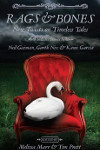
The gorgeous cover art will stay with you, the collective of popular and talented talented writers will stay with you, and the concept of wishes coming with a price, like Rumplestiltskin’s promise, will stay with you and haunt you for a good while.
There are ways to scare, there are ways to inform, and then there is Rags & Bones.
I received this book for review from Headline.
Related Books

Bee Ridgway – The River Of No Return
Posted 7th October 2013
Category: Reviews Genres: 2010s, Comedy, Fantasy, Historical, Romance, Social
5 Comments
Forward to the past. (Reverse that and you’ll see the inspiration.)
Publisher: Michael Joseph (Penguin)
Pages: 546
Type: Fiction
Age: Adult
ISBN: 978-0-718-176-983
First Published: 28th March 2013
Date Reviewed: 26th September 2013
Rating: 4/5
As Nick was about to die, attacked in battle in the 1800s, he disappeared. He reappeared, alive, in the 21st Century, found by a group calling themselves the Guild. The Guild promises Nick $2million a year and sends him to South America for training where there are fellow surprised time travellers from every decade. The Guild teaches their members how to live in 2013 and then sends them off to use their education. That was fine with Nick, millions of dollars and a free reign sounded – and was – great for ten years, but now the Guild want him to return to headquarters and forget every rule they taught him. The Guild’s enemies are getting stronger, and Nick has a part to play in stopping them.
The River Of No Return is an imaginative and rather funny book that deals with a particular sort of time travel, the sort where you’re not going to meet different versions of yourself and where history isn’t to be changed unless the world is about to end.
The story is contained to a few people and only a couple of different times, meaning that the narration is pretty straight forward. This may mean disappointment for some readers, as other times are referred to and it’s safe to say where time travel is concerned the future is a magnet to our interests, but there appears to be a sequel in the works. In fact it’s worth commenting on the ending of the book. Ridgway creates a crafty ending the likes of which means the story could definitely do with a sequel, but if none were written she’s left you enough information for you to construct a conclusion.
She reminded him of modern women. The way she stood so confidently, the way she met his eye like an equal, the way she spoke unblushingly of the sex she was not having with her cousin.
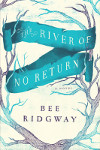
It takes a good while for the humour to show itself. Indeed the cover and first several chapters do not in any way suggest that the book will be humorous. When it enters it is laugh out loud and rather clever, although there are occasions where it could be considered too much.
So to the affects of time travel on the characters. Nick, the nobleman, fits right into life in the 21st century. So changed is he, so happy with his new era, that his return inevitably results in plenty of thoughts about women, equality, voting, and so forth. And Ridgway creates the ideal romantic partner for him. Yes, it may seem convenient and unrealistic that Julia, the 1800 woman who may or may not be a time-manipulator (unknowingly), is ahead of her era, but Ridgway sets the foundation of the relationship in the days before Nick’s jump, so that it is more a simple case of two like-minded people getting together. Nick may not have been as modern in his youth as he obviously is in adulthood, but the flashbacks portray enough ambivalence to his situation ‘back then’ and enough remembrance of the younger Julia to suggest that, traveller or not, the pair would have got together.
“Demand you back? You’re a full-grown woman. You can do as you choose…” Even before the words were out of his mouth, Nick realized that the sentence he had just spoken only made sense after two centuries of struggle that had yet to happen.
The affects of the 21st century form a lot of the comedy. Like other ‘jumpers’, Nick is trained to be a modern man, with all the knowledge of beyond 1800s history and pop culture that that entails. In preparation to jump back again, to the 1800s, he has to re-train himself in the art of being a nobleman. Modern phrases and cultural references inevitably slip out whilst back in the past, and it happens a lot, but Ridgway’s particular usage of the theme stops it becoming annoying. As said above, the humour as a whole can become too much, but this takes a while to happen if indeed it does at all for the individual reader.
However it must be said that Nick does forget a crucial part of his 21st century life – sex in 2013 involves a foil packet, sex in 1815 involves no discussion of Nick’s new knowledge and it is left out of the book completely. Although this is only one instance of forgetfulness, the potential impact of such spontaneity, which Nick would ‘now’ know about, ought to have been addressed. His partner may be a virgin, but Nick isn’t and his nature suggests he would consider STDs. And as Ridgway has created no space for a pregnancy in her novel, regardless of the fact that a pregnancy is neither here nor there unless the author includes one, Nick would have surely thought of it, and likely his 1800s partner, too.
Julia has courage and guts, but she’s not superwoman. She is the realistic, if such a word can be used, result of a woman from a good, happy background, with a fantastical talent she cannot understand.
The book spends time on the concept and storytelling device of good versus evil, but Ridgway twists it to suit the people she has created. Unless things change drastically in any sequels, this isn’t going to be, and isn’t here, your typical science fiction save-the-world-from-the-bad-guys series. And it’s undeniably refreshing.
The book dips a bit towards the end, becoming, if not predictable, rather convenient. The reader may work the secrets out beforehand, but either way it does have the possibility of changing your thoughts as to whether or not you’d like to read further books about this world. It creates an expectation of an epic continuation but may seem too drastic a change, as such, to some readers. In many ways the sudden unveiling of answers and new plot points is a pity.
But overall The River Of No Return will delight. It will bring embarrassment to anyone who worries about laughing over a book in public, which should be considered a positive factor, and sate the appetites of those who love time travel novels but are a little worn. The River Of No Return is long, but then so is history. And if the title has you in mind of Marilyn Monroe, never fear – that is exactly what happened to Ridgway, too.
Related Books
Julie Kagawa – The Iron Queen
Posted 21st August 2013
Category: Reviews Genres: 2010s, Domestic, Fantasy, Romance, Science Fiction
2 Comments

The first was good, the second bad; the third is rather special.
Publisher: Mira Ink (Harlequin)
Pages: 358
Type: Fiction
Age: Young Adult
ISBN: 978-0-778-30479-1
First Published: 25th January 2011
Date Reviewed: 23rd June 2013
Rating: 4.5/5
The battle for the Nevernever isn’t over. Called back from exile, Meghan is ordered by King Oberon to slay the new Iron King as the Nevernever loses ground and faces ultimate defeat. Together with Ash, Puck, and the cat Grimalkin, it’s up to the mortal to save fairyland from the burgeoning power of technology.
If we consider that the previous book in this series, The Iron Daughter, was but a filler, then The Iron Queen picks up from where The Iron King left off, bringing back the wonderment present at the start of the series. Kagawa is back on target and it must be said that whilst she doesn’t make the most of all the opportunities created by her stunning premise (technology threatening traditional imagination) she has certainly stepped up her game.
Meghan, the half-human heroine, is stronger this time and is becoming quite the powerful character. Though still silly at times, for example she says a trip was a waste of time despite being given an item deemed necessary by someone in the know, and seeming to never have seen a musical notation despite having a musical father, she has surely come into her own, being now rather bearable, it could be said, for most readers. Her kindness towards the Iron fey is at once surprising and utterly understandable – Meghan is very much a person of both the old world and the new, seeing the possibility of both co-existing whereas the older realm of course see the Iron world as the destruction of mankind.
In a style instantly recognisable as typical of fantasy storytelling, Kagawa creates another force of evil for the older fae to fight. And whilst there are romantic scenes a plenty, there are few occasions where deep discussions go on too long during battles – in other words the pacing and placement of dialogue is realistic.
Kagawa has reintroduced the epic nature of her story and her usage of Shakespeare’s work is an obvious foundation which she never strays from. The story looks into the dark side of fairytales but there is little to shock or feel uncomfortable about as it’s more a basic backdrop.
Being that Meghan is from our world and Puck has lived there a long time, the contemporary vocabulary and slang fits perfectly. It may jolt you out of the story for a moment but you soon remember that this is far from a case of Kagawa simply seeking to emulate your typical teen story, here the wording is appropriate. It also reminds you that humanity is never far from Meghan’s thoughts.
Meghan isn’t quite the leader you might expect, a somewhat indecisive and stubborn girl in love, but then given the title of the book you knew what to expect anyway. And it must be said that in the case of this series, the titles letting you know the subject of that particular book isn’t as much of a spoiler as you would have thought at the start.
One of the themes of the series is loyalty, and here it is used more than before. A lot of lore is employed to make a comparison between faery and our world, for example to show how Meghan wouldn’t feel for the lack of marriage in the realm, and to some extent Kagawa demonstrates how even the dark faery world can have its trust and vows. This is of course shown through the continuing romance between Meghan and Ash (readers may be happy to hear that Kagawa isn’t going to insist on continuing the triangle) and whilst Kagawa lets the relationship take on a fantastical atmosphere – of the knights and chivalry sort – she doesn’t shy from introducing contemporary views to the book, either.
So there is little time spent on the actual premise of technology taking over traditional dreams (meaning the logistics of it), which would have made an even better book, but it can’t be said that The Iron Queen isn’t a good book. Because it is a very good book.
Read The Iron King, skip The Iron Daughter, and move onto The Iron Queen. The characters will not always delight, and the incessant eye-rolling is… incessant, but the overall atmosphere might just create that magic for you that the fae surely hope for.
Related Books


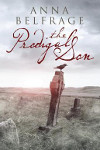
Anna Belfrage – The Prodigal Son
Posted 28th June 2013
Category: Reviews Genres: 2010s, Domestic, Fantasy, Historical, Political, Romance, Social, Theological
2 Comments
You can definitely have too much of a good thing, and it’s intended that this sentence refers to sex.
Publisher: (self-published)
Pages: 368
Type: Fiction
Age: Adult
ISBN: 978-1-780-88574-2
First Published: 1st June 2013
Date Reviewed: 27th June 2013
Rating: 3/5
Alex and Matthew are back at Hillview but as the family grows and tries to enjoy life, soldiers keep visiting to investigate Matthew’s aiding of Presbyterian ministers. It’s true that Matthew is helping, but he cannot give up his faith and friends, no matter what Alex says. And with his son/nephew Ian spending much of his time at Hillview, issues with Luke might come to a head again.
The Prodigal Son is the third book in the Graham saga, but whereas Like Chaff In The Wind was rather good and suggested that this goodness would only get better, a backwards step has been taken. Whilst both the previous books (A Rip In The Veil was the first) suffered from editing errors, a lot of violence, and a bad use of language, unfortunately here these issues have doubled.
The most obvious of these is the writing. There are many editing errors, but more to the point the language Belfrage uses darts back and forth between an over-the-top Scottish dialect, historical language, some sort of nineteenth-century speech, and 21st century phrasing. Whilst the 21st century phrasing works, because Alex is from our present day – and the phrasing works for the children, too, as children emulate their parents – the rest makes the book disjointed. There is also a continual issue with people being relegated to things by the usage of the word ‘that’ when referring to them, in the particular way that absolutely needs to be ‘who’ in order for the sentence to work. Though the good thing is that there are very few questions ending in ‘no?’ this time around.
Undeniably, considering it forms the book’s basis, the best aspect of the previous books was the time travelling, the scene change between Stuart Scotland and 21st century Britain. There is no time travelling in this book and it is a shame because it was the most compelling aspect of the series. In relation to this there is but one short instance of Alex remembering her fatherless son, Issac, who decided to remain in the 21st century, and despite the fact that Alex doesn’t love Issac as much as she ‘should’, it is hard to accept that she wouldn’t be thinking of him, especially considering she often brings her father, Magnus, into conversations. There is a particular episode in this book that unfortunately underlines just how important to its success it is for Alex to remember Issac, as Alex becomes incredibly emotional towards another of her children. Alex may not have had the best ‘start’ with Issac, may even have resented his existence, but she would remember him from time to time.
The episode that causes intense emotion may divide readers. Just as it seems something very interesting is about to happen Belfrage makes a decision that can only be called convenient.
And it is convenient due to the next point that needs to be made. There is no true plot to this book. It is repetitious from start to finish – soldiers come to interrogate, Alex and Matthew have sex, Alex stops talking to Matthew, over and over again. The final resolution is minor. It’s nice that the story stays on the farm and that the family isn’t apart for any length of time, because the previous books already covered separation, but there is really not much going on apart from what has just been listed. If not for the repetition the state of the plot wouldn’t be so bad because of the character development (to be discussed shortly).
Sex scenes can be a wonderful addition to a book, they can contribute to character development and signify the love the couple shares, but here there are far too many of them. The scenes are all very similar, down to the phrasing. It’s wonderful to know that after nine years Alex and Matthew are still in love and lust but Belfrage infers that perfectly well in the dialogue, having the curtains open every night lessens the impact.
Again there is a lot of violence. In some ways just as extreme as before, in some ways less, but it’s the number of scenes that makes it difficult. Indeed it’s realistic, the law and justice were not at all like they are today, but when blended with the rest of the repetition it just becomes another filler element.
Thankfully the book has great characters, good enough to rise above the dialogue. Naturally, considering the amount of sex and the absence of contraception (and Belfrage does make the necessary point that the couple wants each other so much that timing sex would never happen) there are a lot of children in the book. Each child is very different and flourishes whenever the focus is upon them. And Belfrage continues to develop the historical characters in the manner you would expect considering their exposure to a time traveller. This is where the 21st century language comes into its own, where ‘okay’, Matthew’s understanding of the concept of reality TV, and children saying “so, too!” are brilliant additions. The family is a lot of fun and Ian’s story a fine idea.
Included in this time travelling influence is the strict level of hygiene Alex employs that works well except in times when people with or exposed to consumption are around and the woman doesn’t bat an eyelid. Baths are taken, vegetables are eaten, and people survive what are now easily fixable ailments thanks to her knowledge. And Alex’s education is in full swing here, the knowledge Belfrage referred to before is displayed in its glory.
And it must be said that Belfrage has made good use of the history. That she has researched her book is obvious, anyone familiar with the history will be delighted with the references, and those who aren’t familiar can rest assured that they can believe the information Belfrage gives them.
The Prodigal Son does not keep the promise made at the end of Like Chaff In The Wind, could do with another edit, and its filler-like feel is further cemented by the intriguing premise of the next book (suggested by the last pages). However the character development is good, the history fine, and it is hard not to like the set-up. If you have been enjoying the series you will likely want to read it, though it wouldn’t be too detrimental to skip it in favour of the fourth.
I received this book for review from the author for Historical Fiction Virtual Author Tours.
Related Books
Kate Atkinson – Life After Life
Posted 19th June 2013
Category: Reviews Genres: 2010s, Angst, Domestic, Fantasy, Historical, Political, Social
6 Comments

Over and over again.
Publisher: Doubleday (Random House)
Pages: 465
Type: Fiction
Age: Adult
ISBN: 978-0-385-61867-0
First Published: 14th March 2013
Date Reviewed: 30th May 2013
Rating: 4/5
Dying just after her birth, Ursula gets the chance to live again, and when she dies a little later in this second life, she is reincarnated a third time. Living many variations, covering many possibilities, Ursula slowly learns from the mistakes previously made.
Life After Life is a book that goes round in literal circles and has no end. Unlike similar though more specific stories – that of the film Groundhog Day and the Young Adult novel Before I Fall – Life After Life makes little note of the actual process, leading readers to work out the majority for themselves. This is both a positive and negative.
The only way, for most of the book, that the reader can know for certain why what happens happens, is through the book’s blurb. The book is structured so that Ursula constantly goes back in time, leaving out the sections she got ‘right’. It therefore does become difficult, on occasion, to know which version of events you’re reading at a particular time when there are multiple possibilities.
Atkinson deals with the deaths and rebirths in a swift manner, sometimes so swift the occasion doesn’t even get a full sentence. It is darkness and then birth, with very little wondering on what is happening and exactly why. If one considers other books that deal with a similar idea then one can assume Ursula has to get her life perfect in order to move on. Ursula makes a great many of the same mistakes each time, which adds to the confusion, and due to the way that the supposed goal is not reached, it does become difficult not to wonder whether Atkinson had any big plan for Ursula other than as a tool to present different periods and issues.
It may be, of course, that the structure of the book suggests that Ursula may never get it ‘right’ and that there are many more aspects to her life than the reader is privy to.
The book is understandably repetitious, and perhaps most interesting during times when Ursula experiences her so-thought deja vu. There is a lot of repetition about Ursula’s role as a warden during the blitz – it feels particularly repetitious but given that that was life, it is a fair shock about the reality of war, the gruesome details rarely displayed so much in other works.
This brings us on to the grittiness of the book. As well as the obvious idea, present from the start, that Atkinson wants to explore what might have happened had Hitler not existed or had been killed early on, there is also a great deal of feminism and sexism to be studied. There is one life in particular where Atkinson exposes the reader’s possible bias – you’ve been presented with a certain view of the family, got to know them, and then Atkinson provides a very different tale. This tale will likely colour the rest of your reading, quite rightly, and it packs quite a punch.
Because Atkinson highlights the way sexual education, when kept hidden from girls (her focus of course being early 20th century) can have dire effects. She shows how even after such effects girls still were not informed, and she displays the awful hatred of a parent who hasn’t bothered to teach her child anything but will curse them when a terrible event happens. This is perhaps far worse, in the context of the book, than the blitz. Atkinson successfully makes you love, makes you hate, and then she provides that necessary triumph of adversary in the next life that is so sorely needed. Her handling of every issue in the book is masterful, and due to Ursula’s constant reincarnation it allows for a particular modernity to grace the book. Being given many chances enables Ursula to be, if not a feminist, then pretty near one, and similarly she becomes a supporter or dissenter of other ideas, too. Having the hindsight everyone craves makes her, obviously, knowledgeable.
So then to the characters. Ursula is of course difficult to write about as her development is very different to your average person. She is likeable most of the time, and the rest of the time hard to understand. Given her vast experience, and the way it seems she needs to live correctly, it would be hard for her to be bad, though she does often make the same bad choices again and again. A lot of the other characters change depending on the life Ursula is currently living. There is a general focus on Teddy and Ursula’s other siblings, as well as many different versions of Izzie, who is another focus for issues.
In a book like this it’s difficult to find plot holes besides the end of the book, but given the way Atkinson rarely refers to the other lives a few things do feel amiss, for example at one time Ursula has a baby – assuming Ursula has a goal to work towards and there is thus some kind of Heaven or Nirvana in the future, where would the baby be every other time? All the other major and secondary characters are accounted for. And what exactly is the reasoning behind Ursula’s reincarnation? The blurb may suggest it, but considering that one ought to be able to read a book without the blurb, the book feels unfinished. Of course, again, that may be the point.
Life After Life is good, but it is repetitious in a way it needn’t have been, there is a great deal left unsaid, and the suggestion of intrigue at the beginning is nowhere to be found. Not explaining everything may work aesthetically, but it can leave you with a lot to think about and no way of being able to suppose correctly. At the same time the details are compelling and given the sheer number of lives, you do not end the book feeling dismayed that you’ll no longer know about the characters, because you’ve read so much about them already and truly do know them inside out, having had the opportunity to witness every part of their natures.
Ursula likely won’t mind if you like it or not. She’s already on to the next life.
Related Books


