




Danielle Trussoni – Angelology
Posted 19th May 2011
Category: Reviews Genres: 2010s, Fantasy, Theological
2 Comments
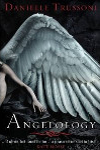
The Bible speaks briefly of the Nephilim, but what if they deserved a lot more words than they were given?
Publisher: Michael Joseph (Penguin)
Pages: 452
Type: Fiction
Age: Adult
ISBN: 978-0-718-15558-2
First Published: 2010
Date Reviewed: 19th April 2011
Rating: 3/5
Evangeline has always led a routine existence; as a nun she looks after the mail and devotes her time to prayer. But all that changes when a man arrives seeking information about a past Mother Superior. Verlaine is working for a tall blond who surpasses human averages by far, someone who isn’t about to let him do his job alone.
Angelology is the first book in a new trilogy written by Trussoni that examines the possibility of evil angels walking the earth. In it she links historic events to these human-angel hybrids and creates a whole educational system for the suppression of them.
Something that I feel is important to impart to the potential reader is the amount of background information included, indeed a large chunk of the book is dedicated to an event that happened over fifty years before. In this Trussoni blends fact with fiction and some sections are extremely interesting but one can feel bogged down especially as you can’t exactly take much of the information away with you for use in everyday life.
The way in which Trussoni goes about telling her tale is at once brilliant and ridiculous. The brilliance comes in the form of such things as drawing a subtle link between the physic of the Nephilim and the dictate of the Nazis on the perfect Aryan. The ridiculous comes in the form of such things as human agents in a secret society working against Nephilim, who want to kill them, having “angel1”, and “angel2” as their car number plates.
Unfortunately it is this second element that dominates the book, and it’s not until the end that things pick up. One character obviously sees a Nephilim, sees their wings, but it isn’t until someone else tells her much later on that she realises it was a Nephilim she saw. Add to this the fact that Trussoni constantly tells us that this character is the brightest student and, well, you can see where this is going.
The characters are not particularly developed, and the sort-of main character, Evangeline, supposedly the heroine, only gets things done because she has people telling her what to do. That she is a major factor in the Angelology circle is peculiar.
There is an issue with language and the book in relation to international audiences. Trussoni talks often of Verlaine’s “wing-tips”. On doing research, I discovered that this is the American phrase for a type of shoe, but even so, it’s really not the best way she could have described them when her book is about winged creatures.
The saving grace of the story is the ending, where Trussoni finally takes the plunge and delivers some top-notch plot ideas. The pacing and variation do make up a lot for the prior 300 or so pages, but unless you are happy to stick with a very average book until the end you are likely to deem it not worth it and that would be entirely understandable.
If you want to read Angelology proceed with caution, and I would recommend having a second book to hand for times when things get silly.
Related Books

Ella Drake – Jaq’s Harp
Posted 29th March 2011
Category: Reviews Genres: 2010s, Erotic Romance, Fantasy, Science Fiction
1 Comment

Magic beans aren’t just for kids.
Publisher: Carina Press
Pages: 56
Type: Fiction
Age: Adult
ISBN: 978-1-426-89123-6
First Published: 21st February 2011
Date Reviewed: 3rd March 2011
Rating: 3.5/5
Jaq’s sister is dying of a disease that only those who live and work in the sky can cure. Knowing that, as an agent of a covert corporation, she can secret herself up to the floating islands courtesy of her colleague’s beanstalk, Jaq prepares to find the antidote. She may also discover her ex-fiancée in the process.
The set-up for Jaq’s Harp is very good, a blend of science fiction and fairytale, and as before for Silver Bound, Drake successfully creates a world that is fascinating to read about. You are given all the details necessary at any given time to imagine the scene.
The characters are interesting and because of the short page count you get to see how they handle a number of different emotions one after another. Jaq is your kick-ass chick and although you know how Jaq’s mind reels at the sight of her boyfriend, it doesn’t stop her later saving the day. The background story of the characters is given enough time so that you understand their love. I think I would’ve liked to see Jaq take more of a role in the retrieval of the antidote but it didn’t hinder the story.
The inclusion of the fairytale works very well, it’s changed enough to be almost Drake’s own work in its entirety. Having the islanders called Giant Corps is surprisingly original because at times it’s easy to forget the children’s story and so the term nudges your memory.
Once again I find myself saying that I would love to read a story that explores Drake’s world further. The book is apt for the time Jaq’s mission would have taken, it’s only a short mission after all, but it would be great to know that you have more space to really enjoy being in the world created.
The only issue I had was with the romance, not because it’s included, but because its initial placement puts a damper on the pacing. The story begins by throwing you into the situation, racing along as Jaq makes her way towards the enemy and then stops suddenly. It stops so that the heroine can meet her hero, which is fine, but when they start considering whether or not to have sex when they should actually be getting the hell out of there it becomes unrealistic, obvious fantasy genre aside. Romance was to be expected with this book but as Drake shows with a well-timed sex scene at the end, there are better places for it.
To the sex scenes themselves, they are hot. The characters are in love, the details are bold and obvious, the latter more so perhaps than in Silver Bound. The last sex scene ends on a written triumph.
If there’s one single thing I’d like to point out amongst everything else, it’s the inability of the sky-dwellers to look down and the rarity of an earth-dweller looking up. The whole social issue is summed up in that one factor.
If the beanstalk was exciting when conquered once, Jaq’s Harp illustrates that it can be just as exciting when conquered twice.
I received this book for review from Carina Press.
Related Books


J R R Tolkien – The Fellowship Of The Ring
Posted 4th March 2011
Category: Reviews Genres: 1950s, Fantasy, Spiritual
Comments Off on J R R Tolkien – The Fellowship Of The Ring

An unlikely group of people make the initial journey to destroy a ring that holds an evil power.
Publisher: Harper Collins
Pages: 398
Type: Fiction
Age: Adult
ISBN: 0-00-712970-X
First Published: 1954
Date Reviewed: 27th October 2010
Rating: 2/5
Bilbo Baggins wants to leave his home and he entrusts the ring he stole from Gollum (chronicled in The Hobbit) to his nephew Frodo. The wizard Gandalf tells Frodo that he must take it away, so that it won’t reach the hands of the dark lord who is back to claim it. And so Frodo goes, picking up travellers along the way, on the first stage of a perilous journey.
You can probably tell by the way I wrote the summary that I really did not enjoy this book. I would like to say it was because my copy was 398 pages of tiny print, but it wasn’t only that. I found it incredibly hard to concentrate on the text most of the time, and actually, because I was trying so hard to give it a good go, I didn’t realise what the real problem was until I reached the end.
Tolkien doesn’t adhere to one of the biggest rules – he tells rather than shows. So much of the book is filled with superfluous descriptions of often minor details that no one needs to know; and then, once he’s written reams of description, he repeats himself to tell you about the place the characters just left or to tell you about a place that is nearly identical to that which they were in moments ago. Once, as a child, I wrote a meticulous account of every single pothole and electricity unit I passed when on a train journey. I would never consider it worthy of publishing, but perhaps if I’d given it to Tolkien he could have made some money on it for me.
Because to be honest I do wonder about his reasons for such needless description. If my copy hadn’t been so densely printed then the page number would have been double. Did he give himself a word count he really couldn’t reach and thus filled it with waffle?
This leads me to the writing style. Again, I’m afraid, I was disappointed. The writing is rather simple in some ways but it’s tedious, and reads as though no editor was involved. Tolkien applies to his writing the repetitive usage of he/she said. He adds onto it constant depiction that, although in this referenced paragraph is probably meant to apply humour to the scene and illustrate that Frodo was getting annoyed, just makes reading the book annoying:
…said Frodo evasively.
…said Frodo, not liking the reminder.
…said Frodo with his mouth full.
… said Frodo sharply.
The story itself isn’t bad and reminded me of David Edding’s The Belgariad (which was released years later and thus was no doubt inspired by Tolkien), and I think back to how Eddings made a similar story, of a journey fraught with danger, comic and readable.
Certainly The Fellowship Of The Ring improves when the rest of the characters come into the story, because there is more dialogue and less space for description. Tolkien even manages to evoke emotion when he talks of the homeliness of Lothlorien. He includes many different locales and weather, which when looked back on are quite amazing.
But I feel as though I’ve read all three books in the way that it took so long to get through just one. I can’t say I will attempt the other two because quite frankly I think I’d prefer to read Lauren Kate’s Torment, and we know how I felt about Fallen. I read this book because I wanted to have experienced it (the same motive for Pride And Prejudice and Jane Eyre, both I fell in love with).
If Tolkien had pondered a bit more, thought higher of his audience and their intellect, and believed in their imagination, maybe this book would’ve been better.
Related Books


Alex Bell – Lex Trent Fighting With Fire
Posted 4th February 2011
Category: Reviews Genres: 2010s, Comedy, Fantasy, Western
1 Comment

Talking foxes, more fire-breathing rabbits and the anti-hero discovering a fear of octopuses. It could only be another Lex Trent book.
Publisher: Headline
Pages: 376
Type: Fiction
Age: Young Adult
ISBN: 978-0-7553-5519-8
First Published: 3rd February 2011
Date Reviewed: 30th January 2011
Rating: 4/5
The Games have been scheduled once again and, once again, Lex has been chosen. But whom will he pick as his companion this time, as he seeks a life-giving sword in the Wild West? The decision is obvious, but Lex and his companion will have to do more than simply spin a couple of pistols and walk beside the tumbleweed. One of the other players is the grandson of a person affiliated with the Trents and having been shunned, the idea of winning the three rounds becomes all the more appealing.
Lex Trent Fighting With Fire continues the same basic format as Lex Trent Versus The Gods but features a lot more events in between the rounds, providing the reader with a chance to get to know the anti-hero even better but also, this time, to see where he can be a bit nicer. That’s not to say that the character improves exactly, because he doesn’t, in fact if anything the more you learn in many respects makes your opinion of him worse, but there are some very good points to him, no matter how well he tries to conceal them, that end up surfacing during the course of the book. This allows for Lex Trent to be ever more awful without alienating the reader.
Money had made them stupid. Lex could have announced himself as Tex Lent and they still wouldn’t have put the pieces together.
Lex’s companion Jesse, is superbly stereotypical as are the other contestants, and this is one of things that makes the book fun to read. Bell exploits stereotypes almost viciously, really making the most of them, and you can’t but be amused even if sometimes in reality it wouldn’t be correct.
More so than the first book, because of the connections between the characters, the other players play a bigger role in the story, at most times being just as much important as Lex and Jesse. The game rounds are more extreme too, whereas in the first book they were very dangerous but more interesting, this time they are more nightmarish and deadly. One round, involving books, is a treat because of the very nature of readers. And Bell includes a far share of libraries.
After all, when a mysterious volcano range suddenly appears on the landscape and may erupt at any moment, what could be more natural than to build a café right there beside it?
The story is slower than Lex Trent Versus The Gods because there is more information in it. The Wild West element is a whole subplot in itself as Lex is doing more than last time; he has two games to win – again the structure and writing style aid in helping the slowness to pass.
Lex Trent Fighting With Fire continues on a theme but succeeds in taking the story further thanks to that theme. In a time when second books are generally fillers it stands out from the crowd with the golden glow of a glowing canary that’s nearing the treasure. And it fits into a sole tradition – it’s own. It is a worthy follow-up and solid piece in a series that is likely to continue.
Related Books
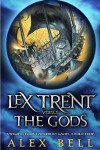
Alex Bell – Lex Trent Versus The Gods
Posted 27th January 2011
Category: Reviews Genres: 2010s, Comedy, Fantasy
2 Comments
An anti-hero with a cleanliness issue plays a divinely-created game lead by a flighty Goddess in a toga.
Publisher: Headline
Pages: 344
Type: Fiction
Age: Young Adult
ISBN: 978-0-7553-5518-0
First Published: 4th February 2010
Date Reviewed: 26th January 2011
Rating: 4/5
Lex likes to make trouble and has a habit of stealing whilst supposedly studying law. Once, when he found himself on the run after an unsuccessful mission, he decided to hide in the church of Lady Luck. This lead to him being enlisted as a competitor in the games, three rounds of challenges organised by the gods. Now, unfortunately for Lex, his boss is his assistant. There’s nothing more Schmidt would like than to give the criminal the what for, but instead they will have to cooperate if they are to win against the odds.
Lex Trent Versus The Gods is an oft-hilarious novel revolving around the tasks set for Lex to complete. There is a touch of Terry Pratchett-like humour in it, especially at the beginning where you may recognise where Bell has got her inspiration from; but the similarity stops there and otherwise the book is unique.
What’s particularly interesting about the story is that the main character is an anti-hero but nevertheless a character you want to read about. Bell’s humour plays a big part in this and she extends it to the group of characters as a whole. Lex is… horrible. He’s not the most awful person by any means, enlivened somewhat by an OCD that ill-fits his “profession” and is thus very funny, but he can at times be uncomfortable to read about. His opposite exists in Schmidt, the lawyer who provides interest because of the oppositeness (and, incidentally, for his opposition) and his dialogue. Of particular note is a scene in which Lex and Schmidt attempt to walk up an ice staircase.
When you have similar themes running through a book, in this case rounds of a game, it can be easy for everything to blend together and for the reader to forget when different events occurred. This is not the case here, where Bell effectively colour codes the rounds and sets them in a variety of locations. Be sure that the game never becomes boring because of these differences and because of the strange goals set.
Generally, authors of fantasy stick with the bog-standard mythical and legendary creatures established in the genre, here and there creating new ones specifically for their own works. Bell partly continues this trend but also diverts her attention to ancient Greek mythology to add a sparkle to the first round of the game. It fits the material perfectly.
“Zoey is – as you say – a ridiculous name for a griffin. I suppose my grandfather thought it was romantic to name a huge, hulking beast after the woman he loved.”
The narrative is fast paced and easy to read. There are a few slower sections where the book can be put down for a while, but the pace means that they don’t last for long. There are also constant climaxes throughout the story owing to the games, and, something I absolutely loved because it’s the thing I don’t like about the fantasy genre – there is no long journey involved. When the scenery changes it’s only for a short while and compared to other books it’s instantaneous. It’s worth reading the book just for the mode of transport.
We always think of Gods as being in the sky. Bell turns this notion on it’s head.
The only thing I wasn’t too sure about was the element of luck, because although it’s completely rational (as Lex is supported by the Goddess of luck) it means that Lex’s tasks are comparatively easy. Not thinking realistically helps, as well as constantly reminding yourself that this is pure fantasy.
Where witches are made the prey for a king’s hunting party while simultaneously still vying for work, and teenagers are turned into fish for trying to trick magicians, you can be sure of a good story. Lex Trent Versus The Gods isn’t perfect, but it’s not far from it, and with a second book on its way I think it’s safe to say that what has been released so far bodes very well for the future.
Related Books


