

Madeleine Thien – Certainty
Posted 13th April 2012
Category: Reviews Genres: 2000s, Domestic, Historical, Political, Romance, Social
Comments Off on Madeleine Thien – Certainty

If you love someone, stay with them.
Publisher: Faber & Faber
Pages: 304
Type: Fiction
Age: Adult
ISBN: 978-0-571-23419-6
First Published: 2006
Date Reviewed: 20th December 2011
Rating: 2/5
This book’s plot is best summed up by giving a true (as in not what the back cover says) insight. Ansel was married to Gail but she recently died. Matthew was in love with Ani but ended up marrying Clara. Both men continue to live in the past – for one of them it’s sort of reasonable, for the other it’s really not right.
Certainty is a book that promises much but fails to deliver on all accounts. It details the day-to-day as well as the past, and while the information on war is interesting and worth reading, the rest is forgettable. The book brings all the characters together to celebrate Gail’s life before moving on to discuss Ansel’s present situation and then Matthew’s past. Gail, although dead, lives through both their memories and Thien’s inclusion of a short piece told about her actions before death. The issue is that the male characters are depressed and neither of them have a true reason to be since they set themselves up for upset; nor do they recommend themselves as good husband material.
This reviewer felt sorry for Ansel as Thien presented him as someone very much in love with his wife. Then a little further into the book she, Thien, tells us how Ansel went behind Gail’s back. This reviewer put the book down, and only returned to it over two months later because she likes to finish what she starts. She felt as betrayed as Gail had. Thien had been making me feel for Ansel and then suddenly told me how he cheated. Instead of feeling sorry for his loss I now found irony in the fact that Gail had died a short while after it all. Neither was I satisfied by Ansel’s admittance or the way he acted towards Gail in future – it all seemed false.
Then there’s Matthew. Clara gets with him and he tells her about the hard life he had, and about Ani, and Clara has to deal with his continuing depression over his father’s death. If it were that simple, okay, but the fact that Matthew is obviously also moping about Ani (who didn’t die) is just stupid. It sets Clara up as a weak follower who does Matthew’s bidding for nothing in return. Matthew should have stayed with Ani, should have waited until he finished university and gone back to her.
Thien’s characters have nothing redeemable about them, except Gail who is unfortunately already dead. The author obviously wanted to write a literary novel that would win awards, and it’s obvious, the writing is too flouncy and pretty and every sentence is short.
Thien goes into irrelevant details, telling us how things are made or prepared that have no bearing on the story whatsoever. And the use of flashbacks is ridiculous. Not only are they used far too much but also there are flashbacks within the flashbacks with no attempt to specify where one ends and another begins.
There is no story to this book – it’s as if the flowery language is supposed to be enough – the characters are pointless and unpleasant, and the women need to stop looking after men who love others instead of them.
The idea behind the book may be about not trusting that things are guaranteed, but all this reader took away from it was the feeling she’d wasted her time. Perhaps this has value as an art form, but barring that there are plenty of other books in the world that should be read and reading this means that one of the valuable ones won’t get a look in.
Related Books

Asko Sahlberg – The Brothers
Posted 6th March 2012
Category: Reviews Genres: 2010s, Angst, Domestic, Drama, Historical, Political, Translation
1 Comment

A lot of surprises and shocks in a very short amount of time.
Publisher: Peirene Press
Pages: 116
Type: Fiction
Age: Adult
ISBN: 978-0-9562840-6-8
First Published: 2010 in Finnish; 2012 in English
Date Reviewed: 2nd March 2012
Rating: 5/5
Original language: Finnish
Original title: He (They)
Translated by: Emily and Fleur Jeremiah
Henrik and Erik are back from the war between Sweden and Russia, where they were fighting on opposite sides. But this isn’t the only issue between them as they arrive home at different times. There has been animosity between them, and between Henrik and his family since childhood, and yet there is something else lingering in the darkness, ready to pounce.
Once again Peirene Press has delivered a stunning novella from the minds of continental Europe. However where previous publications have brought a few particular issues to the forefront of the mind, it is more the structure of this book that stands out. Entirely different in every way, it really does feel as though you are being introduced to Sahlberg, and perhaps Finnish writing in general, in a way that suggests that like the Nordic countries’ most internationally recognised musicians, their writings are in a wonderful realm all of their own.
What is perhaps most striking about the book is the way that it has been told and structured. The sectioning off of the story into short pieces, into the different points of view of the several characters, reads like a script from theatre. While Sahlberg (for although the book has been translated one can assume that Emily and Fleur Jeremiah have been as accurate as possible) does not break the fourth wall, the way that his characters tend to speak in the present tense, as a monologue, comes very close to it. And the very way in which each monologue begins is reminiscent of the strong introductions from the sorts of productions that critics of drama herald as magnificent. One cannot help but imagine how the book might be performed on stage, the monologues being strong enough in themselves that a group could simply sit on the stage with a spotlight to highlight the one speaking and the effect would be powerful enough to warrant use of props or set design as absolutely unnecessary.
The monologues are of varying lengths, indeed some are so short you would imagine that the structure would render those characters minor, and yet the separate elements of both the differing points of view offered, and the inclusion of the “quieter” characters in the speeches of others, means that almost every character is given full description and development by the end of the book. Ironically, it could be said that The Brothers manages to make a better attempt at fleshing out characters than many a longer and more linear novel. Here it is impossible not to imagine a director in future seeing it as perfect for the stage, Peirene Press’s description of it as a Shakespearean drama is surely most apt. And it would be noteworthy to include the fact that while you read each person’s point of view, the story never repeats old ground. The book continues to flow forward (accept for the odd flashback), as though the characters had got together beforehand to decide who would narrate each scene.
Moving on to the content itself, there is an interesting thing in the way that Henrik is the person everybody hates, yet he is the only one who can see how the house is falling apart. The way he speaks of it suggests that it is more than simply the house. And indeed there are tensions which it seems no one picks up on besides the individual themselves. Everyone hides everything from everyone else.
Should everyone direct their thoughts to Henrik? There are many times when Sahlberg implies that the reader ought to look at other people more critically, and remember that while Henrik is disliked widely, there are biases at work.
For such a short book, there really are a lot of twists, and you may find yourself wanting to adopt Anna’s period-centric response of putting hands to face in shock. A couple of the twists are more or less obvious from the outset, but it’s almost as if Sahlberg has made them obvious as a sort of compensation for the utter surprise that comes with the out-of-the-blue moments. The family is both closer and more estranged than you think. And the manifestation of their pain can be difficult to read.
Hate and love are two sides of the same coin, and where one party may think they are providing from one side, the other party may think the reverse is true. Such is the case often here. And those who have caused us pain may actually be the ones wanting a relationship where others have given up. Sahlberg’s story may be historical, but there is a great deal that is relevant on an eternal level. Intriguing, mesmerising, upsetting in so many ways, and always surprising, The Brothers proves that length and time are not necessary ingredients in order to take a person on an immense journey.
I received this book for review from Peirene Press.
Related Books

Elizabeth Chadwick – The Marsh King’s Daughter
Posted 3rd March 2012
Category: Reviews Genres: 1990s, Domestic, Historical, Romance, Social
1 Comment

For richer, for poorer, whether worked for or stolen.
Publisher: Sphere (Little Brown)
Pages: 406
Type: Fiction
Age: Adult
ISBN: 978-0-7515-3940-0
First Published: 1999
Date Reviewed: 22nd February 2012
Rating: 4.5/5
Miriel had never seen eye to eye with her parents and, being unable to deal with her as both his daughter and the object of his lust, her step-father throws her into a convent. But Miriel won’t be staying – this she decides immediately. On finding a wounded man and bringing him to the convent, she comes up with a plan. Nicholas, for his part, is on the run from his captors, and upon leaving the convent goes in search of the treasure he had taken and hidden. When he sees Miriel following he agrees to guard her passage – but just as he didn’t bet on falling for her, he also didn’t bet on her running off with the money.
The Marsh King’s Daughter contains a very different story to other books by Chadwick you may have read. Set in the midst of bustling towns and featuring a cold ancient convent and merchant trips across the sea, it is quite the world away from tales of castles and battles for land. Indeed the book sports a somewhat nautical narrative that provides a good if brief background to medieval shipping.
There is a lot of content about commerce, with plenty of looks at the economy at large and the day-to-day workings of production and trade. This is not only a boon for the story, it also sets further background context for the era that Chadwick favours.
The author likes a brave hero, one who is strong and has morals that fit our present day, yet is undoubtedly a historical person. Nicholas is the subject this time and while he is not as spotlight stealing as Miriel – neither, for that matter, as stubborn – he nevertheless is someone to root for. Miriel is stubborn, as said, sometimes a little too much, but then she is always aware of the discomfort of her position as a female business owner. The characters are delightful and hateful in turn, and as always Chadwick has created memorable personalities. Some of them even truly existed.
The setting and subjects in the book make it perhaps more detailed than others, but it allows for a study into gender roles in the Middle Ages, and shows what could happen when they were turned on their head.
The romance is complex. It’s a case of wondering what could have been while making up for time. So of course memories surface, and there is a sort of anti-romance in the marriage Miriel makes. Miriel’s husband is another good blend of medieval and modern only in his case Chadwick makes things not as positive. Possession is nine tenths of the law.
The book is good in the way that it can command interest, however towards the end it’s easy to wonder why it is still going, even if the inevitable ending is yet to come. There is a lot of angst that is heartbreaking but it fits the story and characters. Miriel is a trooper but her decisions can be hard to comprehend for their foolhardiness. Though sometimes it is the decision of others that are hard to swallow and the reader is presented with the tough lives lead before equality and healthcare.
The Marsh King’s Daughter succeeds in creating a detailed vision of the trading business and of illustrating the way people at the lower to middle section of society communicated and treated one another. And it delves into piratical realms often forgotten about. Miriel may not allow the crown out of her sight, but Chadwick can at least add a feather to her cap.
Related Books




Eowyn Ivey – The Snow Child
Posted 27th February 2012
Category: Reviews Genres: 2010s, Domestic, Fantasy, Historical, Magical Realism, Spiritual
1 Comment
Days will be merry and bright if each Christmas is white.
Publisher: Headline Review
Pages: 404
Type: Fiction
Age: Adult
ISBN: 978-0-7753-8052-7
First Published: 1st February 2012
Date Reviewed: 27th February 2011
Rating: 5/5
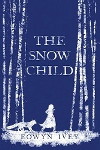
Mabel and Jack moved to Alaska when Mabel suggested they could do with a new life. Having lost their child at birth, Mabel has never quite recovered and the solitary life of 1918 Alaska appealed to her greatly. A gulf is between the couple and Jack cannot understand how Mabel is still so affected. During their struggle to make it in Alaska they create a snow girl; the next day they see a child in the woods. Their world is suddenly filled with a happiness they never dreamed of but there is always the question of how long it will last.
The Snow Child is a sweeping story, encompassing many questions about how we connect with and treat each other. The setting allows the magic to be explored in a way that most anyone can identify with, while allowing Alaska to keep its reality, the author herself being from the state. Although the location never changes, the ride through the character’s lives can often make it feel as though you have been on a long journey. Though of course that is in many ways the point.
Albeit that The Snow Child rests firmly in what is termed “magical realism”, Ivey plays with her reader, coming back and forth with the idea that in fact everything is perfectly true, before throwing at them a snowball filled with thoughts to the contrary. Before the girl, Faina, entered their lives, Mabel and Jack’s relationship was uneasy at best. Faina’s entrance is the catalyst by which everything starts to change, because suddenly there is a child for them to look after, the gulf between them bridged.
And it is through Faina that Ivey shows us change over time. Jack was always more content with life than Mabel was, but the introduction of the girl causes him to move towards a feeling of fatherhood, one that is rather possessive. Mabel, on the other hand, sort of takes a reverse route, beginning by feeling desolate and depressed and ending as Jack begun, more accepting and open. In addition to this, the reader can see a parallel in the personalities and life of the couple’s neighbours, who come to feature strongly in the book.
Possession is a big theme of the book, with Jack and Mabel taking turns at being worried for Faina and wanting her to fit the mould of a child they have created in their minds. Ivey puts forward the idea that Faina might disappear if Mabel enforces her views of education and a stable home life, suggesting that one cannot direct the life of another, as Mabel cannot force a child of nature to be a child of the modern western world. As for Jack, his possessiveness comes to the fore when Faina makes strong choices of her own, choices that bring her properly into their world. Ivey demonstrates that while such possessiveness, especially on Mabel’s part, is due both to the sudden realisation that they have a child, and to the love they have for Faina, it can do untold damage where it is not held in check.
But the bigger theme is relationships. It takes Faina’s arrival for Mabel and Jack to remember who they were, both as individuals and as a couple, and there is a poignant moment when all three are skating on ice and Faina suggests they keep skating past the limits they had set themselves for safety. In this there is the idea that while they are happy, Jack and Mabel will not let themselves fly free, always remaining on solid ground, and Ivey demonstrates that while that is often seen as a good thing, there are times when one should let themselves go. And the reader is left to wonder what might have happened had Mabel and Jack agreed with Faina, and had literally skated past their boundaries.
What is interesting about The Snow Child is that for so long it is simply a nice story – a look at domestic relations – with only the smallest of magical pieces, and the reader may wonder what is happening in the sense that it can seem that nothing much is. The change in mood, pace, and magic comes swiftly – Ivey sets the major points in a section all on their own, and it’s rather like a latch being opened. From content and comfortable little story the book moves to extreme emotions and a much grander tale, from which there is no way back. Perhaps the most intriguing thing is that from this point it is likely the reader will be able to discern what will happen, and far from being a negative aspect, as it would be in other books, this is what propels you on. Like Mabel and Jack, you may have been happy enough with Faina coming and going before, but now you want to truly put her in the spotlight and find out who she is. Again, Ivey shows us that wanting all the knowledge may be part of the problem.
The choices Faina makes, and how she relates to the changes are pause for thought, as they illustrate both how human and, at the same time, how unreal, she is. And surely the final catalyst in her life is a nail in the coffin of the current flow of events and way of life. It is here that another theme, love, is shown most obviously. However it is up to the reader to decide whom exactly Faina loves, or indeed, if she does love or whether it is something else entirely that effects her actions.
But in doing what she does, Faina provides Mabel and Jack with what they always wanted and in that sense the story comes full circle. Who Faina is, was, and will be, why she came, if she had a purpose or if that is something we have come to believe, are all questions that Ivey leaves to the imagination. Ivey will control your thoughts throughout the novel – pushing you towards the realistic, the magical, the deluded, whenever she wants – but the questions themselves go unanswered. The lack of quotation marks during dialogue that includes Faina is cause itself to take a step back. Each reader will come to their own conclusion based on experience, beliefs, desires, and this brings a spiritual aspect to the book.
And that is what makes the book so compelling, and Ivey’s tale so wonderful, that while it is based on a fairytale that was given an explanation, Ivey has twisted it and drawn her own ending, inserting important musings along the way.
Ivey shows that while we may like to think that we can solve problems by rational thinking and talking things through, there is an element in all of us that benefits from the unknown and the magical, or spiritual, or whatever you want to call it. And she shows that maybe what we think we need isn’t it exactly.
The Snow Child is a brilliantly crafted story of learning to live and love. And the best news is that no matter whether winter or summer, real or not, it will always be around to delight and enthral.
I received this book for review from Waterstones.
Related Books


Shannon Stacey – Undeniably Yours
Posted 10th February 2012
Category: Reviews Genres: 2010s, Domestic, Romance
1 Comment

Not as undeniably yours as the other books in the series are likely to be.
Publisher: Carina Press (Harlequin)
Pages: 204
Type: Fiction
Age: Adult
ISBN: 978-1-4268-9072-7
First Published: 2010
Date Reviewed: 30th January 2012
Rating: 2.5/5
Kevin Kowalski met Beth when he chucked her boss out of his bar, costing the woman her job. When they meet again – Kevin and Beth that is – the inevitable happens. But then inevitable takes a hike when Beth gets pregnant despite all precautions. Kevin wants to give a relationship a chance, but Beth’s unwilling.
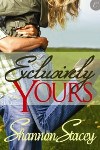
Sadly, Undeniably Yours does not have a patch on the other two books in this series, in fact it’s rather like the rebellious middle child who doesn’t fit in with the rest of the family. Whereas Exclusively Yours and the later Yours To Keep are fun-filled family-orientated romances that stir the heart and take you on a journey with the Kowalskis, Undeniably Yours sits by itself in the corner pushing all the chances for fun away. And that’s quite the literal description.
Beth was nomadic before falling pregnant, and while her viewpoint of losing her freedom is understandable, the way she keeps Kevin at arms length is not. Kevin is overbearing in the way that he tries to help Beth but the reasons Beth gives for shutting him out are just silly. She is afraid they might break up if they got together, and doesn’t consider the possibility that it might actually work out.
Beth doesn’t think this once, she spends the entire book repeating her thoughts over and over. There is also the fact that suddenly, from being so inviting in Exclusively Yours, the Kowalski family are difficult to read about. Here they come across as overbearing, like Kevin, never leaving Beth to work things out for herself. And in regards to Beth’s own parents, one minute she’s missing them, the next she’s remembering why she kept herself away from them, yet when the time comes for the reader to meet them they seem incredibly accommodating. There may be some truth in the idea that Beth may have read them wrongly, but it still doesn’t add up.
The set up was good, but Undeniably Yours is a world away from the other books. The focus is all on the pregnancy, or rather all on Beth’s repetitious mind, and barring the interludes for Paulie’s story (which is a welcome respite) there is nothing else. Even when the other Kowalskis are there they aren’t there for long.
If you’re okay with the idea of a plot about a silly woman pushing the father of her baby away while happily living a few steps away and spending time at home with his family – and nothing else – you might find it alright. But anyone who has read and thoroughly enjoyed other Kowalski books should note that this is nothing like Stacey’s standard Kowalski fare.
I received this book for review from Carina Press.
Related Books