

Elizabeth Fremantle – Queen’s Gambit
Posted 12th August 2013
Category: Reviews Genres: 2010s, Domestic, Historical, Romance, Social
6 Comments

The one who survived.
Publisher: Michael Joseph (Penguin)
Pages: 446
Type: Fiction
Age: Adult
ISBN: 978-0-718-17706-5
First Published: 13th March 2013
Date Reviewed: 17th July 2013
Rating: 5/5
Katherine Parr had already been married twice when she met Thomas Seymour, but those unions had not been founded on love or produced children, so when she fell in love with the man it seemed as though her future was set for happiness. But King Henry VIII has other ideas – he wants Katherine for himself. Alongside this is the fictional tale of Dot, Katherine’s maid, who is practically a daughter to the destined queen.
Queen’s Gambit is a fine novel that combines history with what-ifs and dreams, and looks at the era from a particularly literary perspective.
The book is told slowly but never dully, from the points of view of Katherine, Dot, and occasionally Katherine’s doctor. This method is intriguing, a present tense in which no personal pronouns are used but the scenes are never confusing. Fremantle makes it clear within a paragraph or so who is telling their tale. If ‘telling their tale’ is an appropriate description, given the style.
For the most part, Fremantle sticks to what is widely known about Katherine, using her imagination for gaps and bringing the people to life with her ideas of how they would have felt. However Dot is completely fictional, representing not simply a stereotype but being a way for Fremantle to further demonstrate her thoughts about Katherine Parr – Dot is a lowly maid but Katherine treats her particularly well, aligning with what we know of her nature as a good woman. It’s obvious that Dot is fictional, partly because of this treatment, but that obviousness actually enhances Fremantle’s credibility. And the mixture of pure fiction with fact works well.
Considering what’s been said so far, it will come as no surprise that Fremantle takes liberties with the history overall. Most notable is the beginning, Latymer’s end. This has the potential to colour the entire reading as it makes a pretty bold statement, yet once again Fremantle shows her hand – she is speculating, providing ideas and creating entertainment, not trying to insert her views as fact.
The comparison, in Fremantle’s favour, with Philippa Gregory, is hard to escape. Fremantle makes some people dislikeable, but unlike Gregory she doesn’t show an active hatred herself, the dislike is all on the characters’ front. And the dislike is somewhat cancelled out by the thoughts of the other characters. You may unexpectedly dislike a certain red-headed teenager during this book, for example, but if anything Fremantle has provided that needed other opinion of a person generally regarded favourably. It is always important to bear both sides in mind and here we have that other side, and it’s not forced on you.
There is a lot of thinking in the book, in the main thoughts replace general descriptions, being rivalled only by dialogue for winner of most amount of space employed. In another situation these thoughts would be considered info-dumping, telling, but due to the amount of non-descriptive dialogue this possibility is in the main cancelled out. And whilst the book doesn’t move particularly fast, it’s not slow enough to bring too much attention to what little ‘telling’ there is.
Queen’s Gambit doesn’t offer anything new beyond speculation, but that was to be expected. The reader has to be willing to read Fremantle’s fictional take on Katherine that doesn’t completely match popular thinking but does provide the popular sentiment. And what Fremantle has done for this lesser-known queen is to be commended. We may not know as much about Katherine Parr as, say, Anne Boleyn, but she is worthy of our study and time.
Queen’s Gambit is a quiet but fine book about the queen who outlived the tyrannical Henry VIII and had a matrimonial history of her own. Enter into it with an open mind and enjoy, and don’t worry about historical accuracy or liberties taken too much – this reviewer is a stickler for accuracy and she enjoyed it a lot.
I received this book for review from the publisher.
Related Books



Pavarti K Tyler – White Chalk
Posted 9th August 2013
Category: Reviews Genres: 2010s, Angst, Domestic, Social
3 Comments

This is what happens when you don’t pay attention to what’s behind the change in someone.
Publisher: Evolved Publishing
Pages: 206
Type: Fiction
Age: Young Adult
ISBN: 978-1-622-53298-8
First Published: 7th July 2013
Date Reviewed: 29th July 2013
Rating: 5/5
Please note that due to the nature of this book it was inevitable that some spoilers would be included. These details were impossible not to explore but should, if anything, add to the review and the recommendation, rather than detract from it.
Chelle is thirteen, soon to be fourteen, and has a bad home life. Her parents are neglectful – her mother is a workaholic who doesn’t pay her much attention and her father is an alcoholic – and it’s had an affect on every other aspect of Chelle’s life. She has few friends (though the number includes the new guy, who she loves), smokes, couldn’t care less about school work, and takes full advantage of the only person who seems to care, her male history teacher – who cares just that bit too much.
White Chalk is a story of what happens to young people who are in bad situations, and shows just how oblivious everyone can be to the needs of those in their care. It shows that whilst, for example, school is incredibly important, teachers need to be attentive to what lies beneath a facade (or in Chelle’s case a not-so-hidden upset that is repeatedly missed) and provides a particular lesson of the kind that most books turn away from. It is hard-hitting, shocking, but needed.
What is poignant about the book in general is the relative calm in Chelle’s situation when compared to the stereotype, those favoured by the media and propaganda at large. Chelle is neglected, but not abused by her family (at least not as much as the stereotype), she is developing a poor school record but is not noted as a problem overall, and whilst she does smoke and hang out with older students there isn’t that air of angst to her that other characters in stories possess. To be sure there is a lot of angst in this book and Chelle turns to cutting herself to relieve pain, but it is the atmosphere as a whole that marks Tyler’s book as so important. Because on the surface Chelle seems less at-risk than many other people, but that doesn’t mean that’s actually the case. Tyler’s book speaks of the people who are overlooked, people whose situation does not align with the commonly-held idea of problematic.
And yet Chelle’s reality is incredibly bad and is indeed problematic. Her relationship with her teacher is wrong, but she views it as a good aspect of her life, never imagining how her teacher truly views her or what his motives are. This relationship, which started prior to the book’s beginning, looks at the complex situation from the mind of the teenager. There is no true appreciation of the age difference or the appropriateness of it, because to Chelle what matters is that she is wanted. And, because she is young and naïve (for all the smoking and her mature command of English) she sees little else. Chelle would likely defend Mr Harris (to some extent of course, dependant on latter knowledge) and say she made the decision to stay with him. But if it is a look at consent, then it is a look at how little consent a minor can truly give when they don’t understand what is really happening.
In addition to this there are relationships with other men that to Chelle, and maybe even to her friends, are easily forgotten, but even a slightly older reader will read the flaws in her plans. Yes, Chelle is fourteen, and that does indeed affect her decisions (or lack of). One will see a future for her that is bleak unless help arrives soon.
It is both Chelle’s silence and people’s lack of attention that results in the devastation that is the story. There is actually a section where Chelle returns to school after an accident that leaves her with large bruises to her face and the only people that notice are her mother (who leaves for work after Chelle tells her she’s fine) and Chelle’s friend. No teacher notices. Indeed Chelle ends up in the principal’s office due to her anger at another student and the woman behind the desk doesn’t even bat an eyelid about the bruises, nowhere is it mentioned. Interestingly it takes a while to work this one out – at first it appears as though Tyler has forgotten to include something paramount. But then it all comes together. In the silence of the adults Tyler is again showing how oblivious people can be, and albeit that in reality the teacher likely would’ve noticed, it demonstrates that agendas are still first and foremost. To the teacher, Chelle’s grades are most important, because Chelle needs to be able to get into college. To Chelle, of course, there are far more important things in life, but to the teacher who cannot see why, everything else is invisible and Chelle is but a bad kid.
At the end, the reader will turn the page for the next chapter and be shocked that there isn’t one. Other authors who write about this subject like to include particular lessons, to illustrate how people can avoid disasters, to educate their readers in this way. Tyler looks at the situation more realistically, she doesn’t end her book happily with the subtext of “remember to be nice”, she reminds you that being nice isn’t an option because in these situations, in reality, there is no more time to be nice. The beauty of the ending, if such a description can be used, is that Tyler doesn’t give in to all those who want to see redemption, happiness, an education to adults and younger readers. Instead she tells you very harshly that it’s too late for lessons, that hindsight is pointless, and action has to be taken now rather than later.
White Chalk demonstrates that age is just a number when it comes to self-harm, depression, anger, and so forth. Indeed the older students point out a few times the age of Chelle, which even the reader may forget on occasion. It demonstrates how little we should expect young people to be aware of their situation, and its silence during times when any reader will say ‘Tyler really needed to add such and such’ speaks volumes about what the author is trying to get across. Anything left out of this story is not by accident, and instead of the usual situation, where the book would be considered not yet ready for publication and the author perhaps in the wrong field, becomes the extreme opposite here.
Everyone needs taking care of and no matter that it looks like they’re making do in a bad situation, the truth may be that that is only surface dressing. In addition, people view situations differently and the context of the person living it makes the difference as to whether or not it’s something to watch out for.
With White Chalk, you don’t realise just how hard a book it is until you’ve finished it. But it is, and its importance is vast.
I received this book for review from PixelPr Tours.
Related Books

Kate Forsyth – The Wild Girl
Posted 7th August 2013
Category: Reviews Genres: 2010s, Angst, Domestic, Historical, Political, Romance, Social
8 Comments
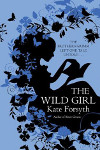
If they were the Brothers Grimm, then these were the Sisters Wild, and one in particular played a big role in the collecting of stories.
Publisher: Allison & Busby
Pages: 475
Type: Fiction
Age: Adult
ISBN: 978-0-7490-1328-8
First Published: March 2013
Date Reviewed: 26th July 2013
Rating: 5/5
Dortchen Wild fell in love with Wilhelm Grimm at first sight. Her love continues to grow over the years but the age gap between them and the difference in societal standing means that Dortchen already knows there’s no chance her father would allow her to marry him, he barely lets them socialise. Wilhelm and his brother are collecting folk tales for a book they wish to publish and Dortchen becomes one of their sources, but the Grimm family have only the faintest idea of what goes on behind the doors of the Wilds’ house, and about the anger of the father.
The Wild Girl is a necessarily slow but by no means quiet novel that takes as its premise the girl history forgot, her family, society at the time, and the possibilities brought forth by Forsyth’s research. In a similar vein but with major differences to Forsyth’s previous book, Bitter Greens, the story brings the concept of the dark fairy tale into reality whilst balancing that hard truth throughout on the other hand.
Forsyth has chosen as her subject the foundations of her previous story. Albeit that she told Bitter Greens, a retelling of Rapunzel, from the view of one of its earlier writers, it is widely known as the work of the Brothers Grimm and therefore The Wild Girl is a return home of sorts. The facts known about Dortchen can be found in Forsyth’s source information at the back of the book; she has followed the facts where possible and elaborated on the grey areas.
One of these grey areas is the possibility of violence, which is important to mention because of the nature of it. The domestic abuse is suggested very early in the book and it should be noted that this is in no way a story for young readers. Forsyth takes the route currently popular in retellings, showing the dark side of fairy tales, exposing their true routes, and this runs parallel to her interpretation of Dortchen’s family life. It is interesting the way Forsyth came to her conclusion of how Herr Wild acted, at least for the purposes of her book, and at the end of the book Forsyth makes a compelling case for what she has written whilst never saying that it is definite. For it is not, but her source information does support her tale.
Here we come to Dortchen’s later meetings with Wilhelm, and this bares responding to because it can be frustrating for the reader but is surely realistic of the situation. In writing what she has, Forsyth has turned the notion of ‘filler’ on its head because in any other context, Dortchen’s conduct would be considered dull. But Forsyth uses the time to remark upon the affects of violence and abuse on a person’s later view of relationships and shows that a fairytale ending is impossible, if not forever then at least for a very long time. And albeit that the backdrop is the 1800s and people respond, react, and keep quiet as they surely would have then, Forsyth’s commentary is relevant to our present day, too.
The book is steeped in French Revolutionary history, and here you get the point of view of the Germans. Forsyth brings the needed opinion of the common person into the picture and provides a lot of factual detail about the movement of the armies and the battles fought. You see the direct affects both the initial change and later reversal of changes had on the population of a country where religion was still important, society unequal, and the poor enslaved. Forsyth offers up the interesting detail of how Napoleon’s rules could be hated until society got used to them at which point, when the reversal happened, a lot of people saw the good in the Revolutionary rules – if not when it came to views about women. There is enough here to supplement the knowledge of anyone with an interest in the Revolution and how it affected Europe, with the foresight that only the inconsequential, such as individual one-scene characters, are fictional.
So The Wild Girl is a fairy tale of a different sort. The main plot isn’t based in fiction and there are no fairy godmothers, princes, or witches with towers. It is in the writing itself that the book makes a claim to the label and in the inclusion of the many stories told to the Grimm brothers. These inclusions are as much a source of knowledge as are the accounts of the wars. There is a very slight paranormal element used but it is more about the ideas Dortchen has, because it is never suggested that this paranormal element is real or that it has a true affect on the story. It is more a case of convenience for Dortchen’s imagination and to help her mental state (though in no way a convenience in terms of Forsyth wanting to hurry on with the story).
After all this, then, what about the characters? Dortchen is strong but understandably this nature is left in tatters as the story continues. The other Wild daughters are well-rounded and made easy to tell apart by Forsyth’s instant usage of stereotypes (stereotypes of a fashion used in fairy tales). The Grimm family, too, are developed, and Wilhelm is a worthy hero, all things considered. He was never going to be the knight in shining armour as real life rarely works that way, but instead he is believable and at times a fine example to use when Forsyth is discussing affects and reactions. Herr Wild shows the contradictions of religion and reality, and in Frau Wild you have at once the typical melodramatic mother you might expect from such a story, as well as a well-written example of both the hindsight of the present and the lack of knowledge – paired with discrimination – of the time. This is a hard book to read, there is no doubt about that, but it is both entertaining in its way and poignant and necessary in another.
The Wild Girl is about the women patriarchal history forgot, of the people who were crucial to the Grimms’ success. It is important, it is informative, and it is a compelling read. And it reminds you that there is always darkness to the sweetest tale and that even the hardest of times can include a little magic.
I received this book for review from Allison & Busby for Historical Fiction Virtual Author Tours.
Related Books

Sheryl Sandberg – Lean In
Posted 31st July 2013
Category: Reviews Genres: 2010s, Business, Commentary, Domestic, Psychological, Social
4 Comments

Sit at the table. Don’t wait to be asked. Your parents might moan but your career will flourish.
Publisher: WH Allen (Random House)
Pages: 171
Type: Non-Fiction
Age: Adult
ISBN: 978-0-75354-162-3
First Published: 11th March 2013
Date Reviewed: 9th July 2013
Rating: 3.5/5
A mixture of memoir, research, and experience, Sandberg, Facebook’s COO, discusses what holds women back from having successful careers. Looking at how social expectations create barriers, she details what we can do to change the workplace to further equality. Drawing on her time as an intern, at Google, and, of course, at Facebook, Sandberg’s book is as much about personal experience as the experiences of others.
Lean In is a comparatively short book that, although it could have been longer as well as better edited, presents good evidence and is a fair motivator. Sandberg is honest from the beginning – this book isn’t of a particular genre and she is very aware that she is not perfect with gender herself. This contributes to the success of the book, even if it doesn’t quite heal the inconsistencies.
Sandberg makes it clear from the word ‘go’ that her word isn’t the be all and end all, that equality means having a choice (for example between being a stay-at-home mum and a working parent), and that whilst the book will likely resonate most with women, there is something for men, too.
These are promises she keeps. Partly due to her own status as a mother, she constantly considers points about child well-being, contact time, and the reasoning against leaving children to go on trips. This is a good aspect of the book and yet as it is obvious and understandable that she defends her own choices, inevitably Sandberg ends up unconsciously reinforcing why there is the social expectation to stay at home in the first place. This isn’t to say you’ll necessarily end the book thinking she’s a bad mother, but she does unfortunately bring into focus the very thing she didn’t want to. This sort of thing also happens with other unrelated accounts, such as when she says crying is good between employees but makes herself sound weak.
On the promise of choice, Sandberg never waivers. Her opinion is that if women want to work they should, if they want to look after their children they should, if they want to combine both they should. She also highlights the need for men to have a choice as well – in that a stay-at-home father is seen as a bad life style when it shouldn’t be. And she reminds you how people will ask a woman how she intends to change her life to accommodate her child, but a man is never asked.
As suggested above, the promise of making the book interesting for men is kept. This reviewer, as a woman, may be saying this from an ‘outsider’ perspective, but Sandberg spends much time speaking about the lack of paternity leave and about how men who wish for equality are not given support or credit.
What of the major aspects, then? Beyond choices and parenting, Sandberg discusses the fact (backed up by evidence) that the sole difference of gender on an otherwise identical profile will illicit different responses from study groups. She explains how we don’t even notice our own biases, how she doesn’t notice hers, and how research suggests that it’s people who say they are not biased who are actually the most subjective. She talks of how women are often the issue, not supporting each other, and how it’s unfortunate, even if understandable, that a woman’s view of another woman is considered most important – unfortunate because a woman will often be more negative of another woman than a man will be.
Sandberg looks at the differences in our perceptions of successful people. A strong successful man is liked, a strong successful woman is considered bossy. Likeability doesn’t match success. She discusses catch-22’s – a woman who helps a colleague is less likely to have the favour returned due to the stereotype of caring, a woman who doesn’t help will be penalised more than a man would be. And she debunks the old saying that people are different as they get older – “nothing has changed since high school; intelligence and success are not clear paths to popularity at any age”.
Perhaps surprisingly, whilst Sandberg hopes for change she says that sometimes stereotypes and little ideas must be bought into to gain success. She speaks of women assuming dominate poses, such as physically taking up more space, to aid the mentality of strength. The focus on faking it until you make it is, in the context of Sandberg’s main ‘lesson’, both understandable and a contradiction.
Unfortunately there are more of these contradictions in the book. One is the focus on women with children. Up until half-way through Sandberg’s advice and opinion is generalised and useful. This then stops suddenly. The initial reason is that there is a chapter that isn’t nearly as worthwhile as the rest and the book becomes very repetitive. But the second and more obvious reason is the exclusive focus on motherhood. There is very little in this book written specifically for women who have no desire to parent. This may fit Sandberg’s own position as a mother, but it renders the book inaccessible, creating a bit of a ‘them and us’ situation. There is a lot about women who are thinking of having children and women who want them someday, contrasted with one single story of a woman (who nevertheless wants children one day) speaking up for those burdened with extra hours so their colleagues can spend more time with their own families. Women with or who want children may indeed have a tougher time succeeding in their careers, but the premise of this book did not suggest such a level of positive discrimination. And to go back to Sandberg’s accidental reinforcement of the mother stereotype, much of what she says in the latter chapters only reminds the reader of why ‘we’ have discrimination.
Taking the positive discrimination further, the book is, perhaps obviously, inaccessible and irrelevant to those on lower incomes. Indeed Sandberg talks of wage gaps, single parent families, and how she happens to be lucky, but this doesn’t make the situation any better. If this was to be about helping women to succeed she needed to cover those not fortunate enough to have the money to afford university, to not have the wealthy and supportive parents, partners, social contacts, those who are stuck in dead-end jobs. As other reviewers have pointed out, Sandberg acknowledges the help of many many women in the creation of the book, but nowhere is there a mention of the women she employs to look after her house or children, excepting a single reference to a faceless woman she was jealous of for owning her, Sandberg’s, son’s affection.
This lack of accessibility is cemented by the name-dropping. Sandberg has worked at Google, Facebook, in countless privileged positions – and that is the point, the continual reminders of luck, money, and a nice but rare modern office culture will likely divide many readers from the text. If the target audience was high-income women then the book wasn’t particularly necessary in the first place, or at the very least Sandberg should not have brought in mentions of lower-income families.
And it’s a pity because as the book moves into its second half there is enough repetition that could have been replaced with a whole new chapter about how to get that first good job, and the book wouldn’t have had to have been any longer. Sandberg is in a position to have written this book, in so much as people will give her book deals without persuasion, but she displays a distinct lack of knowledge or at the very least has left such knowledge out, out of convenience.
But then given the contents of the acknowledgements, how much of this book did she actually write and how much is simply paraphrasing?
Sandberg’s book provides a lot to think about, and her honesty is refreshing. But it’s not perfect by any means and is full of contradictions and missing information. Read it, it’s worth it on the whole, but don’t expect many answers.
Related Books

Eloisa James – Desperate Duchesses
Posted 17th July 2013
Category: Reviews Genres: 2000s, Comedy, Domestic, Historical, Romance, Social
3 Comments

Love and loyalty amongst lust and infidelity.
Publisher: Avon (HarperCollins)
Pages: 382
Type: Fiction
Age: Adult
ISBN: 978-0-060-78193-4
First Published: 2007
Date Reviewed: 4th March 2013
Rating: 5/5
Roberta needs to find a husband. Realising her problems lie in living with her eccentric father – a bad poet with an inclination towards melodrama – she decides to leave for London to stay with family. Her hope is that cousin Jemma will help her make a stunning entrance into Georgian life and improve on the reputation her father has ruined. It was love at first sight when Roberta careened into Villiers, but Villiers doesn’t favour marriage. When Jemma is asked to exact revenge on Villiers by another woman, the plans to shame him as well as marry him to Roberta come together – but then there’s Jemma’s brother Damon who does favour marriage and wants Roberta for himself.
Desperate Duchesses is a surprisingly funny novel with all the basics of a good romance. Set in Georgian England, there is plenty of time for James to poke a little fun at costumes, and opportunities to take advantage of the daring and stereotypically sexy idea of a man who refuses to wear a wig. And there is time for explorations of society to be presented with aplomb.
Roberta is the sort of character that, apart from her era-specific interests, would fit any time period. She worries about how her father’s behaviour will affect her future, she is sexually naïve but not at all reserved, and her propensity to correct the hero’s son’s grammar, though bordering on obsessive, will resonate with readers. She knows what she wants and will strive until she gets it, and her belief that she is in love with Villiers is funny rather than annoying. James never suggests that you ought to believe she is in love and truly it is a case of her believing without knowing what love is. She may not be as compelling as Jemma, who is more aware and gets to show off her intelligence due to her role, but she is a person you can root for – and you’ll be rooting for her to make that crucial realisation about her choices before long. Whether she is likeable is another question, however.
As said, Jemma is rather smart. She is also rather scandalous and the source of a lot of the comedy. Her ideas, such as having a naked woman as a table centre-piece, speak just as much of modern liberation than debauchery. In fact, despite the wide tendency of all to sleep with everyone but their spouses, the book is lacking in the sort of discomfort and lust (without love) that might put you off. It is this aspect that is one of the greatest elements of the book.
Because if the book is character-driven (and it must be said that Damon is just as wonderful a character as his sister and Roberta), then James has made a big effort to bring history into it in a way that won’t alienate. If a romance with infidelity is off-putting, then James has made sure to keep the infidelity confined to the other characters and referred to far more often than shown. Despite Damon’s prior mistresses and illegitimate child, and despite Roberta’s decision to throw caution to the wind, you will not find a faithless couple here. Whilst it might strike you as unbelievable given the setting and other characters, it is understandable and acceptable that James has left out infidelity from the development of the romantic thread.
The book asks, to some extent, what love is. Roberta wants to marry Villiers and believes she loves him. From the text it seems possible that she does indeed love him, but when Damon makes his move she finds what is obviously ‘purer’ than lust, and it is on the part of the reader to see what Roberta does not.
Bringing in something completely unrelated to sexuality is chess. Or rather chess is generally unrelated but of course James uses terminology for innuendo and suggestions. There is a great deal of information and playing of chess in the book, to the extent that a person who hates it will likely find the book boring. Most of the characters practically breathe chess and it forms the basis for other plot points, too. Indeed anyone who enjoys the game or wants to learn more about it may see its potential as a tips and trick book – there really is that much in there.
As supposed for a book where the heroine has been brought up in a house of literature, the book prizes the written word and good English. What errors there are are editing errors and James employs a believable mixture of historical and modern language. One of the characters even makes fun of the language of his ancestors.
As for the romance? Damon wants Roberta and does make decisions without her, but his weakness around her takes away any feeling of inequality and possession. You have a heroine who has learned a lot from her father’s lovers and isn’t shocked by impropriety but has no knowledge of the actual experience; therefore some of the sex scenes are lessons of sorts. There is no colourful language and the relationship begins and ends (as far as the book is concerned) with love. If not quite on Roberta’s side.
Desperate Duchesses sees a situation where the daughter of a man who adopts peculiar pets, runs to the house of her cousins who aren’t cousins, in order to get married to a man who thought she was a servant. It sees a situation where well-dressed people decide to start playing at discus with cow pats, and hilariously bad seamstresses are employed to make ball gowns for the gentry.
It’s silly, it’s stereotypical, and it’s an absolute riot.
Related Books