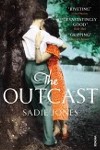


Eloisa James – An Affair Before Christmas
Posted 11th December 2013
Category: Reviews Genres: 2000s, Comedy, Domestic, Historical, Romance, Social
1 Comment

An affair to remember, because it is between a husband and his wife.
Publisher: Avon (HarperCollins)
Pages: 386
Type: Fiction
Age: Adult
ISBN: 978-0-061-24554-1
First Published: 2007
Date Reviewed: 20th November 2013
Rating: 4/5
Poppy and the Duke of Fletcher have been married for four years. They started their wedded life in love, and they may still be in love, but the marriage has gone sour. Does Poppy love him? – Fletcher does not know. Certainly she hates having to be intimate with him. With Poppy’s mother ruling her daughter’s head, and a society that expects a man to be unfaithful, it’s going to be a difficult journey if there is to be no divorce.
An Affair Before Christmas is the second book in James’s hilarious duchess series that sees the continuation of the many couples’ lives in the background whilst focusing on the Duke and Duchess of Fletcher.
James’s characters are, once again, magnificent. It is true that these Georgian nobles might indeed scandalise even the most scandalous of real-life Georgians, but it is rather obvious from the start that James’s work isn’t your standard historical romance. The ladies and gentlemen do everything you ‘expect’ them to do, and then go and behave particularly ahead of their time in a way that isn’t quite unbelievable, but is certainly a whole lot more entertaining than reality. Once in a while the entire plot will get a little too silly, but again, that is half the fun. Make no mistake – the covers may suggest a lot of sex and nudity, and that’s really quite correct, but it is far from the main takeaway of the book.
Whereas Roberta of Desperate Duchesses had her own mind but was rather naïve, Poppy’s naivety is similar yet vastly different. In Poppy there is a budding scientist just waiting to be allowed into university, which of course will never happen; a woman who if she can just separate her mother’s thoughts from her own, will be quite the popular person. She may be silly, but she’s endearing all the same.
The Duke of Fletcher isn’t far behind, indeed he is only slightly less well drawn than Poppy simply because as a man in a male-led society he already has an advantage. The cautious reader will love Fletch, the handsome duke who could have anyone he chooses but is not interested in being unfaithful, and the way his success in his career is aided by Poppy, even though she actually has little knowledge, is particularly appealing for the modern reader. Make no mistake – James writes for the modern reader, no matter how obvious that may sound.
The writing is great, and befitting of the time, if not quite historical. There are a few errors, modern American terms that could be categorised as certain English dialects but not ones that are relevant to the characters, but they are used more often in the narration rather than in dialogue.
The themes are both historical and eternal – it is less likely today that a woman would know nothing of the pleasures to be had during sex, but it is all too common for communication to break down in a marriage. Poppy’s mother is both the Georgian matriarch would believes a woman should obey her husband, and an example of the eternal stereotype of the interfering mother-in-law. All these clauses come together to form the bulk of the content.
However the themes do take their toll on the narrative. The romance in this book, the active love between the characters (as opposed to the feelings themselves), does not start until the book is nearing its end. The miscommunication is there throughout, and Poppy’s first (bad) ideas of how to deal with her husband dominate the book, leaving very little time for the couple once they come to realise what went wrong. Of course it is lovely (and predictable, which is why this reviewer isn’t worried about spoilers) that the book ends with the happy couple, but when so much time later on is taken up by the secondary characters it is hard not to wonder why the book was marketed as Poppy and Fletch’s story. This ultimately means that sex ends up taking what’s left of that short space of time which, while expected, does mean the resolution is even shorter. That said, given the reason for the estrangement, perhaps it makes sense – it’s just that it doesn’t particularly make for a great story structure.
Beyond the mother’s rule, which, yes, does seem strange given the four years, there is as aspect of Poppy’s lack of desire that may irritate the reader, and the pun here is most definitely intended – Poppy suffers an allergy that renders a lot of her lack silly. But it does depend on the reader. If you can believe the miscommunication would extend to Poppy’s silence over it you may be okay, likewise if you view James’s decision as one concerned with comedic value. Otherwise it may just render the book too over the top, the pun here not intended, to continue.
It should be noted that whilst Christmas is specified on the cover, the book isn’t confined to the holiday season. While it may seem better when read beside a tree, there is enough of the story based in summer to make it an option at any time of year. The book could be read as a standalone, but the reader will appreciate it much more if it’s read in sequence.
An Affair Before Christmas isn’t quite as strong as the first book, but it is well worth the read. The characterisation is brilliant, the comedy is laugh-out-loud, and it’s good to have the same background setting written about from another angle. The secondary stories mean that you’re looking forward to the next book very early on, which in this case isn’t a bad thing.
Related Books


Michael Palin – Around The World In 80 Days
Posted 4th November 2013
Category: Reviews Genres: 1980s, Adventure, Comedy, Travel
5 Comments

Easy – until you rule out aeroplanes.
Publisher: Orion (Phoenix)
Pages: 241
Type: Non-Fiction
Age: Adult
ISBN: 978-075-38232-48
First Published: 1989 (this edition with extra content, 2010)
Date Reviewed: 28th October 2013
Rating: 4/5
Star of Monty Python, Michael Palin, was challenged by the BBC to undertake a journey around the world, imitating Phileas Fogg – to follow Fogg’s example, Palin forgoes aeroplanes for slow sea voyages and train rides and he tries to get from the Reform Club in London, to the same club once again (which he’s not allowed to enter), travelling through the Middle East, Asia, and North America.
Around The World In 80 Days is a rather brief (this detailed later) account of Palin’s journey, a book published to accompany the TV series the journey was primarily created for. It’s safe to say you can read the book without having seen the series, though of course your overall experience would be enhanced by making time for both.
The most obvious element that needs to be commented on, considering the bulk of the content was written and concerns the late 1980s, is that the book is understandably dated. Writing in the then-present, Palin carries in his Walkman, ship crews watch films on VHS, and a lot of the country-specific references are now irrelevant or historic-sounding. There isn’t a laptop in sight.
Yet as long as you keep this in mind, the book isn’t old enough to pose any issues. Perhaps the very young reader, who wasn’t born before the Internet, might have trouble catching every reference, but for the most part it isn’t hard. Indeed the book offers the chance to relax in an age where technology wasn’t yet persistent and journeys were more hazardous.
It’s worth noting that the new edition contains Palin’s mini follow-up trip twenty years after the 80 days. It’s written in the same style, details the landscape changes Palin notices, and recounts the reunion with the ship’s crew he was sad to leave those twenty years previous. It’s not a big addition, but it makes the new version of the book the better option nowadays. This said, the book does not end with a grand finale. Palin makes his trip and that’s it. Given the reason for the journey – to attempt Fogg’s mission in reality – there is little think about afterwards.
There is a lot of cultural information in the book, and a lot of it is ageless. So too the historical information. Through Palin’s words it is easy to see how his journey differs in emotion and thought to Fogg’s – Fogg simply travelled without wishing to see the countries he went through, Palin makes a point of using any spare time to talk to people and try local food and wares. He goes clothes shopping in Japan, rides a camel, becomes an extra in a film – for Palin the list goes on and on; one almost feels sorry for Fogg’s belief in western superiority, fictional character or not.
There is a great deal of humour in the book. A lot of it is very British but of the kind that is accessible to anyone. For example, a running theme is Sheffield United Football Club. Palin doesn’t say so outright, but it’s obvious that one of the things he wants to stay updated on is news about his favourite team. There are references to other Monty Python members, and jokes about the many ‘Michael’ incidences on his journey – the camel and its owner being called Michael (a sales pitch it would seem), Palin being called Michael Jackson (as the latter is/was more well-known), and so on. There are also lots of jokes about the different idiosyncrasies and ideas Palin comes across, which may at first seem wrong – but Palin soon starts joking about Britain, too.
Truly this is a book in which the highlights are the comedy and Palin’s focus on getting to know the countries themselves (rather than only the tourist attractions). The book has a lot of information about sea vessels and trains – understandably none on cars or planes – and will therefore appeal to transport enthusiasts too.
This is where we come to the mention of the book being ‘brief’ – there is detail, but only in parts. The book is often written as though bullet points wouldn’t be amiss, and the style is in no way literary. Palin jumps from one day to another, and whilst this could be a reason for suggesting the TV series is paramount to appreciation, it’s more the case that the style is the inevitable effect of the book being a product of Palin’s diary. Indeed if you didn’t know this prior to reading it, you would soon realise, as the amount of detail that is there is more than most people would be able to remember off the bat.
Briefness aside, it’s admirable of Palin that he wrote about every day, come rain or shine, happiness, headache, or sickness.
To sum it up, Palin’s book is relatively short, but it’s sweet. It’s necessarily primarily concerned with transport but this shouldn’t put off those looking for culture. And it’s a whole lot of fun. There are plenty of photographs included – you don’t feel ‘outside’ – and that it is now dated may just be part of its charm. Those with wander lust will love it (note that it may lead to tickets purchased), those who love the slower pace of life will enjoy its use of the sea and the way of the crews as they take their time, and those looking for reports of the culinary kind will find what they seek. With a lot to recommend it to a lot of different people, Around The World In 80 Days is one set of days you’ll want to be escaping to.
I received this book for review from Titan Travel.
Update on 29th March 2016: I see the question, ‘which feature of michael palin’s “around the world in 80 days” best shows that it is a primary source?’ a lot in my stats so I’ll answer it. Palin’s book is in the form of a diary; the book is a published version of the diary he kept whilst on his travels. Diaries are considered primary sources therefore the diary format of the book shows best that it is a primary source. (If we wanted to look into it further we could suggest the book is also bordering on being a secondary source because it’s in part a commentary of Vernes’ original book both through its detailing of the differences and the very fact Palin is following in Phileas Fogg’s fictional footsteps.)
Related Books
None yet.
Bee Ridgway – The River Of No Return
Posted 7th October 2013
Category: Reviews Genres: 2010s, Comedy, Fantasy, Historical, Romance, Social
5 Comments
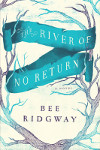
Forward to the past. (Reverse that and you’ll see the inspiration.)
Publisher: Michael Joseph (Penguin)
Pages: 546
Type: Fiction
Age: Adult
ISBN: 978-0-718-176-983
First Published: 28th March 2013
Date Reviewed: 26th September 2013
Rating: 4/5
As Nick was about to die, attacked in battle in the 1800s, he disappeared. He reappeared, alive, in the 21st Century, found by a group calling themselves the Guild. The Guild promises Nick $2million a year and sends him to South America for training where there are fellow surprised time travellers from every decade. The Guild teaches their members how to live in 2013 and then sends them off to use their education. That was fine with Nick, millions of dollars and a free reign sounded – and was – great for ten years, but now the Guild want him to return to headquarters and forget every rule they taught him. The Guild’s enemies are getting stronger, and Nick has a part to play in stopping them.
The River Of No Return is an imaginative and rather funny book that deals with a particular sort of time travel, the sort where you’re not going to meet different versions of yourself and where history isn’t to be changed unless the world is about to end.
The story is contained to a few people and only a couple of different times, meaning that the narration is pretty straight forward. This may mean disappointment for some readers, as other times are referred to and it’s safe to say where time travel is concerned the future is a magnet to our interests, but there appears to be a sequel in the works. In fact it’s worth commenting on the ending of the book. Ridgway creates a crafty ending the likes of which means the story could definitely do with a sequel, but if none were written she’s left you enough information for you to construct a conclusion.
She reminded him of modern women. The way she stood so confidently, the way she met his eye like an equal, the way she spoke unblushingly of the sex she was not having with her cousin.
It takes a good while for the humour to show itself. Indeed the cover and first several chapters do not in any way suggest that the book will be humorous. When it enters it is laugh out loud and rather clever, although there are occasions where it could be considered too much.
So to the affects of time travel on the characters. Nick, the nobleman, fits right into life in the 21st century. So changed is he, so happy with his new era, that his return inevitably results in plenty of thoughts about women, equality, voting, and so forth. And Ridgway creates the ideal romantic partner for him. Yes, it may seem convenient and unrealistic that Julia, the 1800 woman who may or may not be a time-manipulator (unknowingly), is ahead of her era, but Ridgway sets the foundation of the relationship in the days before Nick’s jump, so that it is more a simple case of two like-minded people getting together. Nick may not have been as modern in his youth as he obviously is in adulthood, but the flashbacks portray enough ambivalence to his situation ‘back then’ and enough remembrance of the younger Julia to suggest that, traveller or not, the pair would have got together.
“Demand you back? You’re a full-grown woman. You can do as you choose…” Even before the words were out of his mouth, Nick realized that the sentence he had just spoken only made sense after two centuries of struggle that had yet to happen.
The affects of the 21st century form a lot of the comedy. Like other ‘jumpers’, Nick is trained to be a modern man, with all the knowledge of beyond 1800s history and pop culture that that entails. In preparation to jump back again, to the 1800s, he has to re-train himself in the art of being a nobleman. Modern phrases and cultural references inevitably slip out whilst back in the past, and it happens a lot, but Ridgway’s particular usage of the theme stops it becoming annoying. As said above, the humour as a whole can become too much, but this takes a while to happen if indeed it does at all for the individual reader.
However it must be said that Nick does forget a crucial part of his 21st century life – sex in 2013 involves a foil packet, sex in 1815 involves no discussion of Nick’s new knowledge and it is left out of the book completely. Although this is only one instance of forgetfulness, the potential impact of such spontaneity, which Nick would ‘now’ know about, ought to have been addressed. His partner may be a virgin, but Nick isn’t and his nature suggests he would consider STDs. And as Ridgway has created no space for a pregnancy in her novel, regardless of the fact that a pregnancy is neither here nor there unless the author includes one, Nick would have surely thought of it, and likely his 1800s partner, too.
Julia has courage and guts, but she’s not superwoman. She is the realistic, if such a word can be used, result of a woman from a good, happy background, with a fantastical talent she cannot understand.
The book spends time on the concept and storytelling device of good versus evil, but Ridgway twists it to suit the people she has created. Unless things change drastically in any sequels, this isn’t going to be, and isn’t here, your typical science fiction save-the-world-from-the-bad-guys series. And it’s undeniably refreshing.
The book dips a bit towards the end, becoming, if not predictable, rather convenient. The reader may work the secrets out beforehand, but either way it does have the possibility of changing your thoughts as to whether or not you’d like to read further books about this world. It creates an expectation of an epic continuation but may seem too drastic a change, as such, to some readers. In many ways the sudden unveiling of answers and new plot points is a pity.
But overall The River Of No Return will delight. It will bring embarrassment to anyone who worries about laughing over a book in public, which should be considered a positive factor, and sate the appetites of those who love time travel novels but are a little worn. The River Of No Return is long, but then so is history. And if the title has you in mind of Marilyn Monroe, never fear – that is exactly what happened to Ridgway, too.
Related Books

Eloisa James – Desperate Duchesses
Posted 17th July 2013
Category: Reviews Genres: 2000s, Comedy, Domestic, Historical, Romance, Social
3 Comments
Love and loyalty amongst lust and infidelity.
Publisher: Avon (HarperCollins)
Pages: 382
Type: Fiction
Age: Adult
ISBN: 978-0-060-78193-4
First Published: 2007
Date Reviewed: 4th March 2013
Rating: 5/5
Roberta needs to find a husband. Realising her problems lie in living with her eccentric father – a bad poet with an inclination towards melodrama – she decides to leave for London to stay with family. Her hope is that cousin Jemma will help her make a stunning entrance into Georgian life and improve on the reputation her father has ruined. It was love at first sight when Roberta careened into Villiers, but Villiers doesn’t favour marriage. When Jemma is asked to exact revenge on Villiers by another woman, the plans to shame him as well as marry him to Roberta come together – but then there’s Jemma’s brother Damon who does favour marriage and wants Roberta for himself.
Desperate Duchesses is a surprisingly funny novel with all the basics of a good romance. Set in Georgian England, there is plenty of time for James to poke a little fun at costumes, and opportunities to take advantage of the daring and stereotypically sexy idea of a man who refuses to wear a wig. And there is time for explorations of society to be presented with aplomb.
Roberta is the sort of character that, apart from her era-specific interests, would fit any time period. She worries about how her father’s behaviour will affect her future, she is sexually naïve but not at all reserved, and her propensity to correct the hero’s son’s grammar, though bordering on obsessive, will resonate with readers. She knows what she wants and will strive until she gets it, and her belief that she is in love with Villiers is funny rather than annoying. James never suggests that you ought to believe she is in love and truly it is a case of her believing without knowing what love is. She may not be as compelling as Jemma, who is more aware and gets to show off her intelligence due to her role, but she is a person you can root for – and you’ll be rooting for her to make that crucial realisation about her choices before long. Whether she is likeable is another question, however.
As said, Jemma is rather smart. She is also rather scandalous and the source of a lot of the comedy. Her ideas, such as having a naked woman as a table centre-piece, speak just as much of modern liberation than debauchery. In fact, despite the wide tendency of all to sleep with everyone but their spouses, the book is lacking in the sort of discomfort and lust (without love) that might put you off. It is this aspect that is one of the greatest elements of the book.
Because if the book is character-driven (and it must be said that Damon is just as wonderful a character as his sister and Roberta), then James has made a big effort to bring history into it in a way that won’t alienate. If a romance with infidelity is off-putting, then James has made sure to keep the infidelity confined to the other characters and referred to far more often than shown. Despite Damon’s prior mistresses and illegitimate child, and despite Roberta’s decision to throw caution to the wind, you will not find a faithless couple here. Whilst it might strike you as unbelievable given the setting and other characters, it is understandable and acceptable that James has left out infidelity from the development of the romantic thread.
The book asks, to some extent, what love is. Roberta wants to marry Villiers and believes she loves him. From the text it seems possible that she does indeed love him, but when Damon makes his move she finds what is obviously ‘purer’ than lust, and it is on the part of the reader to see what Roberta does not.
Bringing in something completely unrelated to sexuality is chess. Or rather chess is generally unrelated but of course James uses terminology for innuendo and suggestions. There is a great deal of information and playing of chess in the book, to the extent that a person who hates it will likely find the book boring. Most of the characters practically breathe chess and it forms the basis for other plot points, too. Indeed anyone who enjoys the game or wants to learn more about it may see its potential as a tips and trick book – there really is that much in there.
As supposed for a book where the heroine has been brought up in a house of literature, the book prizes the written word and good English. What errors there are are editing errors and James employs a believable mixture of historical and modern language. One of the characters even makes fun of the language of his ancestors.
As for the romance? Damon wants Roberta and does make decisions without her, but his weakness around her takes away any feeling of inequality and possession. You have a heroine who has learned a lot from her father’s lovers and isn’t shocked by impropriety but has no knowledge of the actual experience; therefore some of the sex scenes are lessons of sorts. There is no colourful language and the relationship begins and ends (as far as the book is concerned) with love. If not quite on Roberta’s side.
Desperate Duchesses sees a situation where the daughter of a man who adopts peculiar pets, runs to the house of her cousins who aren’t cousins, in order to get married to a man who thought she was a servant. It sees a situation where well-dressed people decide to start playing at discus with cow pats, and hilariously bad seamstresses are employed to make ball gowns for the gentry.
It’s silly, it’s stereotypical, and it’s an absolute riot.
Related Books
Sadie Jones – The Uninvited Guests
Posted 27th May 2013
Category: Reviews Genres: 2010s, Comedy, Domestic, Historical, Paranormal, Social
7 Comments

Sense And Sensibility And Sea Monsters and… you know the deal.
Publisher: Vintage (Random House)
Pages: 354
Type: Fiction
Age: Adult
ISBN: 978-0-099-56369-3
First Published: 1st January 2012
Date Reviewed: 21st April 2013
Rating: 5/5
It’s Emerald’s birthday, and as her step-father leaves to go to a meeting to discuss the family’s ability to keep their house, everyone is getting ready for the dinner party. Charlotte is in a whirl and not sure about her daughter’s friends, Clovis is being his usual self, and Smudge is unwell and thinking about the charcoal drawings on her wall. But an unexpected call from the railway changes everything, as the family find themselves having to make allowances for a crowd of people left waiting after a train accident. It’s a weird group of people, and it gets stranger still when an old acquaintance of Charlotte’s arrives as another passenger of the train.
The Uninvited Guests is a peculiar book that turns the notion of literary fiction on its head. Not at all what you’d expect from Jones, the book is somewhat of a parody, yet retains its literary feel throughout.
Jones’s writing is as good as it has been since her début. History is still the period of the day, The Uninvited Guests appearing to take place around the early twentieth century, but there is also a great amount of humour in the book. Either Jones has taken a chance or she wishes to show that literary fiction need not be so separate from genre fiction.
The action takes place over the course of 24 hours, with the majority of the book contained to the evening. A lot happens; it can be hard to remember it is still the same day. What fills the book and keeps it from ever being dull is the number of characters and their development. Apart from the ‘guests’, who are generally observed as a whole group rather than given time individually, the characters are all related in some way and each is distinctive – as detailed to some degree by the summary above. They all have their own stories and goals within the main one assigned to them as a unit, and this means that Jones switches back and forth between them when they’re separated. Jones’s usage of solo plots works here because of the nature of the characters, for example Charlotte is quite the snob and a bit lazy so she stays in her room, and Smudge is the oft-forgotten child and therefore spends a lot of time alone.
Owing to the period and the idea of the sudden burden of people, an aspect of the book lies in the family’s principles. The social status of the passengers compared to the family, the aims and aspirations of Charlotte, the wishes for a good birthday, and the general feeling of unwelcome arrivals, forms the basis of the book and is a big part of why it takes so long for the characters to work out what the reader knew all along (because in this book the reader is purposefully ahead of the game). It is a big part of the hilarity, too, and, somewhat uncomfortably, also the way Jones demonstrates neglect – for example the family literally forget little Smudge, which is what leads to her mishaps.
The dialogue is understandably steeped in its time and the writing is as good as Jones’s previous novels. The humour is both pure comedy and a sort of silliness. Sometimes Jones goes too far – as the book reaches its conclusion it could be said that the humour becomes a sort of private joke, rather over the top and unnecessary – and so it may shock readers who were thinking it might be more serious (despite the quotations and descriptions the book’s cover does not aptly indicate the nature of the contents). Thankfully the silliness resolves itself in the end – as much as possible given the plot.
Perhaps the best way to describe the book is to say that the characters would really like this to be character-driven, but Jones has decided that it is plot-driven. Indeed there is a constant push by the characters to forget the crowd of passengers and enjoy their evening.
There are lessons for the characters, and there is such development of them as to make you feel sorry to close the book, but really this story has no specific purpose. The Uninvited Guests is a novel that exists just because – it’s a laugh a minute but of no lasting value as literature. However that seems to be the point. As long as you’re okay with the idea of literary fiction being gatecrashed by paranormal dystopian stories – which is itself another possibility for the feelings of these ‘poor’ literary characters – and you’re willing to switch the angst-ridden beauty of Jones for frivolity, then you will likely love this book.
Jones’s latest – jolly good fun old chap.
Related Books