

Bianca Zander – The Girl Below
Posted 4th March 2013
Category: Reviews Genres: 2010s, Angst, Domestic, Magical Realism, Mystery, Paranormal, Psychological
2 Comments
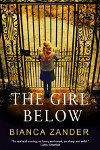
Returning to childhood when memories seem wrong.
Publisher: Alma Books
Pages: 308
Type: Fiction
Age: Adult
ISBN: 978-1-84688-235-7
First Published: 19th June 2012
Date Reviewed: 28th February 2013
Rating: 4.5/5
After ten years in New Zealand and twenty years away from home overall, Suki has returned to London hoping to get back to being who she was; but it’s not going to be that simple. Friends have moved on and no one wants her staying with them, but when she returns to her old apartment block she discovers her family’s neighbour, Peggy, still lives there. She might have found some stability with Peggy and the woman’s daughter, but Suki finds herself haunted by the air-raid shelter that used to be in the garden, no longer there, and what happened the night she descended the stairs.
The Girl Below is a compelling novel, equally driven by characters and plot, that is perhaps best described as realistic magical realism. Mostly consisting of thoughts but having an element that suggests the otherworldly, the book focuses on the reasons a person’s life can spiral completely away from what they had intended, and the need to recover from it when it’s not been a positive factor.
Aiming for detail, Zander tells her story by way of a duel plot line – Suki describes her former life and what is happening in the present. Unlike many stories with such a structure, Zander’s tale invites, perhaps, an equal amount of interest in both storylines, meaning that whilst you inevitably want to get on with the story and find out what happened, there isn’t that ingredient part and parcel of many books where one era is more interesting than the other. There is no divide between the two periods, perhaps because they are not so far apart compared to other books. And the number of characters that inhabit both eras mean you don’t feel like you’re reading two stories.
‘Who am I and how can I be me again?’ is the theme, with Suki’s constant nocturnal travels, in the present day, taking her back to that night she could have died in the flooded air-raid shelter. Because of her parents’ style of living and her father’s choices there has been much for Suki to understand. Whilst understandable, Suki’s character may prove difficult for some, however her actions fit the time period. She does think some thoughts which seem odd for her age, yet this is the first sign of the issues of the book. And as Suki discovers more she realises her childhood memories may not be correct.
The problem with The Girl Below is that whilst Zander wraps some of the plot points up in that dark, complex, and not-quite-obvious-but-fully-implied way that authors of magical realism do, a good half or so of all the questions you have are never answered or referred to at all. You could make guesses of course, but there is scant evidence or reasons for which to back those guesses up, and unfortunately these lost points are some of the most intriguing, the ones most likely to have kept you up at night to find out the truth.
It is for this reason that Suki’s development is stilted at the end. The author has Suki tell you, if not in so many words, that she understands now, but there is not enough showing for the reader to know why. And so abundant are Suki’s strange thoughts, for example that a statue is real, that there really needed to be explanations rather than very very vague suggestions. Suki’s sexual decisions needed more time, too, especially as they are taboo. It’s a case of feeling that the author wants you to be able to relate to Suki without giving you the information you need to know. The reader has to get used to an anxious, childishly scared, and unmotivated person, without a full discloser. It would have also been good to have further insight into Peggy’s grandson, Caleb, who presented an interesting addition to the tale but, whether to illustrate Suki’s anxiety or otherwise, has the focus on his behaviour somewhat diminished in the end.
And this is a pity because overall the book is fantastic and with more attention paid to reasoning it would have been a triumph. The pace is steady, the plot and atmosphere spooky, and there are plenty of times where, for the magical realism, you wonder if you’re reading a suspenseful scene (this wondering itself causes the suspense). One can work out a lot about Suki in the realm of possibility, but it’s not enough.
Writing-wise the book is on the whole very good. The author switches between contemporary British language and some rather old fashioned slang. Zander’s skills as a journalist shine through and it’s obvious she’s brought her own story of the immigrant to the table.
So the difficulty comes, then, in explaining why in general this is a superb book and why you should want to read it. Perhaps the best way to recommend it is to say that in choosing this book you are choosing to be scared, choosing atmosphere over story. Certainly you have to be willing to use the untied threads as a springboard for your own imagination. This book will, without a doubt, divide opinion. It will cause many people to wonder at the fact of a seemingly incomplete manuscript being published, whilst yet providing a satisfactory way to spend reading time. Maybe you will come to a conclusion that trumps all others, the issue is there is absolutely no way of knowing if you are anywhere near correct.
Still, I got the thing open, and propped up the sash with a hardback Dickens omnibus from Harold’s schoolboy collection. With much trepidation, I leaned a little way out. the night air was still but also sultry, humid. With one eye on Dickens – his long-windedness holding fast – I leaned out a bit further and dared to look down.
The Girl Below is unfinished, but brilliant.
I received this book for review from Alma Books.
Related Books
None yet.
Pam Jenoff – The Ambassador’s Daughter
Posted 18th February 2013
Category: Reviews Genres: 2010s, Angst, Domestic, Historical, Political, Romance, Social
3 Comments

Love and war. They change everything.
Publisher: Mira (Harlequin)
Pages: 376
Type: Fiction
Age: Adult
ISBN: 978-1-848-45203-9
First Published: 29th January 2013
Date Reviewed: 13th February 2013
Rating: 3/5
Margot, a German Jew, has spent the war (WW1) living abroad with her father whilst he works at universities. She has a fiancé who went to war but when he returned wounded, Margot decided to stay with her father. She loves Stefan, but not enough, and feels trapped by the idea of marrying him. In Paris, where her father has moved to attend the conference for the treaty at Versailles, she meets Krysia, a woman very different to her who urges her to be her own person in this new world. But because of Krysia, Margot is found by Ignatz, and when Margot meets Georg Richwalder, from the German delegation, she is no longer able to live her life through her own choices.
The Ambassador’s Daughter is a book that looks at the confusion that came with the war and its end, the way the world changed, and the way that a person was able to remake themselves accordingly. Focused on the main character, the war provides the context and backdrop for Margot’s decisions, but it also allows Jenoff to look at the effects of war in general.
The only issue with these two topics being placed together – a historic war and the trials of a young woman – is that one was always going to be used less than the other, and while it’s not bad, per se, that Jenoff chose Margot, it does mean that there is space for further problems.
The main problem with The Ambassador’s Daughter is the main character. Whilst it is in no way necessary to have a character a reader can like, Margot’s constant worries, repetitious thoughts, and poor choices make her rather unrealistic. It is true a person might be indecisive and worry, especially in times of war, but the fact of the first person narrative makes the tale complex for the wrong reasons; if written in the third person Margot may have come across very differently.
The war being considered very little unfortunately makes Margot seem self-absorbed. She is often oblivious to what people have said, even when it is paramount, and does not see what is staring her in the face. When there is hope and a real chance, she pushes it away. The era was not good for women but her father’s support for her education, even if he wished to see her settled, would have made for a stronger sense of reason and fight, if not strength itself.
So the plot is confusing and there are many points that are not expanded. This does mirror, however, the confusion of war and thus makes it difficult to say with confidence that Margot is unreasonable. Her religion, her relative wealth, her father’s position in the world, would have in reality made for a tricky situation, especially when her mother’s death is included in that mix. It’s the fact that Margot never really saw the war that makes her self-absorption so difficult to accept.
Apart from Margot there are some very well developed and poignant characters. Georg, emotionally wounded but striving to stay strong, provides a brilliant contrast to Margot’s indecision; Stefan, for all his misplaced loyalty, is understandable and if anything this makes Margot’s choices worse. Her father is a different story. Revelations in the book may make the reader’s feelings for him change, or at least create a reason for reassessment.
The book is full of lies; lies between the characters, lies towards the reader, indeed it could almost be said that the theme of the book is lies. By themselves they may be considered too numerous. When looked at generally, these are actually clever devices, drawing everything together in their deception and showing that the war might be over but nothing will ever be the same.
There are some plot points that may be considered too convenient. Jenoff deals with the result well, and in fact in at least one place there is a great show of not using it to get to an easy situation, however it does still detract from the book.
Whilst the writing is, overall, rather good, there are a number of Americanisms that do not fit. Margot uses terms such as “gotten” and “fall” (as in autumn). Considering she has spent years in England and never speaks of America except when referring to another’s discussion, the terms are out of place. There is also the matter of research and the usage of objects not yet invented.
However for all this, The Ambassador’s Daughter is not all bad. The romance is lovely, if spoiled by Margot’s indecision, and the focus on Germans is interesting. Looking at the Treaty of Versailles from the point of view of the everyday German provides much food for thought, and learning about the aftermath for the common person is interesting in general. The characterisation of Georg is so fantastic it could keep the book going even if Jenoff had everyone suddenly break into song.
The exploration of change after war, the way people were practically forced to change, is wonderful. The varying nature of the characters and the different ways they cope or choose to move on provides plenty of food for thought. And whilst it is difficult to write off Margot’s anxiety with this statement, Jenoff never gives the reader any need to feel that they must like the narrator.
The detailing may be misplaced and interesting threads lost to oblivion, but there is much to take away from this book. It will not suit everyone; it will likely divide opinion and cause contention for its structure and lack of adherence to history, but it is far from bad. The Ambassador’s Daughter has many flaws, but the ideas it imparts are appealing.
I received this book for review from ED Public Relations.
Related Books


Cheryl Rainfield – Parallel Visions
Posted 9th January 2013
Category: Reviews Genres: 2010s, Angst, Domestic, LGBT, Paranormal
3 Comments
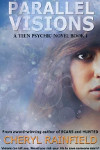
Seeing danger during dangerous episodes themselves.
Publisher: (self-published)
Pages: 56
Type: Fiction
Age: Young Adult
ISBN: 978-0-9878460-1-3
First Published: 20th November 2012
Date Reviewed: 11th December 2012
Rating: 5/5
Kate suffers from asthma, yet whilst her attacks are frightening and sometimes life threatening they enable her to have visions of the past, present, and future. Despite these visions having proved true to life on certain critical occasions, her family still do not take her seriously, but when she begins to witness domestic violence in her sister’s marriage, and the death of her new friend’s depressed sibling, Kate finds she can no longer remain a passive spectator.
Parallel Visions is a short and easy read (in terms of the writing itself) that manages, partly because of those two aspects, to present and highlight vastly important issues with the aim of helping those who struggle in similar ways.
The words and plot are simple, and the novella is very much a YA book, with all the trappings of stories for that age group – love and school problems and the like. In fact if the subject was different it would be a bad thing, but because of the message it works extremely well. People need to read and be assisted by guidance they will understand and relate to and thus the book succeeds in its implied aim. However the book isn’t just for those who have issues in their life and the approach is such that it serves as an introduction, too.
Interesting is the way the paranormal aspect, of seeing oft-prophetic visions whilst suffering an asthma attack, is used. On the face of it, such an aspect is hideous, a girl only being able to see visions when in a critical state, but it could be said that, whether intentional or not, Kate’s suffering amplifies the suffering of those she sees. And the way Kate responds, in her chosen need to see the visions, demonstrates the way people put others before themselves despite danger. And at a basic level the way the necessary situation for the visions to happen echoes, to extent, such phenomenon as the recently dead coming back to life proclaiming to have seen Heaven – the way the miraculous attends sadness.
That Kate’s parents do not believe in her visions sounds unrealistic until you remember that most people tend to be suspicious of the paranormal. The reader may wonder why they didn’t believe her after she was right the first time, however, and how they weren’t receptive of the idea that Jenna was being beaten. This is an interesting, nay, important issue to consider, even if it is different than many statements for the visions, highlighting the worries that attend a situation that may or may not exist, and the underlying problems that appear to support suggestions, and perhaps also the extent to which people are afraid to cause a fuss. Rainfield does a brilliant job at reminding her readers that issues and people are rarely black and white, that things may not be what they seem. Yet she doesn’t simply demonise those in the wrong – in addition to explaining appearances she also takes a look into how people believe they are behaving as well as why they might become that way. And in the case of Gil’s sister she shows that a person can heal but unless they have the necessary support that healing may not last or be strong enough.
In a very short time Rainfield manages to offer a lot of support to those of an age group (in fact more than one group, really) that often does not get such support from elsewhere. The work of a writer of clear prose, bearer of a lot of love and understanding, and a good storyteller, Parallel Visions is far more than just a book you read and finish and with various lessons and messages to hear for different readers.
I received this book for review from the author.
Related Books
None yet.
Lee Martin – Break The Skin
Posted 19th December 2012
Category: Reviews Genres: 2010s, Angst, Crime, Domestic, Thriller
4 Comments

Anything for you.
Publisher: Broadway (Random House)
Pages: 270
Type: Fiction
Age: Adult
ISBN: 978-0-307-71676-7
First Published: 2011
Date Reviewed: 3rd December 2012
Rating: 4/5
Laney tells her story of why she was arrested for a crime, including all the heartache and tears that led to the moment a trigger was pulled. Miss Baby also tells her story, a tale laced with a similar longing for love but of a differing nature. Both stories, initially separate, join together as gaps in one story are filled by the other and the women find themselves in like situations.
Break The Skin rests quite firmly in “literary fiction” whilst simultaneously keeping both feet in a blend of thriller and crime. At once housing aspects of loneliness and love akin to a YA book, the story touches on issues that place it in an older age range. To say that the novel would appeal to many would be an understatement.
It ought to be noted that the thriller element is quite minor. There is a crime, and a good lead up to it, but the reveal isn’t, perhaps, as surprising or sudden as would generally be expected in a book with such a structure. However this is somewhat negated by the general category as well as the locations and characters.
Because it can’t be said that Martin’s emphasis on personality rather than crime was a bad one, indeed the way the author weaves the two tales together whilst ultimately providing two separate stories is rather compelling. The focus on a need to be loved at all costs puts two characters that are otherwise very different in the same box, literally at times, and keeps the threads tied even when they seem loose. Martin’s characters, especially Laney, are at the extreme ends of neediness, but they surely demonstrate a reality that isn’t given enough notice in our world. Perhaps the saddest part is that both situations could have been avoided, in particular Laney’s, if things were just that little bit different.
Thus, neediness being prominent, the possibilities for manipulation and the way a person in need can do the wrong thing, or anything that isn’t appreciated either way, are centre stage. What’s interesting is how Martin includes the manipulation – it’s subtle, sometimes barely apparent, but there nevertheless. And the secondary characters, such as parents, show how easy it is for others not to notice everything that is happening, to only see part of the story, and thus to make the situation worse. And in Miss Baby’s case, one manipulates another, letting them think the other is manipulating them.
The writing is generally good, although sometimes a bit “clunky”. However there are occasions where accents or dialects are used which can help a reader unfamiliar with the setting, and cultural references tend to be explained well.
The differences in time between the two narratives are incredibly interesting, not just for the changes in setting but for the periods themselves. Whereas Laney’s story, the more informed story, takes place over a number of months, Miss Baby’s is after the event and shows the affects of that event on one of the characters. In a way it could be wondered how relevant Miss Baby is besides being akin to Laney in status, because Miss Baby doesn’t really play much of a part to her Donnie’s story, but it allows Martin to demonstrate feelings, and how people don’t always realise how another feels for them.
Witchcraft makes a play for the reasoning behind the crime, and its inclusion is interesting. Martin doesn’t take a side; he shows how the occult could have an effect, whether real or as a consequence of belief, as well as showing how it might not have played a part at all. He allows space for suggesting it’s a bad thing that affects lives, and space for suggesting it doesn’t work. His handling is objective and includes all sorts of perceptions.
Break The Skin deals with people being very down on their luck, as well as those who believe they are but are in fact not. It shows how a person can easily slide from ambition and self-worth to thinking they are nothing, and highlights the differences in worlds that can allow that to escalate. Its characters are not particularly special, and it’s for that reason the premise and themes work, because they are so normal. Even the fact that there is nothing to recommend them works in Martin’s favour.
In the case of this book, extra analysis may prove indispensable, due to the way that the book can, on the surface, appear dull. Because there is a lot to Break The Skin, and in a way the title is apt far more than in view of the narrative. Martin’s thoughts are there, but he wants you to really think about it, instead of handing it to you on a plate and making it easier to read and forget. Once you break the spell, you’ll see it all.
I received this book for review from Crown Publishers.
Related Books
None yet.
Roelof Bakker (ed.) – Still
Posted 5th December 2012
Category: Reviews Genres: 2010s, Angst, Art, Domestic, Political, Science Fiction, Short Story Collections, Social
6 Comments

Visuals, the written word, and a vast reach.
Publisher: Negative Press
Pages: 171
Type: Fiction
Age: Adult
ISBN: 978-0-9573828-0-0
First Published: 2012
Date Reviewed: 14th November 2012
Rating: 5/5
Still is an anthology of short stories by an international mix of 26 writers. Each story is based on inspiration gained from a certain photograph. The concept of Bakker, credited as the editor, the book invites new interpretations of his photographic work. With submissions from writers such as Evie Wyld and Jan Van Mersbergen, and including some up-and-coming authors, the book is an assortment from the industry as a whole.
Combining artistry and writing, Still is a work stunning in both presentation and textual content. Not only are the photographs wonderful to look at – the oft-used macro details, the sharpness and detail, the sheer truth of the emptiness that engulfs you perhaps even more so than it might in real life – the design of the book is as much a strong point as the rest. Whilst for Bakker the photography is important, the book itself almost favours the writing, the photographs covering only 3/4s of a single page per story, the rest of that page given to the title. This makes it truly a book for those interested in either subject as well as those interested in both. Bakker took centre stage for his photography exhibition, and in continuing the theme by incorporating the stories and putting them first he has ensured the longevity of his own work, longer than it might have been otherwise.
The fantastic thing about the stories in Still is something Bakker notes in his introduction – often the writer has taken the photographic inspiration and run with it, leaving behind the notion of the derelict town hall. This means that there is a rough three categories of writing: the story based entirely around the photograph and its context, the story that starts with the photograph before leaping somewhere else, and the story that uses the photograph as a cleverly integrated device. Whilst the stories are in nature quite similar, which will be discussed in due course, the differences mean that the book never loses its brilliance, never becomes dull.
‘…entering or exiting through a doorway serves as an “event boundary” in the mind, which separates episodes of activity and files them away.’
The book is incredibly international, with authors from all over the world contributing stories that highlight particular cultures, and bring into focus the similar experiences that everyone faces. And “faces” is the right word – these are not joyous stories, indeed some are harrowing, and most share an interesting sort of disconnect. This disconnect is between reader and the character and it almost emphasises the vacant nature of the town hall, which when you think of the way some stories do not reference the hall, makes for a whole new topic of discussion. Similar too is the basic storytelling method, one of the reasons the book is so disturbing in that fascinating way. The often sparse language, the difference in dialects and speech patterns that don’t necessarily conform to the author’s choice of setting, and the hard-hitting atmosphere these elements bring to the table.
There is a specific theme that runs through most of the book, that of politics, society, and domesticity. They may be different subjects generally, but the way they are all compiled in one binding effectively puts across the fact that they are connected. Though it is not as simple as saying that politics affects society that affects domesticity. In addition there is the theme of self and how one fits into the world. There are stories focusing on themes such as cleaning an old work place that was important to the person, a loss of place in the life of one’s child, seeking sanctuary in the church, the difference between sisters, and the loss of self and identity that can happen after an accident.
Burdensome womanhood: inviting unwanted attention from unsavoury men who give themselves permission to see a young sapling as a full-grown tree, ready to be mounted. Tiresome womanhood: bringing with it expectations of marriage, of fecundity and of the fruit of the womb. Worrisome womanhood: ushering in responsibilities and tentative, anxious dreams for one’s offspring. Militant womanhood: in a state of perpetual readiness to do battle, a lioness ready to kill for her cubs.
Bakker has achieved his aim of creating something new from something already existing, as well as creating an art book, a literary work, and a combination of both. Still would make a superb addition to the shelves of anyone who favours the freedom provided by short stories and the quick dose of cerebral reading that accompanies them.
The quotations used in this review were taken from the stories of Justin Hill and Barbara Mhangami-Ruwende respectively.
I received this book for review from the editor, Roelof Bakker.
Related Books