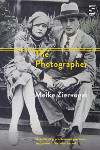
Gøhril Gabrielsen – The Looking-Glass Sisters
Posted 11th September 2015
Category: Reviews Genres: 2000s, Angst, Domestic, Psychological, Translation
3 Comments

The way it is, if it really is.
Publisher: Peirene Press
Pages: 175
Type: Fiction
Age: Adult
ISBN: 978-1-908-67024-3
First Published: 2008
Date Reviewed: 9th September 2015
Rating: 4/5
Original language: Norwegian
Original title: Svimlende Muligheter, Ingen Frykt (Staggering Opportunities, No Fear)
Translated by: John Irons
The narrator of our tale is in the attic; presumably she’s locked in. Through the window she can see her sister, Ragna, and Ragna’s husband digging by a tree. It’s always been like this; our narrator struggles to gain recognition, Ragna’s attention and favour.
The Looking-Glass Sisters is a tale of love, worry, mental and physical health and unreliable narrators. A simple plot with a complex background, it studies the affects desire for love and companionship, accompanied with a lack of understanding and knowledge, can have on situations.
From the reader’s point of view, this book is about the narrator’s ability to relate events reliably. The set-up can be linked to the idea of the mad woman in the attic – in fact one of my own thoughts, whilst trying to root around in all the bits and pieces provided, was whether Gabrielsen was evoking Jane Eyre. This may sound odd, especially considering I don’t believe she is, but this is a point I’d like to make – The Looking-Glass Sisters presents an unstable mind and asks you to work out what is happening, what is true and what is false; the crucial element of Gabrielsen’s – the condition of the narrator – is only ever hinted at; the physical is easier to work out but you realise there is some mental instability, too. This means that there is a lot you can state about this book without knowing whether you’re near the truth and what’s so great about this is that it’s not frustrating; your interpretation, what you yourself bring to the table, is of great value. You’ve a guiding hand but in many ways, in most ways, this book will be exactly what you make it. (It’d make an excellent book club choice.)
The narrator presents herself – physically disabled (of that there is little argument) and the bane of her sister’s life. She knows she is a burden and wishes it were different, wishes Ragna gave her more time, supported her better. Shown through the text is the unrequited love of the narrator for Ragna; it’s not simply that she wants attention, it’s that she needs love.
This is how the reading goes for a time until the narrator starts to provide snippets of conversations that read as true – and they don’t conform to what she’s said in the past. Suddenly you’re presented with a different concept, that perhaps Ragna does care about the narrator and the narrator is being difficult. Perhaps it’s not that the narrator is unloved, it’s that she creates problems herself.
Again, it’s not so simple. It could be unrequited love, it could be the miscommunication, misunderstanding between two sisters who do love each other, or it could be that the narrator is unreliable due to her mental state. It could be a case of being unable to let go of past misfortunes and arguments instead of moving on. Gabrielsen has a firm hand on the story’s progression, teasing out the details so you have ample time to consider each possibility before moving on to the next. And each time that ‘next’ isn’t just a new possibility, it’s the evolution of the previous – that is to say, there’s a bit of every possibility in the whole and life is always moving forward.
It’s hard to say for certain what happens, what has happened and will happen. It’s hard to say exactly who the characters are, to come to a conclusion as to whether Ragna’s husband is someone she loves, someone whose thumb she resides under, or someone simply who’s frustrated, actually cruel. It’s hard to assign ages to the characters insofar as how they come across (their actual ages are suggested). And it’s hard to place a label on the narrator, to know who she is and what is going on with her – perhaps this is the point. This is her truth and it shouldn’t just be ignored, covered by small smiles and patronisation. Is she even alive at this point? Are there even two sisters?
In picking up this book you have to be prepared for an entire book’s worth of ambiguity – it rules here but the book would not be the same without it. It’s the lack of answers that make this novella what it is, that naturally extends the time you’ll spend thinking about it.
The Looking-Glass Sisters is an extremely slow burner, different, beautifully restrained, and full of ideas and thoughts to ponder over. You’ll want to give it your full attention and perhaps have a pencil handy which you might then offer to the narrator because she has much time to write and little in the way of tools.
I received this book for review from the publisher.
Related Books

Judy Chicurel – If I Knew You Were Going To Be This Beautiful, I Never Would Have Let You Go
Posted 9th September 2015
Category: Reviews Genres: 2010s, Angst, Domestic, Historical, Social, Spiritual
Comments Off on Judy Chicurel – If I Knew You Were Going To Be This Beautiful, I Never Would Have Let You Go

Hot summers, long titles, and all that life throws at you.
Publisher: Tinder Press (Headline)
Pages: 326
Type: Fiction
Age: Adult
ISBN: 978-1-472-22168-1
First Published: 30th October 2014
Date Reviewed: 7th September 2015
Rating: 4/5
It’s 1972 and Katie has lived in Elephant Beach on Long Island all her life. It’s nothing special, but it’s home for her and her friends. The prospects aren’t great unless you’ve the money and status to bag a better education, and most people end up at the local college. Getting high is pretty much assumed, cigarettes are smoked by everyone, and everyone’s got secrets.
If I Knew You Were Going To Be This Beautiful, I Never Would Have Let You Go is a book somewhere between a novel and short story collection, that looks at life in a fictional town in the 70s and life at the time for those coming of age.
There is a basic plot running through this book but it’s best viewed as a series of vignettes, indeed if you focus on the idea of a novel having a plot and a main character, you’re going to be disappointed. The stories are mainly set over one summer, with breaks for memories and considerations and reports of the future, and whilst you hear everything from Katie she’s no more important than anyone else. Katie may be the one whose thoughts you know and whose future you’re more invested in by virtue of intimacy, but Chicurel has worked on the whole. It would be fair to say that this book straddles contexts – a book for book’s sake, nostalgia, and a bit of a study.
Not a study as in get your pen and paper and write an essay, more a look at the issues of the time. These are teens still getting to grips with who they are, working through that time between childhood and adulthood and, for many of them, they’re trying to work through the poor hand life has given them, though they don’t always recognise it as such. The drugs keep them living life happy and although the future is discussed, told to us by Katie, everyone is living for the ‘now’. It’s best to. They know they’ve few prospects and that’ll be hard getting out, getting away, though there are possibilities. Many will die young through their various abuses. What all these teens do have, though, is friendship. Lots of it, lots of loyalty. There is a bit of a contrast with the kids from ‘the Dunes’. Chicurel shows us the privileged, the teenagers that turn to hippie living, throwaway boyfriends of less privileged backgrounds and protests for things they don’t have knowledge of, teenagers that were always going to end up as rich as their parents and do.
A new thought occurred to me, that women had all this drama, all this waiting and hoping and crying over things we’d been told, raised on, warned about, these monumental milestones that ended up lasting only minutes in our lives and were never, ever as wonderful or horrible as you thought they would be.
In a way it can seem like there’s a lot going on here, but it works in context. Suicides, overdoses; what we would now call ‘care in the community’; secret abortions where names must not be exchanged (the quote above is from such a scene); running away for a better life to never find it; PTSD. Everything is handled well and with respect in every way.
The affect of the Vietnamese war on mental health is the thread that continues from start to finish. A couple of the characters are veterans and dealing with scars, physical, mental, emotional. Not only does Chicurel detail these changed lives, she shows well how people back home might try but can’t quite understand what would have happened. The veterans, both young, behave in ways unconsidered and the easiest way to show you how the teens are incapable of understanding is to say that Katie fancies Luke something rotten, dreams about their lives together, but thinks trying to get him to notice her will work. You see that Luke doesn’t care but it’s not because he doesn’t like Katie, it’s because he’s got little left.
And there is a smigin of a theme of identity, of finding one’s place. Katie was adopted and wonders about her birth mother – what she’s doing, if she misses her child. The title of the book relates to this.
There are chances gained in this book, but not too many. To make everything work out in the end for everyone would be to negate the very real circumstances the book is grounded in.
I think it’s worth stating that there is a lot of swearing in this book and a lot of very casual ‘yeah, man’ language. I’m stating this, particularly the swearing, because it should be seen in context. Chicurel isn’t aiming to shock or offend, rather she’s setting the book in its era, in its place.
If I Knew You Were Going To Be This Beautiful, I Never Would Have Let You Go. gives you something to think about. There’s nothing we can change now, of course, but it makes you think about similar circumstances nowadays and how the way things are, the privilege, the support, hasn’t really changed all that much and should have. It may not have an ending as such and it may be but a set of memories, but it’s a good read. As much as it isn’t a happy book, it is full of sunshine and friendship. That others would dismiss the friendship and say that it’s a bad place be damned.
I received this book for review from the publisher.
Related Books
None yet.
Irène Némirovsky – The Misunderstanding
Posted 28th August 2015
Category: Reviews Genres: 1920s, Angst, Domestic, Romance, Social, Translation
Comments Off on Irène Némirovsky – The Misunderstanding

Because communication isn’t always the problem.
Publisher: Vintage (Random House)
Pages: 160
Type: Fiction
Age: Adult
ISBN: 978-0-099-56384-6
First Published: 1926
Date Reviewed: 26th August 2015
Rating: 5/5
Original language: French
Original title: Le Malentendu (The Misunderstanding)
Translated by: Sandra Smith
Yves spots Denise when her child throws sand over him; he is entranced from that moment. The two begin an affair as Denise’s husband leaves for work and continue seeing each other for the remainder of their holidays. Back in Paris, it’s not the same. Yves, once rich, has to work for a living, whilst Denise lives in luxury; and that is just the start.
The Misunderstanding is one of those novellas in which the reader is privy to the issues at hand and will see that the couple have a lot to work on if they’re going to be in with a chance. It was Némirovsky’s first book, so it’s not as polished as others – the language is overly detailed, romantic, and the author favours angst for angst’s sake – but nevertheless it’s exquisite – even as a twenty-one year old this writer knew her stuff.
In the foreword, Sandra Smith states that the French version of ‘misunderstanding’ Némirovsky uses means three different things: a specific event; ‘the person who is misunderstood’; ‘incompatibility’. It’s a good thing to note because it is indeed that way in the story. There are a couple of events, one in particular, that cause the couple problems. Neither Yves nor Denise understand each other, understand the other’s life and where they’re coming from. And this, perhaps more so than their respective rank in life, causes their incompatibility.
This incompatibility has to be explored. In a past life, or, rather, if Yves had remained rich (he lost his parents’ fortune during the war) the two would be very compatible. The main thing that gets in the way is the financial distance, the difference between luxury and necessity. Perhaps it wouldn’t be such a problem if Yves didn’t feel so hard done by (he is constantly in debt because he lives above his means, trying to emulate his childhood) but Denise’s relative obliviousness to her lover’s situation creates distance all by itself. Yves can’t go out in the evenings, he needs to sleep – something Denise cannot understand on a fundamental level. So Yves resents Denise, resents the way she’s overbearing in her love, and in pushing her away as he starts to do, Denise resents him in turn. She listens to her mother’s advice and applies it to her relationship, and it works up to a point, but she pushes it too far.
In some respects The Misunderstanding can be compared to The Great Gatsby – the love of a once penniless soldier compared to the once rich man. A topic often discussed is whether Jay Gatsby would ultimately be happy if he had Daisy, and this is something we could ask of Yves. Does Yves love Denise because she represents what he was and would like to be? Doubtless he believes they would’ve had an easier time were he still rich, but then things would have been different across the board.
Yves’s feelings on the divide are summed up by this line:
“When I’m with her… I always have to be mentally wearing a dinner jacket.”
Would Denise accept him if he were poor and didn’t proffer to pay for expensive luxuries as he does? The chapters written from Denise’s point of view suggest that she would, but then if she is unable, as Némirovsky notes, to understand his relative poverty, she is surely living a sort of fantasy.
Yves cannot see what is in front of him any more than Denise can. It would take the reader breaking the forth wall from their side and stepping into the novella themselves to patch things up to a good level. Denise’s mother has it right; she knows what’s going on and has good advice, but there is a level of pain, hurt, that has been somewhat manufactured by Yves and Denise that stops them breaking the barriers between them. Self-loathing runs smoothly in this book, informing everything.
So The Misunderstanding is not on the same page as Suite Française, nor, even, Fire In The Blood (a book with content that’s not as complex or as likely to bowl you over as this one), but it’s incredible nonetheless. It’s quite obviously the work of a new, young, fearless writer who has yet to learn that flowery language doesn’t make a good book, but at the same time it’s also the work of someone with an immense understanding of her subject and the knowledge and empathy to write it well.
Should you read it? Oh, but you must!
Related Books


Jo Walton – Among Others
Posted 26th August 2015
Category: Reviews Genres: 2010s, Angst, Books About Books, Commentary, Domestic, Fantasy, Magical Realism, Psychological
2 Comments

A book about books and fairies.
Publisher: Corsair (Tor)
Pages: 398
Type: Fiction
Age: Young Adult
ISBN: 978-1-472-10653-7
First Published: 18th January 2011
Date Reviewed: 25th August 2015
Rating: 3.5/5
Mori can see and talk to fairies. With her twin gone and her mother out to get her, too, she runs away and ends up living with her absent father and his sisters. Sent off to a prestigious boarding school, she’s out of place but finds solace in the library. She’ll try to stop her mother gaining power if she can and will read the entirety of the library’s science fiction section in the interim.
Among Others falls somewhere between fantasy and magical realism. A book about books, it’s mostly the thoughts of a reader with a bit of spell-casting thrown in.
Something that’s intriguing to discuss is the way Walton deals with magic in this book – it could be argued there is no magic. What exactly is magic, after all? The reader does not see much of Mori’s mother and there are no incantations or blood bindings – such things are spoken of but never really shown. This is not to say there is no magic as such, more that it could be argued the magic is the magic of nature – Mori finding comfort in nature and in her imagination. This is what makes the book fall between fantasy and magical realism. Whether it’s magic in the typical sense of the word is down to the reader’s own interpretation.
And that is a wonderful thing. That Among Others can be interpreted in various ways makes it special. When Mori speaks of adults having power over her are they really casting spells or is it her fear of the unknown, of these relatives who are strangers to her? Her mother is unsafe to be around – the authorities wouldn’t have sent her to her father if Mori were dreaming it – but is this mother actually a witch or is it more of a metaphor? Is Mori using the idea of magic to cope with abuse? In the time span of the book, a year or so (barring a glimpse of the past), Mori gains knowledge of sexual desire and has her first boyfriend. She also grows as a person, very much so, and another section that could be viewed as a metaphor concerns the last time Mori deals with her sister, and her grief.
I’d like to talk about the scene concerning Mori’s father – the person Mori has obviously taken her ‘reading genes’ from. The potential abuse is never mentioned again – Mori wipes over it but not in a way that suggests she needs to in order to cope with it, more that she does not, or did not, understand what was happening. Mori seems not to see the issue with it and never speaks of it again. As a reader you can see the issue with it, the potential for the book to take on a different tone; it leaves a bad taste in your mouth. But then Walton makes you question what you’ve read, whether accidentally (and, if so, this should have been rectified) or on purpose – Mori’s not phased by it and comes to enjoy her father’s company, as a meeting of equals if not as father and daughter, and whilst you are only ever in Mori’s head, nothing further happens or is asked. I don’t think one could say that the suggestion that Daniel is interested in his daughter is wrong, but certainly you’re challenged by it.
Another thing to love is the way Walton deals with Mori’s acquired disability. It’s always there but never takes over the plot; a good depiction of disability that states the pain and then lets Mori’s personality shine through.
So this is a book about books. It’s the diary of a reader, a list of what she’s reading with commentary. Sounds blissful, doesn’t it? And in a way it is; particularly for those who read science fiction and fantasy, Among Others is like coming home. References to classic science fiction abound (the book is set between 1979-1980). (This means that those who don’t read science fiction are less likely to understand the references, however it’s the sheer passion and the intellectual literary conversation that Walton emphasises, so it doesn’t really matter if you don’t catch every nuance.) In a way, however, it’s an issue – you are essentially reading the naval-gazing diary of a teenager who thinks she knows it all. A very ‘today I did this… and this…’ diary.
Now this isn’t so bad by itself, even if it is a bit boring sometimes to read about someone reading and doing little else – the problem is the name-dropping. This book reads as an attempt to gain love, it’s the written version of Walton putting her hand up and saying ‘author I love, notice me!’ Mori, or, as could be asserted given Walton’s age and preferences, Walton herself, gushes profusely about Ursula Le Guin (who incidentally blurbed the book, making this a nice cushy circle) and various other authors, most of whom are still around today and thus liable to read Walton’s love letter. It’s very much as though Walton has written this book to get noticed so she can get in with her idols and it’s all very cliquey and doesn’t feel very welcoming – because it’s not really. This book is for authors.
This is where the magic – be it stereotypical or not – gets let down. Pages about books and then, oh yes, I forgot, this is meant to be about magic, must add it in… and now I can get back to talking about myself and my love of science fiction. The book is very low on plot, the characters are fairly well developed but evidently not important (a great pity considering some of the content), and really all there is to take away – all you are given to take away – is a long list of books you should be reading. The ending, whilst powerful in its way, showing strength, doesn’t solve the puzzles Mori unwittingly sets for the reader.
Among Others will remind you why you seek out book clubs, festivals, and literary conversation. If you know the work of those referenced well, you’ll likely get more from it but on the whole a proper memoir about someone’s reading life and a straight out fantasy book would be better choices.
Related Books
None yet.
Meike Ziervogel – Kauthar
Posted 19th August 2015
Category: Reviews Genres: 2010s, Angst, Political, Psychological, Social, Spiritual, Theological
1 Comment

Faith, love, and misunderstanding.
Publisher: Salt
Pages: 144
Type: Fiction
Age: Adult
ISBN: 978-1-784-63029-4
First Published: 10th August 2015
Date Reviewed: 17th August 2015
Rating: 5/5
Kauthar, a white Brit, found herself in Islam. A lack of something in her life from childhood led to a conversion that she felt was always her destiny. And so she changes her name, wear hijab, learns to pray. She finds a husband, too, and sticks to her beliefs when questioned by her parents, who continue to call her Lydia. But as the world changes and thus affects Kauthar, she begins to change, too.
Kauthar is Ziervogel’s spectacular third novella, a book about identity and self-worth as much as it is about faith and religion.
Islam, and to a minor extent, Christianity, features in this book, but religion is not a point Ziervogel is making with her character (it is made, so to speak, but in general). What begins as a story about conversion with Islam at its centre (and a great one at that, details later) becomes a story about the English convert who doesn’t really understand the faith she has felt called to, and so ultimately you see religion both from those who truly believe and the convert who misunderstands. Suffice to say Ziervogel’s book is one of great tolerance, of teaching, and of comparisons that seek to show how people of different backgrounds can get along regardless of faith; Ziervogel shows how location is more important, how the place a person calls home, on the earth, defines who they are as much as their faith.
Conversion and religion isn’t the ‘issue’ with Kauthar, not really. It’s her lack of identity, the feelings of displacement she’s felt throughout her life that defines her adulthood. She views situations strongly – falling off the monkey bars at a park in childhood onto her knees she sees as her first step towards Islam, humble and profound. Kauthar, Lydia, has a lot of love in her life, but not quite enough nor of the type she ‘required’; a fine example is the way her mother continues to call her Lydia and wonders when her ‘Muslim phase’ will be over – you, the reader, whether or not you share her faith or even believe in religion at all, feel the brunt of such a brushing off of the faith as much as Kauthar does herself. You see first-hand, if you will, the reason why Kauthar feels the need to pen a long letter about scripture, which is similarly brushed off.
The book is set around 11th September and so Kauthar’s somewhat fragile state breaks apart completely when she feels the need to defend herself, to hide herself, and often out of her own fears rather than others’ opinions, though there is a scene that starts it off. Kauthar feels discomfort, the hatred that Muslims felt at the time, but takes it differently. It makes her defensive in a certain way because Islam has become so intrinsic to her self-worth and identity, something she has to prove as an outsider – Kauthar is Islam and you would certainly say towards the end that Kauthar regards Islam as her. No one is as faithful as her or correct in their faithful ways. In wearing a chador and later bhurka, she is hiding herself away from view, vocally to abide by Allah’s wishes but also, sub-textually, in ways the reader notices but perhaps not the character, to hide from herself and her past. From the husband she loved and who was one with her – now considered not good enough, not Islamic enough. In a way she also hides herself from her own faith which, as suggested by my paragraph on religions, she considers not godly enough.
Lastly, this is a book about love. Love for Allah – seen from many points of view – love for one’s spouse, and love for one’s home. It is in part Rafiq’s feeling that he ought to return to London, that that’s where he should be, that causes the gulf between him and Kauthar. And the love between the couple is true; you see the utter devotion Rafiq has for this woman he felt called to.
In all Ziervogel’s novellas, the prose is lovely but in many ways, most especially here, it’s not the point. The book is all about what isn’t said, what you can see in your imagination as a result of the words. And what’s so special about Kauthar is that you know without a doubt that you have the picture, the scene, correct, even though you know it’s not there on the surface, so to speak. There is nothing else like it. The word ‘unique’ is tossed about, given to everything so that it looses its meaning; in Kauthar it has a worthy cause.
This isn’t to say that this style runs throughout the book – reading between the lines for a whole 144 pages would be a daunting prospect – but it comes at the defining moment. The moment when you realise the section you thought might be info-dump really wasn’t and that it was the first obvious step towards what was going to happen. The moment where a book that you thought you had figured out fairly well takes a new turn, in a written version of what is happening in the character’s reality.
This is a book that takes conversion, the white convert in particular, and looks at the reasons people choose to make the change. It shows how profound, amazing, true conversion and finding one’s religious and faithful self can be, and the joy of that. And none of that is tainted because Ziervogel doesn’t make Kauthar and Islam part and parcel. A lot of research and knowledge accompanies this book.
Kauthar is a very different book about identity that outclasses many others. Highly recommended to those who enjoy the theme as well as those who like diversity and high tolerance in their reading when it comes to western fiction.
I received this book for review from the publisher.
Related Books