





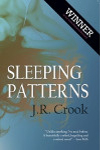
J R Crook – Sleeping Patterns
Posted 24th September 2012
Category: Reviews Genres: 2010s, Domestic, Experimental, Psychological, Romance
7 Comments
Wherever the story ends…
Publisher: Legend Press
Pages: 106
Type: Fiction
Age: Adult
ISBN: 978-1-908775-52-8
First Published: 2012
Date Reviewed: 19th September 2012
Rating: 5/5
Annelie Strandli (Grethe to her friends) presents to the reader a fictional story written by her friend, who is dead. Annelie is herself included in the story, a story of a girl who meets a boy, which in turn contains another story. It seems she took a while to work it all out, but might the reader understand it quicker? The basic plot is that Annelie meets Berry and Annelie wants to read Berry’s work, and he in turn is unhappy that she has a boyfriend.
Many novels have been called unique and powerful, and described as containing incredible depths. If such a number of novels is categorised as a group then Crook’s short work is destined to join it. And yet it can’t, because what Crook has written here is truly different; it is the structure of the plot, the layers of meaning that aren’t contained in the pages and that must be experienced afterwards, that are so individual. What is especially intriguing about the relationship between the text, the reader, and what is implied rather than spoken, is the way in which you can spend a long time, whilst reading, wondering whether or not you will be able to work it out, and a lot more time wondering if for all the reading you have done in the past you might be completely stupid. This being before you work it out. Was such a thing considered by Crook? This in itself is pause for thought because either way the conclusion yields more discussion, of both the text and what the overall purpose is.
Indeed if the summary of the plot, if plot is the word, sounds intriguing, then the structure is all the more so. The reader must start at the dedication page; whereas it is fine to bypass dedication pages in general, in this case to bypass would be to make a mistake. This is because the dedication tells you that Crook is dead, however he is not – it is he who sent this reviewer a copy of the book. And due to the many layers of story, if Crook is not dead and there are already a good few layers of repetition already, then the possibilities are endless and the book may even have a higher level than the reader themselves – in other words the reader may in fact be yet another layer of the story, who knows? Once you’re past the dedication page there is one other element of intrigue and then you start reading the story itself – starting at chapter 5. You don’t need to worry about getting chronological order wrong however, it’s easy enough to keep up. And whilst you could read the chapters in order, there is no bonus to doing so, you might even miss something.
There is a story within a story within a story, possibly with another story before all of that. The reader ought to find it out for themselves. The most inner story, however, is appealing in the way that it is written; Crook is a very good writer yet suddenly this inner story has sections where the plot is written very simply, almost dull in places, juxtaposed with other sections that are more highbrow. Luckily for the reader, apart from the subtext the book is very easy to follow.
The story – whichever story that is – has a romantic basis, subtle so that it will appeal to all, whilst having emotion pouring from it. And the story – this time the obvious one of Crook being the writer of the book – transcends fiction, making the author fictitious as a character himself and Annelie, presented by Crook as fictional, real.
There is a connection between all the stories. At the heart of everything, the author presents himself in the story (the one Annelie presents) as a fly-on-the-wall. But is he? And if Annelie is supposedly real is this non-fiction of sorts? Are we looking into real lives or fictional ones? And why is the author written as dead? We can take what Berry says as fact, but of the rest there is no knowing.
These are questions you will ask yourself, and whilst this reviewer has answers gathered from reading Sleeping Patterns, they could always be wrong and other readers will likely have other questions in addition.
It is impossible to explain this book further without giving the entirety away. Sleeping Patterns requires all of your attention but it will give as good as it gets. If you are looking to be awed and inspired, to be challenged intellectually, and to find love in a different way, this is the one.
I received this book for review from the author.
Related Books
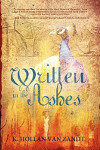
K Hollan Van Zandt – Written In The Ashes
Posted 17th September 2012
Category: Reviews Genres: 2010s, Fantasy, Historical, Romance, Social, Spiritual
6 Comments
Burning libraries in the name of Christ.
Publisher: (self-published)
Pages: 393
Type: Fiction
Age: Adult
ISBN: 978-1-4525-3513-5
First Published: 2011
Date Reviewed: 13th September 2012
Rating: 3/5
Written In The Ashes is the story of one girl’s journey from slave to potential saviour of the right to religious freedom, and the way the events of society culminated in the burning of the Great Library of Alexandria. At once combining the regular workings of ancient Egyptian life and a somewhat epic adventure, the book is the first in a series.
Unfortunately the beginning section of the book does not express the above. The first part of Written In The Ashes is badly written; there is unnecessary melodrama and plot points are left hanging when they require resolution. The melodrama comes in the form of the main character, Hannah, being unreasonably gallant – she throws caution to the wind many times without thinking about the consequences. An example of a plot point left hanging is when Tarek gets bitten right to the bone and then proceeds to help Hannah, who has sprained an ankle during a show of gallantry, get home, carrying her weight by himself. When they get home Hannah is looked after and stays in bed recovering for weeks, whilst Tarek… well nothing happens, you never hear of his mortal wound again. By all accounts, in an unsanitary society Tarek should be dead.
There is a significant amount of info-dumping about locations and ideas that are not needed. The author describes things that don’t matter, such as telling us that while Hannah was speaking her hair escaped her hair-tie; one can presume from the context that Van Zandt wanted to insert a romantic atmosphere into the scene but without continuation it is superfluous. There is constant repetition of the word “so” that has no meaning, as well the device of “an angel” you’ve never been introduced to, who is doing something, be it smiling, being irritated, and so forth. In the second section Van Zandt finally introduces the reader to the concept, at which time you realise the idea itself is a good one, it’s just a pity it was poorly handled.
So we come to this second section of the book and we do this specifically because suddenly that change in section does everything for the story. The writing style is wonderfully different, plot holes are no longer employed, and the characters come into their own. The story takes on a brilliant mythical religious atmosphere and invites the fantasy genre to stake a claim in its contents. The adventure suggested in the summaries begins and everything here after is much better than the initial first section of the book. It is incredibly easy to get lost in the tale and forget all that came before.
For the most part, the third section continues the goodness of the second, but there are a couple of bad aspects to it, in particular the jump in time. The second section ends with the characters in a rather vulnerable position, and then the narrative suddenly jumps ahead by three years. If this was due to factual events happening that Van Zandt had to subscribe to, it is understandable, but due to the narrative of her fictional characters it does not work – and whilst Van Zandt shows that a threat is still there and must be dealt with hastily, it appears in the backs of the characters’ minds. It would have been better had Van Zandt taken artistic liberty with the historical facts and moved events forward, especially as to all intents and purposes it seems the characters forgot all about their friend for three years for no reason.
Yet whilst it needs editing and duplicate actions removed, on the whole Written In The Ashes isn’t a bad book. Indeed although the violence is strong it fits the period, and there is the element of early Christianity included that is so rarely spoken of elsewhere. Van Zandt really looks into the Parabolani, the so-called Christians (in other words people who believed themselves Christians but behaved as anything but) who took to persecuting anyone who would not convert. The situation was the complete reverse of the Biblical stories of Rome against Christianity and whilst Van Zandt may have created some of the episodes that happen, it is merely the extra details that are fictional. Thus the book is important because in a western world where every other sort of persecution has been publicised, little is taught of this situation. And it gives the library’s female academic, Hypathia, an expanded, if fictional, story, bringing to light both the success and plight of women.
It is unfortunate that the book lacks an air of completion (away from the slight cliff-hanger ending as this is the first book in a series) but there is a deal of goodness here and it would appear that Van Zandt has the potential to be a great storyteller.
Written In The Ashes is a fair look at society and religion in era of the ancients. It will invite research and thoughts to be overturned, though it may be difficult at times to get there.
I received this book for review from the author.
Related Books
None yet.
Sarah Pekkanen – Skipping A Beat
Posted 17th August 2012
Category: Reviews Genres: 2010s, Domestic
2 Comments

Love and money – two sides of the same coin?
Publisher: Washington Square Press (Simon & Schuster)
Pages: 321
Type: Fiction
Age: Adult
ISBN: 978-1-4516-0982-0
First Published: 2011
Date Reviewed: 7th August 2012
Rating: 4/5
Michael and Julia have been strangers living in a marriage that’s not been much of a marriage for a long time. Julia is somewhat used to it now, but even more used to the riches that Michael’s self-made company has created for them; so when Michael dies and is resuscitated, wanting to give everything up and live a simple life, Julia has some thinking to do and decisions to make.
Skipping A Beat explores an area of life that is little experienced but widely discussed – after death experiences – and couples it with a more grounded issue. What makes the riches to poverty aspect in the book so unique is that those involved were not born into luxury and have not, especially in Julia’s case, found the years long enough to get fully used to it. Enjoy it, yes, at least somewhat, but it’s rather ironic that Julia has never felt completely “there”, that her situation strikes her as temporary. This was an intriguing idea from Pekkanen.
Julia is the character most detailed, and Pekkanen pays a lot of attention to explaining why Julia feels the way she does; although it isn’t until very late in the book that the reader hears anything less than positive about her. This makes sense in a way, as Julia is the narrator, but not knowing the information leaves you more in the dark than Michael. Considering that Michael knows nothing of what the reader knows – otherwise – this isn’t good. This may have been Pekkanen’s plan, whilst she presents a pretty person in Julia, we are never given the sense that she is wonderful, yet we don’t get to see just how effected Julia has been by Michael’s lack of care. And really, we should have seen this a lot earlier.
But other than this, there is a lot of good, solid, discussion about Julia’s issues. It’s interesting, and rather telling, that although she does have some major problems with Michael, the one that Julia chooses to focus on is money. Whilst she may have always felt uncomfortable and a little lost in the wealthy world Michael’s success threw her into, the sudden jolt out of it gives Julia a lot more anger towards Michael than, for example, the time he never made for her. It’s very telling and very honest, because we can say that money isn’t everything all we want, but how many people would seriously be completely happy to give up wealth after having had a modest life previously? Julia’s plight of whether or not to stay with Michael through this change affects her friend, Isabel. Born with a silver spoon in her month, Isabel is used to wealth, but suffered her own problems when she gave up her daughter for adoption. The two friends boost each other’s confidence and help to bring clarity when the way forward is blurry.
Julia must make her decision based on love – is her love for Michael enough that she would be prepared to give up their wealth? It is this that she must realise the truth of, and Pekkanen shows how invisible objects can stand in the way of love. The only issue is that a lot of the thinking done by Julia isn’t particularly hard hitting.
The ending is rather quick, sudden, and unfortunately an overused plot point. It fits the story, and when one looks back hints can be found throughout, but it still remains incredibly convenient. The book suits a nicely tied ending, threads neatly knotted in bows, but this ending just makes the whole issue almost irrelevant. Irrelevant isn’t a good word to use, considering what happens, but it is apt. It’s almost as if all that thinking was for nothing. It wasn’t – the crux of the story is that Julia had to realise which path to take, and that she did – and perhaps the issue was to provide a life lesson, which is important; but in a book it doesn’t work. In real life it does, heck it does, I can tell you that one, but in literature it’s just too much.
Skipping A Beat makes you think, makes you question, and it will shock you. Hopefully it will make you delve deep too. The issues raised are important and handled rather well. But as a whole package it could have done with a little more thought. Go into it ready for a ride, but be aware of the drawbacks.
Related Books
None yet.
Malinda Lo – Ash
Posted 13th August 2012
Category: Reviews Genres: 2010s, Fantasy, LGBT, Romance
2 Comments

It’s not always the prince you want to go to the ball to meet.
Publisher: Hodder
Pages: 291
Type: Fiction
Age: Young Adult
ISBN: 978-0-340-98837-4
First Published: 2010
Date Reviewed: 4th July 2012
Rating: 4/5
Ash lived with her parents in Rook Hill until her mother died and her father passed away having remarried. Now Ash has been condemned to slave away for her stepmother and stepsisters for the “debt” her father caused the family. Ash has always believed in fairies, and when she meets one she is entranced. But not as much as she is when the King’s Huntress enters her life.
Ash uses the traditional tale of Cinderella as a base, but Lo moves far away from it most of the time, it’s almost as if the tale is there for when she strays too far. But this isn’t necessarily a bad thing, indeed Lo creates enough of her own story that when the reader is introduced to the traditional scenes it can be a shock in that it is easy to forget that Cinderella was incorporated at all.
The book is mature enough that it requires the Young Adult rating, but the writing is rather simple in that mystical, intriguing way of fairy tales. The book doesn’t require much time, however it does require full attention if the reader is to truly appreciate the way in which Lo tells her tale. Throughout the story there are hints of what is to come, the sections that may seem like world building are included to provide a lesson for Ash, and their inclusion makes the dark nature of the tale all the more apparent.
The story feels rather short, but this is in keeping with traditional tales – the book spans a good length of time, several years, but only a few aspects are focused on. Lo knows what is important and what is not and doesn’t spend time on superfluous details. And she manages to do this whilst simultaneously providing her reader with a thorough knowledge of the world she has made.
Ash is quite the strong heroine. She knows when keeping quiet will save her hassle, and she knows when speaking her mind will release her frustrations. Through her Lo demonstrates the difference between a small crush and real love, and whilst a lot of the lessons may not be so relative to real life, for their fairy basis, the overall idea is relevant.
Where tradition is included, Lo still pushes the boundaries of the tale and rarely leaves the elements unaltered, for example one of the stepsisters is rather likeable and a friend to Ash. Where there is stereotypically a good fairy godmother, there is darkness. The fae in Ash consists of a whole other world and there are a lot more mentions of them than just the one appearance. Indeed anyone looking to be totally wrapped in the magical realm will find what they are looking for here. One subject covered is how fast belief is fading, Ash is one of few who appear to still believe in fairies despite the way the two races were integrated in years gone by.
It is well known that the main way the story strays is in the romance department, and truly it would be difficult to review this book effectively without considering it. The bride-finding ball is included, but perhaps Ash isn’t concerned with the reason for it. There is no big literal emphasis on same-sex relationships; loving the same gender in Ash’s land is so natural that such a thing is never addressed, the reader simply witnesses women going off together without any comments from the characters or author. While this obviously brings the story right into the present day, it fits the set up of fairy land well, as often in fairy tales women are entranced by women and the same of men. The relationship itself is chaste, making it ideal for readers who are only just at the age for Young Adult books.
Where Ash fails to hit the mark is in its pace and description. It is true that such issues blend perfectly with the way that traditional tales are told, but because the book is longer than, say, a Christian Andersen story, the requirement for a fast pace is greater. And whilst there is more than enough information on fairies, sometimes the story does feel lacking in appropriate detail. This is where the difficulty in categorising it rears its head – on the one hand Ash feels like a children’s book and in that sense everything works, but the content places it firmly in the realm of Young Adult, causing detail to be important.
Ash is not for the reader who wants a straight retelling of Cinderella. The main character’s name may be a clever substitute, but her life does not mirror the mythical girl’s closely enough to please such a reader. For those not so concerned, especially readers interested in the modern nature of the book, success is likely to be found, if not celebrated.
Some girls do not wish for a prince, and as Lo explains, that’s completely fine.
Related Books


Ella Drake – Desert Blade
Posted 10th August 2012
Category: Reviews Genres: 2010s, Erotic Romance, Science Fiction, Social
Comments Off on Ella Drake – Desert Blade

Love and survival in an apocalyptic world.
Publisher: Carina Press (Harlequin)
Pages: 71
Type: Fiction
Age: Adult
ISBN: 978-1-4268-9367-4
First Published: 23rd April 2012
Date Reviewed: 5th June 2012
Rating: 3.5/5
Derek and Lidia met when Lidia was the doctor in charge of rehabilitating him after he lost his arm. The riots and outright violence that had filled the streets of America threatened everyone’s lives, and whilst the two appeared to strike a rapport, it couldn’t last for long. 10 years later and Lidia still wonders what happened to Derek. When he turns up at her new community’s secured dwelling, looking for a doctor for a young friend, the feelings that had had little time to develop come racing back.
As this is a very short book, giving a basic plot summary without including any “spoiler” information is pretty impossible. However considering that the book’s strength lies in its setting and that the book is fairly predictable in an acceptable way, I do not see summarising it as a bad thing.
Drake once again provides us with an example of how creative and interesting she is when it comes to constructing worlds and elaborating on them. We’ve had sci-fi fairytales, romance in space with cowboys, and now we have an empty apocalyptic world. But this isn’t the apocalyptic world of the Young Adult genre, chilling and tyrannical, no, this is your bona fide obliteration, a world where nature has succumbed to the destructive forces of man and given in. Technology still exists but infrequently, and the world is notable for its desert.
The only issue with this is that there’s undoubtedly much to explore and a lot to learn – whilst the reader does learn a lot, the shortness of the book means that a good deal is left unsaid. Indeed the story itself is so short that it feels less of a novella and more the sort of piece that would fit into a collection. Because of the quick pace and few details you wonder if it would have worked better had it been in a compilation.
However that’s not to say that the book is bad, because as inferred, a book with such world building could not be so. And there is a lot to like about Desert Blade. One such example is the beginning, where everything feels rushed and you wonder if this will be the pace throughout. Once you get to the “10 years later” you realise just how appropriate such a fast pace was, not only because it was provided as background context, but because such a format is used for flashbacks in films – a quick glimpse of something, explosive in its revelations, before the story starts for real. You realise that the entire section was in fact one scene.
Something that was pointed out in reviews of Jaq’s Harp, was the inappropriate nature of a couple casually discussing whether they should revive their sexual relationship – all the while being chased by the enemy. Drake clearly took this criticism to heart, however she wove the criticism around her own preferences to good effect. In Desert Blade there may be enemies chasing the couple, but they will find a safe place before discussing their relationship. That Drake took the criticism of her readers and used it to improve an idea that she liked is to be admired and respected. In this one small element of her writing she has improved as a writer ten-fold, and shown that her readers important.
Desert Blade has a good concept behind it, a fascinating world that begs to be portrayed on the big screen, and an interesting mix of traditional and modern values. It may even have a hint of present media culture in the form of an element not unlike X-Men. The sole aspect that holds it back is its length. While we may know enough to understand the attraction between the characters, especially physically, we do not get to spend enough time with them to truly appreciate their positive roles in the community, and whilst another might say that that’s okay given the romantic focus, the fact that Drake included enough about the context to intrigue us, makes it an issue. The concept of lost and found is completed, but it could have been developed a lot more. Whilst the characters are the focus, it can be easy to instead get lost in the setting.
Something that has so far been left out of this review is the reasoning for this book being an erotic rather than fade-to-black romance. There are a couple of scenes, one in particular, with explicit language and no-holds-barred descriptions. However unlike Drake’s previous books, they are not as prevalent and indeed one of them is woven around the issue of contraception, providing a lesson at the same time. That said, Derek is rather open about his love of women in a way that may prove uncomfortable with some readers, especially when his need to protect oversteps the mark.
Desert Blade is an interesting story combined with a compelling sorry world. Appropriate as an introduction to Drake’s work, it demonstrates the author’s strengths well. It perhaps ought to have been longer but is good on its own merit – and it does succeed in continuing the tradition of making you look forward to whatever world Drake has in mind next.
I received this book for review from Carina Press.
Related Books


