




Debbie Dee – Tiy And The Prince Of Egypt
Posted 18th October 2013
Category: Reviews Genres: 2010s, Adventure, Domestic, Historical, Political, Romance, Social
2 Comments
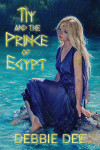
A fine story to introduce readers to ancient Egypt.
Publisher: (self-published)
Pages: 275
Type: Fiction
Age: Teen/YA
ISBN: 978-1-49230-609-2
First Published: 27th September 2013
Date Reviewed: 16th October 2013
Rating: 4/5
Twelve-year-old Tiy went to the bank of the Nile with her parents to watch the Royal barge as it sailed past, but when her curiosity wasn’t sated by the far off sight, she ran further downriver for a better glimpse. Hot on her tail was a sandstorm. As the prince and his friends leave the barge to play, Tiy has a choice to make – use her knowledge to save them and potentially harm herself, or leave them to their fate. She chooses to save them and her act of selflessness will be rewarded in ways she would never have imagined.
Tiy And The Prince Of Egypt is a story to fill in a gap history forgot. In writing her tale, Dee has relied on the history she was able to find (this is suggested in the author note) and constructed a story for young readers from what was left out. The target audience means that the book is by nature quite simple, lacking in detail, and often convenient.
And that is the way it should be. For the older reader, who must be referred to as this reviewer is one, the book may prove an incredibly easy read, but it would be impossible not to say that Dee has written something that is likely to open up the world of ancient history to her young audience. From the features of the story, one couldn’t recommend this to young children unless they were advanced for their age, but for the slightly older reader the book should prove appealing.
Just as she did in The Last Witch, Dee doesn’t coddle her reader. The violence of history, such as punishment for treason, is included as it surely would have been in the day – discussed as simply as if it were a question of who wanted coffee, and carried out without further thought.
It is this, along with the romance in the book, that sets it up as an older child’s read. There is no sex in the book, but there are scenes that might invite questions. The romance is drawn out and full of all the hearts and flowers. The theme of love envelopes the entire story; the characters are seventeen by the end of the tale.
There is not all that much action in the book, a lot of the time is spent on Tiy’s thoughts and day to day life with Amenhotep, but what action there is is thrilling. And whilst Tiy can be foolish and unthinking, she is generally a strong person.
What brings the book down a few notches are the errors and uses of modern day language. Perhaps many readers will not notice the language, but the keen historian will. The errors are of course a bigger draw back here than they might have been otherwise due to the target audience.
Besides the errors, the book is a fine story that will delight any reader looking for boys, adventure, royal status and to be a little awed. It is as much a fantasy as a regular story as much of what happens would never happen in real life, but reality wouldn’t be as appealing.
Tiy And The Prince Of Egypt blends a good dose of history with fun fiction and the sort of fantasy you look for.
I received this book for review from Sage’s Blog Tours.
Related Books


Bee Ridgway – The River Of No Return
Posted 7th October 2013
Category: Reviews Genres: 2010s, Comedy, Fantasy, Historical, Romance, Social
5 Comments
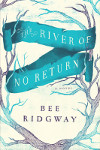
Forward to the past. (Reverse that and you’ll see the inspiration.)
Publisher: Michael Joseph (Penguin)
Pages: 546
Type: Fiction
Age: Adult
ISBN: 978-0-718-176-983
First Published: 28th March 2013
Date Reviewed: 26th September 2013
Rating: 4/5
As Nick was about to die, attacked in battle in the 1800s, he disappeared. He reappeared, alive, in the 21st Century, found by a group calling themselves the Guild. The Guild promises Nick $2million a year and sends him to South America for training where there are fellow surprised time travellers from every decade. The Guild teaches their members how to live in 2013 and then sends them off to use their education. That was fine with Nick, millions of dollars and a free reign sounded – and was – great for ten years, but now the Guild want him to return to headquarters and forget every rule they taught him. The Guild’s enemies are getting stronger, and Nick has a part to play in stopping them.
The River Of No Return is an imaginative and rather funny book that deals with a particular sort of time travel, the sort where you’re not going to meet different versions of yourself and where history isn’t to be changed unless the world is about to end.
The story is contained to a few people and only a couple of different times, meaning that the narration is pretty straight forward. This may mean disappointment for some readers, as other times are referred to and it’s safe to say where time travel is concerned the future is a magnet to our interests, but there appears to be a sequel in the works. In fact it’s worth commenting on the ending of the book. Ridgway creates a crafty ending the likes of which means the story could definitely do with a sequel, but if none were written she’s left you enough information for you to construct a conclusion.
She reminded him of modern women. The way she stood so confidently, the way she met his eye like an equal, the way she spoke unblushingly of the sex she was not having with her cousin.
It takes a good while for the humour to show itself. Indeed the cover and first several chapters do not in any way suggest that the book will be humorous. When it enters it is laugh out loud and rather clever, although there are occasions where it could be considered too much.
So to the affects of time travel on the characters. Nick, the nobleman, fits right into life in the 21st century. So changed is he, so happy with his new era, that his return inevitably results in plenty of thoughts about women, equality, voting, and so forth. And Ridgway creates the ideal romantic partner for him. Yes, it may seem convenient and unrealistic that Julia, the 1800 woman who may or may not be a time-manipulator (unknowingly), is ahead of her era, but Ridgway sets the foundation of the relationship in the days before Nick’s jump, so that it is more a simple case of two like-minded people getting together. Nick may not have been as modern in his youth as he obviously is in adulthood, but the flashbacks portray enough ambivalence to his situation ‘back then’ and enough remembrance of the younger Julia to suggest that, traveller or not, the pair would have got together.
“Demand you back? You’re a full-grown woman. You can do as you choose…” Even before the words were out of his mouth, Nick realized that the sentence he had just spoken only made sense after two centuries of struggle that had yet to happen.
The affects of the 21st century form a lot of the comedy. Like other ‘jumpers’, Nick is trained to be a modern man, with all the knowledge of beyond 1800s history and pop culture that that entails. In preparation to jump back again, to the 1800s, he has to re-train himself in the art of being a nobleman. Modern phrases and cultural references inevitably slip out whilst back in the past, and it happens a lot, but Ridgway’s particular usage of the theme stops it becoming annoying. As said above, the humour as a whole can become too much, but this takes a while to happen if indeed it does at all for the individual reader.
However it must be said that Nick does forget a crucial part of his 21st century life – sex in 2013 involves a foil packet, sex in 1815 involves no discussion of Nick’s new knowledge and it is left out of the book completely. Although this is only one instance of forgetfulness, the potential impact of such spontaneity, which Nick would ‘now’ know about, ought to have been addressed. His partner may be a virgin, but Nick isn’t and his nature suggests he would consider STDs. And as Ridgway has created no space for a pregnancy in her novel, regardless of the fact that a pregnancy is neither here nor there unless the author includes one, Nick would have surely thought of it, and likely his 1800s partner, too.
Julia has courage and guts, but she’s not superwoman. She is the realistic, if such a word can be used, result of a woman from a good, happy background, with a fantastical talent she cannot understand.
The book spends time on the concept and storytelling device of good versus evil, but Ridgway twists it to suit the people she has created. Unless things change drastically in any sequels, this isn’t going to be, and isn’t here, your typical science fiction save-the-world-from-the-bad-guys series. And it’s undeniably refreshing.
The book dips a bit towards the end, becoming, if not predictable, rather convenient. The reader may work the secrets out beforehand, but either way it does have the possibility of changing your thoughts as to whether or not you’d like to read further books about this world. It creates an expectation of an epic continuation but may seem too drastic a change, as such, to some readers. In many ways the sudden unveiling of answers and new plot points is a pity.
But overall The River Of No Return will delight. It will bring embarrassment to anyone who worries about laughing over a book in public, which should be considered a positive factor, and sate the appetites of those who love time travel novels but are a little worn. The River Of No Return is long, but then so is history. And if the title has you in mind of Marilyn Monroe, never fear – that is exactly what happened to Ridgway, too.
Related Books
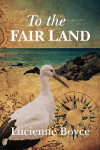
Lucienne Boyce – To The Fair Land
Posted 4th October 2013
Category: Reviews Genres: 2010s, Adventure, Domestic, Historical, Social
1 Comment
Mysterious writers and women at sea.
Publisher: SilverWood Books
Pages: 321
Type: Fiction
Age: Adult
ISBN: 978-1-78132-017-4
First Published: 2012
Date Reviewed: 3rd October 2013
Rating: 3.5/5
Ben, a struggling writer in the late 1700s, joins other struggling writers for dinners at the house of a London publisher – a publisher he and his fellow diners hope to find favour with. When a book about a voyage to a new land is published anonymously, Ben jumps at the chance to discover the author’s identity and find that illusive favour. He believes he has a head’s start, having met a woman at the theatre who dismissed the tale of Cook’s voyage, but it’s not going to be that easy.
To The Fair Land is a sometimes rushed but informative story that includes the details of the fictional naval voyage along with its narrative of Ben’s search. Told from various viewpoints and including the female travellers that history would prefer we forgot, it offers a look at society in general too.
This look at society is in a way puzzling at times. The puzzle comes in the form of the main character, Ben, who does very little to recommend himself to the reader. Mainly he is simply an impulsive, thoughtless man, who is, although not particularly inviting, fair enough as a character – but there is a side to him that is incredibly historical, and however apt this may be it does make reading the book difficult. It will largely depend on the reader’s individual take on Boyce’s reasoning for Ben’s nature as to whether or not they are happy to read about him. Ben is prejudiced against women. He brushes off their opinions even when it is obvious these opinions are of importance, and goes as far as calling a calm, good, woman a hyena. This prejudice is not explained by Boyce and therein lies the issue – is this a commentary? Is this a device to show the reader the treatment of women in the era? Or is it just the way the character was written? The issue with Ben is of course that this is a book written in the 21st century for 21st century readers, and readers in our current time expect more detail and reasoning behind such views, whether commentary or otherwise.
For the most part the book reads as rushed, often to the point of confusion. In addition to Ben’s nature, there is rarely ample reasoning for certain turns in the plot. The lack of these things creates a situation where people seem fickle when they are surely not, and it can difficult to really feel for the characters.
In general the book could have done with more information on the characters (there is some info-dumping about minor characters) – Boyce has spent a great deal of time on the history so the potential was there for the characters. The history is fascinating, however. The information about the navy, the thinking behind the voyages, and the inclusion of other ships that set sale with women on board (there is a nod to Jeanne Baret, for example), is well presented. And, albeit somewhat fictional, the story-within-the-story of the exploration of the ‘fair land’ is engrossing.
The book employs changes in viewpoints during chapters which have the potential to throw the reader off course, though as they read, in many ways, as a compilation of reports and opinions, they would likely work if provided their own sections. On the subject of paragraphs, there are some editing errors in the book that require a mention because they are of the mixing up names and places sort.
Yet there is one character who has been written superbly. Sarah, in her ‘present’ form but most especially during the section which tells of her past, is a wonderful – if discomforting – character and very memorable. Indeed the addition of Sarah brings the question of Ben’s place as a device for commentary into the fore. If Sarah is so wonderfully written, then it does suggest that Boyce had a plan with Ben.
The writing itself is readable. Rushed narrative or not, the words flow quickly. And the account of the voyage is given slowly with much attention to detail. It is difficult not to get lost in the paradise Boyce imagines. The best part of this section is that it goes on for a very long while, and, due to the era in which it is set, there is a lot of harmony between the cultures that come together, making it a nice reprieve from the cruel white supremacy that soon followed.
Lastly, it should be noted that there is a certain sort of relationship in the book that may cause some discomfort, however Boyce has her cast of characters deal with it in a way you would expect of the era and situation.
To The Fair Land has its bad points and its good points. It may not work for everyone, and some readers may feel the scales tip in favour of the negative, but overall this is an aptly fair début.
I received this book for review from the author following correspondence with the publisher.
Related Books
Martin Wagner – Deutschland
Posted 18th September 2013
Category: Reviews Genres: 2010s, Domestic, Psychological
1 Comment

Will you make the right choice?
Publisher: Pinter & Martin
Pages: 151
Type: Fiction
Age: Adult
ISBN: 978-1-905177-66-0
First Published: 6th September 2013
Date Reviewed: 9th September 2013
Rating: 5/5
Sam and her brothers are staying at their grandparents’ for the summer holidays, and when oldest sibling Tony gets bored he prefers subjecting his sister and brother to somewhat nasty games, often dangerous. Sam doesn’t like it and worries about the effect on young Jeff, but she hasn’t the confidence to stick up for what’s right. Kate, their aunt, gets through boyfriends like there’s no tomorrow, always managing to ruin the relationship. This time, with a holiday booked for her and her newest boyfriend, who has lasted 2 months so far, things will be different. And then there is Richard, the step-grandfather who has sent a letter and ordered a package sent from his homeland to England. He’s not sure he should be showing it to anyone.
Deutschland is a fantastic short book that deftly combines the lives of three sets of people, albeit that they are related, to create a solid overarching study. Focusing on the themes of free will and choice, the book jumps back and forth between Sam, Richard, and Kate in a way that few authors master.
This is down to the suspense in the stories (‘stories’ here means the particular version of the few days for each character). Each story rests on an element of suspense so that the reader does not feel disappointed when the focus shifts – you want to read about Kate, yes, because her story is intriguing and you can see that there’s the possibility she’s going to ruin yet another relationship and you want to see what happens, but you want to find out what Richard is hiding just as much. And likewise with Sam and her brothers. What is especially interesting is that the stories by themselves are very much in the genre of the short story – separated they are concentrated character and theme studies that may or may not conclude perfectly and may end a little ambiguously – but due to the linking and the family ties the stories also work as one novel. This is perhaps the strongest aspect of the book, the strength in the structure and storytelling.
But the use of themes is up there, too. It may take a while for the reader to work out that this isn’t your standard story to get lost in, that there is a particular concept that Wagner hopes you’ll take away. The ending of the book is the most obvious sign, but as you read through the chapters (a couple of pages each) it’s easy enough to identify them. Every character in the book has a choice to make – sometimes it is one bigger choice, for others it’s a combination of multiple decisions that will align later on – and there is very much a sense of free will, too. This second theme is a little blurred, so to speak, not so obvious, but the atmosphere of the stories and choices are not adequately described by the word ‘choice’ alone.
As for the writing it fits the ‘literary fiction’ category and is rather lovely. It is at understandable and intriguing odds with the contents, and there is much attention to detail. The book has a grittiness to it, a certain darkness that affects each story, but if the cover is quite alarming rest assured that there is no horror or gore in it. The characters are written well enough that despite the short time you spend with them you feel you know them as well as you would in a 400 page novel, and there is a lot of mileage remaining in the book after you finish it and think about how different choices could have helped/destroyed the week or so it is focused on.
Deutschland is a fine novel that is sure to be loved by anyone who likes a bit of suspense with their top-notch writing.
I received this book for review from Pinter & Martin.
Related Books
None yet
Anya Von Bremzen – Mastering The Art Of Soviet Cooking
Posted 13th September 2013
Category: Reviews Genres: 2010s, Domestic, Food, History, Memoir, Political, Social
4 Comments

Rations versus cuisine.
Publisher: Crown (Random House)
Pages: 294 (324 including recipes)
Type: Non-Fiction
Age: Adult
ISBN: 978-0-307-88681-1
First Published: 12th September 2013
Date Reviewed: 7th September 2013
Rating: 4/5
Von Bremzen chronicles the culinary history of Russia from the 1910s to the present day, interspersing it with political and social history as well as her own.
Mastering The Art Of Soviet Cooking is an intriguing book that blends to a smooth mixture memoir, history and, of course, food. Set up as a project between the author and her mother to visit each decade of Russia’s history via a meal, the book soon devolves into an overall look at the way food was used and consumed in the USSR.
There is a lot of general Russian history in the book, and it will ‘work’ best for the reader if they approach it already familiar with the beginnings of the Soviet Union. Whilst Von Bremzen explains a lot of the reasons for various choices and so forth, she does not introduce the initial change itself. Beyond this, the history is very well described and the reader will come away with a good amount of knowledge about the role of food in Russia.
Well described, too, is the food itself. Due to the limits present in writing about meals (in other words you are of course only reading about the food without tasting or picturing it) it may not be as memorable as the rest of the content, but Von Bremzen’s success is necessarily in the way she links food to the regime itself. For example she explains how the regular person ate, and then details what those who said ‘everyone is equal’ ate.
It is hard not to become fond of Von Bremzen’s family. As the author’s mother played a part in the creation of the book, this is whom you are likely to be most fond of, especially as Larissa comes across as the sort of person you wish would grace more books. Von Bremzen’s mother saw the reality in situations at a young age, so in her daughter’s story you get to see both versions of the history – what it looked like and what it was, and you get this from day one rather than in hindsight. Von Bremzen’s childhood antics are fun, but it is undoubtedly Larissa who steals the show.
The recipes described are contained at the back of the book, and due to their placement the not-quite-concluded final narrative chapter feels strangely fine. In any other book the lack of a conclusion would be a negative, but it really doesn’t matter here and just goes to show that history is still in the making. Indeed if Von Bremzen had left it just a few more years, a whole other decade would have had to have been included.
The one potential downside is the writing style. Von Bremzen has chosen an extremely colloquial language that on many occasions can be difficult to understand. (This is separate to her use of Russian words which is of course a completely different matter – and everything is translated.) In some ways the text reads as though it were a casual speech rather than a book. Slang words and phrases are used, such as ‘cheapo’ (‘cheap’ is never used), aka, and ‘egg thingies’.
The writing has the potential to be a drawback, as does the amount of political history if the reader is expecting food all the time, but overall Mastering The Art Of Soviet Cooking is an informative book with a fascinating cast of real characters. The recipes are introduced well with enough prior information on them for anyone intrigued to want to give them a go, and there is a fair amount of humour and personality in the book.
A good introduction to Russian food history, Mastering The Art Of Soviet Cooking is likely to appeal to anyone who likes the idea of a meal and memoir mix.
I received this book for review from Crown Publishers.
Related Books
None yet


