

Rainbow Rowell – Eleanor & Park
Posted 18th November 2013
Category: Reviews Genres: 2010s, Angst, Domestic, Romance, Social
7 Comments

So take these broken wings, and learn to fly again, learn to live so free…1
Publisher: Orion Books
Pages: 325
Type: Fiction
Age: Adult
ISBN: 978-1-409-12054-4
First Published: 12th April 2012
Date Reviewed: 11th November 2013
Rating: 5/5
Everyone has their own seat on the bus, in fact Park has two as no one sits beside him. When the new girl – large and dressed in strange clothes – walks down the aisle, mockery is rife and the available seats are suddenly taken by backpacks. As the mockery continues, Park offers the girl the seat next to his and that is that. Only it isn’t. Eleanor isn’t quite as different to him as he first thought.
Eleanor & Park is a rather special book that deals with age-old school problems, domestic issues and self-worth, all woven into a beautifully-told love story. Set in the 1980s it offers the reader a chance to settle back into a life where keeping in touch wasn’t as simple as email and music was sold on cassette. There is some humour – there are Eleanor’s brilliant comebacks that would leave glittering princesses in an Austen-esque flutter, and there is some deep consideration.
The beauty is that the book itself doesn’t claim to be special. The plot sounds nice but usual; school romances have been done before. Even the themes aren’t particularly unique. Yet both as a whole and separated into parts, Rowell’s book is delightful. The storytelling is lovely – the emotion and subtext even better. The themes are studied to perfection. And the characterisation is out of this world.
Actually, the characters are completely in this world, and that is what is so brilliant about them. Rowell has access to the same dictionary as everyone else who writes in the English language yet her characters are more realistic than most. If Eleanor and Park showed up at your door, 1980s clothing aside you would not be shocked at all. The pair feel as though they belong in reality, that they are far more than the result of an author’s imagination.
Park is half-Korean just because and there is no massive history provided apart from the understandable dwelling on parents. Eleanor is fat, a description more likely to come from her rather than anyone else, just because. Their situations of course have reasoning to them, but baring that Rowell is content to let them just be.
Eleanor’s size is a subject frequently returned to. The reader will notice that she sounds large for a good while, and then once they are seeing her through Park’s eyes and his parents’ eyes rather than Eleanor’s, that perhaps she’s not as large as they had come to believe. Whether Eleanor is large or not is not the question – it is the character’s perspective of herself that is important. Eleanor isn’t worried about her style of dress (besides the fact her clothing is all from Goodwill), nor does she care about her hair – the two things that concern everyone else. Instead she portrays the many disbeliefs and lack of self worth that many young people face, those that are magnified when love is involved. Park’s life is a dream compared to Eleanor’s but it’s not all sunny days and happiness. He has his own inner turmoil to deal with, an identity issue and protective parents.
The book is told in the third person and it jumps back and forth from Park to Eleanor’s point of view. Rowell switches constantly during chapters, ensuring that you hear about each situation from both characters. This inevitably means that the narration is reliable in its own way and that no feelings are left behind. The switches become less prevalent during times when the couple are happily together, in a sort of textual imagery that shows how thoughts can be divided and people misunderstanding of each other when not together. A reinforcement of the idea of separation, of sorts, is in form of the necessary white-space that accompanies the switches.
Rowell’s style may not please everyone. There are many ellipses, emphasised words, and of course there are the references to the 1980s that younger readers may miss. There is also a lot about the then-present culture of the time, mainly in terms of music, that suits the reader who knows the era well. But the eternal stories of first love, of school, and the issues, means that these are not likely to cause major impediment to anyone.
There are some big domestic issues in the book that take a while to become obvious. Some may work the biggest out relatively quickly, others may require the answer. All the issues are difficult; Rowell has chosen to deal with them without delving into angst. This may mean that at times it doesn’t feel as true as it is, but that is surely a point in itself – when issues do not fit the socially-defined descriptions, they can be missed. What is actually the case is that Eleanor is simply used to it and has become a strong person.
Eleanor & Park is an extraordinary story of a love where the two people are similar but their situations very different. It will pull you in, spit you out, and churn you around with the rest of the washing in the machine that Eleanor’s family may or may not possess.
Whatever it will or won’t do it will definitely leave you a changed reader.
1 From Mr Mister’s Broken Wings.
Related Books
None yet.
Tanya Byrne – Follow Me Down
Posted 13th November 2013
Category: Reviews Genres: 2010s, Mystery, Social
4 Comments
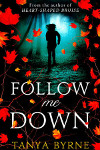
Down in the woods where everyone goes…
Publisher: Headline (Hachette)
Pages: 454
Type: Fiction
Age: Young Adult
ISBN: 978-0-755-39307-7
First Published: 9th May 2013
Date Reviewed: 7th November 2013
Rating: 4/5
Adamma started school at Crofton College in England when her father, a Nigerian ambassador, moved country once again. More familiar with the US, Adamma is somewhat surprised by the reality of the British boarding school, but she finds a friend in Scarlett, a girl who is obviously not prim and proper but not necessarily bad either. The village in which the College is situated is dinky and quiet, but where there are many young people there is surely to be an issue someday.
Follow Me Down is a mystery that twists and turns, ties itself in knots deliberately, and uses red herrings to the extent you wish other mysteries would whether or not you work it out early on. Told via two time instances – the before and after, that descend towards the two mystery threads simultaneously – the story is a quick read whilst sporting a lot of suspense.
Let’s deal with the mysteries first. Byrne has made a valiant effort to stop the reader from truly working them out, in particular the later of the two, and it must be sad that even if you do work them out, it’s quite likely you will still doubt yourself. Byrne’s use of twists and the structure that affords a lot of ambiguity are two of the highlights of the book and worthy of inclusion in the ‘reasons you should read this book’ stakes. Some may find the twists and red herrings annoying, and it must be said that the ending is just as ambiguous as the overall structure – there is an ending but a lot is left unsaid.
But it’s easy to say that the author’s intention may not have been to shock or surprise as much as to study social conventions and ever-present issues. The ‘initial’ heart of the mystery, a possible rape, whilst surrounded by the ‘thriller’ threads, is studied as though it might form the basis of an essay. The book delves into the reasoning victims can be wary of telling the police what happened, it casts a light on the concept of linking clothing and drunkenness with fault, and it also shows how the perception of other women can be an issue where instead there should be support. This spotlight doesn’t run the entirety of the book, but it does cause you to wonder whether your approach to the story and your belief that it’s a ‘simple’ mystery to be enjoyed, is correct.
Going back to the ‘reasons you should read this book’, perhaps the most compelling aspect of Byrne’s creation is her handling of culture and contrasts. The origins and cultural influences of the characters mean that Follow Me Down is a true blend, and Byrne makes every effort to get it right. Adamma is from Nigeria but has spent a lot of time in the US – her narration, when she speaks of herself, is naturally peppered with American terms as well as the understandable various comparisons between England and the States. Her American terminology and nature is matched by her Nigerian roots – she often speaks to her mother in Igbo, for example. This is matched by the British characters – when Adamma relates their conversations they always use the British terms for everything. This approach is a delight in a world where a lack of correct dialect is rife, and it means that the parts of Adamma’s nature – her Nigerian birth, her American schooling, her English Sixth Form years – are each given equal baring. As a study in diversity with characters being ‘different’ just because, it is excellent.
There are some flaws in the plan – there are strange turns of phrase and ways of describing actions, for example Adamma lifts her eyelashes instead of opening her eyes, and these seem stylistic choices rather than dialect ones. There is some repetition and curious uses of emphasis. There are occasions where people don’t speak as you’d expect them to – using very colloquial language where they otherwise use an ‘older’ style, for example – and this can be jarring. Yet as a whole the writing is simply different, not bad, and just something to get used to.
It would be fair to say that if you’re going to find Follow Me Down difficult, it’s likely going to be dissatisfaction with the ending. As Byrne ceases use of red herrings and the answer is allowed out into the open, it may not be as clear as you feel it ought to be. It will be obvious what’s happened, in a literal sense, but it may seem as though Byrne is still trying to hold things back. This isn’t a book for people who like stories neatly tied at the end.
Follow Me Down is in many ways abstract. It is ambiguous and written in a style very much its own. But it also packs quite a punch long before the mysteries are resolved and is a shining example of cultural differences in one place done well. It is a quick read whilst not being particularly fast-paced, it explores the thin line between love and hate, and it makes a very good attempt (and is successful in many ways) at confounding the reader.
The best way to conclude is to say this book is like Marmite. You’ll either love it or hate it, but even if you hate the story you will likely love other aspects of it.
I received this book for review from Headline.
Related Books
None yet.
Tom Kizzia – Pilgrim’s Wilderness
Posted 8th November 2013
Category: Reviews Genres: 2010s, Angst, Domestic, Law, Political, Psychological, Social, Theological
2 Comments
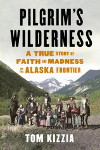
When God is no longer that man in the sky but the father of a family that has no choice but to follow him.
Publisher: Crown Publishing (Random House)
Pages: 296
Type: Non-Fiction
Age: Adult
ISBN: 978-0-307-58782-4
First Published: 16th July 2013
Date Reviewed: 30th October 2013
Rating: 4/5
Tom Kizzia recounts the story of the ‘Pilgrim’ family who appeared at first to be naïve wannabe pioneers in rural Alaska, but later proved to be problematic to the National Park Service, the local residents of McCarthy, and a group of people with a horrific secret.
Pilgrim’s Wilderness is the generally well-paced and well-written tale of a family that was not all what they seemed to be. Including tales of what came before McCarthy, and his own then-present reporting of the Pilgrims for the newspapers, Kizzia creates a strong and shocking story, reminding you that appearances can be deceptive.
Kizzia’s approach to the work is one of the biggest, if not the biggest, recommendations for it. Kizzia’s approach is both biased and highly objective. And whereas a bias can often detract from unpersonal non-fiction, here it is necessarily apt. The actions of Bob Hale (‘Papa Pilgrim’) warrant an incredible and understandable bias against him, and it is to Kizzia’s credit that he, the writer, stays away from slandering. Kizzia could not help but be biased, it would be intolerable any other way, and it is interesting that it may take the reader a while to realise why.
This is because for a long while the issues are all to do with land ownership and the way many dislike governmental take overs of land in the name of preservation. Kizzia is fair here, telling the reader why the Pilgrims had a good claim, and why the National Park Service had a right to feel irritated. He includes the various thoughts of the long-term residents of McCarthy. But the reader who is still on this section, if they haven’t realised where the Pilgrim’s tale is headed, may see Kizzia’s bias as unfair – it will all depend on which side of the debate (parkland or private property) they fall. Kizzia includes, one can assume, the whole debate, but he is bias towards the National Park Service whilst giving the Pilgrims’ opinions plenty of time.
Depending on how much prior information the reader has, it may only be after other details of the Pilgrims’ lives begin trickling into the narrative that Kizzia’s viewpoint can be truly appreciated. Providing all sides and quoting everyone when your story has a darkness to follow is admirable, and for all Papa Pilgrim and others’ thoughts on Kizzia’s reporting, he has strayed from the traditional picture of the entertainment-creating out-for-himself journalist.
Quotations are another element that should be noted. Kizzia’s book is full of the words of others; his sources are identified, his commentary backed up, and his views of people as objective as possible when possible. Crucially, he includes the words of the Pilgrim children, and rather than just telling the reader that they changed, he often writes in a way that almost hands the narrative over to them. It is obvious from the specifics of the writing style that Kizzia went straight to the primary sources whenever he could.
By now it will come as no surprise to say that the darkness in the tale is one of abuse. Whilst Papa Pilgrim based his life and rulings, in his mind, on a literal reading of the Bible, this was a man who acted in every way but the way his God wanted. Kizzia does not gloss over facts.
Referring once more to Kizzia’s style, the author has made a brilliant contrast, showing that whilst the Pilgrims did not live a truly Christian life (at least not so long as their father was controlling them) there are other families of similar appearance who do. When the Pilgrim children finally saw freedom it was in the form of a family who were not so different. The Buckinghams wore (and presumably still wear) the same sorts of clothes, share the same deference to gender roles, put God first, live in a cabin, and promote the virtuous way of life – but they are as different to Papa Pilgrim and his views as chalk and cheese. It is perhaps surprising to hear that the Pilgrim children did not escape their father to be introduced to the mainstream way of life but simply to a positive version of their own, and yet it feels very appropriate. These children were so far from twenty-first century life with its television, video gaming, sexual liberation, and shopping, that there is no saying how they would have faired, but the Buckinghams’ similar (but true) focus on God enabled them to stay true to who they had become. In any other book, the Buckinghams may have been regarded as a worry, given the Pilgrims’ background, but Kizzia shows that just because people do not meet expectations, that they share a visual similarity to problematic cases, it does not mean they are the same.
There are but a few places where Kizzia’s work is brought below masterpiece level. There is a lot of superfluous information in the book, of other people’s pasts and of Alaska, that could have been edited out to keep the pace of the narrative going – especially when those people play only a bit-part. There is a constant switch back and forth between eras of the Pilgrim family’s movements that becomes confusing to follow. And there is the unfortunate story of Kizzia’s wife who died from cancer. Sally’s life is of course important to discuss, but the tale of a law-abiding beloved wife who died of cancer included in the story of a lying, cheating, sexual and domestic abuser who raped his children and had no connection to Sally, is out of place. A memoir would be wonderful.
But, as suggested by this review, the work is, as a whole, an excellent one. Kizzia has given a long-lasting voice (as opposed to disposable daily news) to the children and wife of Bob Hale, as well as a voice to McCarthy. His handling of the subject matter and his approach to it are superb and it is safe to say that this book is one that won’t leave you any time soon.
Pilgrim’s Wilderness suggests reflection, asks for empathy, and relates triumph in the face of adversity. It is a difficult book to read, but it is a story that begs to be heard.
I received this book for review from Crown Publishers.
Related Books
None yet.
Melissa Marr and Tim Pratt (ed.) – Rags & Bones
Posted 28th October 2013
Category: Reviews Genres: 2010s, Fantasy, Horror, Paranormal, Science Fiction, Short Story Collections
6 Comments
Building from the foundations.
Publisher: Headline (Hachette)
Pages: 365
Type: Fiction
Age: Adult
ISBN: 978-1-4722-1052-4
First Published: 22nd October 2013
Date Reviewed: 25th October 2013
Rating: 5/5
A baker’s dozen of creators, including Marr, Pratt, and one artist, have teamed together to produce a collection of short stories based on others’ works.
Rags & Bones is an anthology that retells several stories – all with some sort of fantasy, paranormal, and/or horror base – to create one solid and undeniably excellent book.
It’s interesting to note that the title of the collection comes from its concept. Marr and Pratt wished for stories that were the result of existing tales rewritten it to the effect that the meaning was still there, and perhaps certain elements (for example Neil Gaiman’s The Sleeper’s Spindle is very much Sleeping Beauty) – but were still original works. As the editors put it: “boil those stories down to the rags and bones, and make something new from their fundamental essences”.
And it works. Whilst the stories may indeed at times be easy to place within their context, at others it is more difficult. Certainly it is to the collective’s advantage that the stories chosen for reworking are not all timeless classics. There are lesser known works amongst them which means that there is a lot of ‘new’ for the reader, as well as ‘old’ – it is unlikely that any one reader will know of every story represented.
The stories themselves are compelling and the writers chosen are all rather famous. The horror in the tales is often understated and of the grim, psychological sort rather than the gore and violence sort. And the range of settings and times is vast. Sometimes it is difficult to ascertain when or where a story is set. This adds to the tales rather than detracts.
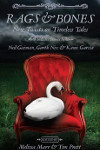
So each story bares a message. Carrie Ryan’s brilliant That The Machine May Progress Eternally takes on E M Forster and weaves a foreboding tale of a child of a post-apocalyptic earth falling into the technological underworld where humans with no reason to move about study history from the safety of their kingdom. Neil Gaiman’s The Sleeping Spindle borrows from Hans Christian Anderson and switches elements around to create a humorous version of an already chilling children’s story. Melissa Marr herself channels Kate Chopin and writes of selkies, a mer-woman imprisoned by a well-meaning but abusive human, in a study of both the selkie myth itself and the wider context of inequality. And then there is the exceptional When First We Were Gods by Rick Yancey, the longest story in the book, a purely sci-fi retelling of The Birth-Mark by Nathaniel Hawthorne that focuses on a specific sort of human immortality, looking at what is lost when forever is achieved. Woven into the collection are Charles Vess’s illustrations, artistic retellings of older tales and poems. The addition of Vess’s work is a reprieve of sorts, a nice method of segmentation, that is provided just as much time for explanation as the written works. (Each contributor explains their inspiration and why they chose it following their story.)
The works highlighted above are those chosen by the reviewer – there are plenty more and each one is just as worthy as the rest. There are no average stories in the collection, the sensational quality is consistent throughout. And whilst the messages and meanings may differ from one to the next, the overall ideas of knowledge, of thinking before you act, of human agency in general.
On the face of it, Rags & Bones is a mixture of oft-scary genres, but it is so much more. Real horror comes in patches, slowly, and timeless fantasies tend to have a dark base. You don’t read this book, become frightened and miss a night’s sleep. You will sleep at night. What these stories do is creep into your consciousness and make you aware of very real ideas and possibilities, as well as things that already happen. And this is regardless of whether the story is of a believable future or of vampires and zombies.
The gorgeous cover art will stay with you, the collective of popular and talented talented writers will stay with you, and the concept of wishes coming with a price, like Rumplestiltskin’s promise, will stay with you and haunt you for a good while.
There are ways to scare, there are ways to inform, and then there is Rags & Bones.
I received this book for review from Headline.
Related Books

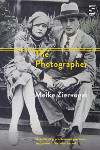
Meike Ziervogel – Magda
Posted 23rd October 2013
Category: Reviews Genres: 2010s, Angst, Domestic, Historical, Political
5 Comments
Behind the decision.
Publisher: Salt
Pages: 113
Type: Fiction
Age: Adult
ISBN: 978-1-907-77340-2
First Published: 1st March 2013
Date Reviewed: 22nd October 2013
Rating: 5/5
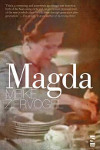
Ziervogel provides a fictionalised account of the last days of Magda Goebbels – wife of Joseph – and her family, giving a voice to those history left out and illustrating the sort of thoughts that could have led to the action Magda took.
Magda is a short and exceptional book that offers a bridge to the historical gap and a poignant look into the feelings of the Goebbels children. Blending well fiction and fact, Ziervogel’s book is an emotional ride with a swiftness that makes the story all the more difficult to read.
This swiftness is an interesting one and bares detailing. Whilst this is Ziervogel’s first book, her background as a publisher has brought a vast amount of specialised experience into the creation of it. Magda is short, but it is far from lacking. Indeed the book never once looses its focus; there is no superfluous content whatsoever. Of course the language can take a few words, as literary fiction is want to do, but the structure, plotting, and the execution (pardon the use of this word) of the story is top notch. What Ziervogel has done is remove everything but the one event she wishes to talk about, exploring other occasions only when an explanation of the characters is required. It is true that this means prior knowledge of Magda and her final days is needed for the reader to fully understand, but it is only the basics that are needed. The lack of historical information we have besides the fact of the end makes this a book that can be read with little context.
Ziervogel has given the children of the Goebbels a voice. She has altered the ages a little, in particular of the eldest child, Helga, but the reasoning for this is obvious. In making Helga older, Ziervogel has afforded the maturity needed of a minor to understand enough of what is going on to have an impact on the reader – without enough understanding for Helga to escape it. Of course the children did not escape, so a fictional escape would not do – and it is easy enough to believe that even at her true twelve years of age, Helga may have had some understanding regardless. Much of the book is told through Helga’s diary, and this brings us to the next point.
Ziervogel’s characterisation is excellent. The characters feel as true as they were and as much as we might say that the actual history would cause this story to be plot-driven, Ziervogel has made a case for the people themselves. Inevitably this all means that rather than thinking about Hitler, the Nazis, and their hatred, the reader is given an insight similar to that provoked by Markus Zusak’s The Book Thief – although Magda is about the very leaders of Germany rather than Zusak’s innocent citizens, Ziervogel reminds you that there were still true innocents involved even high up. Was Magda innocent? Perhaps. Perhaps not. Statements are made about her drive for wealthy happiness. But the children were far too young to be seen as anything other than innocent, unknowing victims of their parents’ choices. This is what the use of a diary for Helga creates; Ziervogel is not suggesting the reader should have a lot of sympathy for Magda – it is the children she weaves the emotions around.
However this acknowledgement of Magda is of course important. It is easy enough to see why Magda did what she did on a literal level, but otherwise we know nothing. Besides Helga’s diary, there are sections told by Magda’s mother to relate her childhood, and her childhood is also provided as a short of flashback by Magda herself. This is where the book is necessarily less concise.
Ziervogel doesn’t have answers – no one does. There were few witnesses and the event revolved around secrecy. But what the author does have is fair speculation for what might have gone on in the heads of those involved, and a feeling that we should consider the others who did not have a choice.
Magda is by its very nature a difficult read, but, as much as one can say so considering the subject, it is a stunning one.
Related Books