




Sarah Mayberry – Her Best Worst Mistake
Posted 14th February 2014
Category: Reviews Genres: 2010s, Romance
Comments Off on Sarah Mayberry – Her Best Worst Mistake

The best friend’s ex.
Publisher: (self-published)
Pages: 146
Type: Fiction
Age: Adult
ISBN: 978-0-987-31600-4
First Published: 3rd May 2012
Date Reviewed: 3rd June 2013
Rating: 3.5/5
Elizabeth realised she and Martin weren’t a good fit, and cancelled their upcoming wedding. Best friend Violet should be happy, after all she loathes the boring man, but she can’t get him out of her thoughts. And if something happens between them, how will she tell Elizabeth?
Her Best Worst Mistake is technically a sequel to Mayberry’s Hot Blazing Nights (published by Harlequin), but can be read as a stand-alone. A short book, there is relatively little action (pun not intended) and it is an easy read.
However. The book contains a multitude of problems. The most obvious one is that this ‘British’ setting and the ‘British’ characters are actually American. In other words it appears that the (Australian) author has done no research. Yes, ‘elevator’ is matched by ‘lift’ many times, as is ‘cell’ and the neutral ‘phone’, but the simple usage of American terms (including ‘high school’ in dialogue when Brits go to ‘secondary school’ and ‘sixth form’ or ‘college’) does the writing a great disservice. A British reader or anyone who knows British terms will likely feel distanced. There are times when it is okay, for example ‘apartment’ instead of ‘flat’, as the former has worked its way into British language, but the lack of care is far too obvious. This is unfortunately matched by numerous spelling and typing errors proofreading should have picked up.
Aside from this, the book is okay. It is incredibly steamy – that’s the only way to describe it, as ‘hot’ doesn’t inspire the same idea – and there are many sex scenes. The novella is practically erotic romance, and the development of the relationship happens mostly lying down. Mayberry writes good sex scenes that generally lack those words and situations that some readers might find uncomfortable (though a special mention should be made for the scene involving fruit). Whether the relationship works or not will depend on the reader – whether they’re okay with people taking on the ex-partners of friends, whether they like the characters, whether they are okay with a girl saying she’s been tested for STDs without anyone mentioning the man (six year relationship or not), and so on.
Being a novella, there’s not much time for the resolution to take place, and the reader may feel cheated by Elizabeth’s response if they were hoping for a long scene (no matter if they wish for Elizabeth to be angry or unmoved). The vast majority of the book takes place in settings where sex is known to occur. That said, there are mini storylines regarding Violet’s feelings of inferiority, as well as the tensions faced by Martin, who works for Elizabeth’s grandfather, that aren’t bad. The characters are likeable enough, though as much of the plot revolves around the bedroom and Violet’s worries about Elizabeth, there is not all that much to get to know about them beyond the basics. This means some of the characters’ interests and dislikes may be confusing.
Her Best Worst Mistake is a very apt title as it will sate the opinions of those who like it and those who do not. Recommended with caution as to high expectations, it is a fair offering but unfortunately also an example of how important research is even when you’re writing about a widely-known theme (romance) and the present day.
Related Books
None yet.
N K Jemisin – The Hundred Thousand Kingdoms
Posted 7th February 2014
Category: Reviews Genres: 2010s, Domestic, Fantasy, Political, Romance, Social, Spiritual, Theological
8 Comments
Where Gods walk amongst us.
Publisher: Orbit Books
Pages: 234
Type: Fiction
Age: Adult
ISBN: 978-1-909039-45-2
First Published: 1st January 2010
Date Reviewed: 4th February 2014
Rating: 3/5
Yeine, happily living in Darr, was commanded to ‘return’ to her maternal family’s palace in Sky to become one of three heirs to the kingdom and the world. As she learns what her role is to be, she’s given a proposition by the earth-bound gods that may not save her but will save her homeland.
The Hundred Thousand Kingdoms is a book that sports a different sort of fantasy but is unfortunately rather confusing, static, and badly written.
The world itself, or, rather, the possibilities for it, are wonderful and promising but Jemisin only goes so far in the building of it, and albeit that detailing the palace is understandable (the story is almost exclusively located there) it does make it hard for the reader to really see Yeine’s plight and her reasons for her actions.
The writing is often confusing. There is a constant switch between Yeine’s usual narration and her inner thoughts and torment, and there are times when she looks back at the day just passed in order to tell you something she forgot to tell you earlier. Whilst the style lends the book an individuality and Yeine a distinct voice, it also hints at a lack of planning, or, at least, the look of such. And at the end of the day the look of poor planning has the same result as an actual lack of planning.
The constant ‘switch’ in narration is a pity because it becomes apparent later on in the book that there was a real reason for it. The problem is, of course, that it is too little too late. What could have been an interesting exploration of Yeine’s sense of self is simply left to hindsight. It means that the switch may indeed work for the remainder of the book but that this doesn’t atone for the confusion of what came before.
The book lacks a true focus – is Yeine concerned about the gods, her homeland, or does she simply want to find out the truth of her mother? Yeine’s mother’s life may be intriguing but it is no match, story-wise, for what is happening at that present moment, to what is happening to the world and the gods, and Jemisin’s increasing focus on it moves away from the fantastical possibilities brought forth by the premise. Nor would Yeine’s mother’s life have a true bearing on Yeine in the future as Jemisin’s focus changes once again towards the very end.
Where the book does shine is in the variation of fantasy it employs. This is no high-fantasy travelling-the-world tale of dragons and witches, and whilst those are not bad elements and whilst the book could have spent more time away from the palace, it is good to have this difference. The city of Sky is at once realistic and utterly imagined. In Yeine’s land women rule (even if Yeine is not written convincingly in that way). There is a lot of unnecessary violence and bizarre thoughts but this does fit the genre. The problem is that Jemisin does not provide any reasons for the reader to care about anyone.
The Hundred Thousand Kingdoms had potential but much of that is lost. It’s possible Jemisin may detail more of the world in later books but without having much of an idea about anything beyond the palace already, not least the knowledge of what the hundred thousand kingdoms are, you may decide it’s not worth finding out.
Related Books
None yet
Emma Henderson – Grace Williams Says It Loud
Posted 27th January 2014
Category: Reviews Genres: 2010s, Commentary, Domestic, Historical, Social
4 Comments

Yet another point in history where people were treated badly.
Publisher: Sceptre (Hodder)
Pages: 323
Type: Fiction
Age: Adult
ISBN: 978-1-444-70401-3
First Published: 1st July 2010
Date Reviewed: 20th January 2014
Rating: 4/5
Born differently-abled, Grace later contracts polio and becomes, as far as the 1950s were concerned, ineducable and severely mentally impaired. Taken from her parents, she is institutionalised along with hundreds of other children and adults, forced into a situation of poor hygiene, neglect, and abuse. Grace’s inner world is full but she has difficulty being understood by those who believe she is stupid; the exception to this is Daniel, a boy who lost his arms in an accident and takes a shine to her.
Grace Williams Says It Loud is a semi-biographical story. A look at the horrors of institutionalisation and the way disabled people used to (and still are to some extent) seen, the book is a good starting point to learn about the truth of disability and social discrimination.
Henderson wrote the book in honour of her sister, whose disabilities were never properly diagnosed. Henderson herself is therefore very much a part of the book – whilst it may take an interview to learn that this is so, the author never excuses herself; her presence as the oft-hateful younger sister Sarah is unapologetic, realistic, and at times very damning.
Whilst the institution in this book may not be as quite as awful as some were, Henderson never holds back from detailing the horrors that occurred. She shows the abuse that was meted out by the staff – sadistic, sexual, forced medication (the latter often increasing the patients’ mental and physical issues) – as well as the numerous slurs and taunts. The words ‘spastic’, ‘mong’, and other denigrating phrases are here in abundance. It is of course worth noting that unlike other books written in our times, where authors use ‘retard’, ‘spastic’, and ‘spaz’ without thinking of the hurt this causes (consider that these words are similar in this way to the N word) Henderson’s use is medical, historical, and relevant.
The author shows just how much severely disabled people – at least ‘severely’ in the sense that they seem so on the surface – can be misunderstood. Grace may not be able to speak, but she is as intelligent as she could be given her lack of a formal education. She is capable of a sexual relationship and love. Her friend (or ‘boyfriend’ – whilst Grace speaks of love a little and has sex, love is one area that Henderson does not elaborate on) Daniel, treats her as he would any other person and whilst Grace is limited in how much she can tell us, being the only narrator and stuck in an institution, there is the suggestion that it is society that is the reason for the disability. This common idea, that society is the cause of disability, the person themselves more able if society helped them be so, is very much suggested in this book. Grace often responds, or starts, or tries, to respond to questions asked by those around her. The way Henderson writes shows that those people answer for Grace before they’ve even given her a chance, never seeing the issue that their belief in stupidity before proven guilty causes.
Henderson’s writing is easy to read but the necessarily restricted-to-a-few-locations story may sometimes prove boring. This is of course both the point and an inescapable truth. Grace is stuck in the hospital, she is not allowed to live to the full extent of her capability, and the narrative is written solely from her viewpoint. Indeed if the narrative switched it would be like a get-out card – if Henderson allowed the reader time away from Grace they would never be able to appreciate just how awful, how dull, how wrong these places were and can still be.
However, beyond this, the writing can at times prove difficult. The author mixes a highly literary style with short bullet-point-like sentences and paragraphs, and whilst you could say that Grace could well think this way, it just doesn’t work. If it is to show that Grace does have a mental impairment of sorts then it is understandable, and admittedly Henderson never tells the reader exactly what Grace’s differences are (this is a nice reprieve from the world’s obsession of having to know what is wrong with someone instead of just getting on with it), but it may prove confusing and it can change the pace in a way that it seems shouldn’t happen. Apart from this the constant and sudden switches between the current time and flashbacks can be confusing as there is nothing to separate the two strands of thought – you learn that Grace is now thinking of her childhood, for example, halfway through, because an age or year is mentioned. Switches happen, we change our thoughts constantly and suddenly, so it is realistic, but the difference in reality is that we of course know what we are thinking about, and if someone else is talking and switches subject we can ask them to explain. Grace could find explaining difficult of course, but the problem is that as readers, bystanders, we don’t have the chance to so much as ask.
The writing is problematic in places, but otherwise Grace Williams Says It Loud is an excellent book. It is incredibly important, it tells of the people that tend to be looked over in the media, it uses words in their true medical and historical contexts, and albeit that it is written by an able-bodied woman, it gives a voice to those society likes to forget.
Related Books
Gillian Flynn – Gone Girl
Posted 24th January 2014
Category: Reviews Genres: 2010s, Domestic, Psychological, Thriller
16 Comments
A match made in hell. Happily.
Publisher: Phoenix (Orion Books)
Pages: 461
Type: Fiction
Age: Adult
ISBN: 978-0-7538-2766-6
First Published: 24th May 2012
Date Reviewed: 22nd January 2014
Rating: 5/5
Amy is missing. Nick was out at the beach having a coffee and when he received the call he drove straight back. The door was open; the living room showed signs of a struggle and mopped up blood; his wife was nowhere to be seen. Nick doesn’t really like his wife. And his wife doesn’t like him. They’re no longer getting on and Nick is the prime suspect. Because it makes sense, doesn’t it? The husband killed his wife; it happens in all the TV shows.
Gone Girl is a twisted, unreliable, yet undeniably magnificent thriller. Told from Nick and Amy’s perspectives – or is it? – the book keeps you on your toes for the entire ride.
The characters give Heathcliff a run for his money in the anti-hero stakes, both taking turns, in the way it is written if not in reality, of making you feel a (little, only ever a little) sympathy for them before you scorn them instead. It’s all rather akin to the way the public and media are swept along in the book. Flynn never once lets you find your feet. Is she going to have her characters present the truth? No; oh, perhaps in a moment? Nick and Amy are as unreliable as the British weather – far more ferocious than the wind, as quick and shocking as lightening but always ready to show a sunny smile. The book may have an ending, but even then you will leave not knowing whether somewhere buried in what you know – the various ‘truths’ – is the real (really, really, real) truth or not.
Needless to say the characters are shocking. These characters weren’t written to be liked or related to. Perhaps one of the characters is more shocking in particular – it’s hard to really say if one is worse than the other due to the unreliability – but either way they stoop to low depths. Calculating, manipulative, and that word again, twisted. It’s one of those ironic situations where you can see that two characters are absolutely made for each other but you can’t say you care.
Flynn’s writing is exceptional. It’s not literary (literary would have ruined this one) – it’s the dialogue, the characterisation, the overall feel. Even the excessive swearing has its place. Flynn’s writing style as a whole is simply different. She brings the characters to life in a way that is rarely seen. The first-person narrative makes it even more damning and sly.
There are many turns in this book as well as the literal switching back and forth in mind set. There are purposes the characters don’t let you in on until later on, too. This point is worth mentioning because a fair way through the book the narrative seems to change – it seems Flynn isn’t going to give the reader what they want, but she’s better than you’ll assume. And no matter whether you like the ending not, it is difficult to say it doesn’t fit the book. Various endings are possible here, some that would provide instant gratification for the readers, some the instant gratification for the characters, others that appear to weaken the characters or to push the book to end quickly, those with loose threads, and those that would be most satisfying a while after you’ve finished. Like the characters, Flynn’s authorship is unreliable – purposefully – and she isn’t going to budge. If you want to know the details you’ll have to stay put and keep reading.
With it’s numerous twists and turns, the diversions to places that suggest a loss of the iron grip Flynn has, the book can seem long at times. Yet except for those moments when you wonder if Flynn will keep her end of the bargain, it’s never disappointing. It doesn’t feel as lengthy as it is, and when you look at the amount of time in which the majority of the story occurs, it’s really no time at all.
The best way to sum Gone Girl up is to say that whether or not it’s exactly what you pictured, this book is one of those few that are unlikely not to meet your expectations in terms of the genre, the hate, and the overall package.
Amy wants you to read this book, and if you’ve been at all intrigued it’s likely she’ll get her way. She always does.
Related Books

Matthew D Lieberman – Social
Posted 17th January 2014
Category: Reviews Genres: 2010s, Psychological, Science, Social
6 Comments
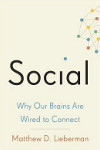
We were not made to be alone, not even for a short while.
Publisher: Crown (Random House)
Pages: 305
Type: Non-Fiction
Age: Adult
ISBN: 978-0-307-88909-6
First Published: 1st January 2013
Date Reviewed: 7th January 2014
Rating: 2.5/5
Looking at various regions of the brain, Lieberman tells the reader how each section revolves around sociability and how we evolved to be social creatures.
Social sports an interesting topic that is unfortunately marred by a lack of reasoning and a lot of bizarre and poorly thought out propositions. On the surface the book presents itself as the antithesis of Susan Cain’s Quiet and will therefore likely attract those readers who enjoyed Cain’s work. However where Cain was mostly objective, Lieberman is incredibly biased.
The book is structured so that different brain regions are examined one after the other with statements about evolution, information about relevant experiments, and short resolutions created by Lieberman, scattered throughout each chapter. The book ends with Lieberman’s most ‘pressing’ resolutions for society in general. It’s not a bad set-up, per se, but it does mean that the book is monotonous and that for the reader who is not intimately aware of the brain regions it will likely be all too easy to become confused by what is what, given the inevitable similarity between acronyms and names that seems apparent when you know little.
Whilst the book begins with promise and the author writes with due attention and care, the content soon devolves into the simple explanation that everything is the way it is because of evolution, and the author’s views of anyone who doesn’t fit the box he has constructed drench the book with a bias that by the end of the work displays more than a hint of intolerance.
There are areas of the book in which it’s usual to find issues in texts, for example there are too many references to the author’s particular country. In this case there is too much Americanisation, which means that some examples of pop culture, used to explain concepts, are likely to be lost on many readers and therefore these readers won’t be able to understand the point being made through them. Sometimes the examples Lieberman chooses are those that are known worldwide, but otherwise the choices are so specific that there may even be some American readers not familiar with them, and due to this it is a particular problem.
The book is incredibly repetitive. Experiments are detailed only to be detailed again a few chapters later, referred to in the chapter after that, and detailed once again further on. Regarding these experiments and researches, Lieberman is inconsistent. He always names the scientists involved but doesn’t always afford the reader the information of who the person is – what field they are in, what university they work for and so forth. Having the names is of course necessary for citation but for the reader having the names without any further information is meaningless.
Looking into the experiments, the cautious reader should note that nowhere in the book is it mentioned that experimenting on animals is considered by some to be immoral. This is the case in other similar works, such as Lynne McTaggart’s The Bond, which was more graphic than Social, but in Lieberman’s book the point is particularly worth noting, not just because of the topic (thinking about others as was the likewise ironic topic of McTaggart’s book) but because of the way Lieberman gives information as to why humans are not experimented on in the same way. For example, consider this extract:
For obvious reasons we do not conduct experiments with humans that involve giving people morphine after they have been rejected, excluded, or cheated on.
The irony here is that this statement appears right after a paragraph about puppies being given morphine after being forcibly separated from their parents.
As an aside, if you find yourself distressed by this story, [about rats having emotional neurons being removed, thereby meaning that they start shunning their young] it probably means your own dACC is intact.
When you consider that you are more likely to be distressed by this story simply because the experiment happened, the author’s statement is artless to say the least.
The downside to studying rodents is that we can’t measure their experiences or even verify that they have them. The upside is that more invasive studies can be conducted to examine how individual septal neurons respond or how surgical removal of the septal area alters behaviour.
In the same way as the above extracts, this is said without any thoughts of wrongdoing or an acknowledge that to many people the ‘upside’ is seen as a downside.
The issue with the experimentation is that everyone knows it takes place and that it is of course going to be included in works involving science, but given the subject of this book and the way it is presented as a work on something that is of general interest, some sort of deliberation or debate (given that very idea of being social and caring for others) ought to have been included.
There is a major focus on autism that isn’t apparent from the book cover or summary that bares commenting on because of Lieberman’s approach. Lieberman, as becomes plain the further you read, is fixated on the idea of the social, of us being social creatures and, especially towards the end of the book, he shows how overtaken he is by this idea to the exclusion of all else. It should come as no surprise then that, when it comes to autism, denigration is the mode of the day. As autism is related to a lack of ‘normal’ social skills, it is easy to see where Lieberman’s issues lie.
The author says that if empathy is the peak of the social mind, autism is sadly one of its low points, showing no positivity whatsoever. Lieberman wonders if when he took drugs he ‘didn’t seem a bit autistic that day’ – does he also say, upon finding his fridge devoid of chocolate, that he knows what it must be like to be a child starving in Africa?
It’s important to note that, strictly speaking, this description is far more accurate than the normally developing child’s… Although the description from the child with autism is more accurate [reviewer’s note: it is completely accurate] it is far less useful. It doesn’t give us the kind of insight we all crave into the psychological drama that unfolded.
This comes after an image of shapes on a page, which is what the autistic child described. There is no drama to unfold, there is no usefulness in the normal child’s description of the shapes bullying each other because that would give you a false idea of what the image shows. What the children questioned do intimate is the possible difference in imagination and storytelling between ‘normal’ children and autistic children.
The denigration of autism is very odd, especially when you consider that a person with autism is as likely as anyone else to be interested in reading this book. And whilst Lieberman may make some good statements that are unfortunate but true, his attitude mars them. It is also interesting to consider that the fact autistic people have ‘problems’ with social skills implies that Lieberman’s theory of the social mind could actually be wrong, for who is to say what is truly normal?
Further denigration is conferred on introverts (whose qualities also beg the question of whether Lieberman’s theory holds any water):
Being smart and motivated, without being able to connect with others in the lab just won’t cut it. I’ve had a couple of students in the lab over the years who never really integrated socially with the rest of the team, and they often struggled. They could leverage their own intelligence and hard work, but they were less able to access the intelligence and expertise sitting in the next office over. From this perspective, social connection is a resource in the same way that intelligence and the Internet are resources. They facilitate getting done what needs doing.
It would not be wrong to say that Lieberman does not understand introverts. It is also apparent why, at least in part, the students referred to in the extract struggled – a lack of support and understanding of your students is going to affect their progress because they are likely to pick up on it.
The assumption that productivity is about smart people working hard on their own has been masking the fact that individual intelligence may only be optimised when it is enhanced through social connections in the group.
This is where we see Social as the antithesis of Quiet. In the latter work, Cain says introverts need their own time and space. But whereas Cain is respectful of extroverts, Lieberman is not respectful of introverts. Furthering this difference, Lieberman states that only those with good social skills should be leaders in the workplace, neglecting to consider the negative impact that this would have if the leaders were not also of good intelligence. He also states that ‘the greatest ideas almost always require teamwork to bring them to fruition’, saving himself by saying ‘almost’ but still showing his lack of research and overall knowledge of the present day that suggests that people can be just as successful working by themselves.
Lieberman suggests a vastly different education system which betrays his age. He says that history classes should teach the whys and the social effects – they do. Perhaps they did not when Lieberman was a boy, but as they do now this section is irrelevant. The author suggests that English lessons should be scrapped in favour of ‘communication classes’. This would be problematic given that such classes are not viable alternatives – language (if we assume he is referring to language rather than literature) is not quite the same as communication – both are indeed about society and communication but there are differences. There is also the fact that the world remains in accordance with, for better or worse, the idea that those who can read and write have power and more opportunities to get ahead in the world.
Lieberman says:
Why would bullying, which typically takes place outside the classroom, affect performance in the classroom?
This is one of the first times where the author’s lack of knowledge really starts to become an issue. To suggest that victims of bullying should just leave their issues at the door displays a complete misunderstanding of what bullying is and how it affects a person. Lieberman somehow does not know that bullying can affect someone’s overall well-being and, furthering that, he should know that bullying isn’t restricted to school corridors and is more often than not just as bad in the classrooms where bullies torment children behind the backs of clueless teachers.
Lieberman suggests cutting back on school lessons that are forgotten so that more time can be spent on the important ones. This is a good idea in theory, but the way Lieberman speaks of it he is in favour of removing the sorts of classes that inspire lifelong interests and passions. Algebra may be boring for many people, but without it would the mathematicians our world needs have been inspired to become mathematicians?
The author is in favour of letting older children learn lessons to then teach them to younger children. A fantastic idea, but how long would it be until the novelty wore off, and would children pay attention to a lesson essentially learned twice when they already find a lesson taught once boring?
It is this lack of knowledge and understanding of children, of people, ironically, that ends the book. Lieberman turns to preaching. The subtext is evident – Lieberman’s way of life, the way his residential area revolves, is superior and ought to be introduced worldwide. He suggests that apartment blocks have socialising areas and appointed people to curate social lives – “Throughout our childhoods and young adulthoods, our social lives are curated by others. Couldn’t we find a way to replicate that in our adult communities as well? Why don’t we have someone on each apartment floor designated to create social activities?” The author does not seem to think that maybe having had their lives curated as children, most people would prefer to control their adult social lives themselves. He does not account for those who just want to live their lives, who don’t want to be social all the time – which, it could be argued, accounts for most people. He suggests closing streets at the weekends for social events without thinking about how this would disrupt traffic, how it would result in noise, how many people prefer to just relax at home.
The author even takes on the individuals who run companies, complaining at the way they focus their efforts ‘incorrectly’. He suggests that most employees would take recognition over more money, which doesn’t sound so bad – until he ruins the sentiment entirely by saying that the profits from the savings the company would make would therefore be able to enter the company coffers and so the company would benefit. Recognition is a ‘free’ and ‘infinite’ resource – which, when used in place of pay rises, would ultimately make a boss a measly employer.
Lieberman does have some interesting things to say, for example that botox disabling a person’s ability to mimic expressions means that the person will be worse at recognising emotions in others. He says that “society values our self-control more than it values our quality of life”, a very sobering thought, and he in no way suggests that the book is all his own work, always attributing research to those responsible. But at the end of the day it is hard to believe that Lieberman didn’t decide to live away from society for several years to write this book, losing touch with everyone in the process.
Ill-informed, rose-tinted, repetitive, and lacking in tact, Social may have a few ideas and statements to astound, but by and large it does not come anywhere near the convincing argument, of humanity being social, that it declares.
I received this book for review from Random House.
Related Books


