




V H Leslie – Bodies Of Water
Posted 16th May 2016
Category: Reviews Genres: 2010s, Historical, LGBT, Paranormal, Science, Social
2 Comments
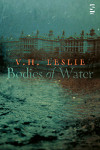
Not just a siren’s call.
Publisher: Salt
Pages: 130
Type: Fiction
Age: Adult
ISBN: 978-1-784-63071-3
First Published: 15th May 2016
Date Reviewed: 3rd May 2016
Rating: 4/5
Following a sad breakup, Kirsten moves into an apartment building situated beside the Thames, which used to be a wing of a Victorian hospital. Drawn by the location, she starts to unpack but is relieved to find she’s not the sole resident of the renovated block. Then there’s Evelyn, rescuer of fallen women in the late 1800s, who has been sent by her father to a hospital for the Water Cure. She’s haunted by the loss in her life of her former lover, a woman she rescued, and hopeful that her stay can help her.
Bodies Of Water is a paranormal, gothic, novella that looks at the way water has had an effect on lives through the decades. It’s a dual plotline work that doesn’t go the way of many others, making it more unique (there are no revelations of connections between the characters).
Leslie has compiled a few concepts and it works very well. The book studies the treatment of women in the Victorian times, contrasting it slightly with the present day. The author works from the diagnosis of hysteria, that Victorian concept of a particularly feminine illness often associated with what we’d now consider the repressed sexuality of women. Leslie never says what caused Evelyn’s hysteria directly – in a way it’s up to the reader to decide – but this works in the book’s favour, allowing for more thought as much as it ushers you to concentrate on the bigger picture. Because whilst Evelyn seems fine, her stay at the hospital speaks of the wider issue.
It’s the basis behind Evelyn’s calling that Leslie wants you to focus on; Evelyn works for the Rescue Society, going out into the streets to aid prostitutes, hoping to save them from the abuse many suffer, from sexually transmitted infections. She likes the idea of bringing the women to a better, higher life, though through the chapters we see her realising that this cannot always happen – in the case of Evelyn’s lover, Milly, for example, Evelyn can’t get away from the fact she’s got Milly a set of rooms but no society to mix in, and that their relationship may be about love on her own side, but Milly may see it as just more of the same.
It’s Milly’s death that gives the study its backbone; Milly is one of many women who have taken their lives, fallen into the Thames, so that whilst Kirsten, who comes to see the paranormal in her leaky ceiling and in the drenched woman on the river bank, is more a bystander, learning about what happened at the scene abstractly, Evelyn’s direct relationship with the river allows a more poignant mode of thought. And as the Victorian character comes to understand the finer details of the hospital and suffers a setback, so her thoughts take quite a shape:
As for lust, it seemed to be the curse of every man. The Rescue Society would have no fallen women to rescue if men could only control what was between their legs. Evelyn had read in her father’s medical journals that hysterectomies and clitoridectomies were often performed to cure women of the very condition Dr Porter had diagnosed Evelyn with. They were so ready with the scalpel, these medical men, to cut and slice, yet no one had thought that castration was the logical solution to venereal disease.
A running point through the book is this plight of women to be heard and to gain freedom; Virginia Woolf’s thought of a room of one’s own is given space, her demise compared to that of the many fallen women ending their lives in the river. There are echoes of Kate Chopin’s The Awakening, too. Kirsten’s introduction to the relative reality of what’s going on is in the form of drawings of bodies being pulled out, doctor’s knives at the ready. Because how else were women to be understood?
Leslie’s study is a good one, just a little short. There is some confusion in the story that would not be there if the plot had been teased out more, given more time between revelations. Everything happens a bit too quickly and questions are left unanswered. In terms of the text there are patches of proofreading errors that are noticeable and add to the confusion on occasion.
But all in all Bodies Of Water is a solid article. It’s well-researched and it puts a different spin on a well-used format. It’s got enough of the history that intrigues many people without treading the same path. Recommended.
I received this book for review from the publisher.
Related Books
None yet
Alex Pheby – Playthings
Posted 9th May 2016
Category: Reviews Genres: 2010s, Historical, Psychological, Social
2 Comments
Nothing is as it seems/everything is as it seems.
Publisher: Galley Beggar Press
Pages: 235
Type: Fiction
Age: Adult
ISBN: 978-1-910-29647-9
First Published: 5th November 2015
Date Reviewed: 22nd April 2016
Rating: 4/5
Judge Daniel Paul Schreber can’t find his wife. She’s gone, and the cook doesn’t seem worried enough. On running outside, he sees his daughter returning home; she urges him to go back in, but he doesn’t, and when others find him they say they’ll take him to his Court. When he wakes up he’s in a sanatorium.
Playthings is a fiction book based on part of the life of a 19th to early 20th century German judge, diagnosed with paranoia Schizophrenia, who wrote a memoir in the hope it would allow him to leave the sanatorium he was living in. It’s a rather unique book that gives all its time to Schreber and what was going on in his mind, based on reports and the memoir, and is quite something.
Pheby throws you into the story without explaining anything, which has the effect of leaving you as confused as his character about what is going on. It’s a great beginning that enables the author to demonstrate Schizophrenia without description, without having to say anything about it, the ultimate of the concept of show rather than tell. And it carries on throughout, meaning that on one hand you understand what Schreber is going through – you’re in his head, via third person, after all – whilst simultaneously questioning everything. It’s the unreliable narrative at its extreme.
So you feel for this man from the get go because whilst you may not understand him at his core, you’ve been with him from the start and he is what you know. You sympathise with his confusion. There is seemingly no malice in him and so you’re comfortable in your discomfort and want him to prevail. That’s important to note, I think – you’ll feel at a loss at the start but you gradually get used to it and any hope you may have had that Pheby would give you a clear answer at some point fades away because you just don’t need it.
Unfortunately what the thrown-into-the-story factor also means is that you’ve no context in which to ‘get’ what’s going on. This book is Pheby’s fictional attempt to continue Schreber’s memoir, to give life to the times of illness that Schreber did not write about; the story reads very much as a continuation and so whilst you may be happy with that, you are just as likely to feel you lack the context, history, information, to truly appreciate it. There is information enough about Schreber online, and likely if you’re interested in the book you’ll have a basic idea anyway, but it does mean you can’t expect to pick this book up at random. It requires research in a way fiction often does not.
It’s worth doing your research. Not only does Pheby look deeply into the way mental illness was viewed and treated at the turn of the century, which is reason enough to read it, he looks at Schizophrenia itself meaning that albeit historical, there is a lot to learn about the illness from this book. He looks into the progression, at where Schreber’s Schizophrenia may have begun (there are a few opinions on this; Pheby’s opinion is of events in Schreber’s childhood and he looks to Schreber’s family’s dynamics for evidence, which are of course fictionalised somewhat here but the factual base is there), at how it affects a person, and by the excellently crafted confusion he includes, he shows how reality and fantasy can be mixed up.
In this book repetition is intentional. If you think you’ve already read that line, heard that simile, you have – one of the features of Schreber’s illness is that he will think he is somewhere and then later think he’s there again and so on. There are conflicts in this book that would be called devices in other books and that simply isn’t the case here – here it’s just truth and illness. Schreber goes on for a very long time about his wife, showing us in turn – once we’ve realised how much time has or has not passed – that his perception of time is rudimentary at best. And so yours will be too – are we on a memory of last week or moments ago or are we in the present? You must work it out.
That isn’t to say you have to be perfect at identifying everything; on this note each chapter starts with a sentence or two which details what the chapter is about – this helps you figure out your impression of events but doesn’t cure you of confusion, leaving out enough that you can draw a line between fantasy and reality but not to be let off the hook. Your job as the reader is to be in Schreber’s head. The sentences have the effect of making the book seem a bit theatrical in the literal sense and bring an additional atmosphere to it.
“There are things I do not allow myself to think of.”
There is a lot of tragedy in this book. Schreber’s father had a few accidents and as he had been very strict and into routine for his children – he’s rather akin to The Sound Of Music’s Captain von Trapp – this has a profound effect on the children and the working of the household in general. Schreber’s illness was characterised by the feeling that he must be good for God, and here, in this book, at least, we witness the emergence of one of the factors of this complete willingness to please – Schreber’s belief that God was turning him into a woman. It may not be obvious from the text of the novel, but this was not a transgender issue, rather an anxiety, a paranoia about what God wanted from him. Whilst at first confused, the character later takes comfort in pretending to be his mother, in assuming her role. He comes to believe he needs to be a woman to do what God wants.
Of Schreber’s father’s authoritarian manner of parenting, some people have used the term ‘psychological fascism’ to describe the way Schreber thinks – to describe the thoughts he has that you come to understand are the result of his father’s demeanour. It fits. There is no reasoning in himself; Schreber is his own dictator in many ways.
Of tragedy, and in terms of the above quotation, however, perhaps the most effecting part of the book occurs in the penultimate pages. We see the ultimate reason for Schreber and his wife’s adoption of a child, and of a girl at that, in a time when heirs were boys. You know the basics for a while but Pheby goes right to the heart of the matter, speaking plainly of multiple miscarriages and two stillbirths that caused the couple a lot of pain; in particular we see Schreber’s pain which given his illness is honest and could be considered graphic – not in a dirty way but in the way devastation can cause things that are understandable but are things we don’t like to talk about. If everything else is somewhere on the scale of confusion, then this episode is clear, transparent.
He sees himself shouting like a God to his stillborn children, animating them, but them refusing to move.
Playthings is a fantastic book. It boasts a particular individuality that’s not just in its subject matter but in its handling. It’s well written, clear in its confusion; it’s one you won’t forget any time soon. You do need to do your research, be awake so that you catch every detail, and willing to start and end in the midst of a longer tale, but make time for some preliminary reading and get to reading this book. You’ll know a lot more about many things by the time you’ve finished and there are a variety of reasons to enjoy it.
I received this book at the Wellcome Book Prize blogger’s brunch.
Related Books
None yet
Nicholas Royle and David Gledhill – In Camera
Posted 6th May 2016
Category: Reviews Genres: 2010s, Art, Commentary, Historical, Political
Comments Off on Nicholas Royle and David Gledhill – In Camera
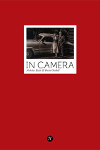
Watched, photographed, painted.
Publisher: Negative Press
Pages: 40
Type: Fiction
Age: Adult
ISBN: 978-0-957-38283-1
First Published: 10th May 2016
Date Reviewed: 23rd April 2016
Rating: 4.5/5
Taken by her father’s instruction that she may hold his camera but never click the shutter, an East German girl living at the time of the Cold War cannot quite ignore her inclination to disobey.
In Camera is a short-story-length historical art book that pairs fiction with oil paintings. Gledhill found a photo album from the time of the Cold War, decided to create oil paintings from it, and asked Royle to compose fiction around his work. It is very much a concept book and a lovely one.
The story is told in a series of vignettes, different episodes in the girl’s life, moving in a linear fashion except for a few times when we move to a more modern time, perhaps this present day, for added context and to tie up the various tales. There is only one name given in this book – the father’s – everyone else is afforded but an initial. This helps to keep each vignette short and nicely presented – most scenes happen in the space of one page and there is a painting to accompany each. It also suits the time period, the initials conforming to the idea of filing, tracking, shorthand, secret synonyms.
It’s all about surveillance in the Cold War, but it’s subtle. This is a book wherein there is a lot packed into a mere handful of pages, much to learn and discover lying under the surface. Again, it suits. The camera at the centre of the story means that the girl is effectively taking records of things that we can assume could be used as evidence; it’s an innocent pastime with an uncanny significance. Spying is the name of the day – presuming the father knows about the photography, which we can expect as she appears young and doesn’t understand that there’s a film inside to show that someone’s been using the camera, he doesn’t so much as mention it – one could say the borrowing is condoned.
Everything layered is rounded off by the simple day-to-day of the girl’s life, her games with her brother and her life as an adult wherein the camera is in full use. We hear about the modern efforts to find out what was noted about people, gaining knowledge – the reader gaining knowledge – from another perspective.
The only thing not in the book’s favour is the size of the prints of the paintings; they are often very small and because of Gledhill’s photographic-like talent, end up looking more like actual photographs than paintings, which makes sense in a way but does negatively impact the point of them. This said, on the size of the paintings the publisher says something worth baring in mind: when it came to designing the book I wanted to make it subversive and circular, for the paintings to appear almost as photographs again, to add to the idea that things are not often as they seem.
In Camera is a wonderfully imagined piece of writing, and size aside, the paintings are lovely. If you like the idea of combining art and literature, you’ll like this book. If you like books with many layers, subtle stories that appear simple but have much more behind them, you’ll like this book. A lot.
I received this book for review from the publisher.
Edited later in the day to add the note about the publisher’s design.
Related Books

Sarah Ladipo Manyika – Like A Mule Bringing Ice Cream To The Sun
Posted 30th March 2016
Category: Reviews Genres: 2010s, Books About Books, Spiritual
3 Comments

Slow and steady wins the race, but what if you’ve got a purposefully fast car?
Publisher: Cassava Republic Press
Pages: 178
Type: Fiction
Age: Adult
ISBN: 978-1-911-11504-5
First Published: 1st April 2016
Date Reviewed: 14th March 2015
Rating: 4.5/5
Morayo is a book-loving English Literature Professor. Originally from Nigeria, her life has taken her around the world before she finds her place in San Francisco – she thinks often of returning to Africa but feels it wouldn’t be right. At 75 years old she’s retired and loves spending time reading, darting around in her Porche, visiting friends at their coffee shops, and walking about the city. But recently she’s had letters from the DMV about incidents she thinks are minor, and on the same day she gets another of the letters calling her for a test, she falls over.
Like A Mule Bringing Ice Cream To The Sun is a beautifully written novella about the changes that come with age and the process towards acceptance when things become difficult. It looks mainly at Morayo but her acquaintances and the strangers she meets during the book are also given time.
It’s a lovely work. In a way similar to Emma Healey’s approach towards the later years in Elizabeth Is Missing, Manyika deals with her subject gently but effectively. She presents Morayo as someone who may or may not be losing her memory – you’re in the same boat as the character herself as to whether you know if it’s happening or not – and someone who has yet to realise that perhaps she needs more help. A very independent person, Morayo is confused about the sudden need for a wheelchair, for example, and does not adhere to the idea that her car must be sold, at least she’d like one more ride first. We have more ‘confusion’ to deal with upon meeting characters like Dawud, a man who seems to patronise Morayo, this older woman who will look through his flowers, rarely buying though she ‘was one of those that preferred the organic place down the street’.
To a slightly lesser degree than independence is included a study of Morayo’s sexuality. She may be old but she looks at pleasure with fondness, remembering moments from her life, relationships, and writing about her feelings. Rather than the stereotype of the older angry neighbour rapping on doors, Morayo listens to the rhythmic knocks on the walls with interest. Age and sexuality is viewed neutrally, Manyika simply saying that it happens rather than discussing it, reminding us it’s normal and that sexual pleasure is not confined to the younger years.
Brought into the book by both Morayo’s presence and the inclusion of another character – an African American who visits the care home to see his wife – there is consideration of race, of living as a black person. Morayo muses on the way a person says she looks awesome in her wrappa, in her multi-coloured clothes, and that whilst it’s a nice compliment, she’d just blend into the crowd in Nigeria. Reggie, the man who visits his wife, contemplates his being married to a white woman, thinking – aside from the way she is no longer herself and that he isn’t keen on the way the staff dole her up with cosmetics when she never used so much in her competent days – about the way her children disowned her for marrying a black man. He thinks of the way he had to stop seeing a girl because her father called him a coolie.
In addition to the subjects at hand we have other stories – the story of Sunshine, who Morayo describes as Chinese but seems to be Indian (the lack of confirmation isn’t an oversight), and the conflict between housekeeping and motherhood, and the desire to work. We have the story of Dawud and his sister, Amirah.
It’s a good book. And it’s a good book about good books. Morayo’s love for reading comes into play often and Manyika knows that going into detail is best in this case:
As you will see, I no longer organize my books alphabetically, or arrange them by color of spine, which was what I used to do. Now the books are arranged according to which characters I believe ought to be talking to each other. That’s why Heart of Darkness is next to Le Regard du Roi and Wide Saragossa Sea sits directly above Jane Eyre. The latter used to sit next to each other but then I thought it best to redress the old colonial imbalance and give Rhys the upper hand – upper shelf.
There are several of those moments. There’s a sad one too, one that book lovers will sympathise with, that demonstrates the vast difference between readers and non-readers.
If there’s any downside to the book it’s that it’s perhaps too short; whilst the ending as far as Morayo is concerned is pointedly ambiguous – it suggests something bitter-sweet without confirming it – we don’t find out what happens to the other characters.
Like A Mule Bringing Ice Cream To The Sun is a novella to look out for. The content, the approach to every situation, the writing, make reading it an afternoon very well spent.
I received this book for review from the FMCM Associates.
Related Books


Chigozie Obioma – The Fishermen
Posted 9th March 2016
Category: Reviews Genres: 2010s, Commentary, Domestic, Political, Psychological, Social
2 Comments

Taking ‘do as I say’ to the extreme.
Publisher: One (Pushkin Press)
Pages: 293
Type: Fiction
Age: Adult
ISBN: 978-0-957-54885-5
First Published: 11th February 2015 (in translation); 26th February 2015
Date Reviewed: 3rd March 2016
Rating: 3.5/5
Together with his four elder brothers, Ben starts going to the river to fish, secretly, because the town views the previously-worshipped waters with suspicion. The boys are caught by a neighbour, whipped by their father, but the real trouble with creeping out alone is yet to come. One day the madman Abulu, considered religious by some, happens upon the brothers and tells them that one will kill another.
The Fishermen is a book that incorporates folklore, old customs, and 1990s Nigerian social and religious culture into its tale of tragedy. A literary venture, it takes its time on one particular element, bolstered by a background of politics, fundamental Christianity, and the kind of child discipline we now call too much.
Dealing with the writing style first because it’s the first thing to make its mark, Obioma favours a detailed, sometimes overly-wordy, almost studious style that nevertheless has the power to wow on occasion. He likes ‘big’ words, beautiful sentences, and his young narrator, Ben, is just the right side of well-spoken rather than appearing too old for his years. Obioma narrates in a way similar to the spoken narration you often find in Victorian adaptations, films – that slow, wistful narration most common to women. There’s an oral tradition feel to it, poetic, storyteller. It could certainly be called too much – it’s one of those styles you’ll likely either love or hate. Obioma is entirely unapologetic; he wants a well-written book, old fashioned – understandably more 90s than nowadays – and he will have one. (You do have to remember the setting when considering the style, the time and the place.)
It’s not completely well-written but whether that’s down to Obioma or the editing process is hard to say. Certainly the myriad uses of ‘in’ instead of ‘on’, of ‘on’ instead of ‘at’ and so on, are at odds with the rest of the text, suggesting an oversight or perhaps a slight discord between our literature professor and the publisher’s editors. Whatever the reason, the constant misuse is distracting and means keeping your mind on the story is difficult.
There is a disconnect of sorts between Ben and the reader; where Obioma is so focused on the way he writes his tale – the words, the genres, the background – Ben, his brothers and other family are not so detailed. They are detailed – they’re not one-dimensional at all – but there’s no pressing reason, no feeling of the need to care, which is a problem when the story involves a lot of tragedy. And it’s hard to get to grips with the family – the way the father metes out punishment, the mother quick to manipulate and throw her children under the proverbial bus, are perhaps more difficult to read than the author hoped.
Not much goes on in the book – this sounds too ironic to be true so I’ll explain: the book is a series of tragic events with some politics in the background, but not much beyond that. This isn’t a failing in itself, many books are similar, it just means that The Fishermen is more about the sum than the parts. The book is not as interesting to read as it is to contemplate after the fact, when you’re able to put everything together and see that Obioma’s goal has been to provide an overall meaning, a message, even.
Superstition or prophecy? Obioma presents the possibility of both and asks you to form your own conclusion. What was it that made things happen as they did and can and should religious ideas take precedent? Obioma looks at the psychological factors ruling his characters’ choices, the way one thing said by a person considered mad has a knock-on effect. And as much as the characters are Christian, the author shows that mythology and old ways can still creep into life, that we can move on to new ideas but those old ones will remain ingrained for a time.
A note on one of the tragedies – this book deals with under-age crime in a way that may make you uncomfortable. This is actually a reason to read it rather than not because it opens you to the situation and says more by its inclusion than Obioma could say without it – more than he could say just in words. It’s viewed through a similar lens as the rest of the book: it happens, whether it’s right or wrong is irrelevant here.
Overall, then, The Fishermen is a good book, but doesn’t quite keep the promise of the first pages. It does make for some interesting contemplation but the contemplation is fairly short-lived. Take it as a look at 90s Nigeria, its politics and its culture and society and you’ll be best off.
Related Books
None yet


