




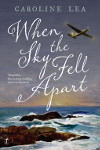
Caroline Lea – When The Sky Fell Apart
Posted 8th March 2017
Category: Reviews Genres: 2010s, Historical, Political, Social
3 Comments
And the ground and the people too.
Publisher: Text Publishing
Pages: 363
Type: Fiction
Age: Adult
ISBN: 978-1-911-23107-3
First Published: 24th February 2017
Date Reviewed: 8th March 2017
Rating: 4.5/5
When Britain leaves the Channel Islands to fend for themselves and the Nazis order surrender or else, the people of Jersey must make their decisions – evacuate or remain? Maurice feels he has no choice at this time – his wife is too ill to travel. Edith, a healer, feels the need to stay in her homeland and tend to those who require help. Claudine has no choice – her mother will not leave. Dr Carter, an Englishman, should leave but feels similarly to Edith. As the Nazis swarm in those residents who chose to remain try to make the best of the situation whilst staying low and staying safe, but, as they know from news of France, it will be nigh on impossible.
When The Sky Fell Apart is an extremely harrowing, brutal tale of Nazi occupation, a book that offers a few laughs to keep you going but stays true to its (assumed) objective of showing just how bad the war was in places not often considered. It’s a book that is impossible to say you enjoyed but is important.
On that ‘assumed’ objective it is best to comment further – whilst this is fiction, you can see Lea’s mission throughout. This book is a very, very, well crafted, structured, tale that shows what life was like. If The Guernsey Literary And Potato Peel Pie Society showed the aftermath of life in Guernsey, then When The Sky Fell Apart looks at the occupation – yes, a different island but similar location – at the time. Indeed if you’re at all interested in the effects of World War II on the Channel Islands, you should look at both books as each provide something different.
It’s important to remember the objective when considering the elements of writing Lea has included. This book uses many devices, in particular one near the end that is very frustrating because although Lea has provided the necessary background to allude to the possibility that the character would do such a thing – to use a vague example – you want it to be different. It’s a case that in real life it may or may not have happened but Lea has chosen the possibility that it would in order to take her story where she wants it to be. The characters are manipulated but with good reason, and it’s never a sweeping change, never not believable, just frustrating.
Of this particular plot point, the good reason is that Lea wants to demonstrate just how far people might go to save themselves and implicate others. She puts in place a couple whose lives have previously literally been saved by two other characters – those saved do not have any qualms about gaining information and harming those who saved them. There is also an element of straight out hatred.
Lea never holds back on the horrors of war, delving into it enough that it’s traumatic. There are, as said, a few laughs – very much laugh out loud, in fact – that remind you of the daily life the people were still living. They aren’t quite enough to make you feel comfortable again but they do help character development – almost all Lea’s characters feel very real. The focus on this little group of people means that you may well forget that they are living on a populated island – it’s easy to picture an almost barren land (aside from the effects of occupation) – which is unfortunate but not necessarily a drawback – to focus on a larger group or the population in general would have just diluted the horrors, made individuals into numbers, an element of war that Lea comments on.
The book does not follow the path you may have expected. It remains horrific to the end – given the subject matter it’s worth saying that this book does not follow any sort of positive outcome. We all know the eventual outcome of the war and so Lea sticks firmly to the events during.
The author stays objective when detailing troops; the horrors are numerous but like authors before her – Irène Némirovsky comes to mind on this point – she includes good people, or, more specifically one person to demonstrate, who get caught up in it. In this case there is a focus on disability among the ranks.
The text itself is solid. The book is written in the third person and whilst there are narrative sections that use very modern wording, the dialogue is authentic – instead of being jarring, the book simply reminds you that it’s historical fiction. There are times when things are repeated unnecessarily – the author’s choice of metaphors in particular – that are noticeable and there are a few times when things are explained that aren’t needed, but these don’t impact the story enough to change your overall experience.
When The Sky Fell Apart is exceptional. Its lasting images, in particular, may well haunt you for a number of days. It’s one of those books that is difficult but nevertheless important. Do not go into this when you are needing to escape, don’t read it when you’re down. This book should be approached with an attitude to study, learning, rather than any sort of literary enjoyment.
But you should most definitely read it.
I received this book for review.
Related Books

Extract From Julia Chapman’s Date With Death
Posted 6th March 2017
Category: Miscellaneous Genres: N/A
1 Comment

I’ve been pretty interested in this book; in light of my recent slow reading I’m posting an extract before/instead of a review.
Julia Chapman is a pseudonym for the writer Julia Stagg and Date With Death is out on 9th March. It’s the first novel in a series and published by Pan Macmillan. This is the prologue:
Mist. Fog. Or even brume. Dense cloud lapping at the muted glow of the station lamp; twin tracks emerging suddenly from the murk, the edge of the platform softening into nothing. It was too far inland to be a haar or a fret. But however it was labelled, it made the dark, early-morning hour redolent of death.
Richard Hargreaves, alone in this cold, shadowy world, stamped his feet, the sound smothered by the dampening shroud, and lamented the paucity of words to describe this recurrent feature of autumn in the Dales. Unlike the Inuit in the frozen north with their wealth of terminology for snow, the locals here had very few ways of representing these dark, damp, drizzly days.
Fog, then. It was too thick for mist, visibility almost zero, and gave no hint of being burned off, should the sun ever rise above the hills to penetrate the low-lying vapour mass. He pulled his scarf tighter against his chilled neck, thrust his hands in the pockets of his overcoat and smiled into the gloom.
Last day of the week. Two days without having to get up to catch the six-thirty train. And this evening with her. There was a lot to look forward to, despite the dreary weather.
He had no idea how wrong he was.
To his right, the flare of an approaching light bled into the blanket of grey. Richard Hargreaves, for the last time in his life, hunched his shoulders, shoved his hands further in his pockets, and stepped towards the edge of the platform.
When the blow struck him in the back, he had no means of defence. No means of stopping himself falling.
The press release looks to fans of Alexander McCall Smith, Robert Galbraith, and Midsomer Murders. Author Cath Staincliffe describes it as ‘A classic whodunit set in the spectacular landscape of the Yorkshire Dales, written with affection for the area and its people’. If you like the sound of it and would like to know more, there will be further extracts and other posts this week:

Do you enjoy reading ‘whodunits’?
Evie Wyld – All The Birds, Singing
Posted 3rd March 2017
Category: Reviews Genres: 2010s, Angst, Mystery
2 Comments

As the crow flies.
Publisher: Vintage (Random House)
Pages: 229
Type: Fiction
Age: Adult
ISBN: 978-0-099-57237-4
First Published: 20th June 2013
Date Reviewed: 30th January 2017
Rating: 2.5/5
Jake (a woman) lives on a sheep farm. It’s a fair life but she’s always on tenterhooks, waiting for what she believes is the inevitable appearance of her abusive ex. In her time she’s journeyed far to get away from him and the life that had become sordid. And most recently she’s had more reason to worry – someone or something is killing her sheep.
This is a difficult book. Not in the literary or harrowing ways but in the way it’s been written and structured. All The Birds, Singing is the story of Jake’s life up to the present point but the events are all jumbled and it’s not a case of a chapter per event; one minute you’re reading about farmer Don and stranger Lloyd, the next Karen, who seems to have been/is a friend, then Greg, who soon falls from the narrative without a trace. And because it’s not just about the people – I’ve used names to make the explanation easier but there are various places involved, too, that often sound the same – it’s a good while into each chapter until you’re blessed with the answer as to what and when you’re reading about. The chapters are not differentiated – there are no dates or times and the writing is the same.
This means you end up spending a lot of time trying to ground yourself, time that should be spent understanding what you’re reading and gleaning answers. The plot itself is incredibly vague to the point that it surpasses all notions of ‘clever’ to become too much. This means there’s a great distance between reader and book. It makes it hard to care about what’s going on. One question is answered but in terms of the book it’s very minor; it may have been important to Wyld but it’s not something that occurs to you to think about until later on because there are other things that have been going on for the entire time that you’d like to know about.
Where the confusion and vagueness works is in the way Wyld doesn’t specify Jake’s present day location, instead leaving clues via references to the flora and fauna in perhaps the most dedicated example of ‘show’ yet. It likely won’t be vague to readers familiar with the place but many will likely admire the way it’s eked out.
There’s a nice atmosphere to the nicer sections of All The Birds, Singing, but it’s hard to recommend.
Related Books
None yet.
February 2017 Reading Round-Up
Posted 1st March 2017
Category: Round-Ups Genres: N/A
3 Comments
In terms of time, February has been better. I struggled at one point with blogging and reading but all considered I managed to get a fair number of books read. As much as it’s been raining recently, there was one day when I sat outside in a t-shirt. Our overall good weather and lesser colder temperatures are still here.
All books are works of fiction.
The Books
Caroline Lea: When The Sky Fell Apart – A group of residents live through the Nazi occupation of Jersey. A great, if harrowing, book.

Charlotte Perkins Gilman: Herland – A trio of exploring gentlemen discover a land of women and decide to journey there to see how primeval it must be. A very good commentary of early 1900s society.
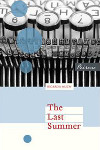
Ricarda Huch: The Last Summer – Lyu decides to aid the plotters and assassinate the governor who has closed the university. Great early 1900s novella.

Tom Connolly: Men Like Air – Three British and one American man in New York, living their lives, getting the flu, ending strange relationships, and working in art galleries. Difficult to summarise, I’ve opted to show the comedy element; this is a fab book.
I really appreciated Herland. I think ‘love’ is a strong word because there are some problems with it – in a modern context at least it can be a bit uncomfortable but I found it to be well structured and created, the use of extremes in the trio of male visitors and the relative balancing Perkins Gilman aimed for in making the more moderate character her narrator, a good set of things. Due in part to the sudden ending (one of those ‘where is the next page?’ situations) I moved straight on to the sequel, With Her In Ourland which can be found at Feedbooks. This sequel seems to be less read and studied but with good reason, I believe: as much as you might want to complete the story, it’s more a set of thoughts than a novel. I very much enjoyed the Huch and the Connolly, too. The Huch was a nice quick read that boosted my feeling of accomplishment as well as added to my goal of reading older books. The Connolly was rather clever and contained so much. The Lea was fantastic, too, just a few steps behind the Connelly for me.
Quotation Report
None this time.
Spring is certainly on its way.
What book did you most enjoy in February?
Ricarda Huch – The Last Summer
Posted 27th February 2017
Category: Reviews Genres: 1910s, Domestic, Thriller, Translation
2 Comments
School’s not just out for summer.
Publisher: Peirene Press
Pages: 115
Type: Fiction
Age: Adult
ISBN: 978-1-908-67034-2
First Published: 1910; 2017 in English
Date Reviewed: 25th February 2017
Rating: 4/5
Original language: German
Original title: Der Letzte Sommer (The Last Summer)
Translated by: Jamie Bulloch
Russia: the students of the university are causing the governor hassle (they’re protesting) and he closes the place down. When he goes on holiday, a plot to assassinate him comes together and Lyu decides to help; under the pretence of security, Lyu joins the governor’s family where he hopes to carry out the assassination. It may prove difficult – the family rather like him, one daughter in particular, and where they assign good work to him he ends up procrastinating.
The Last Summer is a short and somewhat comedic epistolary thriller. Originally published in German in 1910, whilst the time period may have moved on, the sometimes light-hearted (yes, despite the subject) spirit of the book remains as fresh as though it were a new piece of writing.
This is perhaps aided by the translation. Translated into English for the first time, Huch’s book has been well rendered by Jamie Bulloch. The translator of a good few previous Peirene novellas, Bulloch’s language decisions have ensured the text remains steeped in its now historical context whilst being very readable for us today.
The letters – the detailing and wording, the characterisation – mean that you don’t just get to know the people writing, you get to know the recipients too. This is a book of correspondence purposefully lacking in written responses – the characters retort to replies you haven’t been privy to but whilst this may at the outset seem a setback it means the narrative is brisk without any losses. (And it’s interesting that on the whole it seems the receipts do a lot more thinking than our writers, showing the dynamics of the family.)
Because there is a lot of extra detailing beyond the crime at hand – of the good kind. The comedy comes in the form of the everyday quarrelling between the siblings, the responses to the responses of the aunt you don’t get to meet who seems to have suggested trouble afoot for the lovestruck niece who just wrote to her, and even, at one point, the failure of Lyu to come up with a believable reason for a threatening letter to have got past all the security. The comedy fits the time – if you like the classics and other well-known books about everyday life in this period, you’ll enjoy this book. The shortness means you may not get as much out of it but it’s a good couple of hours company.
As for the crime, there is enough if that’s the genre you’re looking for – the ending is rather super. It might often seem as though it’s more a novella of the family but Huch doesn’t forget her premise.
Seeming far from its age, The Last Summer is a novella to look out for. Do the thinking the characters should be.
I received this book for review.
Related Books
None yet.


