





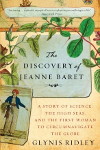
Harper Lee – To Kill A Mockingbird
Posted 31st March 2017
Category: Reviews Genres: 1960s, Commentary, Drama, Law, Political, Social, Spiritual
4 Comments
And question society.
Publisher: Arrow Books (Random House)
Pages: 307
Type: Fiction
Age: Adult
ISBN: 978-1-784-75263-7
First Published: 11th July 1960
Date Reviewed: 30th March 2017
Rating: 4.5/5
It’s the 1930s and Scout and Jem live with their father, Atticus, a lawyer in a small town in Alabama. Scout is just starting school and finding her way around things she doesn’t understand including subjects Jem seems to know a lot about. As she grows a little older she understands more about her father’s work and when Atticus is employed to defend a black man against a charge of rape, the family will have to deal with people heavily prejudiced against black people and the whites who support them, and Scout will come to learn about the variety of people in a country starting to move towards equality.
To Kill A Mockingbird is a semi-autobiographical novel inspired by Lee’s experience in a similar role to Scout, the child of a man in a similar role to Atticus. It’s a rather quiet book that makes its points with aplomb.
There are many fine elements in this book – the look at race, of course, but also the use of location in a way separate from that, the characterisation, and the general feel of it. It’s a book that if published today would likely be called literary fiction and it’s one that benefits from reading it considering a few viewpoints. How might it have been received if published in the day it was written? How would it have been received in its day? And what value does it have for us today? (That last one can be partly found in the answers to the other two questions.)
The plot meanders between strong, hard-to-put down chapters and easygoing scenes that in another book might make you wonder how much it was worth it – this is where the characterisation comes in. Lee’s strength in developing characters means that you want to keep reading and has that wonderful effect of making the characters feel real. This is of course likely due to the autobiographical element but beyond that it’s just pure talent; no matter how major or minor a character they are given what’s needed to make the book read as pure reality. Scout doesn’t understand much of what she hears, but Lee provides enough for the reader to comprehend it all. What’s lovely about Lee’s choice of narrator and narrative style is that you still get a complete picture of the other characters. There’s quite a bit of humour and a lot of love.
Lee’s look at racism and the burgeoning idea of equality is interesting. The book revolves around it but Lee never lets it take over the text itself – there’s the sense that she wants to make her point but in a way that means you get a positive experience alongside the bad, a good experience of the south of the time in both general life and the way many people supported black American rights, and in order to stay true to her narrator. The impact it may have today may not be as much as it would have been – this is where you need to consider the context in which it was written because as a look at what had been happening earlier in her life, the book is very powerful.
Lee incorporates various social circles into the story, mixing them together. Not too much – the book stays true to reality – but in ways that further support what she’s trying to do, such as Scout and brother Jem sitting with the reverend of the black church when in the court room – for Scout she’s sitting with friends, for the author it’s an extra show of support for the defence. (On that ‘not so much’ I’m thinking of the lack of time given to Tom Robinson directly – he says very little in the book, the focus there is more about how the white, privileged, people are helping him, which of course puts across the idea of tolerance in general and the way in which things had to change.) Lee’s fictional community includes people of many backgrounds and by the end a number of economic and social issues have been covered. Most of note, perhaps, is the story the children construct in regards to Boo Radley and the ultimate revelation of who he is, a well-crafted few segments that display childhood thoughts and kindness with a lot of heart.
The overall quality of the book is evident from early on, but it’s one that’s good to mull over because the more you consider it, the more you see.
I’m keeping this short – there’s only so long one can carry on in review form about a book that has been studied for years, especially when it’s their first read – but suffice to say To Kill A Mockingbird is a very good book.
Related Books
None yet.
Restarting A Book You Were Enjoying
Posted 29th March 2017
Category: Chit-Chat Genres: N/A
3 Comments
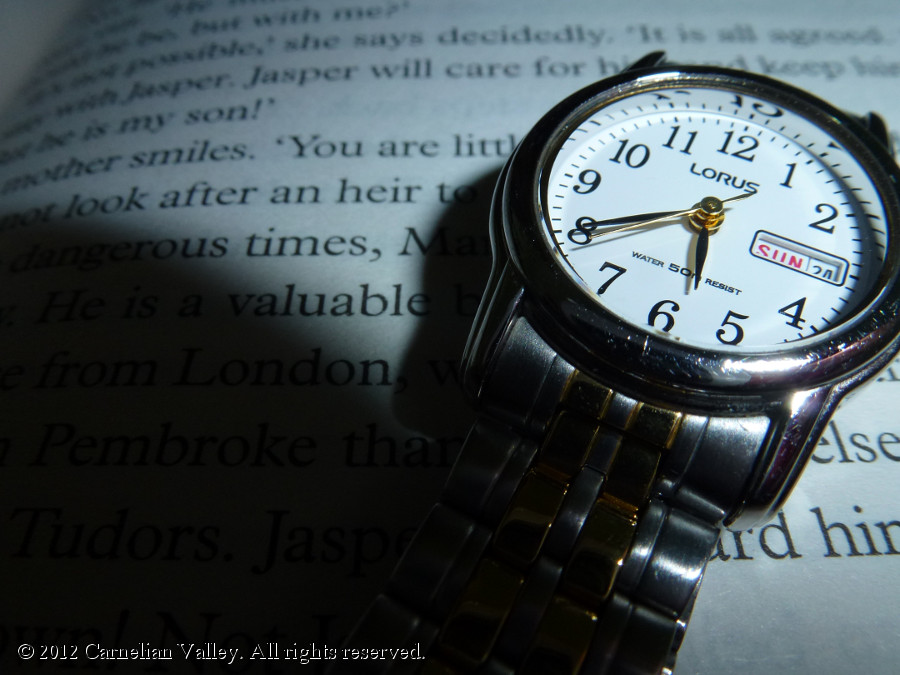
How long a time between starting a book, leaving it, and picking it up again would you/do you need before you choose to restart? This is presuming you were enjoying the book and put it down out of necessity (maybe you just didn’t get back to it). In this, the ‘you’ is you yourself rather than people in general.
From my experience so far, a fair amount of time needs to have passed between putting down the book and restarting it. If attempts are being made to continue it can make it more difficult; just continuing the book, to me, means having only really read the latter part or so on, two distinct reading periods creating the effect of reading two books.
A restart after a long time feels right to me because by then I’ve forgotten enough to feel that it would be an entirely new read. I view the decision in the context of reviewing – I won’t have done the book or author justice, I won’t have had as good an experience, if I just continue. I’ve found restarting too soon adds up to wasted time – it’s the extreme reverse of ‘sunk cost’ and effectively just creates a variation on a theme.
Sunk cost comes into it for me, though, and so whilst I may restart, I have to be far enough away in time for that to really work. I kind of have to get away from my own imposed ideal.
What has been your experience?
Kate Chopin’s The Awakening: Rings, Umbrellas, And Possession
Posted 27th March 2017
Category: Further Thoughts Genres: N/A
Comments Off on Kate Chopin’s The Awakening: Rings, Umbrellas, And Possession

They say re-reading shows you things you didn’t notice before. Whilst I was searching through The Awakening for mentions of the theme I wanted to write about, I read the following from the start of the book:
“You are burnt beyond recognition,” he added, looking at his wife as one looks at a valuable piece of personal property which has suffered some damage. She held up her hands, strong, shapely hands, and surveyed them critically, drawing up her fawn sleeves above the wrists. Looking at them reminded her of her rings, which she had given to her husband before leaving for the beach. She silently reached out to him, and he, understanding, took the rings from his vest pocket and dropped them into her open palm.
When I read the book a couple of years ago I was constantly looking at the whole; I’d heard a lot about how good it was but had avoided spoilers, so I suppose I was reasonably overwhelmed by details (as we all are when reading a new book) and focusing on what most appealed to me at that time – the ending. Now, this time, it’s the above passage that strikes me.
It was Chopin’s obvious, ‘this is what’s happening reader’, that caught me, that description of Léonce looking at Edna. It introduces the theme of the rest of the paragraph. It’s blunt. In the context of its time it’s very bold. And while it’s fiction, we know from history that it fits the social convention of the time. You get the feeling Léonce may not be able to take Edna out with him in public without cringing a little whilst she remains burned, even if it’s a normal everyday occurrence in summer and happens to everyone. But mostly it’s that idea, ‘this happens’, that’s important; the way the author is setting the tone for the rest of the book. (I find this particularly intriguing because Léonce may not be the best person but throughout the novel he’s much better than some.)
Then the passing of rings. Symbolically, in an objective sense, Edna putting her hand out for her rings, and Léonce giving them to her, suggests marriage, which it does. But it does more – Edna looks at herself in recognition of Léonce’s description of her burnt skin which turns into a transaction of rings which adds an active movement to back up Chopin’s previous sentence on property. We also have Edna ‘silently reached out to him’ and Léonce ‘understanding’ – good communication, perhaps, and it also shows the back and forth of power, almost, between them. It’s not a bad relationship and they understand each other, and Edna has power (or a semblance of such) as much as Léonce, but still, through all this, Chopin shows an aspect of social submission – at the beach, with Robert, possibly doing something she shouldn’t (and characters do suggest throughout that Léonce is too lenient), Edna did not wear her rings. Once back with Léonce, she takes them back, conforming to expectations, reverting to her role as a wife. And she did not ask or take them. And all this fits neatly into an objective and general reasoning that could be given if we were to say that it’s just a story – rings in water get rusty. (Perhaps there’s something to that, too, a saving of something, but I reckon that is veering into over-thinking.) And those hands of hers are ‘strong, shapely’ – a capable person.
Edna gets back her rings ‘which she had given to her husband before leaving for the beach’. The beach is out of bounds in their marriage. As we know from the way the sea is portrayed, Edna is herself, an individual with choices, when by the water. And Léonce kept them in his pocket, keeping them safe.
Léonce asks if Robert wants to join him at billiards and Robert says he’ll stay put, which is fine with Léonce, who suggests Edna send Robert along when she’s bored of him. Then this:
“Here, take the umbrella,” she exclaimed, holding it out to him. He accepted the sunshade, and lifting it over his head descended the steps and walked away.
This is particularly poignant because it stresses the fact that whilst the Pontelliers conform to society, there is kindness there and communication – at least where regular everyday things are concerned (of course Edna’s later independence isn’t so good in this respect). A basic show of caring that doubles as a response to the rings – this time Edna gives something to Léonce and whilst it’s not a possessive item as the rings are, and possibly shows caring that he not become burned in the way he obviously disagrees with, it effectively moves the show of possession back to Edna’s court. And it also perhaps furthers the idea of Edna’s independent, individual, self.
When I started thinking about this scene and what it meant, I saw a lot about social norms and little yet of Edna’s independence beyond her time with Robert but the more you read, the more you see Chopin laying the groundwork straight away. I wonder how the thoughts I had, the progression of them, would match a person of the time – I’m guessing the independence, the shocking independence, would’ve been clearer earlier.
A Lot Of Thoughts: Reading And Reviewing Classic Individual Short Stories And Poems
Posted 24th March 2017
Category: Chit-Chat Genres: N/A
4 Comments
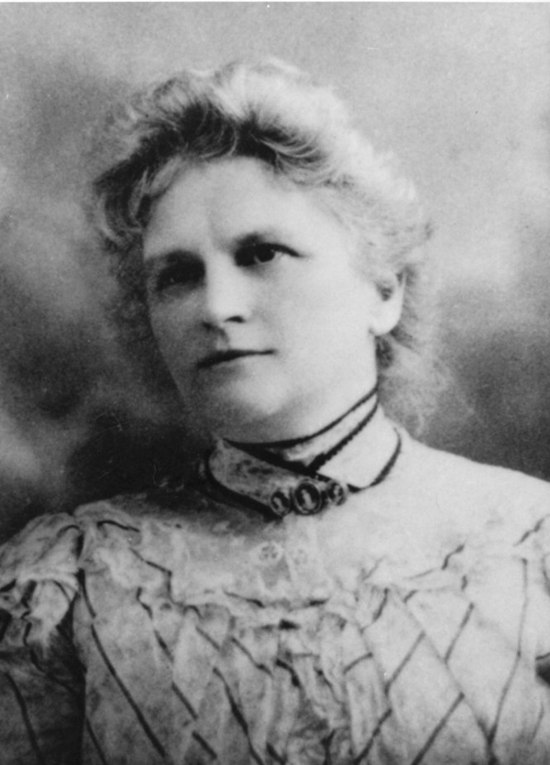
I can’t remember the last time I read a short story that wasn’t part of a larger collection. And I admit to avoiding them these last few years.
I love short stories but in terms of reading I don’t know what to do with them, whether in terms of record or reading.
Record: a few years ago I read a novella that was to all intents and purposes a short story and whilst it was nice to have another number in my statistics, I felt uncomfortable with it – it was not really a book. I doubt anyone would begrudge me a single digit for the ‘book’ but I felt I was cheating myself.
Reading: a while back I read the Everyman’s Jane Austen collection – Sanditon, various other shorter works, and didn’t review it for a couple of reasons. It was my first collection in a while, my first collection since I’d started reviewing, and the thought of trying to condense it all to a thousand or so words was overwhelming. But reviewing each story separately seemed silly as there wouldn’t have been enough to say to make it worth it.
Yesterday I was researching Kate Chopin. I want to return to The Awakening, delve into the themes in more detail, and so I was researching the book, the author’s life, influences… I ended up reading Désirée’s Baby. I then started down one of those research rabbit holes, wanting to learn about the French Creoles Chopin writes about, and ending up a couple of hours later reading about Native American Territories.
I’ve decided to record short stories read in a different place to my general reading, with the idea that it will be exclusively stories that weren’t collected and in the public domain. Classic work is what I’d like most to focus on and recording will allow me to remember for later. This takes me to a sort of sub-decision: recording the publication details of the story. In part because I’m aware Désirée’s Baby was published in a collection a year after it was printed in Vogue (14th January 1893 – I was pleasantly surprised to find the exact date) and thus is actually out of the bounds of what I’m aiming for, I want to keep a record of all those magazines and pamphlets that stories were published in. My thought is it’ll be interesting to note trends, to see where writers shared space, and to learn more about early literary publications. (I’ve often thought of looking at Dickens’ Household Words away from the context of the fiction itself, and as Vogue is now synonymous with fashion, Chopin’s inclusion is intriguing – what’s the history there?)
As to how to review them, I’m considering the ‘mini-review’ collective format some bloggers use. I’ll likely read stories in author phases, so to speak, and round up that way. As for Chopin, because many (all?) of her stories were collected, that will see a bog-standard review. In these cases I’ll likely defer to the original compilation rather than any from our present day.
I’m going to do the same with any poetry I find myself wanting to discuss. I don’t know nearly enough to consider a poem per post. There are some Tudor poets out there, often included in fiction, that I’d like to study. Shakespeare’s excluded for now because I wouldn’t know where to start, but as I said last week I’m enjoying reading about Aemilia Lanyer. I’ve found her poetry online – an easy read which, although it would be considered too simple nowadays, is quite enjoyable.
I think the ‘too long; didn’t read’ version of this post is that I’m giving myself more literary freedom. I think (hope!) I’m at the point now in my journey where I’m reading in such a way and with enough background context that I can discuss shorter works for more than a couple of sentences.
How do you go about reading (and reviewing, if relevant) short pieces of literature?
Samanta Schweblin – Fever Dream
Posted 22nd March 2017
Category: Reviews Genres: 2010s, Commentary, Paranormal, Psychological, Translation
Comments Off on Samanta Schweblin – Fever Dream

Be prepared to never be prepared.
Publisher: Oneworld
Pages: 151
Type: Fiction
Age: Adult
ISBN: 978-1-786-07090-6
First Published: 2014; 10th January 2017 in English
Date Reviewed: 21st March 2017
Rating: 4/5
Original language: Spanish
Original title: Distancia de Rescate (Rescue Distance)
Translated by: Megan McDowell
Amanda’s in hospital. David, the peculiar child of someone she knows, seated somewhere near her, is telling her she’s close to death; she has to keep talking, work out what has happened, why she’s there. It’s difficult; it’s hard to think, she can’t see very well, and David keeps telling her to move on to other things that are more important. She won’t.
Fever Dream is a novella full of circular thinking, warped perceptions, and few concrete answers – they are sometimes there but Schweblin defiantly remains vague. It’s an easy read, a small book without chapters, that asks a lot of your attention but for that it rewards you with the reality of unreality and a fair amount to think about.
The original title is probably a good place to start – a lot of the narrative revolves around Amanda’s concept of ‘rescue distance’, the maximum physical distance between herself and her small daughter at any one time that will result in immediate result in case of accident. Amanda’s ill health makes her even more paranoid and obsessive so that the distance lengths and shortens – most often the latter – over the course of the book. Her time with her daughter is detailed solely as a flashback, the report she gives David as she lays ill in bed, but gets discussed by them in the present every so often. Alongside this constant consideration are other repetitions – Carla’s gold bikini, for example – that further illustrate what Amanda, perhaps erroneously, is focusing on.
Flashbacks. Are they? Aren’t they? Schweblin never tells you the exact times when Amanda is thinking of the past and talking directly to David – it’s generally obvious but not always. This adds to the feeling of confusion for the reader, very much intended, and gives you more of an idea of the situation at hand. It is also difficult to work out the time line of what has happened in Amanda’s story but in this Scheweblin does provide an idea of what you’re meant to be thinking, as a reader, when she presents a definite dream sequence. This dream shows the topsy-turvy construction of our real life dreams, whether feverish or in good health, that confirms for you the feeling that you’re not necessarily meant to be working everything out.
David’s almost changling status is eerie. Supposedly, this child of Amanda’s friend – this child/now adult (who knows?) who is in Amanda’s room – is not the same as he was before. (In years gone by a woman said that in order to save a feverish David’s life, a switch of bodies would have to take place, David’s spirit moving on to another body and David’s body becoming inhabited by a different soul. It’s the different soul/same body that Amanda is supposedly talking to.) David’s actions are seen as strange, haunted, and whereas we can assume that some actions might have been normal in reality, some clearly aren’t. The character of David is very much up to you, the reader, to figure out.
Fever Dream is a short book; you wouldn’t want it to be longer due to the confusion and the relentless and repetitive nature of David’s questions. It’s a book you can enjoy even if you can’t quite explain it, and at times it’s the very idea of not having to understand it that allows you to enjoy it more. And with its relatively small number of pages and a narrative that doesn’t deviate, with its lack of chapters and easy language, it’s the perfect choice if you want to pick up something challenging but very accessible.
I received this book for review.
Related Books
None yet.


