




Joanna Cannon – The Trouble With Goats And Sheep
Posted 12th May 2017
Category: Reviews Genres: 2010s, Commentary, Social, Spiritual
2 Comments

Please note: I talk about who started the fire in another blog post.
Lambs (and kids) of god.
Publisher: The Borough Press (HarperCollins)
Pages: 453
Type: Fiction
Age: Adult
ISBN: 978-0-008-13217-0
First Published: 28th January 2016
Date Reviewed: 10th May 2017
Rating: 4.5/5
Mrs Creasy has disappeared and no one on the avenue knows anything about it. They’ve only two things to go on – the police don’t seem too interested, and Mr Creasy says his wife will be back given time. Grace is interested in the disappearance but more so in the idea of God – if the vicar says God is with us then God must be somewhere on the avenue. One of the neighbouring houses must host him; together with her many-jumpered friend, Tilly, she’s going to find him.
The Trouble With Goats And Sheep is a wholly character-driven dual-narrative novel that looks at the way groups of people deal with individuals who aren’t like them. It’s also about how exclusive a small community can become.
Cannon’s backdrop is the British heatwave of 1976, a time when rain ceased entirely for a couple of months (we had 4 weeks here recently, which was weird enough), the temperature shot to a still-unbeaten record high, and water had to be rationed. This backdrop allows Cannon to look at emotions and personalities pushed to their relative limit. It also ensures that for the sections relating to that year, the neighbours spend a lot of time together by virtue of being outside.
The neighbours are insulated by their unchanged residence; whether by personality or through time (it’s mostly personality but the author covers both bases) these people are very set in their ways; as the then Conservative leader and later Prime Minister is known for saying, they are “not for changing”. There are some rather unfavourable characters here. To name but a few: Harold – a man full of hate who has convinced his wife that she forgets, making her create lists of tasks for the day; Sheila, who heartedly joins in on verbal attacks and is generally unable to see beyond her misconceptions; Grace’s parents who don’t take responsibility for what they’ve done and thus enable bullies to pursue others.
The person they hate, because ‘dislike’ is not a strong enough word, is a man who keeps to himself. You don’t find out if social circumstances were ever different, but the neighbours have turned their backs on Walter completely. In interviews, Cannon has said she wrote the book to shine a light on the situation of people on the edge of society and it is through Walter that she accomplishes this. Walter has supposedly stolen a baby in his time and everyone was secretly happy when his house went up in smoke – from the first, Cannon shows the reader how it’s more likely that Walter is misunderstood… not that anyone on the avenue would care that they got it wrong. The author doesn’t answer the question of the stolen baby until the end – it’s one of the whodunnit elements of the book – but what she says before that is enough for you to conclude that if Walter did steal the baby, it likely wasn’t malicious. Walter may have a learning disability and/or social anxiety – the what, if any, isn’t important, it’s the idea of difference that Cannon focuses on. The neighbours don’t like difference. Intolerance, arrogance, and as it happens, racism, is best in their books. Cannon tends to lace this with clever comebacks:
‘How exactly should they have prepared themselves?’
‘Got used to our customs.’ Harold pulled at his shoelace. ‘Learned a bit of our language, you know.’
‘I’m fairly sure they speak English, Harold.’
‘Well if they do, it’s only thanks to the Raj. You can’t just go marching into somebody else’s country and expect them to follow your rules, you know.’
‘India?’ said Dorothy.
‘No, Britain.’
As this is a character-driven novel, you spend a lot of time with these people – the entire time, in fact – but Cannon makes it worth your while. Aside from providing a reprieve in the form of Grace, who is a caring soul, the author takes time to de-construct how the neighbours’ personalities and biases can lead them to take action when most people would simply shrug and move on.
In terms of the whodunnit elements, the book sports rough pointers as to who might have caused the house fire that killed Walter’s mother, which is revealed at the end. (Have I said how awful these people are?) The mystery isn’t at the forefront and in fact the revelation, which is a bit murky and requires some thought, isn’t much of one – it does answer the question, but it’s only slight in terms of impact.
The ending itself, which returns to the mystery of Mrs Creasy, like the answer to the fire isn’t particularly interesting – Mrs Creasy’s non-presence is more akin to Du Maurier’s Rebecca – an off-stage character, no lines, yet nevertheless managing to make a sizeable impact.
In case all the nastiness is wearing on you, Cannon offers moments of humour. Seen most prominently near the beginning in order that you start the book knowing the deal straight out, there is a chapter that is almost entirely dedicated to making you laugh.
The hall filled with people. It was far more crowded than the church had been, and pairs of jeans mixed with Sunday best. It appeared that Jesus pulled a much bigger crowd if He provided garibaldis.
[…]
No one mentioned Jesus.
In fact, I didn’t think anyone would have noticed if Jesus had walked into the room, unless He happened to be accompanied by an Arctic roll.
The Trouble With Goats And Sheep has a lot going for it. The detailing is excellent, the characterisation and dialogue spot on; many aspects of it are objectively very good, the subjective aspect falls firmly in the personalities. It’s altogether a well conceived and well-executed book, you just have to pick the right moment to read it.
I received this book for review.
Related Books
None yet.
Analyses Of First Lines #3
Posted 10th May 2017
Category: Close Reading Genres: N/A
2 Comments
I’ve had some pretty great books come into my life lately, whether through acquisition – physical or digital – or just because I’m particularly aware of them at the moment, for whatever reason. Books I want to talk about; I’m realising more and more the value of less rigid thinking when it comes to talking about literature here. Another first analysis post seemed the best approach.
I haven’t included every book that I’m working with because there are first lines that just don’t inspire. Copying out all the possible first lines I could have used for this post has demonstrated to me that as important as the first line is known to be, many times this is forgotten. Sometimes the value inherent in a first line is passed to the second. Other times the writing style the author has employed means the concept of the first line is altered (one book had single words as the first few sentences). Yet more times, however, it just seems an opportunity missed.
A realisation upon a realisation, if you will – a magnificent first line can and often does equate to a magnificent book, be the book great for its writing or story or characters. And it can really heighten your desire to read the book. When I received Christina Stead’s Letty Fox: Her Luck, it wasn’t via the postbox – the postman had to ring the bell. The book is a tome and upon seeing it I felt somewhere in between very interested due to its fairly classic status and relief that I had decided to schedule it – then sight unseen – during a time that was otherwise free. But reading the first line, that worry has gone. One line and I know I’m going to enjoy it, likely a great deal.
Something that has occurred to me while writing these posts: does my knowledge of a book, or lack thereof, change or aid the way I analyse the first line? (By knowledge I mean having read the book previously.) I think it likely does on an unconscious level because I know the answers, but what I am finding, for certain, is that my continuing to analyse first lines makes my analyses more thorough, enough to balance out any bias.
Alexander Weinstein’s Children Of The New World
We’re sitting around the table eating Cheerios – my wife sipping tea, Mika playing with her spoon, me suggesting apple picking over the weekend – when Yang slams his head into his cereal bowl.
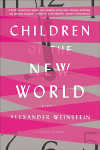
This book is a short story collection, so this line is the first line of the first story, which is called Saying Goodbye To Yang. If the sentence didn’t suggest a death, that title surely does, but then where these two pieces of information are concerned, it’s not a foregone conclusion. If the narrator is the husband of the family and we’ve a wife and child, Mika, do we first assume – title aside – that Yang is a child, too, and thus in all likelihood would be swiftly saved from any drowning by his parents?
Taking the title into it, and the word ‘slams’, we suddenly have a potentially older person, potentially having a stroke. (We could also still have a child having an episode or sudden issue, too.) Taken out of context, ‘slams’ is a pretty extreme word if we were to consider a child playing with his food, and pretty extreme if the cereal bowl is your average cereal bowl and thus difficult to ‘slam’ into if it’s on the table.
In context, it’s a particularly good choice of word. The best short stories tend to get straight to the point and/or leave you shocked by the end and so Weinstein’s first line places you not only in the situation but at the exact catalytic moment. Little time for character description, he gives you the basics – child, wife, husband, leaving you to assume stereotypical ages if you wish – and gets straight to the action. The characters as people may not be important, we don’t know yet, but if their personalities aren’t a focus, you still have enough to go on.
And if you wanted to know location and time period, you’ve Cheerios and apple picking for help – Cheerios suggests present day (no further than 1945 according to Wikipedia), apple picking presumably means near the countryside. Whilst Weinstein could have left out the extra content, could have left out the wife and Mika from the sentence, it rounds off the introduction well.
And whilst it does sound short-story like, if would fit a novel. I love it.
Christina Stead’s Letty Fox: Her Luck
One hot night last spring, after waiting fruitlessly for a call from my then lover, with whom I had quarrelled the same afternoon, and finding one of my black moods on me, I flung out of my lonely room on the ninth floor (unlucky number) in a hotel in lower Fifth Avenue and rushed into the streets of the Village, feeling bad.

Here we have the line I spoke of in my introduction. There is so much information in this sentence; it may be very long but when you consider the book was written in the 1940s (1946 to be exact) that’s suddenly neither here nor there.
In this one line we get a fully-fledged description of the person who is presumably to be our narrator. She had been in a relationship, possibly an extramarital affair, and whilst the fact the two have quarrelled isn’t too much a sign of anything – other than, perhaps, a signal of why they’re no longer together – her ‘black mood’ is. This isn’t one black mood – it’s written possessively and in the plural. She gets these moods fairly often. They are part of her personality; like the way the rest of the sentence refers to the effects of this mood, the author hints that this may be a difficult character to read about at times. That ‘fruitlessly’ suggests she expected a call – why? Do they often make up? Is she needy? Does she expect an apology? Not everything is apparent yet but you’re given some big clues as to what you’re getting in to from the start.
Whether part of the black mood or just a quirk of sorts, this narrator is likely superstitious, naming the ninth floor unlucky for its number. Either that or something in the novel will render her hotel room or floor unlucky and if the latter then again, she’s telling us up front. And a last hint of personality – she’s feeling bad. This is likely to do with the quarrel, however we don’t yet know if her feeling bad is due to remorse or that quarrels and black moods themselves make her angry.
Does a hotel room on Fifth Avenue speak of wealth? Of hers or of her lover’s? And if the room is lonely had she been staying in it herself or is ‘lonely’ a hint to it having been a room she shared with her lover prior to the quarrel? These are things to find out.
We’ve something of a possibility of an anti-heroine to contemplate…
Helen Irene Young’s The May Queen
It was the first thing to come between May and the carnival.
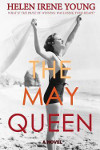
May likes the carnival and a few things, at least, are going to come between her and its parade. Whether we’re going to read about the carnival itself is not known at this point – first, we have to see how much time the ‘things’ are going to take up. May might not get to go to the carnival at all.
With this sentence, Young shows that her book, or at least the beginnings of it, are going to be about some sort of conflict. This book is going to have issues in it of some sort, unless ‘come between’ is taken literally and there are obstacles on the road between May and the parade. To an extent, we can guess May’s age – she’s likely a child, looking forward to the carnival.
Joanna Cannon’s The Trouble With Goats And Sheep
Mrs Creasy disappeared on a Monday.
A disappearance and a name. We’re either going to go back in time for a bit, or we’re going to see the after-effects of the disappearance. Monday – does this suggest 7 days’ worth of reports as to what happened/happens next? And the person is married or widowed – will we hear from her spouse or hear the story of her spouse, whose presence or death or so forth, may have caused the disappearance?
This is a short sentence and there’s not much to go on, at least if we compare it to others, but it does tell us what we’re about to read. It doesn’t tell us if the story of Mrs Creasy will make up the entire book or not, but we can assume that if it doesn’t, the rest of the book will be relative – there will be other disappearances or such goings on.
Joanna Hickson’s First Of The Tudors
Flashes of iridescence gleamed like fireflies in the gloom of the small tower chamber.

This sentence is full of highly descriptive words that draw attention to colour, beauty. Light, which we can expect is needed given the ‘gloom’ of a ‘small’ room. The stereotype of a tower is here in its element and whilst this is historical fiction rather than fantasy, the semblance to the idea of the high unreachable tower works in the context of the sentence, works as a way to set up your image of the scene even if it’s not going to be carried on past the full stop. Besides this, we can assume the scene is a bedroom, possibly an anti-room of some sort. If the former, we are perhaps reading about a squire or other servant, someone who is in a position to be staying in a castle (tower) but not high enough in society to be in a big room.
Given the historical nature, what are the flashes of iridescence? Is a lamp being lit or is a candle burning? Is the person going to bed or are they awake and reading, or talking to someone?
To me this sentence is very much about readying you for an evening of historical fiction, drawing you to the (potential – we don’t yet know!) comfort of what you’re about to read. It sets the historical scene, beckoning you with an image that draws wonder.
Kit De Waal’s My Name Is Leon
No one has to tell Leon that this is a special moment.
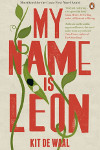
Something positive will likely follow this sentence. A celebration of sorts; no matter whether it’s a special moment in the sense of a surprise party or the start of a friendship, or whether it’s that something positive is to come from something not so good, we’re starting on a high. We also get a name, which is obviously one of our main characters – even if the title did not name him, that his name is given in the first sentence says it all.
We’re going to be privy to this special moment, in a moment, and signs suggest this is going to be a good read.
Sarah Perry’s The Essex Serpent
A young man walks down by the banks of the Blackwater under the full cold moon.

Is this to be our main character, or does the night and body of water suggest this young man won’t be here long? Is this a report and the man is dead? We haven’t been given his name – will this be a mystery?
It is easy to jump to conclusions with this sentence, to realise the possibility of a mystery or thriller – so often such books employ darkness and water and this sentence has a lot of blues and blacks in it. The bank, the ‘Blackwater’ (although this is the name of the water), cold, moon. But it could be many things – it could be a way of introducing us to a historical setting, to a dock or gloomy alleyway, some place that has Victorian and Dickens all over it.
One thing we do know for certain is what writing style we’ll be dealing with or, at least, if we consider the high usage of prologues recently, the style of the first few pages. In fact the writing very much fits the current prologue style – it would be fair to assume that’s what we have here and if it is indeed a prologue then the idea of mystery may well be true.
In Conclusion
I think it’s interesting to compare sentences from older books, newer books, and different genres – particularly old and new. There is such a difference between now and before, and we’ve this whole new genre of ‘literary fiction’ that a lot of classics may well fit… but not completely because we are applying new concepts to old works. I knew that you could tell a literary fiction book from its writing style, its tone – at least usually – but hadn’t really paid attention to just how soon this becomes apparent. ‘Genre fiction’, I think, is less apparent, perhaps partly because some books cross over but also because the defining lines just aren’t as defining as they are ‘supposed’ to be – something I rather like.
Which recent reads drew you in from the start? And did the books continue to be good?
Kit De Waal – My Name Is Leon
Posted 8th May 2017
Category: Reviews Genres: 2010s, Angst, Commentary, Domestic, Philosophy, Political, Psychological
Comments Off on Kit De Waal – My Name Is Leon
My Name Is Leon (Penguin) has been shortlisted for the British Books Awards 2017. The winner will be announced today.
Family lost and found.
Publisher: Penguin
Pages: 262
Type: Fiction
Age: Adult
ISBN: 978-0-241-97338-7
First Published: 2nd June 2016
Date Reviewed: 7th May 2017
Rating: 5/5
Not long after Leon’s brother Jake is born, the children are sent to a foster carer. Leon is confused – he’s been looking after his brother and mother Carol very well and doesn’t know why strange people had to come break up his family. He isn’t sure if he likes Maureen and when baby Jake is taken away by a young couple he vows to see him again.
My Name Is Leon is a stunning story about the British foster care system and adoption, the effects of big changes on children. Set in the 1980s, it’s full of cultural references that will delight many a reader and through small studies of a couple of big moments in the 80s and 90s, looks at the prejudices in the system where mixed race families were concerned.
De Waal is a master of writing. The author has chosen to tell her tale in a way that speaks to Leon whilst showing the target readership – adults – what’s really going on. It’s a fantastic writing style that’s in many ways very easy to read but full of depth, a style that might appeal to children if it weren’t so geared to adults. The writing is what makes the book so profound, so moving; de Waal’s ton of personal knowledge of the foster system, of court, and of these issues across the years means that she packs a lot of punch in ways you really have to read to believe.
Talking of punches, there is a lot of hope in this book, but Leon’s life is never rosy (aside from, perhaps, his allotment) and there are things that will never happen because they didn’t and don’t happen in such situations in real life. Whilst some things are incredibly neatly tied, others are not and cannot be tied. This is a book that truly brings tears.
Leon gets the short end of an already short straw – not only does he end up away from his mother (a woman you will see as neglectful) but he looses his brother. He looses his brother because his brother is white, but Leon is mixed-race, so not only did he stand less chance of adoption due to his age but his skin colour means that either the couple did not want to adopt him or the social workers believed they would not. Yes – it’s horrible. It’s an absolute sod to read but so important.
Leon’s time with Maureen’s sister, Sylvia, coincides with the time of what appears to be the Brixton riots, when black Brits protested against police brutality in the country. The novel deals only with Leon’s early life, he is on the periphery of these protests due to friendships with adults he meets, so the accounts are short, but they hit hard. Do they add a lot to Leon’s story? No, not exactly – what they do is put Leon’s ‘inability’ to be adopted in a wider context. Were the people that could have adopted both white and mixed-race brothers thinking of racial riots whilst they made their decision? Likely not, but de Waal’s themes enable her to explore, for us, problems that were all wrapped up together, if, seemingly, loosely. (Of course the parental candidates for Jake may well never have known much about Leon or even been ‘offered’ him by the social workers, but even if that was the case – we don’t know – it still shows the problems with race in the social services’ system.)
Leon’s friendships lead to one of the more objectively pleasant aspects of the novel – gardening. The book is full of seeds, flowers, vegetables, containers, and it’s wonderful because not only do you get a fair outline of bedding seasons, you get to see how young lives can be changed with the right support, in this story combining with Leon’s foster mother and her sister.
And what about all these characters, this child, the foster parents, the friends? They are very well developed, which considering the writing is quite a feat. As in everything else, de Waal enables the reader to see more than Leon can so you get a delightfully rounded picture of everyone and who they are both to Leon and to the world. De Waal’s characters are great people who lift the novel from its themes. They are a major reason the book remains happy despite all that goes on. Even the more murky characters in this respect, the social workers, are well drawn to the same extent, even if by the very nature of the narrative they come across more neutral than good. (De Waal delves rather well into the thinking behind Leon’s placement and the decisions made for him.)
This is one of the finest novels published, both last year and for many years. Everything about it is just so good and the level of care taken surpasses most else. It is an incredible book that makes quick yet never rushed work of an important subject. It gives a voice to situations we don’t hear about enough by someone who really knows their stuff.
I received this book for review.
Related Books
None yet.
Emma Cline – The Girls
Posted 5th May 2017
Category: Reviews Genres: 2010s, Angst, Crime, Historical, Psychological, Social
2 Comments

The Girls (Chatto & Windus) has been shortlisted for the British Books Awards 2017. The winner will be announced 8th May.
Under the thumb.
Publisher: Chatto & Windus (Random House)
Pages: 353
Type: Fiction
Age: Adult
ISBN: 978-1-784-74044-3
First Published: 14th June 2016
Date Reviewed: 4th May 2017
Rating: 3.5/5
At 14, Evie’s life is becoming difficult. She’s got problems with her major friendship, has a crush on her friend’s brother and knows that’s a problem in itself, her father has left the family home for an apartment with his assistant, and her mother spends all her time elsewhere. Feeling the lack of love in her life, Evie is easily drawn to Suzanne and her friends, girls in well-used clothes who live on a ranch under the leadership of an older man. Evie chooses not to live with them exclusively, knowing she should go home sometimes so her mother doesn’t suspect, but the group’s influence is enough. Now, middle-aged and looking back on the time, Evie muses on the influence, her innocence and role, and the crime committed that saw the major players behind bars.
The Girls is a novel of semi-factual history, an account of a 1960s cult with a devastating end. Told from the point of an acquaintance, it is one part drugs, a manipulated idea of free love, and one part teenage anxieties and fitting in, particularly as a female.
Based on the Manson Family murders in the late 1960s, Cline’s book aligns to facts enough that her book can be considered a semi-retelling. Looking ever more closely at influence and the impact of neglect – both real and assumed – Cline’s focus on the female psych is the strongest element of the novel. Evie’s experience, enmeshed in the cult but with enough time away from it, enables Cline to study the way words, bullying, parental-filial relationships, can impact the self and the ability to be manipulated, both in general and sexually. This is of course mostly in the context of the era being studied, but Cline ensures her writing has long-term relevance, having the older Evie contemplate the experience of a young acquaintance in our present day, a girl she sees staying silent whilst her boyfriend and his friend talk, a girl who takes her clothes off to show her body when requested – though uncomfortable – in the company of both boys.
Evie’s teenage lack of self-confidence, self-worth, most terms that begin with ‘self’, is what enables her to be taken in by the group, their relative (though pretend) empathy and love for her driving her to do things that you as the reader can tell she would really rather not do – she’s always on the cusp of understanding it but lacks the forethought due to self-belief. (It should be noted this book is of a very adult nature.)
I waited to be told what was good about me. I wondered later if this was why there were so many more women than men at the ranch. All that time I had spent readying myself, the articles that taught me life was really just a waiting room until someone noticed you – the boys had spent that time becoming themselves.
The title stays true to form – whilst there are a couple of men in this book who are manipulated, it is not the same – this is a book about girls and women in the ways discussed. There are few good male characters in this book; the literal good guys Cline has painted well, but with Evie’s narrative you don’t get to see them for long and they are not given much time.
Cline’s study has much to recommend it, but beyond this the book struggles to make a mark. The writing falls somewhere between excellent and too much; on a solely literary level it’s marvellous, it’s all very poetic and descriptive but on numerous occasions it detracts from the essence of the story, Cline appearing to favour words over getting her point across. Favourite words and terms of phrase are noticeable, for example, many times something ‘stipples’ something, and every so often words are made up.
It’s literary but missing a few things – it doesn’t say anything new. The background details – the hows, whys and whens of the cult – have been left out entirely; even if the book lines up with the stereotype of cults and rests on history, the details should have been included rather than the expectation that the reader already knows the story. The historical details about the hippie life do not always ring true.
This is a book where you know the ending at the beginning – on purpose – but all the action has been left until the end meaning that you must be enjoying Evie’s musings on the lackadaisical everyday to keep going. Due to Evie’s position in the group, a lot of the lasting information is relegated to paragraphs telling you what the TV reports said, which does mean it has less of an impact than it might have otherwise, and unfortunately this low level of impact is similar throughout.
I received this book for review.
Related Books
Juan Carlos Márquez – Tangram
Posted 3rd May 2017
Category: Reviews Genres: 2010s, Social, Thriller, Translation
5 Comments

Not what you thought.
Publisher: Nevsky Books (Ediciones Nevsky)
Pages: 162
Type: Fiction
Age: Adult
ISBN: 978-8-494-59133-4
First Published: 2011; December 2016 in English
Date Reviewed: 2nd May 2017
Rating: 4/5
Original language: Spanish
Original title: Tangram
Translated by: James Womack
Two men visit an ex-actress in order to network but find themselves locked in her basement for weeks. A man looking to commit a crime finds it difficult to do so when his targets turn out to be suicidal. A group of children take to calling names in the belief that people will change if they hear the truth. These stories, together with a few others, make up the details of what could be different narratives or one whole.
Tangram is a short thriller which makes use of fractured storytelling in order to keep you thinking and surprise you at the end.
Carlos Márquez’s use of fractured narrative means that for a good while, until the story starts to cycle round and come together, it could be said you’re reading a short story collection. Stories, linked by a vague theme, suggest something far from a novel-length piece, but as it turns out, the writing and structure is absolutely key to this book, which is interesting because the necessity of the writing is apparent very early on, but more in the sense that you can appreciate it rather than anything further.
The author uses writing – first person, particular types of phrasing and cracks in the fourth wall – to dig deep into the details of his characters’ stories. The author looks at the whole, of course, but it’s almost whimsical – he places a lot of importance on the ending, on getting it right, but he’s so focussed on each character that the book darts back and forth neatly – is this a literary novel or is it genre thriller? At heart, it’s both. In view of the translation, you can see Carlos Márquez’s words underneath Womack’s text, the author’s concepts and workings remaining clear. Footnotes have been included in places where to translate in-text, so to speak, would have slowed the pace.
There is a bit of humour in the book, a thread that makes you wonder before revealing itself fully. It is slight, very slight, and fits the writing wonderfully.
The ending pulls everything together… well, almost – but almost is the point. You’ll discover (likely, at least, unless you’ve somehow figured out where it’s going and I’d guess in this case that’s not likely) that some of what you’ve read isn’t important but that it wasn’t quite a red herring. You’ll discover that some things you thought important were, and those things tend to be the things you’d later decided were probably red herrings. You’ll discover that the things you did think were red herrings were indeed red herrings and that the author included them fully hoping you’d see them as red herrings.
And the ending may come as a shock because it’s really not what everything seemed to be building up to… until you’re reading the ending and working your way backwards. It’s fair to say appearances may be deceptive and the most crafty person in this situation isn’t any of the characters but the author himself.
This isn’t a book about witnesses or suspects, rather it’s a book about people who happen or happened to be in some way affiliated with the people involved at the core of the story. Reading it is a little like playing Cluedo, only with less of an exact sense of where you’re headed; and keeping a check-list of the people you’ve met so far wouldn’t be much help because the author isn’t telling.
The page count is perfect – you wouldn’t want this any longer or shorter, partly due to the effect the details have where you wonder how much information is relevant. Best read for its technique, Tangram is an award winning book and it’s not hard to see why.
I received this book for review.
Related Books
None yet.


