





Necessary (Official) Short Hiatus
Posted 18th June 2020
Category: Miscellaneous Genres: N/A
2 Comments
…Official because I know I’ve been away anyway.
Brief details: sick rabbit now better but he and his sister were mistakenly separated by the vet. Separating bonded rabbits is not something you’re supposed to do; I now have two very sad, single rabbits, who desperately want to be together but whose species instincts mean they can’t just be put back together because they will fight. They need to be reintroduced slowly, effectively have very short playdates for the next few weeks. This all kicked off last Monday – hence my last post was that day as it had been written at the weekend – and is taking a lot of my time and energy.
I have a podcast episode online this coming Monday which I will post here, but besides that I will be back to blogging on Monday 6th July.
Thank you for baring with me and I hope you are all okay.
Isla Morley – Come Sunday
Posted 8th June 2020
Category: Reviews Genres: 2000s, Angst, Domestic, Social, Spiritual
Comments Off on Isla Morley – Come Sunday

Working through grief to acceptance and forgiveness.
Publisher: Two Roads (Hachette)
Pages: 300
Type: Fiction
Age: Adult
ISBN: 978-0-340-97651-7
First Published: 1st January 2009
Date Reviewed: 7th June 2020
Rating: 5/5
On Maunday Thursday morning, Greg is slow to get up and Cleo’s insistence on wearing unsuitable clothes is getting to her mother. Abbe has all manner of things to deal with and it’s got on top of her. So that she and Greg can get out for the evening, Abbe leaves Cleo with a friend; against perhaps better judgement, the friend chosen isn’t the one she thought of first. But it’s all good; until the couple return to pick Cleo up and find the road full of people, police, and Cleo nowhere to be seen.
Come Sunday is Morley’s superb first novel that looks at the progression of grief towards a new normal. When the revelation of the car accident reaches Abbe’s ears she begins a descent that sees her anger at the driver who couldn’t stop in time, her increased annoyance at her fellow cul-de-sac neighbours and the clique-y members of her minister husband’s church. And she begins to have an increasing number of thoughts about her childhood in South Africa.
Her book set mostly in Hawaii, Morley uses as the time frame the period of Easter – the book starts on Maunday Thursday, as noted, and ends on Ascension Day, however the narrative takes place over a year so the initial Thursday and Ascension Day are from different Easters. More than an extra aspect, the Easter period is used to line up events in the narrative, with the Thursday aligning with Abbe’s ‘betrayal’ of Cleo and the Ascension providing a resolution.
Christianity as a whole forms a fair part of the narrative; with Greg a minister and Abbe thus involved in the church (more than she’d like sometimes), the religion is often there and woven into the whole, however it should be said that this book is far from ‘inspirational’; it’s use is unlikely to turn you off if you’re not into it, however if you do appreciate faith included in books you will like it a lot.
The main themes are grief, later leading also to forgiveness. Morley looks at both carefully, closely. This is a character-driven book with Abbe’s grief front and centre. Greg’s isn’t glossed over, indeed some of Abbe’s choices stem from his own, but Abbe and her friends are more important here. There is a good element of sisterhood, largely informed by the forgiveness.
Abbe was brought up in South Africa, and her history informs a lot of her thoughts. Her grandmother had a servant who was black, so there are looks at racial issues as Abbe questions the relationship of Beauty and her family, and how her grandmother’s belief in equality fit into this. Abbe’s time in the country is brought to the fore as, together with her brother, she inherits her grandmother’s house which has since become a school for HIV-positive children.
I’ve left one of the first things you’ll notice about the story until the end – Abbe is a very negative character, aside from her grief. This is obviously difficult in a novel where a child’s death affects many, but Abbe does have her reasons for being as she is and there is redemption. The book is more about reading about her progression rather than necessarily relating to her all the time; you will relate to her on occasion and this reminds us of how normal it can be to be overwhelmed, to be a result of events, to be in the wrong place.
Come Sunday is exquisite. You’ll find many new meanings and explorations here to other books that look at the same subjects, and it’s all brought together with the use of writing elements, methods, that are very enjoyable. I highly recommend it.
Speaking to Isla Morley about Come Sunday, Above, and The Last Blue) (spoilers included)
Charlie and Isla Morley discuss growing up and travelling back to South Africa, creating a negative heroine, the 1800s medical phenomenon wherein people were literally blue, and what it’s like owning five tortoises.
If you’re unable to use the media player above, this page has various other options for listening.
May 2020 Reading Round Up
Posted 1st June 2020
Category: Round-Ups Genres: N/A
3 Comments
It has indeed been a breakthrough: I read seven books this month. I have been out in the sunshine but more than anything else, and this will come as no surprise, quality and variety helps. And that quality and variety including old favourites helps even more. Here’s what I read in May as I planned podcasts, supervised a couple of bunny arguments (who would have thought that stealing your sibling’s food from their mouth repeatedly would make them upset), and looked to emulate literary pleasure from those times when we all used to go outside and visit each other.
The Books
Non-Fiction
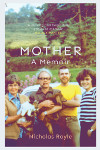
Nicholas Royle: Mother: A Memoir – Royle looks at his childhood, brought up by his mother, and her impact on the family. A fantastic book that’s very different to a regular memoir, full of word play and literary aspects.
Fiction

Chibundu Onuzo: Welcome To Lagos – A group of individuals from very different backgrounds end up living and working together in their quest to find a better life; this leads also to the introduction of an ex-government minister and a journalist (this is simplifying it – there’s a lot going on that would need more sentences to explain). A very good book that uses its group of varied people to do what it says on the cover.
Isla Morley: Come Sunday – The young daughter of Abbe, a woman who is struggling with her general situation, dies in an accident and Abbe has to wade through the repercussions of this whilst learning to live with her grief. An exceptional look at extreme grief and bad circumstances and the process towards acceptance and hope.

Isla Morley: The Last Blue – 1937: a photographer and journalist travel to find out the news on the ground but instead discover a situation they could never have expected; outcast away from the town centre is a family with two young adult children whose skin is somehow permanently blue. An excellent book that fictionises a real medical event to brilliant social commentary effect.

Shannon Stacey: Yours To Keep – Emma told her grandmother that she was engaged so that her grandmother wouldn’t worry about her when she moved to Florida, but Emma chose as her pretend fiancé a very real person who has just returned and with her grandmother on her way back for a trip home, Emma needs Sean’s help in keeping up the pretense.
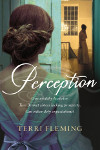
Terri Fleming: Perception – Continuing the stories of Pride And Prejudice’s Mary and Kitty Bennet, Mary, who does not expect to marry meets a young gentleman who asks her to help him catalog his father’s library; Kitty who is expected to marry, finds a prospective suitor amongst the family’s acquaintance but he’s not well thought of. A fab sequel, firmly in the vein of Austen.
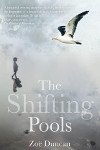
Zoë Duncan: The Shifting Pools – A woman who has pushed aside trauma from her childhood (her family were killed in war) finds the pain catching up with her; whilst this happens, a distant land called Enanti awaits the coming of a woman prophsised to aid them. A wonderful story of affects that looks at (possible) allegory in order to tell its tale.
Four new books and three older favourites. Of the new books, I think Come Sunday just about pips the others to the post – they were all pretty excellent.
I said last week that I wasn’t sure what book I’d pick up next – this morning I started Christina Courtney’s Echoes Of The Runes.
What genres are you reading at the moment?
Reading Life: 29th May 2020
Posted 29th May 2020
Category: Reading Life Genres: N/A
3 Comments

How are you all? I’m officially bored of not being able to leave home but the sun, whilst reminding me of days out, is also helping. I went through a few weeks of taking photographs of various everything things before running out of interesting subjects – the birds have past their courtship phases; the flowers were spring flowers; the rabbits are a bit sick of their human taking photos of them being cute for the 123456th time of the day, particularly as it doesn’t tend to result in treats. I’m looking at finding a metaphorical angle for books and playing around with different settings.
I’ve still a number of books on the go but I’m making headway; I’ve been adding books, so technically, the over all number is same, but the titles have changed. I’m also adding bookish films to both my ‘watch’ and ‘watched’ lists. I loved the 2019 Little Women to distraction, and enjoyed Booksmart and this year’s Emma.
My current priority is Chibundu Onuzo’s Welcome To Lagos, which I’d been wanting to read for a while. It’s an interesting one – a book that seems too simple until you scratch the surface, after which it seems almost too clever. It’s definitely different but I’m enjoying it a lot.
Before that I read Isla Morley’s Come Sunday in preparation for our podcast recording. The initial idea was to focus on her newest book but we increased the scope and I’m glad we did; Come Sunday is one of the best books I’ve read in a while. I think I like it even more than her latest… (Having just reviewed it I won’t go into detail on The Last Blue here.)
Diana Evans’ Ordinary People is still on the go. The title is proving to be correct, but this shows how stories are everywhere.
On the subject of re-reads, Terri Fleming’s Perception has made me want to catalog my books properly. I already keep a basic list of physical books in order to track how many I’ve read (this ranges between 68-70%, a number that understandably changes little due to new arrivals). I also note where I got the book from. Now I’m thinking more info on the ‘where’, including, where possible, ‘when’. I’m thinking genres, ISBNs, format, new or second-hand… it’s ridiculous how exciting organising book collections can be.
I should add that there’s been an additional ‘push’ to expand my cataloguing. Whilst researching Jane Austen I fell down a rabbit hole – a necessary phrase given last weeks’ post – and discovered a project that is cataloguing the contents of the library at the old Godmersham Park estate, a library Austen visited when staying with her family. The website for it, Reading With Austen, is absolutely fascinating: the team have made it graphical so you can digitally peruse the shelves; they’ve gone to great lengths to identify all the books and their placements.
It was perhaps inevitable that my various research projects and reading would lead me to note other past authors. I’ve downloaded Lady Sydney Morgan’s The Wild Irish Girl, which was popular in its day but largely forgotten now. The prolific author had a number of books published but it’ll probably be a while before they’re all available. (Despite the recent uptick in interest in Charlotte Smith and Charlotte Lennox, these authors works are still difficult to find. On Sarah Burney – yes, the sister of – I’m currently considering scans of the original editions.)
I’ve got a post on the aforementioned Alcott adaptation to write and a few books to choose from next. I have finished a good number of books this month, six – a breakthrough – and want to see if I can squeeze in one more in addition to the Onuzo before June.
Do tell me what you’re currently reading or, if you’re struggling to read at the moment, what you look forward to reading when you can. Also, if you have any favourite book-related podcasts that are currently active, do mention them in the comments. (I’m following Smart Podcast Trashy Books, Charlotte Readers, and the two Jennys’ Reading the End.)
Isla Morley – The Last Blue
Posted 25th May 2020
Category: Reviews Genres: 2020s, Commentary, Historical, Romance, Social
1 Comment
Far from gloomy.
Publisher: Pegasus Books
Pages: 326
Type: Fiction
Age: Adult
ISBN: 978-1-643-13418-5
First Published: 5th May 2020
Date Reviewed: 25th May 2020
Rating: 5/5
1972 – a young man has come into town and he’s asking questions, questions of the type Havens doesn’t want dragged up. We return to 1937, when Havens and Massey, photographer and journalist respectively, travelled to Chance, Kentucky, to find out about some local news and end up instead two of few witnesses to the life of an outcast family, living away from others on account of two of the children having very unusual skin. The siblings are blue.
The Last Blue is Morley’s fantastic third novel based on a real medical occurrance, and set in such a time (a century later than the factual history) that it effectively looks at further social issues, too.
The 1930s setting means that the fictional Buford family of Morley’s creation live during the time of racial discrimination; this results in a interesting aspect of the book where, as the reader, you can see a similarity between treatment of these white-blue people and black people; it can at times seem very allegorical – difference is not to be tolerated.
So there’s a lot of discrimination in the book – the Bufords are hated simply because they are different. There are times of extreme violence, and there are a number of looks at the affects and effects of violence as a whole.
Put together in terms of literature, the effect is brilliant – this book gets you thinking. And it almost creeps up on you as the story starts out fairly slowly, almost quietly. However this simply allows you to get a hold of the situation better.
Our main characters – our narrators – are the aforementioned Havens (first name Clay) and one of the ‘blues’, Jubilee. Morley uses an interesting narrative voice, far closer to first person than your usual third person, meaning that you get a number of effective sub-narratives, so to speak. The writing style, like the slowness of the book’s beginning, is deceptive – you’ll be thinking you’re in a soft fantasy novel for a while (even after reading this); at the start you do have to work at that surface to see under it, and that fact is one of the best parts of the text. And our characters are great to hear from, in fact one of the best aspects here is that one is just as intriguing as the other.
(On this note is Morley’s use of birds in the book. Birds are both a factor of life – we begin the book with Havens going to feed a pigeon -, and, in the way Morley situates them in her fiction, a symbol.)
Havens’ passion for photography informs a lot about the novel. There are two points of interest here: the first is the detailing. Morley provides a suitable amount of detail about photography in the era, which covers the role of a photographer in the media (Clay is in some ways what we’d call a photojournalist). Crucial is Clay’s ability to take colour photographs. The second is in the use of photography and imagery as a theme; as Havens comes to know Jubilee, photography becomes a way to tell not only a story in the way we know it can do, but also informs the progression of their friendship.
There is some lovely romance in this book, and it does exactly what you might think – highlight issues in its particular way as well as simply enhancing the story.
It is difficult to discuss The Last Blue in depth without revealing the story; hopefully there are enough pointers to show how successful Morley is in what she’s done. The text is both novel and study, a wonderful creation that you’ll want to keep with you for its fiction and its relation to multiple aspects of historical and contemporary reality. It is also just a very good story.
I received this book for review.
Speaking to Isla Morley about Come Sunday, Above, and The Last Blue) (spoilers included)
Charlie and Isla Morley discuss growing up and travelling back to South Africa, creating a negative heroine, the 1800s medical phenomenon wherein people were literally blue, and what it’s like owning five tortoises.
If you’re unable to use the media player above, this page has various other options for listening.


