





Chibundu Onuzo – Welcome To Lagos
Posted 17th July 2020
Category: Reviews Genres: 2010s, Commentary, Crime, Drama, Social
Comments Off on Chibundu Onuzo – Welcome To Lagos

Slice of lives.
Publisher: Faber & Faber
Pages: 368
Type: Fiction
Age: Adult
ISBN: 978-0-571-26894-8
First Published: 3rd January 2017
Date Reviewed: 26th June 2020
Rating: 4/5
As Chike’s regiment prepares to do something he wants no part in, he and Yemi break ranks and escape. In so doing they meet Isoken – a young woman who has been assaulted – Fineboy – who does this and that and nobody’s completely sure about him – and Oma, who Chike finds himself attracted to and the feeling’s mutual. Together the unlikely group travel to Lagos to look for a place to stay and jobs to make money. It’s difficult – sometimes there are buildings, sometimes there are spaces underneath a bridge – but things take extra turns when they meet Ahmed, a journalist, and later a government minister.
Welcome To Lagos is an interesting novel that looks at the coming together of five different people – two already known to each other – in a way that explores both the characters themselves and the city of Lagos.
Akin to many novels, Onuzo’s narrative almost seems too easy until you scratch the surface, but unlike other novels that are akin to this, once the surface is scratched, it almost seems too clever. That may sound against Welcome To Lagos‘ favour; it isn’t. What Onuzo presents is a novel that can be enjoyed on a variety of levels; to be sure if you want to know why there is so much talk surrounding Onuzo you have to be prepared to spend a bit of time digging deeper – that surface dressing really does look easy – but if you did happen to have a bit lesser time you would still in theory get something out of it.
As you may guess given it’s very unlike me to suggest a novel should be read at it’s surface – you could do this, but you shouldn’t.
Part of the reason for this is that it would make the articles in the book seem disjointed. Onuzo employs both a regular third person narrative and the use of fictional journalism to tell her story. You have the main bulk of the book composed of the lives and short travels of Chike and ‘co’, interspersed with articles written by a secondary character who also moonlights as a primary character: Ahmed. Where Chike and his friends move around Lagos, live in a few different places, allowing Onuzo to show you around Lagos at a grassroots level, the articles show the wider story, including the politics that run the city as a whole. These narratives intersect, both through the use of Ahmed (his in-person appearances are rare) and in the later introduction of a politcian to our characters’ lives.
So to the friends – with Chike at the effective helm, the story focuses on five runaways who have joined together; Chike and Yemi have run away from the regiment, Isoken is mentally scarred from harrassment and assault; Fineboy is along for the ride; and Oma wants to leave also. The characters are both individuals and one homogenous group – in their grouping and story progression, they become one character – Lagos. They represent different aspects of it as well as creating reasons for other aspects to show, and then Ahmed, the Chief, and the various teriary characters tie everything together. And it’s more ‘parts of its sum’ than ‘sum of its parts’.
One of the book’s strengths is in the way Onuzo slowly reveals what’s going on with Isoken – you’re told from the start but with the book’s narrative generally looking at things from Chike’s perspective, it takes a bit of time. It’s done slowly, in actions rather than words.
Two other aspects of note: the conflict at the beginning of the book, and the use of religion. As Chike and Yemi decide to break ranks we get a glimpse of what they’re leaving behind – a lot of killings; it’s an interesting look at the situation, with Onuzo paying a lot less time and attention to it than you’re expecting, showing by not showing it that it may be ‘simply’ an every day thing for the company. As for religion, it’s constant but never too much; Chike reads the Bible to his friends in the evenings and there are brief discussions. It forms part of Chike’s character and informs the others in a way that is accessible to all.
Welcome To Lagos is both deceptive and open, in different ways. With the fairly diverse cast of characters it takes a few chapters to come into its own; it’s also quite its own book. Some questions remain at the end but not many; Ahmed’s role is perhaps the one most likely to cause curiosity – he may be up to interpretation; but over all this is an enjoyable read in both the usual and literary senses.
Abubakar Adam Ibrahim – The Whispering Trees
Posted 13th July 2020
Category: Reviews Genres: 2010s, Domestic, Drama, Magical Realism, Paranormal, Short Story Collections
Comments Off on Abubakar Adam Ibrahim – The Whispering Trees

Things are not always what they seem.
Publisher: Cassava Republic
Pages: 162
Type: Fiction
Age: Adult
ISBN: 978-1-911-11587-8
First Published: 1st January 2012
Date Reviewed: 13th July 2020
Rating: 5/5
A woman becomes interested in the man who takes away the rubbish; a sudden, swift, illness, sweeps through the area and a couple of men look for the reported witch to save the lives of those who remain before it’s too late; a wife’s joke on her husband becomes a surprising reality; a man lives with his new disability and finds new concepts in life open before him.
The Whispering Trees is a stunning short story collection of tales set in Northern Nigeria, an example of how super the format can be.
As is the way with many authors, Ibrahim’s collection is partly composed on stories that had already been published elsewhere; this is worth noting because part of the brilliance of the book lies in how it has been arranged. The stories start out fairly quietly, at least in relative terms, the first three stories bearing small-ish shocks at their conclusion, the fourth – the title story – both diverting from the general idea and progressing it, and then beyond this the stories simply continue to climb in surprises, twists, and horrors.
This idea in itself is not unique – many collections hold surprises – but the content of the stories, their dark, magical realism, fantastical, plot twists make this collection stand out. It can be too dark, difficult to read, but utterly fascinating at the same time.
The title story stands out for its use of the first person – one of only a couple of stories to do so. Other standouts include One Fine Morning and Cry Of The Witch, mentioned above. The first follows a man who is accused of cheating, an elaborate joke that ends badly; the second looks at illness, suspicion, and, putting it mildly, selfish bad choices.
The concept of folklore and superstition runs riot in these stories to good effect, but the book is also steeped in reality, humanity, and social differences.
This is a collection of various value – it is excellent in terms of literature, voice, use of genre, and its studies of people in every sense of the word. As said, it’s stunning. You’ll race through it, though you might not want to – you might want to schedule a re-read in in advance. Incredibly, highly, recommended.
Speaking to Abubakar Adam Ibrahim about The Whispering Trees, and Season Of Crimson Blossoms (spoilers included)
Please note: this episode includes discussion of sexual content, and the second reading includes a sex scene.
Charlie and Abubakar Adam Ibrahim discuss Nigeria at this time, publishing a novel on a very controversial subject and reactions to it, effects of grief, and looking at cultural expectations of women as the generations change.
If you’re unable to use the media player above, this page has various other options for listening.
First Half Of 2020 Film Round Up
Posted 8th July 2020
Category: Film Genres: N/A
Comments Off on First Half Of 2020 Film Round Up
I originally wrote a long tract for this paragraph; in sum, thank you Amazon for enabling easy, affordable, and constant, access to films from all over the world. You may be problematic but you (and Netflix most likely – I don’t have that) are doing what other companies and cinemas over here rarely if ever bothered with. On the more usual topic, the list below is a bit patchy, as might be expected at this time, but it also contains more than a usual number of long-awaited films, so for that I’m happy.




Booksmart (USA, 2019) – Two US college near-graduates realise that by way of working hard they’ve missed out on the social experience and decide to spend the night before graduation at various parties. When I saw this advertised on the Underground, my quickly-get-on-the-train brain may have taken the title literally and considered a film about literature students; never mind, it’s a good film anyway.
Emma (UK, 2020) – Based on the book. Not perfect but a heck of a lot of fun. The way it diverts from the original story had obviously been much considered.
Jawaani Jaaneman (Youthful Lover) (India, 2020) – A 40-something-year-old man who still enjoys a party (understatement) meets a very attractive young woman in a club; it turns out she’s his daughter and he’s soon to become a grandfather. A pretty fun film; goes down a few ‘filler’ avenues and certainly isn’t Saif Ali Khan’s best, but it was a good few hours.
Little Women (USA, 2019) – Covering both part one and part two of the original. I think this is the best adaptation I have ever seen. I’m planning a review of it at some point but in sum, the production team have taken the autobiographical basis and applied it to perfect effect – it’s full of background context and studies of the various ‘controversial’ aspects.


Oklahoma! (USA, 1955) – A young man invites a woman to a dance but he doesn’t do it in the specific way she wanted so she says no and the rest of the film is spent getting them back together. Wanted to see this one since childhood; didn’t like it.
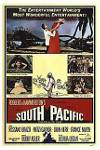
South Pacific (USA, 1958) – A lieutenant on an island army base is roped into a sudden relationship, and a nurse falls in love with a Frenchman who has taken up residence on the island, but then doesn’t want to be with him because he has children who are mixed race. Absolutely hated this one; I’ve since read that the idea is it explores issues of racism but I didn’t see that myself – the racism is there, certainly, but the commentary…
The Wedding Party (Nigeria, 2016) – Two people from wealthy families become engaged to be married; multiple clashes between the two sets of parents and the interference of an ex-girlfriend lead to many problems but the couple are determined. Until the sequel was released, this was the biggest Nigerian blockbuster and it’s not hard to see why; the characters are fantastic and it is often absolutely hilarious.
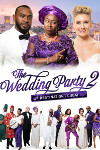
The Wedding Party 2 (Nigeria, 2017) – The English bridesmaid and the brother of the groom from the previous film have continued their relationship; owing to a misunderstanding they become engaged after a few short months and plans are afoot for a destination wedding. Even better than the first – you know most of the characters by now so the humour starts early on and the additional jokes work well.
What have you been watching in these strange times?
June 2020 Reading Round Up
Posted 6th July 2020
Category: Round-Ups Genres: N/A
2 Comments
The rabbits are almost there. We had to go through what I can only describe as emotional flashbacks but there have been no more fights, only two minor arguments (both decide to hog the litter tray at various times). Taking a blogging break was a good idea, though I’m happy to be back.
I read a good amount in June; I only finished three books but I had a couple on the go, so that July currently stands at two. Here’s what I read and finished.
All books are works of fiction.
The Books


Abubakar Adam Ibrahim: Season Of Crimson Blossoms – When Reza breaks in to Binta’s house the woman finds a desire for him under her terror and when he returns in peace they begin an affair. This was a re-read; a very good book about a relationship between a young gang leader and an elder of the community that looks at society as well as the self.
Abubakar Adam Ibrahim: The Whispering Trees – A collection of short stories full of folklore and magical realism. This has to be one of the best collections I’ve ever read; I reviewed Susmita Bhattacharya’s Table Manners earlier this year and the quality of it; Ibrahim’s collection is of similar calibre though very different in content, and the shocks and surprises get bigger and bigger as the stories continue.
Roselle Lim: Natalie Tan’s Book Of Luck And Fortune – After her mother dies, a woman travels back to her childhood home in San Francisco’s Chinatown where the locals are being pressured to move out; Natalie’s grandmother was a highly-regarded cook and restaurant owner and as Natalie gets used to being home she starts to consider the choices she made, her relationship with her mother, and the role she can play in breathing life back into the area. A great story that looks at a variety of cultural, personal, and economic discussions with a strong helping of magical realism.
I enjoyed this month’s reading a lot, and I think that enjoyment is what I’m going to remember over any specific story. I read some of each outside in the good weather, which was lovely (the temperature’s since dropped) and really helped the continuing bit of frustration I have over the pandemic.
In July I’m going to be doing more re-reading and have a couple of review copies to get to, which is quite novel at this time. I’ve Roselle Lim’s and Orlando Ortega-Medina’s August releases and very much looking forward to.
How are you getting on in this ongoing new normal, and what have you been reading?
Podcast Episode 17: Roselle Lim
Posted 22nd June 2020
Category: Miscellaneous Genres: N/A
Comments Off on Podcast Episode 17: Roselle Lim
Charlie and Roselle Lim (Natalie Tan’s Book of Luck and Fortune; Vanessa Yu’s Magical Paris Tea Shop) discuss weaving culture, mental illness, and magic into your fiction, an aid for your eyes when chopping onions, and children you excitedly take to tourist attractions who wonder what you see in them.
Fresh Fiction’s review of Natalie Tan’s Book of Luck and Fortune, as quoted


Release details: recorded 9th June 2020; published 22nd June 2020
Roselle’s social media: Twitter || Instagram || Website
Go back to the list of episodes
Show notes:
Question Index
Book Purchasing Links
Photo Credit Line
Question Index
02:03 Tell us about your writing background
03:45 Is Natalie Tan’s Book of Luck and Fortune one big metaphor?
05:27 You have a particular love of words?…
06:09 Was Natalie always planned to be unsure of herself?
06:53 How did your relationship with your own mother influence the novel?
07:51 What’s your favourite meal to make?
08:55 Have you had experience yourself of food solving, or helping to solve, a problem?
11:16 What was behind the decision to incorporate recipes into the narrative?
12:37 Does chewing mint gum help when chopping onions?
13:14 Was the thread about outsiders, trying to disrupt for their own gain, based on a particular event?
14:09 Introduce us to San Francisco’s Chinatown
15:24 Do you love classical music?
16:12 Was the romance between Natalie and Daniel always in the book?
17:26 How much was filial piety in your mind when writing?
18:53 Is Vanessa Yu Miss Yu from Natalie Tan?
19:20 (We discuss Paris and London – Roselle went there to research Vanessa Yu’s Magical Paris Tea Shop)
25:28 Did you ever wonder about using a different name to Natalie, given that that is your daughter’s name?
32:25 Vanessa Yu – is it fair to say this is a very different book to Natalie Tan?
33:09 Are you writing your next book?
33:35 Natalie Tan has been optioned for a TV show…
Purchasing Links
|
|
Natalie Tan’s Book of Love and Fortune Amazon UK Amazon US Amazon Canada Waterstones Hive Barnes & Noble IndieBound Indigo Chapters |

|
Vanessa Yu’s Magical Paris Tea Shop Amazon UK Amazon US Amazon Canada Barnes & Noble IndieBound Indigo Chapters |
I am an Amazon Associate and earn a small commission on qualifying purchases.
Photograph used with permission from the author. Credit: Shelley Smith


