





February 2016 Reading Round-Up
Posted 2nd March 2016
Category: Round-Ups Genres: N/A
11 Comments
I decided to view February 29th as a blessing and used it to finish the one and only book I could finish this month. As you know I’ve been attempting to read, have three books on the go in fact, but have had trouble getting anywhere with them. I did wonder if perhaps it was time to give up, that as it was to all intents and purposes 1st March I should consider February my first book-less month since I started blogging, embrace it, write a totally different sort of round-up, but truly I didn’t want to. It may not have been a failure to do so, we all need breaks, but there were only 125 pages left and I’m starting to crave a review writing session; in the last hours of Monday I finished a book and had a ‘yay’ moment.
All books – or this book, I should say – are works of fiction. (I always copy and paste this paragraph from another month’s. Changing it is fun.)
The Book

Chigozie Obioma: The Fishermen – In 1990s Nigeria, four siblings are told by a reputed madman that one of them will kill another; it sets off a chain of tragic events. I liked this but, despite the tragedy, I didn’t find it particularly thrilling – I closed the book happy enough to have finished it. It’s only since then, when I started mulling over what I could write about it that the goodness of it became apparent and whilst I know I may not have paid as much attention as I should have I do think this is a case of the sum being more important than the parts; you have to look at the whole to really appreciate it. I’ll wait a few posting days before reviewing because I’ll naturally be repeating a bit of what I’ve said here.
I can’t really pick a favourite in my usual way so instead I’ll say that I enjoyed the Obioma enough and I’m enjoying Cranford a lot. Now the Obioma’s finished I’m bumping Tender Is The Night back to second book status and still have that Fergusson on the go.
Quotation Report
None this time. If I tried to quote Obioma I’d run afoul of fair use rules because his writing style is too good.
I’m going to repeat what I expect is in most people’s minds – how is it March already? – and wish you all a happy one.
What did you read in February? Was the extra day an advantage?
How To Forget Book Spoilers
Posted 29th February 2016
Category: Chit-Chat Genres: N/A
9 Comments

I was taking a look through my stats recently and saw a keyword phrase that caught my attention. After almost six years and Google’s move to ‘not provided’ mean I don’t tend to see new data from search visitors so this was rather novel.
I’ve used the phrase as the title of this post because it’s spot on. I really felt for this person as I expect many of you will also. Spoilers are something that, as a reader, you’re going to struggle with at some point, whether you like them or not; more often nowadays with the Internet, information more available.
I’ve dealt with the problem a number of times, most recently a couple of years ago when I was reading an unrelated article that, without warning, spoiled the ending of Anna Karenina. Many of the comments on the article thanked the author, sarcastically, for it.
This is where I get to answering my visitor’s question. There are a couple of ways to deal with spoilers you’d prefer you didn’t know. In my Tolstoy case, I knew that the spoiler was so strong I’d likely never forget it; the best way to deal with the situation was to move the book from its then current position, far down my list – I didn’t even have a copy of it – to the top. I was never going to forget the spoiler, I might as well just read the book now. By reading it now I would be making the best of the situation and could possibly turn it into a positive – I likely otherwise would still not have read it to this day. The timely release of the newest film adaptation cemented my decision.
In this case we can say that to a point I embraced the spoiler; this reading was undertaken in a different way to my usual. I was reading the book to see why and how things transpired as they did rather than to enjoy the plot. I did enjoy the plot but from the point of view of pacing and style rather than any thrill or anticipation. Ironically I ended up reading the book in a way more akin to re-reading; whilst I’m still not happy to have had it spoiled I appreciate that my accidental knowledge may have aided the output of Further Thoughts posts I finished my reading with. Knowing the climax meant I could write in context before my time.
If you don’t want to read the book now, if you want to rebel against this unwanted spoiling, there’s really only one other option – don’t read it. Wait until later, see if you can wait long enough, without reminding yourself of the details, that you forget them. Perhaps it helps that I had no immediate nor long-term plans anyway but a crucial element of Strange Case of Dr Jekyll and Mr Hyde was spoiled for me some years ago by someone who used the phrase ‘everybody knows that…’ without thinking that that statement is so rarely true – and I have successfully forgotten it. I have a vague notion of what it pertained to but not the specifics, nothing to lead me to remember unless some other person uses the same statement. (I’m very much against the thinking behind the use of ‘everybody knows that…’ because it’s asking for upset and embarrassment.)
Whilst waiting it may help to read around the book in such a way that the detail you learned becomes blurred. Muddy the waters. It’s easier said than done but sometimes reading something like it but not the same can cause you to become confused – the aim here is to achieve the result of the history lover who goes on to read so many fictional re-tellings that they forget the facts. (Of course the history lover would have to be more fair-weather for this to really happen, hence the difficulty.)
Use the spoiler as a bittersweet nudge towards reading the book or do your best to hamper your memory. That’s really all you can do.
What do you do when you learn of spoilers for books you’re wanting to read?
My Childhood Years And Victorian Children’s Books
Posted 26th February 2016
Category: Chit-Chat Genres: N/A
7 Comments

At the moment I’m on a Victorian literature learning bender and as tends to be the case when you’ve already learned a fair amount on a subject I’ve been looking into the smaller details, going further afield to writers of other countries, looking at lesser-known writers who wrote for different ages.
And there they were – a list of Victorian children’s (chapter books) writers. And hold up a moment, go back. I recognised all of them.
To sum it up, all the children’s writers listed were ones I’d read in my childhood. It was a sudden realisation and please feel free to laugh because I’ve been reading and studying literature for, what is it, six years now, but have only just worked it out – my parents tricked me into reading classic books.
I use the word ‘tricked’ loosely because in fact I really love the idea. I can see in it my classics-loving father and my you-can-never-have-too-many-books-oh-dear-what-have-I-done mother, introducing me to the canon without any fanfare.
What’s interesting is the next thought I had. These books constituted gifts from my parents and extended family, books I’d not specifically asked for. And these I read at home; my choices at school were modern. It’s been a revelation – during a certain period of my childhood I finished very few books. I’ve often felt embarrassed by this. Now I can correlate the period with those books; it was the classical literature I didn’t finish.
Not all – I do remember finishing Little Women and I think I finished Pollyanna… or at least I finished the film. But Black Beauty, Heidi, What Katy Did? No. I remember finding them all very charming, though I wouldn’t have used that word then, but looking back with the hindsight and knowledge I have now I can see that the differences in culture and so on made these books less appealing. They were lovely and somewhat utopian but they didn’t represent my experience of life.
This is starting to sound as though it’s in line with my feelings as to the appropriateness of classics at exam level so I’ll say now that it’s not. Whilst I think classics at school are classics before their time, children’s books are obviously read at the right age, it’s just that time has moved on since their release date. Whereas a GCSE student will go on to have the experiences and knowledge to appreciate the Victorian adult canon, a children’s book naturally comes without the requirement to live first. It’s simply a sad fact that due to the progression of time a person may enjoy Victorian children’s literature more as an adult.
To spin off this subject I distinctly remember my editions of Black Beauty and Heidi included the word ‘unabridged’. Even then I was very happy to hear from my mother that this meant it was the complete text – I’ve always been someone who prefers a slow trudge if it means reading a book as it was written. What intrigues me about this is that abridged books are often children’s books. Adult books are abridged for children and recently there’s even been the publication of classics as board books for toddlers, told in twelve words (it’s quite fascinating, see here if you’re interested). But these are adult books made accessible for children – what exactly is the point of abridging a book that was written for children in the first place?
Of course there’s a reason; I suppose it’s to counteract that problem I had – the inability to relate. Children’s books don’t tend to be violent and whilst culture has changed as the years have gone by, Victorian children’s books were hardly gruesome. It’s an interesting one.
As for myself I think I’m going to try and incorporate those old books into my present reading.
Did you read Victorian chapter books during your childhood, Lewis Carroll aside? What do you think of the abridgement of children’s books?
Dated Books And Cranford
Posted 24th February 2016
Category: Chit-Chat Genres: N/A
4 Comments
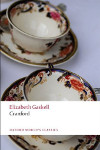
“Have you seen any numbers of ‘The Pickwick Papers’?” said he. (They were then publishing in parts.) “Capital thing!”
I paused at the above. The kowtowing, or, at the very least, nod, to Dickens is obvious – Cranford was published first as a serial in Household Words, a magazine Dickens edited – but what struck me first and foremost was the use of current culture.
Discussed often and especially right now in these times of rapidly changing technology is whether or not including references to specific tech, items and so on, will date a book enough to make it irrelevant in a few short years. Chick-lit, for example, often refers to current culture and whole books are written in emails and tweets. (In this case we can at least say email’s been around for years, has simple taken over the letter. Twitter on the other hand is a new concept entirely and already appears to have peaked.)
Broad references and references to things that have or had been around for ages do of course date a book but more in the sense that they inform you of the era, help you set the time and location in your mind. A reference to Kanye West’s spoiling of Taylor Swift’s acceptance speech will likely mean nothing within a dozen or so years. One reference or two might be okay but a book that’s packed with today’s news will likely be put aside tomorrow.
This whole mode of thinking is different when it comes to classics. Why is that? We could suggest that Gaskell had a crystal ball and ‘knew’ Dickens’ work would last but apart from a general sense that he wrote good books, Gaskell could only guess in the same way that we can only guess Michael Jackson’s music, Suzanne Collins’ books, will survive our era. In Gaskell’s case the usage is to do with her acquaintance with Dickens, an inside joke, and Dickens understandably left it in there. But why do we take no note of it, is it that we just enjoy the literary pleasure of this reference of one now famous person to another?
In Gaskell’s case here it doesn’t matter because The Pickwick Papers is famous – if we consider that Gaskell is more likely to be read after Dickens, after those who are more famous, then this reference is one of those long-lasting references that aren’t really dated because they’re still a part of our culture today. But how many references do we miss because they aren’t part of our culture? A lot, surely, because some we may not even think to look up – think of all the times you’ve missed the context of song lyrics until later because you didn’t know there was context to know about. Part of the exercise in reading classic literature is researching things that would’ve been known at the time of writing that have since been forgotten. Our discussions about dating books are moot when the classics are brought in.
Do you think dating an exclusively 21st Century idea? Do you think there’s an undefined cut off between the time dating wasn’t an issue and the time it was? Does worrying about missed contexts affect your reading?
Reading Life: 22nd February 2016
Posted 22nd February 2016
Category: Reading Life Genres: N/A
7 Comments

I’m still suffering the slump. So many books are just not keeping my attention at the moment and my tolerance for poor development and errors has lowered as a result; it’s getting quite silly really. At this point I’m looking to older books to help get me back in the swing of things. Tender Is The Night is my current choice; Rosemary’s not Jay or Daisy but I’ll give it several more pages before I make the final decision on whether or not to continue at this time. I’m also mulling over the idea of Cranford – I may not have enjoyed North And South but it didn’t put me off wanting to try another Gaskell and I’m wondering if now’s the time.
Thanks to gift cards I’ve a copy of The Ballroom by Anna Hope. I’d say it’s 95% likely I’ll love it so if all else fails on the classics front of this slump battle I’ll be turning to the early 1900s. I’m kind of banking on the promise in her surname!
I recently talked to my dad about Edgar Allan Poe. One of my favourite musicians has written songs inspired by his work and the sheer weirdness of them made me want to ask Dad if he’d read any Poe (after a short inquiry I discovered Dad’s where my interest in the classics comes from). Well he promptly got out a 1970s collection and lent it to me. I’m pretty worried, to be honest – this paperback is in excellent condition and the pages are still white! I’ve got to get myself some doors for my bookcases to emulate the darkness he’s kept this book in. We’ve agreed that once I’ve read a few of the stories we’ll have a chinwag (is that a British expression?) and compare notes.
I may be having trouble but my nephew isn’t; his reading is coming along splendidly and the beautiful Narnia edition I’ve had ready for him since he was born looks a possibility this year. He won’t be able to read all of it but hopefully enough that it’d make a nice dual-reader bedtime story series. I’ve learned that, contradictory to my expectations, the books I read when I was his age are still being published; a lovely discovery. I suppose they were more popular than I thought.
How is your reading life?


