





My Experience Of Two Abridged Children’s Stories
Posted 14th March 2016
Category: Chit-Chat Genres: N/A
4 Comments
Some posts back I mentioned the abridgement of children’s books. What I’d discovered about my childhood sparked conversation both here and in my offline life and I started looking into the abridgement idea further.

I said that abridgement seems odd in the case of children’s books but time got me considering other reasons – or, rather, I remembered The Little Mermaid.
It’s a children’s story and it’s a dark one and features a bitter-sweet ending. The original Hans Christian Andersen tale ends with the mermaid unable to kill her prince and dying, becoming foam on the sea before being offered a chance to gain a soul after 300 years of work. It’s no Disney, that’s for sure.
Disney’s version, with its red-headed Ariel, makes the tale one of triumph. Ariel gives up her voice but she wins her prince and everything turns out okay. Whilst it glosses over the darkness of the original, one could say it was a needed change, at least for younger children. Because the original, is fine for children up until that bitter-sweet ending after which it’s surely confusing and upsetting. There’s a open-ended factor to it – did the mermaid succeed in the post-death tasks she was set? It stayed in my mind for years.
The Disney change also means the story could match Disney’s idea of princesses getting their princes. Perhaps they deemed the mermaid’s story a bit too realistic in the sense that she didn’t get her dream. Enough on that point.
Disney’s changes make sense as do adaptations that follow the same thinking. They ensure younger readers can be introduced to the idea and enjoy it whilst ‘waiting’ to be old enough for the real deal. Certainly, though, I was surprised at my Ladybird copy of the book and its sad ending, it’s beautifully drawn picture of spirits in the sky. Disney had guided my journey but I did feel duped. Whether I was really old enough to appreciate the real story is another thing; that it haunts me to this day suggests that perhaps there’s no good time for the story to be discovered.

Looking again at adult books, my copy of Around The World In 80 Days sported no more than 80 pages. It may even have been 50 – I remember that by adult standards it looked short but the text was crammed in. I stayed up all night to read it, proudly going downstairs around 2am to tell my mother I’d read it all and being escorted swiftly back to bed because I had school the next day. Whether it was because she set a time limit or because I’d realised she wasn’t as happy as I’d expected her to be, I didn’t read for that long in bed again for a good few years.
This was an adult book abridged for children and done right. It was fascinating; it had pictures throughout (it was another Ladybird), the scenes chosen ensured it kept your attention, and it made you feel as though you’d really accomplished something as my pride above showed. It made you feel you’d stepped up your reading, that you’d read a whole book. I don’t feel cheated, even now, because it was produced with so much thought.
Whether or not the book’s release date coincided or if it was just my ownership of it, around the same time the BBC adaptation, a cartoon, again for children, started its run, and again it was well done.
Abridgement can work but only when it makes sense, only when it will truly offer something of value that can’t wait until maturity. Have I read Around The World In 80 Days? No, I haven’t, but I do intend to, and my childhood experience of the story together with my recent reading of Palin’s Verne-inspired trip has made me excited about it.
Has abridgement worked for you?
Considering Ideas
Posted 11th March 2016
Category: Chit-Chat Genres: N/A
5 Comments

I have 23 pages of blog post ideas. Many have bullet points added to them but when you consider it’s 23 pages of tabled information in a smallish font… And I often say I have no ideas. The problem is that many of these ideas are rough, in-the-moment, ideas that would make poor and/or very short posts. Others I’ve simply grown out of.
But I never get rid of them, just in case: I’m following concepts from a number of blogging blogs. Namely two concepts – one: note down all your ideas because you never know; two (which links to the previous): even bad or tiny ideas can be combined to make better ones. That second concept is great but I’m yet to use it. Perhaps it’s the fact I do like to make rough plans as soon as ideas hit but the thought of combing through those pages each time I start writing is enough to make me stop altogether. And I’d always fear that in combining I’d made one post instead of a possible two, even though the object is to combine ideas that would never stand on their own.
Should we purge our lists of ideas every now and then? Perhaps. Like the culling of books, if the idea of the idea makes you want to run to the hills then it’s surely a good plan.
When you’re starting to wonder if you should buy shares in the company that makes the word processor you use perhaps it’s time to purge. Or reorganise, move old ideas to a place they can’t taunt you and make an effort to write up new ideas or get out your guitar as they come. I get out of bed at 1am, though tired, to write – I do it almost every time I’ve not yet fallen asleep and an idea hits – so I should be able to get out the notebook instead of checking whether my favourite vlogger has a new video. (This is where the idea of having a dedicated blog post writing day is good. I drafted a post about that but it was a while ago…)
With all the talk of editorial calendars I’ve finally come up with a decent plan for each day’s blogging time. If my posting schedule is Monday-Wednesday-Friday that leaves me with Tuesday-Thursday, and Saturday and Sunday if desired, to write posts. I got mathematical, worked out that writing 4 posts a week, beginning the initial count on a Tuesday, would mean within two weeks I’d be ahead – by 1 post that week, 2 the next, then 3, and so on. I could create an editorial calendar that I could stick to and not go through phases of writing posts the day before. I could take short breaks. Of course I would still need to be finding ideas but I reckon that would happen by working on others and being present.
Those ideas need to be realised or ditched. There’s no point looking at a list of possibilities that aren’t.
How do you handle ideas be they writing or otherwise? Do you think certain hobbies are easier than others in this respect?
Chigozie Obioma – The Fishermen
Posted 9th March 2016
Category: Reviews Genres: 2010s, Commentary, Domestic, Political, Psychological, Social
2 Comments

Taking ‘do as I say’ to the extreme.
Publisher: One (Pushkin Press)
Pages: 293
Type: Fiction
Age: Adult
ISBN: 978-0-957-54885-5
First Published: 11th February 2015 (in translation); 26th February 2015
Date Reviewed: 3rd March 2016
Rating: 3.5/5
Together with his four elder brothers, Ben starts going to the river to fish, secretly, because the town views the previously-worshipped waters with suspicion. The boys are caught by a neighbour, whipped by their father, but the real trouble with creeping out alone is yet to come. One day the madman Abulu, considered religious by some, happens upon the brothers and tells them that one will kill another.
The Fishermen is a book that incorporates folklore, old customs, and 1990s Nigerian social and religious culture into its tale of tragedy. A literary venture, it takes its time on one particular element, bolstered by a background of politics, fundamental Christianity, and the kind of child discipline we now call too much.
Dealing with the writing style first because it’s the first thing to make its mark, Obioma favours a detailed, sometimes overly-wordy, almost studious style that nevertheless has the power to wow on occasion. He likes ‘big’ words, beautiful sentences, and his young narrator, Ben, is just the right side of well-spoken rather than appearing too old for his years. Obioma narrates in a way similar to the spoken narration you often find in Victorian adaptations, films – that slow, wistful narration most common to women. There’s an oral tradition feel to it, poetic, storyteller. It could certainly be called too much – it’s one of those styles you’ll likely either love or hate. Obioma is entirely unapologetic; he wants a well-written book, old fashioned – understandably more 90s than nowadays – and he will have one. (You do have to remember the setting when considering the style, the time and the place.)
It’s not completely well-written but whether that’s down to Obioma or the editing process is hard to say. Certainly the myriad uses of ‘in’ instead of ‘on’, of ‘on’ instead of ‘at’ and so on, are at odds with the rest of the text, suggesting an oversight or perhaps a slight discord between our literature professor and the publisher’s editors. Whatever the reason, the constant misuse is distracting and means keeping your mind on the story is difficult.
There is a disconnect of sorts between Ben and the reader; where Obioma is so focused on the way he writes his tale – the words, the genres, the background – Ben, his brothers and other family are not so detailed. They are detailed – they’re not one-dimensional at all – but there’s no pressing reason, no feeling of the need to care, which is a problem when the story involves a lot of tragedy. And it’s hard to get to grips with the family – the way the father metes out punishment, the mother quick to manipulate and throw her children under the proverbial bus, are perhaps more difficult to read than the author hoped.
Not much goes on in the book – this sounds too ironic to be true so I’ll explain: the book is a series of tragic events with some politics in the background, but not much beyond that. This isn’t a failing in itself, many books are similar, it just means that The Fishermen is more about the sum than the parts. The book is not as interesting to read as it is to contemplate after the fact, when you’re able to put everything together and see that Obioma’s goal has been to provide an overall meaning, a message, even.
Superstition or prophecy? Obioma presents the possibility of both and asks you to form your own conclusion. What was it that made things happen as they did and can and should religious ideas take precedent? Obioma looks at the psychological factors ruling his characters’ choices, the way one thing said by a person considered mad has a knock-on effect. And as much as the characters are Christian, the author shows that mythology and old ways can still creep into life, that we can move on to new ideas but those old ones will remain ingrained for a time.
A note on one of the tragedies – this book deals with under-age crime in a way that may make you uncomfortable. This is actually a reason to read it rather than not because it opens you to the situation and says more by its inclusion than Obioma could say without it – more than he could say just in words. It’s viewed through a similar lens as the rest of the book: it happens, whether it’s right or wrong is irrelevant here.
Overall, then, The Fishermen is a good book, but doesn’t quite keep the promise of the first pages. It does make for some interesting contemplation but the contemplation is fairly short-lived. Take it as a look at 90s Nigeria, its politics and its culture and society and you’ll be best off.
Related Books
None yet
Discovering Irving Bacheller
Posted 7th March 2016
Category: Chit-Chat Genres: N/A
2 Comments

Laurie’s recent post on wanting to learn more about L M Montgomery reminded me of the time a few years ago I picked an old book at random, read it, reviewed it, and forgot all about it.
I found The Light In The Clearing on The Book Depository. Somehow I’d made my way to their free ebook section, discovered they’d produced PDFs of a great many old books and went on a downloading spree. I didn’t care for authors that day; if the book title sounded even vaguely interesting I promptly clicked on it.
And inevitably forgot about all of them. I’m sure you’re familiar with the free ebooks mad dash situation. The results of mine are festering in a folder on my computer. Yours?
Anyway, at some point some sound reasoning hit me and I decided it was time to choose one of these books and read it. I looked at Amelia E Barr’s A Daughter Of Fife but couldn’t get into it – accents a plenty, I believe. I moved on to the Bacheller – I thought the title pretty.
All this to say I knew nothing about the author. It’s amazing what you discover, sometimes, when you’ve made assumptions, tarring a group of books with the same brush and thinking that even if one was a best-seller it’s just a bunch of old books no one’s ever heard of so what’s to know? (I’m happy to say I’ve improved a lot since then.)
So I went looking for information. There’s not much to be found. There are few reviews of the book I read – at the time mine was the only one I knew of insofar as recent reviews (there’s now a single mini-review). Bacheller is far from the canon. He happened to write during Hardy and Fitzgerald’s eras but his mark on the world was temporary. The sand has since shifted.
But he is worth reading. I was surprised by my miney-mo choice; Bacheller, 1859-1950, was an American journalist who founded the first modern newspaper syndicate in his country. It was thanks to him Americans were able to read the work of British writers – Conrad, Conan Doyle, Kipling are those mentioned.
Bacheller’s first success as a novelist was Eben Holden. Originally drafted for children, it’s about the flight of a boy from Vermont to Paradise Valley and the man who plays a role in his upbringing. It was the 4th best-selling novel of it’s year, an immediate success upon its release in 1900, moving 125,000 copies in its first four months and a reputed 1,000,000 in total. The Light In The Clearing, 1917, was the 2nd best-selling novel; I likened it to Great Expectations in theme. Many of his other works faired similarly.
Bacheller remained a journalist throughout; he had left his job as an editor to write. During the First World War he was a correspondent in France.
Beyond this there is little, indeed most of my information comes solely from Irving Bacheller’s Wikipedia page. There’s no page for the book I read and the one for Eben Holden doesn’t speak of the plot – I had to go to GoodReads for that. There’s something very grounding in the fact an author of best-sellers – noting the plural – can be so forgotten. Bacheller did help improve, on a major scale, Rollins College and his named is used there, but to all intents and purposes he’s illustrative of the fact that even long-term fame is fleeting.
In 1956, when Eben Holden was no longer popular, one Walter Harding (a recognised Henry David Thoreau devotee), is quoted as saying “one was not well-read in 1900 unless he had read [it].” Whilst it’s true there are many more books released in the 21st century compared to the 20th, there’s something to be said for the way a person’s ability to be considered well-read or not today does not depend on new releases.
I’ve marked the afore-mentioned well-read requirement for some point in the future as I feel I almost owe it to the man. When I think of all the possibilities of all the other authors whose works I downloaded it’s really quite humbling.
Any forgotten authors you’d like to share?
Analyses Of First Lines
Posted 4th March 2016
Category: Close Reading Genres: N/A
6 Comments
In this slump of mine, which if it carries on much longer I’ll have to baptise with a formal name, I’ve flicked through several books. Mostly they’ve been books on my pile – next in line and then next after that and so on. As I’ve been previewing these books in a manner akin to window shopping, I’ve read many opening pages and in the absence of any deeper thought posts and reviews it occurred to me I could still discuss what I’ve read, just in a different manner. I’m opting for first sentences because often they are long enough in themselves to be paragraphs, and because to use any more than a sentence – especially considering the length of some, would require counting words for fair usage; an arduous task for little gain.
Please note this post is subjective – I’m no expert in close reading. It’s also very long (2000 words) and quite possibly boring – do let me know if this post should be a one-off.
I’m going to begin with Su Dharmapala’s Saree; reading it was what gave me this idea in the first place. Here’s the opening line:
There is a small park outside the town of Sirsa in Haryana, India.

Dharmapala’s first sentence seems to fly in the face of all we’ve heard about making your opening line attract the reader; there’s nothing particularly alluring about it. Yet, if you’ll pardon my stereotypical metaphor, it’s a bit like the beginning of a guided meditation session wherein the words you’re hearing start with a place commonly associated with peace delivered in a peaceful manner. There’s no action in the sentence but it does set you in place right away.
I’ve heard it said that authors of colour are almost expected to produce works of importance about their ethic origins. Whether that’s true or not I don’t know but certainly I can think of many more books by people of colour that are about profound subjects rather than run of the mill everyday living (I’ve chick-lit in mind for that second group). Dharmapala sets Saree‘s record straight at once – yes, this is going to be about India. (However, and I’m putting this in brackets because it’s not specific to my plan here, as you later discover, the book is more chick-lit than literary which asks a potentially intriguing question of Dharmapala – she’s subscribing to her ethnic origins but writing a book that’s more everyday-ish.)
Going on from that, Dharmapala is very specific: this near Sirsa in Haryana. She doesn’t assume you know where Sirsa is, in fact she’s adopted a style akin to Victorian writers, that slow description that sets the story as early on as possible. Perhaps it’s the info-dump factor, but often books leave the specifics of location to the reader to imagine. Dharmapala believes the debate should fall on this side: combat it quickly.
Here’s Chigozie Obioma’s first line from Man Booker shortlister, The Fishermen:
We were fishermen:
My brothers and I became fishermen in January of 1996 after our father moved out of Akure, a town in the west of Nigeria, where we had lived together all our lives.
What’s special here is the line break – Obioma states his mission almost, repeating his title and informing you that he’s going to get straight to the point. But he doesn’t want to just state it and continue, from the start it’s important to connect the title with the context. At the same time one could suppose the author has noticed the need to use description early on to offset any claims of info-dump. We were fishermen and this is how we came to be such – the word ‘fishermen’ does not provide the layers of meaning Obioma has adopted and so he must tell you.
We can say that context is the name of the game in the usage of a specific year. Yes, it gives a briefing of what time we’re reading about but also Obioma is almost suggesting that, if you do not have the knowledge, you do your research into the state of Nigeria in the 90s now, before continuing your reading. He will of course use social and political history himself anyway, later, but if you like to know background context, the first line is your cue to go and check it out.
Obioma’s lengthy description (because it continues on for a fair time past this sentence) is offset by his writing style. I often start to think of how I’ll write my review early on in the reading – the way I’d describe Obioma here in The Fishermen, I’d call to mind any well-spoken narration in a Victorian novel-based film in which the lead character talks to the viewer, slowly, wistfully. You know the sort I mean; in fact the only difference in delivery, to my mind, is that Obioma is male, his character male also, and I can’t think of any films or TV serials that use male narration in quite the same way.
Certainly I think Obioma’s first line is verging on info-dump but it’s as though the author knows that and will style his voice accordingly so that the text isn’t as dull as it might have been otherwise.
So that’s one mid-list and a prize nominee, let’s jump back in time, shake it up a bit. Here’s the opening line – paragraph – of the book that laid claim to Everdene long before the birth of Katniss:
When Farmer Oak smiled, the corners of his mouth spread, till they were within an unimportant distance of his ears, his eyes were reduced to mere chinks, and diverging wrinkles appeared round them, extending upon his countenance like the rays in a rudimentary sketch of the rising sun.
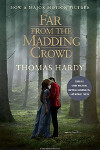
And breathe. Thomas Hardy shows us how it’s done. The beginning of Far From The Madding Crowd is enticing even though nothing palpable is going on. Personal, facial, action, yes, but unlike Dharmapala, who wants you to focus on a place and Obioma who wants your focus to be on a place and time, Hardy’s introducing you to someone who will undoubtedly turn out to be an important character. I’m reminded of the level of detail Markus Zusak employs in The Book Thief, all those pimples moving across faces – perhaps he read Hardy first. In a short paragraph Hardy successfully breathes life into a fictional person, sets in your mind an allure not unlike Tolstoy for Anna Karenina. He makes you want to read more about this Farmer Oak. It’s surface dressing at the moment but it’s that first impression and Hardy knows how to win on that front.
Whoever this Farmer Oak is, his face could launch a thousand ships – who wouldn’t want to continue reading about him?
Certainly, I was thrilled to be galloping along on this beautiful June day with my gentle brother Samson and our valet Miroul, traversing the highways and byways of France, and yet I kept feeling sudden waves of regret at leaving the barony of Mespech behind.
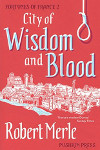
This, translated from the French, is the opening of Robert Merle’s City Of Wisdom And Blood. I love it; this is the second book in a series and Merle throws you into the action from the first moment – there’s no gap between the end of book one and this opening. That the rest of the sentence is a recap is no problem – it’s short and could be considered the opening of a chapter rather than a whole book.
As books go, however, you do have to factor in the… fact… that Merle has the upper hand. As far as the other books in this post are concerned, no one else could have opened as strongly as this – they’re all standalones or firsts-in-series.
Away from that, Merle does what I know I wish, and I expect many of you, too, authors would do – continue a series from where the previous book left off. A jump in time can be all the disconnect required to halt the momentum or motivation. I will always wonder why there was a jump; it’s often the case that the meantime is not refered to or not referred to enough. I’ll feel I’m behind the fence whereas before I was a fly on the wall.
As a continuation of a series, there’s less need for a thrilling, alluring first line and yet Merle does it anyway. (I reckon it’s too involved and specific a line to worry about the translator’s input in this regard.)
Ben Fergusson’s The Spring Of Kasper Meier begins on the following note:
Frau Leibnitz’s tiny bar in Prenzlauer Berg was filled with shouting Russian voices and the smell of sweat, cheap schnapps and vomit.
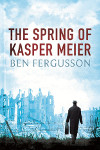
Well it sets a scene even if it’s not quite what you’re looking for in your lunchtime reading. Does it invite further reading? Scene aside it is rather average on the whole and reflective of the book at large – more telling than showing. This said it tells you what you need to know about it: it’s historic – there are Russians in this German pub and the latter part, the sweat, cheap drinks and vomit indicates the war. These aren’t Russian holidaymakers, they’re World War II soldiers. And this is post-war. What it doesn’t do is introduce you to the main character, Kasper. Fergusson’s opted for time rather than his fiction.
If you’re looking for a book with Oxford commas you’re out of luck.
Back to Hardy’s era and here’s Elizabeth Gaskell:
In the first place, Cranford is in possession of the Amazons; all the holders of houses above a certain rent are women.

This book will be turning ideas of gender on its head, says Mrs Gaskell. The reference to tribal people in the first part enables her to point to the women as strong, in control, knowledgeable. The second part allows her to show that this isn’t going to be a book about rowdy people (bearing in mind the views at the time). There may not be men in this book and if there are they aren’t going to be particularly important. With her first sentence Gaskell sets out location, society, gender, manners and suggests that this book may go against the grain a bit… but it’s nothing like Ruth so if your Victorian sensibilities were hurt by that book then please be assured I’m going for something different here. She inserts a bit of humour – see, we’re okay – and suggests that there’s much more to know so keep reading.
My personal opinion is that this is a stellar opening. It tells you everything at a glance and is inviting to boot.
Lastly, we’ve Fitzgerald:
On the pleasant shore of the French Riviera, about halfway between Marseilles and the Italian border, stands a large, proud, rose-colored hotel.”

In this, the first line of Tender Is The Night, Fitzgerald tells us two things. Firstly, that this will not be like The Great Gatsby with its draw-you-in-quick beginning but that secondly, if you’re looking for a potentially relaxing Parisian novel you’ve come to the right place. So much does Fitzgerald want you to be sure on this second point that he details the initial setting down to the mile; and his description of the hotel will inform you of the sort of people you might meet on your trip – well-off, well-connected, and proud like his nature-inspired hotel. But you had that idea already, the pleasant shore telling you.
The book begins in the way it means to go on, slow, leisurely, with a firm sense of vacances.
Due to my last few posts you likely know which book I continued with – Cranford. It was the one that spoke to me at the time, the one that’s least literary – that turned out to be the problem (too much literary fiction without a break for another genre – I’ve since finished the Obioma after which I plumped for an Elizabeth Chadwick as my primary read and moved the Gaskell to second).
How important are first lines to you when choosing your next book? Are you a fan of close reading? Have you read any of the books I’ve discussed here?


