




Rick Yancey – The 5th Wave
Posted 16th September 2016
Category: Reviews Genres: 2010s, Commentary, Science Fiction
2 Comments

Not the happy Mexican one.
Publisher: Penguin
Pages: 461
Type: Fiction
Age: Young Adult
ISBN: 978-0-141-34583-3
First Published: 7th May 2013
Date Reviewed: 7th July 2016
Rating: 3/5
The alien ‘waves’ arrived with only ten days warning. For those ten days, a vast mother ship hovered in the sky; humanity went about life as normal, wondering if the aliens would make contact and either becoming excited or remaining indifferent to the idea. Like the other kids, sixteen-year-old Cassie continues going to school and it’s during a lesson that the lights go out, mobile phones go dead, and a plane falls from the sky. Suddenly excitement about alien contact goes silent, as silent as the waves of death the aliens begin to spread.
The 5th Wave is a Young Adult science fiction book that is an easy and often well-paced read but unfortunately suffers due to its formulaic nature and writing.
The story begins well and with much promise – this will not be your usual alien-invasion story, says Yancey, and Cassie quickly quashes her misgivings over using a gun. She will shoot if she has to. It’s all rather exciting. Get past the first section, however, and the true concept reveals itself: The 5th Wave may not be your ‘usual’ alien story (or at least not too usual) but it is your usual dystopian. After that first section wherein Cassie was a character you were fully looking forward to spending a vast number of pages with, two things happen.
First thing: Cassie’s personality changes. She meets a boy and suddenly it’s no longer a question of guns and survival and aliens outside the door (the humans have considered the possibility of infiltration) but looking nice, washing her hair… you get the idea. That Cassie falls in love in a desperate situation is understandable, but that she suddenly pushes the apocalypse to the side isn’t exactly realistic. She’s just survived tsunamis and a plague that wiped out billions, people are dead and every second counts in saving someone only she can save, but let’s have a cuddle first.
Second thing: the narrative switches to other characters. This isn’t a problem in itself, even if it does mean the book leans ever more into that formulaic territory, it’s that Yancey doesn’t tell you he’s switching and the lack of names mean it always takes a bit of time to work out who you’re reading about. The first new point of view matches Cassie’s in that the situation is one you naturally think is hers – Cassie was hurt so turning the page to read about someone being given first aid sounds like a continuation of the narrative. (I myself thought the referrals to this person as ‘he’ amounted to some sort of alien female-led society, which would’ve been rather awesome.)
Following on from this narrative change is the way Yancey goes about answering questions. He doesn’t really need to say anything, the book is entirely predictable once you’ve figured out what his plan is, but as it trickles out you see the influences – The Hunger Games, a certain vampire series, and notable bits and pieces from other books that it would spoil the ‘reveal’ to list, blended together (there’s even some sort of inner goddess spin-off going on). If you’ve read any of those books or seen the film adaptations, you won’t find anything new in this book.
Are the aliens exciting? Not really. They’re said to be very advanced but they’re conveniently limited by our technology at times. They make choices that allow Yancey to keep the story going. And there will be no epic battle with them later on in the series because of the way Yancey has constructed their civilisation.
There is one very good thing about this book and that is the atmosphere, or slight commentary, Yancey includes of political historical situations. Many other reviewers have noted the Colonial era, the British invasion of America and subsequent trampling of the Natives; I myself found a study of the Holocaust. Suffice to say there is something subtle at work where Yancey is looking at invasion, human against human, and showing how awful it is by pitting the whole of humanity together against another species. There’s no real conclusion to it here and indeed it seems more the general assumption of readers that there is this subtext (rather than an obvious sign from Yancey) but as many have seen it it’s something to bear in mind and, whatever it really is, it lifts the book above its narrative, at times giving it an air of literary fiction. It’s just that it’s not enough to keep the book above the narrative in the long run.
The 5th Wave is worth reading if you want something easy and if you’ve read other dystopian Young Adult trilogies and want more of the same (it is fun in that way – the pages fly by), but if you’re after a good alien invasion story you’ll be disappointed.
Related Books
None yet
Zelda Fitzgerald In Midnight In Paris
Posted 14th September 2016
Category: Further Thoughts Genres: N/A
3 Comments

Screen shot from Midnight In Paris, copyright © 2011 Warner Brothers.
I want to explore the interpretation and portrayal of Zelda in Midnight In Paris, played by Alison Pill. (I’ve previously written about the film as a whole here.) I like comparing interpretation to reality and film adaptations are in my head at the moment as I’m writing about them for a future post. Midnight In Paris, being book-led, is one that’s often in mind. This will be a bit of a ‘facts’ post.
Zelda, together with husband Scott, was an emblem of the Jazz Age. The pair are still celebrated for it, as Scott’s books have remained in print and Zelda’s work is becoming more recognised. We’re also, now, writing about her and studying her. The Zelda and Scott of the film are sociable; it’s obvious they have many friends and are part of many circles.
Zelda disliked Ernest Hemingway – Hemingway blamed her for Scott’s declining literary output. (How much we can say about this is difficult but we know they enjoyed a busy social life.) In the film, Zelda introduces Gil to Hemingway and whilst she’s perfectly polite there’s a slight coldness, an indifference. She stays for a few minutes and then wants to head out. So we’re not told about any problems between her and Hemingway but that under-the-surface atmosphere gently simmers. It’s more a suggestion – and would you notice it if you didn’t already know about her life? – but she’s not partying with him, and he seems okay, if not particularly enthused, with the idea of talking to Gil. The film’s portrayal here is one of gentle showing. The rift isn’t something to focus on.
Zelda and Scott’s marriage was plagued by drinking, affairs, and recriminations. Zelda has been portrayed in history as the victim of an overbearing husband. Diagnosed with Schizophrenia, she was increasingly confined to clinics. The film doesn’t look at any overbearing but it does look at the drinking. Zelda gets very merry and towards the end becomes suicidal. We can assume the suicide aspect here is included to show the progression of her life within that short time frame, but it does introduce us to the affairs and arguments because film Zelda, drunk, is wanting to throw herself in the river because Scott’s been seen with another woman. If anything, in the film, Zelda is shown to be overbearing; it’s not obvious that she’s mentally ill, more that she’s in anguish over her husband’s infidelity. Her fairly neutral behaviour early on isn’t linked properly because of the film’s focus on Gil.
As a child, Zelda was spoiled by her mother. Her father was strict and remote. The family was prominent, southern. Zelda liked the outdoors and enjoyed ballet. She didn’t enjoy academics so much – she was bright but didn’t like lessons. The film puts an emphasise on her regional background, her heavy accent, and there is a nod to her education when she speaks of her own work. She vastly prefers parties, it seems.
As she got older, Zelda drank, smoked, and spent time with boys. She was a leader amongst her peers, gaining an appetite for attention, for flouting social norms. Her ruin was prevented by her father’s reputation. All said, she was in a lucky situation and very privileged. What we get from the film in this case is her privilege in the literary circle; she knows many people and, if the real Zelda was like film Zelda, she was happy to share her network. Again, most of what we can tell of Zelda from the film is shown in the characterisation, direction, and in the actor’s bearing.
I was intrigued to find the interpretation of Zelda in Midnight In Paris to be pretty accurate as far as our – admittedly lacking – knowledge is concerned. (I’ll always remember my history tutor telling us to view media and documentaries made for mass consumption, when looking for evidence and opinions, but to be sceptical of the details when we didn’t know otherwise.) Midnight In Paris gets it right. The main limitation is that a film is far shorter than a life so film Zelda does a lot more things in a shorter time. The film shows the dynamics of her relationship with Scott and we could always say the film shows later stages – how problems had started to turn into troubles.
From the film we get someone who could be irrational but also intelligent, well-connected, and friendly. The film deals with the problems openly but remains respectful. You get a good picture of who the real person was.
Which portrayals of real people have you found to be quite or particularly accurate?
References
Wikipedia’s article on Zelda Fitzgerald, accessed May 2016
Jemma Wayne – Chains Of Sand
Posted 12th September 2016
Category: Reviews Genres: 2010s, Commentary, Political, Social, Theological
5 Comments
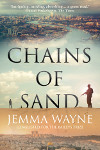
Current, constant, conflict.
Publisher: Legend Press
Pages: 315
Type: Fiction
Age: Adult
ISBN: 978-1-785-07972-6
First Published: 1st June 2016
Date Reviewed: 12th September 2016
Rating: 3.5/5
Udi wants to move to England, to join his cousins. Life in Israel does not offer him what he wants. His girlfriend and family may want him to stay but he hopes for more than menial jobs. In England, British Jew, Daniel, wants to move to Israel, seeing it as his destiny and the place he just ought to be. His friendship with Safia will never progress to a relationship because she is Muslim and he feels it would be wrong, and when he meets Orli in Tel Aviv he feels a draw greater than the one he feels towards Safia, and greater than the one he felt towards his old long-term girlfriend. Amidst these stories is that of Kaseem and Dara, a relationship that secretly crosses the border.
Chains Of Sand is a novel set during the here and now of the Arab-Israeli conflict. Taking on the narratives of Jews, Wayne has written a book that has the potential to divide before it brings everything back together for a short time at the end; in looking at the conflict, Wayne writes from a specific viewpoint first and foremost. She details the day-to-day of fighting, of security and the way such security has become par for the course by both necessity and anxiety. She shows the conflict between modernity and tradition, how in theory one might want to dispense with tradition but in reality it’s ingrained within them, sometimes in ways they don’t realise until they do dispense with it. She shows how holding steadfast can result in familial conflict and how not holding steadfast can result in familial conflict. And she shows obvious cultural differences, violence, lazy contentment-filled days, and everything in between. Reading from afar it’s a big reminder of everything that isn’t covered in the news, of the regular life going on behind the conflict, but also the irregularities that are ever apparent and the intolerance – whilst working from one side of the equation she shows the various intolerances as well as liberal views.
So this book is a look at the conflict right where it is happening, as well as a look from afar. It includes direct knowledge, lived knowledge, and rose-tinted glasses. But something is lacking in the overall presentation and it isn’t until much later that it becomes apparent that what’s lacking is emotion (other than thoughts of love, which themselves aren’t always convincing, the context more often lust). There is a divide between reader and character that is down to the way the story has been written and presented; as the end pages draw near this lack disappears and in its place is the emotion that the rest of the book needed, that helps you relate, that gives you a reason to read, that gets rid of the dryness. This is not to say that every thought any character has should be laced with emotion but a subject of this magnitude and current relevance… you gain knowledge of viewpoints and of the working of the war but the characters’ thoughts, when dealing with it, don’t really ask you to think or engage; it can be a struggle to work out what you are supposed to be taking from it as a reader. Is there a message? It seems so, but trying to work out what exactly that is (until the end, which is a bit late and a bit too much, playing catch-up) and even trying to just look at the book as a study is difficult without that authorial invitation to involve yourself in the text.
Some of this is due to the writing. The writing is okay but there are some odd choices of words, odd phrases that jolt you out of the narrative, and a strange way of translating tone and inference that doesn’t match the situation. (As an example, there are various lines of dialogue that end with “…, no?” which when dealing with Israeli characters seems a way to translate how Hebrew compares to English ways of speaking but it’s then used by British Jews when speaking their fluent first language of English.) It’s not a bad style by any means but the lack of flow often means sentences need a couple of re-reads to understand.
Something included that really works is Udi’s background – Udi is an Iraqi Jew whose family moved to Israeli. His presence in the story enables Wayne to study something that doesn’t get much of a look in – racism within – and open up the narrative far beyond stereotypes. There is a section, for example, where Udi and his friends go to a nightclub, but Udi is denied entry because the doorman will not believe he is Jewish rather than an Arab Muslim. This, whilst a different subject, helps set up the short narrative of a cross-cultural relationship wherein Wayne really delves into the variety of opinions in the region, the liberal sides of the equation, whilst harking back to a type of narrative that is tried and true and thus has a firm basis for the reader to start from. This said, some other uses of tried-and-true come across as devices and detract from the reading experience.
The timeline is confusing – with three narratives, two periods of time, and oft-usage of the present tense, the general confusion of who is speaking and when continues throughout. Most especially because within those sections once you’ve figured out the who and where and when, which becomes easier, you’ve then got to constantly adjust between paragraph and multi-paragraph sections within chapters and these aren’t labelled or set apart from the rest. It means that you could be reading something important but you won’t know because the context is not there and as you don’t really want to be reading a lot of text over and over you miss some of it.
Chains Of Sand has a good idea behind it – one thinks, it is difficult to be definite – but it is confusing. It informs, it’s bold in what it does, and it’s fairly balanced in its overall focus, if not in its characters, but you do need to be prepared to do a lot of legwork.
I received this book for review from Midas PR.
Related Books
None yet
Latest Acquisitions (June – August 2016)
Posted 9th September 2016
Category: Acquisitions Genres: N/A
4 Comments


Augusto Di Angelis: The Mystery Of The Three Orchids – 1940s Italian crime fiction. From the publisher.
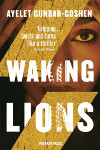
Ayelet Gundar-Goshen: Waking Lions – Very excited about this one, having loved One Night, Markovitch.
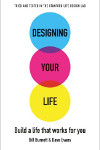
Bill Burnett and Dave Evans: Designing Your Life – I had heard great things about the events these authors have been at and when I received this book I read a chapter at random and it does indeed seem very good. I’ll be reviewing it later this month.
Dan Richards: The Beechwood Airship Interviews – The author decides to build an airship and interviews various famous people (including Dame Judi Dench) about their artistic lives. If it’s anything like Climbing Days it’ll be excellent.
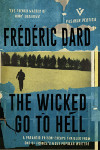
Frédéric Dard: The Wicked Go To Hell – The second Dard to be published by Pushkin Press. The first was pretty great and very original.
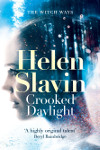

Helen Slavin: Crooked Daylight – The first in a new fantasy series about the daughters of a witch. Scheduled for later this month.
Jemma Wayne: Chains Of Sand – Wayne’s first book was longlisted for the Bailey’s Prize and the Not The Booker Prize, and this has been shortlisted for that second prize. I’m rather excited – the first paragraph, which I read for another round of first line analyses, is excellent in itself.
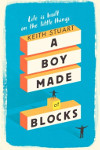
Keith Stuart: A Boy Made Of Blocks – This is a novel inspired by the author’s experience raising a child with autism; the author’s Games Editor for The Guardian and has written about the positive impact Minecraft has had on his son and their communication with him. Very excited to read this.
Linda Stift: The Empress And The Cake – An Austrian psycho-thriller, the latest Peirene and the last in their fairy-tale series. You’re pretty much guaranteed a great read when it’s Peirene.
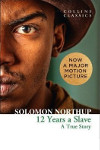
Solomon Northup: Twelve Years A Slave – It’s time, enough said.
Pick one of your recent acquisitions/borrowed books – what made you choose it?
Analyses Of First Lines #2
Posted 7th September 2016
Category: Close Reading Genres: N/A
3 Comments
I was reading Jemma Wayne’s latest, marvelling at the first paragraph. I wanted to study it, to tweet it, though I knew that was impossible. Then I remembered I’d previously written a post regarding first lines and the response had been positive.
I rounded up all books currently in my midst – current reads, books just finished, books I’d been circling in that ‘I want to read this but it scares me’ manner – and got to work. This post’s shorter than the previous, which I’m hoping is more a reflection of prior experience doing rather than a lack of imagination. Please excuse the wonky placement of the book covers.
Let’s start with the book that got me thinking. Here’s the first line of Chains Of Sand:
The house is on top of me.
I love this. It’s original and could mean a number of things. There’s the literal idea – apocalyptic novel? The figurative – is it a heavy weight, a sense of burden, a return to an abusive situation? Or is it the more mundane – the house sits on a hill and I’m in it? I have to break away from convention and look at the next lines:
Under me. Around me. Darkness is everywhere. Like a coffin. I am not scared. I am used to darkness. In Gaza, when blackouts come as often as they do, you have to get used to it.
So it’s all of those meanings – literal, figurative, mundane. The mundane is true but there’s a foreboding heaviness, a real, true, burden, and then there’s the setting. Gaza. Blackout. It’s a powerful beginning. It sometimes seems to me the importance of the first line has changed, that it’s now the first page that’s important; Wayne has stuck to tradition. That first line sucks you in, you want to know what’s going on, and she rewards you for continuing. Even if it’s an instant reward the pay-off is such that you want to keep turning the pages.
The next book shares the house and hiding idea but it’s very different in every other way. Here’s the opening of Rachel Elliot’s Whispers Through A Megaphone:
Miriam Delaney sits at her kitchen table and watches the radio.
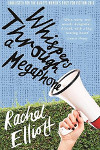
Now this doesn’t seem too interesting. It sets the scene somewhat but isn’t compelling because you can’t tell it’s relevant. Is Miriam listening to war news, is she old, is this the set-up to the plot? As it turns out, the everyday nature is very relevant as is the usage of ‘watches’ rather than ‘listens’, but it’s only over the next few pages that it becomes clear we’re reading about an agoraphobic. What we do get from it is a name, and that Miriam’s surname is included suggests it’s going to be a style Elliot uses. There may be many Delaneys.
Lewis Carroll’s Alice from Alice’s Adventures In Wonderland would find Miriam very dull:
Alice was beginning to get very tired of sitting by her sister on the bank, and of having nothing to do: once or twice she had peeped into the book her sister was reading, but it had no pictures or conversations in it, “and what is the use of a book,” thought Alice, “without pictures or conversations?”

We know how it goes so it’s hard to say how much we’re truly assuming and how much is deeply ingrained within us, but is it fair to say we can assume from this line that this will be a story about a great experience (if not an adventure)? If a book starts with an assertion of boredom then we know said boredom is about to disappear. And this Alice is trying to become interested in her sister’s book but it’s just not happening – this may not be a book about a book lover, not because Alice doesn’t like reading but because it appears there are no fun books in the vicinity. If we look at Alice’s statement we realise the book her sister is reading is likely a bog standard chapter book – no pictures or conversations, though ‘conversations’ is up for debate, admittedly. From this we can assume the sister is older or mature for her age, and Alice is stuck, bored, sitting beside her. We can therefore guess Alice’s relative age and in this context her opinion of chapter books makes sense – who liked the idea of chapter books at a young age? She’s bored, tired of it all, likely she’s about to try and run off or suggest doing something else. Whatever it is, something is about to happen.
We get so much from this one line, even if it does go on. (In my edition it constitutes the entire first page along with a drawing of the white rabbit. This may well be a construction – is every edition’s first page set up like that? And should we be looking into the image at the same time as the first line? If so, then we know it’s going to be a fantasy, bizarre, and that something is going to happen involving a rabbit with a pocket watch.)
Speaking of adventures, here’s Dan Richards’ Climbing Days:
I wake early and set out into the shining day with the sun still low behind Pen yr ole wen – Head of the White Slope – which looks a perfect pyramid from the hostel door, a child’s drawing of a mountain.

Richards does a fair few things in his first line: he sets the time of day, the starting location, the intention of the chapter. He includes a visual description of the mountain – ‘a child’s drawing’ – and some alliteration. There’s a translation and the sense that he doesn’t live nearby. It may be a long sentence but it makes reference to a lot of the suggested contents, history aside. You’re going to get description, nice writing, a personal journey, a good wad of information.
We return to houses for Susanna Kearsley’s Mariana:
I first saw the house in the summer of my fifth birthday.

A book with a house – does this line make you think of Rebecca as it does me? The person starts the same way as Du Maurier’s unnamed heroine, talking about a house in the past tense. We can assume the house will play a big role in the story and it’s likely Kearsley will continue detailing it from here-on in – the house has been in the character’s life since early childhood.
If you’re looking for an epic, you could do worse than Tahmima Anam’s The Bones Of Grace:
I saw you today, Elijah.

This is to do with some sort of regret or longing, it must be. The sighting happened today and that ‘today’ suggests it doesn’t happen much. Consider how different it would have been with quotation marks – a dialogue, a quick sighting of someone known in the present. Can we infer from the line that we’re going to be in for the long haul? A potentially long memory session? The book is written in the form of a letter – is this apparent, too? It’s going to be a slow piece of writing, that’s for sure.
Lastly, here’s Sara Taylor’s The Lauras:
I could hear them arguing, the way they argued nearly every night now, their voices pitched low and rasping in that way that meant they thought they were being too quiet to wake me up.

This arguing has been happening for some time. The parents are at odds, perhaps on the brink of divorce or separation, but they don’t want their child to have to hear it. We could say they perhaps believe strongly that children should not be put in the middle. But this character, who we can guess is quite young, knows a lot about it anyway. We’re thrown right into the story, into the commotion. Taylor’s not waiting around.
We get a sense of the author’s writing style; we can tell she’s descriptive – ‘pitched low and rasping’ – and favours a steady, slow, pace.
There’s something wonderful, involving, about looking at text in this detail. There’s so much to take and it’s a reasonable idea – I often think it’d be nice to do it more often, for extended sections of books, but that would be too much, best left to literature classes. It’s another way to interact with a book, to spend more quality time over it, to keep it in mind longer than the average read-review-done process takes.
Which first lines have wowed you lately?


