

Julie Kagawa – The Iron Daughter
Posted 7th October 2011
Category: Reviews Genres: 2010s, Fantasy, Romance, Science Fiction
Comments Off on Julie Kagawa – The Iron Daughter

When things aren’t as fantastical as before, it can get a little dull.
Publisher: Mira Ink (Harlequin)
Pages: 395
Type: Fiction
Age: Young Adult
ISBN: 978-0-7783-0446-3
First Published: 2010
Date Reviewed: 19th July 2011
Rating: 3/5
Meghan’s back in faeryland, held captive by Queen Mab. But defeating the Iron fey wasn’t as easy as killing the king, and when the Sceptre of Seasons, a vital element in keeping the mortal world in check, goes missing, there’s only one group of people that could have taken it; and only one human, a prince, an elf, and a cat, who know who they need to find.
The Iron Daughter is the second book in Kagawa’s faery series, and although it begins well and indeed ends with a lot of promise, the main bulk of the book suffers from the same bad quality that Torment and New Moon do – pressure to keep the series going as long as possible. It’s not a bad book, per se, but it does rumble along down paths that you know it could have done without, and loses the true fantastical atmosphere that The Iron King had.
The most obvious issue is with the reiterating of what happened before. Yes, it is useful sometimes to reiterate an event that happened in the previous book in a series, it can help those who might be reading the books in a different order to feel they know what’s going on, but there is a subtlety to doing it right and unfortunately Kagawa has made a mess of it. Instead of giving a few brief words on events at the start of the book, Kagawa gives a summary that lasts for most of the first chapter and then, throughout the rest of the book, continually has Meghan explaining events in great detail unnecessarily. It all seems rather like the author had a word count to fill and when the going got tough she filled it with repetition instead. A reader doesn’t want to be nearing the end of the book still being “reminded” about what happened in the last one, they want instead to be reading a climax.
There are the usual revelations that aren’t really revelations, like Meghan being surprised that Ash doesn’t actually hate her and was only pretending to be harsh in order to save her (this isn’t a spoiler since it’s at the start of the book and obvious from page one to any reader worth their salt), and a lot of time spent on things that could have been given a sentence rather than a whole chapter – this is different to the repetition issue and concerns things like shopping.
Kagawa references a lot of popular media to illustrate what she is trying to say, and although it dates the book and means that it may be difficult for future readers to understand, you can see why she has done it and it does amply explain why Meghan wants to be home – because her life is so full of films and music and therefore the technology that is not compatible with the faery world. But there needed to be more research for things like theatre where she talks about The Phantom of the Opera being a play – which it was originally, following on from the book, but when she mentions organs, it is clear that she is talking about the musical, and few people would refer to this musical as a play.
So the book goes on and on, tripping up on additional plot points and taking forever to get somewhere. Just when you think the characters are going to move on to the next part of the story, someone says they’ve hurt themselves, or an enemy comes along and kidnaps them all, and it simply comes across as forced. About 75% of the book could have been stripped away and the result would have been a very good novel, if short.
The romance is as angsty as ever, and strong, and joyfully I can report that Ash, the hero, doesn’t leave Meghan for very long. In that way, the cover of my copy which pronounces it the next Twilight was wrong. In fact this book and the series as a whole is nothing like Twilight except for the elements of love triangle and high school. The set-up itself, of the bad guys not having been eliminated in the first book, is as acceptable a format as ever in literature, and although Meghan can be very weak at times, she does make an effort when she can. There wasn’t any reason why this book couldn’t have been as good as the first, The Iron King.
But it is just so under whelming.
The potential for the third book, The Iron Queen, is good, and hopefully Kagawa will return to the fantastically magical feel that she created for The Iron King. Thankfully The Iron Daughter isn’t so bad that it will put a reader off from continuing the series, because the relationship between Meghan and Ash is worth following; but for all the glitter on the cover, this book contains little of the glamour to merit it not being looked over in favour of a fast track to the third book.
Related Books


Richard Rex – The Tudors
Posted 4th October 2011
Category: Reviews Genres: 2000s, Biography, Domestic, History, Political, Social
2 Comments

‘Defender of the Faith’ was more than just a motto given by the Pope. You also had to have faith in your successor’s ability (or willingness) to have children.
Publisher: Amberley Publishing
Pages: 203
Type: Non-Fiction
Age: Adult
ISBN: 978-1-4456-0280-6
First Published: 2002
Date Reviewed: 26th September 2011
Rating: 4/5
The Tudors were an intriguing bunch of people. Strong-minded and self-righteous often, they caused much joy and much sorrow. Obstinate when it came to the succession, they tended to leave their counsel with plenty of work to do in wondering who should be next up for the crown and whether or not so-and-so was a good choice. Yet there is little doubt that what they did is still worthy of being so famous, or rather infamous, today. Rex gives a quite broad and detailed account of those five people, from the man who wasn’t really in a position to be king, to the woman who refused to provide for the future of the dynasty.
Rex sets out with a couple of goals. He says his mission is to write from the royal perspective, and that his book is for readers rather than academics. The first he succeeds in doing completely – what social information there is in the book is there because it needs to be there to set the rest in context, and it truly is a book about the dynasty rather than anything else. The second is more difficult to rate. The book is humorous – Rex presents the facts while allowing himself and his readers to have a good laugh in places where people were a bit silly. But this humour is quite okay considering that Rex is clearly passionate about his subject; knowing all that he does it’s fine to have a laugh now and again. The humour is what makes it a book for readers, along with the obvious influence of David Starkey, who is a historian Rex admires. However there are a lot of extra details on aspects such as taxation, war, and money in general, and while this is interesting it does move the book more into the realm of academia. There are times when the book is like those you read for study purposes, and indeed the information included is written in a way that makes it perfect for university essays.
Henry Parker… an old-fashioned aristocrat who often bestowed upon his sovereign the fruits of his limited literacy skills…
Like all historians, Rex has his opinions, but he is very good at presenting several arguments and telling you why they could be possible and why not. Obviously he tends to lean towards his own thoughts, so for example after he has covered the possibility of Elizabeth’s having a sexual affair with Robert Dudley, it is mentioned no further. Something that is also intriguing is that he tells you where different theories have stemmed from, and why they have been discounted in modern times, or why they are continually believed. He refers to a range of different types of primary sources and the book itself, at least this edition, is full of pictures of these written and artistic sources. This visualisation of the sources, however, could have been better handled by whoever decided where they should be placed. There are a lot of them in the chapter on Elizabeth and although it makes you feel like you’re reading very fast (because the sources often take up most of the page) it breaks up the text in a way that disrupts the reading experience. This reviewer must also mention the pages of colour images in the book as she found them rather strange – they are copies of originals, however whether they are the originals or not she cannot say as in many places the colours of people’s eyes have been changed.
In the preface Rex says that he hasn’t worried too much about references, and he hasn’t, preferring to simply leave the vast majority to the further reading section. While this does help the flow of the book, it means that if you want to find out exactly whom he has referenced you may need to do a bit of research. What this lack of references does mean, though, is that Rex escapes the trap that many others fall into of unintentionally (or intentionally, if we consider G W Bernard) moaning about his fellow historians. In fact Rex tends to lump groups of people together in a loose way rather than point anyone out, except of course people of the past, which is the starting point of his polite disinclination to favour opinions that do not match his own.
The act included a declaration that it was treason for a woman to marry the [aging] king if she had had premarital sex. As the Imperial ambassador caustically observed, this rather narrowed the field.
There is a chapter for each of the monarchs, though anyone seeking to learn about Henry VIII’s wives in detail, or the ‘reign’ of Lady Jane Grey should understandably not expect to gather much information from this book. Rex has defined his book as one of rulers, so there is little about, for example, Henry VIII’s brother Arthur.
On first glance, The Tudors appears to be a quick introduction into each of the monarchs between 1485 and 1603, but when you read it you discover that it is in fact rather in depth and a sometimes hefty read. True, as Rex says himself, most of the content is general Tudor knowledge, but it is the way that it is presented and the afore mentioned depth that make it worth a read no matter how much you already know.
It is definitely written by an academic, and it is definitely written by someone with a sense of humour. The Tudors is a very good starting or continuing place for anyone interested in the dynasty.
Related Books




J K Rowling – Harry Potter And The Philosopher’s Stone
Posted 28th September 2011
Category: Reviews Genres: 1990s, Fantasy
Comments Off on J K Rowling – Harry Potter And The Philosopher’s Stone

Secondary School has never been so eventful.
Publisher: Bloomsbury
Pages: 217
Type: Fiction
Age: Childrens
ISBN: 978-0-747-53274-3
First Published: 1997
Date Reviewed: 6th September 2011
Rating: 5/5
Harry Potter is famous, but he doesn’t know it yet. Instead he lives in emotional poverty in the cupboard under the stairs of his uncle and aunt’s house where he’s constantly picked on by his voluptious cousin, Dudley. He also doesn’t know that these days are soon to be over as in actual fact he belongs in a society where magic is everything. His parents didn’t die in a car crash, and the reason for their death may not have disappeared at all.
Not much can be said now that hasn’t been said about this book. And indeed even though I enjoyed it less this time than I did when I was a child, it would be wrong to rate it lower because after all it was written for children, and I enjoyed it immensely as a child. Rowling’s imagination and the concepts she comes up with are brilliant and the lessons she imparts should surely put paid to those who bemoan the use of magic in children’s literature.
Something that is much emphasised in the book is the fact that school bullies tend to be those who have the most to lose. Rowling explores bullying extensively through the characters of Draco Malfoy, who always gets his comeuppance, and Harry’s cousin Dudley, who gets what he had always deserved (even if being given a pig’s tail wouldn’t happen in the real world). The fact that Rowling places Neville Longbottom, portrayed as weak and easily frightened, in brave and heroic Gryffindor, should give anyone who’s ever doubted themselves reason to rethink their self-image.
Although the book follows the well-trodden path of good versus evil to good triumphing it is not your standard fantasy, being more of a Pratchett novel than a Tolkien. This means that there is far more time to discuss what is going on rather than talking about sights, as well as more time to craft a vivid world full of great differences. And while you couldn’t really say that the book is a comedy, the laughs are top-notch and very inventive.
The mixing of the world of the wizards with the real world has been given a lot of thought. Both exist together in the same space, and so there aren’t that many occasions when stereotypes can be fulfilled completely, because everyone has to keep the magic away from the regular humans, or Muggles as Rowling calls, well, us, the non-magical readers.
The characters are strong as are the principles as is the world building as is the writer.
It’s Harry Potter, enough said.
Related Books

Elizabeth Gaskell – North And South
Posted 22nd September 2011
Category: Reviews Genres: 1850s, Domestic, Social
6 Comments

The industrial revolution shook England up and changed everything, but where is the plot in Gaskell’s book?
Publisher: Vintage
Pages: 547
Type: Fiction
Age: Adult
ISBN: 978-0-099-51148-9
First Published: 1855
Date Reviewed: 12th September 2011
Rating: 2.5/5
After Mr Hale decides that he can no longer be a vicar of the Church of England, he takes his family from their home in the New Forest, to Milton in the north. Whereas the New Forest is pretty and problems are hidden, Milton is smoky and full of issues. Margaret, the daughter and the heroine of the novel, learns to live in Milton.
Aside from the uprooting of a family, I could find no real plot to this novel. Discussions on life, yes, but a firm here to there in any theme, no. Gaskell is both humorous and knowledgeable about the subject on which she writes, but in detailing the industrial revolution as she did it she forgot to tell a story. And whilst her characters are okay, they are not interesting enough by themselves to make the plot irrelevant.
Margaret isn’t a heroine to enjoy reading about. She receives proposals of marriage and gets angry about it and her speeches single her out as a self-righteous woman who, while not wanting to demean herself and act like a woman was supposed to, does often cause one to want her to be quiet. When a friend dies she refuses to see the body, and at one time she calls herself a genius – for doing something that the reader will identity as common sense. It’s not said in a humorous manner and is thus difficult to read.
Neither are the other characters particularly readable. Mr Hale comes across as selfish in his desire to leave the church, and the younger men have nothing special to recommend them. A lot of characters are there just because. The class issues are not looked into very well and hardly scratch the surface. Yes, Gaskell tells you what happened, but her whys aren’t particularly compelling.
While it may be the melodramatic nature of Victorian literature, that so many people start dropping like flies doesn’t suit Gaskell’s writing at all. It comes across as fake and convenient. The ending is rather sudden and unbelievable and the conversations go on and on without making any real progress. You get excited about all the possibilities with a character or a relationship and then Gaskell kills them off or makes Margaret stop seeing them.
To be sure the information presented is interesting, if you are in to economics and trade, and the later development of an understanding between those with power and those with none is good to read about, but by and large this reviewer cannot see why North And South proclaimed a classic.
Related Books
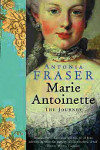
Antonia Fraser – Marie Antoinette: The Journey
Posted 19th September 2011
Category: Reviews Genres: 2000s, Biography, History, Political, Social
1 Comment
The phrase ‘let them eat cake’ has created a false impression.
Publisher: Phoenix (Orion Books)
Pages: 546
Type: Non-Fiction
Age: Adult
ISBN: 978-0-7538-1305-8
First Published: 2001
Date Reviewed: 18th August 2011
Rating: 4/5
Marie Antoinette was the ill-fated Austrian bride of her cousin, Louis XVI of France. Fraser documents her life from the cradle to the grave and the legacy she left.
The book is very well written and the narrative runs quicker than many fiction releases. If this were fiction it would be magnificent. Fraser describes events with good detail, uses plenty of primary sources for quotations, and when she comes to the executions of the family she succeeds in showing how horrific and unjust the situation was.
Fraser presents Marie Antoinette as the unlucky victim of political manoeuvrings by Europe’s dynasties and a scapegoat of the French Revolution. But she does it whilst remaining objective, no matter the fact that her writing positively impresses upon the reader her overall opinion of the Queen as a good woman. She never speaks negatively of Marie Antoinette, but she does allow for those stereotypes that are grounded in truth to stay; for example the idea that Marie Antoinette was uneducated – Fraser presents not a woman unwilling, rather a woman disadvantaged by a male-orientated society. So you have a queen who had wit and was a great entertainer, but was uneducated and an obvious mismatch for her academic husband. Yet she was a lady of common sense who was strong in her own right.
That Marie Antoinette struggled to balance her responsibilities is examined on various occasions. Being told that she was an ambassador for Austria by her mother, she had to also remember that she ought to allow French society to change her. Such instruction would be difficult for anyone, and certainly in our present day much smaller things are hard enough, but as Fraser illustrates it would have been all the more so for Antoinette given her lack of education and her love of her family.
Fraser provides the evidence that was given at Antoinette’s trial, having already examined each piece to destroy any idea of its being true. She does this well, leaving no reason why the reader should think otherwise. The reason why it’s believable is that the author has already described Antoinette’s personality and life, and indeed the book ends with a look back at what was said before. Fraser doesn’t deny that Marie Antoinette didn’t help herself by spending lots of money on friends and on entertainment, but she also reminds you that money was also spent on trying to live more frugally, or at least as frugally as the Queen of France could.
And it is this desire to live more like the common person that gets lost under the burdens of the revolution and thus needs to be remembered. Fraser recounts many occasions where not only did Marie Antoinette wish to dress simply or act the role of a common servant in theatre, but she was truly concerned for the everyday man, especially when it came to children. What she lacked in education and political opinion, she made up for in domesticity, wanting nothing more than to look after her children herself and caring when the offspring of peasants were in a bad situation.
This adds up, successfully for Fraser, to a woman who made the best of what she could with the disadvantages afforded to her. A person lacking in a mother’s love but not lacking in a mother’s criticism, feeling guilt at not being pregnant when it was not her fault, and used to the company of her siblings and an aristocratic way of life was never going to be perfect Queen material.
The big downfall of the book is Fraser’s fixation on her idea that the Swiss Count Fersen and Marie Antoinette must have had a sexual relationship. So relentlessly pursued is this idea that one could say that the most pressing reason Fraser had for her book was to write a story of some-what forbidden love. What makes Fraser’s determination so peculiar is that for the first third or so of the book she continually expresses how content Marie Antoinette and Louis were, that even if they weren’t in love, there was a strong devotion there. The transition between her saying this and speaking of affairs is sudden. From the sources Fraser has provided there is simply not enough evidence to say for certain that this affair happened and that Fersen’s admiration for Marie Antoinette and vice versa ever transformed into fornication. It is possible, yes, but as it is not definite, and as it is quite obvious Fraser is having dreamy thoughts that she should have used in a piece of fiction rather than historical biography, her constant claims are, as Henry VIII would say of his marriages, null and void.
Fraser is well read, that is obvious, and in the main her words are easily acceptable. For the most part she is objective, and where she is not she is at least transparent. Marie Antoinette is a compelling book that deserves a read by anyone interested in the period or the queen herself, just be aware that it was written by a romanticist.
Related Books