

Louise Douglas – In Her Shadow
Posted 23rd April 2014
Category: Reviews Genres: 2010s, Angst, Domestic, Mystery, Psychological
3 Comments

Three’s a crowd.
Publisher: Bantam Press (Random House)
Pages: 372
Type: Fiction
Age: Adult
ISBN: 978-0-593-07021-5
First Published: 2012
Date Reviewed: 8th April 2014
Rating: 4.5/5
Ellen drowned and Hannah has never got over it. The event haunts her still, twenty years later. When she starts to see Ellen in places that reference their past together as friends, as well as at her work place, Hannah wonders if it’s time to go back for therapy. But there’s something nagging at her, and, illusion or not, she feels it’s time to finally discover what happened whilst she herself was in Chile.
In Her Shadow is Douglas’s beautifully written fourth book. It’s a lot slower in pace than the author’s previous work, The Secrets Between Us, but the pace is warranted and it gives Douglas a lot of time in which to explore the themes she chose to include. Likewise the plot is fairly predictable, and this appears to be intended so that you focus on the ‘right’ things.
The book sports an unreliable narrator who presents a fantastic opportunity for the reader to really delve into what’s going on. Hannah is quite obviously unreliable from the very start and with good reason – during the chapters where the adult Hannah looks back on her childhood you’re inevitably presented with a child’s view of life. Where Hannah says that Ellen is a drama queen, where she says that Ellen is too lucky, beyond a couple of choice quotations (that of course could be coloured by jealously themselves), it is apparent that Hannah isn’t seeing reality. Hannah, once good friends with a boy called Jago, becomes the third-wheel when she introduces Ellen to the ‘circle’. That she is, in a way, third wheel, is true, but she is very wrong about the friendship in general.
What is most interesting, as the reader reads on and learns just how wrong Hannah’s thoughts of Ellen are, is that it’s Hannah who is better off. Due to Hannah’s unreliability, the reader can see for themselves not only the truth, easily, but also explore the way jealously affects people, and the extent to which it can destroy a person. And it is exactly because Hannah is too young to know what’s she’s doing that she enables you to see what’s really going on. Because she does not understand what she sees, she ends up telling you the reality just as much as her erroneous thoughts. Indeed it’s intriguing to think that whilst the first-person generally means less knowledge of others, usage of the third-person in this book would ironically have led to less knowledge of Ellen.
And so Douglas shows us just how much perception can play in the construction of opinions. Of course we all know this, but by using a child and making what’s actually going on a horrendous abuse, the author really hones in on it. And it shows how children will latch on to what works for them – a father who hugs his child when their own parent doesn’t, means he must be a good person and that his daughter is lying. Hannah isn’t mature enough to recognise dangerous obsession and abuse; she sees what’s on the surface.
It’s not a spoiler to say that abuse and mental illness is at the heart of this novel. Throughout the reader is presented with the questions – is this man violent? Is this man interested in young girls? Is he mad? There is also Hannah’s mental stability to consider. Jealousy is of course an issue in itself but in her case it’s intertwined with anxiety, fear, and regret. Perhaps it makes Hannah feel better to confine her feelings of guilt to the same box as her jealousy – it’s easier to push bad memories away if you believe the person was awful.
Hannah also has an issue with identity – the boy who kissed her becomes her brother, Hannah isn’t happy in her career, and her parents, though supportive, are not the affectionate kind.
This is where the slow-pacing makes the most sense – in that at first you might find it slow without reason, but as the book continues you see why Douglas has opted to use it. There is just so much to consider. Douglas wants you to really understand Hannah, to see what she thinks and how she got it wrong, to see what her life is really like, and as the book progresses you realise that perhaps it’s not ‘just’ that Hannah was wrong about Ellen, maybe Hannah isn’t as good a person as you thought. Is she misguided, is she led by her lack of information? And what on earth will she do to make things right? There are no huge shocks in this book, no big climax. There isn’t supposed to be.
In Her Shadow is a book with a main character you may not completely like but who you can relate to; you will find yourself rooting for her to learn the truth. There are many injustices and misunderstandings here and it is not a simple case of age making someone wiser. The book does end relatively quickly, and one plot thread in particular is wrapped up in a couple of pages and not particularly satisfactorily, but there are no threads left hanging.
In Her Shadow is a wonderful study of personality, mentality, and its extremes. It may make you want to praise it to the hills or it may not – either way it’s likely you’ll find it difficult to put down.
Related Books

Greg McKeown – Essentialism
Posted 18th April 2014
Category: Reviews Genres: 2010s, Business, Spiritual
3 Comments

Less is more.
Publisher: Crown Business (Random House)
Pages: 246
Type: Non-Fiction
Age: Adult
ISBN: 978-0-804-13738-6
First Published: 15th April 2014
Date Reviewed: 16th April 2014
Rating: 4/5
McKeown discusses the essentialist way of being (choosing only those options in life and work that will get you closer to your goal and forgetting those that distract you and use up time).
Essentialism is a relatively short and informative book, which whilst a little repetitive and high in case studies, succeeds in suggesting why McKeown’s thoughts are of use.
The author urges us to do the opposite of common working practises. He says to take on only a few tasks and excel in them, rather than to try and do everything. He notes a good night’s sleep as essential, in happy contradiction to the idea that a sleepless worker is a hero. And he recommends actively saying ‘no’ when we want, instead of saying ‘yes’ to what we actually don’t want – those things that will ultimately waste our time. He includes tales from his own life in a way that simply teaches, never preaches.
(It is an interesting concept when you think about how bloggers initially feel they should say ‘yes’ to every request, and how they can become better bloggers by being more in control of what they want to read and discuss, when they are more selective.)
McKeown recounts a conversation he had with a person who remarked that we are no longer bored. We have phones that text and can access the Internet whilst we’re in a queue, for example. No longer being bored is of course good, but McKeown notes the fact that it means we have less, even no, time for thinking.
It is interesting to consider McKeown’s values, what he hopes we’ll adopt. To view it as a list it reads as a holiday plan – time to think; less to do; more sleep; not being so busy; time for play and leisure; done is better than perfect. McKeown’s focus on quality is key to his argument. Discuss with your boss if a task given to you won’t get done, make time for your family. It’s intriguing to note that the author’s method of working means spending more time thinking about options than you would, but he discusses how planning saves time in the long run.
Overall the book is a good read and full of value, but there does come a point where you feel he could have applied ‘less is more’ to his content. He starts to repeat information, which may fit his thoughts on routines helping memory but isn’t necessary in a short book. There are a few too many stories where it would’ve been better to simply carry on discussing strategies. The book isn’t particularly well-written but that’s not important in regards to its purpose. This said, fewer instances of non-classic media being called classic, fewer uses of the word ‘classic’ in general, would have rid the book of its slight ‘name-drop’ atmosphere.
Essentialism provides a thorough grounding in a better way to live and work. It will best suit those who already have thoughts in mind to change, though almost everyone will find it of use in some way.
I received this book for review from the publisher.
Related Books
None yet
Peggy Riley – Amity & Sorrow
Posted 14th April 2014
Category: Reviews Genres: 2010s, Angst, Domestic, Social, Spiritual, Theological
5 Comments
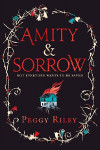
When one marriage leads to another.
Publisher: Tinder Press (Hachette)
Pages: 324
Type: Fiction
Age: Adult
ISBN: 978-0-755-39436-4
First Published: 1st March 2013
Date Reviewed: 7th April 2014
Rating: 3/5
When the fire started burning down her polygamist community, Amaranth took her two daughters and escaped. Happy to marry and comfortable with her growing family, if uneasy about the ceremonies, Amaranth was glad to defend her people as women left and those living nearby took an interest in what was going on. But after her good friends leave and her husband draws their daughter too close, the first wife knows she and her daughters must leave, too.
Amity & Sorrow is the story of the plight of a mother who has become too used to her life. Interestingly, it is not so much about the plight of her daughters, which is the reason for some of the issues.
There is just something ‘off’ about the book. The cult is presented fairly well, but the writing style doesn’t fit the subject. Even though the reader knows the cult is bad, and has the details to imagine the situation, the literary style of writing distances you from it. The story may include the information, but it doesn’t truly try convince you of it, even if you are convinced.
It’s interesting to look at the choice the author made as to where the mother and daughters would end up. On the one hand you have them crashing the car into what many would see as a backwards place – a farm worked by only a couple of people; an ancient television set; a rarely-used petrol station; a lack of modern technology despite its day. What this choice means is that the family have little opportunity to see what life is like for the vast majority, to get used to the ‘new’, and to rehabilitate. This in turn means that the book lacks any big moments in the plot besides those in the flashbacks and at the end, and that whilst they escaped you might not feel as though the women will truly live life to the full, especially as Amaranth seems happy to remain in the first place they find.
But on the other hand, this lack of modernity, this lack of computers (other than one instance in a town) and so forth, mean that the family are eased into the world. It means that the changes in Amaranth especially (the girls will be discussed in due course) are slow and she has time to get back to life as it was when she was a member of society. You see more of her adjustment than you would if she’d found herself in Silicon Valley, or the like, where the change would have been immediate but only on the surface for its suddenness. Beginning in the middle of nowhere in a place more familiar in lifestyle, there is perhaps less of a chance she’ll return to the husband who brainwashed their daughter.
The sisters, Amaranth’s daughters, Amity and Sorrow, were born on their father’s land and therefore their reaction to their mother’s escape is, if not in words, that she has kidnapped them. Sorrow especially wants to return; she is the sister most brainwashed by her father, the cult’s leader. It is in Amity, the less extreme of the two, that the reader gets to see the most progression. Amity is more open to change, and whilst it may seem a little too fast a progression at times, Amity’s growth makes up for the little growth otherwise.
It is in Sorrow’s experience, specifically, that the story lies, and it’s also in her life that the potential dissatisfaction with the ending is to be found. She is not as developed a character as the others, in fact it could be said that she is a plot device; yet without her Riley wouldn’t have been able to explain her points. Sorrow was impregnated by her father, who had sex with her, having brainwashed her so much that she believed it was important and right that she and her father ‘make Jesus’. Whilst not commented on in the text itself, there is the obvious theme of consent running throughout the book. Incest itself is discussed.
And because it is this event that wakes Amaranth to the reality, finally, (if even then late in the day), the story continues on with Sorrow’s extremist beliefs taking what amounts to the biggest element of the book. Sorrow is always looking for a way back, because she doesn’t know any different and she is at an age where she won’t listen to her mother, especially not a mother who has left her, Sorrow’s, glorious father. The issue here is that whilst Sorrow’s extremism is believable, the extent to which she is, to all intents and purposes, encouraged, is not. Amaranth spends very little time with her daughters, even though, as the one person in the three who knows about the real world, she should have been helping them. Instead she starts to make a life for herself by herself.
A warning here to anyone who doesn’t want to read too many details: the ending of the book needs to be discussed because of what it effectively does, and will be in this paragraph. Amaranth, though obviously scared and still suffering from the manipulation and abuse under her husband, shows, in leaving the cult, that she still has her wits about her. She knows what is right and wrong both in regards to her own beliefs and the world at large, and she takes her daughters away from their father. Due to this escape, it is hard to believe that in the real world, such a woman would ultimately leave her daughter back at the cult’s land together with the father, after having tried and failed to convince the daughter to return with her to their new home. Maybe she would leave her temporarily while she went to the police for help, but leave her there for good? You can’t say that due to the possibility for danger, as the daughter is very unstable, it is best she stay away from Amaranth and Amity – the girl has had no chance to change and the handful of days during which there was space to influence her were not enough. At worst there are places she could be sent away for care. Perhaps Riley is showing us just how brainwashed and scared someone can become, but given everything that Amaranth does and thinks beforehand, the conclusion is not at all sufficient.
Where Amity & Sorrow gets it right is in the small things – the wondering about the changes to the world since Amaranth left it; the comparisons of dress and its relation to sexuality; the overall consideration of religious cults; to some extent, Amity. But with its poor choice of voice, underdeveloped characters, and the knowledge the reader will be left with when it’s over – the knowledge that what you’ve read is very wrong on a completely different level to the basic wrongness of the cult – one would be hard-pressed to recommend it for its story. You could try to come up with an explanation for the ending, but this is one book for which the ending is impossible to make right.
Related Books

Lindy Woodhead – Shopping, Seduction & Mr Selfridge
Posted 11th April 2014
Category: Reviews Genres: 2000s, Historical, Social
1 Comment

“The customer is always right,” he said.
Publisher: Profile Books
Pages: 261
Type: Non-Fiction
Age: Adult
ISBN: 978-1-781-25058-7
First Published: 1st October 2007
Date Reviewed: 3rd April 2014
Rating: 3.5/5
After many years at Marshall & Field in Chicago, Harry Gordon Selfridge crossed the Atlantic with his family to create a department store in London. At the cutting edge of retail, Selfridge’s was successful. As time went on Harry bought out more locations, but spent the money on women and gambling. His decisions away from retail would define his later years.
Shopping, Seduction & Mr Selfridge is a fairly short book that details Selfridge’s creation, the effects of war on an already changing society, and, of course, the social changes that came with burgeoning technology and increasing gender equality. Straight forward in its approach, the book lacks excitement and bias, but it does fall off the beaten path sometimes.
The beaten path in question is that of the subject – whilst Selfridge is Woodhead’s focus, the author does pause the narrative many times to profile a ‘bit player’ of the story, and although the title may suggest the book is about more than the American retailer, the profiling is irrelevant and filler content. People are introduced with a full background history after which it turns out their relation to Selfridge is minimum and short-lived and there are dozens and dozens of people mentioned who, in contrast, aren’t detailed at all. (These latter people aren’t often famous or known to us nowadays, which means that unless you have a background in retail or a great knowledge of the early 20th century, the names will mean little.) Those who play big roles in Selfridge’s life are detailed, understandably, but other than that you can’t help wondering if Woodhead shouldn’t have just written a shorter book.
And sadly for Selfridge, the amount of content not relevant to him means that there is simply not enough of the book dedicated to him. Perhaps Selfridge’s life was too straight forward to warrant a lengthy text, either way it does at times seem as though he has been pushed to the sidelines, a strange coincidence given what happened to him in life.
What is best about the book is surely its general style. Woodhead is largely unbiased; the book lacks opinions and is more of a report, even more so, perhaps than it is a biography. There is no particular flare to the writing which can make it dry, and there is little humour beyond the quotations and paraphrasing, but there is a lot here that will be of interest to modern historians, social historians, those who enjoy shopping, and technology enthusiasts. Woodhead includes a handle of suppositions but they are never expanded upon as opinions of the author, they are only furthered if it was a common view of the time. This is an account of what happened and little more.
And whilst it may also wander from the beaten path, the updates as to social context are informative and set the scene well. The stories of war, the gambling tables, the changing fashions that stores had to cater to, provide another dimension to the book and show just how swift modernity arrived once it had started. The changing attitudes to women both by way of clothes and the way women worked are interesting, and as Selfridge was very much in favour of women being able to shop by themselves, to go to restaurants and so forth – even if there was a personal benefit to him in sales – the theme of gender and equality is returned to many times.
The book ends abruptly; there is no epilogue. Anyone looking to known who owns Selfridge’s today or simply what happened after the initial change in management will need to research for themselves.
Shopping, Seduction & Mr Selfridge isn’t fast-paced, a book that is hard to put down, or written in your typically juicy style to match the juicy contents, but it will leave you with a good knowledge of the man, the times, and the views. Recommended most obviously to those interested in retail history, the book will find a place in the minds of a great many readers for its historical appeal.
Related Books
None yet
Shannon Stacey – Love A Little Sideways
Posted 4th April 2014
Category: Reviews Genres: 2010s, Domestic, Romance
1 Comment

Sideways (verb): dating your best friend’s sister even though it’s wrong.
Publisher: Carina Press (Harlequin)
Pages: 353
Type: Fiction
Age: Adult
ISBN: 978-0-373-00225-2
First Published: 26th November 2013
Date Reviewed: 28th March 2014
Rating: 3/5
Liz is moving back to Whitford after (finally) splitting up with her boyfriend and realising she was missing out on all the fun being so far from her family. However as she nears the town her car skids and hits a tree, and although she’s not injured those nearby are convinced it’s an emergency. So they call the police, and to the scene arrives Chief Drew Miller – the man Liz spent time with at the last Kowalski wedding…
Love A Little Sideways is the seventh book in Stacey’s Kowalski series and the last to focus on a member of the family itself. Focusing on a female Kowalski rather than a male, the book has a different feel to it from the first page. This could easily have made for a strong and more interesting book, given that no matter how fun the other books are there is inevitably repetition – however the final bow from the Kowalski clan isn’t as fluid as it could have been.
The major issue with the book is one of the two conflicts, which this reviewer hates to call ‘the first’ due to how debatable the ‘second’ issue is. This conflict is that of the best friend’s sister. Drew is the best friend of Liz’s brother, and a vast amount of time is spent, not just by Drew and Liz but by practically every one of Liz’s family members, worrying about this ‘problem’. It is understandable that the reality of a romantic relationship, a relationship that is far easier to break than that of blood (in most cases), would be cause for thought, yet this understandable reason isn’t the book’s focus. The ‘problem’ with Drew and Liz is simply that Liz is Mitch’s sister. And apparently there is a ‘code’, one of those school-aged agreement ideas.
Liz and Drew are adults, in fact Liz is 30 and Drew is a little older – yet this best friend’s sister issue keeps getting in the way as if someone is threatening to tell Mum and get everyone grounded. Later on, when Mitch inevitably finds out, he deals with the issue as a little child – and Drew responds in a complimentary fashion. Of course this ‘conflict’ gets solved in the end, but it is totally unbelievable and likely to simply evoke a ‘so?…’ on the part of the reader.
Next is an issue far more mature and completely believable – the difference in life choices. Drew is single because he wants children whilst his ex-wife didn’t. He’s now on the lookout for a woman who feels the same as he does about padding feet. Liz is at the start of a new life, and is at the beginning stages of working out whether she’s happy in Whitford working at the diner, whether she wants children, or whether she wants to go and get a degree. Drew definitely wants to stay in Whitford and procreate; Liz may want to move to the city and start a business like her brothers. Of course a conflict of interests can work, and people make compromises and allowances so that they can live with the person they love whilst also living the life they want as an individual, so that isn’t an issue. What is is the relative, and, by the end of the book, complete, marginalisation of Liz’s wants and dreams. Part of the problem is that the characters have little chemistry. When measured against the other couples in the series, the romance is even more suspect. But the biggest problem is that whilst Liz gets a few cries of “what about what I want?” the book leans firmly on the side of Drew, and because the books are founded in family, this is inevitably cemented.
That’s not to say that the basis in family is bad, it isn’t, and it’s been a reasonable feature of the books – indeed you need to be open to the idea of ‘living in each other’s pockets’ and traditional gender roles to enjoy these books – but there is using the idea of family to make a book ‘warm and fuzzy’ and using it to override the thoughts of someone who may prefer a child-free life. Liz’s opinions of her own destiny are simply not valued enough by anyone and so Liz’s future is effectively decided upon by her lover and family. It is also resolved far too quickly.
Speaking of the chemistry it’s a pity that Liz’s suggestion that Drew simply wants a woman to breed for him comes across as true. That Drew loves Liz seems a nice convenience. Likely if Drew’s single-mindedness on the issue wasn’t such a big element of their relationship the relationship would read better, but as it’s the case that it is, it’s all too easy to believe that a few months down the line when the couple are married and Liz has finally had time to work out what she wants in life, a swift divorce will follow.
Aside from this the book could do with another copy edit. There are awkward phrases, plot development issues, and scenes such as Liz and Drew having a shower, Liz’s long hair not being combed afterwards, sex and sleep ensuing, and no mention of time-consuming tangles and impossible bed-hair in the morning. (These things are noticeable when you have long hair.) Despite the entirety of the family being at the camp and despite the fact that Liz is renting her house from her sister-in-law, Lauren gets one small mention and no admission into any other scenes or any lines of dialogue whatsoever. It is as though the heroine from two books ago doesn’t exist. Terry and Evan only get a small look in, but as they don’t have a book to themselves this feels ‘right’. And, whilst it’s not an editing issue, Mitch saying he often doesn’t listen to his wife puts a damper on the fabulous chemistry in his own book.
Where Love A Little Sideways does work is in the family factor, as is to be expected. The family may be around a bit too much and you may get to hear the same old information about everyone as the book seeks to welcome readers who haven’t read about the Kowalskis before, but overall it works. Liz is distant enough in her role of the half-stranger and Drew in his role of friend to make the book interesting in a unique way compared to the past six, and the book is a fine comfort read.
But the conflicts do unfortunately place it firmly in the middle of the scale.
Returning to a great family and location, but making one reconsider the values, Love A Little Sideways may be worth reading if you’ve read the other books in the series but as an introduction it’s unlikely to foster interest.
Related Books