




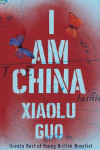
Xiaolu Guo – I Am China
Posted 8th February 2016
Category: Reviews Genres: 2010s, Commentary, Domestic, Political, Spiritual
2 Comments
When politics force people apart.
Publisher: Chatto & Windus (Random House)
Pages: 369
Type: Fiction
Age: Adult
ISBN: 978-0-701-18819-1
First Published: 5th June 2014
Date Reviewed: 8th February 2016
Rating: 1/5
Iona is tasked with translating a set of letters and diary entries handed to a publisher by a Chinese woman. The publisher has a mind to release the work but first they have to know what it’s all about.
I Am China is a semi-literary novel about personal/political problems in China. It promises much but delivers little.
There are major issues with the book, namely the way the story is told. The set up is all very convenient, contrived; the story of Jian and Mu is told through the letters but it would’ve been much better had we heard directly from the characters themselves. The translator, Iona, is nothing but a plot device inserted to allow the story to come to fruition, as are the other few characters – the publisher, for instance. The problem becomes two-fold when Guo starts to try and make more of Iona. Guo is all about telling, never showing, and it’s far too obvious that she’s trying to insert some meaning into Iona’s own story – you can practically see the thought process as the author realises her readers are going to see through Iona as nothing but a device and she doesn’t want you to see her as a device.
Amongst all this telling, then, is repetition and a distinct lack of emotion and character development beyond Iona. Guo is relating a very important subject but that subject never becomes important because of the lack of anything to pull the reader in and make them care. The author tacks on various statements about Iona’s emotional state whilst reading these letters but it never rings true. And a publisher planning to publish work without any idea what it’s about or permission from the owner of the text… one of those, possibly, but both?
Unfortunately the writing itself is also problematic. English is Guo’s second language so it’s understandable there would be errors but it seems the author was left completely alone when it came to the copy-editing stages.
I Am China is a fair idea gone horribly wrong. Look elsewhere for books on the aftermath of Mao.
Related Books
Paula Hawkins – The Girl On The Train
Posted 15th January 2016
Category: Reviews Genres: 2010s, Angst, Psychological, Social, Thriller
6 Comments

She may not see you when you’re sleeping, but she knows when you’re awake.
Publisher: Doubleday (Random House)
Pages: 310
Type: Fiction
Age: Adult
ISBN: 978-0-857-52231-3
First Published: 13th January 2015
Date Reviewed: 14th January 2016
Rating: 4.5/5
Every day Rachel takes the train to work and back home; she has a favourite house on the route whose occupants she’s made up life stories for. She gets used to their routine, seeing them in their garden most days that summer but one day the man stands alone and the news breaks that the woman has disappeared. Rachel had seen her with another man and it occurs to her that she might be able to help with the inquiries.
The Girl On The Train is a chilling psychological thriller with no reliable characters. Constantly compared to Gone Girl, there are some similarities but the atmosphere differs.
It’s the page-turner factor that stands out most in this respect. Whilst other thrillers make you want to speed through their pages, Hawkins’ book stays steady, a bit like a steadily moving train, ironically. You do want to keep reading because the execution is excellent, bar none, but there’s a subtlety to it, the feeling that you could put the book down, it’s just you don’t want to at present. You will finish the book quickly enough whilst feeling you were able to relax. Yes, for all grimness you’ll enjoy an even ride.
To this excellent execution then; this book is well-paced, well-plotted, and well-edited. In hindsight you can see that Hawkins gives the whodunnit away fairly early, in fact when you look back you can see the neon lights blazing above the person’s head. The reason you don’t see, straight away, who the criminal is is because of all the work Hawkins has put in to fleshing out the characters. She makes you sceptical of everyone – everyone is unreliable, in part because you come to feel they should be (that’s not to say they are in fact reliable, more that Hawkins messes your head up). The book feeds off a sort of reader prejudice, if you will, in which Hawkins plants an idea and lets you run with it. But of course you’re right to be sceptical – as much as this author-reader interaction is a game, it’s something that’s important. The nature of the situation requests that you learn how to identify who you’re looking for, to work out how to spot lies and manipulation.
Aside from their unreliability, none of the characters are particularly likeable. You’ll find yourself wondering if perhaps you should be sympathetic – and right at that time Hawkins comes in and messes with your head again. This is an author who is on the ball, who has thought of everything.
There obviously comes a time when you work it out but it’s not at the end. No, Hawkins keeps the book going for a good amount of time after this reveal, skirting the line between perfect length and too much, so you can get that bookish satisfaction. She keeps up a thin thread of mystery right until the end.
Rachel’s life is marred by her failed marriage. It’s marred by her childlessness, the depression this caused, the drinking it resulted in. The character’s unreliability is down in part to her inability to retain memories, due to drink and sometimes a sort of blanking out of the event. Is it convenient? Most certainly, but we wouldn’t have a book if she just knew everything. In this way, The Girl On The Train echoes Elizabeth Is Missing; both books feature heroines (anti-heroine in Hawkins’ case?) trying to solve puzzles they’ve forgotten the clues to. Rachel sports bruises she can’t remember getting, realising that’s par for the cause, but it makes her think nonetheless.
Through Rachel, because of her utter despair, Hawkins is able to delve into issues. She can have Rachel repeat things, which might be annoying but is understandable. Whilst unlikeable in a way you know is down to genre, Rachel comes across as real. Her issues are grounded in reality, and despite your uncertainty as to her role in the disappearance Hawkins urges you to empathise. This is a woman who needed help and didn’t get it, who has gone crazy from pain and instead of support has received scorn, at least from those she wants support from. She wears out those who care. Part of this whole thread, this subplot of sorts, relies on the ending and shows how easy it can be for someone to slip through the net. Whilst the emphasis is of course on the thriller aspect, Hawkins’ writing about what Rachel’s dealing with is important. The other characters, particularly the two other narrators are focused on, too, if for a lesser amount of time. In the case of issues this is largely a book about women but it’s not exclusive.
The writing itself is pleasant. It flows well, Hawkins makes good use of language and whilst it’s not going to be called literary fiction any time soon in terms of the text it’s not too far from it either.
The Girl On The Train isn’t going to wow everyone and it’s the sort of book that is ripe to disappoint if your expectations are too high. It’s best to go into it with a view to having a good reading time, to enjoy the journey an author can take you on. It isn’t Gone Girl and your feelings for that book won’t necessarily translate to this one whichever way you felt. Take this book as an individual and for what it is; hop aboard and take a seat.
Related Books

Cheryl Strayed – Wild
Posted 13th January 2016
Category: Reviews Genres: 2010s, Domestic, Memoir, Spiritual, Travel
5 Comments

Climb every mountain.
Publisher: Knopf (Random House)
Pages: 309
Type: Non-Fiction
Age: Adult
ISBN: 978-0-307-59273-6
First Published: 20th March 2012
Date Reviewed: 12th January 2016
Rating: 3.5/5
By 26, Cheryl Strayed had lost her mother, had multiple affairs as a result of the pain and confusion, and divorced her husband who she still loved, knowing that separating was the right thing to do. Looking back on a random shopping trip she’d taken, when she’d seen a guidebook about hiking the Pacific Crest Trail, Strayed decided to up sticks and take up the challenge of travelling a large portion of it (without any preparation), hoping it would help her get back to herself and work out how to move on.
Wild is a memoir, a hybrid of travel report and spiritual (not religious) journey that includes both the day to day of Strayed’s literal journey and flashbacks to the past. Written up around 18 years after the events it rests on memory and diary notes.
I’ve written that last sentence now so we can deal with this part first – it’s best to know before going into Strayed’s memoir that a lot of time has passed since her journey and thus when something doesn’t sound quite true or realistic, it’s not necessarily made up, though of course it could be. There are a lot of anecdotes and repeated information, a lot of detail that is difficult to believe considering Strayed never mentions writing in her journal (instead falling asleep exhausted many times) and some things sound a little too… cute. It’s fair, in this book’s case, to say that Strayed probably isn’t lying – she has most likely forgotten a lot of details and had to rely on sketchy memories and other people’s memories to form conversations. Because she’s detailed a lot of conversations in great, well, detail.
It’s obviously a pity from this perspective that the journey happened so long ago, but the dubious quality of the book is not, at least, a drawback. Strayed doesn’t exactly impress upon you the fact she’s writing so late, but it’s not been hidden either. Who knows, perhaps some of it was written up and no one wanted to publish it at the time. Suffice to say it’s worth keeping all this mind, accepting that your doubts may be warranted, and then getting on with the book.
Because it’s a good book. Strayed is open about the fact she’s no seasoned hiker (and you’re not going to find Bill Bryson or the like here) but that’s part of the journey. Strayed learns to hike as she goes along, detailing plainly her silly, rash, decisions, her embarrassing moments, the times she was worried and wanted to quit, and this lack of knowledge means that the book is accessible to anyone who is interested in hiking, whatever their own experience. (It’s worth noting that Strayed doesn’t hike all of the trail, and a few times she hitch-hikes to bypass certain sections which can be a bit disappointing as a reader.)
Less humble is Strayed’s discussion of her family. There is an element of self-absorption in the book that’s pretty tolerable during the hiking sections but less so in flashbacks. Strayed casts herself as the golden child, putting herself on a pedestal and detailing the lack of time her siblings put into the event of their mother’s illness and the aftermath of her death. It could well be true, and certainly Strayed talks more objectively about her siblings later on, but it doesn’t do Strayed any favours. Most other people are given more thrift. Strayed’s ex-husband is blameless, indeed Strayed makes it clear it was her fault without going into apologies – it’s a fact, it happened, and now she’s got to move on. Fellow travellers fare differently depending on how they appeared and how they treated Strayed, quite naturally. For all this book is about solo hiking, there are meetings with many other people, too.
It’s true that whilst open and humble about her lack of hiking ability, Strayed has a lot of good luck on her journey and writes a lot of me-me-me paragraphs. This is where you have to know that this isn’t simply a travel memoir – the whole point of Strayed’s journey, whilst, yes, she certainly wants to be able to say she managed to hike the trail and celebrate such an accomplishment, is to move on from her mother’s death. But yes, it can at times become a bit much.
Now the prose itself is far from perfect but as an overall product, Wild is a good, easy, read. Strayed succeeds in taking you along with her to the point that you’ll likely feel as daunted, yes daunted, once the end is nigh – physical exertion aside, you’ll feel you’ve joined Strayed on the trail. As much as she looks back on her life she describes the landscape and offers an image clear enough that the lack of photography in the book is no drawback. What’s the landscape? Forest, desert, snow, sun, heavy rain – pretty much everything. There’s even a crater formally known as a volcano. And throughout Strayed carries her monstrous backpack, the shoes on her feet causing her no end of problems. (She’s pretty graphic about those problems; beware if you plan to read this book over lunch.)
Strayed discusses abortion, her affairs, her drug use, openly – almost to a fault. She swears casually. This is a book full of heart, full of personal truth, but it must be said there’s no big resolution, in fact the book ends quite suddenly with a purchased reward, a glimpse of what hindsight could have told her about the future, and nothing else. Clearly the takeaway is the journey, the journey on foot and the journey in mind.
A special mention must be made for the literary details. Strayed reports on the books she read during her trip, their subject matter, what she likes about them, and then their unfortunate end as she turns their extra pack weight into ashes. There’s a nice variety here and to show that books are important despite their sorry ends, there’s even a list of them at the back of the book in case you want to be well-read in a particular Cheryl Strayed manner.
Wild offers the chance to go on a long hike without moving a muscle. It offers a story of personal growth and redemption that’s earnest and unashamed, even inspiring. Should you read it? Yes; even after all the problems discussed, I still think you should.
Related Books
None yet
Helen Oyeyemi – Boy, Snow, Bird
Posted 11th January 2016
Category: Reviews Genres: 2010s, Angst, Domestic, Historical, Magical Realism, Social
8 Comments

Racial divide? What’s that?
Publisher: Picador (Pan Macmillan)
Pages: 306
Type: Fiction
Age: Adult
ISBN: 978-1-447-23713-6
First Published: 27th February 2014
Date Reviewed: 6th January 2016
Rating: 3/5
Boy, a girl, runs away from home, and the abuse from her father. She gets off the bus at the end of the line, moves through a few menial jobs, makes friends. The boy who loved her, who she loved, is forgotten as life takes her towards businessman Arturo and his reputedly perfect daughter, Snow.
Boy, Snow, Bird is based around three girls/women. There isn’t much plot – what little there is isn’t particularly compelling – this is a book written as a study. It’s not bad but beyond the study there’s little to cling to and the ending comes out of left field.
This study, then, forms the subtle backbone of the story. It’s great, full of the sorts of sentences that beg quotation for the meaning they provide because the handling is really very good. Oyeyemi hasn’t a unique viewpoint, but the way she’s written it is wonderful. To sum it up, the book is about race – divisions and broader social issues in the mid 20th century.
To speak of it in long form, the book is about the way this fictional group of black Americans – whose role in the story is to illustrate this particular angle – try to fit into the mostly white society. Strictly speaking, it’s about colour, for example you aren’t told until 1/3 of the way through that particular characters are black, showing the importance of the question, ‘does colour really matter?’ Now of course you may have viewed these characters as black anyway, the lack of detail at the beginning lets you imagine what you want to imagine – but being shown, suddenly, almost, that they are black is what Oyeyemi seems to have been aiming for, not in order to shock you (in case you’ve seen them as white people) but in a literary fiction shocking way, if that makes sense.
The family of Boy, Snow, Bird accomplish their desire to fit in by never acknowledging their colour. That the book is fictional, verging on magical realism, means that they are able to completely ignore their colour in a dismissive way (without actively being dismissive) that furthers the point without the need for the reader to suspend belief. A prime example of the way the family functions is in the scene wherein Boy is asked, by her black in-laws no less, if she slept with a coloured man to produce her mixed-raced daughter.
On the surface Boy, a white character, finds no shame in differences, and never mentions it beyond her discussions with her in-laws.
“Nice try, but I’m not going to stand here while a coloured woman tries to tell me that maybe I’m the one who’s coloured.”
Oyeyemi’s Boy is open, firm, no nonsense; rather than seeming at all superior, she causes Oyeyemi’s study to be more obvious. There is never any sense that Boy is higher or indeed lower because of her whiteness. Or is there? Why did Boy send away her beautiful step daughter?
The above said, you can likely see where ‘Snow’ comes in. Snow is not white but she’s the apple of her relatives’ eyes, a girl supposedly of lighter skin who everyone adores because of it. She fits into the white society, supposedly tricks white people into thinking she’s like them – of course that she’s like them is Oyeyemi’s whole point so the book is a little meta. As says Boy:
Snow’s beauty is precious because it’s a trick. When whites look at her, they don’t get whatever fleeting, ugly impressions so many of us get when we see a coloured girl – we don’t see a coloured girl. The joke’s on us.
In addition to this basic premise, Oyeyemi takes a glance further back to the days of plantations and the differences between ‘house negros’ and the people who worked in the field, the hierarchy there.
Moving on from this subject, it must be said that Boy, Snow, Bird is no fairytale re-telling. Yes there is a beautiful girl called Snow, and yes her stepmother sends her away, and there are mirrors, but beyond that there is nothing. If you want to read an exceptional dialogue of race relations and fitting in, give this book a try, but if you’re looking for a retelling go elsewhere.
Mirrors in this book suggest beauty, look at beauty and identity. What Boy sees in the mirrors she’s obsessed with point to many issues she has and it is primarily here that the book shows the distinction between fantasy and magical realism. It’s a fair subject and an interesting look at both the outer world and the inner world – what one sees in themselves, what others see, and what can cloud perception.
Where Boy, Snow, Bird fails, then, is in the way it’s written. It’s not the words – Oyeyemi writes beautifully – it’s the execution. The addition of characters that don’t aid the plot. Letters when prose and actually meeting the characters would’ve been better. An ending that seems thrown in for good measure. A lack of detail and a general confusion, different to the planned racial confusion, and distance between reader and characters, make it difficult to lose yourself in the text and work out where the characters are, what time they’re in, what’s going on, and what the book is about. Unfortunately the question ‘what does this book want to be?’ can be applied here.
It’s hard to say why the ending was written. In the last few pages Oyeyemi starts up on a completely new issue that is interesting in itself but has no baring on the rest of the book – or at least it shouldn’t; Oyeyemi sort of jams it in. If it is an attempt to provide a reasoning for abuse it fails miserably because it’s not a very nice thing to use in comparisons, at least not in the way it’s been written. If it’s to try and show that the author hasn’t forgotten the set up, it really wasn’t needed here. And if it’s some sort of girls in it together idea it just falls flat. (This issue warrants the use of an extra genre tag but I’m not going to use it because the book does not do that tag and its readership any favours.)
If Boy, Snow, Bird had been a novella or short story, more focused, it would’ve been excellent. As it is although there’s much to like about it on a historical and intellectual level there’s just as much that isn’t so good and as such it’s difficult to fully recommend it. If there was ever a chapter book to dip into, this one is it.
Related Books

Sunjeev Sahota – The Year Of The Runaways
Posted 14th December 2015
Category: Reviews Genres: 2010s, Commentary, Political, Social, Spiritual
2 Comments

The modern British version of the American dream.
Publisher: Picador (Pan Macmillan)
Pages: 466
Type: Fiction
Age: Adult
ISBN: 978-1-447-24164-5
First Published: 15th June 2015
Date Reviewed: 7th December 2015
Rating: 3/5
Ranjeev’s father is ill and despite his claims to the contrary, cannot work any more. The family, once fairly high up in society, find themselves nearing poverty. Avtar’s family is in need of money too, especially as his brother has to keep studying. Tochi’s family was killed in a gang war, their low caste status meaning they were hunted. The three men decide to take a risk and travel to England. Then there’s Narinder, the British Sikh who married Ranjeev because she felt called by God to help those in need. Britain may be said to offer better options, but as the men find, it’s not quite the opportunity they were led to believe.
The Year Of The Runaways is a long novel of job searches, spiritual searches, pain and suffering. It is more of a report than a story, the ending is a bit of a rush job, and it can be as arduous to read as the characters’ lives are to live.
There is a lot, and I mean a lot, of Punjabi in this novel. I’m not the best person to comment on this as I can speak a fair amount of Hindi (similar enough to Punjabi for me to have understood the majority of it) but anyone who knows only or less than how to say ‘hello’ in the language is going to be stumped, often. It’s an interesting situation because on the one hand it’s nice not to have a running translation commentary, which I think anyone could understand – those who speak the language don’t have to read everything twice and those who don’t speak the language don’t have to feel the language, being translated, is rendered pointless – but there is no glossary and only one or two translations for paragraphs of text. I would say that a small amount can be figured out from the English replies Sahota writes, but most cannot and you can’t always Google the words because everyone transliterates differently (I myself had many light bulb moments when I realised, for example, that ‘beita’ was ‘beta’ – an obvious example, but you see what I mean).
If you understand the language or are able to get past it, there is the general writing to consider. It’s mostly good but there’s some clunky phrasing and sudden uses of very colloquial terms in amongst the otherwise literary text.
As said, the book is a novel of job searches. Not much happens beyond the cycle of job search, fast food and construction work, losing the job, searching for another, getting harassed, and hiding from the authorities. Is it true to the real life situation? It would seem so, but it doesn’t make for a very good story when you’re talking over 450 pages and a non-ending. As far as the ending is concerned the story just suddenly stops, in the sense that you flip over the page to keep reading and find only a blank one, an epilogue tagged onto the end of the book, set a year or so into the future. The epilogue doesn’t fit the rest of the book and contains the most rose-tinted of rose-tinted scenes.
What is good in The Year Of The Runaways are the discussions of caste, wages, and treatment of the underclass – if we can call them that. The men find themselves at the mercy of others who share their ethnicity but have been in England most of if not their entire life, as well as at the mercy of each other. They are nobodies both figuratively and in the sense that they have no honest paperwork. They get less than minimum wage because of the catch-22 – they can’t complain because they’ll be deported and their employers can pay them as little as they want because it’s all under the radar.
Indian caste divisions apply to England – the low-caste Tochi, a chamaar (‘leatherworker’) is viewed as below the rest of the men even when he’s the one doing fairly well for himself and they are practically on the streets. This said, the man who is high-born doesn’t understand why that fact doesn’t have any sway in his treatment; he becomes the lowest of the lowest as far as living conditions are concerned. Throughout Sahota does not say anything, he lets his words, his stories, do the talking, and even then it is subtle. It’s a ‘take what you will’ method of storytelling and as such there are bound to be many views and interpretations as to what he is saying and what’s important. Sahota has said that his book owes a lot to those he’s met, the stories of NRIs in the UK.
In regards to Sahota’s fairly journalistic stance, it could be said that it doesn’t quite do what it ‘should’ be doing. You might expect a book about illegal immigration to show you there are reasons for it, that these people ought to be where they travel to and the residents of that country should welcome them. Sahota does this but only a little. Tochi, the chamaar, goes to England because his family have been killed, his auto-rickshaw has been destroyed, and he is being hunted because of his caste. His presence in England poses a question: shouldn’t he be a refugee? In many ways Tochi is the definition of the sort of immigrant host nations look for: he works hard and would surely look for a job for which workers were sorely needed if it weren’t for his status as an illegal. Sahota doesn’t look into refugees, the book doesn’t go into the process, but he is the character you are likely to remember most.
If you take away the issue of immigration and focus solely on the social issues, the book seems stronger. It has more going for it. The discussions of caste and money and religion, in a largely objective manner, are very detailed. Sahota shows both sides of the stories, for example, Narinder’s devotion that may look a bit much on occasion – certainly to those around her – but is built on true belief and love – and then her lessening belief as she sees the horrors in the world and cannot understand why God would bring so much misery. In this way you see that glimmer of a different viewpoint as she sees herself, a believer who can trust that god will help her fairly well-off self, contrasted with others who are not so lucky. The caste issues show that it can be easy to find help and help is available, but only if the classes match and that sometimes success, in this case financial, is of no matter – sometimes even no success is better than success.
In this way – the success or no success – Sahota also comments on the way people are sent abroad to help their families – not just the way it happens but the way one person is compelled to put themselves at risk and the way there’s no certainty. Considering the characters he writes we can assume he is making the point that sometimes it’s not needed, and it’s not that he’s saying it simply shouldn’t happen, it’s that he’s asking if all Randeep goes through, for example, is worth it. Is Randeep’s plight as a homeless man, is what Avtar goes through that requires urgent care, okay when placed against their family’s wishes to get to England, to have money? Now Sahota isn’t saying it isn’t, he isn’t saying that, no, this is not okay and it shouldn’t happen, because he’s included the other side, Tochi’s need to be in England – what the author is asking is that things be given more thought. And likely they are given a lot of thought, but Sahota is pressing the idea because of the tales he has come across. Like my analogy at the start of this review, he’s suggesting that the idea of going abroad isn’t what it seems, it’s not the gold mountain those who immigrated to America thought America would be… or at least that’s what the book says up until the ending.
To go back to the ‘should be doing’ debate and to look at that ending, the other characters besides Tochi are in that grey area. Randeep, high-born, is sent on a marriage visa so that he can get a good job and keep his family in the luxury they’re accustomed to. He is the one Sahota gives the most hardship to, once in England, but the ending (it’s difficult to call discussing it a spoiler) does kind of ruin it, leaving the character ultimately learning little or at least learning nothing that Sahota thinks important to impart. Narinder, Randeep’s visa wife, is the one who learns the most but it’s a bit too subtle and her section of the ending is strange. The other character, Avtar, who sells his kidney and gets a student visa, shows the desperation and a will to be himself and do well whilst trying to balance the hopes of his family. It’s the families that push their sons on, the sons living in dire straits whilst their relatives, by comparison, are wealthy. And then Randeep gets his planned divorce and brings his family over, Avtar gets the medical help he needs and throws college away for good, and there are no questions as to the horrors of the men’s lives whilst their families waited for them. Surely in real life something would be said, but Sahota’s ending is a dream world in which the men are suddenly in high-powered jobs with no telling of how they got there. Narinder and Randeep are free of their marriage but they applied for a divorce just days after a suspicious inspector visited which would’ve surely made the inspector even more suspicious. It is this gap in the narrative that would’ve made the book excellent had it been included – the drudgy of work and running is important but it’s not the be all end all of it.
To briefly sum it up, The Year Of The Runaways is okay but it’s not compelling enough for the length it is and requires a great amount of your attention due to its reliance on extreme subtlety. It’ll be your background book, so to speak, that one you’re reading alongside a slew of others.
I received this book at the Young Writer of the Year award blogger event.
Related Books
None yet


