




Helen Irene Young – The May Queen
Posted 28th April 2017
Category: Reviews Genres: 2010s, Domestic, Historical, Political, Spiritual
1 Comment
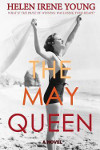
Women and war.
Publisher: Crooked Cat
Pages: 214
Type: Fiction
Age: Adult
ISBN: 978-1-539-99706-1
First Published: 25th April 2017
Date Reviewed: 28th April 2017
Rating: 3/5
May lives in the Cotswolds with her family, but one day Sophie leaves and life changes; May can’t shake the feeling that the boy she likes, Christopher, is the reason for Sophie’s disappearance. Deciding to join the Women’s Royal Naval Service, life in London results in new friends and new tragedies, but also the potential for marriage – it’s just that May can’t quite see herself married to John while thoughts of Christopher linger in the background.
There is a lot to like about this book. Looking at World War Two from the point of view of a female member of the military, Young’s research is evident and there’s much here that isn’t often discussed in fiction at the moment. You’ll take away a few things you’ve learned but it never feels as though you’re being told too much.
The story itself is good, too. Besides the tragedies, which in view of the page count do happen quite often (besides the fatalities of war), Young presents a great little study of home life. May’s relationship with her mother is fraught by criticism and what seems to be a lack of love from mother to daughter, yet at other times Ma gives much; the effect is such that Young provides you enough to really ask yourself what is going on – it’s up to you to decide the dynamics of the relationship.
Besides this, there’s a good balance of other domestic and social points – runaway sisters and illicit affairs looked at alongside the every-day of war, basement parties, being out and about when sirens could sound at any minute.
Unfortunately there is a lack of detailing in the book. The May Queen does not have any filler sections but the writing is disjointed. The book reads as an extensive plan for a novel, so you’ll have a fair sense of what’s going on but because the scenes aren’t fleshed out enough there can be confusion. The writing is bare in the same way as the detailing.
Where do the characters stand in this? Some are mostly developed, others less so. The book shines best during the second section, set in London, where the story moves with the new location, separating May from her family and allowing you to get to know her better.
This is a good look at the Wrens and the way people lived through war, just a sparse look. It will appeal most to those wanting to read about women’s roles in the war and the way life continued throughout.
I received this book for review.
Related Books
None yet.
Emma Henderson – The Valentine House
Posted 26th April 2017
Category: Reviews Genres: 2010s, Angst, Domestic, Drama, Historical
Comments Off on Emma Henderson – The Valentine House
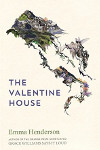
Houses, history, family, and secrets.
Publisher: Sceptre (Hodder)
Pages: 335
Type: Fiction
Age: Adult
ISBN: 978-1-444-70402-0
First Published: 6th April 2017
Date Reviewed: 26th April 2017
Rating: 3/5
The Valentines own a house in the French Alps and summer there each year. The house remains in the family for decades and so in the nearby village there is a lot of knowledge and rumour spread and over time many residents employed; if female, the mistress of the house looks for very plain, ugly women so that her husband won’t be led astray. Mathilde is one of those employed and ends up spending most of her summers working at Arete. But there is more than meets the eye in Lady C’s wish for plainness and there are more tales behind the elusive Margaret and younger Daisy than people will know.
The Valentine House is a dual plotline book of family issues, history, and climbing, set in France. It switches between Mathilde – both in her early and later years – and a Valentine descendant called George.
This book is an easy read. Full of the colloquial language of the times, it can be fun and often poetic. Many sentences ultimately rhyme; it’s not that the book is written in verse, but there are enough rhymes here to believe that it may have been a stylistic choice.
It is hard to say whether the book is a success from an objective viewpoint – The Valentine House does not have much of a story arc, and depending on what you were hoping for or were thinking might happen, the reveals near the end may not be satisfying. There is a point roughly two-thirds of the way through where Henderson deliberately turns away from giving away an important detail (think the ‘I didn’t want to listen to what the person was saying’ device), which does mean you get to enjoy more of the atmosphere (which is great) but may cause some frustration. At the beginning of the book the idea of ‘uglies’ seems to be very important on a larger scale than the English family’s hiring practises, however as the novel continues it ceases to be looked into. This may well have been a case of nothing from the start, so to speak, but with a nod towards disfigurement, rather than plain looks, in several people, and given Henderson’s previous book, it does seem as though something has been left out.
Beyond this, apart from times of confusion, it’s an enjoyable read. The writing, as said, is rather lovely, especially so at times, and there is a lot to love about the aspects of climbing and general Alps history. You wouldn’t necessarily call this a book about climbing, and not a book about families and climbing, either, but nevertheless the sort of detailing Henderson has included about climbing means it’s likely to satisfy those who enjoy the sport as well as those simply interested in the idea of it. The people might be fictional but the delights as well as the sorrows, the dangers, are very true to history and life, so there is an element of learning here to be had. Nods are given to the Alpine Club and the experiences of individuals, and as the sections about mountaineering occur in both the the early twentieth century as well as the later twentieth century narratives, you get more than one slice of how the sport has changed. And you get the benefit of learning not just how much safety improved but inevitably, as the book’s ‘present day’ narrative is in the 1970s, how much further we have come now.
Read the book for the family saga aspect of it and you’ll find yourself a happy – for you if not for the characters – afternoon. It’s in the family that the idea of the story arc can take a back-seat – if you are reading for the saga, you may well be happy with the arc as it is. As the book isn’t very long compared to other sagas the generations are written both linearly and muddled together (in a carefully considered way) meaning that it does bridge the divide between genres. This said, you are highly likely to prefer one narrative to the other which may affect this. Mathilde’s is the one most likely to inspire as it has a lot more going on than George’s, which for most of the time can seem more a device for Mathilde than a story in itself.
And the family is most definitely a dysfunctional one. Henderson has stuck firmly to the concept of the rich family holiday; she has gone to town with it and done it with aplomb. The characters are stereotypical insofar as literature goes which in this case is a great aid rather than a drawback. There’s an interesting semblance of cut-out along with fine development, with Henderson leaning a little on the stereotypes so that she can spend more time on the not-so-stereotypical, a sort of ‘these are the basics, now let me give you the specific details’. Whilst the characters may not all stay in mind beyond the book – some definitely will do – together they make the book what it is in terms of theme.
In the case of the reveal and how satisfying it may or may not be, it’s worth noting that Henderson takes a very different fork in the road than you might expect. For some it may come out of left field, for others it will be a wonderful difference – this is where personal opinion must trump any talk of objectivity.
It’s hard to place The Valentine House. It’s easy to get through and a good read, but it does seem a missed opportunity for various reasons. Nevertheless there will be some readers who find much to like about it and it must be said the location and atmosphere is lovely. This is a book to read up on before trying yourself to see how you’ll likely fare.
I received this book for review.
Related Books

Phillip Lewis – The Barrowfields
Posted 7th April 2017
Category: Reviews Genres: 2010s, Angst, Books About Books, Domestic, Drama, Spiritual
3 Comments

A contemporary coming-of-age tale with a slice of Southern gothic.
Publisher: Sphere (Hodder)
Pages: 348
Type: Fiction
Age: Adult
ISBN: 978-1-473-63682-8
First Published: 7th March 2017
Date Reviewed: 5th April 2017
Rating: 5/5
Henry’s father wanted to be a writer. Growing up in a house without books in a town that didn’t value reading, he struggled, achieving a little success but ultimately not getting far, in part, by that time, due to his need to get things right. Henry himself thus grew up around thousands of books, housed in a large library in a large foreboding house. As he grows up himself, he too struggles to find success, his life marred by the disappearance of his father, other family deaths, and communication problems with his family that he doesn’t want to acknowledge.
The Barrowfields is a magnificent work that reads like a great work of American literature. Lewis’s writing style is subtle, beautiful, and the book feels as though it is from another time. It’s very much literary fiction, the plot simple but full of meaning. The end result is a book that is in many ways an easy read, and for all the right reasons.
At its heart are two major elements: the effect of parental neglect and loss on children, and the wonder of literature. The effect on Henry of his father’s leaving is huge but he doesn’t often confront it directly, he can’t. Lewis’ characterisation is fantastic, the author makes you second-guess for a very long time as to the worth of the story as a whole whilst simultaneously giving you plenty of other reasons to keep reading, which has the effect, particularly by the end, of demonstrating how damaging being silent can be but also showing how it can be difficult to identify problems when you are on the outside looking in. Even though you spend the entire book in Henry’s head, you are kept back from many of his deepest thoughts – what he portrays as his deepest thoughts are often layers of disguise.
It is perhaps easier to see where parental loss has an effect (I apologise for using that word so much) in the character of Threnody, Henry’s sister with whom, as a child, he had a terrific bond. Henry is very open about his sister and as Lewis’s character development shines throughout the novel, it is through Threnody that all the hurt and pain is revealed. (Lewis’s sibling relationship here, in terms of literary bonding, is influenced by his becoming a father early in life.) Yet The Barrowfields is not a depressing book. Whilst Lewis deals with the darkness of his subject, he includes a lot of humour in his description and dialogue, enough to make you laugh out loud.
This humour brings us to the second major theme of the book – this is a book about books. About books and literary studies and grammar and the classics, even book banning and burning. The Barrowsfields is soaked in references to classic works of many genres and eras – literature is what father and son bond over, what son and daughter fill their time with, and what Henry often discusses with his friends. Harper Lee. Faulkner. Fitzgerald, Thomas Wolfe. Marion Zimmer Bradley. References are sometimes blunt (a character asks someone if their situation isn’t straight out of To Kill A Mockingbird), others are woven into the text in such a way that the book seems at its heart a love letter to literature. Many references are made to Southern literature, matching Lewis’s setting of North Carolina. It is difficult to explain just how satisfying this novel is; it goes above and beyond many others.
The foreboding nature of the house has its place, forever towing the line between being in the background and becoming a character in its own right. It’s what situates the novel firmly in gothic territory, beckoning over another couple of classic works – Du Maurier, Brontë – but remaining almost defiantly apart from them. The plot line here is often on the back-burner but it smolders constantly until Lewis gets to the place you come to realise most makes sense to explain it. Whether or not the house has or had a direct influence on the rest of what happens is left up to you to decide; Lewis, through his characters, never says one way or another. It’s the big old dark creepy house with the residents who are used to it.
The Barrowfields sometimes takes patience, holding back much for a while, but it rewards in spades. It also takes a sudden seemingly odd turn during the middle – one of those occasions where a character joins the narrative half-way through and due to experience you wonder if it’ll work; it does so with good reason. This is very much a bildungsroman, and you learn along with Henry, at his pace. It reads as partly autobiographical, the extent of the detail, the depth of the knowledge that seeps from it.
It’s just glorious. If you want to read something classical from our present day, if you want a book about books and a skilled, careful, look at heavy themes that will nevertheless make you feel positive, this is your book. I can’t recommend it enough.
I received this book for review.
Related Books
None yet.
Speaking to Phillip Lewis about The Barrowfields (spoilers included)
Charlie and Phillip Lewis discuss planning out fictional houses, the detail and beauty of classical music, books about books, and how real life in all its ups and downs makes its mark on your work.
If you’re unable to use the media player above, this page has various other options for listening.
Harper Lee – To Kill A Mockingbird
Posted 31st March 2017
Category: Reviews Genres: 1960s, Commentary, Drama, Law, Political, Social, Spiritual
4 Comments
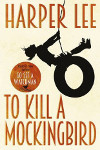
And question society.
Publisher: Arrow Books (Random House)
Pages: 307
Type: Fiction
Age: Adult
ISBN: 978-1-784-75263-7
First Published: 11th July 1960
Date Reviewed: 30th March 2017
Rating: 4.5/5
It’s the 1930s and Scout and Jem live with their father, Atticus, a lawyer in a small town in Alabama. Scout is just starting school and finding her way around things she doesn’t understand including subjects Jem seems to know a lot about. As she grows a little older she understands more about her father’s work and when Atticus is employed to defend a black man against a charge of rape, the family will have to deal with people heavily prejudiced against black people and the whites who support them, and Scout will come to learn about the variety of people in a country starting to move towards equality.
To Kill A Mockingbird is a semi-autobiographical novel inspired by Lee’s experience in a similar role to Scout, the child of a man in a similar role to Atticus. It’s a rather quiet book that makes its points with aplomb.
There are many fine elements in this book – the look at race, of course, but also the use of location in a way separate from that, the characterisation, and the general feel of it. It’s a book that if published today would likely be called literary fiction and it’s one that benefits from reading it considering a few viewpoints. How might it have been received if published in the day it was written? How would it have been received in its day? And what value does it have for us today? (That last one can be partly found in the answers to the other two questions.)
The plot meanders between strong, hard-to-put down chapters and easygoing scenes that in another book might make you wonder how much it was worth it – this is where the characterisation comes in. Lee’s strength in developing characters means that you want to keep reading and has that wonderful effect of making the characters feel real. This is of course likely due to the autobiographical element but beyond that it’s just pure talent; no matter how major or minor a character they are given what’s needed to make the book read as pure reality. Scout doesn’t understand much of what she hears, but Lee provides enough for the reader to comprehend it all. What’s lovely about Lee’s choice of narrator and narrative style is that you still get a complete picture of the other characters. There’s quite a bit of humour and a lot of love.
Lee’s look at racism and the burgeoning idea of equality is interesting. The book revolves around it but Lee never lets it take over the text itself – there’s the sense that she wants to make her point but in a way that means you get a positive experience alongside the bad, a good experience of the south of the time in both general life and the way many people supported black American rights, and in order to stay true to her narrator. The impact it may have today may not be as much as it would have been – this is where you need to consider the context in which it was written because as a look at what had been happening earlier in her life, the book is very powerful.
Lee incorporates various social circles into the story, mixing them together. Not too much – the book stays true to reality – but in ways that further support what she’s trying to do, such as Scout and brother Jem sitting with the reverend of the black church when in the court room – for Scout she’s sitting with friends, for the author it’s an extra show of support for the defence. (On that ‘not so much’ I’m thinking of the lack of time given to Tom Robinson directly – he says very little in the book, the focus there is more about how the white, privileged, people are helping him, which of course puts across the idea of tolerance in general and the way in which things had to change.) Lee’s fictional community includes people of many backgrounds and by the end a number of economic and social issues have been covered. Most of note, perhaps, is the story the children construct in regards to Boo Radley and the ultimate revelation of who he is, a well-crafted few segments that display childhood thoughts and kindness with a lot of heart.
The overall quality of the book is evident from early on, but it’s one that’s good to mull over because the more you consider it, the more you see.
I’m keeping this short – there’s only so long one can carry on in review form about a book that has been studied for years, especially when it’s their first read – but suffice to say To Kill A Mockingbird is a very good book.
Related Books
None yet.
Samanta Schweblin – Fever Dream
Posted 22nd March 2017
Category: Reviews Genres: 2010s, Commentary, Paranormal, Psychological, Translation
Comments Off on Samanta Schweblin – Fever Dream
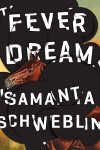
Be prepared to never be prepared.
Publisher: Oneworld
Pages: 151
Type: Fiction
Age: Adult
ISBN: 978-1-786-07090-6
First Published: 2014; 10th January 2017 in English
Date Reviewed: 21st March 2017
Rating: 4/5
Original language: Spanish
Original title: Distancia de Rescate (Rescue Distance)
Translated by: Megan McDowell
Amanda’s in hospital. David, the peculiar child of someone she knows, seated somewhere near her, is telling her she’s close to death; she has to keep talking, work out what has happened, why she’s there. It’s difficult; it’s hard to think, she can’t see very well, and David keeps telling her to move on to other things that are more important. She won’t.
Fever Dream is a novella full of circular thinking, warped perceptions, and few concrete answers – they are sometimes there but Schweblin defiantly remains vague. It’s an easy read, a small book without chapters, that asks a lot of your attention but for that it rewards you with the reality of unreality and a fair amount to think about.
The original title is probably a good place to start – a lot of the narrative revolves around Amanda’s concept of ‘rescue distance’, the maximum physical distance between herself and her small daughter at any one time that will result in immediate result in case of accident. Amanda’s ill health makes her even more paranoid and obsessive so that the distance lengths and shortens – most often the latter – over the course of the book. Her time with her daughter is detailed solely as a flashback, the report she gives David as she lays ill in bed, but gets discussed by them in the present every so often. Alongside this constant consideration are other repetitions – Carla’s gold bikini, for example – that further illustrate what Amanda, perhaps erroneously, is focusing on.
Flashbacks. Are they? Aren’t they? Schweblin never tells you the exact times when Amanda is thinking of the past and talking directly to David – it’s generally obvious but not always. This adds to the feeling of confusion for the reader, very much intended, and gives you more of an idea of the situation at hand. It is also difficult to work out the time line of what has happened in Amanda’s story but in this Scheweblin does provide an idea of what you’re meant to be thinking, as a reader, when she presents a definite dream sequence. This dream shows the topsy-turvy construction of our real life dreams, whether feverish or in good health, that confirms for you the feeling that you’re not necessarily meant to be working everything out.
David’s almost changling status is eerie. Supposedly, this child of Amanda’s friend – this child/now adult (who knows?) who is in Amanda’s room – is not the same as he was before. (In years gone by a woman said that in order to save a feverish David’s life, a switch of bodies would have to take place, David’s spirit moving on to another body and David’s body becoming inhabited by a different soul. It’s the different soul/same body that Amanda is supposedly talking to.) David’s actions are seen as strange, haunted, and whereas we can assume that some actions might have been normal in reality, some clearly aren’t. The character of David is very much up to you, the reader, to figure out.
Fever Dream is a short book; you wouldn’t want it to be longer due to the confusion and the relentless and repetitive nature of David’s questions. It’s a book you can enjoy even if you can’t quite explain it, and at times it’s the very idea of not having to understand it that allows you to enjoy it more. And with its relatively small number of pages and a narrative that doesn’t deviate, with its lack of chapters and easy language, it’s the perfect choice if you want to pick up something challenging but very accessible.
I received this book for review.
Related Books
None yet.


