





Julianne Pachico – The Lucky Ones
Posted 5th December 2017
Category: Reviews Genres: 2010s, Commentary, Crime, Psychological, Social
Comments Off on Julianne Pachico – The Lucky Ones

Please note: as well as today’s post – which is in lieu of yesterday – and Wednesday’s usual post, I’ll also be posting this Thursday. As I haven’t been able to blog much recently I’ve a small backlog of posts that I’d like to share with you before Christmas. Next week will be back on schedule.
Or are they?
Publisher: Faber & Faber
Pages: 259
Type: Fiction
Age: Adult
ISBN: 978-0-571-32974-8
First Published: 31st January 2017
Date Reviewed: 5th December 2017
Rating: 3/5
In 2003, a girl decides to stay home instead of go to the party at an equally rich family’s house on the top of a hill, agreeing with her mother to tell the maid not to open the door to strange men. A few years later, a professor who may be a prisoner teaches a class made up of ferns, and leaves and twigs of other plants. And as the professor teaches the plants he mistakes as children, elsewhere the girl who lived at the top of the hill listens as her words are delivered as a lecture to the militia.
The Lucky Ones is somewhere between a short story collection and a novel, the stories focusing on different characters who are all fundamentally linked by their school years. Set in Columbia (with a brief sojourn in New York), it looks at the drug war conflict in the country in the 1990s and early 2000s.
Starting with the topic, it’s a difficult one to make out – you can by all means research but you may have to read a fair portion of the book first to work out what you’re looking for, instead of spending your time appreciating what the author’s saying, because so much crucial information has been left out. The identity of each story/chapter’s character is left out until a good way into it, and you have to piece together clues further on. This lack of identity is combined with a non-linear narrative. If you happen to know a lot about the topic already you’ll likely ‘get’ it but the approach may still prove a problem.
In view of the writing, there are some outstanding turns of phrase throughout, most often those that expose the things you should be considering. But there are also many clunky sentences, an abundance of hyphens, and a very noticeable reliance on ‘abruptly’.
Looking at the content, what Pachico is saying is very good. Thankfully there are some moments when proceedings are looked at openly, where times in the characters’ lives are referred to in a manner that clearly shows the shocking reality of the situation. There is also a story written entirely in metaphor – or is it? In this case, at least, you are meant to wonder about what you’re reading.
To speak of another positive, the title of the work is irony at its best, referring to all the characters. Some of them are in good shape but others have been altered forever whether mentally, physically, emotionally – if these damaged people are the lucky ones, what of the rest? It’s an excellent title which, when combined with the use of its singular version as the title of the first story, asks a few more questions.
So, in sum, notes of importance, but it could have used a different approach.
I received this book for review. The book has been shortlisted for the Young Writer of the Year Award.
Related Books
None yet
Lewis Carroll – Through The Looking-Glass
Posted 29th November 2017
Category: Reviews Genres: 1870s, Fantasy
2 Comments

Mirror mirror on the wall.
Publisher: N/A
Pages: N/A
Type: Fiction
Age: Children’s
ISBN: N/A
First Published: 1871
Date Reviewed: 29th November 2017
Rating: 3.5/5
Alice is playing with her chess pieces whilst cat Dinah tends to her kittens, but Alice isn’t happy where she is – there’s a big mirror over the mantelpiece showing the room in reverse and she wants to visit it. She goes up to the mirror to have a look, and finds she’s able to climb into it.
Through The Looking-Glass is the slightly lesser known sequel to Alice’s Adventures In Wonderland. Shorter to a fair degree, it shares a couple of the same Wonderland characters but is rather a lot different.
Speaking from an adult perspective, there isn’t any character development here – Alice is exactly the same as she was in the book published 6 years prior and she hasn’t learned anything from her previous time away, that is to say she’s as stubborn as she ever was. It’s an interesting factor because you might reasonably expect a character, particularly in a children’s book, and no matter the era it was written in, to learn something solid, but this book is very much about the fantasy.
Speaking more generally and thinking of the target age group, this is a fun book, just not as good as the first. There is no White Rabbit or Cheshire Cat, and whilst it appears at first glance as though the Mad Hatter and the Hare make an appearance, that appearance is deceiving – they appear to be different characters entirely. The story has a satisfactory concept – a game of chess with human/fantasy creatures, but it’s not as well-plotted as the first. It’s worth a read, but will disappoint if you’re – reasonably – expecting a second visit into Wonderland; this Wonderland sports the same strangeness of character but is otherwise quite different.
But it is fun and has a lot of content for both children and adults. Clever turns of phrase are the ruling factor. The poetry is out in full force. And well-known concepts – such as the afore-mentioned chess – are given a lot of time. There’s having to hurry up if you want to remain in the same place; there’s this:
“I see nobody on the road,” said Alice.
“I only wish I had such eyes,” the King remarked in a fretful tone. “To be able to see Nobody! And at that distance, too! Why, it’s as much as I can do to see real people, by this light!”
And there’s handing round a cake before one actively slices it. Lots of wordplay and thinking.
The relative shortness of Through The Looking-Glass is good – the story and characters are rather too strange for comfort and leaving the world is a bit of a relief; Alice might want to spend longer but it’s more nightmare than dream. It’s a good book but you’ll likely find the original better.
Related Books

Helen Oyeyemi – What Is Not Yours Is Not Yours
Posted 15th November 2017
Category: Reviews Genres: 2010s, Books About Books, Magical Realism, Paranormal, Short Story Collections, Social
3 Comments

…But this book may be yours.
Publisher: Picador (Pan Macmillan)
Pages: 263
Type: Fiction
Age: Adult
ISBN: 978-1-447-29936-3
First Published: 8th March 2016
Date Reviewed: 14th November 2017
Rating: 5/5
An abandoned child looks for the lock that the key around her neck is linked to; a girl looking for a place in the world joins a puppetry school and her experience of the paranormal extends beyond the ghost in her house; an all-female university society seeks new members, detailing its history with the all-male society that led to their own creation.
What Is Not Yours Is Not Yours is a fantastic and fantastical short story collection of the sort that draws you in swiftly and keeps you glued to the page.
These stories don’t always come with a message or shocking ending like some, but there’s a grain of truth (or fictional truth) in all of them. What they are is incredibly enjoyable; the mix of fantasy and paranormal together with the balance of contemporary and historical is a dream to read. Then there’s the fact that often, stories are written in such a way that they seem historical when they aren’t, and it’s the magic of them that makes them feel as though they’re set in the past. Take the first story, for example, Books And Roses that has a big element of The Secret Garden in it, where things are not bona fide magical but do feel so. (Books And Roses also features a massive library so it’s beautiful in that way, too.) Is Your Blood As Red As This? calls in a paranormal, almost horrific, vibe, looking at ghosts and puppets, the second of which might be able to move by themselves. Then there’s the wonderfully titled If A Book Is Locked There’s Probably A Good Reason For That Don’t You Think? which doesn’t tell you exactly what it’s about – you find out the consequence for unlocking the book but not the history or reason for what happens – but that doesn’t really matter. It’s bizarre, but here bizarre is a feature, something that you nod or even shrug about and then move on, the strangeness somehow making the book even better.
On the subject of stories sometimes seeming historic when they aren’t, the writing plays a big part. Oyeyemi’s prose is simply gorgeous, somewhere between the literary fiction of today and the glorious Gothic of the Victorian period. (Oyeyemi recently covered Emily Brontë’s writing for a television documentary so there’s an influence here. She’s also inferred a love of classics elsewhere.) It’s just lovely, the sort of writing you want to be reading for hours.
The book mainly looks at women but there are a number of men, and the book is diverse in race, setting, and sexuality. Sometimes these things are they with reason, so to speak – that is to say they are there for a studious reason – other times they’re just part of the story, the collection being a mix of stories for interest-sake only and ones that look into society. Indeed one story looks at one society in particular, focusing on the fictional Homely Wench Society of Cambridge, formed to rival a male-only one.
Do the stories go on on occasion? Yes and no. These are slightly-longer-than-usual stories, so it can feel you’re reading them for a long time, but as books go, the 263 pages really aren’t a lot and there aren’t any dull moments. The object of the book does seem to be to entertain first and foremost and perhaps leave you with something to think about. Above all, the experience of reading it is the highlight. With its admittedly random, long titles, no matter how interesting they might be, it can be difficult to recall later exactly what you were reading and for once that’s not a big drawback, the similarities in the tales being intentional with the same characters showing up various times.
In an entirely unrelated song from the 1980s, Radio Musica, British singer-songwriter Nik Kershaw sung ‘Experience has made me rich’. I note it here because that is the perfect way to describe What Is Not Yours Is Not Yours. Reading this book leaves a small mark in your conscious – whilst you may not necessarily wish it would carry on forever, your sense of literary knowledge will be better for having read it.
Related Books

Hanif Kureishi – The Last Word
Posted 10th November 2017
Category: Reviews Genres: 2010s, Comedy, Commentary
Comments Off on Hanif Kureishi – The Last Word

Or words, plural. Many.
Publisher: Faber & Faber
Pages: 344
Type: Fiction
Age: Adult
ISBN: 978-0-571-22755-1
First Published: 21st October 2013
Date Reviewed: 10th November 2017
Rating: 2.5/5
Harry is charged with writing a biography of Mamoon Azam, a literary giant; his editor promises it will launch his career. And so Harry goes to meet Mamoon and his Italian wife – his second wife, previously a fan of his work – and stays with them for a time, getting to know them both. There’s a lot to Mamoon’s life that Harry thinks should be included but the literary star has other ideas.
The Last Word is a somewhat comic novel looking at the situation and life of a fictional, rather pretentious person. Some reviews have said it seems to be a parody/based on V S Naipaul – Naipaul’s love life as reported on the internet does match Mamoon’s, albeit that Mamoon’s in this case is incredibly exaggerated.
The novel begins well and is very funny, but it quickly becomes stoic, with Harry, Mamoon, and Liana spending their days talking about various subjects and doing nothing else. The slight philosophical vibe of the book becomes overdone and repetitive, the plot never really going anywhere.
In addition to this the main characters are difficult. Harry spends his time talking about his strong feelings for his fiancée, Alice… whilst in bed with Julia, a person who works at Mamoon’s. Is this whole situation and sexual promiscuity likely part of the whole parody? Yes, but when there’s no really story arc to it and it’s included just because, it’s hard to say it’s of any worth.
This is to say that no one in this book learns anything, there is no character development at all and the plot doesn’t go anywhere. It’s hard to pinpoint a reason for the book, except perhaps, if it’s simply a sort of inside joke about another, factual, writer.
If you know a lot about Naipaul – if we consider it could be about him – then you might enjoy it but beyond the first few chapters (which are admittedly stellar) it’s difficult to say this one is worth your time. The type of comedy has a lot to recommend it – in another book, perhaps.
Related Books
None yet
Louise Douglas – The Love Of My Life
Posted 8th November 2017
Category: Reviews Genres: 2010s, Angst, Domestic, Romance, Social, Spiritual
Comments Off on Louise Douglas – The Love Of My Life
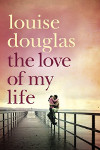
The tree makes the apple fall… and calls itself lighter for it.
Publisher: Pan Macmillan
Pages: 328
Type: Fiction
Age: Adult
ISBN: 978-0-330-45358-5
First Published: January 2008
Date Reviewed: 8th November 2017
Rating: 4/5
After Luca died, Olivia decided to move back up north, where she and her husband were originally from. She wanted to be close to their childhood homes but true to form his family are not at all interested in seeing her return, in fact they really don’t want her to come back. Olivia’s childhood was not a happy one and the choices she made were seen as rebellions. Only Marc, Luca’s twin brother, is happy to see Olivia, and they find themselves becoming closer in their grief, a dangerous thing in the situation they’re in.
The Love Of My Life is a short novel with a dual narrative, Olivia speaking of the present in tandem with the past. The book is somewhere between a contemporary novel of social issues and a work of suspense, the reason for all the hate unravelling slowly but the slowness being rather apt as Douglas has something she wants to talk about – the way Olivia was brought up and the affect her mother had on her maturity. Olivia is only somewhat a heroine, often remaining passive and often quite annoying to read about, her decisions being the sort we call wrong; however your like or dislike for her is not the point in this book, rather the importance lies in how Olivia has come to be in the situation she is in.
Olivia was, is, and likely will always be the black sheep of the family, her mother spitting out such phrases as ‘you’re just like your father’ and demeaning her. Because Olivia was not as talented academically as her sister and because she often made very normal mistakes for her age, she was belittled. The town being small meant that this hatred from her mother spilled over into society, with adults believing Olivia was trouble. And so as she aged she rebelled, but there were also a lot of things she did that weren’t her fault at all.
So Douglas looks into the effect of this treatment. Struggling in a place that hates her, Olivia’s choices often look bad but aren’t. A good example that doesn’t spoil the plot – because it’s known from the start – is the way she ‘stole’ Luca from his family, ‘ruining everything’ by starting a relationship with someone who she’d known since childhood and who loved her very much. Olivia wasn’t good enough for their family.
The only possible point of contention with this study is how it continues into the ending of the book, the climax being perhaps not as satisfying as you might have hoped and Olivia leaving things be that she could very well fight against. Whether or not you like the ending will largely depend on how much you’re willing to suspend bookish enjoyment for what Douglas is trying to do, however either way you will likely see and appreciate it for what it is.
Interesting to consider is the way the author balances showing and telling. As a first-person narrative, Olivia obviously tells the reader a lot but Douglas’ look at grief and its effects allow for a lot of showing. There’s a lot to Olivia that she, the character, may or may not realise – things that the reader is privy to. As much as she can be difficult to emphasise with on occasion, you will feel a lot of understandable pity for her and the desire for her to spend her time with those who support her.
It’s a book steeped in grief but there are happy times. Douglas’ flashbacks and writing of Luca are so winsome it’s easy to forget you’re reading about a character who is no longer there; whilst Luca doesn’t ‘haunt’ the book, so to speak, his personality makes the pages brighter. Luca’s inclusion provides extra ‘evidence’ alongside Olivia’s descriptions and the phone calls with her sister as to the way the protagonist has been manipulated and split as black, the scapegoat everyone uses to take all their issues.
As for the writing, it’s rather lovely, and is enough to keep you reading when things are difficult. Douglas’ careful prose and attention to detail makes the pages fly by as you seek to know what happened all the while feeling at ease with the pace she’s set.
This is a book that exposes why things that seem so trivial or different on the surface affect people – a lot of the conflicts are small on the surface but big for the characters. It’s a book with a lot of romance but balanced by a massive dose of reality. But whilst it may be difficult at times it’s never too much to handle, Douglas’ expertise ensuring a good reading experience.
I read this book in preparation for my event.
Related Books
None yet


