





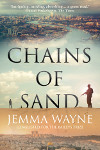
Kimberly Derting – The Body Finder
Posted 12th November 2010
Category: Reviews Genres: 2010s, Paranormal, Romance, Thriller
1 Comment

If she can find the dead, can she find the killer too?
Publisher: Headline
Pages: 327
Type: Fiction
Age: Young Adult
ISBN: 978-0-7553-7895-1
First Published: 16th March 2010
Date Reviewed: 3rd November 2010
Rating: 4/5
Violet Ambrose has an uncanny ability – she can sense the “echoes” from the dead bodies of people who’ve been killed. So when the disappearance of young women becomes a regular occurrence in her small hometown, Violet is the first one to know. But at the same time she’s struggling with her feelings for her best friend, feelings that have changed since the last school term. She’s changed, he’s changed, but has he changed in the same way she has?
I’d had only fleeting contact with this book before I read it, seeing the cover a few times but feeling completely uninterested. Like many paranormal books for teenagers at present, the base colour is black, but rest assured, this isn’t Twilight, not in the least. Yes, it shares a few features: a prom, a gushy romance, and maybe Violet gets into some awkward situations, but in the main is it difficult to so much as guess where the author might have got her ideas from.
There is a real sense that Derting wants to impart advice to her readers, but she never goes overboard, instead speaking the same as any parent but going further by telling a detailed narrative about why one should listen to those warnings. What’s interesting is that while the book reads as a fictional account, and a lot of emphasis is placed on everything else unrelated, when it comes to the sections solely about the killer Derting doesn’t paint over it – while she doesn’t present the most harrowing story she works well within the parameters she’s set herself.
Surprisingly, although when generalised you would say this story focuses on death, there is a great amount of romance in the book. This is what makes it a story for younger readers, and certainly it’s an appropriate account of love for the target audience. Derting limits how far the couple go while straying a little past the usual borders, and although it can become soppy at times she always remembers to create mini conflicts in a way that pushes any bubble, that may have been forming over the couple, far away.
This leads to the characters in the book. Violet exudes confidence, and her lack of love for her appearance is but a realistic flaw. She only ever becomes helpless in understandable circumstances, and the times when she goes against common sense are explained – there is always a good reason for it. Romance-wise, when Violet starts to lean perilously close to drooling she tends to remember that feigned spite and disagreements are often fun. This girl walks into danger all the time, but she knows the risks, and when Jay comes to protect her she gets angry. I assure any would-be reader, in lure of the current batch of damsels, that like Jenny from The Forbidden Game, this is someone to really root for.
Jay is much the same as Violet, and he only appears as less daring because he’s not the major character. Jay can command, but he’ll also follow. His hero moments work because of Violet’s tendency to walk into jeopardy, and when he does get angry it’s logical.
The writing is very undemanding of the reader and the book quick to get through. The subplots always serve a purpose and the story is told without any particular drifting into unnecessary areas – which is more than can be said of Violet.
Although much of the ending is predictable, the climax itself isn’t, and if the loose threads are dealt with too quickly then it’s reasonable as a second book will be released shortly.
In The Body Finder, Derting puts a number of genres onto a plate and mixes and matches until she has ample quantities of each while sticking to the overall expectations that events of the past few years have created in young readers. She goes beyond what a lot of writers have been doing, unafraid to break the mould. It’s compelling without being too compelling, worrying without being too scary, and damn sexy whilst resisting sex.
The question now is will the echo from this book reach you?
Related Books


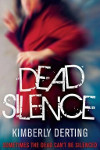
Alex Bell – Jasmyn
Posted 27th August 2010
Category: Reviews Genres: 2000s, Fantasy, Thriller
1 Comment
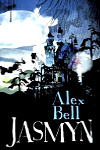
An epic tale of love, dark magic, and mystery, told in a reasonably short time.
Publisher: Gollancz (Orion Books)
Pages: 311
Type: Fiction
Age: Adult
ISBN: 978-0-575-08029-4
First Published: 2009
Date Reviewed: 24th June 2010
Rating: 4.5/5
Jasmyn’s husband is dead, that’s all there is to it – there were no warnings, no signs, it was sudden, he’s gone. And now Jasmyn’s started to experience strange things – swans falling from the sky at his funeral, photographs of her wedding day being altered so that she no longer looks happy, cruel people around her. We say that fairy tales aren’t real, but Jasmyn knows better and, actually, fairy tales may be exactly what this is about.
Jasmyn boasts a fantastic story. In it Bell has blended reality with fantasy. There are a lot of fantasy books that are strictly fantasy, and then there are some that mix our world with a pretend one, but in these latter cases the worlds are more clear-cut. What Bell has done here, not unlike in The Ninth Circle but certainly to better effect (because of course in The Ninth Circle the fantasy was theological, therefore more knowingly realistic than unicorns and fairies) is set the bare basics of the story – Jasmyn herself – in our world and then tease at the edges until they fray and become twisted around the make-believe. The fairy world in Jasmyn isn’t happy-go-lucky – this is a dark fantasy – and the dark element aids the blending further. This is in part due to the fact that the actual fairy world comes into the story only a few times because the emphasis is on keeping the characters away from it. Similarly to Lex Trent Versus The Gods, Bell has included a range of different tales from different countries. I found the book made me re-think all the things we are told are myths. Is our world really as black and white as we’re taught?
Jasmyn, the character, is an interesting one. Bell has made her albino and so alone this brings in the question of whether or not Jasmyn may be mystical herself. To think about it beggars the question of whether this would be acceptable in real life because, like anyone whose looks differ from the “norm”, albinos would not like to be singled out in such a way – but then at the same time some might find it empowering to see themselves in the way that Jasmyn has been taught by her husband. The inclusion of Liam’s love for Jasmyn and his understanding of her is a great attribute of the book. The character will likely appeal to anyone who has a disability or has trouble with social expectations for her internal discussions about how she is accepted.
In general Jasmyn is a fine narrator, but at times she can be irritating. It suits the telling of the story to have her not realising or understanding things every now and then, but although it may provide more space for extra subplots it causes the story to slow down. It suits its length but it’s slower compared to Bell’s other work. Some of the dialogue is superfluous as are some internal conflicts within Jasmyn’s mind.
Through the character of Ben, Bell has re-used the same idea she did for Stephomi in her previous book. Is he good or is he bad? She writes this element well so that although it may basically be a repetition – and a very apparent one – it never feels stale, and most importantly is, as with The Ninth Circle, a big reason to keep reading.
Bell brought up differences in the form of Jasmyn, but she doesn’t stop at looks. Included in the book is a laboratory and it is here that Bell proudly stands up and makes a statement about animal testing. It doesn’t impact the plot, and she hasn’t gone overboard. She has made her point but now the story will continue, and actually, the way it’s been done makes it one of the most memorable parts of the book.
Jasmyn takes the fairytale and turns it on it’s head. It takes the legend away from it’s comfort zone and often to some very unexpected locations. And it’s believable because of the extent of the mundane throughout.
I defy anyone not to travel with Jasmyn into this parallel world – even if it’s not quite the happy place you would expect.
Related Books

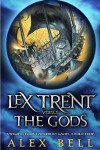


Sasha Blake – The Wish
Posted 13th August 2010
Category: Reviews Genres: 2010s, Chick-Lit, Thriller
1 Comment

Some dreams push it a little too far.
Publisher: Bantam Books (Random House)
Pages: 436
Type: Fiction
Age: Adult
ISBN: 978-0-553-81916-8
First Published: 19th August 2010
Date Reviewed: 11th August 2010
Rating: 3/5
From the look of the cover, Blake’s The Wish looks like the Chick-Lit of Chick-Lit, so I was very surprised when it was more about getting away from money and living a normal life.
Lulu loves Ben, the son and heir of an entrepreneur. Ben just wants to get away from it all and in knowing Lulu he has found that there is a better life to be had than the one he lives. Ariel, Ben’s sister, wants more attention from her parents for all the good work she does, indeed she wants what Sunshine has, only for more virtuous reasons. Frank has a brilliant business – and he doesn’t know it, but it’s all down to his wife. And Sofia, his wife, has, does, and will stop at nothing to be the very best. Because being the most revered person is the most important thing in the world. Which is what Bessie believes too, even if you have to do one of the most hideous things ever in order to achieve it.
There are three levels to the book. Level one: money, pure and simple. The casino owners have it and they want more of it. Level two: getting away from money. Money isn’t the greatest element of life and is a poor, nay empty, substitute for love, family, and happiness. Level three: money. The filthy rich may have other things in mind but those who stray are often already too caught up to leave it.
The plot is completely character-driven. Blake tells the story through the eyes (though in the third person) of most of each of the main, and some of the secondary, characters. She could have got away with limiting the number of people she used because to be honest some of the characters favoured, although important in their own way, are all to similar to one another, and because there are so many people they overlap in the stories too many times. A couple of the more interesting characters (read: of difference status and mind) are dropped altogether soon after their introduction and while their purpose may have been amply served the difference in them would have enlivened the story further.
One of the themes is family. Frank Arlington dotes on his daughter, but when she jumps ship and goes to work as a stripper for a rival company he lets her get on with it. The Arlingtons have money but Frank knows that there are more important things like that and that his daughter should wallow in what she’s done because he had treated her fairly. Ariel wants her father to give her a promotion and goes to the rival when he doesn’t. It’s a bitter period of familial estrangement that’s wholly needed in a place where money has slyly replaced relationships.
Relationships are more important to these people than they realise. The core of the story rests in the decisions Sofia made when desperate to gain status. She never wavers, yet the person directly involved in her decisions does. Bessie was perhaps worse than Sofia, but she realises her mistakes, even though it’s too late (this is something you learn early on and thus not a spoiler).
I am undecided as to whether the book’s cover is a stroke of genius or a hindrance. On picking the book up I expected money, diamonds, shallow and narrow-minded people and while the book has plenty of all of those thing I was most definitely not expecting to read anything about war.
Yes, war. War has quite a lot to answer for in the character of Sofia. You wonder if she would have been the same person had she not experienced what she had. Certainly she learned the value of family, but at the same time she possibly learned that some people were expendable.
The problem with The Wish is that it is predictable and not unique. It’s a story that’s been told hundreds of times ever since casinos opened. Fortunately, Blake’s discussion of relationships and inclusion of money-driven yet not money-focused characters keeps the book above the water. She knew that she could use her story to provide a lesson to her readers but knew that she was limited by this same story from going too far without changing the genre and plot completely. I say that within the confines she has done very well. It will be interesting to see how, if she so chooses, Blake will continue on this theme in the future.
I received this book for review from Transworld Publishing, Random House.
Related Books
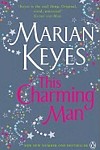

Alex Bell – The Ninth Circle
Posted 11th August 2010
Category: Reviews Genres: 2000s, Mystery, Theological, Thriller
Comments Off on Alex Bell – The Ninth Circle
Good and evil fight against each other, but sometimes it’s the middleman who is in the right.
Publisher: Gollancz (Orion Books)
Pages: 262
Type: Fiction
Age: Adult
ISBN: 978-0-575-08465-0
First Published: 2008
Date Reviewed: 15th June 2010
Rating: 5/5
Gabriel doesn’t remember how he ended up on the floor of his flat, but he’s been bleeding and there’s a significant amount of money on the kitchen table. He’s able to find out his name pretty quickly but no other information seems to exist. Should he wait for someone to come looking for him, wondering about his absence in their life? He knows that he’s in Hungary and that he speaks Hungarian but that he’s from England and speaks English as well as a possible several other languages. He seems to be a writer – an unpublished one by the look of his zealous manuscripts – and possibly a madman. For Gabriel has been having weird visions since he woke up, of flaming men, and has seen people who don’t appear to actually be there. Why is he receiving packages and whom are they from? And why was his previous self so obsessed with Hell?
The Ninth Circle is a remarkable book, and for the first time in ages my sky-high expectations were justified, ten-fold. Bell has written a novel that successfully takes a look at subjects that have been raised before, but applied them to her characters in a whole new way. The book is structured as a diary but unlike a lot of diary-structured books it’s easy to forget that it’s in the first person.
Bell has done research, and put her education to good use. She’s read up on a variety of topics, some of which aren’t even fundamental to the plot, and delivered back to the reader her findings. On her blog she herself says that she’s interested in World War II (and there is an event described in her book in great detail), and she studied Religious Studies – but baring her own interests it is clear she’s spent time on extra and useful information. This means that you come away with a lot more knowledge on things that aren’t neccersarily imperative to the story itself.
The nucleus of the novel is religion, which I’m actually not too happy about saying because for me it was a shock (a good one) and the thing that first made me start reading faster because it was so unexpected – but I know that won’t be the case for everyone and so it must be said. The Ninth Circle deals with the apocalypse, the beginnings of it that is – there are no full-scale battles – and in case you are put off by this idea I must say that this book is not Christian fiction, in fact although one may believe that Bell is a devoted Christian if you are excited by this suggestion then you will be disappointed later. Bell does not look at the topic with a religious fervour, rather she has stood watching from the sidelines. And if I have appeased those who do not want to read Christian fiction then I should also appease those who do want to read it – Bell is no Philip Pullman, she is fair in her convictions without bias. There is no reason why either camp should not enjoy this book.
Gabriel is a strange character to get used to, not so strange in himself (because you understand early on that there’s going to be a reason for all his visions and feelings) but because he edges toward one notion before seeming to go back to another. Is he a likable person? That’s hard to decide, but he’s certainly compelling and a fantastic fictional hero and narrator. The other character of particular note is Stephomi. You’ll change your mind many a time about him, but is that perhaps what he’s looking for? Because you want to believe he’s good, don’t you? It’s a relief to find out that he is, isn’t it? There is equality between characters and plot, both are as important as each other. The locations in the book are all real places in Budapest and Bell is adept at weaving eerie mists over it to make you curious and longing to visit, while simultaneously being alarmed by the idea.
Bell’s writing is of very high quality; the only thing that sticks out is her reliance on emphasised words. There are a lot of them, sometimes too many, but it does cause you to delve deeper into the presented situation overall, and once you’re a fair way through the book you get used to it, it’s just her style.
The Ninth Circle is brilliant – but do I like it, as in did I feel comfortable reading it? The thing is that you’re forced to think about things that we, as humans, generally try not to think about. Whether or not we believe in God we do in general believe that there is a distinction of sorts between right and wrong and good and bad (though Bell makes the poignant proposal that they are not so different, like heat at it’s hottest feels cold, like the phrase “two sides of the same coin”), and also, to my knowledge, we tend to believe in evil, again no matter our faith. It’s easier to be bad than good, being good takes more effort, and it’s easier to submit to the devil – this is a well known thought in religion, God needs us to work (and so does the devil, but his requests are easier). Submitting to evil brings instant reward, working hard to be good may not and often leads to pain before happiness. We know this, and it scares us, and in introducing us to the demons in an intimate way through the characters Bell is exposing us to what we fear, and that concept is something we worry about – being exposed to our fears.
I wonder if the reader feeling uncomfortable was what Bell had in mind. In fact no matter what she had in mind she’s succeeded in her goal, as I will definitely be thinking about this novel further and recommending it to everyone who talks to me about books. It’s going to stay in my head for a long time and will probably factor in any conversations I may have on religion, the future, and the apocalypse.
Read it and enjoy. Gabriel’s loss is our gain.
Related Books
Philip Pullman – The Tiger In The Well
Posted 8th July 2010
Category: Reviews Genres: 1990s, Historical, Political, Thriller
Comments Off on Philip Pullman – The Tiger In The Well

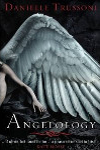
Twelve years ago a young girl called Charlie bought a book, captivated by the beautiful cover of a gun on a green background and a woman’s silhouette drifting away into the green night. She thought it would make a good candidate for her first “grown-up” book – but then she found out that this was the third in a series so she bought the first two (The Ruby In The Smoke and The Shadow In The North), loving the first but finding the second boring. She never finished the second and so the awesome green book with the gun on it was never read.
Publisher: Point (Scholastic)
Pages: 390
Type: Fiction
Age: YA/Adult
ISBN: 978-1407-11171-1 (a newer version than the one shown)
First Published: 1991
Date Reviewed: 30th June 2010
Rating: 4.5/5
Throughout my older years The Tiger In The Well continued to beckon me from a dusty old shelf and, finally, last year, I decided the time was right – I must re-read the first and finish the second and then read this third book. I liked the first but it wasn’t as compelling as I remembered, however the second was dull, so dull, and I could see why I’d given up on it. And now I’ve read the third and it seems my young intuition was correct – this time Pullman has presented a cracker of a story.
Someone’s after Sally’s money and the daughter fathered by her dead lover, Frederick Garland, claiming that she was married to him (the man after her money) and saying he’d like a divorce due to her scandalous behaviour. Everything seems legit, and it’s starting to eat away at Sally so much that she’s beginning to believe it. At the same time hundreds of Jewish immigrants are being persecuted, and it’s the same faction that are pursuing in both incidences. Sally’s friends Jim and Webster are out of the country but fortunately, due to the plight of the Jews, there are plenty of people who want the faction brought down and unlike her poor excuse for a solicitor these people won’t let them get away with it.
The Tiger In The Well brings the Sally Lockhart Quartet into a new light. Sally is in her mid twenties now and because of this Pullman is able to take the storytelling up a notch, assuming the readers will have grown up too and therefore are old enough to digest the issues he presents without worry. There’s a mass of subplots and extra details in the book, making it a speedy read – there are situations where characters split up and so the narrative has to dart back and forth continuously, but Pullman goes into enough detail before this happens so that you want to hear about each group equally as much and forgetting is impossible. With never a dull moment whatsoever, the long book takes you through chases, hiding places, work in the slums, the high society, the gangs, the big homes, the shabby shelters, the battles, the peace, the sadness, the happiness – it’s all here.
The Victorian setting was good in the last books but Pullman never made the most of it; that’s been rectified here, he describes locations beautifully and makes the past come alive, one can envelope themselves in the plot and although it’s a story centred around hate it’s hard not to wish you were there when Queen Victoria reigned. Orchard House brings pastel greens and white to mind, the streets grey and brown, and the mansion red and gold. Victorian England was a mutely-toned place, but Pullman has pulled out its treasures and put them on display.
Pullman is at his best when writing about women, and he’s on top form here. He likes his women to have guts and be strong of mind but doesn’t load them with the stereotypical sex image you would usually expect. Sally Lockhart is only ever burdened as a woman by the sexist views of her society, away from that she is as good as any man and only ever behaves as men would expect her to when completely overpowered.
Unfortunately the climax is a let-down. After all the preparation Sally has done, when she finally gets to the deepest darkest part, the nucleus of all her problems, the plot is resolved by something outside of anyone’s control. You’re on course, reading swiftly, and then this “thing” happens and suddenly there’s no reason to continue because it’s over and you know you’re never going to get to read about what Pullman had primed you for. The particular setting of this part, a fantastically described house which you can let your imagination go riot on, is magnificent and set the stage perfectly, so why Pullman went for an easy and boring cliché is incomprehensible.
Luckily there is a bit more action to be had after this episode and it’s very funny, so although it doesn’t quite match up it’s worth carrying on. Harriet, Sally’s daughter, goes from posh rich girl to happy average child and the dialogue Pullman gives her is hilarious. Throughout the book Pullman makes a point of giving Harriet a good amount of time and tells us what she’s thinking. And when Sally tells her to be brave, the little two year old remembers it and comes into her own. A toddler being a compelling character all by herself – that’s something you don’t come across every day.
If you are upset by the fact that Jim and Webster are in South America while this is going on never fear. Pullman will more than make up for it by the time you’ve reached the end.
I believe that with a quick bit of research you could read this book without having read the others first, and personally that’s what I would recommend doing. The Tiger In The Well rips it’s claws through the previous books and roars it’s way through from start to finish. It is an excellent book, possibly even surpassing Pullman’s His Dark Materials trilogy.
Related Books


