





Suzanne Collins – The Hunger Games
Posted 11th July 2014
Category: Reviews Genres: 2000s, Fantasy, Political, Science Fiction, Social, Thriller
7 Comments

A dystopian future. An ancient-style blood lust.
Publisher: Scholastic
Pages: 434
Type: Fiction
Age: Young Adult
ISBN: 978-1-407-10908-4
First Published: 14th September 2008
Date Reviewed: 9th July 2014
Rating: 5/5
The reaping. Every year the Capitol picks from each district two children, a boy and a girl, to face all the others in a fight to the death. Whoever is left last wins and is ensured food and shelter for the rest of their days. This is the final year Katniss is eligible to be chosen. It’s her sister’s first. Her sister wouldn’t survive, but maybe Katniss can.
The Hunger Games is the first book in a trilogy about a deprived dystopian world. With a big helping of Battle Royale, a seasoning of Lord Of The Flies, and a side dish of reality TV, the book is an unapologetic violent young adult novel that brings horror, suspense, and fine characters to an often-lacking list of books.
That it is violent is of course something to be considered, but in a way you could say that Collins is respecting young people’s intelligence. Young people know a lot about violence and horror, with video games and advertisements never far from view, and by not treating her readers with kid gloves, Collins better aligns herself with her target audience. Yet, whilst violent, The Hunger Games doesn’t linger over the gore for very long at a time, only once spending more than a couple of pages on a scene that even then is told whilst narrator Katniss is hiding from it. The gore is often something the reader conjures up themselves – the first bloodbath is related third-hand.
The characters win you over, whether they are good or ‘bad’ (because the villains are only villains because they have to be). Katniss is a hunter, a poor person transported to a rich person’s world. She never succumbs to the damsel-in-distress syndrome that claims so many other intelligent young women in today’s YA, and the stereotypes remain flipped over. Peeta may be a hero, a protector, but the terms are equal. Despite the fact that many characters will die before this first book ends, Collins give each a personality. You might not know them for long, but by and large you would be able to take a fair guess of who they were in life.
The plot keeps moving; the pace is pretty fast. The author has split the story into sections, meaning the the Games themselves are not too long. (It’s fair to say that if it had been the entire content, you may have become almost used to the horrors.)
This being used to horror, this immunity, is a fascinating aspect of the book – the way Collins interacts with her readers. Through the not long but long enough Games, and also through the relative lack of (reported) gore compared to the numerous deaths that occur, Collins effectively exploits the idea of normality. What I mean by this is that the reader won’t ever see the violence as okay, of course they won’t, but because you get all the extra plot threads you start to see how the horrific practise has become acceptable to the city residents. And the part of your reader-self that is involved in the bare basic task of reading the book from start to finish does become somewhat immune.
Awful, isn’t it? To think that there might come a point in the reading when the horror ceases to affect us so much. But whilst this could be attributed to a lack of knowing when to call it a wrap on the writing of the Games, given that Collins’s book is to teach children about war (further information here) it could be said that this immunity was planned. (As I learned after writing this, it was indeed planned, as this interview implies.) It is such that you know it is happening to you and you wonder why you’re not as moved by it. Isn’t this what happens in real life? We see so much war that we can often just turn off the television, make a coffee, forget about it. Then something ‘worse’ is reported and the immunity is gone. And the cycle starts again.
Back to the writing. Collins’s text focuses on story and meaning rather than sounding nice. The balance of the sections works well, as said, and the build-up to the Games leaves you fully informed. The reality TV nature of the book keeps you in context.
Beyond all this it must be said that the book offers some true survival tips. This is not nearly as important, obviously, but readers interested in roughing it will find an additional source of reader pleasure.
There is so much to his book, both in-text and otherwise, that you will be spending a lot longer than I have here, discussing it all. And I think I’ve discussed enough. The Hunger Games is excellent, no matter the comparisons to other works. It has much to offer even as it forcibly takes away. As a reader you are in a similarly safe position as the city dwellers. Make the most of it – even if this sounds bad, enjoy the book.
Related Books


Isla Morley – Above
Posted 9th May 2014
Category: Reviews Genres: 2010s, Angst, Domestic, Political, Science Fiction, Social, Thriller
5 Comments

Can’t let the monster in.
Publisher: Two Roads (Hachette)
Pages: 370
Type: Fiction
Age: Adult
ISBN: 978-1-444-79700-8
First Published: 4th March 2014
Date Reviewed: 8th May 2014
Rating: 4/5
On the day of the parade, at sixteen years old, Blythe was abducted by the school librarian. Locking her in an old missile silo with provisions for many years, Dobbs told her he was protecting her from the apocalypse that was soon to hit. Unable to escape, Blythe is forced to live with him and his madness, his passive aggressiveness, his abuse, and she watches as he often leaves to go Above, back to the world he tells her is falling apart. Throughout, Blythe’s hope, though faded, never dies – one day she will escape and get back to her family. And Dobb’s madness can be put to rest. Or can it?
Above is an epic story that spans a fair few decades, many themes, and culminates in a rather tidy ending. It is an interesting book, as it could be said that it isn’t sure what it wants to be – there are two parts to the story that, whilst sharing a general element vary greatly – yet the overarching idea of theme exploration does manage to keep the two plots together.
Whilst the first half of the story is inevitably dull on occasion, the second half transforms the book into the afore-mentioned epic. Above is a lot longer than the almost 400 pages suggest, partly because the time scale is convincing and partly because there are so many moral elements considered.
Beyond the dullness of a lot of the first half – the days spent with nothing to do, the literal dullness of a world without sunlight – there is of course the times in which abuse takes place. Dobbs tends to ere on the side of caution, that is to say that generally the horror of Blythe’s situation is the fact of imprisonment and Dobb’s removal of things that make her happy. However, as may be expected, there is some violence involved. It’s a creepy sort of violence – Dobb’s doesn’t beat Blythe up but he does enough, and he does it in a ‘careful’ way as to make it sobering. Morley affectively shows how a person can seem average, even good, and keep a certain façade or even belief around them, which can make others think they are okay. Even Blythe, though she is strong at heart, feels sorry for him despite what he does to her.
This abuse and manipulation is the biggest thought of the novel. Morley puts the reader, and Blythe too, in a particular situation. We hate Dobbs because he is a bad man. There are no two ways about that – he forces himself on Blythe and his kidnapping does not begin and end with her. The man is bad. However once you reach the second half of the book you are presented with confusion. Blythe’s confusion. The confusion of both the prisoner she was and the person she is right then in that moment. This confusion doesn’t change the fact that Dobb’s is a bad person, but in the context of the book, and in the context of science fiction, it asks its main character and the reader questions. Blythe makes you question.
(The rest of this review will contain references to the twist in the tale, by necessity.)
Because what Dobb’s had been saying all along turns out to be true. Blythe has been abused by Dobbs, but she has also been protected. This means that Dobbs, in some ways, occupies a grey area. Both the character and the author herself constantly refer back to Dobbs, and it is obvious that Morley wants you to really hone in on this question of right and wrong. She never suggests Dobbs should be pardoned, of course he can’t, but she opens up all the sorts of thoughts we as a society tend to push aside. What exactly is right? What exactly is wrong? Can wrong ever be right, just a little bit? Do we truly try to understand victims or do we pretend we do? More than the questions surrounding Dobbs, Morley urges us to relate to Blythe.
Once you’re ‘familiar’ with this line of questioning, the rest of Morley’s ideas become apparent. Above isn’t ‘simply’ a story of abuse, nor an apocalyptic book. It is much more than that. It’s a study, a constant questioning of morality, of race, of government, of the news, of disability. The last on that list becomes prevalent towards the end. Most everyone is disfigured, and Morley compares viewpoints. Blythe, born before the apocalypse and kept safe, notices the disfigurements. Adam, her son, having lived solely below ground, doesn’t notice any differences. Or if he does (because he has read books and seen films) it doesn’t bother him. With Morley telling the story from Blythe’s viewpoint, every new person or group of people is detailed, their scars, burns, and lack of features brought to the forefront. You could even say it’s too much, that Blythe sees too much even after she’s been Above for a good few days. It’s interesting to contrast this detail with Blythe’s unhealthy pallor but ultimately flawless (as far as radiation is concerned) person. Especially when she notes her pale, now freckle-less face, and notes that her old crush would likely not find her attractive now. It takes us, the reader, to remember that, saying her crush is still alive, he is likely disfigured beyond compare.
Included in this study of the view of disability is the way the medical group of people are trying to create a perfect baby (to recreate humanity as it was) and the group of average citizens who are saving the creations who haven’t turned out correctly. This is now a world that values difference. Difference is all there is.
There are other things to consider, such as Blythe’s naming her son Adam – a stated plot device that infers who Adam may end up to be – and the experience, though only a minor part of the story, of a black albino woman. There is the effect that sudden freedom can have on a person, the effect of a difference that wasn’t expected (of course this particular difference wasn’t expected, but you know that Blythe would never be returning to life as it was when she was sixteen, the world moves on, and this is what she hasn’t really thought about), the struggle to regain what’s loss, and control, possession. In Adam you see the world in a new light, literally and metaphorically, in Blythe you may end up appreciating what we have now just that little bit more.
Above isn’t a masterpiece. There is a disjointedness to the duel plot-line that is likely only to be healed with prior knowledge of the duality, the writing is average, and once Blythe has escaped she’s not quite the person you may expect or even like, and not simply because of her displacement and longing for the past. The epic nature also makes it seem a little too long and there are reports from people familiar with Kansas that the numbers aren’t correct. But the morality and the way Morley uses a society harmed in order to make her point clearer is good to read and, as the length of this review suggests, leaves you with plenty to think about.
Combining ideas and repeating details, Above may not be the book you were expecting it to be, but judged on contents alone it is very much worth the read and the time it takes to reach the end.
I received this book for review from the publisher.
Related Books

Speaking to Isla Morley about Come Sunday, Above, and The Last Blue) (spoilers included)
Charlie and Isla Morley discuss growing up and travelling back to South Africa, creating a negative heroine, the 1800s medical phenomenon wherein people were literally blue, and what it’s like owning five tortoises.
If you’re unable to use the media player above, this page has various other options for listening.
Gillian Flynn – Gone Girl
Posted 24th January 2014
Category: Reviews Genres: 2010s, Domestic, Psychological, Thriller
16 Comments
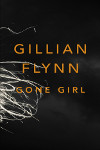
A match made in hell. Happily.
Publisher: Phoenix (Orion Books)
Pages: 461
Type: Fiction
Age: Adult
ISBN: 978-0-7538-2766-6
First Published: 24th May 2012
Date Reviewed: 22nd January 2014
Rating: 5/5
Amy is missing. Nick was out at the beach having a coffee and when he received the call he drove straight back. The door was open; the living room showed signs of a struggle and mopped up blood; his wife was nowhere to be seen. Nick doesn’t really like his wife. And his wife doesn’t like him. They’re no longer getting on and Nick is the prime suspect. Because it makes sense, doesn’t it? The husband killed his wife; it happens in all the TV shows.
Gone Girl is a twisted, unreliable, yet undeniably magnificent thriller. Told from Nick and Amy’s perspectives – or is it? – the book keeps you on your toes for the entire ride.
The characters give Heathcliff a run for his money in the anti-hero stakes, both taking turns, in the way it is written if not in reality, of making you feel a (little, only ever a little) sympathy for them before you scorn them instead. It’s all rather akin to the way the public and media are swept along in the book. Flynn never once lets you find your feet. Is she going to have her characters present the truth? No; oh, perhaps in a moment? Nick and Amy are as unreliable as the British weather – far more ferocious than the wind, as quick and shocking as lightening but always ready to show a sunny smile. The book may have an ending, but even then you will leave not knowing whether somewhere buried in what you know – the various ‘truths’ – is the real (really, really, real) truth or not.
Needless to say the characters are shocking. These characters weren’t written to be liked or related to. Perhaps one of the characters is more shocking in particular – it’s hard to really say if one is worse than the other due to the unreliability – but either way they stoop to low depths. Calculating, manipulative, and that word again, twisted. It’s one of those ironic situations where you can see that two characters are absolutely made for each other but you can’t say you care.
Flynn’s writing is exceptional. It’s not literary (literary would have ruined this one) – it’s the dialogue, the characterisation, the overall feel. Even the excessive swearing has its place. Flynn’s writing style as a whole is simply different. She brings the characters to life in a way that is rarely seen. The first-person narrative makes it even more damning and sly.
There are many turns in this book as well as the literal switching back and forth in mind set. There are purposes the characters don’t let you in on until later on, too. This point is worth mentioning because a fair way through the book the narrative seems to change – it seems Flynn isn’t going to give the reader what they want, but she’s better than you’ll assume. And no matter whether you like the ending not, it is difficult to say it doesn’t fit the book. Various endings are possible here, some that would provide instant gratification for the readers, some the instant gratification for the characters, others that appear to weaken the characters or to push the book to end quickly, those with loose threads, and those that would be most satisfying a while after you’ve finished. Like the characters, Flynn’s authorship is unreliable – purposefully – and she isn’t going to budge. If you want to know the details you’ll have to stay put and keep reading.
With it’s numerous twists and turns, the diversions to places that suggest a loss of the iron grip Flynn has, the book can seem long at times. Yet except for those moments when you wonder if Flynn will keep her end of the bargain, it’s never disappointing. It doesn’t feel as lengthy as it is, and when you look at the amount of time in which the majority of the story occurs, it’s really no time at all.
The best way to sum Gone Girl up is to say that whether or not it’s exactly what you pictured, this book is one of those few that are unlikely not to meet your expectations in terms of the genre, the hate, and the overall package.
Amy wants you to read this book, and if you’ve been at all intrigued it’s likely she’ll get her way. She always does.
Related Books

Taylor Stevens – The Doll
Posted 24th July 2013
Category: Reviews Genres: 2010s, Angst, Crime, Social, Thriller
2 Comments
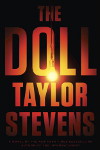
A race against time and death.
Publisher: Crown (Random House)
Pages: 335
Type: Fiction
Age: Adult
ISBN: 978-0-307-88878-5
First Published: 4th June 2013
Date Reviewed: 15th July 2013
Rating: 5/5
Please note that this reviewer has read the first book in the series but not the second, so any confusion discussed may or may not be the result of not having read the second book.
Vanessa Michael Munroe was enjoying a respite with Miles Bradford when she was whisked to hospital following a blackout. Bradford saw it happen but it’s not obvious at first what truly happened. Together with this a rising star of the screen has disappeared, and no one knows where she is either. Are they connected, and if so why would the same group wanting a young girl want Munroe as well?
The Doll is the fantastic third book in Stevens’s Munroe series. A book with no slowing of pace, no fillers, and a constant awareness of reader intelligence, The Doll is a triumphant example of the thriller genre at its best.
Munroe is the same tortured soul as before, but Stevens has again created a good balance, allowing the darkness to make its mark but never letting Munroe really succumb to weakness. Munroe can be harsh at times but her strength and belief makes her easy to love as a character, especially in a time when so many books have weak heroes; and the word ‘heroes’ is not a spelling mistake. Here again we have Munroe posing as both genders and the affects such a lifestyle has had on her is portrayed, subtlety in her words and movements. She has the respect of a man and never needs to do anything to prove herself in that vein.
Stevens has also put a lot of work into the book’s particular other main character, the celebrity. You would expect that (assumable if you consider each book has its own criminal storyline) Neeva wouldn’t be fleshed out as much, but Stevens has created in her the most memorable character.
The ongoing relationship between Bradford and Munroe follows the same pattern. The love is obvious, but you could never assign the label ‘romance’ as a theme. Even the strong love Munroe has for others have their limits on her character.
The awareness of intelligence is one of the most intriguing aspects of the book, because Stevens never makes concepts or plot points unnecessarily obvious. She gives you the basics – all you need to work it out – and then the rest is up to you. This means that sometimes the book is confusing, but it also adds longevity to the plot. In addition, the book is not predictable and barring Munroe’s almost reluctant humanity, which ‘had’ to occur sometime, anything could happen. And it does. Stevens never promises a smooth ride, beginning, middle, or end.
The pacing is just something else. From start to finish you’re speeding 100 miles per hour and even the chapter breaks leave no time to catch your breath.
A book with such a poignant subject had to be treated carefully and Stevens has done that. She gives you as much as is needed to feel entertained by a novel and then goes all out to show how awful it is. She doesn’t just use the situation and create a happy ever after, she brings the reality of the situation into it. Of course there is a measure of apology from the criminals but it’s clearly definable as something to help the story and not suggested as realistic. The horror is never glossed over.
Stevens has bypassed the description of ‘promising’. It would be impossible to say that this book holds promise for the future because Stevens is already beyond promise. The Doll is a masterpiece and one of the best books of this year.
I received this book for review from Crown Publishers.
Related Books

Kimberly Derting – Dead Silence
Posted 12th July 2013
Category: Reviews Genres: 2010s, Paranormal, Romance, Thriller
1 Comment
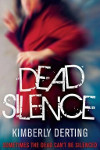
It’s been closer to home, now it’s at home.
Publisher: Headline (Hachette)
Pages: 389
Type: Fiction
Age: Young Adult
ISBN: 978-0-7553-8917-9
First Published: 16th April 2013
Date Reviewed: 9th May 2013
Rating: 4.5/5
Violet has recovered from her ordeal and still has the echo to prove it. But it won’t be long before she’s back to using her abilities. There’s to be two additions at school, making life complicated, and Violet never has been able to listen when people tell her to phone for help rather than investigate a crime scene herself.
Dead Silence is the fourth book in The Body Finder series. Derting is as good as ever, Violet is as strong as ever, the romance includes all those details and questioning you wish other YA books would include, and the series has got ever more unapologetic and mature as Violet gets older. As always Derting never shies from the gruesome truth, and in fact Dead Silence has some gruesome information about related subjects, too.
This time the story is more involved with the characters directly. Not that the series was ever lacking in either character development or plot (indeed Derting balances character and plot-driven nicely) but this time there is a little more focus on Violet and her friends for good reason – the setting doesn’t move so much between her ‘factions’ and there is reason to concentrate on her home and school life whereas before the concentration needed to be on the cases. And this, even though the crimes are just as thought-out and included. There is also a lot more back story as to the history of abilities, as well as insights into the mysterious Dr Lee.
Derting has focused on crimes that are fuelled by motives that have become very ‘every day’. She does provide lessons and suggestions for her readers but she also looks at the other side (in other words the book does not preach because of the basic structure of the books – the switch between Violet and the killer). Again ‘balance’ is the word of the day – the crimes are bad, like the other books, but there is a particular humanity in Derting’s portrayal of the killer’s life that demonstrates how upbringing has a lot to answer for. It does not excuse the crime, but puts it in terms that fit Violet’s life – gruesome, but not so far away that Violet, nor Derting, nor the reader, could put it in a box and move on. It might be a closed case now, because Derting doesn’t continue a crime beyond one book, but the way Derting has approached it means that it is poignant nonetheless, and perhaps the ultimate in showing rather than telling.
Violet makes a choice in this book to tell another person of her abilities. Her choice may not please everyone due to the way the person reacts, but it does bring a new element into the story, keeping it fresh, and one assumes Derting knows how this choice might affect her books as she uses it to a particular end.
The only thing that holds the book back is the writing; it’s not bad but it lacks Derting’s previous continuous strength, and there are some grammatical errors that aren’t the sort you would expect editors to pick up – they are style errors. There are also a couple of occasions where Derting is either too contemporary (regarding the way the back story is presented) or uses particular slang as her writer’s voice. These are generally ‘niggles’ but collectively they do faze the book.
Nevertheless, Dead Silence is a must-read. It could possibly be read as a stand-alone but it would be difficult for the reader to fully appreciate what Derting has created. For the faithful follower, it may just be the best yet.
I received this book for review from Headline.
Related Books


