





Reading Cause And Effect: Family History
Posted 27th September 2017
Category: Chit-Chat Genres: N/A
2 Comments

This photograph was taken by Clarence.
I once bought a book I’d never seen before by an author I knew nothing about – so begins many happy stories. But this one is quite different. Having studied the cover I came to the conclusion that the author was somewhat known and, liking the story set in historic Britain, bought it. It arrived battered. I was peeved – if anyone should ruin a book it should be the owner; in that vein I’ve now flipped through it enough I’ve added to the ruin.
It was a defining moment; one day some months after I’d finished it, my mother entered the room, speaking to someone on the phone about family history. I didn’t listen in… until she said the surname of the factually-based characters in my book. She had a book in her hands, a different one, with one of the surnames in her family tree on it. I commandeered it when she put the phone down.
I’ll say now, there’s no awesome end to this story. When you’re dealing with family trees and a book that follows only one line, trying to find out whether your own ancestors are in the muddle can prove impossible – it did this time. But my subsequent research led to experiences I’ll remember for a long while. After the author of the historical novel replied to my excited questions, sadly unable to answer them as they didn’t know of the people I’d quoted, I realised it was best to abandon my initial port of call – the start of the chronology in my mother’s book – and study the last pages instead, try and see if I could find a link to my family there.
To that end I contacted a historic house. This is a daunting thing to do when your query is valid but you know you’re likely to appear a gold digger. Nevertheless I got a reply from the archivist. I got the phone number of the owner of the estate. I got an invitation to talk about a possible link and my mother’s book; whilst my mother had her misgivings about my taking it, I had to point out that we hadn’t been able to work out if it concerned our family in particular but that it most certainly concerned the estate’s.
In the end I didn’t learn anything and having found nothing since have not been in contact with the estate, but I did have a lovely day. My meeting was scheduled along with that of the staff of another house. We had wine and made conversation in the library, followed by a wonderful lunch in the dining room. I got to see areas tourists couldn’t access and gained knowledge of periods I love, as well as history about the house. Yes, the content of my day did match my worry – it was a bit touristy and made me wonder if I was indeed thought a gold digger.
Still, it’s not every day a book results in such an experience. Sometimes it’s the people you meet only fleetingly that leave an impression on you. They can create a spark that leads to further adventures as the things the owner told me led to – it was a conversation with him that got me thinking about university. And I went back to the first pages of my mother’s book, researching simply out of interest, going a few generations beyond the information in the introductory pages. I’ve made a couple of trips to visit places of interest but I also find myself in places I’ve visited for other reasons, that turn out to be connected, which can be quite fun as well as a bit too uncanny. Not so fun are the times I wanted to see a sight for unrelated reasons, couldn’t, and learned there was a potential familial connection only once I was back home, too far away to return.
And yes, I’m still reading the author of the historical novel, finding a whole new meaning in their books.
Have you ever tried (or indeed succeeded!) to trace your family history?
Reading Life: 18th September 2017
Posted 18th September 2017
Category: Reading Life Genres: N/A
3 Comments

Firstly, thank you all for your messages about Tabby. I’m not able to respond individually at the moment but I did read them all. Thank you.
My reading life has been different lately; I’m still figuring out reading times in regards to my job – I’ve been doing some content marketing for the SO: To Speak festival of Southampton and it’s been a lot of fun, finding out connections between Jane Austen and the city, and Southampton composers and Charles Dickens.
I am a bit behind on my reviews so I’ll be scaling back during November and December. The biggest thing will be reading for my event with A J Waines. Waines is a psychological thriller writer with two interesting stories. One is fair – she is a hybrid author, self-published in Britain and traditionally published in Europe. The second is pretty awesome – in 2013 she published a book called Girl On A Train. You can probably guess the rest – two years later sales of her book increased and, a fact we’re using verbatim in the promotional material, The Wall Street Journal said that she started getting lots of reviews saying it wasn’t what people expected.
Many readers have said they liked it a lot more than the other one.
I’ve retitled the event this time; instead of ‘in conversation with’, we’re calling the evening The Original Girl On A Train, neatly sidestepping any issues over using Hawkins’ title but being obvious about what we’re talking about. I’m looking forward to it, it’s in conjunction with the festival so there’s more support and advertising opportunities.
But, and admittedly more to the point in the context of these posts, Waines’ has quite a backlist, so I’ve lots of reading ahead of me.
In terms of other titles, I’m in the midst of Nicholas Royle’s Ornithology, a short story collection based around the theme of birds that has similarities to other books – Max Porter’s Grief Is The Thing With Feathers, for one. More importantly, in terms of similarities, you may remember a few months ago I reviewed An English Guide To Birdwatching by Nicholas Royle. Excellent book – only it wasn’t written by the Nicholas Royle whose short story collection I’m reading now. However, An English Guide To Birdwatching references the short story collection – I believe it is in part why the title of the novel includes birds. The two authors met a few years ago – they didn’t know about each other until they both submitted work to the same literary magazine and the editor of that magazine sent the replies to both stories to a solo Nicholas.
It’s confusing, yes. But having first read In Camera (‘Salt’ Nicholas, as I’ll likely refer to him from now on – he works at Salt Publishing), and then Birdwatching, reading Ornithology is a particular experience I’d never have had in another situation. It’s this weird situation wherein there’s added context to the book that in a way shouldn’t be there.
I’ll stop there.
Moving on, I’ve just finished Fanny Blake’s Our Summer Together – a contemporary romance about a 60-something British women who has a relationship with a younger Bosnian immigrant. Not bad, just a bit repetitive and with two highly different characters. I’m a fair way through Lesley Glaister’s The Squeeze – a difficult read but well written. Next up is Chitra Ramaswathy’s Expecting – a memoir that’s up for the Polari Prize – and after that I may read a bit of Dorthe Nors. I’m going for shorter books at the moment.
I’m considering making a start on Virginia Woolf’s oeuvre before Christmas but we’ll see – previously I didn’t know much about her and so was surprised not to find her books on Project Gutenberg. I now know a lot more, including the new fact that I want to go and visit Monk’s House, and so will work on the idea that if I get all the reading that needs to be done before Christmas… done… I’ll go purchase Orlando.
What are you reading at the moment, what did you read previously, and what will you read next?
The End Of An Era
Posted 15th September 2017
Category: Miscellaneous Genres: N/A
7 Comments

On Wednesday morning we lost my cat, Tabitha or Tabby, who had just turned 20. She was a trooper – she survived the shock of the death of her mother earlier this year, made it through two moves in quick succession, made a valiant effort pretending to hate the dog, and in her final days pushed back against the progression of a year-long illness.
Born to our half-wild/half-domestic cat, her ancestry was apparent. She was off the wall and always had to explore every nook and cranny no matter how many times she’d done it before. She could often be found sitting in the empty bath. She’d get locked in the shed by accident. She’d never sit on your lap, she hated being picked up, and would let everyone but me touch her belly. But she was incredibly loyal; she could often be found sitting on the very edge of my desk trying to find a way down from a place she really shouldn’t have jumped to or would sit on the top of the back of the chair I was sitting on, knocking her head against mine. One of the most Tabby-like photos I have is of her lying on her back; she loved rolling around outside and would do it more if she knew you were there.
It would be fair to say this human has lost her mistress; frequently, instead of spending time with me, she preferred to spend time trying to usher away from us the dog (and my parents… and friends…).
Tabby was the last remaining cat of four in our family; Badge, a classic black and white; Dusty, the grey half wild cat, Harry, Tabby’s litter mate who died long ago (another lives with a friend). It’s going to take some getting used to – I loved her to bits, as I know many of you will relate to – but there are plenty of wonderful memories.
Conquering Travel Sickness On Buses
Posted 13th September 2017
Category: Chit-Chat Genres: N/A
3 Comments

I have always suffered from travel sickness, something I expect a lot of you can relate to. It’s a major hassle when you like to read a lot, and more so when you’ve a review deadline looming. I think in my case it has something to do with the fact my parents didn’t have a car until a good number of years into my life; my journeys in cars were infrequent, they were all different (a few very old cars, too, with the requisite vintage smells which to this day I can’t stand) and it was generally the case that if we were in a car, we were going a long way, to a place without a train station or bus route. I believe my nephew’s the first person not to suffer from travel sickness at all; he’s been used to cars since he was born.
I can read on planes and on trains – the only aspect to contend with there is chatter – and I’ve tried on many occassions to read on buses and in cars but it’s always come with a sense of borrowed time. A 30 second glance at a text message? Sure, but it might affect the rest of the trip.
Recently I tried once again, on a long bus trip, and found something that worked. In researching travel sickness previously, I learned some tips, such as don’t look out the windows, and read in moments here and there, but they didn’t work. I experimented a bit and found a solution:
I sat on my seat, facing towards the aisle. I’d picked a window seat, and this is a good idea particularly as facing inwards mean you’d be intentionally blocking yourself from anyone sitting next to you were they in the window seat. (It’s also more comfortable; I’m not sure what I would’ve done if there was no choice of seat.) I made sure not to look away from my book unless the bus was stationary. When the bus jolted, I stopped reading until it was travelling steady again.
With time I think it will be possible to look up briefly whilst the bus is moving. I don’t know the effect a different direction would have – I sat in the direction of travel. I also don’t know whether format would have an impact – I experimented when I was reading an ebook so I didn’t have to worry about the slight difference in the context of left and right pages or holding a book open.
If you suffer like me, I recommend giving the above a go and seeing if you can work something out. Get that time back.
Next goal: reading when a passenger in the car.
Have you any tips for travel sickness and reading?
Further Thoughts On To Kill A Mockingbird
Posted 11th September 2017
Category: Further Thoughts Genres: N/A
2 Comments
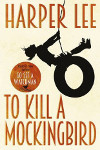
Whilst reading To Kill A Mockingbird, I couldn’t help but wonder if the character of Dil was inspired by Truman Capote; Capote and Lee knew each of as children, and there is this quotation from Capote, included on the back of my addition of Lee’s book:
“Someone rare has written this very fine novel, a writer with the liveliest sense of life and the warmest, most authentic humour. A touching book; and so funny, so likeable.”
I didn’t know until halfway through reading the book, wherein I read up about the background of it – that Truman Capote was a friend of Harper Lee’s. Beforehand I’d wondered at the point of a present-day edition including that quote because Capote’s opinion here misses the point of the book and I wondered if there was something to be said of that, a conscious missing of the main point of the book, given the time it was written in and the time it was written about, but the friendship makes more sense, with Capote focusing on the style of the book and Lee’s personality, what he would have liked about her. The tone of it, whilst inevitably biased, is interesting in a literary study sense.
On a different note entirely, as I read more about Lee’s life and the way her book was influenced by her father’s involvement in a similar case to that looked at in the text, I wondered about the reasons for Lee writing it. The possibilities in the way she chose to set it with Scout at the age she had been when her father was working. Is it a novel of ‘what if’ in the sense that Lee would have liked to do more in her position, in the way she involves Scout? Is it simply that she wanted to bring her father’s work to light, to a bigger number of people to show them what happened? Lee said that her book was not autobiographical but clearly, there is something there, the comparisons to be made are too many. Does her reticence on the similarly point to her general shying from the spotlight? Did she simply want more time spent on the text than on her life, albeit that more time on her might have brought more attention to her father’s case? Maybe she wanted people to think generally, and look for commonality between her book and America in general rather than focus on one case.
I read Lee’s book around the same time as I read Kate Chopin’s Bayou Folk story collection and it’s interesting to compare the ways the writers wrote about race, Chopin’s general thoughts of equality (given her time) not being dissimilar. What struck me particularly was In Sabine for its inclusion of a free black man choosing to help a ‘Cajun woman’, married to a ‘white man’ (phrasing the white man uses) with the chores. There is nothing here of Lee’s story beyond this factor, but reading the stories together, it strikes you that, particularly given the ‘white man’s’ stereotyping something could have happened. His wife does not seem happy to be married to him and the narrator, a visitor, notes how much she has changed.
It may have been due to expectation or simply that I didn’t know the book followed a child, but I found it less involved than I thought it would be, less about the courtroom, though the added narrative of difference was a good find. I did think there would be more ‘action’ but it was enjoyable for what it was. Certainly the autobiographical nature of it impressed me. Lee involves all types of people (well, to an extent, in keeping with the time).
This post feels very me-centric, more than usual in terms of Further Thoughts, but it fits the general background context in which I approached the book; not the most concrete of expectations, but enough that it got me thinking. For all the ‘lack’ of action, though, I loved the quietness of it, the slowly unfurling nature of what is transpiring – even if it’s easier for the reader and you have to wait for Scout to understand. And I think there’s something special in the way Scout is recounting the story at an older age, with the benefit of hindsight but also the innocence of childhood mixed in.
What do you think of Lee’s book, or if you haven’t read it, do you plan to?


