






I Am Writing
Posted 23rd October 2017
Category: Chit-Chat Genres: N/A
1 Comment
The lack of posts on this blog recently may suggest otherwise, but I am in fact writing every day.
The festival I’m working for started on Thursday so my role has expanded – to the original public relations and marketing I am doing, I’ve now added event reporter and photographer. It’s often early mornings and late nights.
As for this blog, I’m going to aim to post again (properly) on Friday, but it may end up being Monday. The festival finishes on Saturday and I’ll be back to my normal schedule.
How is October treating you? We’ve had some t-shirt weather but the season is definitely changing.
Where Or When Does A Book Begin
Posted 18th October 2017
Category: Chit-Chat Genres: N/A
1 Comment

“Where – or when – does a literary text begin?”
The above quotation from the first chapter of An Introduction To Literature, Criticism and Theory by Nicholas Royle and Andrew Bennett, is something that’s often mused upon in articles but not always so… bluntly. Certainly it’s a question that’s asked in so many words, but more often it’s an idea in itself, a thought that gets banded around when people talk of authors and readers seeing things differently and believing that particular aspects of books should be shown or written in particular ways.
I think there’s at least three stages of the book process – rather than the writing process to consider: the forming of the idea, writing the text, and the reader’s reading of it (which in this case is largely focused on the experience rather than the exercise).
The forming of the idea is perhaps the most exclusive part of the process. Until or unless the writer decides to share their thoughts at this stage, it belongs solely to them with no outsider influence. (I say ‘belongs’ in the context of the experience of a text, where each reading of a book and the resulting thoughts or imaginings and so forth belong to that reader.) A text does in effect begin here, with the thought, but there’s obviously no physical evidence of it and everything about it can be shared or withheld as the writer sees fit, so few would know the entirety of it. At most, in terms of a concrete beginning, we’re dealing with content akin to quotations, extracts. But for the author it is the beginning. Perhaps it’s also the beginning for fans, when news of a work in progress is shared.
However once the book has been out a few years focus largely remains on it rather than its development, meaning that it could be said that there’s a time when the idea is the beginning and then a longer time when it is not.
With the writing, it depends on your view. From the author’s point and likely their editor or friends and family, the text has begun. It’s always in mind, it’s discussed, likely a lot. There’s that interesting division of beginning and ending, where the author celebrates the launch of a book and the ending of all the hard work, and the readers celebrate the launch and the beginning of their journey into the pages. If the author has chronicled the writing process on a blog or in newspaper/magazine articles, the book may begin for readers there; some fans may view the very first mention of the book as the beginning of it.
In terms, of course, of generality, it could be said a text begins when readers start reading it. This is when the discussion between author and reader starts happening, when an unlimited number of interpretations and imaginations occur, creating new thoughts and visual imagery than the one that up to now has most if not solely been just the author’s own. If we view a book’s success by how many sales it makes, how much discussion there is about it, then there is surely a strong case to be made that the book’s release date is the date the book begins.
It’s a sliding scale of access, if you will, ever more branches of a tree that starts with the author, extends to their publishers and friends, and becomes impossible to quantity after publication.
Perhaps it’s simply individual – where does a text begin for you, whether you’re the author or reader (more likely in this case, the reader, because I think it’s fair to say an author will consider planning and the moment of the idea as the beginning)? So many different opinions… it would be impossible to state a definite time because all three periods of time are valid. For me it has a lot to do with the discussion around the book – whether the book is part of a series and therefore discussion happens long before the release date (or in the case of Philip Pullman’s The Book Of Dust, the book’s been alive for 20 years…). If there’s hype, then actually holding the book in your hands can feel like the middle of the overall story, where the hype is the beginning and the final page the end. Books I haven’t heard about or for which there’s been less discussion, that first page is it. If there’s not much information about the author’s writing progress with the book, the idea of its existence is very much that, an idea rather than any true beginning.
What do you think – when does a book begin for you?
The Trouble With Goats And Sheep: Who Started The Fire?
Posted 11th October 2017
Category: Further Thoughts Genres: N/A
1 Comment

This is a question I had right up until the end of the book, in fact in a way I was still asking it after the closing pages. Cannon is both cunningly opaque – if you’ll forgive my 7am workday phrasing – and obvious, a not unclever mix that manages to be both literarily inspiring and literally frustrating, but the ending is explained.
Firstly, it’s best to put the fire in context: why was it started? The inevitable answer is that it was to cause damage to Walter. How much damage can’t be guessed, exactly, but we can assume that whilst some people wanted harm to befall him, whether it be verbal harm enough to cause him to leave of some sort of physical injury, the person who actually caused the fire was wanting devastation.
Why Walter? Because he was different. The residents didn’t understand him – nowadays we might say he is a bit odd, and the description ‘autistic’ would probably get throw around somewhere. Due to their lack of understanding, the neighbours thought he was nefarious and a threat to their children.
Who, then started the fire? It isn’t until the very end that Cannon relents and gives you a bit to go on – Mrs Forbes tells Sheila Dakin that she knew someone was in Walter’s house when everyone thought it empty, and then comes the blackmail: the photographs might be gone, but she’ll remember what was there. Mrs Forbes has something on Sheila and if Sheila doesn’t want it widely known she’d better stay mum about Mrs Forbes’ lighting the fire. Page 450 of the paperback version; the first line refers to Mrs Forbes’ cat being scared by Walter’s taxi:
‘Nasty taxi, scaring you off like that.’
Mrs Forbes kneaded Whiskey back again.
Sheila Dakin was frowning at her. ‘What taxi was that, Dot?’
‘The one that brought Walter and his mother home.’ Mrs Forbes carried on kneading, and gave more kisses to the top of Whiskey’s head. ‘I said to Margaret, it’s no wonder he ran off. Big, scary car like that, pulling up in the avenue in the middle of the night.’
‘You knew she was in the house?’ said Mrs Dakin.
Mrs Forbes smiled, ‘I thought they both were,’ she said.
…And then Mrs Forbes talks about photographs being gone but memories staying.
We know it was Mrs Forbes, beyond the above, because of the way Walter’s tea towels are found folded up on the range – Cannon talks about tea towels a couple of times in the book, providing a hint, but at those points it’s difficult to see any relevance, particularly as everyone in the book is… particular. Walter tells Grace and Tilly about the way he keeps his tea towels, and that doesn’t involve folding them. Later on we see Mrs Forbes’ tea towels in her home, folded neatly.
Mrs Forbes knew both Walter and his mother – not all that much older, it seems, than Mrs Forbes herself, and most certainly innocent – were in the house, and was angry enough about the situation the residents had constructed to kill.
The one saving grace is that it turns out the other residents weren’t thinking that far – well, if it can be called a saving grace.
Latest Acquisitions (September – October 2017)
Posted 6th October 2017
Category: Acquisitions Genres: N/A
8 Comments
I didn’t realise the last time I posted about acquisitions was January. High time for another; I may write about books in my Reading Life series but unless I’m actively reading/considering reading any one work at that time, it’ll get missed.



A J Waines: Lost In The Lake – You knew this was coming! This is the author’s latest book and one we’ll be focusing on in our conversation. (I’ll be recording the event and may well write about it here as we’re working with a slightly different approach.)
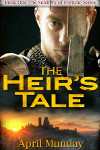
April Munday: The Heir’s Tale – Released just last week, this is April’s latest book, a medieval romance with a blurb that has me thinking of Elizabeth Chadwick – awesome. You’ll know April from my blog comments; we’ve known each other a while. Look out for my review, it’ll be posted later this season, and may well prompt another foray into stories about the Middle Ages.
Hanif Kureishi: The Last Word – Those times when you read about something, are intrigued and then start seeing it everywhere. Mix that with finding a book that’s a comedy (it reminds me of Alan Bennett), a semi-quick read, and a heavy discount, and buying happens.
J Courtney Sullivan: The Engagements – I’ve wanted to read Sullivan’s Maine for years, but it’s proved very difficult to find in Britain. (I once found a copy but it was very battered and not worth the brand new price.) This is the next best thing.



Jane Harris: Sugar Money – I saw this in an article last week and noted it was going to be released on 5th October. I studied American slavery and abolition at university and it’s one of the subjects I’ve retained a big interest in. And when you add the author’s name to that… So, yesterday morning, I looked online for stock at my local Waterstones and there was a copy. I got there after work and it was nowhere to be seen on the shelves; I finally found it on the trolley, yet to be shelved. Bit of a laugh with the member of staff; I was most certainly allowed to take stock from the trolley and it was great it hadn’t even made it to the floor before being sold. With this book, I think my December reading list is complete.
Peter Ackroyd: Civil War – A couple of years ago I bought the previous book in this series in hardback, an impulse buy that nevertheless made absolute sense because, as I believe the common phrase goes, ‘because Tudors’, and thought I might get the next. Never did, and I passed that time when hardbacks are replaced by paperbacks. Then a nephew wanted a toy dinosaur, I found myself in The Works, and there was the book for £3. (For anyone not in Britain, The Works is mostly an art shop but they also sell a whole heap of discounted books.)
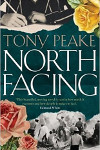
Tony Peake: North Facing – From the publisher, a book about South Africa set in the political upheaval of the 1960s. I can’t pretend to know anything more than that but the publisher, Myriad, have proved to be good so far.
Virginia Woolf: Mrs Dalloway – Readying myself for Christmas; I was planning to buy Orlando but it wasn’t there when I went in and I decided to take that as a hint that I should be starting with something else.
As you can tell by the essay above, I’m pretty excited about these books! I should also stop spending money on brand new books and concentrate on my backlog. Best intentions and all that. I’m currently living by the famous quote from Erasmus.
Do you ever go to buy a book on its release date?
September 2017 Reading Round-Up
Posted 2nd October 2017
Category: Round-Ups Genres: N/A
3 Comments
I was pleasantly surprised to find I’d read four books this month. It’s been a long four weeks and I’d forgotten a couple of them… actually I thought the Ramaswamy might have been it. With everything that’s going on at the festival, home fixing, and my own events, I didn’t expect to have much to list here, but here it is. I’ve one more review deadline to make and then I’ll be moving on to reading A J Waines’ backlist for my Conversation, so next month may look a bit samey but with good reason. I’m already planning December – on Saturday I bought my first Woolf, and I’ll likely be reading The Essex Serpent and the new Philip Pullman (finally!)
The Books
Non-Fiction

Chitra Ramaswamy: Expecting – The author chronicles the nine months of her pregnancy, filling the pages with details, commentary, and bookish references. A book about pregnancy that’s interesting to both parents and those who don’t plan to have children.
Fiction
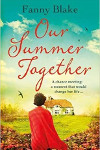
Fanny Blake: Our Summer Together – Separated from her husband and watching him get with a much younger woman, Caro realises it’s time to live her own life and when a younger man from a different country enters, she throws caution to the wind. Sweet, but it’s got a slight sheen of patronisation to it.

Lesley Glaister: The Squeeze – Romanian Marta goes to meet the man at the hotel against her intuition; she’s trafficked to Scotland; meanwhile Norwegian Mats travels to Scotland for work and decides against his better judgement to join a coworker at a brothel. Quite good, but full of editing problems.

Orlando Ortega-Medina: Jerusalem Ablaze – A collection of short stories about the darkness inside of us. An awesome book that’s a fulfilling but easy read (for good reason – the author says himself the stories are to entertain rather than send messages).
Two favourites – the Ortega-Medina and the Ramaswamy. In terms of reviewing, the first wins, but I enjoyed them both a lot.
Quotation Report
None this time.
As busy as it’s going to be, I’m looking forward to this next month. Though there will also be relief when it’s over, perhaps best shown in the way I originally accidentally titled this post ‘October’ reading round up.
What are you currently reading?


