Reading Life: 8th June 2018
Posted 8th June 2018
Category: Reading Life Genres: N/A
2 Comments

As you’ll have seen, I finished Lennox’s The Female Quixote, and wrote the review. Throughout my blogging years I’ve often found myself floundering when it comes to writing reviews of books I have taken a lot of notes for; it’s most often led to me not completing the review; but this time, I did it. I wrote a basic plan and then made it more detailed until it was practically written. I will be trying out that method again in future.
Having started reading around the subjects of the book, I ended up going down an internet rabbit hole and searching through digital copies of 1700s literary magazines for information required to write this post. Many issues of Samuel Johnson’s The Gentleman’s Magazine still exist, which as it turned out not only included Johnson’s blurb for the book and Henry Fielding’s brief views, but the month in which Lennox’s book was published. After two hours searching through the editions for the correct information, finding the month of publication was an added bonus. I may have celebrated with coffee.
Having finished all the research, I’ve moved on to Frances Burney, which also sent me on a search for information, this time in view of Austen’s usage of ‘pride and prejudice’, which is believed to be taken from Burney’s Cecilia:
Remember: if to pride and prejudice you owe your miseries, so wonderfully is good and evil balanced, that to pride and prejudice you will also owe their termination.
I’m reading Evelina and getting back into Valeria Luiselli’s Faces In The Crowd which has turned from ‘simply’ meta to ‘a book in a book in a book maybe in a book maybe reality’… yes, it requires a lot of attention. I’m also reading The Peace Machine, a steampunk-esque Turkish novel set in the 1800s, and so far so good. It’s about a Turkish erotic novelist, who publishes under a pseudonym in France. The first couple of chapters covered his childhood during which he was living in poverty, before he saved a rich man’s life and being adopted. The blurb speaks of WWI and the fictional creation of a machine, which reviews online mention can create peace but at an ethical loss. The translation is excellent – the translator has chosen to keep the rhymes of the fragments of poetry that are scattered about so that whilst the words may by necessity be changed, the concept carries over completely.

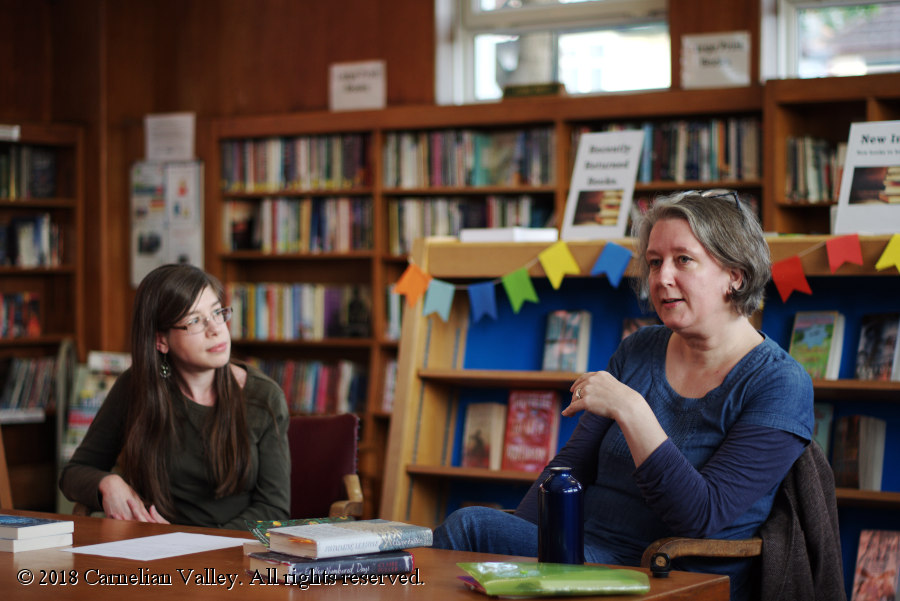
Lastly, I spent a lovely Wednesday lunchtime with a group of writers, most local but a few from as far as Devon, and a diverse selection of genres. It was interesting hearing about marketing and publication from an author’s perspective, as well as the writing process. They are, from left to right (excuse the awful photo – mine): Rosie Travers, Sue Fortin, Carol Thomas, Charlie Cochrane, Lyn Lile (May Raymond), Liv Thomas (writes as Isabella Connor together with Val Olteanu), and Rosemary Smith.
On a completely different note, given the Twitter-trending Love Island and Big Brother-esque set up of many discussions and challenges but nothing otherwise to do I would like to ask you: how long do you think you could leave reading behind before you’d need to return? (I reckon I could go without reading for a month fairly easily but I’d want to leave from then on.)
May 2018 Reading Round Up
Posted 4th June 2018
Category: Round-Ups Genres: N/A
2 Comments
May was quite the busy month. With packing, then a wedding/holiday to go to, an event, and various other things (including the birth of some baby rabbits I had to go and visit, because you can’t not), I haven’t finished as many books as hoped. But I do have a few books on the go and completed Marian Keyes’ tome on the 1st June, so that technically counts. I got my library books back on the return date and took them out for another month, adding an older Nicola Cornick book into the mix (she’s our next author; older books are hard to come by). So here is what I finished in May. Most likely June will have quite a few books to speak of.
All books are works of fiction.
The Books

Charlotte Lennox: The Female Quixote – As an isolated child, Arabella educated herself via the fiction books that belonged to her mother and, upon the arrival of her cousins and her entrance into society she finds conducting herself in the same manner as the histories she believes to be real very difficult. A parody of Cervantes’ classic, Lennox’s book was written and is set in the 1700s so there is much drama and fainting (or wish for fainting) but it’s pretty fun.
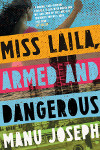
Manu Joseph: Miss Laila, Armed And Dangerous – On the day of election results, social media prankster, Akhila, comes across a crumbled apartment building in Mumbai, a victim of an earthquake, and offers to help the rescue team get to a man buried in the rubble; he’s mumbling about a potential terror attack in progress. Quite good, but more of a report than a fully-fledged piece of fiction.

Weike Wang: Chemistry – The unnamed narrator has been proposed to by her boyfriend twice and can’t find it within herself to say yes; there’s a lot of confusion – she’s struggling with her PhD and is unconsciously still suffering from the neglect of her parents. A search for identity where the reader is more privy than the character, this is an excellent book full of vignettes, humour, and boasts an interesting writing style.
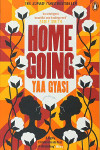
Yaa Gyasi: Homegoing – As the slave trade continues in Ghana, one sister is ushered into marriage with a white man at the ‘castle’, whilst her unknown half-sister is taken into slavery to be shipped to America; we follow both women’s decedents as they tackle their pasts. A wonderfully written book that succeeds in writing short pieces about various characters without you ever feeling lost.
Tough call as to a favourite this month – both Wang’s and Gyasi’s books were fantastic; as Wang’s in particular will be on my ‘best of’ list I should probably choose that, though in all likelihood, Gyasi’s may be on the list too.
Quotation Report
Hilarity and heartbreak in Chemistry:
At the gate, he goes through his repertoire of tricks – sit, lie down, crawl, play dead, roll over, high-five, sit, lie down, crawl, play dead, roll over, high-five. I ask him to please be dignified about this, but I have not yet taught him that command.
Whilst in The Female Quixote, Arabella’s cousin and suitor agrees to read her favourite books at his peril – it just so happens her favourites include the (still) longest fiction book published, all 13,000 pages of it.
Earlier this year I began reading books from the 1700s almost on a whim – I read one and then just thought I might read another. Now I’m on my fourth book, Frances Burney’s Evelina with no thoughts as to when I might ‘stop’ or which to read next. It has meant that I’ve read both the 1700s Charlottes I spoke of last year (my plan to read five classical Charlottes) which leaves me with one remaining – the Victorian Charlotte Mary Yonge. It’s also given me a crash course in a number of literary subjects I hadn’t expected, as evidenced by a few recent posts. All this to say, this month I’ll be reading 1700s fiction. I’ve also a couple of review copies to get to and I’m hoping to finish Claire Fuller’s upcoming Bitter Orange and those library books.
What are your favourite books of the year so far (of those you’ve read, regardless of when they were published)?
The Female Quixote On Historical Epic Romances, And The Value Of Reading In The 1700s
Posted 23rd May 2018
Category: Further Thoughts Genres: N/A
Comments Off on The Female Quixote On Historical Epic Romances, And The Value Of Reading In The 1700s

As I have been compiling the notes for my future review of The Female Quixote, I came to the several highlights made of the dialogue that forms Arabella’s long-expected ‘cure’ from her romantic notions; these highlights will not be making it into my review so I thought I would collect them here; they are quite fascinating and make for a small exploration of the thoughts of 1700s people – or, at least, 1700s writers – on fiction, in particular romantic fiction (as swooning epics of the past were referred to).
Something I will likely add to my review is this statement; it’s also very relevant here:
Charlotte Lennox’s Female Quixote (1752) seems to join a persuasive eighteenth-century effort to dispel as “unreal” and dangerous the romance tradition that English readers had valued for two hundred years (Gordon, 1998).

The same source goes on to say that the book ‘avoids endorsing this demolition of romance… The precise relationship The Female Quixote establishes between madness and romance needs careful articulation’. And later, ‘This critical narrative commands respect for exposing how eighteenth-century culture controlled female power and, equally importantly, how such control could be contested.’ (ibid.)
I do not know enough about the period’s literary culture to comment on it in general, but certainly Lennox’s novel suggests a background of ridicule; whilst we can’t say for certain that Lennox herself disliked epic romances, particularly given our contemporary thoughts as to viewing author and text as separate entities, the possibility is certainly there and even if not from Lennox’s own heart, it exists as someone’s opinion… quite possibly, given that Lennox was of his circle and looked up to him, Samuel Richardson.
Without further ado, then, let’s look at these extracts from the second to last chapter of the novel – which in itself is a subject of debate as some believe it to be the work of Samuel Johnson (both Samuels were in Lennox’s circle). The discourse between the Doctor and Arabella concerning the knowledge she has gained from books which she thinks contain facts (please note, quotation marks are not used in the original text):
To the names of many of these illustrious sufferers I am an absolute stranger, replied the doctor. The rest I faintly remember some mention of in those contemptible volumes with which children are sometimes injudiciously suffered to amuse their imaginations; but which I little expected to hear quoted by your ladyship in a serious discourse. And though I am very far from catching occasions of resentment, yet I think myself at liberty to observe, that if I merited your censure for one indelicate epithet, we have engaged on very unequal terms, if I may not likewise complain of such contemptuous ridicule as you are pleased to exercise upon my opinions by opposing them with the authority of scribblers, not only of fictions, but of senseless fictions; which at once vitiate the mind and pervert the understanding; and which if they are at any time read with safety, owe their innocence only to their absurdity.
Whether the above was written by or with a mind to Samuel Johnson, or whether it’s entirely the product of Lennox’s thoughts, there is a strong dislike of ‘senseless fictions’; the ‘not only of fictions’ could be taken to mean that the writer dislikes fiction in general, however, given Lennox’s interests in novels I think we can say that’s not the case. We have ‘read with safety, owe their innocence only to their absurdity’ which could be applied to Lennox’s work itself, an absurd book that readers would know without doubt is fiction and thus it is ‘safe’ to read.
There is also this, Arabella’s opinion of her past occupations once reality is pointed out to her:
What examples can be afforded by the patience of those who never suffered, or the chastity of those who were never solicited? The great end of history is to show how much human nature can endure or perform. When we hear a story in common life that raises our wonder or compassion, the first confutation stills our emotions; and however we were touched before, we then chase it from the memory with contempt as a trifle, or with indignation as an imposture. Prove, therefore, that the books which I have hitherto read as copies of life, and models of conduct, are empty fictions, and from this hour I deliver them to moths and mould; and from this time consider their authors as wretches who cheated me of those hours I ought to have dedicated to application and improvement, and betrayed me to a waste of those years in which I might have laid up knowledge for my future life.
Whilst this begins well and says good things, unfortunately, given that a long time prior to this, Arabella’s cousin and ‘lover’, Glanville, had been on the cusp of directing the servants to burn the collection, it’s likely that Lennox had in mind a mass burning of books when she wrote The End, or Finis.
On the (more) positive side to this post, on the value of reading in general and the value of novels in the 1700s specifically, Lennox includes these fragments:
…and the great use of books, is that of participating without labour or hazard, the experience of others.
Particularly, we could say, when those fictions concern killing one’s rivals in love, being taken by ravishers, and dying for the extreme amount of love one has for someone unobtainable.
Truth is not always injured by fiction. […] Books ought to supply an antidote to example.
To use words Arabella might appreciate, oh blessed relief!
The only excellence of falsehood, answered he, is its resemblance to truth; as therefore any narrative is more liable to be confuted by its inconsistency with known facts, it is at a greater distance from the perfection of fiction; for there can be no difficulty in framing a tale, if we are left at liberty to invert all history and nature for our own convenience. When a crime is to be concealed, it is easy to cover it with an imaginary wood. When virtue is to be rewarded, a nation with a new name may, without any expense of invention, raise her to the throne. When Ariosto was told of the magnificence of his palaces, he answered, that the cost of poetical architecture was very little; and still less is the cost of building without art, than without materials.
Ladies are most problematic:
Then let me again observe, resumed he, that these books soften the heart to love, and harden it to murder. That they teach women to exact vengeance, and men to execute it; teach women to expect not only worship, but the dreadful worship of human sacrifices. Every page of these volumes is filled with such extravagance of praise, and expressions of obedience, as one human being ought not to hear from another; or with accounts of battles, in which thousands are slaughtered for no other purpose than to gain a smile from the haughty beauty, who sits a calm spectatress [sic] of the ruin and desolation, bloodshed and misery, incited by herself.
It is impossible to read these tales without lessening part of that humility, which by preserving in us a sense of our alliance with all human nature, keeps us awake to tenderness and sympathy, or without impairing that compassion which is implanted in us as an incentive to acts of kindness. If there be any preserved by natural softness, or early education, from learning pride and cruelty, they are yet in danger of being betrayed to the vanity of beauty, and taught the arts of intrigue.
Given that the penultimate chapter (the one these extracts are taken from) is so different than the others, bordering on philosophical, it may indeed be the case that as some suspect, Samuel Johnson had a big role to play in its creation, though if he did, it would have been quite against his own literary tastes, as ‘Johnson had, if not a taste, at least an appetite, for the old-fashioned romances which Mrs. Lenox [sic] satirised’ (Dobson, 1892). Certainly, if not for that, there seems a sudden effort to bring in the thoughts of an intellectual in the field in ways there hadn’t been before; there is a difference between the Doctor’s dialogue and that of the Countess a few chapters before who, due to authorial devices, was unable to complete the slow suggestions she had begun to bring about to Arabella that what she had read does not reflect reality. And there is a difference between the Doctor and the historian Mr Selvin who for reasons likely, again, to do with devices and keeping the story going, did not last long in the text and indeed took the view that the lady who knew all these accounts he had never heard of, was more well-read than himself.
But however the chapter was created, it is a mini treasure trove of a few subjects – fairly generalised, but with some interesting insights into the 1700s’ reader’s mind and a few phrases about books that are quite wonderful.
References
Books
Dobson, Austin (1892), Eighteenth Century Vignettes, Thomas Nelson & Sons, London
Articles
Gordon, Scott Paul (1998), The Space of Romance in Lennox’s Female Quixote, Vol. 38, Issue 3, pp.499-516
Could There Have Been An Alternative Ending For The Awakening?
Posted 21st May 2018
Category: Further Thoughts Genres: N/A
2 Comments

‘The Awakening alternative ending.’
It came as quite a shock to me to see this phrase in the list of search queries that had led visitors to my site; I think anyone who has read the book can emphasise – the ending is a crucial element to the impact of the text. Nevertheless, I’d like to explore this possibility of a difference, and to do that I believe it’s worth first considering the intent and purpose behind such a query.
The situation that first comes to mind is that of a student, perhaps a school student rather than university where, I presume, studies of the book would be less general and more about the female agency; in a general study, such a query or consideration would be possible. Either someone wants another’s opinion, or they are looking for inspiration with which to write an ending themselves.
This brings us to possibility number two – a search for a fabled ending. Alternate endings are hardly unheard of, consider Dickens’ original ending of Great Expectations and the recommendation that he change it to something more positive… and arguably more romantic!
Perhaps however, it’s more simple: a person, very affected by Chopin’s ending, who is looking for a different one. Such intent would be categorised as personal research and furthering one’s reading. Continued interest, albeit for a reason Chopin may have not agreed with.
So to the possibility of another ending, could there be one in terms of viability? Edna could always have chosen to turn back before she became too tired but in the context of her time, arguably also Chopin’s, it would have achieved these two things:
- It would have made people, both fictional and factual (think of the angry reviewers of the time) think things, life, were fine as they were. Chopin would have been commended for going along with the status quo and putting the woman with the bizarre thoughts – near hysteria! – back in her place. (In this vein it’s worth considering also the effect Edna’s choice would have had on Léonce and the children.)
- The novel would not have achieved its full purpose and, indeed, the good work done by Chopin in the lead up to the ending would have been obliterated.
So there could have been a second ending, sure, but we would not likely still be reading the book as much as we are; it would be but a similar story to many other books. We might be looking at Anna Karenina for everything else which of course does not have the same message, albeit that there’s a similarity between the texts.
Might Edna have been okay with going back, whether literally turning around and swimming home or never going to the sea in the first place, that final time? I think we can say that she would possibly have been content but not happy. Her children would have kept her at home perhaps – or might she have left them and Léonce for good, just moving on? – but there is too much about her that doesn’t fit the socially prescribed mold. Unfortunately in this situation her children would, as much as they might also please her, remind her of her restricted life. An Edna today might have travelled the world, solo. The independence she wanted was impossible in her society.
Could Edna have had a better relationship than the one she had with Léonce, one with more freedom? Probably. Something that has always interested me is the blend in Léonce of some less restrictive elements with the then-standard socially acceptable limits he placed on Edna. He was far from the worst but still strict. Chopin surely also felt the need for her ending to support her own views and life choices, and in both of these she is more independently minded than many. She started writing after the death of her husband and her marriage was not a bad one.
If the ending were different, it would have been better at the time, the critical reviews a lot more positive, likely completely different. We know that Chopin didn’t write any more novels precisely because of the reception of The Awakening. But to have written novels that were well received may have been to compromise her values. We might remember her differently.
Chopin’s famous short story, Désirée’s Baby, sported a very similar ending, with Désirée walking into the water – she ‘disappeared among the reeds and willows’, after her husband disowns her for giving birth to a child of mixed heritage. It’s obviously a type of ending that Chopin saw good symbolism in, a firm way to get her point across. (The short story was published 6 years prior to the novel.)
To sum, I don’t think we can really contemplate another ending. The ending is there for good reason. It may have been poorly received then, but it’s considered a triumph today. Edna chose the only freedom available to her. She was stuck in ways her fictional descendents wouldn’t be now.
Your thoughts?
Event Report From The Host: In Conversation With Claire Fuller
Posted 18th May 2018
Category: Events Genres: N/A
2 Comments

Yesterday evening saw our first event at Cobbett Hub & Library in the Bitterne Park area of Southampton. Claire Fuller joined us and told many wonderful stories including the inspiration that led to Swimming Lessons (notes she and her husband left around each other’s houses), the influence of Kate Chopin on the same book, and the story of a young boy that helped inspire Our Endless Numbered Days. (Of that book she also spoke of the way the survivalist subject was written – having discovered there were no cults in Britain in 1976, the year the book begins, she brought in a fictional American.)
We had some wonderful questions, including one that led to Claire telling us about completing NaNoWriMo with one word over the requirement, and another in which she described her method of working – writing, going back and editing, and moving on.
The library proved the perfect setting, the panelled interior and wooden bookcases full of texts providing a nice colourful backdrop; all original 1930s Art Deco. We’ll most likely be making it our long term home. Many thanks to Claire, the library, and the Friends of Cobbett Road Library.
Claire’s next book, Bitter Orange is out on 2nd August. With only a few pages left to read, I can fully recommend it.