




June 2018 Reading Round Up
Posted 2nd July 2018
Category: Round-Ups Genres: N/A
6 Comments
It’s 28c here. We’ve had only a couple of minutes of light rain, once, this past month, and on a sunny weekend if there’s no trip out planned then I like to be reading outside. Suffice to say I’ve been reading quite a bit.
All books are works of fiction.
The Books
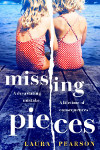
Laura Pearson: Missing Pieces – When Phoebe dies, aged three, the resulting grief has a massive impact on her four surviving family members. A very good book that looks at different modes of grieving and the way communication and support is paramount.
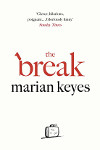
Marian Keyes: The Break – When Amy’s father-in-law dies, her husband tells her he needs a break from their marriage, a several months-long trip where he will be free… but he’ll return after that. This is a long book but there’s a fair amount of other commentary going on and Keyes ensures her characters work through their issues.

Nicola Cornick: The Lady And The Laird – Lucy writes erotic letters for her brother’s friends when they require help wooing the women in their lives, but when her brother asks for her help she doesn’t realise that she’s throwing a spanner in the works for the wedding of the man she kissed many years ago and he must marry in order to gain his inheritance. Very good regency romance, full of communication and low on angst.

Patrick Gale: A Place Called Winter – Sent on from an asylum to a treatment/retreat centre, Harry must look into his hazy memories to work out why he is no longer on his pioneer-era Canadian farm. It’s tough to sum up this book in one sentence – it’s an epic turn-of-the-century novel about a man whose affair with another man is discovered, and he must leave his family in order to not be exposed.
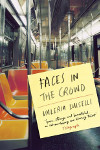
Valeria Luiselli: Faces In The Crowd – A translator in Mexico chronicles her own life, her past and her work, and writes a book about a Latin American poet for whom she has ghostwritten some translations. As confusing as it sounds, this is a book in a book in a book, but has a lot of interesting literary elements to enjoy.
I enjoyed everything I read this month. The Pearson was the best on a personal level because her book is set in Southampton and that was a lot of fun to read through. Literary-wise, the Cornick was good for its use of communication and perfect balance of conflict and general story, and the Gale reminded me, in atmosphere, of Anna Hope’s work – the wonderful historical story full of important detail with great characters to match.
I’m currently reading Ben Okri’s The Famished Road and Özgür Mumcu’s The Peace Machine, and then I have some review copies to get to. Hoping to keep my annual trend of many books in July going this year, too.
What are you reading?
How Much Do You Remember Of Books You Read Years Ago?
Posted 27th June 2018
Category: Chit-Chat Genres: N/A
4 Comments

(I’m considering 8 years or more to be ‘years ago’, as it matches my blog’s age and is only one year off the time I’ve been reading avidly.)
This is a topic that’s been on my mind a lot lately. I’ve been thinking about how my knowledge of the books I’ve read fails at times, then felt glad that I’ve made notes and written reviews… but there are a lot of books I haven’t made notes of, and quite a number are those I’ve read since I started blogging.
It’s bad enough when you can’t remember a book you read a year ago. I’m trying to create a list of conversation points for a book but struggled after two – and it’s a book I know I loved. I can even remember the general concept and sentiment behind it, a lot of the plot too (granted, it wasn’t a long book) but I know there was a lot more to it than that.
Even with notes, it can be a struggle to remember. The problem with some notes is that because you’re making them at the time of reading, despite the fact you know that you have to be careful with details because out of context what you’re writing down might not make sense, there will still always be notes that don’t work long term, where the best will in the world couldn’t help you ‘translate’ them later.
I find that once I’ve read a book twice, remembering is pretty easy. I won’t have an exact grasp of all the content but I’ll be able to speak about it in perpetuity, whether further studies are conducted or not. Writing more than one post can help me remember a book I’ve read once but it’s never as useful in this sense as a re-read. I’m not much of a re-reader generally but I’m definitely a re-reader in terms of realising I can’t remember a book, finding that troublesome, and doing something about it. (These will be books of which I remember having a particulary emotional reaction or studious interest. Some books I can’t remember and I’ve no plans to change the situation.)
I had a favourite book for a long time which was replaced in my affections when I was a bit older and found better books. I can tell you I liked the magic and the reversal of power in the otherwise factually-based society, and I can tell you that I’ve since read others’ opinions on it and came to call into question a section that I hadn’t noticed was problematic at the time because I was too young to understand it. I can tell you there was a princess, a warrior woman, a person who had a disability, and a few other people. But I can’t tell you the story, and I haven’t a clue who the other people were. (That was The Secrets Of The Jin-Shei which I will re-read at some point.)
On the other hand, I could talk about Northern Lights – read twice – for ages; I found the idea of reviewing it too daunting but I’ve written about the trilogy before.
I opened my reading database for 2009, the year before I started blogging, wherein most of the books I read did not receive a belated review. Of the 27 on the list, I could talk about 7 of them with confidence, however this number includes Stephenie Meyer’s first book which would be difficult to forget given the popularity and general talk, two are factual history books on subjects I know well in general, one is historical fiction which didn’t differ from the fact too much (thus I can remember where it did), one is a memoir of someone with a highly unique story, one I’ve gone back to many times since, and the last is The Hobbit. A few I could give a vague summary for – time period, location, how I felt about it, and the rest I really couldn’t say. And that’s scary.
Some years ago I wrote about the ‘production line’ I saw in my blogging and how it affected my reading. It was different to this post today – I hadn’t been reading avidly for long enough to truly forget at that point – but going back to it I’m reminded of my thoughts of being engaged in a text. It goes hand in hand with what I said above about note taking and writing other posts – I’m engaging in my reading even more now than I was in 2013, but that forgetfulness still lingers. I expect the way we naturally change over time also plays a part.
(As I’ve mentioned 2013, I thought I’d open my database for that year as well – 76 books, 24 I remember the general summary for.)
Interestingly, I don’t think that reading less would affect this forgetfulness. It’s all about the progression of time and the fact that unless you revise, you’re going to have trouble remembering the more time moves on. The more you read the more likely you are to come across books that say similar things or have characters that remind you of others and so on that will cause you to confuse texts.
Apart from re-reading or writing enough notes that you might as well transcribe the entire book, there’s no way around the problem. Perhaps as some say the information gets stored in our heads somewhere but if that’s so, science hasn’t yet reached the point where we can get that information back without re-reading. As much as a reading experience can last, it definitely has a use by date and unlike a shop shelf where you can look for food items with longer dates on them, there’s no saying what a book will be like.
How much do you remember? (Your own ‘years ago’ may vary – I’d like your thoughts on that, too!)
When How You Read Changes
Posted 20th June 2018
Category: Chit-Chat Genres: N/A
5 Comments
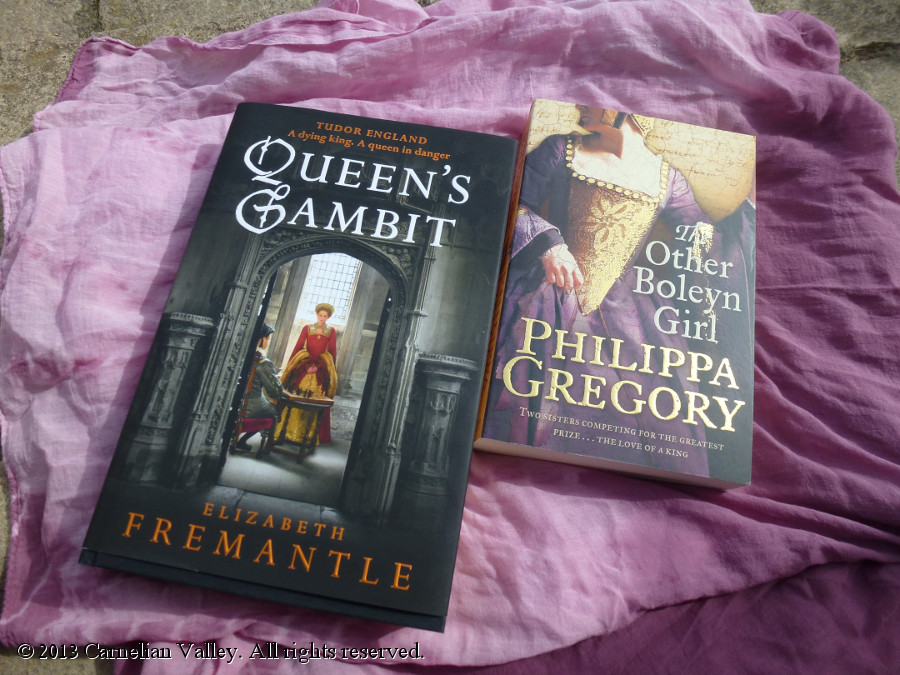
I’ve come a fair way since the days when I had to have absolute silence around me to read, and having travel sickness. In the past year I started being able to read on buses (for a short time and as long as I didn’t look up much) and just recently I’ve come to find solutions to other problems, namely keeping my attention on the book.
As much as I can’t not place some of the blame on myself, it would be correct to say that since social media and phones and so forth have been contributing to our world-wide attention span problems I’ve often had issues with reading, especially when it comes to longer books and that delayed satisfaction of completion that naturally accompanies them. If I’ve had all I can take of the internet in a day, I can read. And if a book is very good, I can read, which is of course something to think about in this respect – our fast-paced lives are not the only reason.
I’ve come to find that I’m at my reading best when reading first thing in the morning, before I’ve done anything that will get my brain heading in a different direction. If I can, breakfast then book, or book then breakfast is the best way to read. On the days when this happens, I consider any extra reading to be a bonus. (Interestingly, despite this and despite multiple reading slumps lately, I’m currently on track to make my average of 50 books in a year for this year.)
Lots of studies have found that keeping the parts of your day not related to screens away from screens provides the best chance for getting things done. As I’m not a big TV watcher, I can sit in front of a TV and read a lot, but I do find it good to stay away from the computer. I often sit in a particular seat in another room where I can have a drink on a table. In the summer, reading outside is wonderful – I believe it’s the reason my Julys are always full of books – lots of sun, warm weather, and to be outside is to be ever further from the computer. The only downside is that a computer or other device is useful for looking things up you may not understand, and so there can be anxiety if I come across something in a book that I feel needs explaining before I continue. Do I go to the computer and potentially lose some time in research (admittedly often very worth while), or do I try and remember for later what I want to look up? The latter is fine… until you’ve a small list of things to remember. I also find I don’t concentrate so well once I’ve something noted to research.
This brings me to note-taking, which can of course help with items of research – taking notes is great but it can pull you away from your reading flow. I also find that once I start taking note of a good quote or two, it’s all too easy to pinpoint further quotes of worth.
In terms of noise, I can now read with a bit of noise. There’s a bit more traffic where I currently live compared to my previous home – the first time I attempted to read with the windows open I soon came to the conclusion that as nice as the place was, reading was going to be difficult. But I kept at it; a few weeks later I found I’d blocked out the noise.
Whilst I can read on buses, even when there’s quite a few people on there, I find trains impossible. And those ‘quiet’ carriages are often the most loud. I’m not sure what the difference is – a bus is more bumpy, there are more stops and there’s more bustle.
When I need to relax I ironically find chores a better escape; mindless activities. I’m also not too great in a library; I browse and then bring the books home.
Writing this, it seemed my reading life has become more limited, however until quite recently most of the above would have been off the table to the extent that they wouldn’t even warrant a mention. I reckon that whilst it’s happening slowly, I’m moving in the right direction.
How do you read best, and what are your limitations?
Returning To The Question Of Ratings
Posted 13th June 2018
Category: Chit-Chat Genres: N/A
1 Comment

A few years ago I wrote about how ratings show one’s opinion. At the time I was considering dropping ratings from my blog; I was conflicted.
That conflict remains. I’m still considering dropping them but the reason I continue to keep them is because I know that to go without them would present its own set of problems. (Not least because I’d have to restructure several on-going posts!)
On one hand, ratings make reviewing easier. Using numbers to back up your thoughts – both in the publicly accessible review itself and whilst mentally planning what you’re going to say – is a boon. A number can help when you’ve not yet found the words, or, if you’ve found the words already they round it all off.
On the other hand they can be restrictive. Words provide description, a rating can only ever help sum it up (I still believe a rating without words to be of limited value). On the occasion that you have the words but can’t decide on a rating, it can be incredibly difficult to reach the balance of words and numbers that feels right. And as it’s both inevitable and understandable that sometimes people will look for the rating rather than the rating and the words, the pressure to get it right increases.
Sometimes there is no one correct rating; I’m writing this post with the Valeria Luiselli book in mind – the book is of high literary value but at times I feel it goes a bit too far in the way it expects you to keep up with its concept. I’m nearing the end of the book and really should have made up my mind already as to the rating; after having written about books for the time I have I generally have a good sense of what my final rating will be by about halfway through (this is of course subject to change as I continue the book and I have and do change my rating). This time, I don’t know, and although this conflict doesn’t happen all that much it’s enough to make me consider throwing in the ratings towel. Excellent literary content – I’m thinking 5. But that feeling of ‘too far’ – I’m thinking 4. Perhaps I should split the difference and say 4.5.
A 4.3 might be more appropriate, but I’ve never wanted to go down the decimal route. I admire those who do but it looks like too much to keep track of. I chose to rate out of 5 with .5s included because it’s near enough to 10 but different enough to get around the problems I had with the idea of 10 itself.
No, that doesn’t make sense to me either but somehow it works. I may be over-thinking this. I still haven’t made up my mind.
Have you changed your thoughts about ratings as you’ve continued to read (whether you review or not), have you ever felt conflicted as to their value?
In Which I’m Researching Authors Again
Posted 11th June 2018
Category: Chit-Chat Genres: N/A
1 Comment

A couple of years ago, I created a bookmark folder in my internet browser for books I’d like to read, placing in it reviews, other articles, and some author websites. I found it a useful way to keep all those pieces of information that I hope to one day use but likely rarely will (I have bought a couple of books due to going through it which I consider makes it a success).
Then, sometime earlier this year, I started a ‘literary criticism’ folder in case I wanted to write articles based on the books those articles were talking about. Purposefully being more picky before I commit anything I read to the folder, it’s working out quite well. What I hadn’t reckoned on, though, was the way in which I’d be wanting to note each new classic author I came across. (‘Classic’ here used for both those who are famous and people less known/unknown who have long since passed.)
I have a penchant for keeping information I may need in the future, mostly because it has indeed come to pass many times that information has been used, and whilst in terms of handwritten notes – university and so on – I keep a lot less, when it comes to the internet and computers all bets are off, particularly in the case of literature. If I come across a person from the past who happened to be a writer, I will be bookmarking that page, no matter whether I’m interested in the subject they wrote about or not.
Still, as much as the information will be useful to somebody and indeed I am using it elsewhere, I wonder about it all. I remember reading a blog several years ago in which it was noted that it’s estimated we can get through about 5,000 books in our lifetime; constantly seeking out old authors only reminds me of this sobering fact. (There were certainly more than 5,000 books in the Beast’s library, which is something I think it’s fair to say we all aspire to emulate.) Even if you seek to read only the best of the best of the best, you will never cover it. (To include another sobering bookish screen reference, a statement by Ted Danson’s Gulliver comes to mind, from his main statement in court about his travels: “I could read every book ever written” – 1996 adaptation.)
I think, beyond the reasonable hope and plan to write about these authors, I just like having the information. I find I retain much more knowledge after a second read of information, and keeping it allows this. It also allows me to look back at people when other connections are made, such as my recent finding of the possible (likely?) inspiration for Jane Austen’s title for the book initially called First Impressions, as well as what got the ball rolling on Northanger Abbey.
It makes sense that I write about a few of them here. Aside from works on authors I’ve written about recently and thus don’t need repeating yet again, I have work on Christine de Pizan, Mary Hays, and Charlotte Perkins Gilman. I’ve saved pages on Adela Florence Nicolson (1800s poet from England, died in India, who wrote who the pseudonym Laurence Hope); Amelia Opie (1700s-1800s novelist and leading abolitionist – Amelia’s was the first name on a petition to parliament from women to end slavery); Ann Hatton (1700s-1800s popular English novelist); and Anna Bray (1800s British novelist).
Most interesting so far has been Anne Richie née Thackarey, the daughter of William. Wikipedia says this: Her 1885 novel, Mrs Dymond contains the earliest English-language use of the well-known proverb “give a man a fish and you feed him for a day; teach a man to fish and you feed him for life”. It would also seem she visited Southampton, my city, where her father once attended a school he found wretched but the city itself he liked. There is also Sarah Burney, half-sister of Frances, who wrote several novels but isn’t much remembered, possibly because she didn’t have too many friends. The Burney sisters’ father was more supportive of Frances, disliking Sarah’s Clarentine, and Jane Austen’s thoughts (as we know she liked Frances’ work) are thus:
“We [the Austen family] are reading ‘Clarentine,’ & are surprised to find how foolish it is. I remember liking it much less on a 2d reading than at the 1st & it does not bear a 3d at all. It is full of unnatural conduct & forced difficulties, without striking merit of any kind.” (Austen 1807, cited in Woolsey, 1892)
But Sarah’s third novel, Traits Of Nature, did very well.
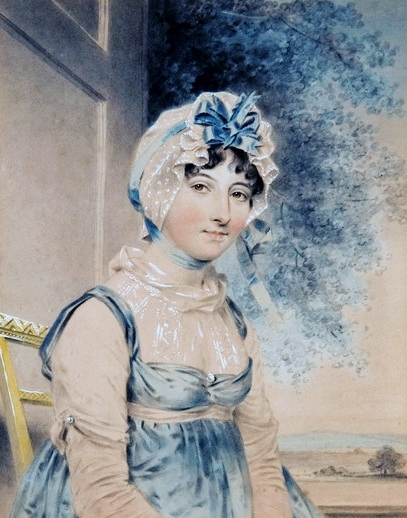
Finally there is Maria Edgeworth who may well be well-known today (and I would have just missed the discussion). She was an early realist writer of children’s literature, and a ‘significant figure in the evolution of the novel in Europe’ (Britannica 2014, cited by Wikipedia, n.d.). Her novel Belinda depicted an interracial marriage and was thus controversial.
Austen, again:
“Oh, it is only a novel… It is only Cecilia or Camilla, or Belinda; or, in short, only some work in which the greatest powers of the mind are displayed.” (Austen, 1817)
Unfortunately, when looking through my browser bookmarks for this post I happened upon yet another author. I’d better call it a day.
So today I would very much like to know, do you collect information for later use and are there occasions when you’ve come to use some of it? And which relatively unknown authors of the past do you recommend reading?
Book References
Austen, Jane (1817) Northanger Abbey, John Murray, London, Chapter 5
Austen, Jane (1892) The Letters Of Jane Austen, ed. Woolsey, Sarah Chauncey, Little, Brown, And Company, Boston, p. 97
Doody, Margaret Anne (ed.) Introduction, in Lennox, Charlotte, The Female Quixote (1989) Oxford University Press, Oxford, page unknown.
Online References
Maria Edgeworth, Wikipedia, accessed 8th August 2018


