





Book Launch: Rosie Travers’ The Theatre Of Dreams
Posted 3rd August 2018
Category: Events Genres: N/A
Comments Off on Book Launch: Rosie Travers’ The Theatre Of Dreams
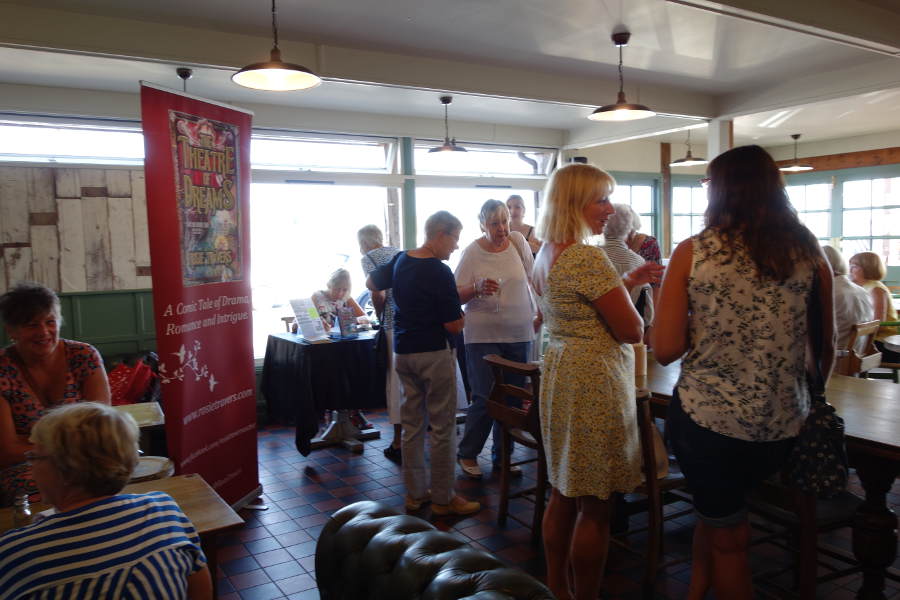
Wednesday evening saw the launch of Rosie Travers’ debut, The Theatre Of Dreams. Held at the Boat House Cafe in Swanick, just a few miles from Southampton, it was a lovely setting – casual, with the marina surrounding us, and the weather was blissful. It was also packed – this photograph was taken very early on and does the evening no justice.
I met Rosie a couple of months ago at a local author meet up. She has had an interesting journey to publication; her first manuscript was accepted by a small publisher, but only on the condition that she changed the book to suit their house style and any future books followed a pattern. The book would have required a lot of rewriting. Before making her decision as to whether or not accept the offer, Rosie sent a pitch and then the first three chapters to a big publishing house. Whilst they didn’t take her on they said they liked her writing and so she rejected the offer she had had, choosing to carry on looking.
That book is not published but Rosie found a publisher, Crooked Cat, and The Theatre Of Dreams was taken on.
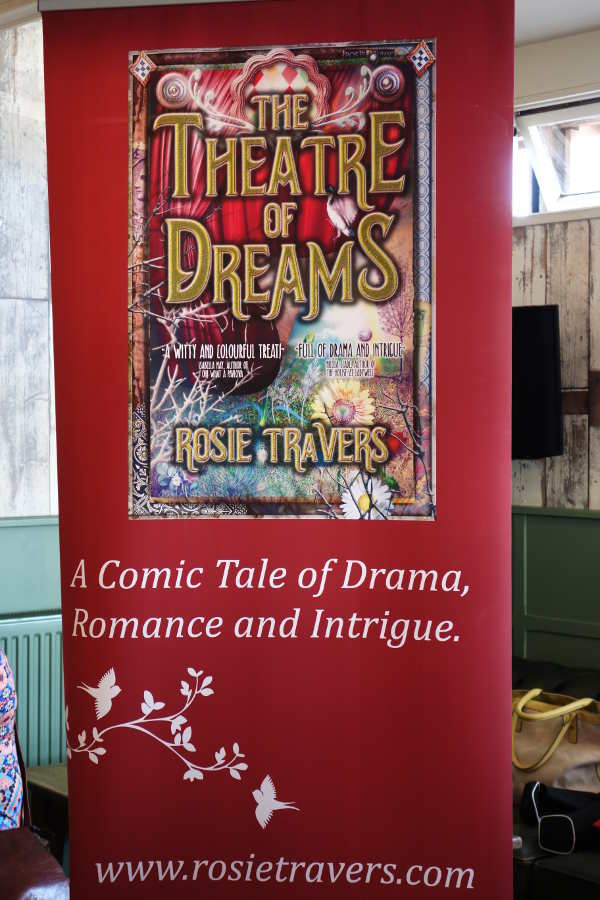
Rosie was inspired by the history of Lee Tower, a structure that no longer stands. Situated in Lee-On-Solent, a place the author rightly states isn’t well known beyond those who live nearby (it really should be more of a tourist spot, it’s lovely), her fictional version in the equally fictional Hookes Bay earned her an article in a local paper where Lee Tower was accounted for. The book as a whole is about a down-on-her-luck actress who is invited to take over the running of a former dance academy from a terminally ill 80 year old, whose invitation is not as nice as it seemed – the Lee Tower complex boasted a ballroom and cinema among other venues.
I’m yet to read the book in full; I bought a copy and have browsed through it; I’m looking forward to it. Rosie has a very good writing style and a knack for opening sentences. The very first is:
I met the man who orchestrated my downfall in a Soho nightclub.
She carries on in this strong manner for the next few chapters, making the most of the concept of good openings. I can feel a first analyses post coming on…
Curious Arts Festival 2018: Friday
Posted 1st August 2018
Category: Events Genres: N/A
1 Comment

Disclaimer: I was invited to cover this festival on a press pass.
For the first literary event, Emma Healey spoke to Georgina Godwin, mostly on the subject of her recently released second novel, Whistle In The Dark.
Speaking of her relevant history, Healey started with the time she was a student of book binding. At that point she had decided she was never going to be a writer and didn’t want to do something academic as a career. This feeling came as a result of the depression she suffered in her teenage years1. She went on to do an MA in Creative Writing.
In the year between the publication of Elizabeth Is Missing and her journey writing her next book, Healey’s life changed substantially. She got married and had a baby – she wrote whilst her daughter was new born. On this subject, she said it was stressful, but her experiences hadn’t changed her perspective as a writer, instead they had given her nuggets of ideas she could use in her book.
The author had wanted to include teenage depression in this book without referring to her own experiences; she didn’t want to write about the illness from a teenage perspective. She thought it would be interesting to write from the mother’s point of view, and inform that point of view with the teenager’s thoughts and feelings.
Looking at social media, which plays a part in the book, Healey pointed out that the exploration she wanted to do was easier when written from the perspective of someone to whom it was alien, and so she chose the mother, Jen. She was interested in the idea of Jen looking at daughter Lana’s online accounts and thinking there would be information there that would help her understand her.
Between readings – Whistle In The Dark is written in short chapters/vignettes – we also heard about the inspiration for Elizabeth Is Missing: one of Healey’s grandmothers suffers from dementia; sparking the idea for the book, she had asked if her friend was missing. The rest of the content was inspired by Healey’s other grandmother, who doesn’t have dementia.
Healey doesn’t write chronologically; she stated that this works for her but it is inefficient. Finishing books is difficult. She prefers as characters ‘ordinary people’ who have great things happen to them than characters who start the book in a great position.
After a very welcomed ice cream from the Purbeck van (they warrant a shout-out because they were lovely in general, and on the last evening gave me a serving of my favourite for free), I popped into Jamie Reid’s discussion about Patrice des Moutis, an insurance businessman who was a compulsive gambler in the 1950s to 1970s. With a backlist including a couple of books about horse racing, Reid is well-read on the subject of gambling as a whole. (His book on des Moutis is Monsieur X.)
Reid spoke of a man hounded by the French government and the media, who would have found it easier to do what he did (he was also a gangster) because of his looks and charm. His wife came from a respectable background and was uneasy at first by the idea of gambling but then starting putting bets on for him. Of gambling in general, the writer said that online gambling poses huge problems for society, that it’s too easy to spend more money when you’re doing so on a phone. The change from deciding yourself to letting a machine choose for you is sad.

Whilst the children got bedtime stories, the evening’s entertainment for adults began with comedy and continued with some fantastic music in the Gorse tent. I stayed for the first set performed by bülow, lowercase intentional, who I’d describe as somewhere between Katy B and Dua Lipa vocally and, at least live, not too far from Ellie Goulding. (Studio recordings sound more like Lipa and Anne-Marie.)
For the first afternoon at the festival it was spot on. Enough things happening to ease you into the weekend and get you excited about the rest of your time at Pylewell.
Footnotes
1 Healey was almost sectioned for depression. She had made a number of suicide attempts and her doctor had recommended a hospital; she was turned away because it was for adults (Walsh, 2018).
Online References
Walsh, Rowena (2018), Author Emma Healey draws on history with depression in new book, Irish Examiner, accessed 1st August 2018.
Curious Arts Festival 2018: An Overview
Posted 24th July 2018
Category: Events Genres: N/A
Comments Off on Curious Arts Festival 2018: An Overview
Disclaimer: I was invited to cover this festival on a press pass.
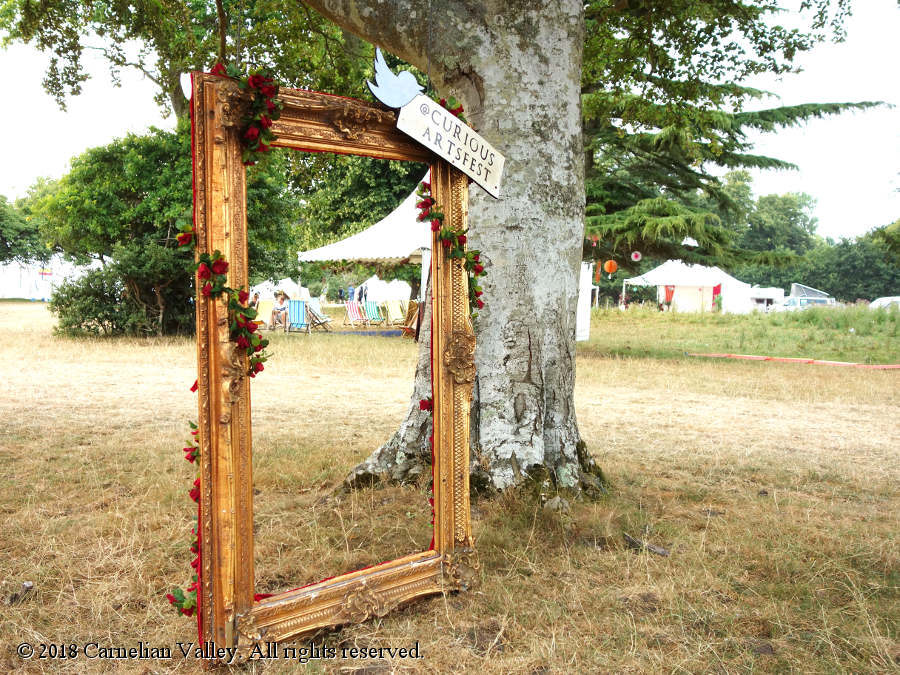
This year’s Curious Arts Festival took place over the weekend at Pylewell Park in the New Forest, an estate that opens its gardens to attendees, and its house to the speakers, each summer. Organised for the first weekend of the summer holidays, Curious is an intimate luxury boutique festival that offers interesting talks, workshops, and lifestyle-related classes for the whole family, and positively welcomes well-behaved dogs (who are in turn welcome to heckle the comedians if they so wish, and did so on Sunday). From Friday afternoon to Monday morning (technically Sunday night as that’s when the last event takes place; on Monday morning everyone packs up and leaves) there were a great variety of things happening, enough that I was still discovering new things to do late on the Sunday. Numbers are in the hundreds, everything is within a couple minutes walk – generally under a minute – and the festival is such that if you wanted to come without going to any of the programmed events, you would have just as good a time.
I last attended the festival in 2016. It has grown since then in a lovely, organic way. The intimacy of the festival has not changed; the same relaxed nature remains, and the space is the same.

And these are perhaps the best features of the festival when looking at it from a general viewpoint – at Curious you buy a day or weekend ticket that entitles you to access all events that day or every event in the programme respectively. You bring your tent, caravan, or choose to glamp, and then everything else is there for the taking. Want to attend part of one talk and then saunter over to another? Absolutely fine. Want to bring an ice cream or burger with you? Go ahead. Events have a listed start time but these are not strict by any means and the set-up means you can be very early or a bit late. The speakers wait a few minutes for people to arrive.

In that regard, something I noticed this year, that was confirmed when a fellow attendee brought it up in conversation, was the attention to detail of the scheduling. Ninety percent of the events I – and she – wanted to attend, did not conflict in their timings with others. Evidently a lot of time was spent on thinking about what people would like to see and it had an excellent result. (This is not to say previous years did not have a good schedule because they did – it’s just that this one stood out.)

Just like the other subtle changes, the genre of the festival has broadened. Literature, comedy, and music are the biggest elements – are the ones with scheduled events – and have been before, but the previous leaning towards literature has moved to a more equal balance between the three. There were fewer literary talks than in 2016, but it wasn’t by much, and the extra variety of events created by the balance rounded the festival off nicely.
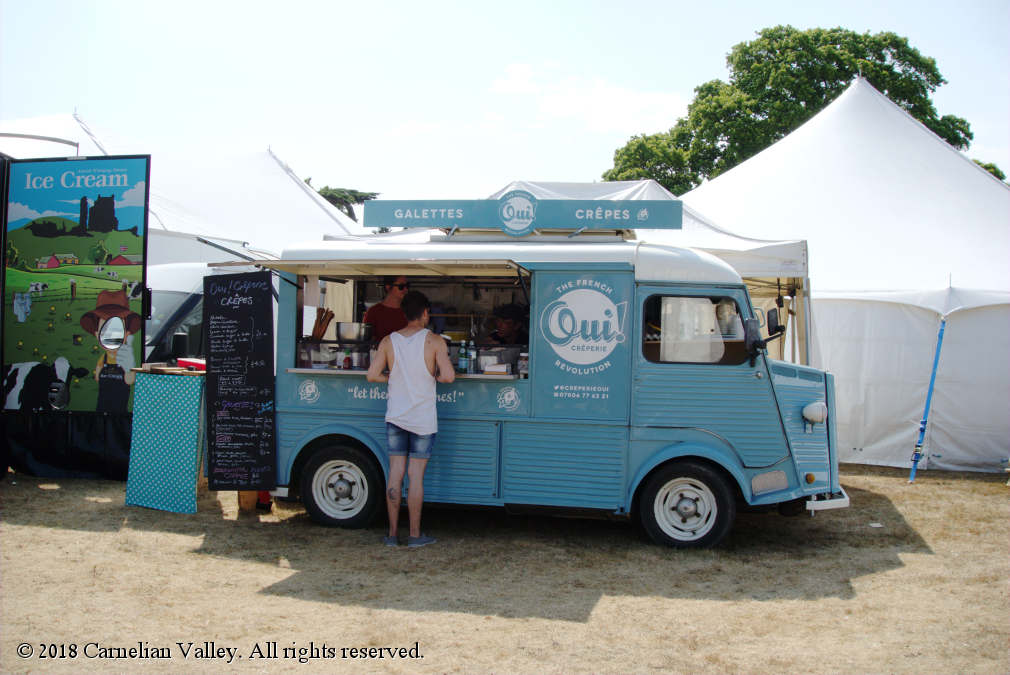
Outside food is not permitted but there is a good range of food vans and kiosks to purchase from. The festival supports all sorts of diets and food choices. This year the burger vans jostled for space with the Thai cuisine, neighbouring a fish and chips vendor, a Vegan burger option, and gluten-free choices. This year the crepes were sweet, but also savory. There were all-natural ice lollies, the Purbeck ice-cream that powered my afternoons, a number of bars, and very, very, good coffee. The festival as a whole is eco-minded, with more recycling bins than ones labelled ‘landfill’ and a good few food vendors using recyclable products.

Away from the main events, bohemian clothes stores, craft workshops, and giant versions of dominoes and Jenga, sat the Kanga Spa which offered morning Yoga, meditation, massages and other therapies. They also held tea ceremonies which I was very tempted by. They arrived with their very own teepees – you had to bend down to get into the reception – and proved very popular, their set-up its own little sanctuary, near enough the main stages for you to feel part of the festival, but far enough for a bit of quiet and privacy. Unlike 2016, where the options were more integrated, Kanga is its own outfit with training courses in India and events at the London School of Tea.
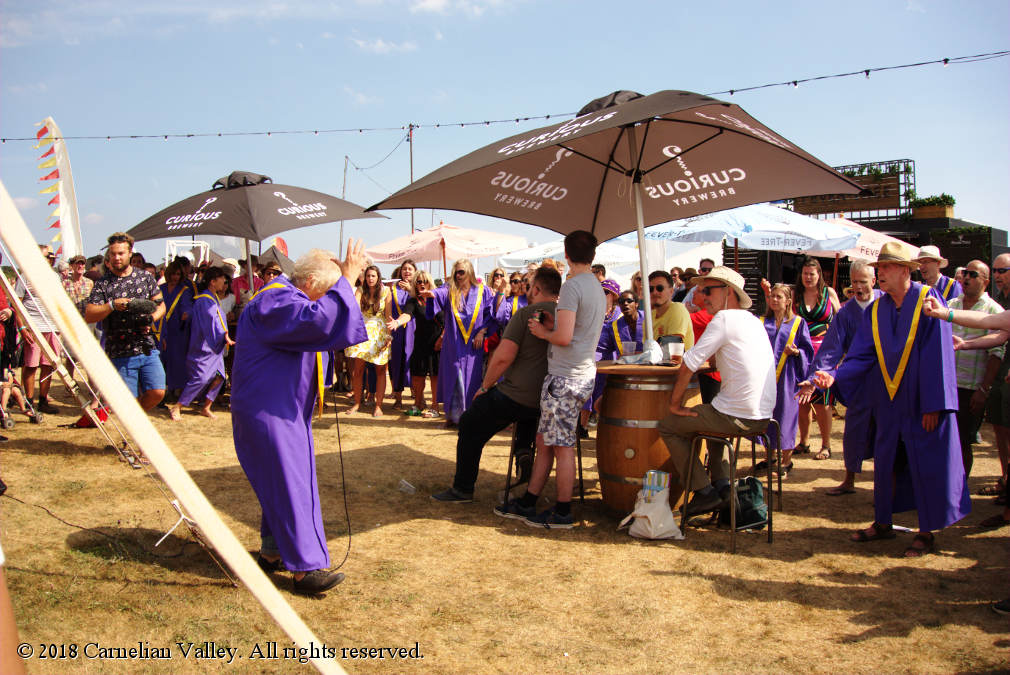
By mid Saturday almost everyone was in floaty clothing and shorts, and flower garlands adorned heads. Paul Blezard, a regular speaker at Curious and otherwise, said that at the festival it was either pouring with rain or burning hot. This year, in keeping with the UK heatwave that’s well into its second month now, it was scorching.

On Saturday and Sunday mornings, Blezard presents a round up of the days newspapers along with guests, and this year there was a similar round up for children. Children get their own tent – during the festival this morphed into two tents (extra tents and event spaces slowly increase over the weekend), bedtime stories every night, craft activities, mini adventures (for example I came across a man dressed as a stereotypical cook leading a bustling crowd of children around the site), and a couple of talks.
And speaking of mini adventures, this year the dogs had a moment to play with each other and perform tricks. (Owners are asked to keep their dogs on leads throughout the festival.)

For book lovers, the genre tends to be literary and poetry, whether contemporary, historical, thriller and so on. Comedy is a mixture of well-known names and up-and-coming artists. The music is very broad – folk, acoustic, and then there are quirky choices and well-known stars.
There is a uniqueness to Curious that makes it one to seriously consider attending. The size, the setting, and the nearness of everything (even your tent is only between a minute and 3 minutes walk away) make it stand out from the rest. I highly recommend it. Next year’s date is 19-21 July. Tickets and more information will be available from the website.

A note about access – it isn’t great due to the setting (some of the fields have lots of potholes), but people do visit with scooters and sticks and travel around the site at a fair speed. Chairs in the tents can be moved to make space for a wheelchair. In the largest tent, where the sound equipment required its own stage at the back, attendees in wheelchairs were able to park up next to the engineers with an unobstructed view of the stage.
A Day At Beaulieu, New Forest
Posted 20th July 2018
Category: Chit-Chat, Photo Posts Genres: N/A
6 Comments

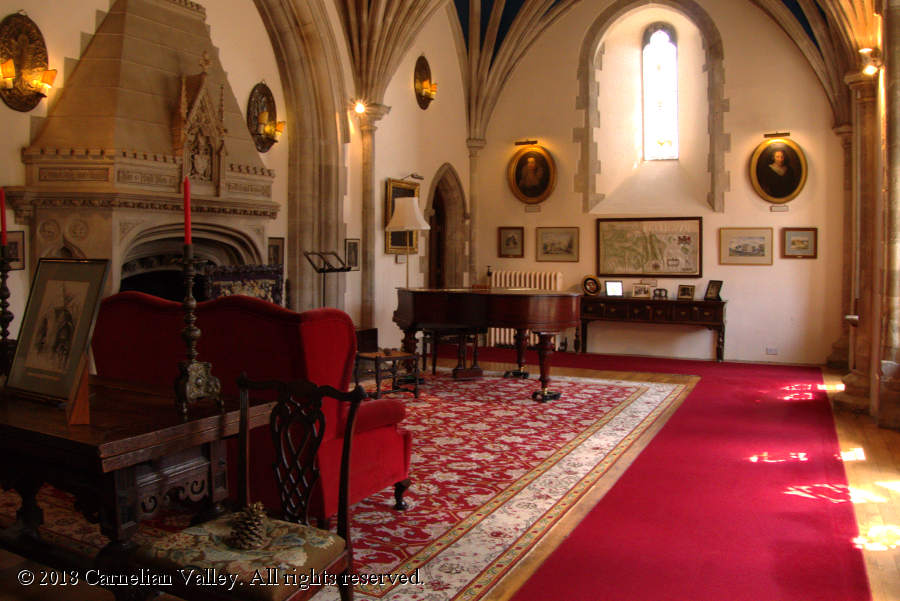
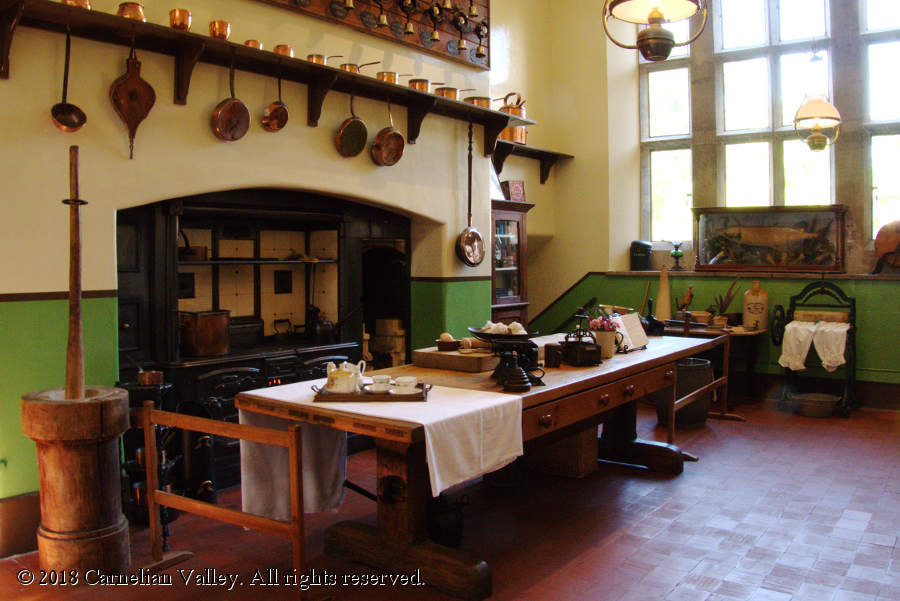
Please note: the lens I took with me this visit turned out to be entirely the wrong one for the weather and light in the house so I have supplemented them with photos from a previous trip in June 2013. The arrangement of furniture in the house has changed since that day but the gardens are much the same.
Last Sunday morning and early afternoon I spent at Beaulieu (‘byu-lee’) in the New Forest. It was to my knowledge the hottest day of the year so far here, the temperature reaching 29 degrees Celsius at some points.
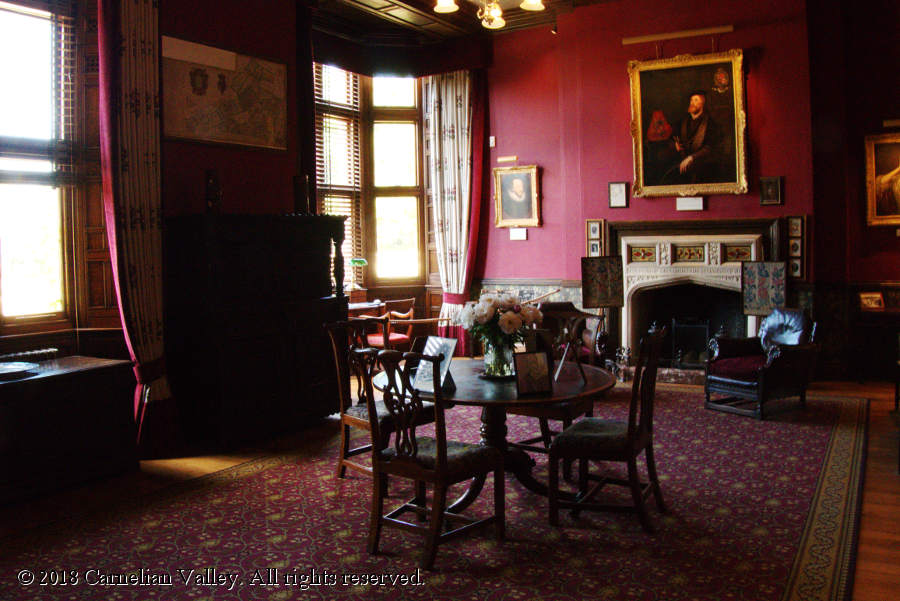
Beaulieu is an estate that offers a lot to do and it’s always packed with visitors. It’s best known for its National Motor Museum which was created by the 3rd baron Montagu of Beaulieu in 1952, whose statue stands outside the entrance to the museum building. The Montagu family still own the estate, living at Palace House, the historic home on the edge of the estate, by the river. It was originally built in the 1200s as the gatehouse of the abbey, and following Henry VIII’s dissolution of the monasteries the estate was purchased by Thomas Wriothesley – whose portrait is in the house – then passed down through the Montagu family.The house is partly open to visitors; not surprisingly, it’s my favourite element of the place. (And currently, there is a garden set piece dedicated to Alice Liddell, the supposed inspiration for Alice’s Adventures In Wonderland, who visited Beaulieu as an adult. Image at the bottom of this post.)

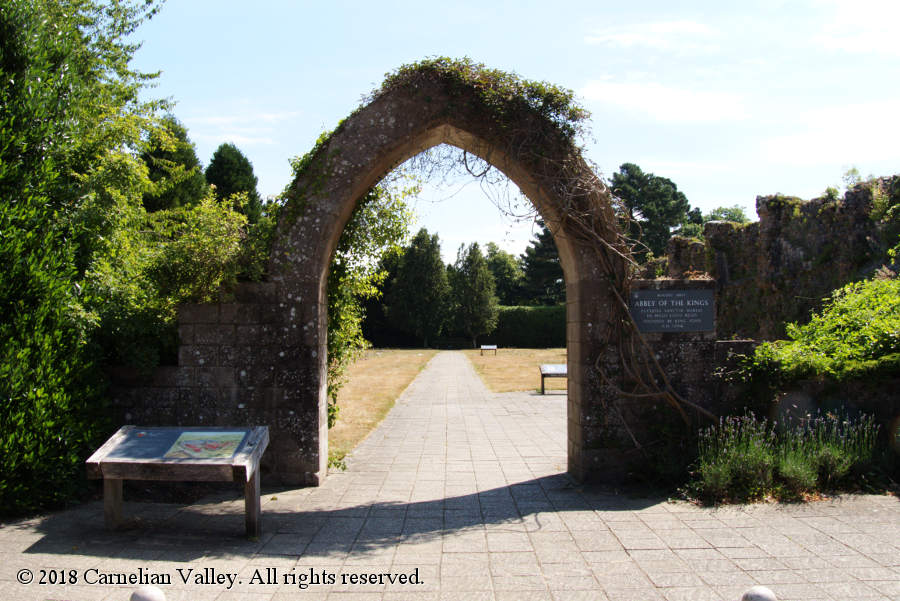
Beaulieu Abbey is medieval, founded in the early 1200s by King John. It was the residence of a fair few Cistercian monks and nowadays it’s rather haunted. You can view part of the inside but the upper floor is solely for event hire. (In recent years I attended a reception there; the hall is dark as expected but worth seeing if you get the chance – all beams and rafters.) You can also walk along the foundations of the abbey church, outside.) The surviving rectory serves as the parish church.
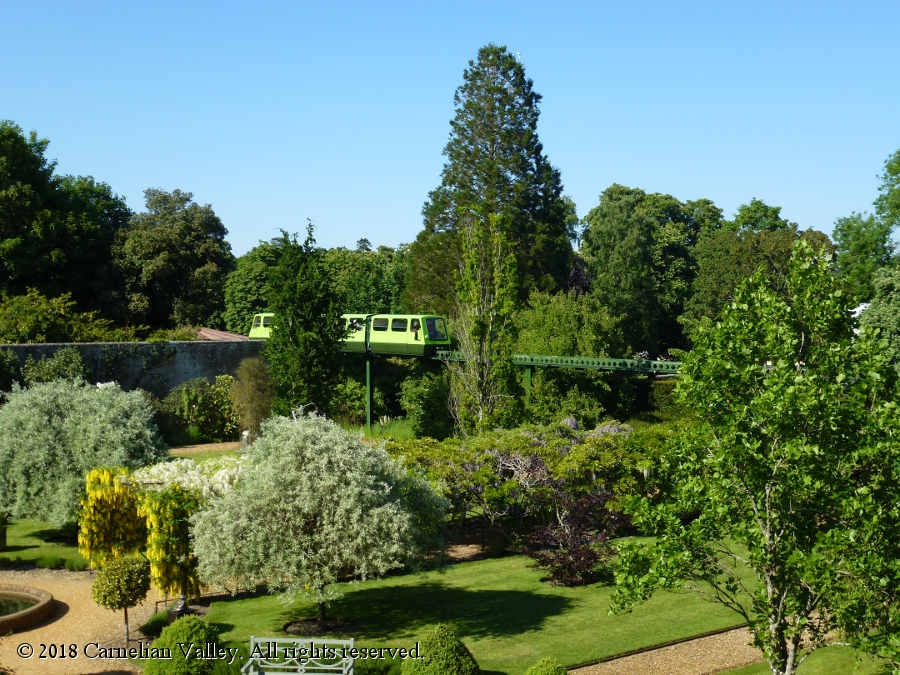
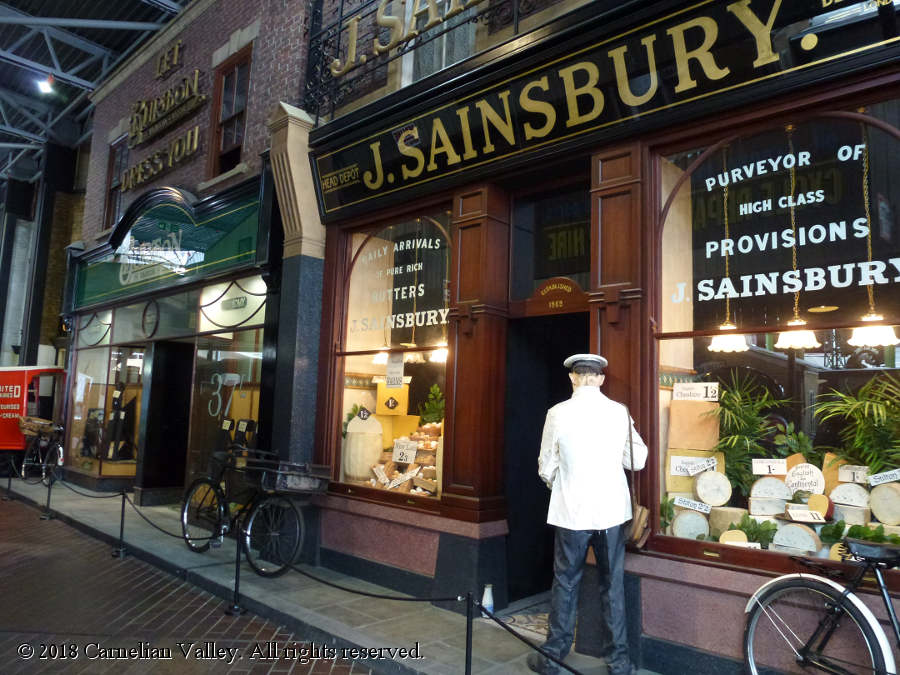
Apart from the attractions I’ve already noted, Beaulieu has an elevated monorail that takes you from near the entrance of the estate, through the eves of the Motor Museum and up to the Abbey. A kitchen garden is accessible. And the restaurant features a lot of choices – on this day I favoured the slushies, which were invariably crowned best item on the menu.
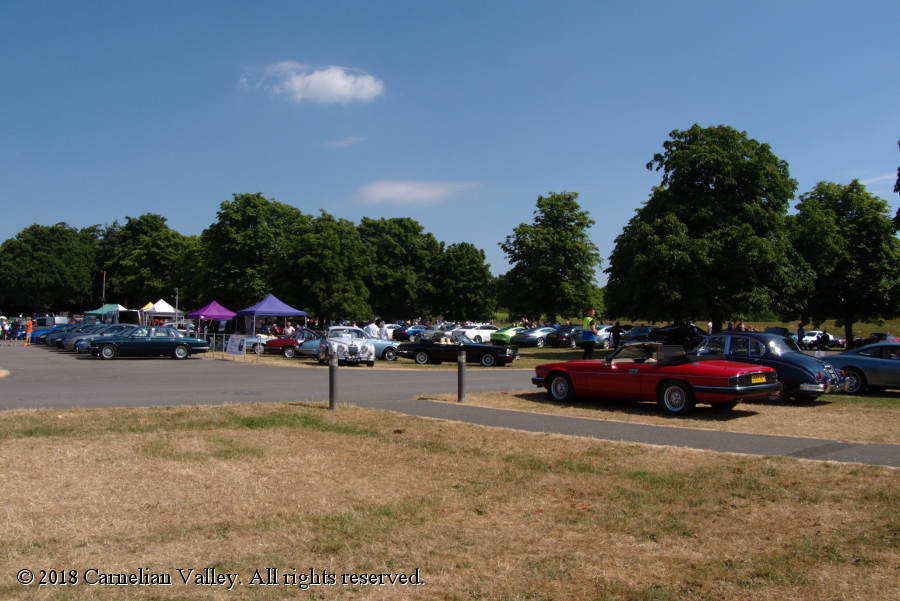
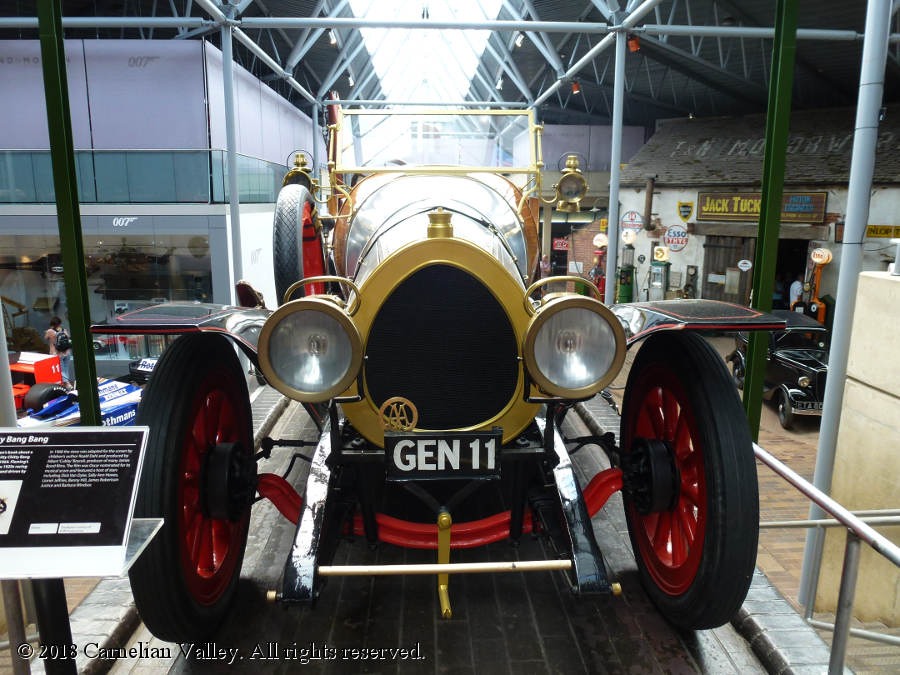
And on this day about a hundred Jaguars were parked up by the main thoroughfare, an added attraction. (The Motor Museum contains many old vehicles – early and record breaking cars, cars from films and television. The Weasley’s Ford Anglia from The Chamber of Secrets resides there as does Chitty Chitty Bang Bang. There’s also a tent dedicated to Top Gear experiments.)
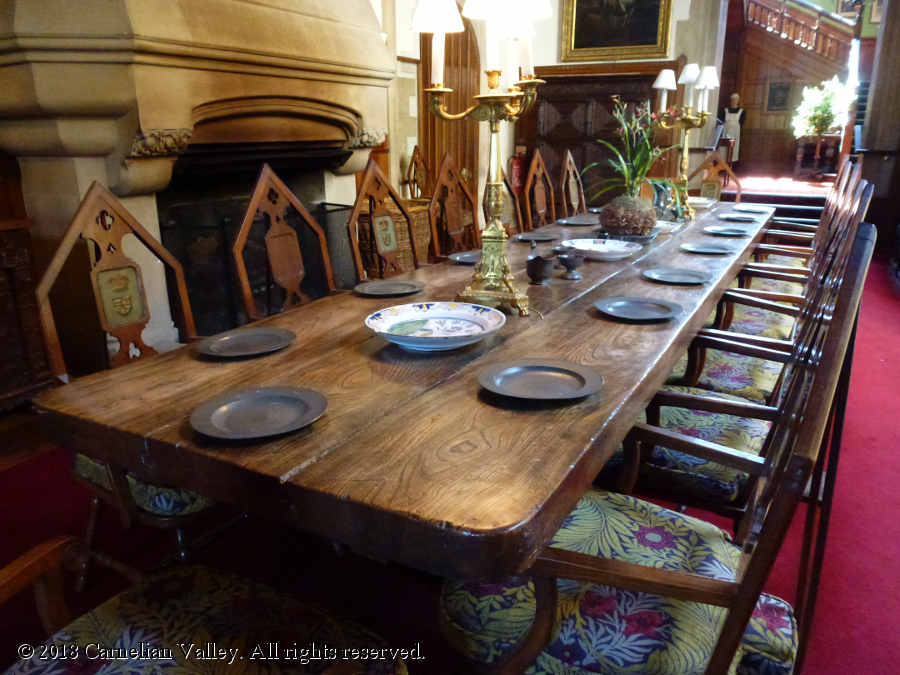
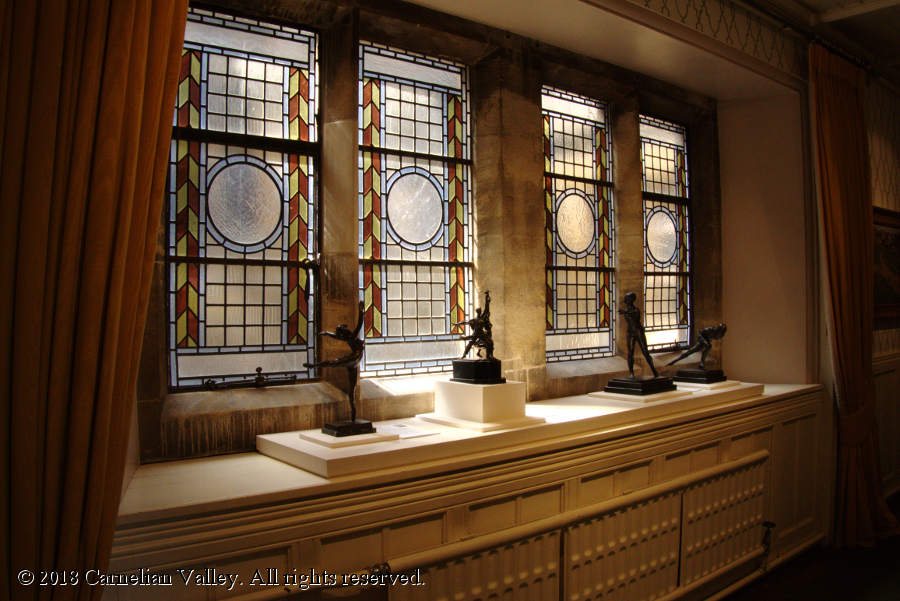
But back to the house; it’s lovely to walk around and this visit I noticed more rooms were open to the public than in years gone by; not that there were ever few rooms – for a house still lived in the access is very generous. You are welcome to take photographs, invited to in fact. The welcome in general is super; Beaulieu staff are on hand to tell you about the rooms or give you a tour, and there are lots of information boards sporting text from the Montagu family themselves. You never have to wonder who features in a painting and whilst areas are naturally cordoned off it doesn’t feel at all restrictive.
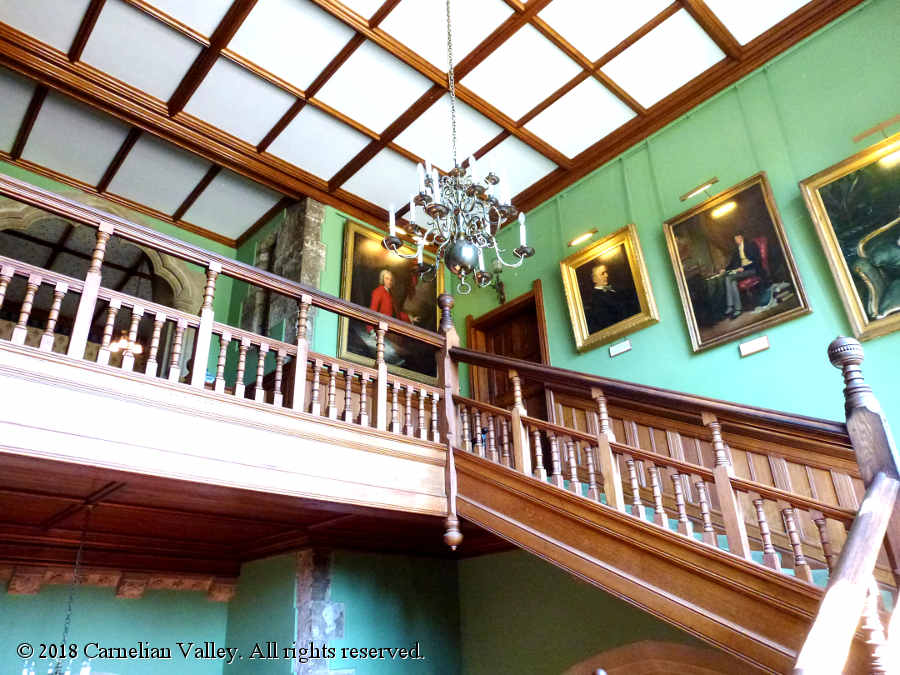
As I walked up the grand stairs, a member of staff asked if I had a similar staircase at home – I kind of understood where he was coming from because I did nip up there quickly – I told him I’d been to many historic houses. After a number of different staircase designs you’re prepared for anything.
The rest of my photos





First Half Of 2018 Film Round Up
Posted 4th July 2018
Category: Film Genres: N/A
2 Comments
On starting this post I was pleasantly surprised; I’d made my usual January film resolution to watch more films – with all the vagueness that implies – got through some films and then promptly put the big screen on the back-burner; I did better than I thought.



Annie (USA, 2014) – Wasn’t feeling it; the casting was fine but the old songs were barely used and I love the original too much for that to work for me.
The Lady Vanishes (UK, 1938) – Loved this. A simple plot so well executed and the comic duo were a lot of fun with their cricket obsession.
The Last Jedi (USA, 2017) – The family thought this was better than The Force Awakens. I didn’t, but it’s still a very good film.

Nut Job (USA/South Korea, 2014) – Quite good, but not as much as other CGI family films in recent years. The jokes very rarely worked.
Pretty Woman (USA, 1990) – Really enjoyed this; I’d actually grown up thinking Pretty Woman had the story of The Runaway Bride so it was good to put the real thing in perspective. I think I’d now better watch that second film.
Trainwreck (USA, 2015) – It took a (long) while of over the top swearing and not-funny funny stuff to show what this film was all about, and that’s a bit of a pity, because what it tries to do – reverse the stereotype of dating and relationships so that it’s the man that wants commitment – is interesting.
Well, Amazon’s put Bollywood on UK screens at a good time, which is about time. And there are some random New Zealand productions I’m interested in. But, most helpful of all, my mother’s had a DVD clear out so I picked up a few older classics. I may finally see The Shawshank Redemption…
What films have you recently seen and loved?


