




10 Years Tracking My Reading (22nd September 2009 – 22nd September 2019)
Posted 23rd October 2019
Category: Chit-Chat Genres: N/A
2 Comments
The 22nd September marked 10 years of me keeping exact records of my reading – dates, and formats and so on. Before September 2009 I had been reading avidly (I begun at the start of that year) but I hadn’t begun taking any notes of what I’d read. The list for the first several months of 2009 was made retrospectively.
I decided to have a look at all the data to see what they showed about my journey as a reader. This journey is 90% combined with my journey as a book blogger, too, as I started blogging early 2010. I already look at each year, and in 2017 I amalgamated various data from 8 years, so I won’t be repeating any of that, instead it’ll be simpler. I read 12 books that were re-reads but only 3 had been first read during my blogging years. I’m counting re-reads as separate books.
Total number of books: 553
Opening book: A Gathering Light by Jennifer Donnelly
Closing book: You Then, Me Now by Nick Alexander
Centuries & Decades
My reading era, so to speak, spans just over 500 years. The oldest book I’ve read is Thomas More’s Utopia (1516). And, because classics and famous books are most often older, I’ll say here that I’ve read 67 of them. I’ve read a big 0 books from the 1600s. My plan to read Aphra Behn should (start to) rectify this. I feel I should add some books from 1900-1907, too. (If anyone has recommendations do let me know.)
I read more books in 2013 than any other – 76. My ‘least books’ year was year 1, 2009, which is to be expected – 27. Likely due to everything being new and exciting, my second year, 2010, ended with 60. The numbers are consistent with being given review copies.
Publication year most read: 2013 (58 books)
1500s: 1 (1516)
1700s: 3 (1752; 1764; 1788)
1800s: 29
- 1800s: 1
- 1810s: 8
- 1830s: 1
- 1840s: 4
- 1850s: 4
- 1860s: 4
- 1870s: 3
- 1890s: 4
1900s: 80
- 1900s: 2
- 1910s: 5
- 1920s: 7
- 1930s: 7
- 1940s: 2
- 1950s: 10
- 1960s: 4
- 1970s: 1
- 1980s: 15
- 1990s: 27
2000s: 439
- 2000s: 82
- 2010s: 357
Translations From…
- Danish: 2
- Dutch: 1
- Finnish: 3
- French: 13
- German: 6
- Hebrew: 1
- Japanese: 1
- Latin: 1
- Mandarin: 1
- Norwegian: 3
- Portuguese: 2
- Russian: 2
- Spanish: 3
- Swedish: 2
- Turkish: 1
Ratings
In my first year I labelled some books not applicable to be rated – I gave N/A to books I didn’t review. I discussed this in a separate post. In 2018 I assigned N/A to Twelve Years A Slave – if considered numerically it would be a 5 and I have considered this for the below.
I’m pretty happy with the ratings. It surprised me that there were a good fewer less 4.5 ratings than 4s and 5s but its a tricky one to assign sometimes; it always feels better when something’s a definite 4 or 5.
540 ratings
- 0/5: 1
- 0.5/5: 4
- 1/5: 7
- 1.5/5: 3
- 2/5: 13
- 2.5/5: 30
- 3/5: 68
- 3.5/5: 82
- 4/5: 127
- 4.5/5: 89
- 5/5: 116
Reviewing
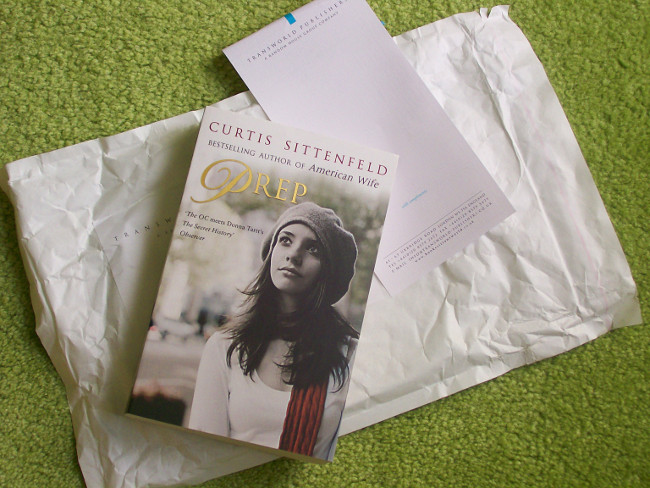
The first book I read for review was Curtis Sittenfeld’s Prep. It was a ‘sign up for a challenge’ read. My first review request was for Molly Roe’s Call Me Kate, in September 2010. This book was also my first ebook.
Books for review, various reasons: 222
Concluding Statements
The biggest change in my reading happened in 2010-2011, when blogging opened my reading world to many different types of books and pushed me to try classics. In 2009 the idea of reading a book for adults was a scary thing; this is a big reason why I never reviewed the first I read that year (when I started blogging in 2010 I slowly started reviewing previously read books). I remember trying to review non-fiction but I was aware that – whilst it was on a subject I knew a lot about – I probably needed a bit more experience to do so.
My book stats are obviously a reflection of where I was at that moment (well, year) in time, and although I can’t remember every circumstance I can remember enough to see why the patterns are what they are. I struggled to finish Station Eleven and thus it was my last book of that year; I found reading easy in 2013 because I’d changed the way I blogged, and I’d also chosen a few more shorter books; 2017 saw a slow down due to a new job; 2018 further still as I added rabbit care to my schedule. I’m on track to reach approximately 40 books this year.
How long have you been tracking your reading and what does the information you note down show about your journey?
Incoming Podcast!
Posted 21st October 2019
Category: The Worm Hole Genres: N/A
Comments Off on Incoming Podcast!

This photograph was taken by Chris Engelsma.
The last couple of weeks I’ve been contacting authors, re-reading books, and creating questions. I had been wanting to start a podcast for a long time but put it off because of silly worries. I finally got myself in gear, said enough was enough and it was time to get it done.
I’m excited to announce that episode one of The Worm Hole podcast will be uploaded next Monday, 28th October. The guest is Nicola Cornick. We recorded the episode on the 16th and it was a lot of fun.
It will initially go out via SoundCloud (there’s a mobile app for it as well as the web browser version) and be shared on iTunes as soon as possible following that. I’m also looking at TuneIn as a future possibility. The link will be available as part of that day’s blog post, so those of you who are on my mailing list will get it, too, and I’ll be posting it on Twitter. New episodes will go out on the second and fourth Monday of each month.
Hope you all enjoy it as much as I (we!) enjoyed making it.
Updated – first author finalised.
(Very Subjective) Thoughts On Virginia Woolf’s Mrs Dalloway
Posted 18th October 2019
Category: Chit-Chat Genres: N/A
Comments Off on (Very Subjective) Thoughts On Virginia Woolf’s Mrs Dalloway

I’ve chosen to eschew my regular review/discussion format – I don’t feel I can do Mrs Dalloway justice, and I’m not sure I ‘got’ it.
I appreciated a lot about the book. So much of it was poetic – poetry in prose. The language was sometimes difficult to read – I don’t mind long sentences but my word! – but the choices made, and the rhythms, were lovely.
The portrayal of PTSD – then ‘shell shock’ – at the time when it wasn’t fully understood was very careful and caring. If Woolf’s book, albeit published several years after the war (1925), played a role in helping people to help veterans further and later, I wouldn’t be surprised. Woolf shows the symptoms well, creating a balance of flashbacks and other mental health issues that came as a result. She shows the effect of misdiagnosis and the beginnings of understanding.
I appreciated the look at love, unrequited, and same-sex.
The inclusion of suicidal thoughts and an actual suicide is interesting in its context. I wasn’t sure whether it’s ‘right’ to see anything here in items of hindsight, Woolf’s mental health and her later choices – I wonder if, perhaps, the book reflects a few of her thoughts pertaining to herself. Certainly if nothing else, she explores it all in its social context.
All these things I ‘got’ but I was left feeling that I was still missing something, hence my choice to bypass a review. All opinions are valid, but I felt too strongly about missing something – can I really evaluate something with which I struggled so much?
I struggled with the stream of consciousness. When I was able to keep my attention on the words – try as I might this was a continual problem – the moment the perspective changed I was right back at the beginning.
I didn’t ‘get’ the sudden changes in perspective. Had the book been solely from Clarissa’s point of view it would’ve been easier. I realised these extra characters might turn up at the party but still their inclusion seemed irrelevant.
I suppose I’m not sure what it was, exactly, that Woolf was trying to say overall – I’ve not a clue. Society at the time? Relationships – problems in love? Attitudes to each other, two-facedness? I did like how everything revolved around Clarissa whether the characters intended it to or not, whether they liked her or not.
Can you enlighten me? Was I somewhat right about the book or completely wrong? And how have you found Virginia Woolf yourself?
On My Old N/A Rated Books
Posted 14th October 2019
Category: Chit-Chat Genres: N/A
Comments Off on On My Old N/A Rated Books

In my 10 years of statistics post, I mentioned the books I’d decided not to rate. To recap, this happened a few months before I started blogging; when I started blogging I went back to the previous year’s books (started blogging March 2010, started keeping statistics September 2009, and noted the books I’d read in the months prior) to help me write reviews so that I had a bit of a backlog to fall back on. In doing this I decided to rate the books I was intending to review; I decided that books I wouldn’t review – which often included books I’d attempted to review and given up on – didn’t need a rating.
Hindsight is a wonderful thing, and so on. Although it’s hardly the end of the world that I don’t have those books rated, I feel a bit of a bad reader for having essentially left them out of the running. Some were books I didn’t enjoy and probably wouldn’t enjoy today. But others I loved.
My thoughts here aren’t towards the books themselves – they have all been mentioned here over time – but the general idea of having books on my list with N/A in the rating column: should I be adding ratings? I certainly like the idea – not only would it complete my log for the year, it would feel like I’m doing them justice, finally.
But is giving a rating in hindsight – 10 years’ hindsight in this case – a viable option? No matter how much I try to think back, and no matter that I do in almost every case remember my general thoughts on the books, my present reading self will surely come into play. I’ve changed, and my expectations have changed. Perhaps I could give two ratings – one in the context of today, one that I believe I would’ve given then. But isn’t today’s context irrelevant if I’m not re-reading the book? (And, unless I’m reviewing them, does a rating of any context matter beyond completion?)
This all comes back to the question of how much we remember of books read years ago, and how we change over time. By the very fact that I’m wondering how useful a rating given in hindsight might be – that is, not useful in the context of today – aren’t I saying that it doesn’t matter because I’ve moved on? It might have been a reflection of my reading then, but without a re-read – that would show change more clearly – or, indeed, a review, which these books necessarily lack, there is perhaps not much objective use in having these ratings.
How much do I remember of these books? Where the thought was particular, for example I remember one book became almost illegible, suddenly, at 3/4 the way through, and another that it was decidedly average and dry, I could give a rating more in keeping with the time. Where the thought was more about my feelings, I’m not so sure. And the subjective and objective would be mixed without my knowing.
I’m not sure if I’ll ever rate them – it might do them justice in terms of back then, but it wouldn’t be informed and thus also wouldn’t do them justice.
In what ways do you consider your opinions of your old reads relevant and irrelevant?
Next Stop Procrastination #12
Posted 11th October 2019
Category: Next Stop Procrastination Genres: N/A
Comments Off on Next Stop Procrastination #12

There have been some phenomenal literature-related articles recently, but perhaps the most intriguing find for me was a post on Medium, published two years ago. It’s under Miscellaneous – Jenny Odell’s speech transcript on how to do nothing. Given its original format, it’s a very long read, but utterly worth it. I also highly recommend the article about narrating audiobooks; it’s fascinating.
Author Specific
‘I knew Christopher Robin – the real Christopher Robin’
Sylvia Plath didn’t want her mother to know she’d written The Bell Jar
Interview with Philip Pullman ahead of The Secret Commonwealth
The journey that changed Geoffrey Chaucer’s life
How The Guardian became the first newspaper in Britain to use the F-word
The trial of Lady Chatterley’s Lover
Book Specific
The politically radical family that inspired Little Women
Considering the secret of Northanger Abbey
Teaching Jane Eyre: a teacher’s perspective
An appreciation of Claire Fraser (unfortunately this link has since been made inaccessible for readers in the EU)
On the magical landscapes of Anne of Green Gables
Olivia Laing on Daphne du Maurier’s Rebecca, 80 years on
Writing
What is the difference between a preface, a foreword, and an introduction?
Maybe the secret to writing is not writing (on taking breaks)
Can language be understood as a spiritual medium?
When being a disabled writer means being an educator
Libraries & Bookstores
A photo appreciation of libraries
Saying goodbye to my beloved bookstore
On opening Ghana’s first subscription-model library
Misc. Literature
Authors and translators on their unique relationship
500 year old library catalogue reveals books lost to time
Why narrating an audiobook is a lot harder than you think
Picturing writerly demographics in the Norton Anthology of American Literature
2019 is the first year in 20 years that copyrighted works are entering the public domain (includes list and contextual information)
How to visit the graves of 75 famous writers
The curse of reading and forgetting
Other Links
(Reddit thread of the happiest facts people know)
What the blue hour is and how you can use it for photography
A disabled life in a superhero universe
Soft foods helped humans form ‘F’ and ‘V’ sounds
The crew of the Mary Rose may have included sailors of African heritage
The people who wear historical dress every day
Southampton’s medieval vaults
An unpublished essay by Judy Garland written to promote The Wizard of Oz
How to do nothing (long read)


