





What Is The Impact Of The Amount Of Time Between Your First And Second Read On The Latter Read?
Posted 8th November 2019
Category: Chit-Chat Genres: N/A
Comments Off on What Is The Impact Of The Amount Of Time Between Your First And Second Read On The Latter Read?
Having continued to re-read, discovering more about the texts, I found myself wanting to look into this whole process further. The books I’ve been reading are on a shortish line – there are those I first read in the earlier years of my blogging (every book so far has been a ‘first read whilst blogging’ book), and those from only a year or two ago. On paper, it’s not much – the longest gap is 7 years – but when you read a lot that’s a fair amount of time. And in the context of being a reader, it’s more than enough time for changes to occur, specifically to your reader self.
I’ve pondered over whether the gap between first read and re-read has any particular merit in regards to amount of time, and in saying ‘gap’ I mean both the factual gap of time and the gap in relation to how many books have been read in the meantime; the more books you get through, the more you’re likely to forget ones further back, an understandable drawback of avid reading. (That, I think, is something that can be lived with.)
When it comes to the question of whether being able to remember less or more of the book makes for a better re-reading experience, I don’t think there’s a right answer. Not being able to remember – and this can, as noted, happen no matter how long ago (or not so) you first read the book – means simply that you’re going to enjoy your re-read in a different way. It might take a bit more time for you to ‘get back’ to where you might have been had you remembered, but that’s not a bad thing. Whilst being able to remember a lot means your further appreciation of the book – all those things you didn’t notice the first time – might happen sooner, not remembering the content doesn’t mean it won’t happen. And of course remembering the book – most likely the story, themes, and any impression the characters made on you – may well cause you to need a bit more time to get into the book again due to the chance you wonder why you’re re-reading it right then. (By this I mean you wonder in general – ‘why am I reading this again when I’ve already read it?’)

My present experience of this pertains to Samantha Sotto’s Before Ever After, which I started a couple of days ago. I remembered I loved it; I had the benefit of having reviewed it (though my review, in 2012, seems to me now incredibly amateur and lacking in literary context); and I remembered the basic plot and my liking of Sotto’s hero. But I didn’t remember that the author started her book in the present, and I didn’t remember the character of Paulo, the young man who arrives at 26-year-old Shelley’s front door to tell her that her husband, who died a couple of years previously in his early 30s, is his grandfather and managing a restaurant on the other side of the world. (Yes, it’s as good as it sounds.)
And – to my shame, right now – I have had this book on my favourites list ever since I read it.
My re-read of Montgomery’s The Blue Castle gave me a completely different feeling for the book, enough that I wondered if I shouldn’t write a new review. (I opted for a Reading Life post.) In brief, my first read had me me laughing, my re-read had me looking at the poignancy and dysfunction. I laughed very little.

This moves us to the way we can change as readers. We change as a whole – our reading preferences change, we read differently, we’ve got a lot more reading behind us to inform new reads – but I’m thinking specifically on a per-book basis: we often change in the context of being a reader of that book, whichever book is currently in question. My second read of The Barrowfields showed me the progress I’d made by the way of reading more classics and in general knowledge of other classics. My time in-between first and second read – a year and several months, not long really – allowed me during the second read to understand and often be simply able to note more literary references than I had that first time, and, in so doing, I was more aware of the idea that the best way (for me) to read the book that second time was to look up anything I came across that I didn’t know, no matter whether it struck me as important or not.
This, then, is why ‘amount of time’ is and has to be a malleable concept when it comes to re-reads. It’s the amount of time in the context of you, of your self as a reader, your reading background, and so on. It’s also not always related to how much you enjoyed the book that first time, in fact I’d argue that loving a book so completely can make you forget the details sooner. It’s all too easy to think that because you loved a book so much, you’re never going to forget it. The only definite, I reckon, is that you’re unlikely to forget the experience of reading it and your feelings at that time.

I don’t know if I ‘need’ to read The Blue Castle again – I probably will but it’ll be for the same reason I re-read it earlier this year: the simple enjoyment of it. I’ve identified a likelihood of ‘needing’ to read The Barrowfields again, in a few years time, perhaps, to see how much more I might enjoy it, to see how much newly accessible content there is for me to take away. This of course circles back to the idea of there possibly being a limited amount to take.
There is obviously no real way – one might use the buzzword ‘organic’ – to measure the effect of the passage of time between reads. You’d have to erase the book from your memory, and selectively at that, keeping some of it back, but it is something I’d like to keep in mind as I continue what has become a real pleasure – re-reading what I’ve loved.
I’ve always worried about the fact that a re-read necessarily means one less new read in your time, but when done right – and again, that’s subjective – it’s incredibly valuable.
What are your thoughts as to time on this subject?
The 2019 Young Writer Of The Year Shortlist
Posted 4th November 2019
Category: Chit-Chat Genres: N/A
1 Comment
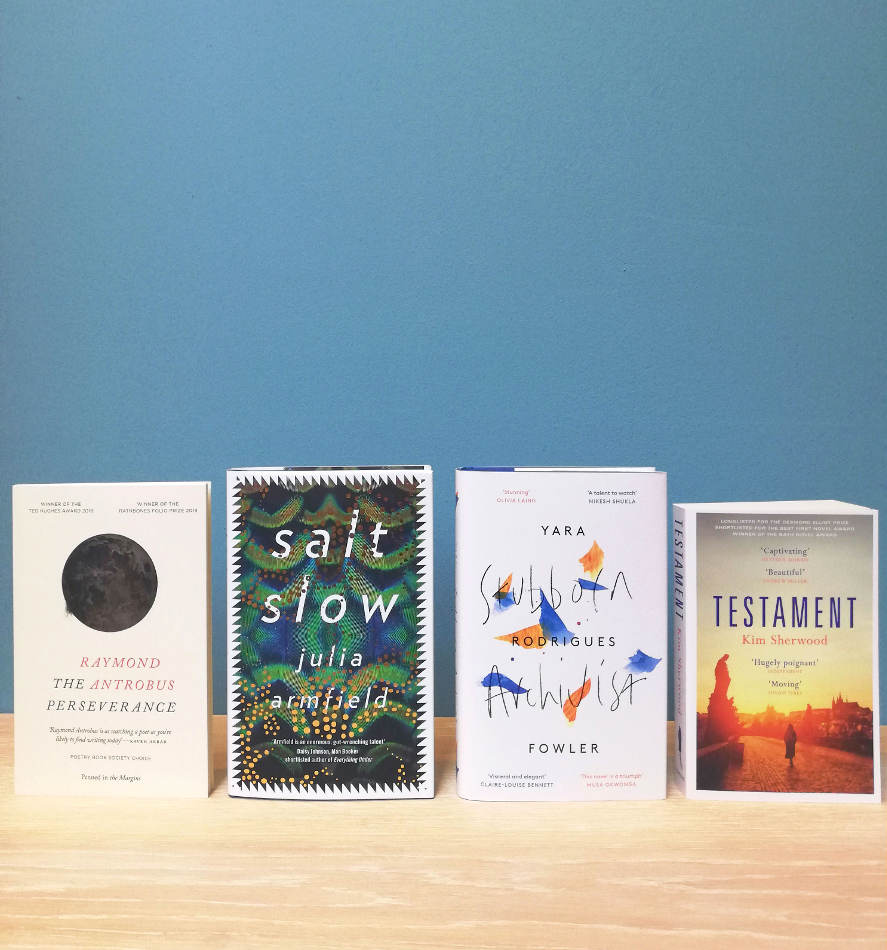
To me, now, it wouldn’t feel like November without this. The shortlist was announced yesterday following a record number of submissions – over 100 books were sent in this year. Awarded to a writer under the age of 35, the prize was won last year by Adam Weymouth for Kings Of The Yukon, a non-fiction narrative. He was joined on the shortlist by Imogen Hermes Gowar, Fiona Mozley, and Laura Freeman. The award was won in 2017 by Sally Rooney, 2016 by Max Porter, and 2015 by Sara Howe.
This year’s authors are Raymond Antrobus for the poetry collection The Perseverance, which won the Rathbones Folio Prize earlier this year; Julia Armfield for short story collection Salt Slow (one of her stories won The White Review Short Story Prize last year); Yara Rodrigues Fowler for the novel Stubborn Archivist, a Desmond Elliott Prize longlister; and Kim Sherwood for the novel Testament which has won the Bath Novel Award. This year’s winner will be announced on 5th December.
Due to the number of submissions this year, there are five judges – alongside The Sunday Times’ Andrew Holgate are Kate Clanchy, Victoria Hislop, Gonzalo C Garcia, and Nick Rennison.
This year’s shadow panel of bloggers are Anne Cater, David Harris, Linda Hill, Clare Reynolds, and Phoebe Williams. Each year’s shadow panel have so far awarded a different author than the one who won officially so it’ll be interesting to see if this year’s group do the same. Perhaps I’m biased – okay, I am – but I do look forward most to the bloggers’ choices.
I’m particularly happy to see Antrobus on the shortlist; whilst I’m yet to read his collection in full I’ve read examples from it and read a fair amount about the poet’s work and background, which I mentioned in the post linked above about his Rathbones Folio win.
Have you read any of the books? What’s your opinion on the shortlist?
October 2019 Reading Round Up
Posted 1st November 2019
Category: Round-Ups Genres: N/A
5 Comments
Breakthrough – I’ve read more this month than I have in a relatively long time. Adding to the month’s list one by one has been an excellent motivation and the fact that there was re-reading to do helped.
All books are works of fiction.
The Books
Jane Austen: Sanditon – When a carriage accident befalls the Parkers, they are taken in by the Heywoods and when better, they return to their seaside resort of Sanditon with the eldest Heywood daughter, Charlotte. I’ve read this twice now and it was just as good the second time, the promise of what could have been both wonderful to read and understandably a little sad as well.

Meike Ziervogel: The Photographer – To Agatha’s dismay, daughter Trude falls in love with a local photographer; when Agatha finds out the couple are listening to an anti-Nazi radio station she sees her chance to save her daughter by going to the police about Albert. A very well-written tale of the German experience of the war and its aftermath.
Naomi Hamill: How To Be A Kosovan Bride – Two young women prepare to marry as Kosovo looks to the future; one will find herself in a traditional marriage, the other, believed to not have been a virgin is returned to her parent’s house but finds freedom in her new status. A stunning look Kosovo post-war, its birth as a new nation, and the mixing of tradition, culture, and outside influences.

Nicola Cornick: House Of Shadows – Receiving a phone call from her frightened niece, Holly leaves home for the holiday house she owns with her brother, and when Ben doesn’t just turn up as everyone says he will, Holly takes up a meeting he had scheduled with an antiques expert who has the mirror that matches Ben’s reputed pearl. A timeslip novel that goes back to the 1600s and 1800s, this book is super – always compelling, well-paced, and just a joy to read.

Orlando Ortega-Medina: Jerusalem Ablaze – A boy sees a homeless man and envy takes him from onlooker to problem; a woman discovers a dead body following a storm and feels a sense of possession over it; a priest in training follows a prostitute to a bedroom not knowing the darkness that lies in front of him. The book is a collection of short stories, dark, sinister, and exquisite.

Samantha Sotto: A Dream Of Trees – As Aiden waits to die he is joined in his hotel room by a stranger, a lady who wants to help him by taking him to his ‘rooms’ in the period between life and death. It’s incredibly hard to sum up this book in one sentence, not least because there is so much mystery involved – it is an incredible and very moving fantasy/magical realism story of souls and unfinished business told with an immense amount of heart.
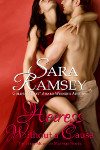
Sara Ramsey: Heiress Without A Cause – Lady Madeleine is a spinster and, bored of her role in society, has taken to acting in a theatre in a low-class area of London; when Ferguson, the owner of the area in which the theatre stands, recognises her he suggests she pretends to be his mistress to lessen any scandal that would occur if she were found out. The basic premise of this book is good and the characters are fairly well developed but the story is pretty thin which means there’s a lot of manufactured threads, repetition, and overuse of the idea that Ferguson is going to end up like his father.

Virginia Woolf: Mrs Dalloway – On the day it is to happen, Clarissa plans the finishing touches to her dinner party, musing about her life as she goes; the book also looks at the life of her old friend Peter and a couple whose day will make an impression on Clarissa later. I appreciated this but didn’t feel I ‘got’ it. A good book, just not for me.
Of the new books, my favourite was A Dream Of Trees. It’ll be on my best of list for the year, quite possibly along with a re-read or two – I’ll have to see where re-reads fit in the year round up.
November will involve a few more re-reads and potentially the completion of The Secret Commonwealth – I must admit I put it aside after 80-odd pages as this young woman just doesn’t seem like Lyra to me and I’m disappointed with the direction Pullman’s taken with this sequel as it just doesn’t line up with what Lyra was to do when she came back to Oxford at the end of The Amber Spyglass. So we’ll see. If I get to all the other books on my list, I’ll go back to it.
How was your reading October? (And I know a few of you are taking part in R.I.P – how is that going?
On My Present Re-Reading And Discoveries Therein
Posted 30th October 2019
Category: Chit-Chat Genres: N/A
2 Comments

Over the last month I’ve been being doing a fair amount of re-reading. I’ve re-read various books before but never in quick succession as I am now. It’s been a pleasure.
I’ve found re-reading to be quicker than the first read even when reading the book in full, not skipping anything just because you’ve read it before. I think it’s a ‘thing’ anyway, but it’s perhaps been intensified due to my relative generally slower reading speed; I’m re-reading these books faster than I normally would read, which is both obvious and a big motivation, and it doesn’t seem to be necessarily reflective of how I read them – I’m faster whether I’m reading a chapter at a time or spending the whole evening with the book.
It’s definitely true that you notice more when re-reading; it’s a well-known concept applicable to all kinds of things but is nevertheless still surprising when it happens. Without needing to concentrate so much on what’s happening (or on character development in cases where plot is less important) – and even if you often notice ‘small things’ anyway – it’s surprising how much you miss the first time. I’ve found this to be the case no matter whether notes from the previous reading of the book were detailed or not. And if the lifelong interests of academics of an author and/or their work is anything to go by, the more times you re-read the more you pick up. I can’t help but wonder whether there’s a line of sorts for each book (because it couldn’t be applied equally across the board) where to go over it, to re-read more than that number, would finally present nothing new. It’s an interesting thing to consider, partly because I suspect that the answer is that no, there isn’t a line, or that if there is, it would indeed take a great many re-reads. More likely, I think, is the chance that there will always be something new to find, just that the somethings will become less and less interesting, less relevant, and at some point understandably too minor to bother with.
I think it’s also true that you notice more during a re-read regardless of when you first read the book. No matter when it was you, will remember more as you go along, the only difference being the amount you remember, the time it takes you to remember whilst re-reading, and the clarity of your memories.
Reading with hindsight allows you to see more of the writing process. You know where such and such a thread is heading so you can enjoy the journey the author takes to get there, not unlike the way the author must have found it when writing. Likewise, you’re more aware of author context and/or background context in the book.
I found I enjoyed the books even more. And it does help to know in advance that you’ll most definitely enjoy reading it/them, it lessens any tendencies to browse before choosing. Whilst any twists will not be new – you’re not going to get quite the same experience – coming back to a book you loved ensures an easy, happy, read.
What benefits do you find in re-reading?
On Wanting Another Book As Awesome As The One You’ve Just Finished
Posted 25th October 2019
Category: Chit-Chat Genres: N/A
5 Comments

That slight feeling of sadness after you’ve finished a great book, it’s over. When that happens it’s tempting to want to find another book just like it; even when you’ve reading plans to continue you can still have that wish.
Sometimes it’s easy – pick up the sequel. There’s a chance – sometimes fairly big – that the sequel won’t live up to the book you’ve read, but it’s the best chance of reading more of the same that there is. Other times the author may have written another book with the same atmosphere. Lesser times but still significant enough, another author in the same genre or with books set at the same time (for example if it’s a historic novel) may provide a similar reading experience. Recommendations are great here, particularly as people tend to specify what is and isn’t the same.
The thing that interests me in a literary way, though, is those times it isn’t easy to find another book that’s similar, which includes times when you can find one similar but it takes time and during that time you’ve ‘recovered’ from the ‘need’ (though that is a fair alternative in itself). I find it interesting that the process of reading a great book and being unable to replicate the experience for whatever reason can lead to a slump. Perhaps it’s because I’m not as avid a film watcher as I am a reader, but I don’t find the same process in the context of films as powerful. Nor music, although I love music and the right song can be a stunning experience.
Sometimes TV series can produce a similar feeling, which makes me wonder how much is down to length and time invested. In books, a book can be shorter than, well, a tome, and still produce the same result because of how much relative time and attention it uses. It’s generally easier to watch a TV series than to read a book no matter the genre of the book as it requires less attention; all the imagination has been done for you. A short book might not cause the same feeling as a longer one due to time invested, but I’d say it’s more likely to cause it than a film.
I think it’s fascinating that a good book and the resulting wish to read more – which a re-read won’t do – can cause a slump. We talk about good books being the pinnacle. We talk about average books causing a slump, burnout causing a slump, and the daunting nature of the anticipation of a good book causing a slump. But the aftermath of a great book can be a slump. (Of cause a great book can also put off a slump, but that’s not the topic here.)
Looking at the times I’ve had this problem in the past, it relates most often to times when I’ve been able to give the great book not only the literal attention but the physical space, that is to say when I’ve set myself up for an evening of reading, for example, rather than just happening to have reading time. This often leads to associations which, I suppose, play their own role – ‘when I’m at the beach I’m going to get my book out and read’, ‘I’m making a cup of tea on this particularly bright February afternoon and am going to read this book because it’s getting great and I want to enjoy it’. That second one is something I’m still musing on, 9 months later.
How do you handle this situation?


