

Alison Weir – Innocent Traitor
Posted 21st September 2010
Category: Reviews Genres: 2000s, Historical, Political
Comments Off on Alison Weir – Innocent Traitor

A brilliant re-telling of a life that other lives conveniently forgot.
Publisher: Arrow Books (Random House)
Pages: 404
Type: Fiction
Age: Adult
ISBN: 978-0-09-949379-2
First Published: 2007
Date Reviewed: 16th September 2010
Rating: 4/5
Lady Jane Grey, the great-niece of Henry VIII, was executed on 12th February 1554. A puppet at the hands of her elders, she was abused by her parents and shown little care all her short life, being set up as queen against the rightful succession for the welfare of those very people who abused her. She “ruled” as queen for nine days having been forced to take the title by her power-driven father-in-law, before being arrested and made to suffer the pain of waiting while her second-cousin, the rightful queen, attempted to have her set free.
Weir has the story narrated by various people, those associated with Jane in some way, and of course Jane herself. Weir uses this device in order to give full details of what was happening so that you hear the story from different view points and can gather a lot of the evidence avaliable from different sources. Where Jane’s information is lacking Weir switches to her nurse, and where the nurse is stuck at home with her mistress Weir turns to the Dudleys.
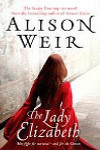
There is a single point that I find cause for debate with, and it is not so much to do with the story as the author herself so I will deal with it first. Because much of Jane’s life was included in those of Katherine Parr and Elizabeth I’s, much of the narrative is very similar to that of Weir’s later book, The Lady Elizabeth (which I do not hesitate to admit that I read first), and also her non-fictional account of the heirs of Henry VIII, Children Of England. In literal terms this could not be helped and it is understandable that, being a lover of Tudor history, Weir would want to write about all three women, but the stories are too similar. So the question is, was it a good idea for Weir to produce three books that, in part, deal with the same subject? The case for the books is that the accounts are each told from different points of view, so in that way to read all three means you gain a very good understanding of events. The case against is that it reads a bit like a cut and paste job. Weir hasn’t reused the same phrases but the problem is that for the most part she may as well have because of the similarity.
It’s difficult to review objectively a book that deals with a very real and very terrible subject, so it’s just as well that Weir has produced a book that had me angry for good reason, and emotionally involved. As Weir reminds us, Mary was not disposed to kill Jane but when the Spanish ambassador said that her husband-to-be would not go to England unless she did, she relented. It’s horrifying to read, because even if the dialogue of the scene is fiction the basis is factual. It’s abhorrent to think that Mary put her husband-to-be before Jane’s life even if you can understand somewhat that she was afraid that to lose him would mean no marriage or children from her; because Mary didn’t want to lose the power to change the faith back from Protestant to Catholic. We all know that in truth Mary was an incredibly mislaid Catholic for believing Protestants needed burning, but the case of Jane versus Catholicism is just disgusting. Unfortunately it happened and there’s nothing we could have done about it. And all that for a man who was constantly unfaithful, uncaring, scheming, and evidently only Catholic in name.
And religion is something you definitely find yourself thinking about, towards the end of the book especially. The monologues regarding religion demonstrate the lack of thought both denominations had regarding the ways to God. Both sides consider themselves the true faith but did either really have a right to the claim? In essence very few truly practiced what they preached, and it wasn’t just a case of being lax in their Christian duties.
Something Weir causes you to do is re-assess Guilford Dudley. She tells you about the cruel ways in which he treated Jane, which may or may not be true but if not certainly would have mapped to other ways, and then shows his remorse. Guilford was unfortunately a product of his parents and it took the threat of death to change his actions towards Jane. In Guilford and Jane we see where a path has forked – Jane has dealt with her neglectful parents in a mature manner, whereas spoiled yet subtly neglected Guilford is a mess.
As she does later, in The Lady Elizabeth, Weir peppers the text with lots of factual bites, but you can tell in the way that it’s done, like dialogue, that Weir wants to impart as much factual knowledge as possible. This the book read more like a non-fiction so that, effectively, what you’ve got here is a factual book disguised.
Weir takes the chance, while the story is less harrowing, to inject some humour into the it to lighten the mood, but she never strays from fact which means that the laughs you will find are ones the people of the time would also have shared. For example, Henry VIII wanted to annul his marriage to Anne of Cleves post haste because he found she smelt bad and was overall unattractive to him – but he was very upset when she agreed without pause that that was a good idea. It’s also fun to read the description of Jane Seymour by Frances Brandon, whether factual or not, who describes her as “that pale witless milksop”. In addition to these snippets you get to hear what the servants thought of their masters, and of course as they were actually normal people (for can you really say the sheep-like nobles with their disloyal ways would make preferable companions?), it’s very interesting. The servants were the satirical reporters of the day.
Children are often head strong and inclined to speaks their minds, and perhaps none more so than the young kings of old. Although King Edward VI is part of the background cast, Weir provides through him a very good source of the nature of privileged children in those times, including all the thoughts a nine-year-old boy would have given his thirty-year-old sister regarding the redemption of her soul. Of course the young king wasn’t always obeyed, and in fact had a tendency to be stroppy.
I know people speak in hushed whispers of young brides dead within a year of their wedding, or of mothers of large families cruelly taken from them.
Speaking of children, Weir doesn’t shy from providing accounts of childbirth, indeed there are at least three included in the book of varying success. Childbirth was fraud with danger in Tudor times and it makes you think how far we’ve come, yet also reminds you that many places in the world still suffer, which is crazy really because medicine has come so far.
Weir’s style of writing is compelling without being difficult to put down for a while. In my opinion her best moment is in the final pages where she moves between the point of view of Jane and her executioner. But she makes a few errors that should have been picked up on, most noticeably saying that baby Mary Grey went to bed with Katherine while they were in Oxford – after saying Mary had been left at home. This isn’t a problem however, and it’s perhaps a reason to be thankful that she made the error there where historical fact wasn’t imperative to know.
In a bad time and a bad place there lived many awful and self-righteous people who would give their daughter’s happiness for their own promotion. Lady Jane Grey’s story is an all too often but very important one and Weir has produced a work worthy of the time you may want to dedicate to her.
Related Books


Katherine Webb – The Legacy
Posted 15th September 2010
Category: Reviews Genres: 2010s, Historical, Social
Comments Off on Katherine Webb – The Legacy

Every family has their secrets, their problems, but not every family’s secrets are entwined.
Publisher: Orion Books
Pages: 422
ISBN: 978-1-4091-1716-2
First Published: 2010
Date Reviewed: 29th August 2010
Rating: 3.5/5
Beth and Erica have moved to the manor owned by their extended family, to sift through their grandmother’s belongings and ready the house for a potential buyer. But neither of them knew that when they got there they would find their childhood friends right where they left them, and they didn’t know the history of the great-grandparent who had caused their grandmother so much pain. Beth and Erica have not been back since two years after the disappearance of their cousin, and Beth has never been quite the same in the twenty-odd years in between, but now there’s a chance to find out what happened, both to their cousin and to the great-grandmother who so upset her own dynasty.
The Legacy is an incredibly long book. The narrative is split into two parts, past and present, each chapter being one or the other so that they are told back-to-back. At times the stories run parallel so that while Caroline travels in America in the past, Erica is discovering, in the present day, those events that occurred.
Webb has constructed an interesting story but unfortunately, although you can understand the issues the characters have, the people that populate her pages are lacking. They are not bad by any means but because the novel follows a simple pattern to many others, and shares the same basic storyline as so many before it, the characters fall flat of expectations. Caroline is very much a product of her time but it is still frustrating to read about her because you’d hoped she would be different. Some of her decisions are difficult to read about, so while she may have been a worthy candidate for her time she is unworthy of all that is given to her. Erica and Beth, Dinny too, are very average. There is nothing to recommend them to memory. The problem is that they are mostly there to further discovery but they’ve been given an ample amount of the book and so while there is plenty of space for them to develop there is little reason for them to do so. Although there are two secrets involved in the book, one historical one modern, the emphasis is on the historical so their fictional lives have been created for Caroline’s tale.
It is Caroline’s life that’s in the spotlight, and it’s this that is most interesting, but a rival to that interest has to be the location of the modern section of the story. As such this is also a rival to Erica’s narration. The wonderful thing about The Legacy is that the modern part is set at Christmas but often reflects on summer; this makes the book perfect for any weather, any season. It has all the recommendations of a summer read and all the recommendations of a winter one. I was very comfortable reading this novel while the rain poured and the sun shone in equal measure.
The locations picked are so far apart that it spurs the narrative on, so that where the modern characters may lack substance and the historical ones goodness, there is a constant need to read the book. Caroline lived in America before she came to England, in the hot, dry, hardly-cultivated lands of Oklahoma, and while Webb is not adept at character development she excels at location description. It’s all too easy to get lost in the landscape so that when you pull yourself away the heavy rainfall outside your window is a shock.
Lamentably, one of the two secrets is too predictable, in fact I realised the twist by a quarter of the way in. Whether or not this was intended by Webb I cannot decide because in a way it is painfully obvious, but the fact that the book carries on digging through ideas before coming out and telling you the secret itself leads me to think it was meant to stay secret. Because it was so obvious and because so many people will guess it like I did (it is that obvious that I can say that for sure) it puts a bad light over the book. All those pages to work out what the reader already knows; and it’s not like there is an interest to be had in reading about how the characters work it out because it’s not like the story is your average well-researched and forensic-riddled mystery.
Webb has thrown noticeable satirical and observational remarks into the book. She comments on the pushy quality of organisations to get you to join and the oft-acknowledged situation of Britain’s Prince Charles. These bring in some very up to date points of conversation for the reader to ponder on and allow for a sort of participation you wouldn’t generally expect in a novel.
But Webb’s style of writing is baffling. She often closes a sentence of dialogue with a full stop rather than the usual comma and then the “he said” part which makes working out who’s said what or done what very confusing. She also uses peculiar sentence structures that have a similar effect. There’s a good story behind the words but digging through them to get to it is difficult.
The Legacy takes a long time to tell a short story and while it’s a nice pastime there isn’t enough to recommend it to memory. It really is a very average book.
Related Books

Janice Y K Lee – The Piano Teacher
Posted 25th July 2010
Category: Reviews Genres: 2000s, Historical, Political, Romance
Comments Off on Janice Y K Lee – The Piano Teacher

War affects everyone involved in different ways, and sometimes it doesn’t just stop with those around at the time.
Publisher: Harper Press (Harper Collins)
Pages: 329
Type: Fiction
Age: Adult
ISBN: 978-0-00-728637-9
First Published: 2009
Date Reviewed: 21st July 2010
Rating: 3/5
A few years after WW2, Claire moves with her husband (a marriage of convenience) to Hong Kong, setting herself up as a piano teacher for a local family. She starts to become acquainted with the community yet always remains on the outside. At one of these parties she meets Will, an Englishman employed by her own employers, and the two begin an affair. But Will is constantly distant and there’s something amiss about the Chen family. As the story unravels we are introduced to another tale – Trudy Liang ten years earlier, a beautiful woman who once called Will her lover.
Before reading The Piano Teacher I’d gone for a good few months without historical fiction and the setting of this book and the summer-read aspects meant that I read it incredibly fast. But speed-reading isn’t so much a positive thing with this book – you find yourself reading it quickly because there’s nothing to peak your interest. It isn’t until much later on that it begins to show promise. A big factor in this is that it is mostly era-driven. It’s the war that is paramount here. Lee has written her book akin to the way Victoria Hislop did a year earlier in The Return, it’s very much a case that the characters serve a purpose as vehicles – they are simply there to aid the explanation of the wretchedness of the war. However, unlike Hislop, who used a number of characters to explain different situations, Lee has focused on specific features, she mentions the bombing but focuses on the predicament of the civilians, for the most part the foreigners (Americans, Britons, Europeans) who were stuck in Hong Kong when the Japanese took over. The information is fascinating and horrid in it’s own right but as the focus is on the war you can’t help but feel disconnected from the characters for whom there are parties and a little love but not much else to recommend them to your memory.
Then it all changes. From era-driven the narrative nose-dives straight into the characters, suddenly they are everything and the war is still important but more the cause, it’s no longer in the spotlight. Where Claire was the only character available for comment there is now a crowd of willing participants.
By themselves the characters are fabulous. Claire begins a possible racist and ends as perhaps the most open-minded of the lot. It takes a while to warm to her and even then sometimes you want to change your opinion, but you can’t because you know that she knows of her flaws and that she’s struggling to work through them. Will’s aura is enticing and his distance and pain understandable, but maybe he could have handled things differently. The Chens remain unlikeable and plummet further as the story goes on, and Trudy, though but a memory, is an enigma.
Because the different aspects are so disjointed it’s easy enough to close the book at the end. You feel sad for what’s happened but because you weren’t acquainted with the characters for long enough it’s difficult to feel their plight beyond the general understanding that what happened was awful. Part of this can be explained by taking into account the book’s title – it doesn’t really say what the book is about as Claire (the piano teacher) is very much apart from the rest of the story even when she meets those involved. She develops into a strong character and the end suggests she would be an interesting person to read about further – only of course you can’t because the book has ended. Claire made a few people talk about the issues, but nothing she did caused anything that wouldn’t have happened anyway because although she gains information she never uses it. This book could have easily been called something in reference to Will, Trudy, her cousin, the Chens, or the war. It is so unspecific that yes, I do believe it impacts upon your enjoyment because you open the book having ideas of a completely erroneous nature.
Lee provides ample time to the different nationalities. She writes about a country ruled by foreigners but never slanders anyone, and when it comes to the invasion she simply details, never condemns. Her characters get on with everyone. There is still racism about but in most cases the characters have already rejected it.
Lee’s writing is lovely, not incredible, but noticeable. She prefers some words at strange times however, for example, “brackish”: “The sea was green and brackish” – the word is like a crack in an otherwise perfectly smooth pavement, it doesn’t fit in with the rest of her writing. The chapters move between tenses and while Claire’s flow well it seems that when it came to Trudy, Lee wasn’t sure how she wanted to write it. There are a couple of times when both styles are used in the same chapter and you find yourself reading the same sentences over to try to work out exactly what you’re reading.
I think that if you’re looking for a breezy summer read with a bit of substance you’ll be satisfied but in my personal opinion The Piano Teacher does not fill the criteria for a good political historical novel.
Related Books


Philip Pullman – The Tiger In The Well
Posted 8th July 2010
Category: Reviews Genres: 1990s, Historical, Political, Thriller
Comments Off on Philip Pullman – The Tiger In The Well

Twelve years ago a young girl called Charlie bought a book, captivated by the beautiful cover of a gun on a green background and a woman’s silhouette drifting away into the green night. She thought it would make a good candidate for her first “grown-up” book – but then she found out that this was the third in a series so she bought the first two (The Ruby In The Smoke and The Shadow In The North), loving the first but finding the second boring. She never finished the second and so the awesome green book with the gun on it was never read.
Publisher: Point (Scholastic)
Pages: 390
Type: Fiction
Age: YA/Adult
ISBN: 978-1407-11171-1 (a newer version than the one shown)
First Published: 1991
Date Reviewed: 30th June 2010
Rating: 4.5/5
Throughout my older years The Tiger In The Well continued to beckon me from a dusty old shelf and, finally, last year, I decided the time was right – I must re-read the first and finish the second and then read this third book. I liked the first but it wasn’t as compelling as I remembered, however the second was dull, so dull, and I could see why I’d given up on it. And now I’ve read the third and it seems my young intuition was correct – this time Pullman has presented a cracker of a story.
Someone’s after Sally’s money and the daughter fathered by her dead lover, Frederick Garland, claiming that she was married to him (the man after her money) and saying he’d like a divorce due to her scandalous behaviour. Everything seems legit, and it’s starting to eat away at Sally so much that she’s beginning to believe it. At the same time hundreds of Jewish immigrants are being persecuted, and it’s the same faction that are pursuing in both incidences. Sally’s friends Jim and Webster are out of the country but fortunately, due to the plight of the Jews, there are plenty of people who want the faction brought down and unlike her poor excuse for a solicitor these people won’t let them get away with it.
The Tiger In The Well brings the Sally Lockhart Quartet into a new light. Sally is in her mid twenties now and because of this Pullman is able to take the storytelling up a notch, assuming the readers will have grown up too and therefore are old enough to digest the issues he presents without worry. There’s a mass of subplots and extra details in the book, making it a speedy read – there are situations where characters split up and so the narrative has to dart back and forth continuously, but Pullman goes into enough detail before this happens so that you want to hear about each group equally as much and forgetting is impossible. With never a dull moment whatsoever, the long book takes you through chases, hiding places, work in the slums, the high society, the gangs, the big homes, the shabby shelters, the battles, the peace, the sadness, the happiness – it’s all here.
The Victorian setting was good in the last books but Pullman never made the most of it; that’s been rectified here, he describes locations beautifully and makes the past come alive, one can envelope themselves in the plot and although it’s a story centred around hate it’s hard not to wish you were there when Queen Victoria reigned. Orchard House brings pastel greens and white to mind, the streets grey and brown, and the mansion red and gold. Victorian England was a mutely-toned place, but Pullman has pulled out its treasures and put them on display.
Pullman is at his best when writing about women, and he’s on top form here. He likes his women to have guts and be strong of mind but doesn’t load them with the stereotypical sex image you would usually expect. Sally Lockhart is only ever burdened as a woman by the sexist views of her society, away from that she is as good as any man and only ever behaves as men would expect her to when completely overpowered.
Unfortunately the climax is a let-down. After all the preparation Sally has done, when she finally gets to the deepest darkest part, the nucleus of all her problems, the plot is resolved by something outside of anyone’s control. You’re on course, reading swiftly, and then this “thing” happens and suddenly there’s no reason to continue because it’s over and you know you’re never going to get to read about what Pullman had primed you for. The particular setting of this part, a fantastically described house which you can let your imagination go riot on, is magnificent and set the stage perfectly, so why Pullman went for an easy and boring cliché is incomprehensible.
Luckily there is a bit more action to be had after this episode and it’s very funny, so although it doesn’t quite match up it’s worth carrying on. Harriet, Sally’s daughter, goes from posh rich girl to happy average child and the dialogue Pullman gives her is hilarious. Throughout the book Pullman makes a point of giving Harriet a good amount of time and tells us what she’s thinking. And when Sally tells her to be brave, the little two year old remembers it and comes into her own. A toddler being a compelling character all by herself – that’s something you don’t come across every day.
If you are upset by the fact that Jim and Webster are in South America while this is going on never fear. Pullman will more than make up for it by the time you’ve reached the end.
I believe that with a quick bit of research you could read this book without having read the others first, and personally that’s what I would recommend doing. The Tiger In The Well rips it’s claws through the previous books and roars it’s way through from start to finish. It is an excellent book, possibly even surpassing Pullman’s His Dark Materials trilogy.
Related Books


Julith Jedamus – The Book Of Loss
Posted 18th June 2010
Category: Reviews Genres: 2000s, Historical, Romance
Comments Off on Julith Jedamus – The Book Of Loss
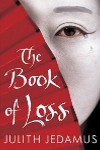
Do to others what you would have done to yourself – or you may find yourself in a terrible predicament.
Publisher: Phoenix (Orion Books)
Pages: 259
Type: Fiction
Age: Adult
ISBN: 978-0-753-820483
First Published: 2005
Date Reviewed: 11th June 2010
Rating: 2.5/5
If you wish to read this book you may have to search for it, for it appears to be out of print. Articles on Julith Jedamus are nowhere to be found.
A fallen princess comes into possession of the diary of the woman who slandered her name. She presents this diary, unedited, to the reader, whom she hopes will understand how awful this woman was. In 10th Century Japan two women sought to gain the heart of one man. The writer of the diary, our narrator and the one pushed aside, tells of her plight to get him back after he was sent into exile for damaging the emperor’s reputation and the virtue of the high princess. She spreads rumours to hurt her rival but comes to fall in love with another; however those old rumours are not easily shifted in a world where thousands can hear them.
It took this reviewer ages to get into the book. Up until half-way through it’s easy to get distracted from it, even if you’ve nothing to be distracted by because essentially you’re thrown into the middle-end of a story. It bypasses the tale of how things were, going straight into the time after the main event – the triangle between the man and the two women – has happened rather than telling you about it as it happened. All there is to read about, therefore, is the aftermath. How is one supposed to feel for a character they haven’t spent time with? An important factor in a book is being able to relate to the characters in some way, whether that’s with fondness, an understanding, or dislike. This fundamental concept has been left out by Jedamus to dire effect. We have a situation where the title of the book is perfect for it’s contents, but for all the wrong reasons.
The distance between reader and character is a pity because the writing errs on the side of beauty – with nothing to keep your interest you’re not going to recognize the poetry as many times as you should. However, this said, Jedamus has made too much of her favour towards metaphors anyway. I can’t be the only one coming up with images of a writer sat in silence, unmoving at her desk, desperately searching her mind for anything, anything, that she can turn into a metaphor. I put to you two quotations, the first an example of goodness, the second perhaps the biggest clanger of all:
My needle flashed back and forth through the blue silk, like a wasp darting amongst a bed of delphiniums.
His limbs as pale as peeled willow.
Where did Jedamus find the idea for the second one? She has written a sentence that will boggle most of her readers because let’s face it, how many people will have seen peeled willow? It’s a good metaphor for the time period perhaps but it’s too specific, niche, for us today.
Going back to the plot of the story and the content that should not have been missed, the reader is thrown straight into the “action” without sufficient background knowledge. “Action” is put in quotations because in actual fact there is no action, not of the generally presumed kind (although if by “action” you read “sex”, well yes there is a bit of that). Most of the story is taken up by the spreading of rumours, rumours that you couldn’t care less about because, as said, there’s no reason to feel anything for the characters. You may feel a little dislike for the narrator but while that may have been the aim of the fallen princess who presented the work, it doesn’t seem to be Jedamus’s aim. Certainly she wants us to look at both sides and see the cruelty produced by these sides, but she seems to want us to be forgiving too.
The plot eases up where there is dialogue as it gives you something current to focus on. The scenes between the narrator and her new lover are especially easy to read simply because this man is a new acquaintance of hers and thus their story is brand new, the one thing the reader is given that started in the book itself. Finally, as the lover gains overall importance and the narrator begins to forget her malicious ways the plot turns into something you look forward to reading. The narrator seeks redemption, and even if it’s too late there are from then on reasons to become emotionally involved.
The romantic scenes are in the main short and passionate, without being graphic. Sex is mostly simply alluded to (though there are a few descriptions) and more emphasis is placed on feelings and emotions.
The ending is interesting: the princess, in a postscript that suggests what happened afterwards, concludes it, but not fully – there is room for your own conclusion. Whether the end is satisfactory you’ll also have to decide for yourself.
Quite honestly it’s not difficult to see why this book is out of print. There is not enough explanation of culture and too many heavy references. Jedamus would make a stunning poet, non-fiction author, and even commentator, but as a novelist her future is unlikely to get any better. This is the story of a woman cast into hell by a man who soiled the reputation of many women; a woman so hurt she saw it necessary to drag others along with her. It has a good message but takes far too long to find it.
Related Books