Alison Weir – The Princes In The Tower
Posted 28th May 2010
Category: Reviews Genres: 1990s, Historical, Political
1 Comment
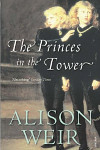
I will say now that I believe Richard III to have instigated the murders of Edward V and his brother. But regardless I was after more debate and another’s decision on the subject, someone with more information than me.
Publisher: Vintage
Pages: 258
Type: Non-Fiction
Age: Adult
ISBN: 978-0-099-52696-4
First Published: 1992
Date Reviewed: 25th May 2010
Rating: 2.5/5
What happened to Edward V and his brother the Duke of York has been the subject of speculation for centuries and their purported death in the late 1400’s material for many debates. Richard III, their uncle, wanted the throne – but did he kill them? He had usurped the crown from Edward already – all he had to do was keep the children locked up. Then was it Henry VII who took the crown from Richard, wanting to make sure the old line wouldn’t try to overturn the ruling? Or were the Princes left in the Tower indefinitely and died of natural causes?
I looked to Weir’s book on the subject because I’d read two of her non-fiction works before, The Six Wives Of Henry VIII and Children Of England and even though she has gained from me the nickname “The Hitherto Woman” for her excessive use of the word, I regard her publications as a staple part of my Tudor studies.
In the foreword Weir announces that she will look at the evidence for and against objectively – I relished these words because a debate was just what I was after, but alas it was not to be. At first glance the book shows promise, Weir has grand designs and will do her best to give all the accounts and evidence. She provides a thorough grounding in the background of the family and plenty of information on how Richard could have come to be so cruel. She is definitely right to have assumptions here, Richard’s childhood was full of violence and hatred and as has often been the case throughout history, a background such as this promotes the perversion of an otherwise innocent mind.
The characters are given a lot of space. We hear plenty on Richard, as discussed, Elizabeth Wydville, the heirs of Elizabeth’s union with Edward IV, most of the related gentry, and those first involved with Henry VII. There is detail enough to know quite well the personalities of each. Weir documents the period from Edward IV’s reign (including his own battles for the crown) to the time the rumours died down during the Tudor dynasty, adding information about the discovery of the bodies and the latest forensic work done in modern times – which was in 1930; since then the permission to study the bones has been denied.
But the historian’s winning streak doesn’t continue. Weir, from the first few pages, indicates that she believes Richard guilty, and the reader would be forgiven for listening to her at the time when she says that she will be objective. But from the moment she launches into the heart of the story, until the end, it’s obvious that she has let bias take over. Her voice is centred on her belief that Richard was guilty and although she looks at the opposing evidence she rarely gives it much thought. To her it’s plain and simple – the opposing evidence is worthless – and all this happens while she’s picking and choosing which rumours suit her story, opting at times to suggest that rumours believed by few are reliable and dismissing ones that many more people listened to.
Weir uses Thomas More’s account more often than any other. This she gives reason for – Thomas More was known to have good connections, eye-witnesses, and was able to be truthful (I haven’t said “was truthful” as in some instances his is the only account of an event so we can only take his word for it) because by the time he was writing people didn’t have to fear revenge for what they said. Note my words, “in the time he was writing”. Yes, More may have had his contacts, but he himself was not around at the time.
Another worrying problem is Weir’s total reliance on More. It’s a case of what More says goes. Weir assumes without a doubt that More would have acquired some of his information from his friend, who lived in a nunnery that was opposite the Tower of London. She says that because the nunnery was so close the occupants would have known what was going on. This assumption is, I’m afraid, cause for mirth, because we cannot say for definite that the nuns would have known anything. Do we today know everything about our neighbours’ lives, every one of us? Not often. The final point I will make regarding More is that Weir says he is true because he was writing for himself with no plans to publish his work. He could well have written in this way, but with Henry VIII, a man of irregular mood, on the throne, and More in such a high position at court, would he have been so careless? A sovereign could dispose of a person at the drop of a hat, at the drop of a sword; More’s privacy wouldn’t have been guaranteed. Of course if the account is true there would be no reason for him to lie because as it is there was no content that the Tudors could harass him over but, and amazingly this is a point Weir makes that contradicts her afore mentioned love – his sources may have been lying.
So while More’s account could be deemed reliable it’s the way in which Weir approaches him with starry eyes that’s cause for contention.
Weir often contradicts herself via quotations. As an example she says on one page that Henry VII and his wife were sharing a bed before marriage because their baby arrived eight months after and seemingly at full term, but then on the very next page, the opposite page no less, she quotes Francis Bacon as saying that the baby was born in the eighth month but was strong and able. This quotation suggests that the baby was premature.
Lastly I will examine the writing style. There are too many instances of jumping back and forth along the chronological scale. Weir will start with one date then go back a few years for a number of paragraphs by the end of which you’ve completely forgotten that this was just a short detour from the main path. As well as this she sometimes neglects to point out exactly which person she’s referring to, for example when one paragraph discusses the actions of two Elizabeths. Would it be Elizabeth Wydville who we begun the paragraph with or Elizabeth of York who we moved on to afterwards – the ending sentence would suggest the latter but it really could be the first.
It is quite apt that this book has gathered reviews erring equally on both sides of the coin. It’s fuelled more debate as well as possibly (if Weir read them) making Weir re-assess her ideas once more. But that is all. The blatant rejection of any opposition is very unprofessional, and I say that as someone who agrees with Weir’s conclusion. As a tertiary source the book is useful for essays and the like, and even otherwise it’s interesting as another person’s research, but it should on no account be taken as the definitive conclusion and should form merely a small part of a study into the Princes. This book is biased and badly written and I would advise readers to seek out another historian’s work, if not instead of this then at least as well as.
Related Books


Celia Rees – Sovay
Posted 8th May 2010
Category: Reviews Genres: 2000s, Historical, Political
1 Comment

Sometimes an author’s light fades miserably. And sometimes it’s their fault entirely.
Publisher: Bloomsbury
Pages: 404
Type: Fiction
Age: Young Adult
ISBN: 978-0-7475-9808-4
First Published: 2008
Date Reviewed: 28th February 2010
Rating: 2/5
Sovay finds that her family are more caught up in the political turmoil than she thought. She assumes the role of highwayman to steal documents that incriminate her family and won’t rest until her father and brother are safe. The country is on the brink of civil war and the male members of the family are high up in the ranks of the revolt for freedom.
The subtitle on the front of the book and the blurb on the back suggest that the story revolves around highway robbery. This is not the case. Sovay robs for love for all of 5 minutes and only robs otherwise a handful of times. The book is far more about politics and struggle than adventure and scandal. It’s also a very slow read; towards the last quarter the story picks up significantly, but it remains easy to put down.
There are many main male characters in this book who enter at different stages of the story and remembering them all can be challenging, but the upshot is that Sovay is strong enough a character herself, even in her weaker moments. In her Rees has created a perfect example of the balance between strength and courage and the expected hesitations and thoughts of a teenage girl. Sovay is forward thinking and would be fine as a character in a present-day novel, while retaining her historic features.
Rees’ previous novel, Pirates!, dealt with the concept of rape and if you’ve read my review of the book you’ll remember that I discussed the fact that it went too far for the teenage target audience. Sovay goes further and it is incomprehensible why the publishers thought it could be categorised as a book for children. Sovay becomes friends with a boy who lives in a brothel. The boy is a prostitute and he and other boys dress up in drag for their older male clients. The idea of prostitution is bad in itself for a children’s novel, but to include such perversion and deprivation of young people is incredibly worrying. Rees doesn’t describe what goes on in detail but she drops big obvious hints of it, and although the characters aren’t happy with their lives they are content enough. There isn’t the big escape or lesson for the brothel owner or clients and the whole subplot is very disturbing. There’s the definite sense that Rees wants to write more freely – so she should try adult literature instead where her stories would be acceptable. If the style of adult literature and forming appropriate characters is difficult then maybe she should realise that children need to be protected from such ideas until they are old enough to understand; and if she can’t perhaps she should stop writing altogether.
The book takes an abrupt turn about two thirds of the way through, first sending Sovay to a scientist’s home and then packing her off to France. Although France is referenced several times it isn’t implied that she’ll go there at any point and the whole thing feels forced, as though Rees wanted to add more adventure to it. This doesn’t work when you’ve set your story in a hideous period of history and the seriousness of events that follow, in this book, swing back and forth between coming across as not so bad and being horrific in nature. Rees should also have spent more time on the ending as there are threads left loose.
For a long while there are a possible two or three men that Sovay could end up with. The final result could prove a shock; it comes out of nowhere but is treated as something you knew all along. Badly handled would be the right phrase here as anyone harbouring notions of Sovay becoming attached to one of the other men will be bitterly disappointed, it’s rather like someone entering an auction just as it finishes and taking the item from the auctioneer’s table.
One thing stands out and is exquisite, so it’s a pity it’s contained within only several pages and that at the end. The revolution in France causes all the main characters to be suspected of being against the changes and Sovay ends up in prison. Rees makes the poignant observation that the revolution itself had failed in it’s promise to make everyone equal, condemning anyone who was so much as in the wrong place at the wrong time without a proper jury or any defence – and that it’s ironic that it was on those journeys of people from court to the guillotine that class and wealth lost importance and everyone sort to give solace to each other. We then experience this court and the prison to which the condemned spend their last night for ourselves. We share in the knowledge that those who first sort equality had images of domination, and rejoice when those who killed thousands for no reason are brought to justice.
Sovay had potential, but it was not realised. The book would be a good basic, and I stress basic, introduction of the French revolution – for adults – but it is not appropriate for the target audience and definitely not recommended for any children who are of a nervous disposition, especially if the parents or guardians are uncomfortable with the idea of a discussion that will compromise their innocence at such an age.
Related Books




Philippa Gregory – The Other Boleyn Girl
Posted 2nd May 2010
Category: Reviews Genres: 2000s, Historical
1 Comment
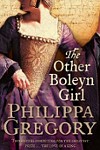
Gregory has always been rather popular but never more so than when her best-loved book, The Other Boleyn Girl, was picked up by Hollywood.
Publisher: Harper Collins
Pages: 529
Type: Fiction
Age: Adult
ISBN: 978-0-006-51400-8
First Published: 2001
Date Reviewed: 19th January 2010
Rating: 1.5/5
Nowadays it seems anyone who’s anyone has read this book or is planning to read it. Its second time in the spotlight triggered a new set of fans. But the problems in the book vastly outweigh the successes and leave one feeling unsatisfied.
Before Anne there was Mary. When Mary is set up at fourteen years old to draw King Henry VIII to her affections she is little more than a naive girl, a pawn in the game her family have designed. The trap works and soon she is having an affair with the king and siring his children, estranged from the husband she was forced to cheat on. But it’s not good enough for the Boleyn family’s goal and she has to yield to her sister who employs a different tactic and gains the king as a husband. Though Mary is seen as just another girl to be used to effect it may be that she has the last laugh.
Within moments of starting the book it’s painfully obvious that Gregory’s work is akin to that of a fan following the demise of their favourite show, and it’s clear that the book was born of dreams pertaining to “what if…” situations. By using Mary as her narrator (the story is told in the first person) Gregory is able to get around events that she doesn’t want to discuss, and has moulded Mary into her own creation as she deems fit. The problems here are that Gregory’s Mary isn’t compelling enough a storyteller and leaves out important details, tending to describe instead her daily routines. The uproar over Anne’s succession is given copious time and Gregory should be commended for giving the reasons for it – but she fails to approach the major factor of the reformation. The only information provided is the Pope’s reluctance to make a decision over the proposed annulment and excommunication of Henry from the Roman Catholic Church. Anyone reading the book without good knowledge of the history of Christianity would assume it was a minor problem. Gregory has her rights as a novelist, but she also has her duties to the history she is using for her own gain. Henry’s pursuing of the church is hardly mentioned and it doesn’t matter who had been chosen to narrate the story – the reformation had such an impact that no one would have failed to mention it, especially not one in such a position as Mary’s.
Katherine of Aragon’s plight comes secondary – as is to be expected in a book focused on the Boleyns – but the way in which Mary constantly thinks back to her after she is dethroned is shameful. In the book Mary does as she is bid by her family, and feels sorry for Katherine. It’s good that she feels bad for having wronged Katherine, it’s a pity she didn’t realise it properly and give it its fair dues sooner.
The feelings of guilt serve in turn as another of the books drawbacks: repetition. Much like Lesley Downer for The Last Concubine, Gregory constantly has her narrator thinking of the very same things she thought about only chapters ago. This happens in reality but as part of a book it has no place. You learn that Mary reminisces over Katherine when her sister performs the same actions as the former queen did but you don’t need it said all the time and especially not in the exact same words.
Gregory’s writing style is adequate at best. This would be fine if she had a good story to tell and it was simply a case of not being good with words. One thing that is interesting however is the lack of spelling and grammatical errors in the book – a rarity today. Pity then that we must attribute that to the publishers rather than Gregory.
Gregory has a right, as a novelist, to change facts (or tempt further discussion by raising issues that have never been proved one way or another), but she goes too far. She clearly sees no redeeming qualities in Anne Boleyn whatsoever and sets out to demonise her. When reading, it is hard not to dislike Anne for her actions but that doesn’t speak for the bigger picture. Historically, Anne was unlikely as poisonous a person as detailed and as such Gregory comes across as having a mighty chip on her shoulder. She is happy when able (by one of her few historical accuracies no less) to condemn Anne to death and put Jane Seymour on the throne. She delights in making George Boleyn incestuous and homosexual and in incest a partner in the creation of a “monster” baby. It’s unnecessary and comes across as a rant against something she had no hand in rather than a good read. Anyone looking to study the period having read this book is wholly unprepared.
So to the book’s positive points – there are only two. Since the book is set mostly at court and has been stripped of most compelling events it drones on and on like the terms and conditions of a poorly produced product. Thus when the story moves to the countryside the sun almost literally shines and the 529 pages of small print seem a lot shorter. It would be even better if Gregory was adept at describing locations but we can let that pass. Unfortunately these moments don’t last long, just as you’re settling yourself down for a more leisurely read Mary is recalled back to court. The second positive point is the end of the book where there is finally some real action and a reason to speed-read.
A tribute to history and the lives of those caught up in a narrow-minded and selfish society this is not. There are so many books out there on Tudor history and even the dull ones are a darn sight better than this.
Related Books

Alison Weir – The Lady Elizabeth
Posted 23rd April 2010
Category: Reviews Genres: 2000s, Historical
1 Comment
Alison Weir is an English historian who has been writing for a couple of decades. Most of her books are focused on the Tudor period of England and the eras just before it. She has done ample research into the life of Lady Jane Grey, Henry VIII’s niece and based her first novel on her. The Lady Elizabeth is her second work of fiction.
Publisher: Arrow Books
Pages: 481
Type: Fiction
Age: Adult
ISBN: 978-0-099-49382-2
First Published: 2008
Date Reviewed: 24th September 2009
Rating: 3/5
The Lady Elizabeth reached the chart list and received a lot of praise from the critics. It was released in hardback a year before the paperback edition hit the shelves.
For the story, Weir has kept to the basic facts of Queen Elizabeth’s youth but padded it out and exaggerated some parts where little is known. She’s also taken the rather bold step of having Elizabeth pregnant and miscarry, using the information about Elizabeth’s time at Chelsea with Catherine Parr and Thomas Seymour as her springboard. As she points out herself in the notes at the back of the book, she is being bold in her suggestion but there is a possibility that such a thing happened. Using the idea has also lent itself to making the book more fiction than fact.
Weir is a brilliant historian and her factual books beautifully written. Her biographies read like novels, omitting footnotes and discussing all sources used in the introduction. Thus her books are not bogged down in references like most authors and are a good choice for people who struggle with multitudes of dates and places. The problem here is that she has taken too much of her factual writing style to use in The Lady Elizabeth. It’s inappropriate and causes the book to be rather choppy. In addition Weir demonstrates a difficultly in handling this new genre as her afore excellence in articulation has been lost, much like Elizabeth’s proclaimed innocence. A reoccurring flaw in Weir’s books is her obvious love of the word “hitherto” which she uses as much as possible. It’s seen in this book too, and just as much as in her previous publications. Of similar note is Weir’s lack of descriptive language, the needed element for full immersion.
The story is fascinating but the telling is poor. On and on it goes back and forth which while an echo of what really happened does not make for good writing. Weir also repeats herself as if with no confidence of her reader’s memory. What should rightly be a thrilling tale full of frustration turns out to be a bore.
This is a good book for history-lovers looking to glean more information on Elizabeth but other than that I’d advise looking elsewhere for historical fiction on Anne Boleyn’s daughter.
Related Books


Markus Zusak – The Book Thief
Posted 20th April 2010
Category: Reviews Genres: 2000s, Historical, Political
1 Comment

We are taught that Nazi Germany was a hateful place and full of hateful people, but in reality the citizens were just as badly off.
Publisher: Black Swan (Random House)
Pages: 542
Type: Fiction
Age: Adult
ISBN: 978-0-552-77389
First Published: 2005
Date Reviewed: 19th April 2010
Rating: 5/5
I was introduced to The Book Thief by an old friend. It stayed on my to-be-read pile for some time while I got over the demise of the friendship, in actual fact I almost packed it away, unread. That would have been a mistake.
The story is narrated by Death who explains the basic end before launching into the beginnings. Liesel, a nine-year-old girl, is sent to live with foster parents, presumably because her family is on the wrong side of a hijacked law (the blurb says concentration camp but the topic is never explained in detail). With them she lives for a time in relative happiness, finding friendship and learning to read, the latter being the cause for her initial interest in stealing. But this is Nazi Germany and her family become involved in things they shouldn’t; and there is always the threat of the enemy.
It’s difficult to explain the plot of the book without giving everything away. Part of this difficulty stems from Zusak’s writing – it’s absolutely exceptional. It’s not that he’s just good with words, he uses them like a talented artist sweeps paint across canvas – you never once sense that he might have had trouble completing a sentence. This artist and paint metaphor is apt really because one of the characters is a decorator. Zusak doesn’t use “big” words, he never thrills you with academia, rather he moulds words and creates metaphors the like of which I, and I would guess you also, have never come across. A poet is someone who is clever with words but Zusak transcends that. It’s almost as though he is made of words and his physical body is but a mask to pacify humans. Consider the following quotations:
Pimples were gathered in peer groups on his face.
His thoughts criss-crossed the table.
His uniform was shiny brown. The iron was practically still on it.
Zusak’s style is one of colloquial phrases and bullet points. He surprises you in the way that he narrates often because it can be as if he doesn’t understand literary English, but what you realise is that he is saying there’s more to writing than being grammatically correct.
There are many characters in the book, and while they may not be detailed quite in the way you expect in a good novel, the descriptions are enough. Zusak ensures you feel a bond with them – it’s easy to imagine yourself there, to imagine the locations, and it’s the kind of intimacy that would make you want to stroll straight up to one of the characters and say “hi” as if you’ve known them forever.
The backdrop of the book is the Second World War but while it is the cause of a lot of plot elements the story is never weighed down by it like you might expect. As mentioned at the beginning of the review the people of Germany were in much the same situation as the rest of the world, innocent people, but this fact is not given as much airplay. Zusak puts these people in the spotlight, he provides the forgotten information and he ensures that if you read this before writing an exam your account will be broader than it would be otherwise. A book like this will scare history teachers, not because they don’t want their pupils to know the other side of the story in detail, but because this book could potentially cause people to want to go off on a tangent and explore ideas the examiners haven’t asked for. Make no mistake, this book will cause you to want to discuss.
Perhaps Zusak has thought about this issue and written accordingly, because he makes his characters affable to the outsider. Most people in The Book Thief have no animosity towards Jews and do not support the war at all. Again, there’s that bond. Zusak hasn’t thrown you in at the deep end or affirmed stereotypes and even someone who has never allowed themselves to so much as consider the other side of the story may be moved by it. Zusak is very clear in this – Hitler was the enemy, not Germany. In relation to this he makes the poignant supposition of the Jews. A Jew goes into hiding, but when he comes out he’s still German. He is and was German, that he is Jewish could never change his nationality.
You may look at the size of this book, notice the little space between lines in the text and put it back on the shelf. Don’t. One of the book’s biggest appeals is the spin off from the writing style: there are rarely long chunks of text. Most chapters are short – a few pages long – and there are many gaps where small pieces of information are supplied in the afore-mentioned bullet points. Zusak has made his story a work of art. Instead of writing everything in the usual way he’s enlisted an illustrator to draw pages of his imaginary books and bolded the important information. The Book Thief is more of an experience than a novel and although it may be off-putting at first (yes, I admit this in regards to myself) you soon get used to it.
When you think about it, a book like this is a hefty task for any author and a daunting task for any reader. In presenting it, Zusak strove to deliver a story that needed to be delivered in a way he knew would reach the hearts of the reader.
You may have bought it, borrowed it, or even stolen it. Read it, it’s what it’s there for and you don’t want to miss out.
Related Books