

Eloisa James – An Affair Before Christmas
Posted 11th December 2013
Category: Reviews Genres: 2000s, Comedy, Domestic, Historical, Romance, Social
1 Comment

An affair to remember, because it is between a husband and his wife.
Publisher: Avon (HarperCollins)
Pages: 386
Type: Fiction
Age: Adult
ISBN: 978-0-061-24554-1
First Published: 2007
Date Reviewed: 20th November 2013
Rating: 4/5
Poppy and the Duke of Fletcher have been married for four years. They started their wedded life in love, and they may still be in love, but the marriage has gone sour. Does Poppy love him? – Fletcher does not know. Certainly she hates having to be intimate with him. With Poppy’s mother ruling her daughter’s head, and a society that expects a man to be unfaithful, it’s going to be a difficult journey if there is to be no divorce.
An Affair Before Christmas is the second book in James’s hilarious duchess series that sees the continuation of the many couples’ lives in the background whilst focusing on the Duke and Duchess of Fletcher.
James’s characters are, once again, magnificent. It is true that these Georgian nobles might indeed scandalise even the most scandalous of real-life Georgians, but it is rather obvious from the start that James’s work isn’t your standard historical romance. The ladies and gentlemen do everything you ‘expect’ them to do, and then go and behave particularly ahead of their time in a way that isn’t quite unbelievable, but is certainly a whole lot more entertaining than reality. Once in a while the entire plot will get a little too silly, but again, that is half the fun. Make no mistake – the covers may suggest a lot of sex and nudity, and that’s really quite correct, but it is far from the main takeaway of the book.
Whereas Roberta of Desperate Duchesses had her own mind but was rather naïve, Poppy’s naivety is similar yet vastly different. In Poppy there is a budding scientist just waiting to be allowed into university, which of course will never happen; a woman who if she can just separate her mother’s thoughts from her own, will be quite the popular person. She may be silly, but she’s endearing all the same.
The Duke of Fletcher isn’t far behind, indeed he is only slightly less well drawn than Poppy simply because as a man in a male-led society he already has an advantage. The cautious reader will love Fletch, the handsome duke who could have anyone he chooses but is not interested in being unfaithful, and the way his success in his career is aided by Poppy, even though she actually has little knowledge, is particularly appealing for the modern reader. Make no mistake – James writes for the modern reader, no matter how obvious that may sound.
The writing is great, and befitting of the time, if not quite historical. There are a few errors, modern American terms that could be categorised as certain English dialects but not ones that are relevant to the characters, but they are used more often in the narration rather than in dialogue.
The themes are both historical and eternal – it is less likely today that a woman would know nothing of the pleasures to be had during sex, but it is all too common for communication to break down in a marriage. Poppy’s mother is both the Georgian matriarch would believes a woman should obey her husband, and an example of the eternal stereotype of the interfering mother-in-law. All these clauses come together to form the bulk of the content.
However the themes do take their toll on the narrative. The romance in this book, the active love between the characters (as opposed to the feelings themselves), does not start until the book is nearing its end. The miscommunication is there throughout, and Poppy’s first (bad) ideas of how to deal with her husband dominate the book, leaving very little time for the couple once they come to realise what went wrong. Of course it is lovely (and predictable, which is why this reviewer isn’t worried about spoilers) that the book ends with the happy couple, but when so much time later on is taken up by the secondary characters it is hard not to wonder why the book was marketed as Poppy and Fletch’s story. This ultimately means that sex ends up taking what’s left of that short space of time which, while expected, does mean the resolution is even shorter. That said, given the reason for the estrangement, perhaps it makes sense – it’s just that it doesn’t particularly make for a great story structure.
Beyond the mother’s rule, which, yes, does seem strange given the four years, there is as aspect of Poppy’s lack of desire that may irritate the reader, and the pun here is most definitely intended – Poppy suffers an allergy that renders a lot of her lack silly. But it does depend on the reader. If you can believe the miscommunication would extend to Poppy’s silence over it you may be okay, likewise if you view James’s decision as one concerned with comedic value. Otherwise it may just render the book too over the top, the pun here not intended, to continue.
It should be noted that whilst Christmas is specified on the cover, the book isn’t confined to the holiday season. While it may seem better when read beside a tree, there is enough of the story based in summer to make it an option at any time of year. The book could be read as a standalone, but the reader will appreciate it much more if it’s read in sequence.
An Affair Before Christmas isn’t quite as strong as the first book, but it is well worth the read. The characterisation is brilliant, the comedy is laugh-out-loud, and it’s good to have the same background setting written about from another angle. The secondary stories mean that you’re looking forward to the next book very early on, which in this case isn’t a bad thing.
Related Books


Vincent Lam – The Headmaster’s Wager
Posted 29th November 2013
Category: Reviews Genres: 2010s, Domestic, Historical, Political, Social
1 Comment

Ignorance is bliss until it isn’t.
Publisher: Hogarth (Random House)
Pages: 421
Type: Fiction
Age: Adult
ISBN: 978-0-307-98648-1
First Published: 14th August 2012
Date Reviewed: 26th November 2013
Rating: 4/5
It’s the 1960s and Percival Chen, a Chinaman, is living in Vietnam. He’s the founder of a successful language school but dislikes his adoptive country, remaining loyal to his homeland. As Vietnam turns to war and his son, Dai Jai’s, obedience to him leads to trouble, Percival sends his only child back to China where he will surely flourish. He is Chinese, he will be better off there. But Percival is ignorant of Mao’s Communism, of the darker side of debts as he continues to gamble, of how his continual bribes are seen by others, and as war and a changing Vietnam move ever closer his luck will not stay with him forever.
The Headmaster’s Wager is a fine book that shows off the goodness of tradition, the trouble of following tradition when it is no longer of use, and the awful war of Vietnam. Both frustrating and important, it illustrates how such a clash can be devastating.
First and foremost it would be prudent to discuss the frustrating aspect – Percival. Percival isn’t an anti-hero but he is certainly a character who is impossible to like. He is ignorant by choice, does not listen or care for reason, is impossibly dedicated to money beyond all else, and never really learns his lesson. That is something you should know before you begin the book as Percival is the main character and even the most important other characters are secondary. Percival gets away with a lot and ruins many lives, and he doesn’t even gain anything from it. Whilst the ending will not be explained here, it is unlikely to satisfy many people’s hopes for the character, especially given the meeting between Percival and violent rebel leaders.
If you can get past Percival’s lack of practising what he preaches, an epic historical account awaits you. Lam’s knowledge is evident as is his research and his story is both stunning for its detail and awful for its horror – and, of course, more horrific given his choice to spotlight such a careless person. The book spans from just as the Vietnam war was beginning up to its end as the north took over and renamed Saigon to Ho Chi Minh, so whilst a lot of time is understandably spent delving into Percival’s red packets and bedding women, there is still a lot of historical fact to be had. And Lam shows the plight of women – the female characters in this book do their best to teach Percival of the politics but at the end of the day they are dependent on the will of men to take them to safety.
This will is displayed openly for all to see. Escaping was easy for the Americans as they had interested parties back home, but when it came to the men’s Vietnamese lovers and mixed-race children, many promises were made but few kept. The poor are constantly studied – Lam includes an abominable scene in which starving children are put to death – and whilst China is not the focus for anyone but Percival and Dai Jai’s other relatives, Lam comments on the sad and ironic plight of the rich as Mao took over. Of the fate awaiting mixed-race children, the author is blunt.
Naturally the book includes a study, though minor, of the affect on the east of the conquering west. Percival’s English language school presents the biggest opportunity here, and its place in the story also highlights the way the staunchly patriotic Pervcival became a suspect due to his lack of cooperation when it was decided that every school should teach Vietnamese. This book is about Vietnam, but the perspective is that of the foreigner from start to finish. The Vietnamese get a small look in, but Lam’s study is one of the affects of the war on foreigners – Percival, the Americans, the mixed-race. Thus Lam gives a voice to sections of communities that are often forgotten or less noticed by reports, and by studying foreigners in Vietnam he is in many ways studying foreigners in other times and wars too.
The book is literary with few non-English phrases used. Those that are used are added naturally and the reader won’t be left wondering about meanings. The lack of languages other than English is far from convenient – it fits the plot and characters. Percival prefers English over Vietnamese, only knows so much of the second language, and everyone converses with what he would consider the superior English language. Then there is the fact that foreigners of various countries were going to understand each other better in English. In terms of the writing style it is easy to follow, including times where the narrative is heavy, which makes it a good choice for those wanting history without feeling daunted by the style of prose that often accompanies the subject. Lam’s medical background shows through a little too strongly at times – needles are injected into the ‘intravenous’ in every instance meaning that the author suddenly makes too much of an appearance in the book – and there are a few very modern western phrases that don’t suit the setting, but otherwise it is very good.
The Headmaster’s Wager is a fine book, it is simply the person of Percival that makes it seem to be not as good as it is, because whilst not everyone learns from their mistakes, Percival’s result in events that are so horrific it is hard not to feel that he got the equivalent of a mother’s telling off followed by a chocolate bar for pretending to be sorry. However, given that his inaction allows Lam to further explore the atrocities of the war, maybe thinking of the character is irrelevant.
I received this book for review from Random House.
Related Books

Meike Ziervogel – Magda
Posted 23rd October 2013
Category: Reviews Genres: 2010s, Angst, Domestic, Historical, Political
5 Comments
Behind the decision.
Publisher: Salt
Pages: 113
Type: Fiction
Age: Adult
ISBN: 978-1-907-77340-2
First Published: 1st March 2013
Date Reviewed: 22nd October 2013
Rating: 5/5
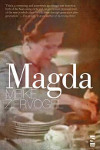
Ziervogel provides a fictionalised account of the last days of Magda Goebbels – wife of Joseph – and her family, giving a voice to those history left out and illustrating the sort of thoughts that could have led to the action Magda took.
Magda is a short and exceptional book that offers a bridge to the historical gap and a poignant look into the feelings of the Goebbels children. Blending well fiction and fact, Ziervogel’s book is an emotional ride with a swiftness that makes the story all the more difficult to read.
This swiftness is an interesting one and bares detailing. Whilst this is Ziervogel’s first book, her background as a publisher has brought a vast amount of specialised experience into the creation of it. Magda is short, but it is far from lacking. Indeed the book never once looses its focus; there is no superfluous content whatsoever. Of course the language can take a few words, as literary fiction is want to do, but the structure, plotting, and the execution (pardon the use of this word) of the story is top notch. What Ziervogel has done is remove everything but the one event she wishes to talk about, exploring other occasions only when an explanation of the characters is required. It is true that this means prior knowledge of Magda and her final days is needed for the reader to fully understand, but it is only the basics that are needed. The lack of historical information we have besides the fact of the end makes this a book that can be read with little context.
Ziervogel has given the children of the Goebbels a voice. She has altered the ages a little, in particular of the eldest child, Helga, but the reasoning for this is obvious. In making Helga older, Ziervogel has afforded the maturity needed of a minor to understand enough of what is going on to have an impact on the reader – without enough understanding for Helga to escape it. Of course the children did not escape, so a fictional escape would not do – and it is easy enough to believe that even at her true twelve years of age, Helga may have had some understanding regardless. Much of the book is told through Helga’s diary, and this brings us to the next point.
Ziervogel’s characterisation is excellent. The characters feel as true as they were and as much as we might say that the actual history would cause this story to be plot-driven, Ziervogel has made a case for the people themselves. Inevitably this all means that rather than thinking about Hitler, the Nazis, and their hatred, the reader is given an insight similar to that provoked by Markus Zusak’s The Book Thief – although Magda is about the very leaders of Germany rather than Zusak’s innocent citizens, Ziervogel reminds you that there were still true innocents involved even high up. Was Magda innocent? Perhaps. Perhaps not. Statements are made about her drive for wealthy happiness. But the children were far too young to be seen as anything other than innocent, unknowing victims of their parents’ choices. This is what the use of a diary for Helga creates; Ziervogel is not suggesting the reader should have a lot of sympathy for Magda – it is the children she weaves the emotions around.
However this acknowledgement of Magda is of course important. It is easy enough to see why Magda did what she did on a literal level, but otherwise we know nothing. Besides Helga’s diary, there are sections told by Magda’s mother to relate her childhood, and her childhood is also provided as a short of flashback by Magda herself. This is where the book is necessarily less concise.
Ziervogel doesn’t have answers – no one does. There were few witnesses and the event revolved around secrecy. But what the author does have is fair speculation for what might have gone on in the heads of those involved, and a feeling that we should consider the others who did not have a choice.
Magda is by its very nature a difficult read, but, as much as one can say so considering the subject, it is a stunning one.
Related Books




Debbie Dee – Tiy And The Prince Of Egypt
Posted 18th October 2013
Category: Reviews Genres: 2010s, Adventure, Domestic, Historical, Political, Romance, Social
2 Comments

A fine story to introduce readers to ancient Egypt.
Publisher: (self-published)
Pages: 275
Type: Fiction
Age: Teen/YA
ISBN: 978-1-49230-609-2
First Published: 27th September 2013
Date Reviewed: 16th October 2013
Rating: 4/5
Twelve-year-old Tiy went to the bank of the Nile with her parents to watch the Royal barge as it sailed past, but when her curiosity wasn’t sated by the far off sight, she ran further downriver for a better glimpse. Hot on her tail was a sandstorm. As the prince and his friends leave the barge to play, Tiy has a choice to make – use her knowledge to save them and potentially harm herself, or leave them to their fate. She chooses to save them and her act of selflessness will be rewarded in ways she would never have imagined.
Tiy And The Prince Of Egypt is a story to fill in a gap history forgot. In writing her tale, Dee has relied on the history she was able to find (this is suggested in the author note) and constructed a story for young readers from what was left out. The target audience means that the book is by nature quite simple, lacking in detail, and often convenient.
And that is the way it should be. For the older reader, who must be referred to as this reviewer is one, the book may prove an incredibly easy read, but it would be impossible not to say that Dee has written something that is likely to open up the world of ancient history to her young audience. From the features of the story, one couldn’t recommend this to young children unless they were advanced for their age, but for the slightly older reader the book should prove appealing.
Just as she did in The Last Witch, Dee doesn’t coddle her reader. The violence of history, such as punishment for treason, is included as it surely would have been in the day – discussed as simply as if it were a question of who wanted coffee, and carried out without further thought.
It is this, along with the romance in the book, that sets it up as an older child’s read. There is no sex in the book, but there are scenes that might invite questions. The romance is drawn out and full of all the hearts and flowers. The theme of love envelopes the entire story; the characters are seventeen by the end of the tale.
There is not all that much action in the book, a lot of the time is spent on Tiy’s thoughts and day to day life with Amenhotep, but what action there is is thrilling. And whilst Tiy can be foolish and unthinking, she is generally a strong person.
What brings the book down a few notches are the errors and uses of modern day language. Perhaps many readers will not notice the language, but the keen historian will. The errors are of course a bigger draw back here than they might have been otherwise due to the target audience.
Besides the errors, the book is a fine story that will delight any reader looking for boys, adventure, royal status and to be a little awed. It is as much a fantasy as a regular story as much of what happens would never happen in real life, but reality wouldn’t be as appealing.
Tiy And The Prince Of Egypt blends a good dose of history with fun fiction and the sort of fantasy you look for.
I received this book for review from Sage’s Blog Tours.
Related Books


Bee Ridgway – The River Of No Return
Posted 7th October 2013
Category: Reviews Genres: 2010s, Comedy, Fantasy, Historical, Romance, Social
5 Comments
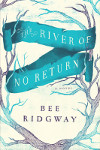
Forward to the past. (Reverse that and you’ll see the inspiration.)
Publisher: Michael Joseph (Penguin)
Pages: 546
Type: Fiction
Age: Adult
ISBN: 978-0-718-176-983
First Published: 28th March 2013
Date Reviewed: 26th September 2013
Rating: 4/5
As Nick was about to die, attacked in battle in the 1800s, he disappeared. He reappeared, alive, in the 21st Century, found by a group calling themselves the Guild. The Guild promises Nick $2million a year and sends him to South America for training where there are fellow surprised time travellers from every decade. The Guild teaches their members how to live in 2013 and then sends them off to use their education. That was fine with Nick, millions of dollars and a free reign sounded – and was – great for ten years, but now the Guild want him to return to headquarters and forget every rule they taught him. The Guild’s enemies are getting stronger, and Nick has a part to play in stopping them.
The River Of No Return is an imaginative and rather funny book that deals with a particular sort of time travel, the sort where you’re not going to meet different versions of yourself and where history isn’t to be changed unless the world is about to end.
The story is contained to a few people and only a couple of different times, meaning that the narration is pretty straight forward. This may mean disappointment for some readers, as other times are referred to and it’s safe to say where time travel is concerned the future is a magnet to our interests, but there appears to be a sequel in the works. In fact it’s worth commenting on the ending of the book. Ridgway creates a crafty ending the likes of which means the story could definitely do with a sequel, but if none were written she’s left you enough information for you to construct a conclusion.
She reminded him of modern women. The way she stood so confidently, the way she met his eye like an equal, the way she spoke unblushingly of the sex she was not having with her cousin.
It takes a good while for the humour to show itself. Indeed the cover and first several chapters do not in any way suggest that the book will be humorous. When it enters it is laugh out loud and rather clever, although there are occasions where it could be considered too much.
So to the affects of time travel on the characters. Nick, the nobleman, fits right into life in the 21st century. So changed is he, so happy with his new era, that his return inevitably results in plenty of thoughts about women, equality, voting, and so forth. And Ridgway creates the ideal romantic partner for him. Yes, it may seem convenient and unrealistic that Julia, the 1800 woman who may or may not be a time-manipulator (unknowingly), is ahead of her era, but Ridgway sets the foundation of the relationship in the days before Nick’s jump, so that it is more a simple case of two like-minded people getting together. Nick may not have been as modern in his youth as he obviously is in adulthood, but the flashbacks portray enough ambivalence to his situation ‘back then’ and enough remembrance of the younger Julia to suggest that, traveller or not, the pair would have got together.
“Demand you back? You’re a full-grown woman. You can do as you choose…” Even before the words were out of his mouth, Nick realized that the sentence he had just spoken only made sense after two centuries of struggle that had yet to happen.
The affects of the 21st century form a lot of the comedy. Like other ‘jumpers’, Nick is trained to be a modern man, with all the knowledge of beyond 1800s history and pop culture that that entails. In preparation to jump back again, to the 1800s, he has to re-train himself in the art of being a nobleman. Modern phrases and cultural references inevitably slip out whilst back in the past, and it happens a lot, but Ridgway’s particular usage of the theme stops it becoming annoying. As said above, the humour as a whole can become too much, but this takes a while to happen if indeed it does at all for the individual reader.
However it must be said that Nick does forget a crucial part of his 21st century life – sex in 2013 involves a foil packet, sex in 1815 involves no discussion of Nick’s new knowledge and it is left out of the book completely. Although this is only one instance of forgetfulness, the potential impact of such spontaneity, which Nick would ‘now’ know about, ought to have been addressed. His partner may be a virgin, but Nick isn’t and his nature suggests he would consider STDs. And as Ridgway has created no space for a pregnancy in her novel, regardless of the fact that a pregnancy is neither here nor there unless the author includes one, Nick would have surely thought of it, and likely his 1800s partner, too.
Julia has courage and guts, but she’s not superwoman. She is the realistic, if such a word can be used, result of a woman from a good, happy background, with a fantastical talent she cannot understand.
The book spends time on the concept and storytelling device of good versus evil, but Ridgway twists it to suit the people she has created. Unless things change drastically in any sequels, this isn’t going to be, and isn’t here, your typical science fiction save-the-world-from-the-bad-guys series. And it’s undeniably refreshing.
The book dips a bit towards the end, becoming, if not predictable, rather convenient. The reader may work the secrets out beforehand, but either way it does have the possibility of changing your thoughts as to whether or not you’d like to read further books about this world. It creates an expectation of an epic continuation but may seem too drastic a change, as such, to some readers. In many ways the sudden unveiling of answers and new plot points is a pity.
But overall The River Of No Return will delight. It will bring embarrassment to anyone who worries about laughing over a book in public, which should be considered a positive factor, and sate the appetites of those who love time travel novels but are a little worn. The River Of No Return is long, but then so is history. And if the title has you in mind of Marilyn Monroe, never fear – that is exactly what happened to Ridgway, too.
Related Books