

Debbie Dee – The Underground Witch
Posted 12th June 2013
Category: Reviews Genres: 2010s, Angst, Fantasy, Romance
4 Comments

So that others may live…
Publisher: (self-published)
Pages: 338
Type: Fiction
Age: Young Adult
ISBN: 978-0-615-78130-3
First Published: 2nd May 2013
Date Reviewed: 11th June 2013
Rating: 4.5/5
Incenaga witch, Emmeline, may have escaped Mahlon and Weldon and found happiness with the servant who turned out to be a prince, but as she always knew, that happiness would not last forever. As she and Erick prepare for their wedding another person seeks to claim her power…
The Underground Witch is the follow up to Dee’s début, The Last Witch, and whilst there are still issues with the text the book is leaps and bounds ahead of the first.
The book is plot-driven (at least in the main – Emmeline’s development is crucial). A fast pace runs throughout it and the detailing is good. Red herrings are used less this time around, but the somewhat predictable plot twists are not disappointing. Rather they might surprise you initially before you realise that in using them Dee has created more scope for future books.
The storyline, whilst inevitably sporting a ‘fight against evil’ thread as its base, is rather different otherwise to the last. Whereas there was a strong focus on romance before, here the romance is in the background, the love fuels Emmeline’s decisions but is less important than the action. And despite the fact that the chemistry is strong, Dee’s change in focus is one of the most successful aspects of this book, because she doesn’t spend any time letting the characters linger in angst longer than is necessary for the plot, which means that the story keeps moving.
This leads us swiftly on to Emmeline herself. The character was likeable before, but now she is a contender for strongest female character this year. Not once (again, unless absolutely necessary) does Emmeline give up her opinions, her will to fight, her sense of what should happen. She repeatedly stands tall in the face of evil adversity, but never so much as to overturn common sense. (This is of course partly because her power undermines anything her adversaries throw at her.) Emmeline is not simply a breath of fresh air, she is the entire gust of wind. When it’s necessary to give in she does so without losing hope, and never lets anything break her spirit for more than a few moments.
Erick is not as strong but then it aids the plot and the development of the relationship for him to see only what’s on the surface for a while. And Dee doesn’t draw it out for too long, practically piling the sense and other reasoning on him as soon as he comes to his nonsensical conclusions. The other characters are developed enough to make them interesting; given that the plot is the main event, it does not matter too much that they are not as detailed as Emmeline and Erick.
Whereas The Last Witch darted back and forth in time with little time spent where it should have been spent, The Underground Witch takes the literary equivalent of the scenic route, slowing down, detailing everything and generally seeking to create that which is now commonly termed ‘epic’. It’s true that the ending is quick, but given that this is the second book in a trilogy that was to be expected somewhat, especially given the obvious direction the third book will take (as intimated by the last paragraph).
Like before, the book is very violent. Emmeline is struck by her captor repeatedly and there are many murders. This is a series where the heroine is strong but ultimately lives in a world where men have the upper hand.
What unfortunately brings the book down is something that marked the last. There are many editorial errors – spelling, grammar, and there are times when the wrong punctuation is used (such as questions ending with full stops instead of question marks). If you enjoy the story enough they may not bother you too much, as this is a book where the plot is good enough to aid such a dismissal, but they are noticeable all the same. That said, there is good news in regards to the dialogue – the book lacks the proliferation of modern day expressions that mired the last, baring only a small number and all but one or two confined to description.
The Underground Witch may not be perfect but it is an incredible step up. Dee has advanced a great deal in the short time and it is a wonderful thing to witness. The book promises a strong end to the series and is a novel that one can recommend without hesitation.
Help Erick. Discover the princess. A very strong heroine awaits you.
I received this book for review from Sage’s Blog Tours.
Related Books

Jeanne Ray – Calling Invisible Women
Posted 13th May 2013
Category: Reviews Genres: 2010s, Comedy, Domestic, Fantasy, Political, Social
6 Comments
No longer on the shelf.
Publisher: Broadway (Random House)
Pages: 246
Type: Fiction
Age: Adult
ISBN: 978-0-307-39506-1
First Published: 2012
Date Reviewed: 28th April 2013
Rating: 2/5
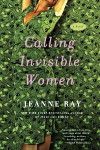
At fifty-four years old, Clover feels invisible as a woman. One day she wakes up and it’s no longer a feeling – she is literally invisible. Going unnoticed by her family, she discovers a group of women like her and starts attending meetings. The other women have worked out what’s gone wrong, but is there a way to fix it?
Calling Invisible Women is a book that starts brilliantly and has a fantastic premise, but rapidly falls to what’s most comfortable in a way that provides a negative impact. The premise, or at least the supposed premise, of a middle-aged woman feeling invisible, is fresh. The possible metaphor of literal invisibility standing in for the invisibility of middle-aged women in a society that values youth and beauty, is promising and had a lot of potential, but sadly Ray does not take the opportunity presented.
What is good in Calling Invisible Women is the laugh-out-loud humour of the first half, the fine writing, and of course the social issues referred to. But that is where it stops. In Clover there is a character who feels invisible but has done everything that will insure she’ll remain so; a woman who simply does not fit her time period. If this book had been released in the mid-twentieth century, understanding Clover would be easier.
A typical example is Clover’s relationship with her daughter. Ray’s descriptions and the dialogue show Evie to be a self-absorbed person who cares not a jot for others unless she needs something. When Evie needs clothes, Clover describes how she’ll be giving her daughter, who is 20 and hasn’t realised her mother is invisible, the money for these clothes. If Clover spoke of how she should stop and how she lets her family walk all over her, it would be okay, but she doesn’t. There is also a situation where Clover and Gilda stop their grown-up sons making their own life choices, and when Clover tells her women’s group what happened “The group let out a moan, the collective heartbreak of all suburban mothers.” Given the subject at hand, Ray affectively wipes out a great number of potential readers from her audience as well as providing an out-dated social commentary on something that is widely considered an individual’s choice.
After the initial set-up, wherein one could suppose the women have become invisible because of society and the way they themselves feel, Ray places the actual reason outside of the women’s jurisdiction in order to conduct a commentary of another subject. It means that the strength of the premise is destroyed, even if the commentary itself is an interesting one. This happens later also, in a minor way, by Clover’s changing thoughts about her family. This is a family who fails to notice that their mother and wife has become invisible, despite the fact that Clover continues a sexual relationship with her husband and affectively flies around in clothes, headless. There is also the fact that Clover’s issues really needed to be at the forefront.
For its premise this book needed strength and empowerment. The ending is little more than a summary and the action happens too late in the day. Calling Invisible Women could have been incredible, a friend to women entering middle-age and a lesson for those who are younger or who simply forget such women. Unfortunately, it is not and whilst it may be one thing to have an un-likeable character, it is another to have one who is nonsensical for no given reason.
I received this book for review from Crown Publishers.
Related Books


Anna Belfrage – Like Chaff In The Wind
Posted 27th March 2013
Category: Reviews Genres: 2010s, Domestic, Fantasy, Historical, Political, Romance, Social
4 Comments
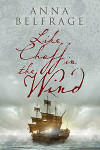
Over the sea, once from the sky.
Publisher: (self-published)
Pages: 367
Type: Fiction
Age: Adult
ISBN: 978-1-78088-470-7
First Published: 17th December 2012
Date Reviewed: 26th March 2013
Rating: 3.5/5
So Alex chose to remain with her 1600s husband. But the tensions between Matthew and his brother Luke have not weakened – Matthew finds himself abducted and aboard a ship bound for the new world. As a slave with no rights it will be up to Alex to save him; and of course amongst this there is always the future, the time of Alex’s birth, and those she left there.
Like Chaff In The Wind is the second book in the Graham series, and, it must be said, a strong step up from the previous book. Belfrage has expanded on her topic, filling it with events and complexities that make it more gripping than A Rip In The Veil, and whilst there are still issues there’s the suggestion that any further books will continue to build on these new strengths.
One of the biggest reasons this novel succeeds is Mrs Gordon, who provides a nice balance to the main two, being less impulsive, a winner of hearts for good reason, and realistic. Indeed the character development in this book is much better overall; although Alex and Matthew are of course the same people, the reader gets a lot more information about them. It is thus a lot easier to appreciate them.
Where A Rip In The Veil spent little time in the 21st century, Like Chaff In The Wind hands the period a good portion of space. Belfrage answers questions and allows the ‘younger’ family to become important in their own right. And just when you think she might let it peter out again she dives straight back into the fantasy to produce a plot point that is welcome, fitting, and appealing. Speaking of time, more characters get to hear of Alex’s background, which inevitably makes matters more interesting and fun.
This writing, too, is better, however here we come to the negative aspects. The book suffers from many of the problems the previous book did. The characters still end questions with “no?”, when it doesn’t fit their overall usage of English, and there is a vast amount of editing and grammatical errors that detract from the story. There is also a lack of spacing between some scenes, meaning that you may need to pause for a moment so that the sudden jump in situations doesn’t feel so wrong (because with adequate spacing it wouldn’t, normally).
The plot is strong on the whole, but it does follow the basic pattern of violence, argument, sex. Again there is a lot of violence and a lot of sex, and again one must try to suspend beliefs in the way this 21st century British woman acts in a society of male domination. This copious violence and sex take precedent; the reader will have to decide whether the family feud, considering the years covered in the book, isn’t going on a bit too long given the back and forth of the vengeance.
But overall, Like Chaff In The Wind is a major progression. The characters are memorable, the time travel is exciting, and the good use of history is continued. There are problems but its hard to say that the book isn’t enjoyable. If the reader deems it possible to start with the second book that is perhaps recommended, but either way you might find here a story to love.
I received this book for review from the author for Historical Fiction Virtual Author Tours.
Related Books
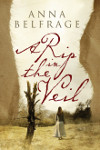
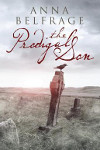
Anna Belfrage – A Rip In The Veil
Posted 22nd March 2013
Category: Reviews Genres: 2010s, Domestic, Fantasy, Historical, Political, Romance, Social
8 Comments
Don’t forget your toothbrush.
Publisher: (self-published)
Pages: 370
Type: Fiction
Age: Adult
ISBN: 978-1-780-88242-0
First Published: 1st August 2012
Date Reviewed: 20th March 2013
Rating: 3/5
Alex was pulled back in time, and all she was doing was heading to a presentation. Landing in the countryside, the 1600s version of where she was when her car stopped, she meets Matthew. Matthew is on the run from jail and agrees to help Alex, intrigued by her looks and story. Alex has family in the 21st Century, but there’s something about Matthew, and soon, despite the hardships that await her in Stuart Scotland, she might start to wonder whether the idea of returning is the opposite of what she wants.
A Rip In The Veil is a time travel novel with a twist. Here we have a woman who has fallen back in time to land in the Scottish Commonwealth, meeting a man who is on the run, and later trying to discover what happened to her mother.
Belfrage has done a good job of using her characters and plot to detail the time periods and their differences. Where others might info-dump she has Alex tell Matthew about what will happen in his own lifetime in order to help him understand what is happening. Belfrage has created a character that knows enough of history that means she doesn’t freak out when events occur – she does worry, because anyone would in the situations – but she has the knowledge and modern methods of, for example, fighting, to last the day.
The issue is that the characters aren’t developed enough. They are stereotypical and it would be difficult to describe them well if you were asked by an interested party. Alex is a career woman, has a child she didn’t want, knows some history, and has a multi-cultural background, but beyond that there is little to say. And the case with Matthew is similar.
This would actually be okay if the plot was not full of holes – because it’s obvious that Belfrage wanted a plot-driven book and there is nothing wrong with that. But there are major issues with the plot, such as Alex, someone who is otherwise very aware of how unhygienic 1600s Scotland is (she is always wishing for a toothbrush, understandably) beginning a sexual relationship with Matthew without any mention of STDs or contraception. One can assume that Matthew may have only been with one other woman before, but the way Belfrage presents Alex leaves no room for unprotected sex. And there is a lot of sex and lust in this book. Indeed there is also the issue of Alex saying how much she loves John, back in the 21st Century, whilst she lusts after Matthew. That can happen, but in this case it does not add up.
And for all her knowledge, Alex isn’t good at accepting the differences that come with being in Matthew’s era. She rallies against some occurrences, as would any woman from a modern western society, but some of her arguments, considering the way she is otherwise, sound at best impolite. And when you’ve a career woman not finding a problem with the relative boredom of a woman’s lot in the 1600s, it doesn’t come across well. Neither does the agreement to burn and give up the possessions that have accompanied her in time travelling. But that’s the issue; Belfrage is very good 50% of the time detailing time differences in regards to characters, and completely forgetful the other 50%. She’ll constantly highlight changes, and then has Alex tell Matthew she thinks she pregnant a few weeks before she suddenly realises she’s pregnant, for example.
The writing is okay, and Belfrage is able to use both old styles of speaking and, of course, modern day slang. However there is this odd element employed where every character tends to end questions with “no?”, as though using broken English. It works for the truly foreign characters, but is out of place and distracting otherwise.
The mystery of Alex’s mother is compelling, even if the sections on the men involved are less so. The violence is extreme and repetitive but it doesn’t stop the story moving forward. But reading the book, it can be difficult not to feel like the premise and various ideas were not taken advantage of. A lot more time could have been spent on Alex’s thoughts of home, especially as she is presented as so modern, and after the initial set up has been established, the characters in the 21st century are abandoned where they could have provided a good balance and more intrigue.
A Rip In The Veil has a great premise and a lot of unique ideas, and for all the issues it is difficult not to want to keep reading. But it must be noted by the prospective reader that threads are left hanging and the unrealistic can take precedent (besides the concept of time travel). It is the start of a series, so there is the possibility that Belfrage may fill in these holes later on.
I received this book for review from the author.
Related Books
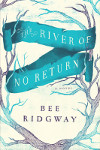
Kate Forsyth – Bitter Greens
Posted 15th March 2013
Category: Reviews Genres: 2010s, Angst, Fantasy, Historical, Romance, Social, Theological
10 Comments

Re-tellings can be just as just as masterful.
Publisher: Allison & Busby
Pages: 491
Type: Fiction
Age: Adult
ISBN: 978-0-7490-1362-2
First Published: 20th March 2012
Date Reviewed: 14th March 2013
Rating: 5/5
Charlotte-Rose is banished to a convent after causing one too many scandals at the court of Louis XIV. It’s a terrible punishment, but she manages to befriend an old nun who tells her the story of a girl who was kept in a tower by a witch. But the witch has her own story to tell, dark and full of despair, and Charlotte-Rose, not always in the garden with Soeur Seraphina, has much time to look back on her old life, too.
Bitter Greens is an utterly fantastic retelling of Rapunzel, blended together with the factually-based story of the woman who wrote down the version we know today. Not at all suited for children, Forsyth’s book is an incredibly dark account and far more stupendous.
The novel is a constant succession of details, complexity, and magnificence. Set in France and Italy, Forsyth doesn’t simply introduce the reader to the history, the life at court and beyond, she soaks you in it. She adeptly demonstrates the hypocrisy of a Catholic court where people had many lovers, and shows that, for all its glamour, the court was a place of extreme cruelty. Indeed the book can be hard to read at times, gritty and depressing as it is, because Forsyth never holds back, she details sexual abuse, gang rape, murder, torture – in fact given the amount of it you could be forgiven for thinking it gratuitous. Unfortunately it cannot be said that it is – whilst Forsyth’s characters, other than Charlotte-Rose and some of those at court, are fictional, the horrors surely echo real life. It has been said on many occasions, especially recently, that fairy tales are in fact dark and cruel, but it’s easy to gloss over that darkness and look at all the glitter and magic. Forsyth reminds you what is behind that glare that blinds you to the truth.
The storytelling is exceptional. Even when the story is repetitious (and given the routine life at a renaissance convent and the sheer boredom of being shut in a tower for months, that is going to happen) it manages to keep its pace. Forsyth fills the pages with such detail and intriguing thought (her characters think of everything and are strong enough to recommend them to memory) that entire chapters may pass before you realise you’re still reading about the same dull life of Rapunzel (here called Margherita).
And Forsyth weaves the magic in beautifully. For a while she almost teases you – will there be true magic or will it be more of a metaphor? – and when it does arrive it is the sort of magic that fills childhood stories, yet the book never looses its darkness or the adult atmosphere. Forsyth invites you to leave reality behind and embrace all the stories that are ‘supposed’ to be denounced upon maturity. And it is every bit as thrilling as it was as a child, only now it also includes the necessary ingredients to keep you hooked as an adult.
It should be noted that there is a lot of social and religious history in the book. Charlotte-Rose lived in a time of Inquisition, when Louis XIV decided to revoke the tolerance afforded to Protestants. It is surely to Forsyth’s good fortune that Charlotte-Rose’s story aligned with this religious persecution as it allows the purely fictional elements to be ensconced in the history, sounding as true as it could ever sound. If the vast majority of men and women under suspicion as witches were innocent, then the author examines those few that could have feasibly made magic their career. And she looks at the known wise-women who were frequented for love potions and curses as well as for abortion and medicines, using fiction to wonder at the possibility of there being true magic assigned to them.
The social history includes a lot of inequality on various levels, for example class and gender. Forsyth shows how weak the position of women was and explores the strengths and intelligence of women to a point where you might just ask yourself why these clever (and sometimes understandably manipulative) women didn’t simply turn on their men. In other words, you could use this book as a study of women’s history, because it has information and both fictionalised and factual accounts in abundance. Examined too are, of course, the convents, where women were thought to be independent. Forsyth demonstrates that this was the case, but only to a degree, due to both male dominance outside the walls and the female hierarchy and bullying inside. A convent could be freeing, but also a death sentence.
It will not surprise you to hear that general sexuality issues are explored as well, with all the prejudices and biases history has provided it.
Lest you wonder where Forsyth could have possibly fitted any characters other than cardboard cut-outs into this, given all the time taken by issues and magic, let us consider the women at the heart of the three narratives (the narratives being Charlotte-Rose, Margherita, and the witch Selena Leonelli). As you may have expected, they are written superbly well. Strong in the face of adversity, cunning and clever, and just simply captivating, for all their strife there is reason to look forward to returning to each of their stories; the book switches back and forth between the tales. Margherita might give you pause, but is it not a case of her being too young and innocent? Selena is an evil witch, but is her own story not heartbreaking? And as scandalous as Charlotte-Rose could be understood to be, is she not just a force of independence and free will?
The romances and secondary characters are all interesting. Forsyth employs few curtains – there is a lot of sex in this book – and perhaps one of the elements that is most obvious to take away with you is the thought that worse than hate is indifference. This indifference being that of Louis XIV, a man so self-absorbed that the terminal illnesses of others were considered inconveniences, things not to be allowed to interfere with the King’s wishes. Talking of men, perhaps most interesting is the way Forsyth includes many instances of men being dominated themselves, by other men. A man was an independent, able to do what he liked in a way no woman could, but add hierarchy and family into the mix and suddenly a man was a prisoner of tradition and society not so unlike all women. Not as horrific, certainly, but still a pawn in the games of influence and pride. Incidentally, of men, Forsyth’s version of Rapunzel’s prince is a brilliant example of bringing mundane reality to fairy tales.
The ending could be considered convenient until you remember that the book is purposefully fantastical by its very nature. It might be less than expected but at the same time it is far from disagreeable, and by the end of all the terror, you’ll likely welcome it.
Having used up a lot of the most laudatory words in the English language, this review is going to have to have a moment of repetition: Bitter Greens is a masterpiece. A mix of history, fantasy, romance, and, let it be said, horror, it is completely worthy of your time. If you want a final recommendation, let this be it: if you don’t want to miss the book that might end up being your favourite of the year, you’ll want to read it, and soon.
I received this book for review from Allison & Busby for Historical Fiction Virtual Author Tours.
Related Books