

Hay Festival 2017: Tony Robinson, Neil Gaiman, And Stephen Fry
Posted 21st August 2017
Category: Events Genres: N/A
Comments Off on Hay Festival 2017: Tony Robinson, Neil Gaiman, And Stephen Fry
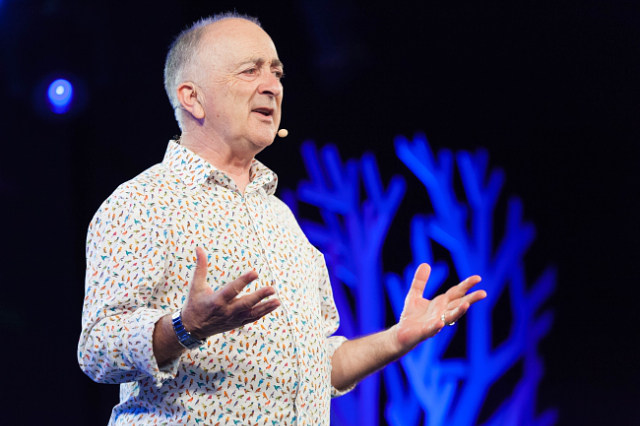
Photo © 2017, Liam Webb.
Tony Robinson wanted the house lights up so he could see everyone. Lucy Cotter introduced him as a politician and history buff at which point Robinson said “just a bloke doing his life really’. There was a fair chunk of humility that was apparent from the start.
Also setting the tone from the start were the jokes: Robinson’s mother spent World War Two defending the nation’s amateur dramatics. But on a serious note, she did encourage him to do theatre. As a teenager, the actor was understudied as the Artful Dodger and knew enough to get it right… he didn’t know the lyrics of ‘Consider Yourself’. He later went to drama school.
On the subject of school he said, “why does everything have to be a university degree?” He’s passionate about children having an education that is flexible, and said that as we don’t know what will happen in the future (what will be important then) why have just 5 important subjects?
When Robinson first read the pilot script of Black Adder he “though it was shite”, but then at that point it wasn’t what it would become. His letter, inviting him to audition for Baldric arrived very late in the creation process; he knew he wasn’t first choice. He never thought the role would change his life. There was little laughter during production; it was all about collaborative critique. “I don’t think there will be another Black Adder,” he said. The show ended on a high – even if another was written if wouldn’t be as good, nor as good an experience.
Of his TV show, The Worst Jobs In History, he said the worst was making the show; he was constantly ill from all the ‘muck’ and it took him 6 months to recover.
Cotter asked ‘why politics?’ (Robinson has joined the Labour party.) The actor spoke of hating bullying, the outrage about American history, but most importantly he didn’t want to just ‘moan about the world’ and then die knowing he hadn’t tried to do something about it. He talked about power in numbers. He’s active in his Bristol community; whilst it’s all away from his job as an actor he does realise the power of celebrity. People listen to him. He’s criticised Corbyn but says the leader had a good campaign. “We need the most robust opposition we can get.”
Robinson is also an ambassador for the Alzheimer’s Society. His parents both had Alzheimer’s for years; it was the ‘central motif’ of his life outside of acting. He found there was a lack of support for the condition and made a documentary about his mother, for which he received more letters than he had for Black Adder.
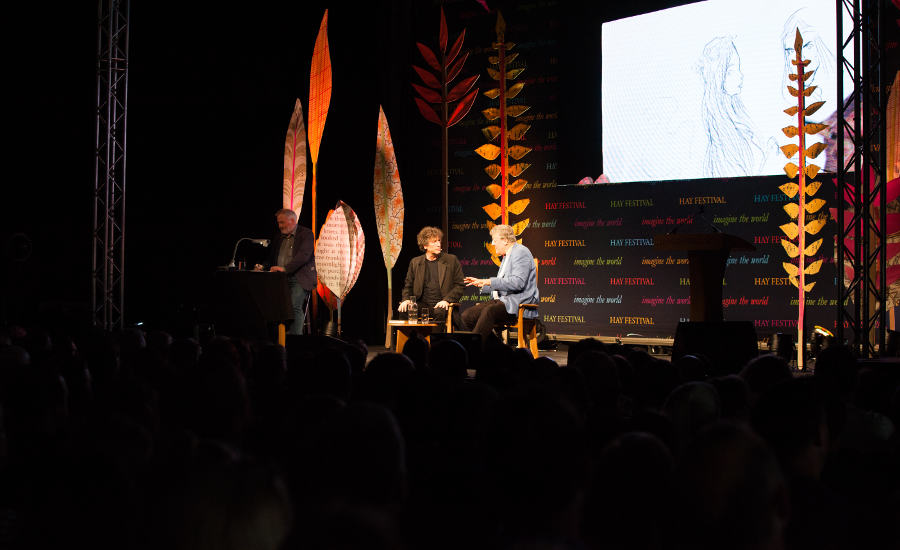
Photo © 2017, Marsha Arnold.
The evening after Tony Robinson’s talk, Neil Gaiman took to the stage with Chriss Riddell and Stephen Fry – it just made sense to link the two events together, all the more so as Robinson caused a small stir in the audience prior to the event, taking a seat in the first row. Riddell was there to ‘live draw’ the talk; the sketching was show on a big screen and for the most part Riddell drew his interpretation of the stories Fry and Gaiman were discussing, except the first drawing which was of Fry and Gaiman from Riddell’s literal point of view, a sketch of the side of Fry’s face and the back of Gaiman’s head. It was a fun talk throughout, but it was Riddell who initially set the tone.
The theme of the discussion was mythology, in particular Gaiman’s new book, Norse Mythology. The writer has always been interested in the topic and loved the Thor comics. The book began 9 years ago when he was asked about the subject. He spent several years thinking about how he should write it. It was important to him to write in a voice children could cope with. When it came to Loki and fighting, he stuck to one paragraph; he had looked forward to writing it but found it didn’t work dramatically.
Both author and actor read from their respective myth-inspired works; Fry’s is a book about Greek mythology.
Has Gaiman ever felt like a god, when writing and drawing? The reply: only twice – once when writing a Doctor Who script and including a stage direction, ‘interior Tardis’, and the second 30 years ago when he wrote what Batman might say.
At the end Gaiman’s wife, Amanda Palmer (who was performing at the festival) came on stage to read a poem he had written. All in all it was a much greater event than even the description (and quoted appearances) could have suggested.
Susanna Kearsley – The Shadowy Horses
Posted 16th August 2017
Category: Reviews Genres: 1990s, Historical, Paranormal, Romance
4 Comments

Even when not in Rome, if the Romans are there, do as they do.
Publisher: Allison & Busby
Pages: 397
Type: Fiction
Age: Adult
ISBN: 978-0-749-00703-4
First Published: January 1997
Date Reviewed: 16th August 2017
Rating: 4/5
When Verity is offered an archaeological job in Scotland, the decision to go for the interview is easy, but saying yes to the job – digging where only one person thinks there’s something to be found – is harder. But she takes it, and together with her equally sceptical colleagues, starts to see the paranormal aspects that are making her employer believe there’s a Roman fort underfoot. And by the time she’s been there a few days, the presence of David means she won’t be leaving quickly.
The Shadowy Horses is a paranormal historical with a bit of romance, looking further back in time than Kearsley tends to.
The use of location here is very good. Kearsley has steeped the story in the Scottish setting, the specific place. (There’s very much the feeling that if anything has been changed it was in error.) There’s some sunshine but a lot of wind and rain, and the descriptions are excellent. It’s easy to get a feel for the place and world-building is well-balanced between town, weather, and the subjects at hand. Kearsley mixes the present-day and true history with the paranormal very well, letting the ghostly elements and slight magical realism blend in neatly; it does become more fantastical at a certain point, with everyone believing, but this suits the temperament of the leader of the archaeological group; suffice to say you don’t have to believe it possible for it to work as part of the story, you just have to believe the characters believe it.
In this Kearlsey has been prudent. Her version of a sixth sense aligns with the more realistic ideas about and there’s an even split between others who believe, are not sure, and completely disregard the notion. The author taps into the idea of ‘feelings’, sensing consciousness.
Due to drawbacks covered below, Verity is not a particularly strong character owing to author intervention, but the others are written well enough. There’s some sudden changes – mostly in Verity, and different to the author intervention – that are there presumably to aid the slow transition of the book from paranormal historical to paranormal historical with romance, but it’s enough to make you want to keep reading through the problematic sections. Quinnell, director of the dig and the person who believes in it all despite a complete lack of evidence, is winsome. (Kearsley uses this idea a lot, to good effect – the utter belief in something by one balanced out by others who require evidence.) The romance itself is strictly okay, its average nature in part owing to the fact that you’ll find yourself wanting to return to the archaeology, and there’s obviously more development of other aspects of the book than couples’ chemistry.
There is a lot of research behind it all, both in terms of present-day Scotland and the Roman legion, and in the notes Kearsley has thanked many local residents for their help. But whilst there’s a lot of information that is great, particularly about the Romans and, of course, archaeology (though the author does info-dump a bit when it comes to methodology), the show of how much Scots Kearsley has learned is continuously referenced. Verity is always pulling out her Scots dictionary to look up a word that’s just been used by someone else. It detracts from the character, making her a mouthpiece for language lessons. The specific detailing in the book, away from world-building and characterisation, is a little too much, with information about what the cats are doing and which cat is doing any one thing (when names are not needed because you’ve been informed as to their markings) a mainstay of the book.
The dialogue and narrative is mainly good but the Canadian phrasing and words of the author have sometimes slipped through – an understandable factor that will affect some readers (British English speakers and others familiar with it may find it jolts them from the text).
The Shadowy Horses isn’t Kearsley’s best but is still worth reading. It’s her only ancient history-based book, so it’s something very different in terms of her work, and not as refined as others, but there is still a lot of fun to be had.
Related Books

Hay Festival 2017: David Mitchell And Colm Tóibín
Posted 14th August 2017
Category: Events Genres: N/A
Comments Off on Hay Festival 2017: David Mitchell And Colm Tóibín
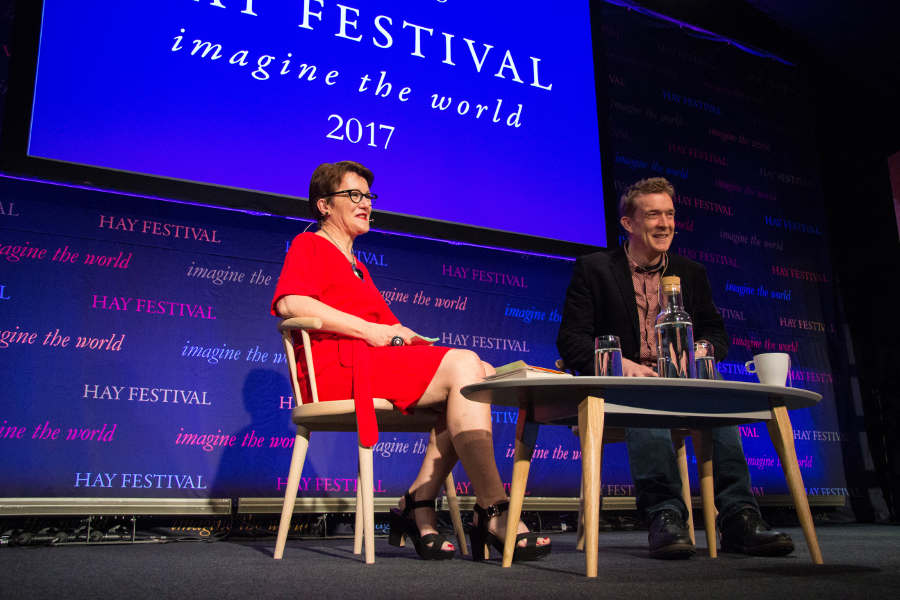
Photo © 2017, Liam Webb.
David Mitchell’s newest book was released last month (July). It’s a translation of Fall Down 7 Times, Get Up 8, written in Japanese by Naoki Higashida, about living with autism. Translated by both Mitchell and his wife – who is Japanese – the English language release is an effort towards making autism more understood; their son has it.
The speech and then talk between Mitchell and Rosie Goldsmith – who also has a child with autism – revolved around the condition. Like Steve Silberman last year, Mitchell used the hour to explain autism in real-world terms, breaking down the medical/world barrier. (Good, honest, conversation is something Hay does well.)
Historically, autism was seen as under the umbrella of clinical schizophrenia, or ‘living with the fairies’. Treatment was psychological analysis; in the 1960s, electrotherapy and LSD was used. The damage from these methods was massive and research into the condition was not worth the name.
Mitchell said, in the context of today, that the more ideas there are, even wrong ones, the more our knowledge will increase. “Just because research is faulty, [it] doesn’t mean there was nothing in it in the first place.” he said of MMR.
The writer uses the term ‘person with autism’ because people with it have asked him to; people made the adjective known to him – it’s fine when it’s a person. But Mitchell with call a person by the term they prefer on an individual level.
He does not like the assumption that a person with autism who can’t communicate is intellectually affected – it’s better to assume the reverse.

Photo © 2017, Chris Athanasiou.
There were a reported 1700 people in attendance for Colm Tóibín’s talk with Claire Armistead. The two talked about the author’s latest work with ancient texts – House Of Names, a retelling of a Greek tragedy.
Tóibín talked about Antigone and Electra, working with the stories, using voice. He said that what Antigone, the character, says in dialogue is a translator’s dream; well-worded lines. He looked at Electra’s story from the point of view of her mother which gave him a different perspective, helping him with his own novel. In using ancient texts, he could get away from Ireland, the rosaries, tea, and rain – he kept the new book dry in that way. He pointed out that in retelling an older story, you can take just the story, whereas a contemporary novel has to be detailed and move more slowly. ‘Things you can just see in a play, you have to detail in a novel.’
He ended by saying that if you start to feel the weight of the historical work on you, you’re in trouble. (He just took what he needed.)
Armistead asked ‘why this story, now?’ Colm Tóibín responded that Nora Webster had taken many years, then came Brooklyn for another while as there was so much he had to use from his memory, his childhood, that he had to get right. He said that no matter how much you try to resist, some of what you know – your background, studies, and so on – will make it into a book; there’s a bit of Nora Webster in House Of Names.
The author works at 3:30 in the morning for a bit; the morning is useful for erasing bad ideas; one has time to chew on it.
Naomi Hamill – How To Be A Kosovan Bride
Posted 11th August 2017
Category: Reviews Genres: 2010s, Political, Social
Comments Off on Naomi Hamill – How To Be A Kosovan Bride
Tradition, modernity, politics, and folklore.
Publisher: Salt
Pages: 212
Type: Fiction
Age: Adult
ISBN: 978-1-784-63095-9
First Published: 15th August 2017
Date Reviewed: 11th August 2017
Rating: 4.5/5
A young woman begins the traditional process of leaving her family’s home for that of her inlaws; she may stay with her new family or she may return home. Her life plays out against a backdrop of a country at war, and the beginnings of a new nation.
How To Be A Kosovan Bride looks at the cultural traditions surrounding life in post-war Kosovo, bringing in stories of refugees and a few folklore-esque tales, too. Told by someone who goes to the country each year, it offers a particular perspective.
There are two threads in this book. In the first, Hamill balances tradition in all its trappings of dignity and honour, with the very modern. There’s a peppering of humour here and there but by and large this is a look at the clash between tradition and modernity, of being a traditional bride and a modern university student with all the cultural and, in the context of university, political, elements behind it.
To do all this, the author takes the wedding day as her starting point, a bride both excited and reluctant – unsure if this is the right thing to do – and then splits her story in two from wedding night onwards. The bride becomes plural, two people, as Hamill looks at two possible lives, one girl ‘passing’ her virginity test and the other ‘failing’ it (though she is in fact a virgin); one girl becomes the traditional Kosovan wife, the other, having been ‘returned’ on day one by her in-laws, deciding to pursue a university degree. For the most part this results in two narratives that are very, very different, and Hamill’s ‘Kosovan Wife’, as the character is called, does not find much happiness, so the narrative leans towards modernity, but there does come a point where both girls have a ‘grass is greener’ moment and wonder whether another life would’ve been a better choice.
Through the Kosovan Wife, Hamill is able to look further into culture, but it’s during the Returned Girl’s sections that the narrative comes into its own, where the author looks at the way the university entrance exam must be passed with flying colours in all subjects and how schools get around this issue where it concerns pupils having particular skills in particular subjects. The book as a whole is full of politics and it packs an almighty punch for its relatively small number of pages and white space. The second thread of the book, vignettes, stories, of the war – people fleeing, children killed, men walked to their death, liberation by people that aren’t all good – are absolutely harrowing; Hamill is completely blunt and in the acknowledgements of the book she thanks various Kosovan acquaintances for their stories that she used as a jumping point for her fiction, underlining the reality behind it all.
Finally there are a couple of faux-folktales dotted about, one spanning several chapters, adding a bit of magical realism to the book, rounding out the text so that it has information about history and the arts as well as the political element. This is where Hamill’s love for the country is shown best, her writing here being fictional but aligning to folklore well.
Of the writing, that second person, it’s difficult to say… if you hate the method, you may grit your teeth at this book, but because the author has made a point of often tamping it down, you may find it easy enough to get on with. There are only a handful of chapters that directly specify a ‘you’ – admittedly it’s not obvious who this ‘you’ is, whether the reader or a character and if the latter which – and the style matches the various stories told. It adds to the sense of oral history, folklore, and stories of war.
How To Be A Kosovan Bride is a good look at a country in conflict and the people on the wrong side of it, as well as a country still coming into its own. It is hard-hitting and very political but the humour and shortness of it balances this out. You’ll likely want to research the facts alongside your reading, especially if your knowledge is limited, as the book has a sense of a basic knowledge base behind it. It’s very much worth doing so.
I received this book for review.
Related Books
None yet
Speaking to Naomi Hamill about How To Be A Kosovan Bride (spoilers included)
Tune in as Charlie Place and Naomi Hamill discuss post-war Kosovo, using a narrative method that divides opinion, and researching Albanian folklore.
If you’re unable to use the media player above, this page has various other options for listening.
The Forest Of Bere, Rainy Spring Day
Posted 9th August 2017
Category: Photo Posts Genres: N/A
1 Comment
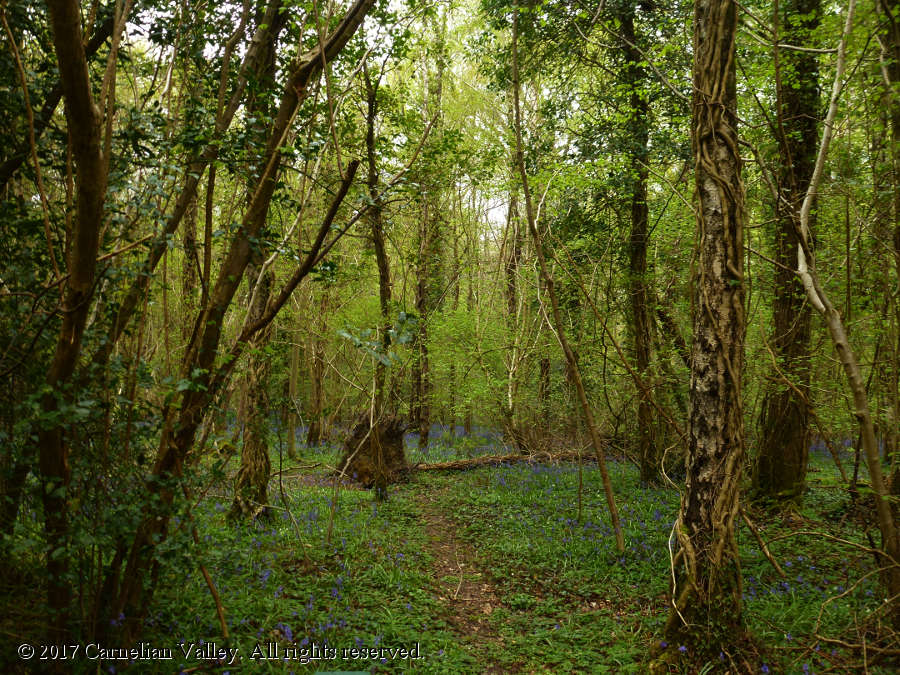
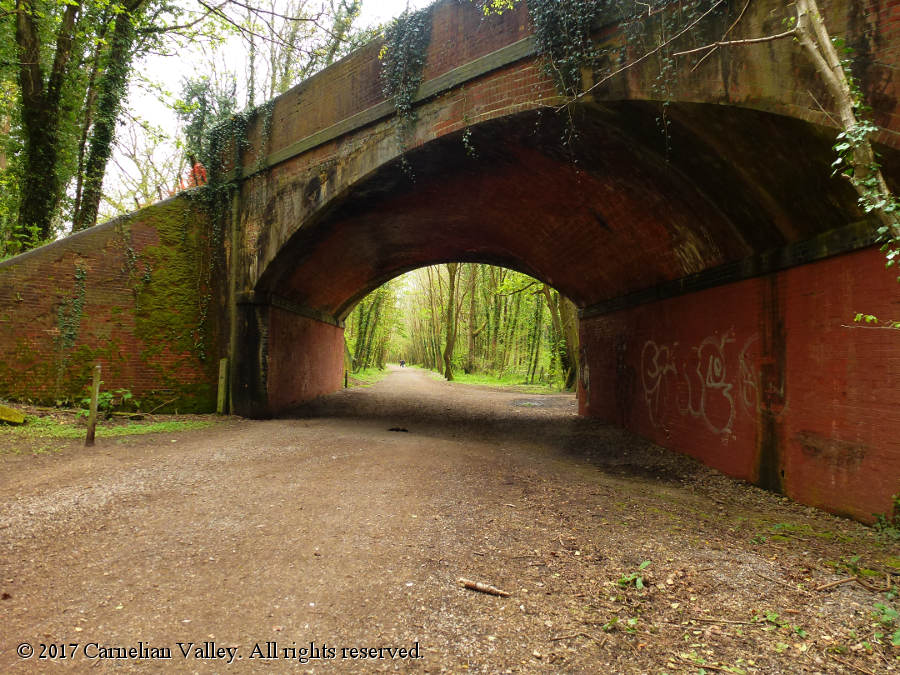
On a dreary day in May, having decided to get lunch to go, we chose to drive for longer than usual to find somewhere new to sit. On a road we’d never been on, a ‘what’s that?’ moment happened; we turned down the tiny lane and found the Forest of Bere. It’s a relatively small area of land just north of Fareham and on that day there were bluebells as far as the eye could see.

A couple of bridges define the place where a railway line once skirted the edge of what is now a road. There are a couple of entrances, that we could find, and the ‘main’ one is set up for picnics and short walks, parking and benches aplenty. Some sites call it ‘the former forest of Bere’ – it is essentially, now, at least, a patch of forest in an otherwise rural but populated place – there is a country park and myriad villages nearby.