





August 2017 Reading Round-Up
Posted 1st September 2017
Category: Round-Ups Genres: N/A
5 Comments
Lots of reading this month – I decided early that I wanted to make up for the last two and I managed it. The small moments helped but just making a firm decision and stopping yourself from watching a film (or Mozart In The Jungle in my case, the follow up series to the last several months’ Parks & Recreation) is great. I can’t say I remember having many conversations about a topic other than books but for one month that’s okay.
The Books
Non-Fiction

Adrian Mourby: Room’s Of One’s Own – Wanting to find out about and experience the spaces past writers have inhabited and worked in, the author journeys around the world to visit them. An okay book; often Mourby is denied access to the buildings which means you end up reading his suppositions instead, and there is a distinct lack of diversity.
Fiction
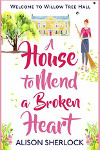
Alison Sherlock: A House To Mend A Broken Heart – A self-proclaimed bad housekeeper struggles to keep a large historic house clean without any estate income and when the Lord’s grandson arrives and schedules some builders the company may end up being dodgy but the man himself seems a winner. Lacking in chemistry, characterisation, and writing.

Barbara Erskine: Sleeper’s Castle – When Andi’s partner dies and his long-gone ex-wife reappears looking for a fight, Andi travels to Hay-On-Wye to house sit and finds herself dreaming of people who used to live in the house… and it seems they are aware of her presence. Strictly okay.

Eric Beck Rubin: School Of Velocity – Jan’s lined up to play in front of an audience, one of many occasions he’s done so, but this time the random music in his head is too much to bear; he takes us back to his childhood, his extremely popular and extroverted friend, and a relationship that he’s still to get his head around. A super book about the lasting affects of a friendship and a whole lot about music in all its technicality.

Isabella Connor: Beneath An Irish Sky – When Jack’s estranged wife is killed in a car crash he doesn’t want to visit the hospital bed of the teenager people are calling his son but he does, even if it would upset his snobby parents; he still doesn’t know why his wife left him and young Luke’s councillor is interested in helping. The basic story is all right but there are some stereotypes, and the relationship between Jack and his son’s trauma councillor raises questions.

Kitty Danton: Evie’s Victory – Britain during World War Two; Evie wants to be a better person. There’s no plot to this book – it’s a series of social calls – and there is far too much telling and explaining of commonly understood things.
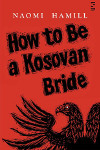
Naomi Hamill: How To Be A Kosovan Bride – The story of two women from the day of their weddings, one who passes her virginity test but doesn’t like her husband, and another who fails and goes to university instead. A wonderful book interwoven with stories of the conflict and folklore tales.
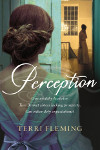
Terri Fleming: Perception – With Jane, Lizzie, and Lydia married and away, there are just two girls remaining, and whilst Mary doesn’t think she’ll ever marry there may be a bookish man out there for her. A sequel to Pride And Prejudice, this is a very well told book with an excellent use of language, great knowledge of the characters, and no fear in sticking to the idea of less action in a story… and there is a fair amount of time spent organising library.
I think the Fleming just gets it this month in terms of pure enjoyment – it’s an easy read and a very pleasant surprise (I’m suspicious of sequels). In terms of literary appreciation the Hamill wins with the Rubin following swiftly afterwards.
Quotation Report
In School Of Velocity, Jan recommends a musician use the energy in the air as the house lights go down as a kind of armour. Then there’s this:
Accompaniment is a particular skill. You are the bridge between the audience and the soloist, a lens that magnifies the leading melody, a handler to the outsized personality next to you, one player who sometimes has to be two.
And in Rooms Of One’s Own, Mourby quotes from William Morris (“Have nothing in your houses that you do not know to be useful, or believe to be beautiful”) which makes one wonder whether Marie Kondo is a fan.
The coming month is likely to be chock-a-block. I’ve a lot of reading to do – we’ve secured an author for the conversation in Southampton for So:To Speak – and I’m working with the festival generally, which means lots of content to write. But I’m very much looking forward to it; by the end of October I imagine we’ll all be exhausted but hopefully it will pay off in spades.
Did you make a rough goal of how many books you wanted to read this year, and, if so, are you on track to achieve it? (I’ll probably be somewhere between my usual 50-60.)
Reading In The Small Moments
Posted 30th August 2017
Category: Chit-Chat Genres: N/A
9 Comments
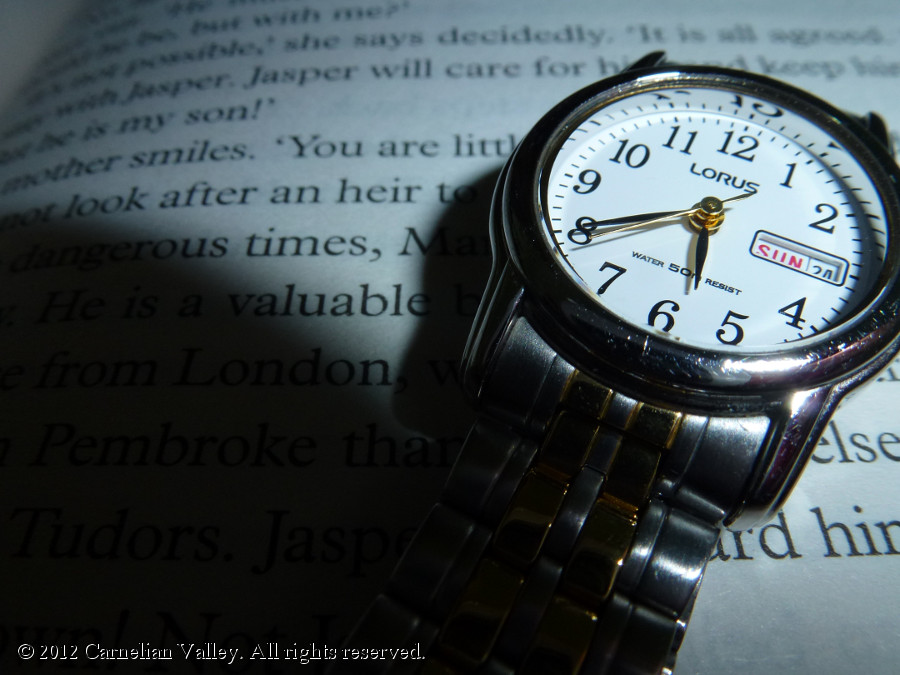
I’m not sure if there’s an established, or relatively established, term for this – reading in every available moment you have free. Reading in queues, whilst waiting for people, at stations, and so on. I recently added ‘in the car wash’ when you’re a passenger. (I get travel sick. I recently turned to my nephew, sat reading in the back seat, and asked him, ‘don’t you feel sick reading in the car?’ He had no idea what I was talking about. I’m jealous!)
I’d heard people reference the small moment ‘method’ of reading many times before but never paid it much heed as I always got caught up wondering how it could work – attention needed, time to find the book in your bag, your place, and so on. I finally decided to try it out a few weeks ago after reading about how a person who read many more books than me in a year did it. They credited reading in the same moments, a big factor.
First thing I learned: it takes practise. Starting out, you have to remember it’s something you can do. You also have to be prepared to look anti-social.
There’s a learning curve I’m still on: the thought of ‘is this going to be enough time?’ takes time – unless your answer is an immediate ‘no, because they’ve taken one step away to throw something in the bin’ this self-questioning isn’t productive in any way.
You’ve got to work out how short a moment of reading is your limit in terms of retention. A two sentences read moment is likely pointless – better to add the two to the three pages you’ll be getting to whilst your friend pops into the store to get a coffee. In a similar vein, it works best when you’re with people you know or when you’re at a place you know fairly well. Is my friend likely to spend time chatting at the counter with the barista? Yes. Will this queue of twelve people at the hardware store take time? No, because there are eight cashiers on duty and everyone has one item. (I don’t encourage tracking things in this detail, but it works as an explanation.)
Easy going books that you’re enjoying work best. You’re pretty much primed to step back into the fiction or non-fiction quickly, which again means more time used effectively. Anything heavy going is possibly going to be hard to fully comprehend.
Ebooks work best in terms of finding the book in your bag and getting to your page, but only if the device is already on. (I’m still working through the ‘sleep mode uses a lot of battery when I don’t know when I’ll be picking it up again’ conundrum.) Bookmarks in physical books are a must unless you know you have a fair amount of time.
You’ve also got to remember to take the book with you. Everywhere. It’s going to be the times you don’t that you’ll find would’ve provided the most time. I do find now, having got into the habit, that when I don’t take my book (at this point that’s an active decision), I regret it.
So reading in the small moments has been cited as a reason for having read many books in a year; I don’t think it’s as much a factor as people might lead you to believe, but it does definitely help. For me, my August stats will show that, combined with the big effort I made to make up for less reading in June and July.
There can only be one question: do you read in the small moments?
Barbara Erskine – Sleeper’s Castle
Posted 28th August 2017
Category: Reviews Genres: 2010s, Historical, Paranormal, Thriller
Comments Off on Barbara Erskine – Sleeper’s Castle
Now I lay me down to sleep…
Publisher: HarperCollins
Pages: 530
Type: Fiction
Age: Adult
ISBN: 978-0-007-51319-2
First Published: 30th June 2016
Date Reviewed: 28th August 2017
Rating: 3/5
When Andi’s partner dies, she’s forced out of his London home by his ex-wife; Andi moves to Hay-On-Wye to house and cat sit for a friend. Sleeper’s castle, as the house is known, poses a bit of a paranormal conundrum – those who remain there are visited by history, dreaming of the lives of the medieval residents of the house. Andi must balance this mental take over with the looming presence of her partner’s wife, whose home Andi starts to visit in her dreams. The woman seems to have a penchant for violence.
Sleeper’s Castle is an epic novel of history, and a psychological thriller. It requires a lot of time that may be seen as a reward by some but not worth it to others.
The book is effectively two stories melded into one package and it can be a bit jarring when the narrative moves from one to the other; especially where it concerns the time-slipping, the reversion back to thriller can seem an after thought. And as the novel continues, it does drag on, not knowing when to call it a day.
What’s interesting though, is that the historical content isn’t particularly compelling in itself; aside from the bit on Owain Glyndŵr it’s largely an ordinary tale; but the time-slipping itself is a lot of fun to read. The process of it. The theories. The way the cat is a fully developed character, an aspect that has been done with aplomb.
The thriller starts off well enough, with the long-gone wife returning to lord it over the long-standing loyal partner, and the ensuing conversations between the characters affected by the woman, about emotional instability, make for a solid foundation, but it starts to get unrealistic with people leaving things to fate instead of acting on the threat. The ending of the thread is very unsatisfying.
The writing is so so. There appears to have been a very heavy hand in the editing process, a distinct lack of commas and odd grammar choices which are at odds with the author’s longevity and affect the dialogue badly.
So it’s fun sometimes but for the length of it and everything that detracts from the fun, you might be better off reading (or re-reading) Erskine’s previous novel about the town of books.
Related Books


Noirwich Crime Writing Festival
Posted 25th August 2017
Category: Miscellaneous Genres: N/A
Comments Off on Noirwich Crime Writing Festival

Photo © Writers’ Centre Norwich/University of East Anglia.
No, it’s not a spelling mistake – Noirwich is a festival of crime writing that happens in Norwich. I’d very much like to go but am unable to make it; it’s a good programme so I thought I’d post the details in case any of you are interested. (This post isn’t sponsored.)
The festival runs from 14th – 17th September and tickets can be purchased per event, per day, or for the entirety.
On the Thursday, Val McDermid will be discussing her latest novel as the launch event. She’ll be in conversation with Stav Sherez.
Friday sees The Times/The Sunday Times crime club. Arne Dahl will be at UEA. Later that evening at the same venue, Martina Cole will be in conversation with Harry Brett.
On Saturday there are a few multi-author events. ‘Female characters and writers’ with Laura Wilson, Mel McGrath, and Erin Kelly. Later, Lone Theils, Daniel Pembrey, and Nick Quantrill will be talking about fiction further afield; Mark Billingham and Christopher Brookmyre will take to the stage (though this event is sold out), and there’s a 2pm chat with Anthony Horowitz.
Sunday, Stella Duffy, Felicia Yap, and Cassava Republic’s Leye Adenle look at international crime writing; Karen Maitland, Andrew Martin, and David M Mark look at historical crime fiction, and closing the festival will be Stuart McBride.
There are also fringe events: a murder mystery evening; and book group; a writing exhibition; a short film, and there are writing workshops on the Friday.

Photo © Writers’ Centre Norwich/University of East Anglia.
It’s an excellent line-up and three weeks away. If you’d like to go and haven’t tickets already, get planning.
What festivals, literary or otherwise, have you always wanted to go to?
Eric Beck Rubin – School Of Velocity
Posted 23rd August 2017
Category: Reviews Genres: 2010s, Music, Spiritual
Comments Off on Eric Beck Rubin – School Of Velocity
The constant reprise.
Publisher: One (Pushkin Press)
Pages: 213
Type: Fiction
Age: Adult
ISBN: 978-0-993-50629-1
First Published: 23rd August 2016
Date Reviewed: 22nd August 2017
Rating: 4.5/5
A conscientious piano student, Jan’s school life was changed by the arrival of Dirk, a boy who was here, there, and everywhere in every sense of the phrase. Previously unknown to the musician, Dirk’s presence shook Jan’s remaining years at school; the pair became best friends, complimenting each other’s personalities, and even exploring their advancing maturity together. But then Dirk leaves for college in America and Jan for university to further his piano studies. Contact dwindles and Jan believes Dirk no longer cares as much. The musician moves on as much as he can but as he ages, the ever-present music in his ears becomes more than just a nuisance.
This is a book for which it pays to explain more of the plot than usual. School Of Velocity is an epic story in a small package, a tale that emulates many great novels and ends on a literary high. The Financial Times has likened it to The Great Gatsby, the relationship between Nick and Jay, and they’re not far off. Dirk is a whirlwind compared to Jay, but the experience of the two books, the narrative style, and the overall product, is similar.
We could argue about whether the score was sacred or improvisation was allowed. Whether one plays in period or updates for the modern age. But if I was going to be a professional I would have to keep a professional’s schedule. No more poet waiting for his inspiration. Learn the section, choose an interpretation, stick with it, move to the next section. If I had imposed this routine on my student self, I would have rebelled. But as it became the outline of my daily life, and I added more pieces to my repertoire, and took on more work as a result, I found I liked it.
The major themes of the book are music and relationships. Rubin is very instructive and open about the music, detailing it to good extent and making it as easy to understand as he can for those not familiar with the terms; but the relationship he leaves entirely to you. Is Jan and Dirk’s connection one of friendship or one of user and supporter? Is there a romantic element? Is there an underlying aspect of distaste or dislike? Anything is possible; Rubin looks at every potentiality, sometimes through dialogue and other times through narrative, a short phrase or a gesture, employing nuance to study a situation in a way that makes the questions come to you seemingly without any help from the writer. Rubin’s style here often means that some of the story initially comes as a surprise, though on reflection you realise it was always there.
A lot of the success of the book is down to the reader being ahead of Jan in terms of knowing what’s going on. Jan talks a lot about things that make it obvious to you, the reader, what’s happening, or, at least, the possibilities of what’s happening, but due to a lack of belief in himself, often also a lack of confidence and a bit of a lack of self-worth, he doesn’t see it himself. In another novel this might be a drawback, the reader effectively waiting for the character to catch up, but here it’s a triumph. Jan’s inability to see what might be the case allows Rubin to explore the character’s mindset in detail for his audience.
This detailing races towards the second half as Jan’s mental state begins to fail him (the book is told in flashback so you know the mental changes will happen in advance). Again possibilities are abundant and again Rubin sorts through the chaff swiftly to show the reader what is behind it all.
Never letting up on letting the reader decide things for themselves, Rubin’s ending is open to interpretation which is in turn open to being called either a success or unsatisfactory. Suffice to say that if you’ve been enjoying the book – particularly a lot – then there’s more chance of you appreciating what the end result becomes. What you will likely do, regardless, is appreciate it.
School Of Velocity is in many ways an incredibly literary book. The characterisation, the attention to detail, the subtlety – but it’s also accessible otherwise. The characters, especially Dirk, can be irritating, most often when you’re trying to work out the relationship dynamic, and you may wonder at Jan’s inability to completely move on, but it’s written so well and with such good reason that it’s consistently hard to put it down.
And, as Jan finds, it’s hard to walk away from it all afterwards, remaining present in your mind for a while after it’s over. Great stuff.
I received this book for review.
Related Books
None yet


