

On Wanting Another Book As Awesome As The One You’ve Just Finished
Posted 25th October 2019
Category: Chit-Chat Genres: N/A
5 Comments

That slight feeling of sadness after you’ve finished a great book, it’s over. When that happens it’s tempting to want to find another book just like it; even when you’ve reading plans to continue you can still have that wish.
Sometimes it’s easy – pick up the sequel. There’s a chance – sometimes fairly big – that the sequel won’t live up to the book you’ve read, but it’s the best chance of reading more of the same that there is. Other times the author may have written another book with the same atmosphere. Lesser times but still significant enough, another author in the same genre or with books set at the same time (for example if it’s a historic novel) may provide a similar reading experience. Recommendations are great here, particularly as people tend to specify what is and isn’t the same.
The thing that interests me in a literary way, though, is those times it isn’t easy to find another book that’s similar, which includes times when you can find one similar but it takes time and during that time you’ve ‘recovered’ from the ‘need’ (though that is a fair alternative in itself). I find it interesting that the process of reading a great book and being unable to replicate the experience for whatever reason can lead to a slump. Perhaps it’s because I’m not as avid a film watcher as I am a reader, but I don’t find the same process in the context of films as powerful. Nor music, although I love music and the right song can be a stunning experience.
Sometimes TV series can produce a similar feeling, which makes me wonder how much is down to length and time invested. In books, a book can be shorter than, well, a tome, and still produce the same result because of how much relative time and attention it uses. It’s generally easier to watch a TV series than to read a book no matter the genre of the book as it requires less attention; all the imagination has been done for you. A short book might not cause the same feeling as a longer one due to time invested, but I’d say it’s more likely to cause it than a film.
I think it’s fascinating that a good book and the resulting wish to read more – which a re-read won’t do – can cause a slump. We talk about good books being the pinnacle. We talk about average books causing a slump, burnout causing a slump, and the daunting nature of the anticipation of a good book causing a slump. But the aftermath of a great book can be a slump. (Of cause a great book can also put off a slump, but that’s not the topic here.)
Looking at the times I’ve had this problem in the past, it relates most often to times when I’ve been able to give the great book not only the literal attention but the physical space, that is to say when I’ve set myself up for an evening of reading, for example, rather than just happening to have reading time. This often leads to associations which, I suppose, play their own role – ‘when I’m at the beach I’m going to get my book out and read’, ‘I’m making a cup of tea on this particularly bright February afternoon and am going to read this book because it’s getting great and I want to enjoy it’. That second one is something I’m still musing on, 9 months later.
How do you handle this situation?
10 Years Tracking My Reading (22nd September 2009 – 22nd September 2019)
Posted 23rd October 2019
Category: Chit-Chat Genres: N/A
2 Comments
The 22nd September marked 10 years of me keeping exact records of my reading – dates, and formats and so on. Before September 2009 I had been reading avidly (I begun at the start of that year) but I hadn’t begun taking any notes of what I’d read. The list for the first several months of 2009 was made retrospectively.
I decided to have a look at all the data to see what they showed about my journey as a reader. This journey is 90% combined with my journey as a book blogger, too, as I started blogging early 2010. I already look at each year, and in 2017 I amalgamated various data from 8 years, so I won’t be repeating any of that, instead it’ll be simpler. I read 12 books that were re-reads but only 3 had been first read during my blogging years. I’m counting re-reads as separate books.
Total number of books: 553
Opening book: A Gathering Light by Jennifer Donnelly
Closing book: You Then, Me Now by Nick Alexander
Centuries & Decades
My reading era, so to speak, spans just over 500 years. The oldest book I’ve read is Thomas More’s Utopia (1516). And, because classics and famous books are most often older, I’ll say here that I’ve read 67 of them. I’ve read a big 0 books from the 1600s. My plan to read Aphra Behn should (start to) rectify this. I feel I should add some books from 1900-1907, too. (If anyone has recommendations do let me know.)
I read more books in 2013 than any other – 76. My ‘least books’ year was year 1, 2009, which is to be expected – 27. Likely due to everything being new and exciting, my second year, 2010, ended with 60. The numbers are consistent with being given review copies.
Publication year most read: 2013 (58 books)
1500s: 1 (1516)
1700s: 3 (1752; 1764; 1788)
1800s: 29
- 1800s: 1
- 1810s: 8
- 1830s: 1
- 1840s: 4
- 1850s: 4
- 1860s: 4
- 1870s: 3
- 1890s: 4
1900s: 80
- 1900s: 2
- 1910s: 5
- 1920s: 7
- 1930s: 7
- 1940s: 2
- 1950s: 10
- 1960s: 4
- 1970s: 1
- 1980s: 15
- 1990s: 27
2000s: 439
- 2000s: 82
- 2010s: 357
Translations From…
- Danish: 2
- Dutch: 1
- Finnish: 3
- French: 13
- German: 6
- Hebrew: 1
- Japanese: 1
- Latin: 1
- Mandarin: 1
- Norwegian: 3
- Portuguese: 2
- Russian: 2
- Spanish: 3
- Swedish: 2
- Turkish: 1
Ratings
In my first year I labelled some books not applicable to be rated – I gave N/A to books I didn’t review. I discussed this in a separate post. In 2018 I assigned N/A to Twelve Years A Slave – if considered numerically it would be a 5 and I have considered this for the below.
I’m pretty happy with the ratings. It surprised me that there were a good fewer less 4.5 ratings than 4s and 5s but its a tricky one to assign sometimes; it always feels better when something’s a definite 4 or 5.
540 ratings
- 0/5: 1
- 0.5/5: 4
- 1/5: 7
- 1.5/5: 3
- 2/5: 13
- 2.5/5: 30
- 3/5: 68
- 3.5/5: 82
- 4/5: 127
- 4.5/5: 89
- 5/5: 116
Reviewing
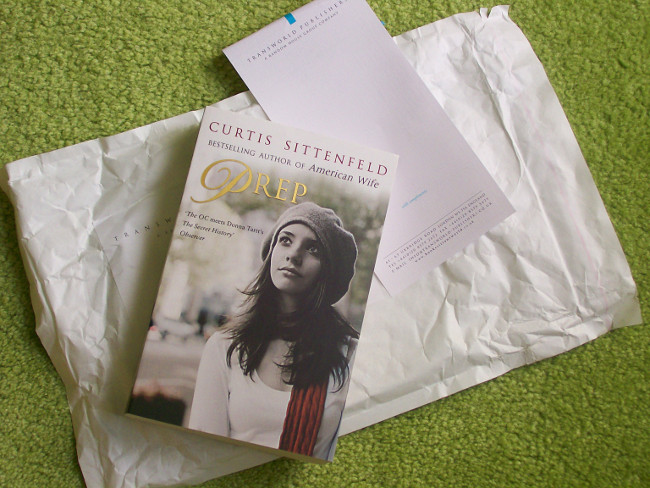
The first book I read for review was Curtis Sittenfeld’s Prep. It was a ‘sign up for a challenge’ read. My first review request was for Molly Roe’s Call Me Kate, in September 2010. This book was also my first ebook.
Books for review, various reasons: 222
Concluding Statements
The biggest change in my reading happened in 2010-2011, when blogging opened my reading world to many different types of books and pushed me to try classics. In 2009 the idea of reading a book for adults was a scary thing; this is a big reason why I never reviewed the first I read that year (when I started blogging in 2010 I slowly started reviewing previously read books). I remember trying to review non-fiction but I was aware that – whilst it was on a subject I knew a lot about – I probably needed a bit more experience to do so.
My book stats are obviously a reflection of where I was at that moment (well, year) in time, and although I can’t remember every circumstance I can remember enough to see why the patterns are what they are. I struggled to finish Station Eleven and thus it was my last book of that year; I found reading easy in 2013 because I’d changed the way I blogged, and I’d also chosen a few more shorter books; 2017 saw a slow down due to a new job; 2018 further still as I added rabbit care to my schedule. I’m on track to reach approximately 40 books this year.
How long have you been tracking your reading and what does the information you note down show about your journey?
Incoming Podcast!
Posted 21st October 2019
Category: The Worm Hole Genres: N/A
Comments Off on Incoming Podcast!

This photograph was taken by Chris Engelsma.
The last couple of weeks I’ve been contacting authors, re-reading books, and creating questions. I had been wanting to start a podcast for a long time but put it off because of silly worries. I finally got myself in gear, said enough was enough and it was time to get it done.
I’m excited to announce that episode one of The Worm Hole podcast will be uploaded next Monday, 28th October. The guest is Nicola Cornick. We recorded the episode on the 16th and it was a lot of fun.
It will initially go out via SoundCloud (there’s a mobile app for it as well as the web browser version) and be shared on iTunes as soon as possible following that. I’m also looking at TuneIn as a future possibility. The link will be available as part of that day’s blog post, so those of you who are on my mailing list will get it, too, and I’ll be posting it on Twitter. New episodes will go out on the second and fourth Monday of each month.
Hope you all enjoy it as much as I (we!) enjoyed making it.
Updated – first author finalised.
(Very Subjective) Thoughts On Virginia Woolf’s Mrs Dalloway
Posted 18th October 2019
Category: Chit-Chat Genres: N/A
Comments Off on (Very Subjective) Thoughts On Virginia Woolf’s Mrs Dalloway

I’ve chosen to eschew my regular review/discussion format – I don’t feel I can do Mrs Dalloway justice, and I’m not sure I ‘got’ it.
I appreciated a lot about the book. So much of it was poetic – poetry in prose. The language was sometimes difficult to read – I don’t mind long sentences but my word! – but the choices made, and the rhythms, were lovely.
The portrayal of PTSD – then ‘shell shock’ – at the time when it wasn’t fully understood was very careful and caring. If Woolf’s book, albeit published several years after the war (1925), played a role in helping people to help veterans further and later, I wouldn’t be surprised. Woolf shows the symptoms well, creating a balance of flashbacks and other mental health issues that came as a result. She shows the effect of misdiagnosis and the beginnings of understanding.
I appreciated the look at love, unrequited, and same-sex.
The inclusion of suicidal thoughts and an actual suicide is interesting in its context. I wasn’t sure whether it’s ‘right’ to see anything here in items of hindsight, Woolf’s mental health and her later choices – I wonder if, perhaps, the book reflects a few of her thoughts pertaining to herself. Certainly if nothing else, she explores it all in its social context.
All these things I ‘got’ but I was left feeling that I was still missing something, hence my choice to bypass a review. All opinions are valid, but I felt too strongly about missing something – can I really evaluate something with which I struggled so much?
I struggled with the stream of consciousness. When I was able to keep my attention on the words – try as I might this was a continual problem – the moment the perspective changed I was right back at the beginning.
I didn’t ‘get’ the sudden changes in perspective. Had the book been solely from Clarissa’s point of view it would’ve been easier. I realised these extra characters might turn up at the party but still their inclusion seemed irrelevant.
I suppose I’m not sure what it was, exactly, that Woolf was trying to say overall – I’ve not a clue. Society at the time? Relationships – problems in love? Attitudes to each other, two-facedness? I did like how everything revolved around Clarissa whether the characters intended it to or not, whether they liked her or not.
Can you enlighten me? Was I somewhat right about the book or completely wrong? And how have you found Virginia Woolf yourself?
Jane Austen – Sanditon
Posted 16th October 2019
Category: Reviews Genres: 1820s, Books About Books, Comedy, Drama
2 Comments
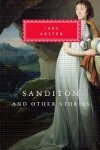
Austen’s potential finest?
Publisher: N/A
Pages: N/A
Type: Fiction
Age: Adult
ISBN: N/A
First Published: 1825
Date Reviewed: 9th October 2019
Rating: 5/5
Mr and Mrs Parker are travelling through Willingden in search of a doctor for their small town, Sanditon, when their carriage overturns. Mr Heywood comes to their rescue; the couple end up spending a fortnight at the Heywood family home as Mr Parker is injured. The two discuss with the Heywoods their fabulous residence, a burgeoning spa town in need of more visitors. When they leave they take with them Charlotte, the eldest child of the Heywood family.
Despite there being only eleven chapters, Austen’s last unfinished novel has a lot going for it, both in terms of enjoyment and inevitable contemplation. That the author finished work at the end of a chapter, a bog standard chapter at that (she’d still been setting up the scene), suggests, I reckon, a sudden downturn in her illness; it makes sense that she might’ve put her pen down at the end of that last day of writing with the intention of continuing either the next day or when she felt better. There are, so far as we know, no notes to suggest where the novel was headed.
So reading Sanditon is both a wonderful and a grounding experience. The eleven chapters are excellent, not so much in themselves (though there’s certainly nothing wrong with them), but in what they represent, the promise for the rest of the book. The text presents itself as a bit of a departure from the rest of Austen’s oeuvre. Whilst the author had previously used the seaside, mostly notably in Persuasion, Sanditon has a different atmosphere with its use of leisure, health, and tourism. There are a lot of previously-used devices in it – ‘poorly’ relatives who Austen is keen to show are just attention seekers; book-loving heroines; a potential second Lady Catherine de Burgh who has many relatives looking at her with pound signs in their eyes.
Austen is known to have lived in two spa towns – Bath and Southampton. With Sanditon situated on the coast around the Sussex/Hampshire area, closer to the middle of the coast than Eastbourne, it’s possible she looked to Southampton for at least part of her inspiration. Certainly it has been suggested that she preferred Southampton to Bath1. She stayed in Southampton three times, once in a house that was only a few minutes walk from the beach. (Southampton no longer has a beach – land has been reclaimed – but we know where the house stood and where the water originally came up to.) Whether based on Southampton or not, however, it’s interesting to ponder whether the now city might be more well known in the context of her life than it is had the book been fully realised. Either way, the descriptions of Sanditon are wonderful, full of atmosphere. Although there’s certainly more description in terms of people than place it’s not difficult to imagine the scene.
Sanditon contains echoes of the brilliance of Pride And Prejudice – might that book be less known if Sanditon had been completed? Interestingly, though, Charlotte says a lot less than Elizabeth; she’s more of a device. In Charlotte we can perhaps see further evidence, beyond Northanger Abbey, of Austen’s 18th century writer’s influences. Either way, at least in the chapters we have, Charlotte is more a device to show off Sanditon and its people than a character in her own right. This is quite different for Austen, so it is very possible that Charlotte was yet to come into her own. Perhaps Austen was playing a longer game, writing more slowly, planning a book more lengthy than her others.
Would Charlotte have overtaken Lizzie in our affections? One of the major themes is books. One of the first things the Parkers do upon returning home is visit the subscription library; Charlotte takes out a number of books including Frances Burney’s Camilla, which was also one of Catherine Morland’s reads and so likely Austen’s too. In her descriptions Austen mentions her favourite poet, Cowper, and Voltaire. She spends a chapter on Sir Edward Denham’s fiction preferences. This is where her wit shows best:
But if you will describe the sort of novels which you do approve, I dare say it will give me a clearer idea.”
“Most willingly, fair questioner. The novels which I approve are such as display human nature with grandeur; such as show her in the sublimities of intense feeling; such as exhibit the progress of strong passion from the first germ of incipient susceptibility to the utmost energies of reason half-dethroned—where we see the strong spark of woman’s captivations elicit such fire in the soul of man as leads him—though at the risk of some aberration—from the strict line of primitive obligations to hazard all, dare all, achieve all to obtain her. Such are the works which I peruse with delight and, I hope I may say, with amelioration. They hold forth the most splendid portraitures of high conceptions, unbounded views, illimitable ardour, indomitable decision. And even when the event is mainly anti-prosperous to the high-toned machinations of the prime character, the potent, pervading hero of the story, it leaves us full of generous emotions for him; our hearts are paralysed. T’were pseudo-philosophy to assert that we do not feel more enwrapped by the brilliancy of his career than by the tranquil and morbid virtues of any opposing character. Our approbation of the latter is but eleemosynary. These are the novels which enlarge the primitive capabilities of the heart; and which it cannot impugn the sense or be any dereliction of the character of the most anti-puerile man, to be conversant with.”
Really Edward, ‘I love epic romance’ would have sufficed…
There is so much to like about Sanditon, indeed the one and only drawback is that it ends with absolutely no clue as to where it was to end up except that someone will probably be given an inheritance by Lady Denham, and that if Austen has anything to do with it, Sir Edward is going to annoy Clara Brereton. If we consider that a marriage is a likely feature of Charlotte’s future then perhaps the arrival of the Parkers’ relative, Sidney, in the last paragraph, is a hint because it’s unlikely to be Sir Edward.
Footnotes
1 Local historian, Cheryl Butler, holds this view and believes it’s possible we don’t know more about Austen’s time in Southampton due to Cassandra’s burning of her letters. (Information learned from her talk ‘Jane Austen & Southampton Spa’ given at Cobbett Road Library, Southampton, in 2018.)
Related Books