




All About My TBR
Posted 9th December 2015
Category: Chit-Chat Genres: N/A
6 Comments

My TBR from last year. I’ve read eight of them.
As I mentioned on Alice’s post, this is a meme I can get behind. I don’t often do them but this one is right up my street. Here are my answers to questions about that fearful literary concept – the to be read pile.
How do you keep track of your TBR pile?
When I say to-be-read pile it depends on the context as to what I’m talking about. I have my all-in TBR which is every book I own that I’ve not read, then I have a basic middling pile which is a general idea of what I might like to read soon, and then there’s my immediate pile which I don’t often end up seeing the bottom of because I’ll make some progress before opting for a different to-be-read. My book database – physical books only – has a column I mark when I’ve read a book, otherwise I keep track in piles. I recently ran out of shelf space so I’ve made a couple of piles of my newest books: those I’ve read, those I haven’t read but don’t plan to read soon, those I want to read soon.
Is your TBR mostly print or e-book?
I tend to think in terms of print only because there are lots of free ebooks out there.
How do you determine which books from your TBR to read next?
A combination of which ones I want to read next and which ARCs I need to get to. If I haven’t specified a date for a review copy – if it’s unsolicited – they’ll often be lower priority.
A book that has been on my TBR the longest?
Immediate pile: The Girl On The Train, about 6 months. All-in: I honestly hate to think, probably about five years.
A book you recently added to your TBR?
Boy, Snow, Bird. It will be my next read after I finish the Young Writer Of The Year shortlist and it’s staying on top even if I suddenly lose all my reading time until after Christmas.
A book on your TBR strictly because of its beautiful cover?
None currently, but I had Amy Snow, since reviewed, on my pile for months because the cover echoed a dream I’d had.
A book on your TBR that you never plan on reading?
Raising Steam by Terry Pratchett. This is purely because it’s #40 and I’m on #7 and have been for the last two years I’ve had it. From what I’ve heard I need to give it a few more specific books if I’m to appreciate it.
An unpublished book on your TBR that you’re excited for?
That’s a whole other list I like to forget about…
A book on your TBR that everyone recommends to you?
All of them, which was sort of planned. I figure if it’s full of recommendations I might actually get them read.
A book on your TBR that everyone has read but you?
Probably Cloud Atlas. It’s daunting!
A book on your TBR that you’re dying to read?
The Oyeyemi. I tend to be dying to read the newest additions to the pile, and that feeling lessens as more books are added. This book, however, is one I reckon will remain in my mind until I get to it – there are a few of those – and I have to be wary of that because it can be accompanied by high expectations.
How many books are on your TBR shelf?
3 on the will-definitely-get-to, want-to-read-around-Christmas, pile. 14 on the main pile.
I’m not going to tag anyone specifically; go ahead and copy the questions if you like the idea and let me know if you do so I can read your answers.
How many books are on your current TBR?
Reading Life: 7th December 2015
Posted 7th December 2015
Category: Reading Life Genres: N/A
3 Comments
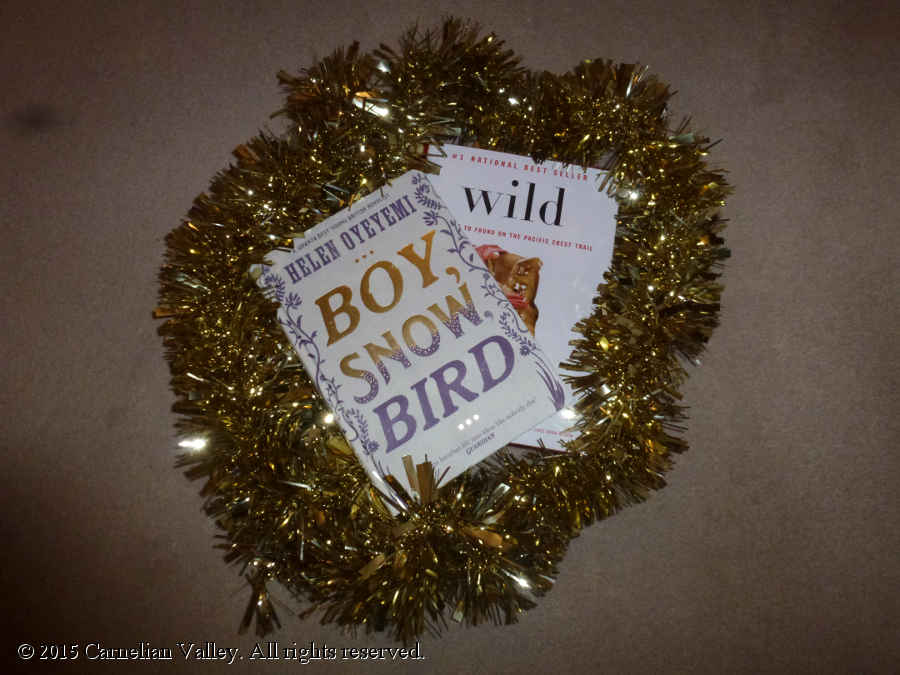
Thanks to a present-giving day I’ve the two books above, books I’ve wanted ever since bloggers first reviewed them. To say I’m excited would be an understatement. I wasn’t sure Strayed’s would still be available in hardback and was so glad to find out it was; I quite like Reese Witherspoon but would prefer she sticks to our film collection. How envy-inducing is it that Oyeyemi’s published five books and is only 30? Anyway, I’m glad to have another fairy-tale retelling ready as well as what I know is a good, if rose-tinted, story of self-discovery.
Right now I’m reading Sunjeev Sahota’s The Year Of The Runaways, trying to get through the Young Writer Of The Year short-list before the winner’s announced. Sahota’s book is number three for me, I’ve only the Ferguson left, and I must admit I’m finding it difficult. It’s not a bad book, it’s that at almost half-way little has happened beyond going to work. There have been flashbacks to the characters’ last months in India but the writing hasn’t interested me enough to make me eager to keep reading.
I watched the film adaptation of The Book Thief last week. Perhaps it’s the amount of time since I read the book, but I loved the film. It was definitely different – considering so much of the success was down to the writing it was always going to be – but as adaptations go I found it fairly faithful. It’s one of those that can stand on their own without being constantly compared. I found myself picking up on lots of themes and thoughts I’d missed when reading and again, it was the absence of the writing – I was enthralled by Zusak’s writing to the point that was my main takeaway. Watching let me see the way Liesel’s burgeoning education and stealing habits conflicted against the idea that a lot of material was bad and shouldn’t be read, the irony of it, even if book censorship wasn’t a major part of the period. And of course there’s Max’s use (whether just in the film or the book, also, I can’t remember) of Hitler’s book, blanking it all out, so the binding could contain new words. I could’ve done without the Apple product placement at the end, though. It did a good job of letting you know exactly which era we’d moved into, but in case you didn’t know, Apple paid a lot of money towards the production of this film, multiple exclamation marks and capslock.
I’ve a couple of Christmas book ideas ready in case I finish the shortlist. One is Annie O’Neil’s The Surgeon’s Christmas Wish and I’m tempted to re-read A Christmas Carol. I suppose I could review The Jolly Christmas Postman – children’s present idea if you need one – but I’d have to pinch it from my nephew and he’d likely have something to say about that (quite rightly, too).
The tree is up and the decorations are about 40%; complete. There’s still tidying to be done and the inevitable hoovering of tree spines that reminds you you’ll have to get another tree before too long. We found last year’s half-full box of cards and it’s definitely a half-full situation – after fretting that we hadn’t bought enough a couple of weeks ago we now find we have the right amount. As much as it’s nice to be out around Christmas getting everything done early so you can just saunter about instead of worry is lovely. Presents don’t get wrapped until the last week, however – you’ve got to leave some of the fun for the festive period. In addition, I’ve been reading about Christmas traditions – did those of you who aren’t Kiwis know that in New Zealand advertising on television is banned on Christmas Day? It’s also banned at Easter. Awesome, isn’t it?
How are your reading, shopping, and decorating going?
Is There Anything In The Fact Tolstoy Calls Both Karenin And Vronsky Alexei?
Posted 4th December 2015
Category: Further Thoughts Genres: N/A
2 Comments

If ever I’ve asked myself a rhetorical question on the blog, that question is it. While I was writing my review of Anna Karenina and specifying names I couldn’t help but follow it up with this question. I’m always like this as you’ve probably realised by now: if there’s something in something that might be worthy of exploration, I’m on it. I’m a strange scholar.
My question came after I’d discussed the way Tolstoy doesn’t condemn his characters (that is to say yes, I know what happens to Anna, but Tolstoy doesn’t ram it down your throat). Vronsky has his moment wherein he could’ve been the precedent that Anna followed instead of the other way around, and Karenin is strong-willed over the question of divorce, but Tolstoy doesn’t offer either to the vultures. Vronsky’s just a bit immature, perhaps, and Karenin thinks of things society says he shouldn’t which ends up endearing him to us rather than seeing him in a bad light.
I noticed, whilst reading – and forgive me, I can’t recall the quotation itself this time – that Anna does make note of their both being called Alexei. If we needed any evidence Tolstoy thought about it, there it is.
So yes, of course there must be something in the fact – most books steer clear of repeating names, the vast majority not even giving the same name to characters on different social scales – but what is it exactly? Is it something in the region of ‘Alexei’ perhaps being a common name, or is it something more fundamental to the text? I think it’s the latter, very much.
The most compelling thought is that it’s as simple as a comparison; this Alexei is doing this, that Alexei is doing that. There are possibilities for an ‘Alexei’, and these are two of them.
Perhaps it’s more abstract, more philosophical: ‘Alexei’ is a ‘person’ who is in Anna’s life and there are two ways it can, or she can, go. Alexei as a name, a ‘thing’, is the factor that alters Anna’s mindset. Anna is the core around which Alexei spins. And I’ll stop there on this thread or we could be going on forever.
What I think is interesting, when viewing the two characters only by their shared name, is that we see the way Anna moves from one Alexei to another, literally, and figuratively. She moves from one station that was comfortable and content but no longer enough to another station that is comfortable (enough) and happy in its way but soon goes full circle and becomes limiting. Her first relationship became limiting and no longer enough and her second relationship comes to emulate it.
Both relationships stifle Anna; she is wrong in her thinking that joining Vronsky will change anything other than being with someone she, for the time being at least, loves. (Not that love isn’t important, of course.) By joining Vronsky she casts off the limitations placed on her from her relationship to Karenin, which could be said to be imagined limits as well as social limits – Karenin is quite easygoing after all. But in joining Vronsky, she gains limits – she loses the respect of society for leaving her husband. She looses her son even as she gains a daughter. And it’s interesting that the child she bares Vronsky is a baby she doesn’t particularly care for. It shows just how much the change has affected her because it isn’t as simple as saying ‘oh, she should love Annie because the child is Vronsky’s’; Annie is a reminder of what Anna has lost. If having a baby changes a person’s life and lifestyle then Annie represents that to extreme and almost damning effect.
And of course Annie’s age and status mean that Anna, neglectful, will naturally have less empathy afforded to her by society and, likely, the reader also. Who would have thought a tiny baby who is seen so few times and doesn’t grow up within the novel could be so important a character?
To me it seems plausible that Tolstoy uses the same name for both men as a way of showing that Anna isn’t really moving as far or as much as she assumes. Tolstoy knows a lot more than her and planned for it – he lets her swan about and then watches as what she’s done dawns on her, becoming more the neutral reporter (because if his rather swift tidy-up and focus on Levin at the end isn’t a suggestion of what’s more important I don’t know what is). For all the freedom she seems to gain, Anna is stuck. And her world revolves around her relationship with Alexei, both of them.
What are your thoughts?
November 2015 Reading Round-Up
Posted 2nd December 2015
Category: Round-Ups Genres: N/A
3 Comments
November was busy, a very long month. I attended two events, Meike Ziervogel’s book launch and the Young Writer Of The Year blogger afternoon. I struggled through a mini slump but made it through. There were birthdays and anniversaries and of course all that pre-planning for Christmas. It was a great month, really, but I am looking forward to getting my weekends back. I’m currently on my 55th book so I’m going to aim for 60 but at this point in the year, anything’s a bonus.
The Books
Non-Fiction

Lisa Hilton: Elizabeth: Renaissance Prince – A look at the Tudor queen from the perspective of Kingship rather than Queenship. Good but lacks focus.
Fiction

Elizabeth Baines: Used To Be – A short story collection with the theme of different roads in life. Very, very good.

Nicola Cornick: House Of Shadows – A woman looking for her missing brother starts to unravel the mysteries her brother was working on at the time and finds out the house she’s always seen beyond the trees was destroyed years before she was born. Utterly superb.
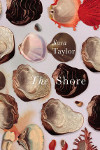
Sara Taylor: The Shore – Short stories, interlocking, about different generations of a family. Excellent – full of twists and things you didn’t know you needed to know.
Poetry

Sarah Howe: Loop Of Jade – A collection of non-fictional and fictional tales, many based on the poet’s mother’s life as an unwanted daughter in China. Super.
I didn’t realise it until I wrote this list but all my books have been stellar this month. The only one I wasn’t so keen on was the non-fiction but even that wasn’t bad. Without a doubt my favourite was House Of Shadows; it’s likely it’ll be on my best of list. The Howe is right up there too, with its literary and intellectual aura. I’m enjoying reading my first award shortlist, I’ve never followed an award before and certainly never read any shortlisted or longlisted books before a prize has been awarded.
Quotation Report
None this time.
well, it seems it’s the most wonderful time of the year. It’s also pretty mild which is lovely and great for heating bills, even if it’s not particularly festive. (Hearing Elton John singing ‘step into Christmas’ in Britain, when there are still one or two people in shorts, is a bit mind-boggling.)
What was your favourite read this month? And do you have any Christmas book recommendations?
Sara Taylor – The Shore
Posted 30th November 2015
Category: Reviews Genres: 2010s, Domestic, Historical, Magical Realism, Psychological, Science Fiction, Social
1 Comment
Broad horizons. Land’s end.
Publisher: William Heinemann (Penguin Random House)
Pages: 304
Type: Fiction
Age: Adult
ISBN: 978-0-434-02309-7
First Published: 19th March 2015
Date Reviewed: 17th October 2014
Rating: 5/5
Chloe’s glad to hear Cabel’s dead. He tried to hurt her sister. The girls live with their Dad in a small house; they aren’t as well off as their ancestors. But the ancestors didn’t have great lives either.
It’s easier to carry on the summary in this way: The book sports a ‘fractured narrative’ (a term Taylor uses herself), a style in which the author looks at one person’s life as a short story, then looks at one of their relatives, and so on so that you end up zipping from the twentieth century back to the nineteenth and into the future, learning about the various branches of the same family tree. It sounds a lot more complicated than it is.
The Shore is a fantastic book. From the first chapter – the first story – it pulls you in and whilst there are dips every now and then it soon draws you back, yes, not unlike the tide.
Taylor’s writing is lovely. She uses a variety of persons and tenses, ensuring each story is different, and whilst every chapter boasts its inevitable literary style, the characters are varied. The world building is naturally limited in space – most of the book is set in the same place – but unlimited in scope. Taylor aptly describes her settings but there’s space to put your own mark on it; much of the beauty of this book is in its potential for numerous visuals. (And for the most part it doesn’t matter how you see the setting as although there is history in the book, other genres are more important, for example, fantasy.) What’s not so varied are the themes; this is part of the book’s concept. Underlying almost every one are a few particular ideas: to have or not to have children, to do what is right or not, to drink or not to drink, to stay or not to stay – the same basic themes run throughout.
Most poignant of these is surely the question of children. It’s a question that isn’t in every single story – some of the chapters are about children themselves so it wouldn’t be appropriate – but individual agency and the right to choose, most particularly in the sense that throughout history women have had that mother, home-maker role to play, are very important to the text. A lot of the women in this book are happy to have children, but many of them are not so keen. The second group are most often victims of abuse. You also have a few members of the family tree who know how to use herbs to prevent pregnancies and the stories surrounding them are full of neighbours coming to their door for help. It’s a study of choice, the ability or not to choose, the extremes of either choice, and history.
Always in the background, or in the foreground, abuse. It’s often the same characters who happen to feature, whether in person or in reference, and one in particular who has an affect on a number of people. The Shore can be hard to read on occasion; Taylor doesn’t shy away from telling the details. And the cycle continues; Taylor shows the classic concept of traits, decisions, in this case abuse, passing down the family tree however in this case it’s not quite the stereotype – it misses generations, it comes in from another branch, and so forth.
The book presents itself as your average nostalgic read, one of those books that is quite comfortable in its telling if not its content, the sort of book about American life that can draw non-Americans to it due to the setting being so different. There’s a hint of magic in this book, there are paranormal elements, and there’s some science fiction. It’s these three elements that stop the book from dipping too far (in the way I suggested earlier) because there comes a point where everything starts to come together, when things you didn’t know you needed to know about, things you didn’t know anything about, all get twisted up into that very satisfying literary notion, that feeling that causes the recently coined phrase ‘you guys, this book!’ Taylor doesn’t just deliver a gratifying literary experience, she delivers a gratifying literary experience with bonus points. And she plays with the concept of religion in an interesting way.
There are a few houses in this book, but two are more important than the others. These houses are as much characters in their own right as Manderley and are a further factor that unites the already tangled family members. The houses keep the family grounded in their history; they couldn’t leave forever even if they wanted to.
The Shore is exceptional. It’s written well, it’s planned well, it’s executed well – it’s everything well. It’s a subtle thrill that bowls you over mentally, intellectually, without requiring you jump up and down about it, though you surely will.
I received this book at the Young Writer of the Year award blogger event.
Related Books


