




On Society, Inequality, And (My)Self
Posted 19th October 2012
Category: Chit-Chat Genres: N/A
8 Comments
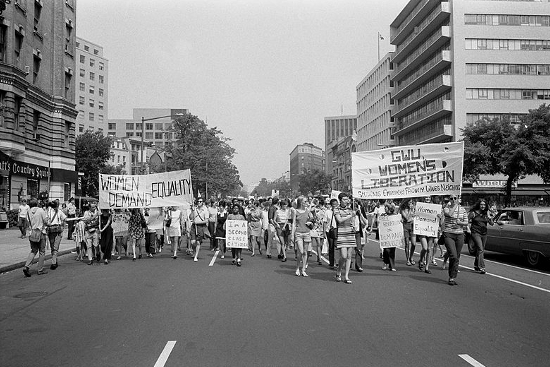
Following on from my post on the gender of authors and their characters, I’m wondering if the change from childhood to adulthood has impacted the way I select books. If you haven’t read that post, you may want to first.
As a child I read a lot more books by male authors and had no qualms about reading books filled with male characters. I wonder if the change in my selection process has something to do with the way I’m now an adult and recognise the way women have been treated in general, and treated by men, throughout history. In simple terms, I now see all the inequality in the world, as people are ripe to do as adults.
So has the change from reading mostly male authored books to female been influenced by my adult knowledge of inequality? I know, for example, that I was absolutely over the moon when I read Jodie’s post on the influence of the Olympics and Paralympics on British sport – the Women’s Euro 2013 Football qualifiers were being shown on the BBC; I wanted to text everyone I knew, it felt a triumph for women and any sport that isn’t your bog standard Wayne Rooney football. And it’s good to hear of women in male-centric careers and of the hopeful beginnings of equality in pay.
In regards to my reading as a child, when I was younger I didn’t know about inequality, but once out of school and it’s protective environment I started to become aware of everything bad, and of course only as I got older and started taking an interest in the world in general that I learned of inequality of the sexes. But it wasn’t just this, indeed as a very young child I had preferred the company of my male cousins over females, finding girls and their dolls boring. Growing up saw a change in the gender of friends I made and so changed the ideas that were given to me.
Through this story it is evident that there was a change in my relationship to gender, both naturally through the influence of society, and in the way I responded to girls myself (though that could be said to be down to society too). And there is further change now that I have become particularly interested in women’s issues as an academic subject as well as ongoing interests in sexuality, equality in general, the rise of female education, and any country that isn’t my own.
I would say that I have been influenced by my adult knowledge of inequality as well as my first hand experience as a woman. Where choosing books is concerned I believe that it is a subconscious effort, but it is an effort nonetheless.
Has your place in society and your upbringing been responsible for what you read today?
On David Eddings And Views About Women
Posted 15th October 2012
Category: Chit-Chat Genres: N/A
5 Comments

This post is brought to you by some of the themes, terms, and actions found in The Belgariad and The Malloreon, two related series by Eddings. I haven’t reviewed all of the books, but if you aren’t familiar with the series or have forgotten about them, here are my reviews of Guardians Of The West and King Of The Murgos. In the second you will find the paragraph about women that first inspired this article. Please note that due to the situations that raised the thoughts that follow, if you have not yet read the second series and plan to, you may find minor spoilers in the text.
Eddings has a view of women, but what that view is is debatable. At first, when I realised how well he had laid out these views, I thought it was simply a minor point, an issue hardly worth any time, but the more I looked into it I saw how deep these views were ingrained in the text overall. Indeed it could be said that Eddings’s views form part of the background context of the books, with Princess Ce’Nedra being destined to become a wife and mother as part of a prophecy, but since the prophecy also declares that everyone else must play a role, and because of her husband having to play a particularly warrior-like role he continually wishes he could escape from, I believe we can leave background context out of it.
The main issue of contention is the way Eddings handles the relationship between his male and female characters, and the fact that given Eddings is a narrator with a pretty distinctive and often black and white tone, we can assume that this relationship forms part if not all of his own views towards women. On the one hand we have an author who portrays his female characters as strong and somewhat fearless – Polgara is a powerful witch, Ce’Nedra leads an army into battle, and newcomer Prala gives her betrothed a sword and basically tells him to get on with it. Indeed it is rather nice that Eddings sets up these women in such a way that, for example, in Ce’Nedra we have a small weak-looking girl who has a tendency to take off her clothes and flirt, later spinning round and bringing the ceiling down with her yelling, giving her husband as much in an argument as she receives from him. But on the other hand we have the group of male characters constantly worrying about what “the ladies” might think. And this isn’t the sort of thinking that will make the women turn round and give the men the what for, this thinking is about how a woman will react to seeing the bodies of slaughtered people. Yes, this worry is about how women, who have previously gone into battle and caused the violent deaths of hundreds, will react to seeing a dead body. It doesn’t make much sense, does it?
There are times when the women cry, such as Polgara when distraught at the fact she had to condemn an amateur sorceress to Hell, or Ce’Nedra as she mourns the loss of her baby to a kidnapper, but these situations are understandable. The men have their moments too, one can imagine that any of them would have felt similarly to Polgara, and whilst Ce’Nedra’s husband Garion may not cry over his baby he certainly feels anger and the need to get the child back. And yes, Ce’Nedra, once the leader of armies, becomes a woman obsessed with screaming at people to get back “my baby”, thus neglecting Garion’s role as a father, but in the event one can’t blame her outrage and pain.
So if Eddings portrays both sides, the strong female and the weak female, what is he saying? One could argue that he is suggesting, through his use of the male characters as the sole perpetrators of the idea of the poor weak woman, that women are actually the stronger sex and that men in all their power and historical superiority have got it all wrong. And it is true that in some cases when a male character has decided something, a woman comes along and overturns the verdict. Indeed Eddings could be demonstrating a sort of hypocrisy within his world.
However if hypocrisy is the right word, then it is also an apt one for another element we must consider – the role of Eddings’s wife in the series. It is more widely known today than it was back in the 1980s; Leigh Eddings played a substantial part in the writing of all of Eddings’s books, and while we may not know how much of a part exactly, it is safe to say she played at the very least an equal role, be it in the creation of the world, the plot, or in the writing itself. Yet what you won’t find, even in most cases still today, is Leigh’s name on the book covers. And considering women were publishing books in the 1980s it would not be wrong to wonder if it was David’s decision rather than his possibly female-fantasy-author-phobic publisher to not include her name anywhere except in the dedications (in which she is credited for her support and contributions). Indeed in this it is interesting to note that the woman’s first name was in fact Judith1. A quick search of reviews will yield a few murmurs of discontent for Leigh, such as “his books have taken a turn for the worse since Leigh Eddings began to be credited” for example2.
If it was Eddings’s decision to neglect Leigh in the author credit, then what does that say to the reader? Did Eddings not believe in the literary relevance and education of women, as some of his (male) readers seem to believe too? Did he want to take the glory for himself rather than acknowledge in an appropriate manner the help of a woman? To read this interview certainly suggests a writer who was rather vainglorious.
Does it make sense that a woman in the 1980s would have been so gracious to give all credit of every book to her husband? As mentioned in my review of King Of The Murgos, Girl Power followed not too long after the publication of all two series had happened, and in a time where women were writing and achieving success through it, would it really have been so bad for a husband and wife to write a book together? The generation the couple were born into might have had something to do with it but considering the books are so appealing to both women and men a double credit would have made sense, even if “Leigh” is a unisex name and thus open to mis-comprehension.
Sadly there is little to add to this debate as both authors have passed on and the only additional point that can be made is the unsupported snippet from a fan that they simply decided against including her until she was writing so much that it was impossible not to3.
It would be nice to think that the co-authorship was such that the treatment of women was simply a means of adding tradition and the values of an older generation into the text. It is the tone and method of reference that makes it suspect. The jury is out and likely always will be; and I could always be completely wrong. But whatever the feelings of Eddings, his wife, or their publisher, it does seem a particular message within the text, albeit difficult to discern.
Have you read the Eddings’ work? What are your thoughts on the portrayal of women therein?
References
1 Jakob Persson, Jack’s David and Leigh Eddings site, 8th January 1999
2 Kotori, Amazon USA, 7th October 2004
3 My boyfriend (he introduced me to the series)
On Making A Classic Book List (Or, What Is A Classic?)
Posted 10th October 2012
Category: Chit-Chat Genres: N/A
15 Comments
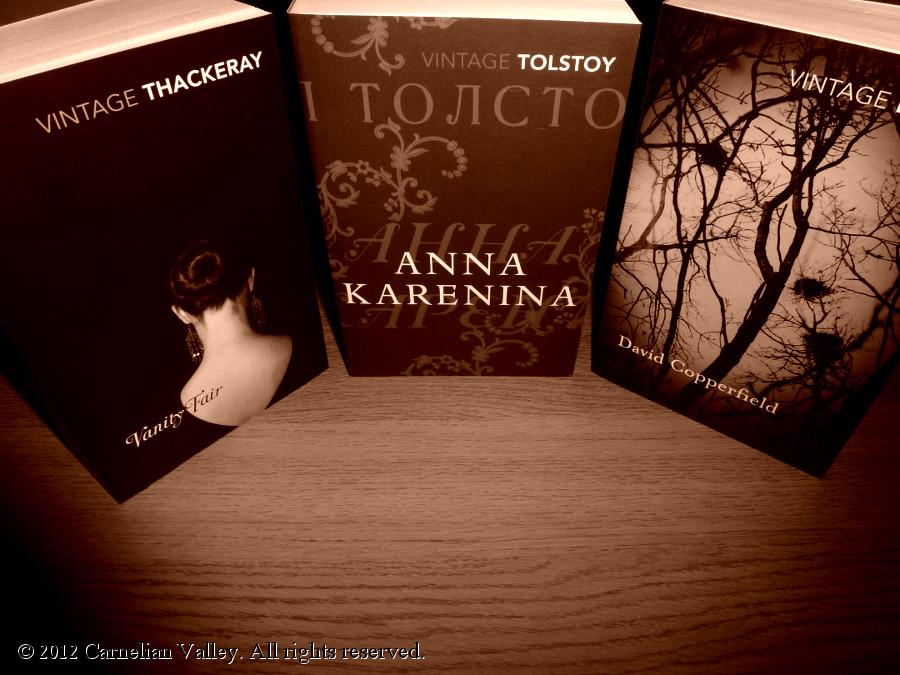
Ever since I learned about The Classics Club, I’ve considered joining. Many of you have joined already and are successfully getting through your lists, and whilst it’s not exactly necessary to create a list or join a club to get through books, I love the idea of honing in on the classics I’d like to read. When I want to read I don’t pick my classics at random, but I could do with a plan of sorts so that I am actually getting through the books most important to my reading-self.
There are many books I have floating around my head for inclusion, and I could probably just note them all down and be done with it, but reading book blogs has broadened my horizons as to what makes a classic and as such this post is in fact more about that. Because the question is, what do I deem relevant, what could I include to make it a classic book list that isn’t so much a global notion as it is about my personally and thoughts? Obviously there are differences in opinion. I think everyone is in agreement that, for example, Jane Austen’s works are classics, but does everyone agree that Harry Potter is a modern classic series? And how far do I go in my definition of time, and do I only choose books based on their eternal favour with readers?
If I define the word “classic” for myself, without bringing anyone else’s thoughts or popular opinion into it, then “classic” is a broad term encompassing famous old books, old books that are no longer famous but were in their day (and are eternally relevant in their subject matter), and books that are modern and famous and likely to be passed down to future generations. However this definition causes a problem because whilst I have no problem including Dickens on my list, or Bacheller, I’m not sure about the two remaining books of the Fifty Shades trilogy.
So I must limit my own definition. Therefore for the purposes of my club list I will be including the following: old famous books and old best sellers. It’s not much of a definition but I’ve the basic idea set. I won’t define “old”, instead I’ll go with the flow. And rather than go and search for books I might like to add to my list, thus possibly ending up with a very long list that will put me off the idea altogether, I’ll include the books that come to mind all by themselves. A piped piper of Hamelin wouldn’t go amiss right now.
Because you have to have 50 books for the Club, I’m still writing it out; I will let you see them later otherwise this post will be far too long.
For now I’m going to ask you this question:
How do you define “classic” for the purposes of your own reading?
On Having A Reading List For The Month
Posted 5th October 2012
Category: Chit-Chat Genres: N/A
15 Comments

I’ve noticed that many bloggers, in their monthly round-up posts, include a list of the books they plan to read in the next month. It intrigues me as it’s something I’ve never done. I do write a list of goals for the year, but it is always in the knowledge that it’s not the be all, end all, and that a year is a long time. I suppose you could say I find monthly book lists too rigid. This month I’ve had to make a list because I received several ARCs, but that’s different – it’s a one-off and the circumstances are new; I’m choosing not to count it.
I don’t plan my reading beyond the odd “maybe” because I suppose I’m one of those in-the-moment readers. And I say “suppose” because I’ve only now realised it. It is rather in keeping with my post on requiring certain moods for certain books – I read by mood and if my mood doesn’t like the look of Tolkien then I won’t read Tolkien. I find mood important in the enjoyment and appreciation of books and therefore to have a list only to go against it would not work for me. It would be a failure.
I guess I see a monthly book list as a chore, and yet so many people use them and find success. And I have wondered if the organisation leads to more reading happening – without a list it’s easy to spend a while staring at your bookcase, undecided. I am generally a list person. I plan most of my reviews, I keep a database of the books I’ve read this year, a list of blog post ideas, and a note of when books need reviewing – but planning my reading is something that eludes me.
Do you plan your reading? Why/why not?
Literary Criticism Can Not Be Accomplished By Bloggers (Again)
Posted 25th September 2012
Category: Chit-Chat Genres: N/A
7 Comments
If you haven’t already, you may want to read this article before continuing: The bionic book worm
It is quite evident, given what the editor of the TLS says, that the “professional” (in quotes because I think it’s run its course) literary critics have no knowledge of book bloggers at all. It would appear that those who scorn bloggers have simply logged on to Google and found a few blogs that may not represent the community at large, or they have simply not spent enough time browsing to find blogs that suit their tastes. And it’s rather funny really that, furthering this, Peter Stothard fails to realise that many bloggers share a similar educational background to him. I don’t know about you, but I’ve come across many profiles that cite Oxbridge and indeed other educational institutions of high regard; maybe you are one of them? And they are good writers.
It is ridiculous of Stothard to suggest, subtly as he does (yes, I’m being kind there), that the opinions of all bloggers are of no importance and should be disregarded. Not only is he fundamentally wrong, all he achieves by saying so is to reveal his own prejudice of anyone who does not conform to the high standards he has created for himself. If Peter Stothard does not approve of you, then that is all that matters. Never mind that there is a place for every opinion online, and that people in general appear to appreciate the concept that anyone can have an opinion which is worth listening to – if Peter said that a person who doesn’t read shouldn’t have an opinion on such-and-such a book, that would be easier to understand, but to scorn the very valid opinions of a person who read the book is elitist. And I think we’ve seen enough of that against our community, when will they learn? Indeed, as Rebecca of The Book Lady’s Blog said, “every new article about how bloggers are ruining something is really an acknowledgement that bloggers are powerful” 1. The bigger picture isn’t that bloggers are bad, per se, it is that they may mean the end to “professional” criticism. Perhaps if the media actually bothered to write about books as much as they used to, and didn’t just display their class and educational status in their reviews, there would be more healthy competition between us rather than a reason for scorn. Because as has been said numerous times, there is a place for both our factions.
And how can it be said that some opinions do not matter? Of course there will always be occasions where a person will review in a positive manner a book that another thought was an abomination to literature, but that positive review has its place. People think differently, they appreciate different things, and what works for one person won’t work for the other. A blogger might review a book in a way that reveals they lack understanding of the background context. Another person may not find such a review helpful if they happen to know the context – maybe the blogger will say something that makes no sense or is literally irrelevant given that context. But, and this is a big but, that review would appeal to someone who also doesn’t know the context of the book, and the fact is very few, given the number of books we read, will ever know the context behind everything. That includes people of Stothard’s ilk, whose mistakes are often pointed out. We often learn through our reviews and the discussions we have about them. There will always be someone who will find an opinion useful, even if others don’t. That in itself is reason to suggest that all opinions count, and particularly it is reason to suggest a level of equality in opinions.
So Peter Stothard, and every other “professional” critic who hasn’t bothered to spend time doing research and discovering our various purposes, can continue blathering on about what they have little knowledge of, making a fool of themselves in the eyes of not only those who they scorn, but the very many who support bloggers. Maybe one day they will realise that there is not such a strict divide between “them” and “us” and that the people who work with “professionals” often work with bloggers too. Perhaps that’s another thing that gets them in a twist, the idea that it is no longer exclusive.
Their motive is not to suggest that good criticism is in decline, their motive is to prove their own worth and to push back the force that is eligibly turning the tide. Unfortunately for them, it is their own methods of working and the refusal to work with what is popular that is the real enemy they should be throwing their words at, and it seems unlikely they will ever realise it.
If Peter Stothard wants to keep up, he should probably reconsider his workings – “in a normal year, you might read 20 novels” – and see how many novels the book bloggers are getting through.
References
1 Rebecca Schinsky, on Twitter, 25th September 2012
More opinions on this topic:
- Amanda Nelson
- The Guardian
- Damien Walter
- Alex in Leeds
- Rohan Maitzen
- Alice Farrant
- Simon Savidge
- John Self
- Forbes
- New York Daily News
- Huffington Post
- Insatiable Booksluts
- Damyanti
- TeleRead


