




Read. Review. Forget. Repeat.
Posted 16th September 2013
Category: Chit-Chat Genres: N/A
11 Comments

I’m going to say straight away that I realise this topic has been covered before. It was an idea that occurred to me as I finished writing a review that took 10 minutes, so whilst I can’t say I am copying anyone, I can say that I know there is a sense of ‘been there done that’ to it. However considering everyone differs in their reading and reviewing, I reckon talking personally is still relevant.
I am loving the way I read and have been reading since I started blogging. Blogging and reviewing have kept me on the ball – even my reading slumps are shorter than they were before. Before blogging I read and read in depth, but I never particularly questioned what I read, and the few times I found myself engaging with a text in a critical way I ended the book feeling at a loss as to how I could take it further, to express my thoughts. I admit to seeing little point to writing about books if I wasn’t going to somehow publish what I’d written. This is in part why I have never kept a diary.
Blogging has kept me on my toes, it forces the kind of reading and writing that I always wanted to achieve but never could, namely in-depth looks at themes the sort I never managed at school. It’s stopped me procrastinating. It keeps my mind ticking over in a way my university studies haven’t. It constantly educates me.
But.
It’s peculiar. Even though I am engaging in texts far more than ever, at the same time the production-line sort of reading that my blogging requires makes me wonder about what has been lost. I realise this production-line description may not fit other bloggers, but know that overall it works for me – I’m terrible at getting things done without a deadline.
Whilst I know I engage far more, I believe I savour texts far less than I used to.
Read, enjoy, review, done. Start again with the next book. I do, often, think back to previous books and sometimes write about them, even if their popularity has long gone (take my recent post on The Iron Fey for example), but still I feel guilty. I even feel I’m cheating the author of someone who should be a good reader of their work, even if I’m technically offering them more as a reviewer than I would be if I were silent.
It’s the production-line that is the issue. And I know that most book bloggers have one of sorts, be they faster than mine, the same, or slower. Indeed sometimes I envy those who post infrequently, those who you are pleasantly surprised to see again in your feed reader. They must savour far more than I.
And yet. And yet I wouldn’t want to go back to reading less, to reviewing slowly, to no self-imposed deadlines. I’m someone who must review straight away or else the review doesn’t get written (my promised review of Persuasion exists only as a forgotten draft, and my notes on Fifty Shades Of Grey made a lovely-looking plan that is just that, a plan). I love the blend of personal reading and critical reading that allows me to have two different ratings for the same book, allows me to gush in my round-ups and remain more objective in my review. I like that I am consuming so much knowledge. I thrive on my deadlines. But I still feel like I’m doing the book a disservice, that I’m doing my future self a disservice.
I don’t believe one way is better than the other. They both have pros and cons and each suits different people. But, in my case at least, I can’t quite come to a complete agreement with myself about either of them. I know the way I read and review is right for me, yet I can’t quite accept it, whilst I do accept it.
Maybe it’s because I realise how short a time each book actually takes, how much that eight or nine pounds lasted (when I’m reading a book I purchased), the number of months an author spent on it only for me to finish it in a matter of hours. It’s in that last one that I also feel I’m giving authors the short straw. How quickly the average review takes me to write, even if I know I’ve written something the author would like.
It’s all those things and more. I can’t see myself switching reading methods, but it’s worth thinking about every so often – it has the potential to improve the method you have chosen. I know this most recent contemplation has made me read a bit slower, to aim to read more closely.
Have you ever suffered this conflict of interests? Which works best for you and do you adhere to it in practise?
Where Do You Draw The Line On Fiction In Historical Fiction?
Posted 4th September 2013
Category: Chit-Chat Genres: N/A
9 Comments
How much fiction in a historical novel is too much? How little is too little? As a person who reads a lot about the past, these questions are in my mind constantly.
As you will likely know by now – or, if you’re a new reader, you’ll find pretty quickly – I’m a stickler for historical accuracy. Granted, I’m a bit of a perfectionist, but it is the historian in me that takes precedent in this case. It can irritate me if too many liberties are taken without a later discussion (I love detailed acknowledgements and bibliographies), but I do enjoy speculation. I don’t mind bias if it is obvious and accounted for. I do mind it if it is presented as fact.
Of course this mainly concerns historical books that are based on true events and real people, however a novel that is entirely made-up except for the era it’s set in of course needs to be accurate about that setting.
If there is too little fiction in a book, then I often wonder what point there was in the author writing it. Yes, I do think that, in fact what I really wonder is why they didn’t simply go one step further, expand on their research, and write non-fiction. (I find it interesting how it’s easier to notice that there are ‘too many’ non-fictional books on one subject but that it takes quite a few more fictional books to realise the same there.) There are many novelists who would make fine ‘bona fide’ historians, indeed I can’t help but think it’s the idea of the necessity of letters after one’s name that has resulted in more fiction than non-fiction, for all that fiction is incredibly enjoyable.
I digress. There need to be enough gaps in the history to warrant the fiction, else many liberties must be taken. The problem with liberties is that they are difficult. In taking them, an author must take care that what they write sounds believable. Likewise with liberties you want to still be respecting the people about whom you are writing, most especially if they were good people. (Of course ‘good’ is often down to the individual’s opinion.)
I admire writers of historical fiction. They have to find gaps, research, be accurate but not too much, be entertaining and unique but not take too many liberties.
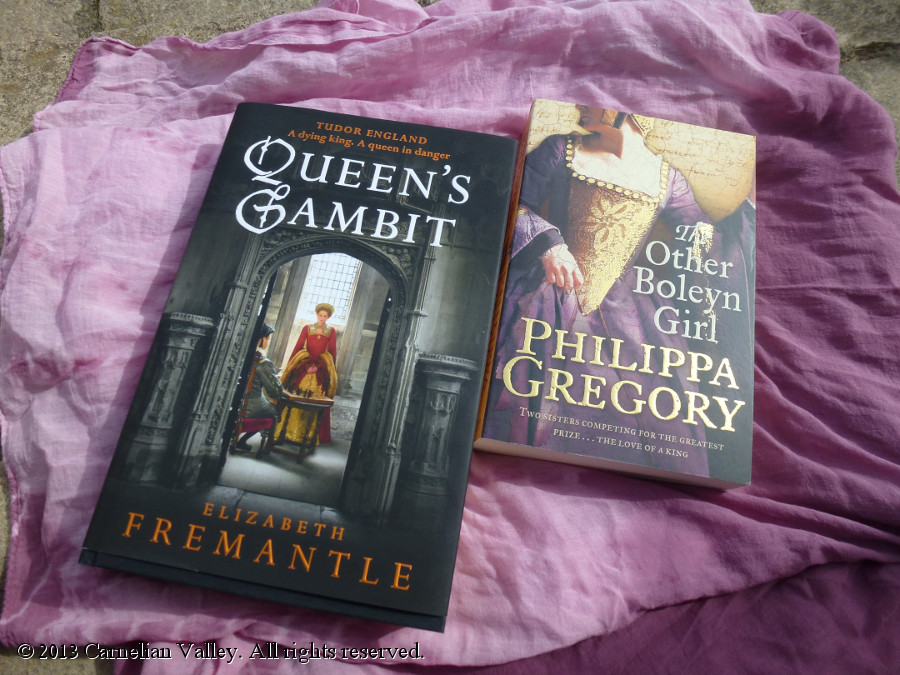
The books that inspired this post were The Other Boleyn Girl by Philippa Gregory, and Queen’s Gambit by Elizabeth Fremantle. Both concern the wives of Henry VIII – Anne Boleyn and Katherine Parr respectively – and a comparison became inevitable when Fremantle was recommended by the publisher to fans of Gregory.
It’s no secret that I am not a fan of Gregory. I found her book a bit too extreme in its hatred of Anne Boleyn and Gregory presented her views as facts. As someone who has continually weighed up the evidence – at school, at leisure – I’m on the side of those who believe Anne was innocent. And whilst I enjoy reading the opinions of those who think differently, there is discussing your opinion and then there is being malicious.
Where Fremantle is concerned I enjoyed the work. I see how a comparison was made, but the difference with Fremantle is that the dislike is firmly in her characters’ court. If Fremantle has any controversial opinions she is respectful and objective about them. Fremantle actually makes Elizabeth I quite the villain, which is incredibly controversial, but she keeps it to the page and provides a plausible explanation for it. And she brings in popular opinion, too. Her work creates a sort of mental discussion with both sides included.
There is often a thin line between acceptable and unacceptable, and a historical fiction writer takes on a lot more than just the requirement for a good story when they sit down to write.
Historical fiction books, those that concern real people and events, are a little like fan-fiction. They sate the appetite of history lovers, who feel the loss of what has been forgotten very keenly. They educate new ‘fans’, often leading readers onto a course of study (for this reason in itself writers have to be careful). In order to be enjoyable to as many people as possible there must be a degree of accuracy and accountability.
I draw my own line at the deliberately controversial for which there is no evidence. I continually enjoy speculation that is believable and fills gaps.
Where do you draw the line about fiction in historical fiction?
On The Resulting Procrastination From Leaving A Book For A While
Posted 19th August 2013
Category: Chit-Chat Genres: N/A
6 Comments
I have this issue when it comes to getting back into books I’d been in thrall to but for one reason or another had to set down. When I mentioned it on Twitter, I found I wasn’t alone.
For some reason, going back to a book I was loving seems a chore. And I could have been loving it enough for it to trump Jane Eyre (my favourite for three years now), I will still procrastinate over going back to it. This situation was the major reason it took me so long to become a book polygamist as an adult, because book polygamy had been a feature of my childhood. I got over the procrastination, finally, but it seems it’s reared its head again.
If I wasn’t loving the book it makes sense, so I’ll go no further with that. Otherwise I wonder if it has something to do with our Internet-era short attention spans, which despite constant battles I’ve found I’ve developed. Of course there are times when leaving a book for a while is necessary, but then I ought to want to pick it up once I was free to read again.
Jennifer answered my tweet with a very good point. She said that momentum is easily lost. In many ways that’s worrying as it infers we are shallow, fickle, but then we can be. Jennifer’s words made me wonder if it means my love for the book in question wasn’t real, if I somehow projected onto myself the opinions of others (which is possible, the book I was having trouble with at the time was The Omnivore’s Dilemma which was a recommendation twice over) but considering the little I can say against Pollan’s work this surely cannot be the case. But then perhaps a sort of hype did exist around my enjoyment of the first few chapters that slowly wore off and I was left with a base interest that wasn’t quite strong enough to keep me reading quickly. I don’t know.
My friend Laura said that procrastination is why she makes sure she reads a book in one sitting, which I thought a great idea. And I thought it a poignant statement as Laura has a young son. In many ways I wish I had her reader dedication. But it did make me wonder about longevity. Of course it would be difficult to discuss on a case by case basis before the book has been read, but if it is obvious you’re not going to get through a book without that single sitting (which Laura didn’t suggest – this is my own thought) does that infer the book isn’t worth it? Books are supposed to stay in your mind, if for nothing else then to help you remember the author next time they release a book, but a book you have to read quickly in order to finish, without the sort of firm deadline that comes with study, is surely not quite as worthwhile a use of your time.
Ever since this started happening in earnest I’ve tried to make sure I get back to a book. I don’t want to return to being the ten year old with as many books as her age on her currently reading list. But I thought it something that should be discussed, questioned, and referred to others.
So, do you ever find yourself procrastinating over current half-read reads you were enjoying, and do you have a method you use to combat it?
Why Are Long Books Intimidating When We Read A Similar Number Of Pages Per Month?
Posted 14th August 2013
Category: Chit-Chat Genres: N/A
13 Comments

This question entered my mind as I looked for perhaps the thousandth time at my copy of Shogun, which has been lingering on my To Be Read pile since early Spring and on my shelf for years previously. I won’t be reading it. I keep placing newly-acquired books on top of it.
At present I’m reading Gone With The Wind, the second longest novel I own, and although at the time of writing I’ve only just started it, I can see myself taking my time just because it’s long.
What I find particularly interesting about our general reluctance to read long books is that many of us read just as many (or more) pages per month. It’s just that those pages are separated into a few shorter books.
I wonder if we are okay with shorter books because on an unconscious level we trick ourselves into thinking the overall page count is less.
I also wonder if ‘book count’ has something to do with it. I admit to seeing the page count for Gone With The Wind, once I’d entered it into my year database, and realising that my overall count for 2013 may take a hammering due to it. But then do I think the reverse of novellas? That novellas will create a falsely high count? Of course I don’t; the thought never crosses my mind.
A more likely response – does our fear of filler content play a part in our reluctance? A long book is naturally likely to be accompanied by lots of description, and possibly telling rather than showing – and if we’re not enjoying it, it’s a long way to the finish line.
When I asked my question on Twitter, Scott referred to having found success upon choosing the ebook version. However, having a Kobo with a page count you can’t turn off, I couldn’t take his word for it. In a physical sense, ebooks must be easier. You can’t see the stack of pages ahead and you can’t feel the weight of them. But if your ereader presents a page count, and especially if it shows the original number (as opposed to the dynamic count based on your font settings), seeing a number could be just as off-putting.
I’m confident enough to say that it is, in part, a variety of the above – but I’m not at all confident in suggesting that that comprises every reason.
Why do you think we have ‘issues’ with reading long books when we’re happy to read the same number of pages via shorter books?
Appreciation And Maturity
Posted 5th August 2013
Category: Chit-Chat Genres: N/A
7 Comments
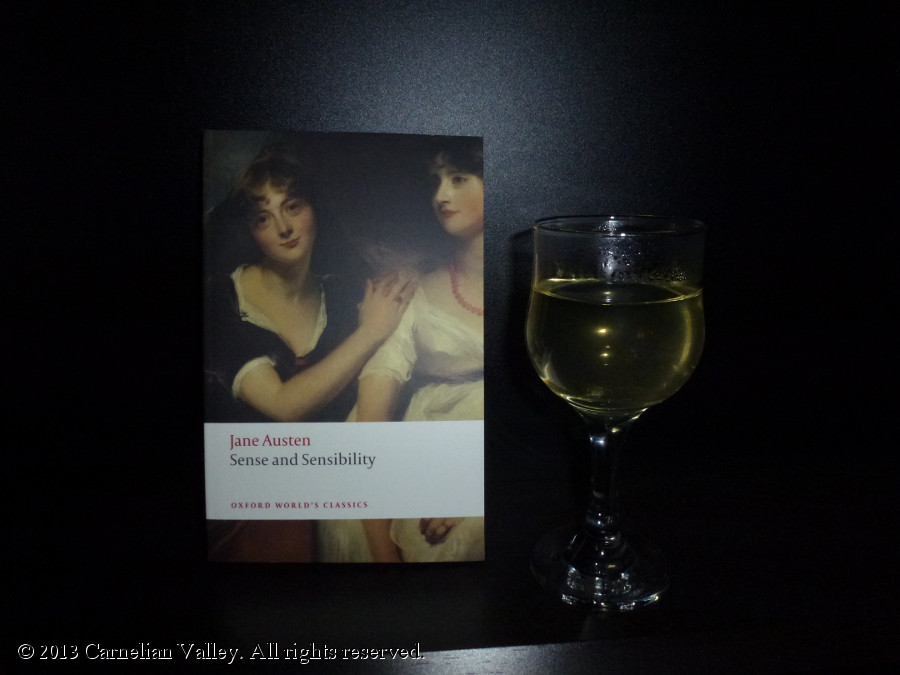
I had a fantastic English teacher. Once, when we were watching an adaptation of a book (I forget which), she paused the video, telling us girls to look at the brooding eyes of the handsome actor. Perhaps it was stereotypical, but it was obvious it was more about her own attraction and was quite the funny moment. On my last day of school I told her that my music career dreams were just dreams; she told me I shouldn’t let go of them.
But it was her unapologetic admission in class that made her memorable to me. The inevitable day came when a student asked how we could be so sure an author had meant to say such-and-such through their book, how we could know for certain that what we were being taught was correct. Our teacher simply said we didn’t, and that we could only ever assume and suppose, no matter what other teachers said. Our future classes were better for it.
At that age it was impossible to truly appreciate that what you were being taught was the result of many years and many opinions – the compilation of the studies undertaken by those who have gone before us and who know the text better than we do, maybe better than we ever will. Indeed in my case it was only through blogging that I came to recognise themes and hidden meanings. And maybe we can’t say for certain that we are right, but we can say we’re pretty damn close.
It’s interesting, and I think this applies whether you’re actively writing about books or not, how we mature, finally interpreting all those meanings. In this way it’s sad that so many classics are introduced to people at school, before they are old enough to truly understand them, because they might then miss the wonders that dissecting a text, for study or leisure, can bring. I know that my writing here surpasses anything I ever thought at 15 years of age, simply because I know more about the world.
And it’s this, our knowledge, that allows us to understand themes, and see what our teachers saw in the books. We can know we’re right about Daphne du Maurier’s use of identity in Rebecca because we can empathise with the heroine’s need for love and to fit in; we can understand why Jane Austen’s work doesn’t require a lot of action because we can appreciate the social context she was writing in.
Knowledge is important, but even more than that, surely caring is paramount, too. We can know a lot of facts but if we don’t care about them, we won’t be inclined to study and again I think that’s what can set us apart from our younger years. I’m looking at this from one perspective of course, in my ‘time’ in my year group there were no passionate advocates of literature (or if there were they were silent about it) and I know that grades were everything, the actual lesson of no lasting importance.
How reflective of your own experience is this?


