




Childhood Favourites: The Babysitter’s Club
Posted 18th September 2015
Category: Chit-Chat Genres: N/A
6 Comments
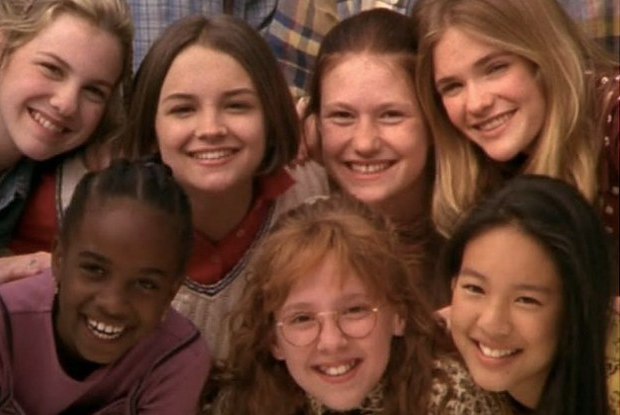
Promotional photograph from The Babysitter’s Club, copyright © 1995 Columbia Pictures.
One day, when I was about twelve, my mother came to me and said that her co-worker’s daughter was getting rid of her collection of The Babysitter’s Club books – would I like some of them? I replied in the affirmative and, having noticed the ‘some’, said I’d rather like all of them. Being polite doesn’t become a young reader who is being offered a bookish gold mine.
My mother was already on her way back to the phone, these were the days of twisted cords, and didn’t hear the last bit. Or perhaps she just pretended she didn’t.
Nevertheless a few days later a big box of books was in the hallway. There were around forty to fifty in it – a whole collection up to a certain point minus the odd books. (There were 131 books in the original series.)
Many I’d already read. I had a staunch favourite: #21, Mallory And The Trouble With Twins; it was a book I’d read a few times and I read it a few more. If I remember rightly, the twins’ ages made for much mischief, what I suppose we’d call ‘action’ today, even if there wasn’t much plot. That there were two children made it more fun and I thought the names – Marilyn and Carolyn – were a riot. I don’t know how many times I read that book, but it seems it was enough that I remember the names even now. Most of the collection went unread; likely they’re amongst the books packed away and I hope to read them some time, especially as the page count will seem far smaller.
I discovered book #21 and, I believe, the series itself, on one of our infrequent trips to the library. I can’t remember how often I finished other books I took out – I was one of those children who thought what we now term ‘all the books’ and then realised I had a pile of books that was quite daunting. (This is likely the reason the trips were infrequent.) Ann M Martin’s books, however, I read from cover to cover, even all those overly-long re-cap introductions. Mallory was my favourite, closely followed by Mary Anne and Claudia. Stacey was out of the running because I considered her an interloper – I read the books out of order and she left early on.
Nowadays I know many of the books (those following #35) were ghost-written. A sort of pseudonym of many writers, it was an ‘ah ha’ moment – I always did wonder where Martin found the time.
I can’t remember many books I read in my first double-digit years, but I’ll always remember the club. Nostalgia hits me on a fairly regular basis and I’ll probably have to find a copy of the film at some point for a re-watch because wouldn’t you know I loved that, too.
What book(s) defined your pre-teen years? Did you read The Babysitter’s Club?
Re-Thinking Favourites
Posted 17th August 2015
Category: Chit-Chat Genres: N/A
4 Comments
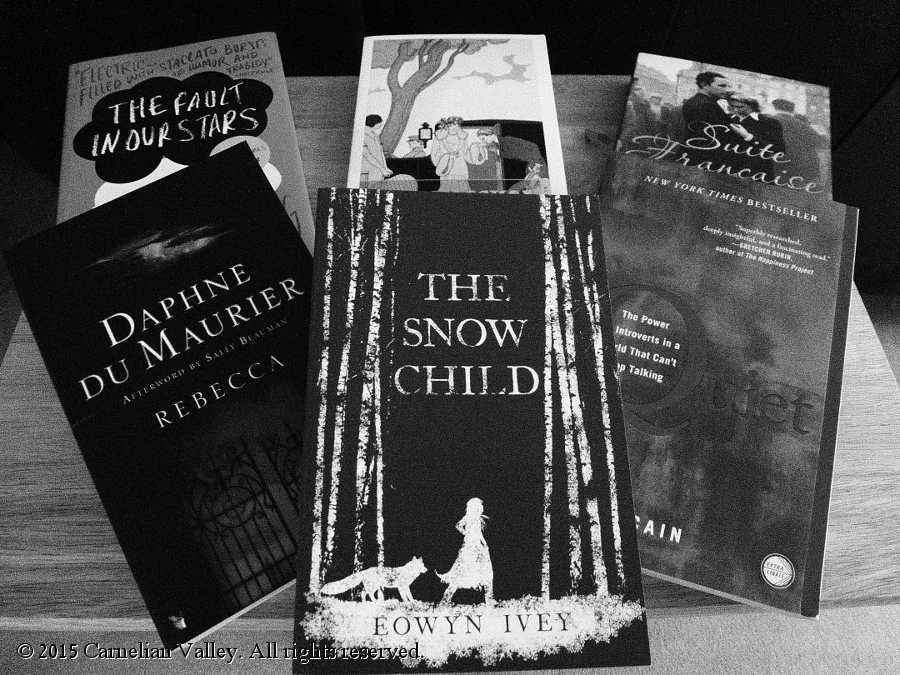
Wendy wrote a lovely comment on my post about the role impact has on whether you remember books. Thinking about what she said about her favourite books made me realise something, something that I found myself touching on when I met Alice in Brighton: the books I call my favourites aren’t often the books that have stayed with me.
Sounds crazy, doesn’t it? I sure think it is. And the thing is, it had never occurred to me before Wendy posted her comment; I guess I get so wrapped up in loving good plots and, on the other end, writing lots of posts about themes I find incredible, that I don’t notice the disparity in how I view them on a personal level.
Some books from the shelves beside me that I’d call favourites in the ‘old’ sense: Jane Eyre, The Secrets Of The Jin-Shei, Bitter Greens, The Fault In Our Stars, Empress Orchard, The Doll. (That’s a mix of pre-blogging favourites and books I’ve loved since blogging. All books I’d give 5 stars too.)
The Brontë had some impact, mostly in the sense that I just loved it. The Forsyth and the Green I could write about (and did, in the case of the Green). The other three I just enjoyed, straight out. My favourites can be about the pace of the plot.
There’s nothing wrong with my list. Nothing wrong with thinking that a book has to be excellent in every way (and that some don’t need subtext and and ‘deep’ themes) for it to be a favourite. But then I look at the books I still think about a lot today and love to discuss: Rebecca, The Great Gatsby, The Snow Child, The Time Machine (I believe I’ve written three posts on the last one). I loved them but they wouldn’t make a top ten list. But why not? they should – I think about them all the time.
I’ve realised there are many ways to define a favourite, and the word itself has many meanings, means different things to different people. I suppose I ought to adopt ‘old favourites’ and ‘favourites with impact’ to include those I hadn’t considered favourites but clearly are. If I can’t stop thinking about a book in a positive way then it’s surely a favourite, right?
How do you define favourites and what does a book have to contain/be to be a favourite of yours?
Reading Without Studying
Posted 14th August 2015
Category: Chit-Chat Genres: N/A
5 Comments
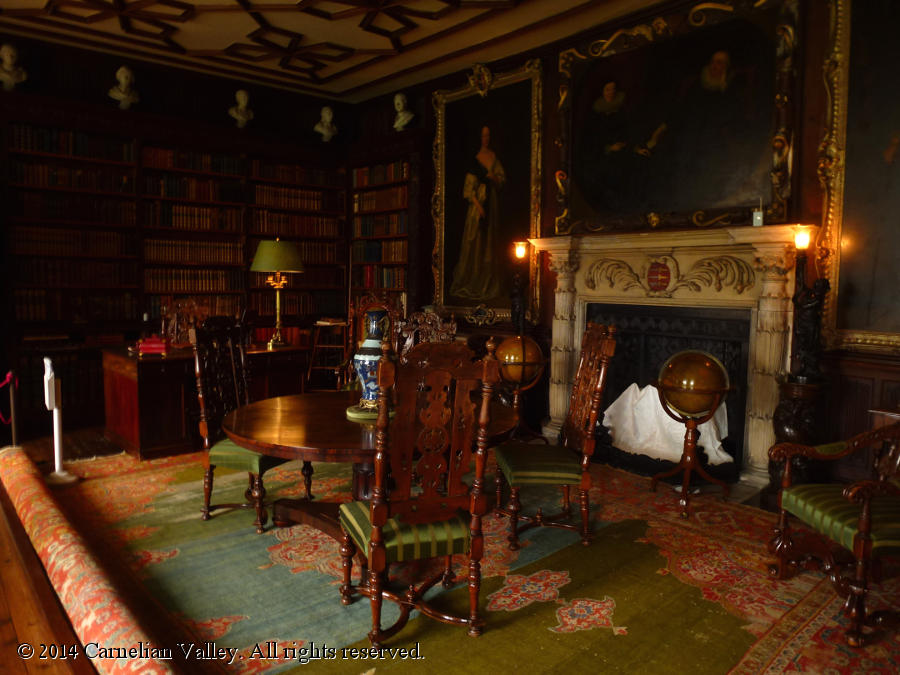
There are many people, I reckon, who would read this title and think ‘it’s good to just read and not study texts’. This is part of what I want to discuss today.
As a school student (in the years that set you up for university study) I thought that completely. One should just read and enjoy a book, in fact it would ruin the book to study it. And did the author write the book for it to be studied? Likely not. There has been at least one author in the past who has been annoyed that their book would be used in a studious environment.
I can’t say I fully disagree with this even now the way I approach literature has changed. I think it’s important that we’re ‘able’ to read any book just for enjoyment, just for the pleasure of reading, without dealing with anything that isn’t right on the surface. Sometimes, though I value the way I read now, I wonder what it would be like to read Rebecca without considering the way she lacks an identity. I can’t imagine what it would be like – in this example at least, because I think the theme of identity is so important – but the idea is fascinating. And despite a lack of literary thought, I think such readers’ opinions would make a refreshing change in a world where themes are studied to death.
I’m not sure I could ever go back to reading without thought to the studious side of it. Not because I don’t want to – I’d like the choice – but because it’s ingrained. For something I never gave two hoots about in my teenage years it’s become an intrinsic part of who I am as a reader.
So I think both ways of reading have value but as someone who does look at themes, characterisation and so on, I see reading with an eye to all that as important. I know that a lot can be missed if you don’t look deeper into the text, and albeit some of what you learn might have been manufactured by overzealous professors – that ‘how do you really know that’s what the author was trying to do, Sir?’ still rings true – most of it has been written in deliberately. It would be difficult to read Lucy Snowe’s extreme hatred for Catholicism without the context of Charlotte Brontë’s upbringing. I think a person would be frustrated with it either way, but it’s possibly easier to read in context and makes a lot more sense. It would be hard, I think, to really enjoy The Great Gatsby without thought of the American dream and the society of the time; it would be quite a mundane book without it. I’m trying to keep references to a minimum and stick to classics, but I think even modern books like The Hunger Games could be considered similarly.
(Of course there are also works by, for example, Shakespeare and Chaucer, that don’t work so well without knowledge of the historical contexts and language of the time. You could potentially read them, but they might not make much sense and certainly the language would be difficult.)
I suppose I see reading purely for pleasure and only on the surface to be great, and goodness knows it’s a lot easier to read when you’re doing that. I see reading with a view to study, however the study is conducted – for the reader alone or for school or in order to write an article – as a step up, so to speak. Not required but of great value if it’s of interest. I know from my younger years that interest is key.
What do you think about this subject?
The Internet Versus Reading: My Short Attention Span
Posted 31st July 2015
Category: Chit-Chat Genres: N/A
3 Comments

I think this image is meta in this context.
So I’m sitting there on the sofa, late afternoon, and finding it incredibly difficult to just sit still, open my book and read it. (Or, as I would have been more likely to think then, ‘read the damn thing’ with emphasis on that ‘d’ word the same way we place emphasis on Rhett Butler’s uttering of it – this was a damn book and a damnable situation.)
Read a handful of pages, me? I didn’t even want to read 10 – correction: I couldn’t read even 10. And I realised…
The Internet has affected the way I read; it’s affected my reader self. No real surprise there – it’s affected us all.
I read a lot better years ago. I was younger with fewer responsibilities, true, but that wasn’t it. I can’t blame age, adulthood, here. I think our collective description of a tome was different before the Internet. I see 500 page books labelled ‘long’ nowadays and think “that’s not long! Have you seen the size of Gone With The Wind, of Shogun?” We now call what we used to call average or fair-sized, long. I can’t help but think this change is down to our shorter attention span, linked to Internet usage.
I am always distracted by what else I could be doing, often web-based things, but not always. I believe what the Internet’s done is make me less attentive over all so that shorter or more involved tasks, even if they’re as mundane as pulling away clothes, hold more interest. I note how many pages I have left to read frequently. As said, even 10 pages is too many.
The sad thing? This happens even with books I’m loving. It makes me wonder if I’d have liked them even more if the web didn’t exist; it makes me wonder if in an alternative universe there’s a Charlie spending hours reading Jane Eyre with not one check to see how long she’s got left. We would both love the book, but you’d believe her passion for it over mine any day. She’d probably remember more of it, too. I kind of hate her.
I still recognise a good book but do books lose a bit of impact through the loss of attention span?
Planning this post? One of those distracted times. Yes, I came up with the idea upon sitting down to read. I could’ve left it until later but the thing is that reward, that feeling of satisfaction that accompanies writing and finishing a plan, doing any short task, is instant compared to the reward of finishing a book. A plan takes minutes, a book hours, days. You can fit in many more rewarding moments by doing shorter tasks and that fact that the longer ones are ultimately more satisfying doesn’t win out.
I like the idea of unplugging whilst I read – I try to read in a different room, I’ll turn any devices off. But it’s still difficult; it’s as though we’re at the beginning of an evolutionary stage for humanity. Maybe we are.
It’s weird to think I’m going to have to work hard at something so normal, but hopefully I’ll get there as I hope we all will. Reading shouldn’t be this difficult, at least not in this way.
How has your attention span changed since the advent of the Internet and does it affect your reading?
How I Choose The Books I Read And Review: Review Copies
Posted 29th July 2015
Category: Chit-Chat Genres: N/A
4 Comments

Last week I discussed how I choose the books I read and review as far as blogging and myself are concerned. Whilst choosing review copies and ARCs is largely the same, there are a few other things I take into consideration which some of you may be interested in knowing. Perhaps I can help new bloggers with my methjod and those of you who are established can weigh in with your own, too?
Let’s do this in chronological order assuming the pitch is via email (most are, after all – don’t use Twitter!) The first thing I deal with is the email. Publishers and authors write in different ways – authors tend to be a bit more personal and chatty, publishers more formal. I don’t mind either, though certainly, and I think I speak for most bloggers here, personality wins if you’re looking to start a working relationship with me. Time will factor into my decision: when is the book released? Will I be able to read and review it in good time? (Don’t pitch a book that’ll be released the next week – pitch earlier.)
But most of my thoughts concentrate on the tone and content of the email. If I’ve never worked with the pitcher, I’m less likely to reply to a mass email. (I’ll reply to mass emails from those I already have a working relationship with, for example Peirene Press sends mass emails on occasion but otherwise we’re on a first name basis.) I’m not a big fan of ‘hi’ by itself but it’s far better than ‘Hello The Worm Hole’, ‘hi blogger’, and, as I was recently called after a couple of back and forth emails, ‘Mr’. (The sudden revelation that the person I was talking to hadn’t even viewed my blog was off-putting to say the least.) I like to know you’ve read my blog and got a feel for what I do; you will know if my blog’s a good place for your book. I once received a lovely pitch that I had to decline because I don’t review books for young children.
This brings me to tone – be polite. Introduce yourself – be brief. Tell me why I might enjoy the book, compare it to others I’ve reviewed. If you write a good, short, email, I’m likely to choose your book so long as I’ve the time, and if I don’t have time I may well recommend other bloggers if they do.
I choose books sent to me by people I already know – they tend to know my literary tastes. I used to receive books from a publicist who continually got it right – I read every book she sent, whether she’d notified me previously or it turned up unannounced. I will put a solicited book before an unsolicited book unless the unsolicited is one I’d been reading about or sounds particularly good. I don’t get to all that many unsolicited books simply due to time but, again, it does depend on who sends them.
I check samples in most cases. If there is no sample to be found I won’t accept the book unless I’ve read the author’s work before. I like to know what I’ll be dealing with. I will also prioritise authors who have social media accounts, publish across platforms (if the book is digital only) and have an informative website. In other words, if you’re promoting yourself, I will promote you. I can’t help an author who has done little to get the word out – people wouldn’t know where to go.
As to the way I schedule my reading, release dates get priority. If all the books have another month to go, for example, I will flick through them and pick what interests me at that time. I won’t generally put a book I’m already reading aside (unless it’s a tome) but I make note of release dates to keep on track. Physical copies get priority on occasion, too, due to the fact they take me away from screens.
It’s all down to the communication and the book itself. And I will put a review copy before an ‘owned’ book I want to read if time is short.
Any bloggers wish to weigh in with their own methods of choosing?


