




On Tackling Reading Attention Spans
Posted 16th November 2015
Category: Chit-Chat Genres: N/A
3 Comments

How can we make ourselves more attentive in our reading? This is something I’m constantly struggling with, struggling to get better at. On days when I’ve a lot to think about I’ll find I’ve ‘read’ several pages – my eyes have scanned the print, which could have been gibberish for all the attention I paid – and I’ll suddenly realise I’ve not taken anything in and have to go back some pages. (Or, more often, I’ll call it a day and come back to it later.) This ‘dreamer’ sort of experience isn’t wholly down to the Internet, but is nevertheless still down to attention.
So, for one thing, I’ll call it a day if I’m not really reading what I’m reading. There’s no use in half-read books and I see it as not only disrespectful to the author if I were to call it ‘reading’ but also disrespectful to myself. I’ll go and do whatever it is that’s taking my mind away from the words on the page, be it a chore, tiredness, or, if it’s just that I’m distant I’ll go find another task, one I can do in autopilot.
I find making a deliberate action of reading helps, making a show of the activity, if you will. I’ll read in a different room to the computer, I won’t take my phone, and I’ll make a drink. I’ll create the whole snuggled up with a coffee and a book tableau because the association is so enticing that the enticement itself works. Turning off the computer can help but it’s not foolproof. That move to another room pays off, and it pays more the further it is from any devices. It’s easier to stay sitting with a book and make a couple of notes with your pen than to get up, plod along to the computer and fire it up. Laziness is an excellent tool to use for keeping your attention on your book. Again, like the snuggled up tableau, it’s using laziness for what it can mean.
Of course you need to pick the right book. You need to work out whether it’s your attention span that’s the problem or whether it’s the book and if it’s the book change it. It could be both in which case you need to leave reading for a bit and come back to it later. Comfort helps, too.
Lastly, I try to make a plan. If it’s a work day then you’ll be going home for dinner and after that reading for the rest of the evening, or you wake up and read during breakfast – that sort of thing. I find the earlier in the day I plan my reading, no matter when I plan it for, the better the reading itself goes. If you can plan it down to the hour it’s even better. This may be a basic to do list sort of idea but it really works because everything you need and want to do is given time, a start and an end, so you can focus solely on reading during the time you’ve allotted to it.
These are the ways I deal with my attention span. What are yours?
Why Boys Can’t Read Girl Books
Posted 21st October 2015
Category: Chit-Chat Genres: N/A
4 Comments
I head over to the children and teen fiction section of the bookshop. A mother and her son are browsing through the books. Mum late 30s to early 40s, son 12ish. Mum’s doing the looking, pulling books off shelves and putting them back whilst the son stands passively behind her.
“That’s romance. You don’t want that.”
“That’s got a girl on the cover, you don’t want that, do you?”
Rinse and repeat. This was not a conversation, these were rhetorical questions delivered in a tone that said the comments were not open to discussion; the kid had no say in the matter. Had I been able to spot a few books I knew enough about to combat being ignored (where is Diana Wynne Jones when you need her?), I would’ve stepped in.
When I thought of what I’d seen, and though I don’t think it’s solely down to a mother (it could be father to son, too) I reversed the situation. Perhaps it’s the men in my life but somehow I can’t see it – a man with his twelve year old daughter picking out a book about boys fighting aliens and saying, ‘that’s not for you, sweetheart’. What I see instead is a father singing the praises of it, trying to get his daughter excited about science fiction and Star Wars. It wouldn’t have happened years ago, true, but it would now.
There are articles (and this, too – Hale is the most prominent author in this context), about the gap between boys and girls. Girls are reading lots of books – books by male authors and female authors, books about boys and books about girls. Boys aren’t reading as much, often shun books written by women, and say that books with heroines are ones they won’t relate to.
Well we can teach them about Katniss Everdene as much as we want and may be successful with a boy whose opinion is influenced by his peers but if the problem is, like the one I saw, rooted in a black and white manner at home, the focus is going to have to change.
How I Keep Track Of The Books I Read
Posted 14th October 2015
Category: Chit-Chat Genres: N/A
5 Comments

This is a question that’s popped up in my blog stats and it’s one I can answer (“how to get rid of worms”, for example, isn’t my forte).
I’ve been keeping track of the books I read since 2009, a little before I started book blogging, and it’s one of those things that have become important to me. Not only does a log mean I remember my books (apart from reviews), I find it helps keep me in check regarding goals. I reckon everyone would champion their own methods and I’m sure there are a few I’ve never thought of, but I’m going to explain a couple.
I keep track via a database. Well, I say database – in reality it’s a word processing document I’ve set up as a big table. Each new year sees a new document. I tend to finish all the books I read in the year I started them; any I don’t get carried over – I remove the entry from the official year and place it as the first entry of the year I finish it, whether I finish in January or October and whether it’s in the next year or a few years later. (Tolstoy, I’m looking at you.)
My columns have multiplied as the years have gone on. The headings are as follows: Title; Author; Type (Fiction/Non-Fiction); Main genre; Secondary genre; Page count (if known); Date began; Date finished; Publisher; Initial publication date; Rating; Fame (in other words am I reading classics?); Notes.
I had thought to add gender to it because I’m aware I read far more women and want to balance it out but, well, you see how long that list is already and I’ve found keeping the awareness of balance in mind helps anyway.
My data is naturally tailored to the fact I blog – if you’re not a blogger no matter what method you use you’ll likely have more space for fun data and I’m somewhat envious.
Horizontal scrolling aside, what I like about this method is that you can add as much or as little information as you want. Book covers, opinions, different ratings, music that you listened to whilst reading and so on. The downside is unless you use Google Docs or even if you use one, it’s not always going to be available. I’ve sometimes had to estimate start dates due to being away from my device.
If I didn’t use a database I’d most likely use a book journal, be it one designed with tracking in mind or a notebook I modified for the purpose. The added bonus of using an official reading journal is there’s space to note your thoughts. The downside is you’ve limited space and you’re stuck conforming to whatever categories of information the designer deemed important. In many ways a customised notebook is the way to go.
When choosing it really depends on who you are, why you want to keep track of your books.
Book blogging itself is a good way – I love that I no longer have to remember all my thoughts – the vast majority are written out as posts.
What’s your method?
A Rambling Exploration Of Reading Everything An Author’s Written
Posted 25th September 2015
Category: Chit-Chat Genres: N/A
5 Comments

It all began with Shadows And Strongholds. I think it was one of those ‘if you liked that you may also like…’ recommendations Amazon gave me. The cover was appealing so I bought it, read it, and promptly wanted to read everything Elizabeth Chadwick had ever written. There were a fair few by that point and I can’t say I’ve read many yet but I had one thing in my favour – right place, right time. By the end of Christmas Day I’d acquired almost all her backlist.
When you fall in love with an author’s work more often than not there’s that desire to read everything they’ve written, that ‘read all the books’ colloquialism. Read them all now. Sometimes this is fine because the author may have only written a couple of books but in many cases your discovery is accompanied by an extensive backlist and that’s daunting. So daunting, in fact, that your desire can dwindle – you might read a couple of the books or you might never read any more than that first one you started with.
Certainly it works best if the author hasn’t written much by the time you discover them. You’re in no danger of your reading being taken over and as such a thing can cause slumps that’s a good thing. It means the catch up won’t take too long. Until I decided by my own accord to stop reading Lisa Jewell – I was getting bored of the casual usage of ‘retard’ and ‘spastic’ in every book – I was doing fine playing catch up with her work. I read the couple of books from previous years and then it was just a case of picking up the latest release each summer. When I think of my late teenage years in terms of reading, I think of Lisa Jewell.
To read all of a prolific author’s work takes a chunk of reading time. Unless you really space them out – which will not help if the author’s still writing – your reading will be less varied. It’ll be hard going if you’re someone who likes to read widely. I stopped reading David and Leigh Eddings so this wouldn’t happen; I’m not sure when I’ll be reading book 2 of series 2. In this case there is at least a firm ending point as David passed away a few years ago.
It’s hard to know where to start after that first book: should I read Rose Cottage, Nine Coaches Waiting or Touch Not The Cat? If I can’t find the one I’ve been recommended I’ll choose at random. That’s certainly what happened with Mary Stewart. Do you find that you’ll read your first book by a famous author only to hear it doesn’t do justice to their talent? I wanted to read Angela Thirkell and opted for The Brandons because it happened to be in the shop.
The want to read everything – do you? should you? I want to read Austen’s letters because I’m sad I’ve no more novels left. I drew the books out as long as I could; I can’t do those re-imaginings. There’s that feeling of loss once you’ve finished. Perhaps not if you’ve managed to ‘finish’ Nora Roberts – that deserves a party – but certainly finishing that last book is like coming to the end of an era. It’s the end of your era of reading insert author’s name here.
Where the most prolific writers are concerned there are going to be times you pass them over for those with a shorter backlist. The reward is closer, it won’t take as much time, and similarly to the way our attention spans have shortened I’d say sometimes the length of time we’re willing to wait for a reward has, too.
Who did you last discover in this context?
Making The Fictional Real
Posted 21st September 2015
Category: Chit-Chat Genres: N/A
2 Comments
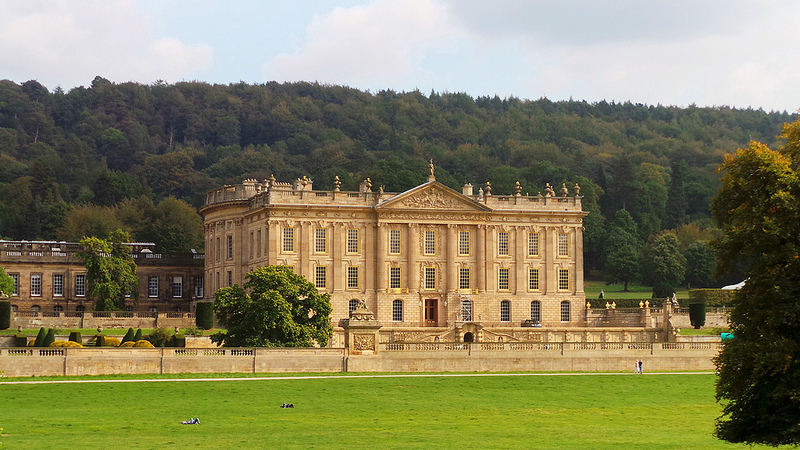
This photograph was taken by Gareth Williams.
Alison O’Toole, from The Toast, wrote an excellent piece about literary pilgrimages that included as a matter of course the way we apply reality to the books we read. These literary pilgrimages were journeys to places that inspired authors to write.
It’s a compulsion of sorts, I think, to provide a reality to fiction, most especially the books we love (we’d probably rather emphasis the unreality of those we dislike). Not only does it help us when it comes to imagining settings and characters, I’d say there’s a subconscious element that deals with the way we want it to be real. This element includes the way it almost needs to be real – we incorporate the fictional into general culture enough that a factual basis is useful. The same can be said of the way we present things – concepts, people. If asked, “Who is this Mr Darcy you reference?”, few would say, “Oh, he’s just this character from this old book”. No, it’s more likely we’d explain that Mr Darcy is a character in Pride And Prejudice (the title important itself), that’s about the lives of five young women, and so on. We’d also likely describe Darcy’s character, too, and what he looks like… or at least what Colin Firth looks like drenched in water. In this way we make Darcy real because he kind of is; the idea of him, what we mean when we reference him, is entrenched. And so we apply the fictional to our world, our culture, in such a way that makes it inherent to it.
To reference Mr Darcy again, with all the ideas of richness that accompany him, if we call Chatsworth House Pemberley (albeit we’re drifting into film now) no one would say we were wrong, indeed you’d probably be thought a bit snobbish if you said it. (This reminds me of my visit to Highclere Castle: I asked a staff member about the portrait of Charles I and felt very uncomfortable because despite the validity of my question, it had nothing to do with Downton Abbey.)
We make the fictional real because we love it. We love it enough we wish it were real and we like to share with others. It’s part of what makes reading a social activity. We make the fictional real because it has affected us; we glorify it, we set it on a bit of a pedestal. And because we all talk about it enough it makes sense to make it real.
We can tell how big a mark something has made by how well-known the reference is. I’d say Mr Darcy rarely needs extra information – most people know what the name represents, at the very least, and they know he’s a fictional character. Brontë’s Mr Rochester? Perhaps not so much. He might need a qualifier: ‘Mr Rochester from Jane Eyre‘, not because Brontë is less known, more due to the popularity of adaptations.
I think it’s a fascinating concept, this factualisation, if you will, and unlike some things that can be laughed away – imaginary friends, for example – literature is accepted by all in this way.
I’ve droned on about Darcy – what other characters can you think of who’ve been applied to reality in this way? Are there any characters/books that have impacted you enough you’ve incorporated them into your vocabulary?


