





Rambles From My Freewriting Journal: Cinderella
Posted 13th February 2017
Category: Chit-Chat Genres: N/A
Comments Off on Rambles From My Freewriting Journal: Cinderella

Screen shot from Into The Woods, copyright © 2014 Walt Disney Pictures.
It occurred to me after watching Into The Woods that we’ve had a couple of (few?) deviations recently from the meeting-the-prince element of Cinderella – in particular the aforementioned Into The Woods and Malinda Lo’s Ash. It kind of plays around with the idea of being summoned to the ball – what if you don’t want to go or aren’t sure you want the prince? If every eligible lady must attend, what about those who don’t actually want to, who want to marry someone from their home town? In the context of the traditional story and in the context of the audience/reader, the desirable outcome is to have the prince – so romantic!
By placing our modern contexts and the idea of independence into it, you get something different. Maybe Cinderella would like to meet the prince and then have time to think about it. Maybe it shouldn’t just be up to the prince (though admittedly no one says that; though it’s the prince’s opinion and love that’s considered important to this element of the story). Is the whole before-midnight aspect useful in this way, effectively giving Cinderella time by way of a forced ‘out’ to consider what she wants, even if in the end she doesn’t use it? (Arguably this is what Into The Woods does.) Whilst it may not be possible for Cinderella in the Disney versions, the overall darkness of the traditional story… there’s a possibility there perhaps that whoever it was who first told the story thought of all this. Unlikely, but possible.
I liked how in Into The Woods Cinderella decides to leave a shoe for the prince to use to find her if he so wishes, thus making a sort-of decision for herself. It plays with the whole idea and puts a bit more active thinking into the fairly ridged concept of let’s-have-a-ball-and-choose-a-girl. Cinderella made the effort to get there, now it’s the prince’s turn. (Though of course by removing the responsibility of choosing for herself and giving it to the prince she’s just pushing away the decision. If she’d given it more thought at the time she would have realised earlier that she didn’t want to marry him.) The message is there – don’t let others decide your destiny. You’ve likely made a decision, you now have to own it.
Your thoughts?
Are Older Books More Important Than Newer Ones?
Posted 6th February 2017
Category: Chit-Chat Genres: N/A
6 Comments
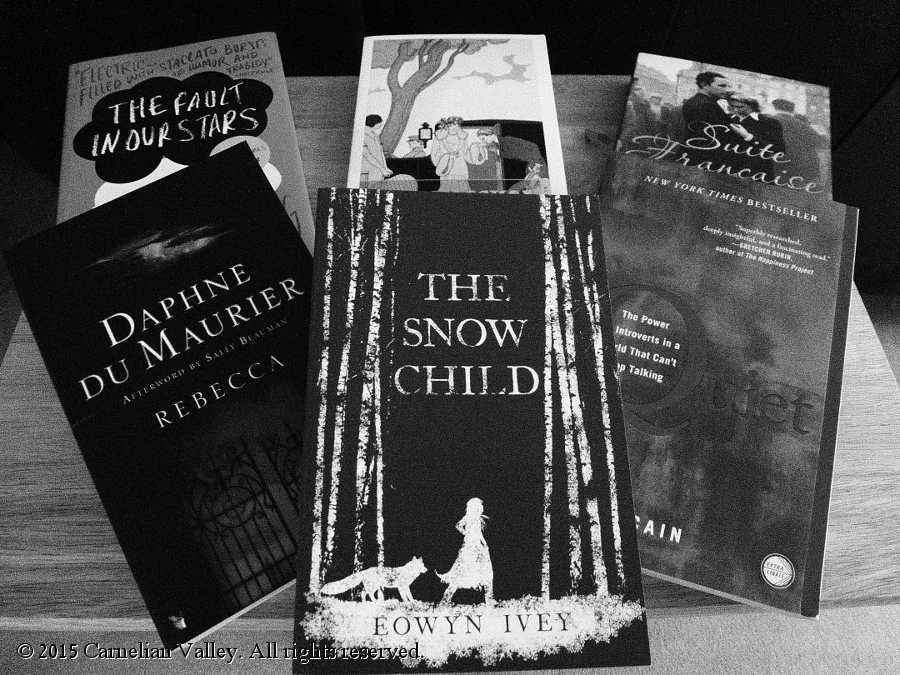
Following on from my post on eternally playing catch up, reading Elizabeth Fremantle’s books, with their Tudor characters who are readers, got me thinking of the way it can be easy to apply importance to older books over newer ones. I’d say we do this partly because of the plethora of newer ones and the fact we can’t know for sure which will last the time. (I also wonder if it’s in some way also due to history – there weren’t so many new books. Or were there? The biggest thing Project Gutenberg has taught me so far is that there were a lot more books published in days gone by than you’d realise.)
It kind of puts it into perspective – the Tudors didn’t have any books by, say, Austen, to read so whilst we might ascribe importance to older books there’s a relative newness to many of these older books. And then, of course, where do we stop – if we’re looking at ever-loved works we need to be looking at Plato, Socrates, and no further… is Plato too new?
On some level, there is something to be said for only or mainly reading older books. I know that whilst I myself don’t think reading only older books is a good idea because you’d be missing a lot of present discussion, I nevertheless admire and understand someone who passes by contemporary novels.
Do I feel similarly if someone says they only read newer books? No – whilst I might not think them silly, I do think they’re missing out, and missing out a lot more than the person who is reading only older books misses out. I would say this feeling is ingrained – by school, by society, by the importance and general fame placed on older books – and whereas my feeling that it’s good to read newer books rather than just older books isn’t completely personal either, the idea of newer-books-only being a ‘problem’ is a lot stronger.
I suppose the whole lot of this is cultural. Could I ever write a post on this subject and it be based purely on my own uninfluenced thoughts?
I think I do deem older books more important in that there is a lot more conversation around them, and particularly because the conversation is ongoing. It’s not going to suddenly come to a halt unless perhaps our values change a lot, and even then nowadays we tend to simply start viewing the books in new ways, from different angles.
That said, is there a difference between famous older books and forgotten/merely average older books? The connection between both is that they inform us about the period in which they were written in, but how much relative value is there in a book that has been largely forgotten because it was just average fare? (If a book was forgotten because it served its purpose at the time – Twelve Years A Slave, for example, which was written during the abolition – that’s a different ball game.)
Yet to dismiss new books would be to dismiss future classics, and to miss the conversations happening about issues we are having now. You can read a classic that talks about the industrial revolution and there will be much to discuss, but what of current political, social, cultural issues?
How do you balance old and new books?
2017 Goals
Posted 20th January 2017
Category: Chit-Chat Genres: N/A
10 Comments

For the past two years I’ve not paid much attention to the idea of reading goals where it concerns myself. In 2015 I listed all the ways I’d failed the goals I’d set the previous year and threw the whole concept away – I decided reading as much as I comfortably could was best. Last year I hoped to improve my male to female ratio and read more translated fiction.
I was going to do similarly this time but around November I started creating goals without really thinking about it. Shaking my head to myself and thinking ‘I really should read more of X next year’. I’m wondering if that’s a sign of sorts that it’s time I tried goals again. So I’m making some but keeping them vague, a bit wishy-washy. I’m thinking that being non-committal might mean I have more success.
I want to read more books by authors who aren’t white – Having read so much Asian literature pre-blogging I got into the habit of thinking all was well – it’s taken me a spell of looking through my reading lists to see that I’m not reading at all as I used to. And whilst some of that is to be expected, such a complete change of this type doesn’t suit my personality. More on this when I post about my reading statistics.
I want to read more classics – I say this a lot but without considering how I might achieve it, and without any sort of plan those daunting tomes I’m interested in are going to remain on my shelves. So I’m going to try and see if I can read at least one classic every couple of months, starting February. I’m giving myself a pass this month because I’m in a slump and have a lot of books to read. I’m under no illusions – I most likely will not achieve 6 books this year – but as long as I read something classical, that will be good.
I want to read more books published in recent years that I haven’t yet got to – This goal ties in with the first (I’ve a lot of translated fiction – that Murakami I still haven’t read and the Hiromi Kawakami I got for Christmas) as well as the rest of the Man Booker 2015 shortlist and some Chimamanda Ngozi Adichie that I’m wanting to read. It seems everyone has read her work and I feel out of the loop.
And one goal that’s not about books but is related to my blogging:
I want to visit some historical sites – I didn’t visit any castles last year except Old Sarum which I’d already visited before.
In typing these out, phrasing them, it’s occurred to me that my goals, sans the last, can be summed up in one bigger goal: I want to read more widely. I’ve been reading fairly widely already, but I want to improve on that.
Have you made any reading goals for this year? What was your reasoning behind choosing to make goals/not make goals?
Will The Book Be As Good As I Remember?
Posted 18th January 2017
Category: Chit-Chat Genres: N/A
9 Comments
There was a good piece posted on Book Riot last month in which the author said:
“I worry that the books aren’t as good as I remember, or that there’s something horrible and problematic that I missed when I was younger.”
I feel this and I reckon it’s part and parcel of the concept of re-reading when you’re considering books you read years ago. No matter if it’s something that occurs to you as an all-powerful may-make-or-break-your-decision-to-re-read or just on the periphery, it’s natural for it to be there.
And I think especially when those years in between have seen you grow up a lot, mature. Any age can see this but it’s especially apparent when you’re looking at a book you read at, say, ten years old, a decade later. If the book in question was one you read at the appropriate age or older, it’s likely you understood it correctly. Unless we’re talking adult books and possibly missed cultural references, it’s almost a forgone conclusion, I reckon, that you’ve not much to worry about.
But if you read a book that is or was considered a little too mature for you, having missed something becomes quite likely and this likelihood increases the larger the gap between you and the book’s recommended age. Sometimes you may have realised at the time of reading that you were missing parts and in those cases that awareness will have carried over into the times you considered talking about the book – you may not have recommended a book you loved, for example, because you knew you may have missed something significant. Other times you won’t have been aware of it.
And that can cause a problem – in re-reading this book, am I likely to notice something I didn’t before and thus feel stupid or embarrassed? I recommended this book, lauded it – am I going to find something in it that’s wretched? Am I going to make the discovery that I possibly looked very bad/ignorant when I recommended it to X friend X years ago, or discussed it with X who, older than me, knew it wasn’t as good as I was saying?
Most of the books I’ve re-read were YA and I’ve not had too many experiences of feeling embarrassed – Northern Lights will always be good, for example, and most of what I missed on other occasions turned out to be very minor points – it’s actually more the case that I recognise a few of the books I read just as I was starting to become an avid reader again, in adulthood after leaving school, were likely a lot better than I thought. Does literary fiction seem lifeless and plodding when you don’t ‘get it’? In my experience, yes, it does.
Those times you didn’t like the book but you find on a re-read that it’s good, you just weren’t mature or knowledgeable or in the zone – that’s better. I think in many ways it’s easier to go from ranting about a book to saying ‘okay, it’s not so bad, I messed up’ than ‘oh my goodness this book is amazing… okay, actually the characters are horrible and I feel ashamed’. I think I’d have hated Heathcliff at any age, but I am still glad I only read that book a few years ago.
Away from any embarrassment, does this ‘worry’ that a book will be different point to the importance of re-reading? If an important element of re-reading is to see how your opinions have changed, then worry is as good a reason as any. Re-reading means we learn more. It’s linked to the concept of a book still having something to say, just that it’s on a personal level rather than societal, and not limited to the classics.
But what does this difference in maturity and so forth have on our ability to form an opinion, in terms of reviews and recommendations? Can we trust our opinion? Does it resonant a little too uncomfortably with that idea that some opinions are worthless? (Or does it simply match the idea that all opinions are worthwhile and should be matched with people who will appreciate them?) I know many people delete old reviews – I can’t see myself doing that but I do wonder if an update is in order.
What are your thoughts when considering re-reading a book you read a while ago?
Finishing A Book In A Certain Month Having Read Most Of It In Another
Posted 9th January 2017
Category: Chit-Chat Genres: N/A
8 Comments
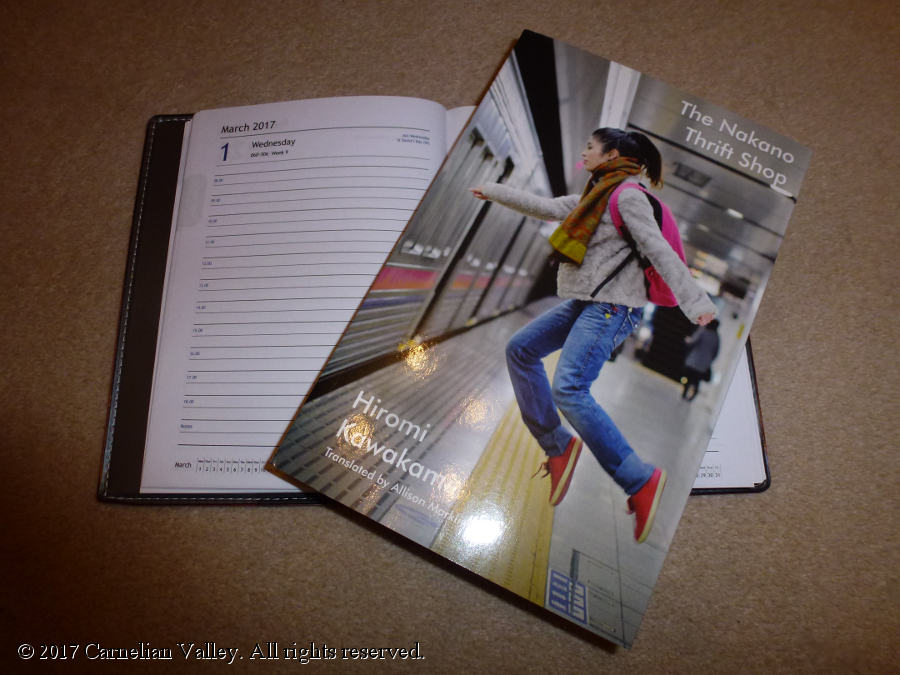
I have a personal problem with my own concept of reading by month in accordance with my blog. (I hope that makes sense.) That the problem is entirely of my own creation; nevertheless it’s hardly unheard of to talk of books you read in any one month – book clubs are based around months – and so I know this might strike a chord with many of you or at the very least form a fair discussion.
I feel, in terms of my own reading and blogging life, that it’s cheating if I finish a book in one particular month having read the majority of it the month previous. I read 75% of Anna Karenina in the months… years… preceding the one it was included, round up wise. And often this can happen in multiples so I’ll have a month where I’ve read a lot overall but only finished two books, say, and then because I finished the remaining books on the 1st of the next month, it looks like I read a lot in that next month. I know it’s silly, especially as it all works out in the end, and especially because a month of few and a month of many achieves the same result – talking year by year now – but I continue to struggle.
So the extremely first-world problem is effectively balanced out by the fact the month in which I read most of the book isn’t included.
This post, though brewing for years, was written up because I was inspired by Stefanie’s descriptor, ‘The Middles’. The Middles is that time when you’re in the middle of a few books. It can feel like you’re not getting anywhere and of course you are getting somewhere but the more books you have on the go, the harder it is to make noticeable progress. Your reading time is diluted, even if you concentrate – once you’ve noticed there’s a problem – on getting one finished at a time. You get to that place where September saw you finish lots of books but October saw none.
I think it’s time I put more emphasis on books I have on the go.
Have you ever thought something similar?


