Maria McCann – The Wilding
Posted 4th November 2010
Category: Reviews Genres: 2010s, Domestic, Historical, Social
6 Comments
Most likely your unremarkable life is full of the remarkable.
Publisher: Faber
Pages: 333
Type: Fiction
Age: Adult
ISBN: 978-0-571-35187-2
First Published: 4th February 2010
Date Reviewed: 1st November 2010
Rating: 4.5/5
In 1672, Jonathan Dymond’s routine – living with his parents, making cider for the neighbours in autumn – comes to a halt upon the death of his uncle Robin. His father is upset that he didn’t make it to the deathbed in time and Jonathan is harrowed by a dream in which the ghost of his uncle accosts him along the road. Jonathan wants answers and it just so happens that, his aunt having an orchard herself, she might have a place for him; he goes under the guise of cider maker. There’s a strange servant at aunt Harriet’s, a girl who is very forward. And then one day she disappears. Something’s up, and it’s more than simply his father’s upset and his aunt’s formidability. Jonathan’s found a mystery to solve and by God will he solve it, no matter what happens to him.
When I picked up The Wilding I was expecting a story that would trundle along like a wooden cart, and for the most part this is indeed what happens. What is so unique about the book is that McCann involves a mystery to solve but doesn’t make it all that compelling until later on, instead she focuses more on life at the time and social issues. This may sound off-putting but it enables the story to rest gently over a number of genres and thus exhibit appeal to readers of many persuasions.
For the characters, The Wilding is unlike any other story I’ve ever read of this time period. There are differences in class and wealth but there are no extreme riches, or poverty without any sort of redemption. Everything happens within a radius of several miles and most journeys are made for cider.
“I marvelled at the shamelessness with which she turned thanks inside out. She was not a vagrant for nothing: here was one who could beg an apple peel and end by carrying away the tree.”
Tamar is a wonderful character. She has been so well created and written by McCann that she is real beyond any other character I have come across. For the first time in my life (that I can remember) I have been able to form a character head to toe in my imagination without resorting to an actress or someone from my own life. My Tamar is true flesh and blood, a real person with movable features, except that she resides solely in my head. And yet McCann’s writing doesn’t seem, when you’re reading it, to possess any special quality – but my inability to create a face has waned, at least for now. I may see Jonathan as a faceless narrator (which is the usual way I see characters) and Aunt Harriet as Pam Ferris (a result, I believe, of having watched the TV adaptation of Jane Eyre recently) But I’m glad to have one fully-fledged character in my head at last.
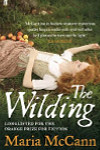
And the best bit of that? My Tamar has not in any way been influenced by the girl on the book’s cover. Except for the red hair, of course.
To move away from my cooing, Jonathan Dymond, the narrator, has been perfectly created – being not so much the subject but certainly the reason, he is provided with a lot of emotion and is always rethinking issues while allowing the focus to be on the other characters. He’s an average working class citizen of the day, with a very interesting family.
McCann deals with a number of issues that have eternal relevance; these she discusses quickly and skilfully. As an example, she touches on prostitution, saying that being with so many men for such a reason as money a woman can become deadened to emotions during sex and unconcerned about the man afterward. This may sound bad, but it’s something that the narrator must talk about during the book and you have remember that the woman in question is young and ignorant in ways.
The text is mainly modern but McCann sometimes writes in the way people of the time would’ve spoken. The modern language, made more realistic by the social standing of the characters makes the narrative easy to follow. One of the initial secrets is no hardship to work out dozens of pages before it’s revealed, but this was quite possibly something McCann meant to happen for reasons that you will understand when you read it.
As the book revolves around a family, the emphasis is on them and their daily lives rather than any key moments in history. A few events, and some fictional yet all too possible ideas, are looked into but briefly. This isn’t a book for learning about the period so much as a book for those who want to live it themselves.
Because on the face of it, McCann’s writing is nothing special, I’m wondering if she enlisted Joan’s help in making it come across as enthralling. If nothing else she definitely stole an amulet from the thorns at the front of the cave. The Wilding will let you breathe for a long time before it takes your breath away. But once it does, you might not get it back.
Related Books
None yet
Katherine Webb – The Legacy
Posted 15th September 2010
Category: Reviews Genres: 2010s, Historical, Social
Comments Off on Katherine Webb – The Legacy

Every family has their secrets, their problems, but not every family’s secrets are entwined.
Publisher: Orion Books
Pages: 422
ISBN: 978-1-4091-1716-2
First Published: 2010
Date Reviewed: 29th August 2010
Rating: 3.5/5
Beth and Erica have moved to the manor owned by their extended family, to sift through their grandmother’s belongings and ready the house for a potential buyer. But neither of them knew that when they got there they would find their childhood friends right where they left them, and they didn’t know the history of the great-grandparent who had caused their grandmother so much pain. Beth and Erica have not been back since two years after the disappearance of their cousin, and Beth has never been quite the same in the twenty-odd years in between, but now there’s a chance to find out what happened, both to their cousin and to the great-grandmother who so upset her own dynasty.
The Legacy is an incredibly long book. The narrative is split into two parts, past and present, each chapter being one or the other so that they are told back-to-back. At times the stories run parallel so that while Caroline travels in America in the past, Erica is discovering, in the present day, those events that occurred.
Webb has constructed an interesting story but unfortunately, although you can understand the issues the characters have, the people that populate her pages are lacking. They are not bad by any means but because the novel follows a simple pattern to many others, and shares the same basic storyline as so many before it, the characters fall flat of expectations. Caroline is very much a product of her time but it is still frustrating to read about her because you’d hoped she would be different. Some of her decisions are difficult to read about, so while she may have been a worthy candidate for her time she is unworthy of all that is given to her. Erica and Beth, Dinny too, are very average. There is nothing to recommend them to memory. The problem is that they are mostly there to further discovery but they’ve been given an ample amount of the book and so while there is plenty of space for them to develop there is little reason for them to do so. Although there are two secrets involved in the book, one historical one modern, the emphasis is on the historical so their fictional lives have been created for Caroline’s tale.
It is Caroline’s life that’s in the spotlight, and it’s this that is most interesting, but a rival to that interest has to be the location of the modern section of the story. As such this is also a rival to Erica’s narration. The wonderful thing about The Legacy is that the modern part is set at Christmas but often reflects on summer; this makes the book perfect for any weather, any season. It has all the recommendations of a summer read and all the recommendations of a winter one. I was very comfortable reading this novel while the rain poured and the sun shone in equal measure.
The locations picked are so far apart that it spurs the narrative on, so that where the modern characters may lack substance and the historical ones goodness, there is a constant need to read the book. Caroline lived in America before she came to England, in the hot, dry, hardly-cultivated lands of Oklahoma, and while Webb is not adept at character development she excels at location description. It’s all too easy to get lost in the landscape so that when you pull yourself away the heavy rainfall outside your window is a shock.
Lamentably, one of the two secrets is too predictable, in fact I realised the twist by a quarter of the way in. Whether or not this was intended by Webb I cannot decide because in a way it is painfully obvious, but the fact that the book carries on digging through ideas before coming out and telling you the secret itself leads me to think it was meant to stay secret. Because it was so obvious and because so many people will guess it like I did (it is that obvious that I can say that for sure) it puts a bad light over the book. All those pages to work out what the reader already knows; and it’s not like there is an interest to be had in reading about how the characters work it out because it’s not like the story is your average well-researched and forensic-riddled mystery.
Webb has thrown noticeable satirical and observational remarks into the book. She comments on the pushy quality of organisations to get you to join and the oft-acknowledged situation of Britain’s Prince Charles. These bring in some very up to date points of conversation for the reader to ponder on and allow for a sort of participation you wouldn’t generally expect in a novel.
But Webb’s style of writing is baffling. She often closes a sentence of dialogue with a full stop rather than the usual comma and then the “he said” part which makes working out who’s said what or done what very confusing. She also uses peculiar sentence structures that have a similar effect. There’s a good story behind the words but digging through them to get to it is difficult.
The Legacy takes a long time to tell a short story and while it’s a nice pastime there isn’t enough to recommend it to memory. It really is a very average book.
Related Books

Curtis Sittenfeld – Prep
Posted 13th July 2010
Category: Reviews Genres: 2000s, Angst, Romance, Social
3 Comments

A dedicated coming-of-age story more detailed than most and set against the backdrop of a boarding school.
Publisher: Black Swan (Random House)
Pages: 478
Type: Fiction
Age: YA
ISBN: 978-0-552-77684-4
First Published: 2005
Date Reviewed: 12th July 2010
Rating: 4.5/5
Prep is being been re-published by Transworld on 22nd July 2010 and features a stunning cover that conveys the atmosphere of the story well.
Lee went to boarding school at fourteen after doing all the research into schools herself and being drawn in by dreamy-looking prospectuses. But on formally joining the school she realises that all those images of happy-looking students aren’t quite true to life, at least not in the way she expected them to be. Perhaps being a scholarship student makes it difficult when everyone around you seems to have a money tree in their room, but as Lee comes to understand herself better she finds that most of her issues are solely to do with herself. Prep is set some time in the late 1980s or early 1990’s – around the time mobile phones first came into use, when cassette tapes outdid compact discs, and young people listened mostly to their parent’s music collection.
I came to choose Prep as my first Transworld challenge read due a similarity in situation between Lee and myself, and to my pleasant surprise I found that not only could I relate to Lee in that afore-mentioned way but in many others; a great deal of what she experiences are things that young people face as a whole so I will discuss these in detail.
Firstly however, I’m going to talk about the setting. Sittenfeld presents us with Ault boarding school and it’s as picture perfect as Lee’s preconceptions suggested. Reviewers have likened the book to Sweet Valley High and Sittenfeld’s writing to Salinger and Plath – I myself think of Mallory Towers, The Templeton Twins, and St. Trinians, the books I knew of as a child thanks to the older generation, which I enjoyed myself. Although there is a lot of time given to Lee’s personality there is enough here to enjoy the book for the school’s sake, in other words if you’re wanting to read something akin to any of the books I’ve just mentioned you won’t be disappointed. A great deal of the first third or so of Prep is dedicated to student life as Lee settles herself in the secluded world she’s entered.
“What am I writing?”
All of us fell silent, a loaded, electric silence. “I know where you live,” Alexis suggested.
“I see you when you’re sleeping,” Heidi said.
“I smell your blood,” Amy said. “And it smells” – she glanced at Madame – “tres delicieus.”
“We will not bring the French into this,” Madame said.
The catalyst for everything Lee experiences is her nervousness, her inability to accept the fact that she is as good as everyone else and that really no one’s out to get her, she’s just overly paranoid. It’s said that if you want something bad enough you’ll get it and that applies to negative things too – Lee is a normal person but her personal worries and issues sometimes lead her to open up cans of worms that hadn’t previously existed. Of course as soon as this happens she revels in her false belief that she was right all along, which is sad. You feel you want to root for Lee, especially when she finally gets a boyfriend, but you can’t help feeling frustrated at the way she handles things.
Nevertheless this frustration is good – because it’s the frustration that our parents quite likely felt for us, so now of course we, as readers, through Lee, can pick up on times when we chose the wrong path in our own childhood – and it’s also good for readers around Lee’s age (while she is at Ault – the story is told as a first-person recollection years later) because they might be able to pin-point where their own lives are the same at this present moment and do something about it before they have time to look back with regret.
Sittenfeld deals with loneliness in a way that is subtle but completely effective. Clearly she remembers her own school life well and has applied plenty of her own knowledge in order for her readers to relate to this fictional character seamlessly. Lee thinks she’s lonely and that she has no friends but in fact there are many people she meets and gets to interact with, including one of her class’s most-sought-after boys. Most people feel alone at some point but what Sittenfeld has done is to hint that all that loneliness put together, as in everyone’s loneliness, makes for a happy and full life. You have to be willing to accept invitations when you get them rather than be put off by the person’s own loneliness. We all get lonely but somehow we’ve developed this mindset that if a social activity is proposed to us by another person, and that person is themselves lonely, then our taking up of their offer is shameful and embarrassing. In these moments of possibility, of not being alone, we are unwittingly scared by something that has already consumed us – we are, in effect, scared upon seeing a reflection of ourselves in another. But it always looks worse when you see it in someone else.
A lot of the lesser-acknowledged issues observed in the book are conquered via short dialogues and quotations. Consider the following:
Little’s blackness made her exist outside of Ault’s social strata. Not automatically, though, not in a negative way. More like, it gave her the choice of opting out without seeming like a loser.
This is true for many different social groups, but it hasn’t been fully realised yet. When you’re on the outside looking in, and even sometimes when you’re on the inside, you don’t always see the advantages to being uncool when it’s related to something that’s difficult, nay impossible, to change.
In such proximity to Cross, I stared at the floor, feeling clammy and unattractive from having been outside with Conchita.
This quotation backs up the idea of us being lonely and put off by other’s loneliness as well as explaining where exactly Lee’s place is at Ault. Lee actually straddles both “cool” and “weird” social groups but she doesn’t understand that. As in Little’s case, Lee is in a position of advantage but her mentality towards being seen as uncool means that this isn’t realised. The quotation also explains that as soon as people make it higher in society (Lee was talking to a popular student) they like to pretend that their less high acquaintances (usually the ones who got them there in the first place) don’t exist to them.
This leads into:
There are people we treat wrong, and later, we’re prepared to treat other people right.
We hurt people, dump our friends, but these relationships give us practise for next time – and we’re probably practise for other people ourselves anyway.
And lastly, in relation to the wider-world:
“Why do you think so few students receive financial aid?”
“We don’t add diversity to the school”
Be sure that race is another issue featured heavy in Prep and that again, Sittenfeld knows how to tackle it efficiently.
Something negative I would like to point out, in relation to Sittenfeld’s writing, is her reference to “spazzing out”. It’s the kind of thing many authors say but in Prep it is particularly bad because not only is Sittenfeld using the term but she’s saying that if you spaz out you can’t have boyfriends. Considering all her other political commentary, this is very poor.
Aside from the disability awareness issue however there is little else to find fault in. Sittenfeld’s writing style is on the whole beautiful and the words slide across the page effortlessly, though she should have considered more her word order at times. I’m not sure if it’s a new American convention but sometimes her sentences are clunky and read like gravelled driveways rather than smooth ones. Lastly, many of the names she uses are… not names. Horton is a surname, not a first name; Gates is the term for the doors that separate a person’s home from the road, and Cross is the mood you’re in when your sister yanks your hair out.
Speaking of Cross and who he is to Lee, I should talk about the romance in the book. There’s not much of it, but it’s in keeping with the rest of the story and with Lee’s personality. The finer points are explored in keeping with Lee, so that although the period of intense focus on it is specific to a situation others may not have experienced, it suits the book well.
It often seemed to me that boys preferred to be by themselves, talking about girls in the hungry way that, I suspected, they found more gratifying than the presence of an actual girl.
In addition to Lee’s crush, sexuality as a whole is explored, the damning consequences of taboo lifestyles and stress brought out into the open. While they may be less of a taboo today and widely accepted an explanation is apt and warranted here and it reminds you how different we are as a society now.
Something that isn’t nice about Lee is when she feels unable to be there for her friend who’s just been elected prefect. Lee doesn’t want to be there for her because she’s worried about having to reassure her. Her jealousy at finding out that her friend is popular and the fact that she (the friend) has been given something that would’ve changed Lee’s own life makes her unable to be happy for her. This is the extreme result of Lee’s nervousness and it puts everything else into perspective. In truth Martha is the same as Lee herself and in having her present Sittenfeld shows us the other side of the equation, what you can do if you’re aloof from others to gain respect, what Lee could have done. Martha is Lee’s opposite in the ways that it matters to this story.
In essence, Lee is a regular teenager who doesn’t take opportunities and then wallows in her self-pity. In essence she’s not simply a misunderstood character at all, but what she is is a reflection of real life for many people and an illustration in how we should conduct ourselves. She is a good main character because we can relate to her either all the way through the book (and see her flaws) or some way through and then react with distaste to how she handles situations and be able to use this distaste to set ourselves on the right path.
Prep is a fantastic look into life as a teenager, focusing in depth on issues that many other books cover only as a subplot or general part of a character. In writing it Sittenfeld has provided the reader with something not unlike a manual on how to get yourself out of unwanted situations and how to deal with social interactions when you’re just finding your feet amongst your peers. It doesn’t really matter how old you are, there’s something here for everyone and everyone could benefit from reading it whether they actively apply it’s “teachings” to their life or not.
I received this book for review from Transworld Publishing, Random House.
Related Books
None yet
Lauren Oliver – Before I Fall
Posted 9th June 2010
Category: Reviews Genres: 2010s, Angst, Paranormal, Romance, Social, Spiritual
1 Comment

What happens when you’re dead, but you’re alive, and the world keeps spinning over and over in the same circle?
Publisher: Hodder & Stroughton
Pages: 341
Type: Fiction
Age: Young Adult
ISBN: 978-0-340-98089-7
First Published: 2nd March 2010
Date Reviewed: 4th June 2010
Rating: 4.5/5
Lauren Oliver’s debut made the rounds of US book blogs at its release. But it was somewhat more difficult to find in the UK where perhaps we categorise books differently. Never the less there are numerous copies to be found – as long as you know where they are.
Sam Kingston died in a car crash on a cold night in February. She’d spent the day at school: joking with friends, skipping classes, and at a party where she’d joined with everyone in soaking the social outcast with alcohol. She was in the passenger seat when the car crashed, but somehow she never experienced the reported flashbacks on her life, instead waking again in bed the next morning only to find it’s actually the morning of yesterday, the day she died.
The first thing that’s striking is how average the day that Sam lives over and over is. Nothing big happens except for, of course, the accident. But you come to realise that this was good thinking because it allows Oliver to explore different avenues of “what ifs…” and “maybes” in more detail than she could have had she packed out the day with activity. What Oliver does is reveal that initial day – the day of death – in bits and pieces throughout the course of the book so that you learn new things about it as each repetition rumbles on. This means that, in addition to the changes Sam makes, there is plenty to read on for besides the obvious desire to know what will happen at the end.
At the start Sam isn’t the most attractive character, in fact she and her friends are somewhat loathe-worthy. A transformation does happen, but not quite as much as you might have been expecting – Oliver never proposes the idea that Sam should be forgiven for everything nor become a saint. This is a breath of fresh air. So many stories have the character turn 180 degrees and while that may be interesting it’s far too clichéd and overused. Oliver is, actually, quite hard on the character, but it’s subtle, she doesn’t condemn outright but skirts around it issuing ways in which Sam could improve.
As anticipated, with every “new” day Sam aims to conclude differently. She goes through days of happiness, days of giving up, and, interestingly, she knows on the last day that this is the last time she’ll have to relive it, describing how she wants to see and savour things for the last time. Now this is cause for thought – Sam simply knows. But how does she know? Certainly she has come to understand what it is she has to do to get out of the cycle but everything she says confirms the idea that it is definitely her last day, and not just in hindsight but in the way she acts at the time. This would be a good place to stop and consider the spiritual aspect of the book. It may be just that a week is seven days, seven days is a standard, and seven is also the number of days it took God to make the world in the creation stories. And, to ponder on something separate from this, there is the concept of “knowing” when things are going to happen which many people experience. Of “knowing” that if you do something in a certain way something will happen.
The proceedings of the day are important (including all the events that would have gone unnoticed by Sam had she not been given her chance) but it’s the interaction that is paramount. They are pretty regular proceedings for a school but Oliver illustrates how sometimes these seemingly average occurrences can make huge differences to a person’s mental well-being. Bullying is a topic covered in the novel, but again as in the case of Sam’s change of heart, Oliver hasn’t gone overboard. Yes, she shows that the behaviour of one person towards another can cause damage but she also shows that it doesn’t have to be the end of the world and that a lot of it should be taken with a pinch of salt. Sam doesn’t reject her friends even when she realises the huge flaws in their personal qualities – in doing this Oliver reminds us that it’s ok to view things in different ways without changing who you are as drastically as you’d think you’d have to. In addition she looks at the other side of the story to point out that sometimes what is said isn’t meant in the way it’s taken, that people don’t think before they say what they do – but that of course they should.
The relationships are brilliantly handled. Oliver offers all the intimate details of friendship, the secrets, and the lies; and crafts a beautiful story around Sam and the man she loves. Romantic affairs are given a good amount of coverage. This fulfils the basic young adult novel idea of young love but more importantly provides Oliver a place to explore relationships with her audience, the majority of whom will be nearing the time when sex is about to enter their minds constantly.
Oliver delves into the concept of waiting until you are in love before having sex. Had Sam chosen a slightly different path of that first run of her last day she could have lost her virginity. One thinks she might have escaped death but would she have been happy with her sexual outcome? It’s upsetting perhaps, but if Sam hadn’t died and had the experience she did she would never have learned what she did about herself, about others.
The most important theme is personal hardship, living in spite of problems, living with the problems, overcoming them. It ties in with the bullying issue and is on a big scale. It may surprise you to hear that the main character isn’t the subject here.
Something that’s worth mentioning is the language, because unless you’re American, and even if you’re American, odds are you’re going to be stumped by some of the abbreviations and references. In the main brands are easy enough to “get” but culture-specific ones may cause the need for Internet research or, if you can get by without it, a brush past.
A choice quotation:
The sun has just risen, weak and watery-looking, like it has just spilled itself over the horizon and is too lazy to clean itself up.
There are many stand-out scenes and in fact the book as a whole is incredibly memorable, but I would like to highlight one between Sam and a younger student. Set in the old school toilets where no one goes, the location efficiently provides the correct atmosphere of loneliness laced with quirkiness and the metaphorical dirt that comes with slurs on a person’s character.
This reader welcomed the choice made for the ending – you find yourself prepared for all possibilities – but the way it was executed has left her uneasy, she’s still thinking it over a week later. There’s nothing bad about it but it takes some getting used to; at the heart of it is a good message.
Before I Fall is a book that offers a unique challenge: we often shun books that repeat themselves, naturally, but this book is based on repetition. It uses this repetition to aid not only it’s main character but it’s readers in looking at life differently. It offers guidance without guilt, wrapped in a coat of beautiful romance, developing maturity, and bog standard US school life tinted with a slick of coloured lip gloss. You are allowed to feel moved by it, you are allowed to become engrossed in it but you are also allowed to be opposed to it, and you are allowed to take a break from it from time to time. I don’t know about you but to this reader that’s the perfect package.
Related Books




Lisa See – On Gold Mountain
Posted 3rd June 2010
Category: Reviews Genres: 1990s, Memoir, Political, Social
1 Comment
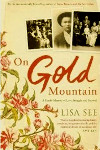
In the new world, known in 1800’s China as the Gold Mountain, fortunes were made by those whose lives were otherwise destined to be laborious. One of those lives was Fong See’s and he changed the make-up and the fortunes of his family forever.
Publisher: Bloomsbury
Pages: 376
Type: Non-Fiction
Age: Adult
ISBN: 978-0-7475-9907-4
First Published: 1995
Date Reviewed: 10th May 2010
Rating: 5/5
Lisa See, author of the later best-selling Snow Flower And The Secret Fan, details the business ventures and lives of her paternal family from the very first venture to America of her great-great-grandfather to the present day.
In 1867, Fong Dun Shung left his family in China to seek his fortunes in America. He soon brought his fourth son, Fong See, over to help him but ended up living out his later years in his home village. Fong See, on the other hand, lived to prosper in the United States, setting up an underwear company and marrying an American woman. The business changed to become an antique supplier. Fong See’s children learned perhaps more than he the injustice in the world, yet managed to be successful in their own right. As a memoir the book focuses on one subject in particular – business success in America – with information (a great amount, actually) about other aspects of family life. Amidst this is the story of the persecution of Chinese Americans and the many laws to dissuade them from doing practically anything other than stay at home.
On Gold Mountain reads like a work of fiction. The story is fascinating by itself but Lisa See (the author, whom I will refer to by first name from now on to avoid any confusion) has made it even better. A few of the dialogues are completely made up, as the amount of detail she goes into just isn’t possible to gather through sources, but instead of detracting from its success as you may think, this adds to the engrossing quality of the book. Lisa hasn’t just doled out dates and factual information about a story that, let’s face it, isn’t going to affect anyone but her own relatives, she’s made it compelling for the casual reader too. She’s used her skills as a writer and plenty of artistic license to create a work that her great-aunt Sissee, the person who proposed the idea of a memoir, would surely approve of.
Talking of Sissee, let’s get straight down to another note I made while reading this book – I, a reader in Britain with only outsider knowledge of Chinese culture, feel as though I’m part of the family. The book isn’t written in a way that entices the reader like this, and of course because the characters are real people they never address the audience, you’re just a fly-on-the-wall – but after all the information I’ve been given and after all the emotions I’ve been made to feel for these people I know I could sit down to lunch with them as boldly as if I’d been invited as kin. I was excited by Fong See and Ticie’s family and very upset as each passed away; even if I knew it was going to happen, I hoped that it wouldn’t. The family is accessible. The rogues of the story are likeable, even as they cause family disputes. No one is condemned, though there are good reasons why they could and perhaps should be. Everyone is described in detail enough that their unique personalities are shown – in the case of the siblings you have Ming and Ray – playboys and business-orientated, Bennie who is loyal, Eddy who wants to do his own thing, and Sissee who just wants freedom. It makes you think, should I be writing my own family’s history before it’s forgotten? No family history is plain and boring, and Lisa, with her incredible yet mostly family-centric story (no one changed the world, for example) proves that you don’t have to be of royal blood to have a good tale to tell.
Lisa makes her great-grandfather, Fong See, incredibly readable. Whether or not some of the events are fabricated to some extent the reader can really move into step with him and become absorbed in the story. For my part I must say that I’ve never felt such a pull from a book before, I was living as an invisible follower of Fong See and, his roguish elements included, I can see why Ticie, Lisa’s great-grandmother, was so drawn to him.
The characters focused on most are Fong See, Ticie, and their children. This creates two points of thought in my mind. The first is that depending on the individual preference of the reader for country or city living, either the first or second half of the book will be more intriguing. As America, at the time, was just forming, there are plenty of descriptions of farmland to whet the appetite of a person who prefers peace, but then as the cities expand there is little greenery and many factories so the detail is in the creation of material goods. Fong See and his first family’s story (he got around a bit) straddle both, but while Fong See and Ticie are together the emphasis is more towards the country. The second thought is that after Fong See and Ticie part ways the story is less engrossing, this can’t be helped of course, as it’s fact, but the interest garnered from the reader because of the story of a mixed-race family in troubled times, the adaptation to another’s culture, and the building up of a business, is lessened immediately following it. There is more to be had in the stories of the children for their number but as American laws are relaxed and life becomes more like our own today the narrative appears to slow down – however it’s not so much the story as the reader’s desire to continue reading. The problem is that the “action” comes in those first years and then of course there is no climax because the story can never end completely because this is the tale of a family still going today.
Lisa writes her account of Fong See crossing to America and then and only then gives all the other reported accounts that she has discovered. She ends the section brilliantly with a little wit, saying that we should probably trust the age and journey times Fong See gave to newspapers and customers. She wants the version she provided first – detailed and probably, by her own admissions of the information, dreamt up by relatives – to be true, but will give us the other accounts anyway. That she uses wit may seem self-absorbing, but the way she words it makes it akin to the usual basic mysteries every family has – as more generations are born and previous ones disappear, information gets blurry.
In relation to this, the wit in the book, I would like to put forward a quote:
Fortunately, the Pruetts were Pennsylvania Dutch and not given to concerns over worldly possessions.
While the initial opinion may be that Lisa is on a moral high ground flaunting her superior ancestry, isn’t it that she’s injecting humour into a relatively arduous subject? Both possibilities are equally possible, but there’s no doubt it’s the latter, the humour.
Irony – the information Lisa provides on reclaimed land. The Chinese reclaimed land from marshes and bogs when no one else would because it was dirty and infested but they were not granted any of that new land because of the Alien Land Act. Aliens? Surely everyone who wasn’t Native American was alien – but the Caucasians didn’t think of that because they thought they were superior. The people who put the act in motion, the invaders, likely British-born or if not at least European, were not natives of the land themselves. It’s disgusting when you think about it. Looking back on one’s country’s ancestors is always a cause for distress at some point, no matter where you’re from, but to read a true account of how your people were so self-righteous is most difficult. In this reader’s humble opinion, yes the Chinese may have been cruel themselves at the time with their foot-binding and treating women as slaves, but it was the Caucasians who were the true aliens, for their actions towards other races rendered them inhuman.
Although the Chinese saw America as a gold mine there was nothing gold about the few dollars the first workers brought home. In retelling the See family story Lisa describes the creation of the original railroads – the meagre pay, the poor living conditions, the perils of the parties using dynamite to blow holes in the hills – and the many shop keepers who struggled to earn their keep. The lucky ones, who had the ideas and ambition to start their own businesses, like Fong See, were those who caused the phrase “gold mountain” to stay in use, but they were few and far between; and, to determine another aspect of this school of thought: as Fong See remarks, one could be a rich man in China from the money they made in America, but in the west they were still poor. What the Chinese didn’t realise was the extent of the difference between quality of life and cost of living. To be truly rich, one had to return to China, making their time in America simply a long sabbatical.
In her fiction work, Lisa uses words brilliantly. Because of the nature of this book there are few incidences for poetic language but they do exist, and they exist in the form of those thoughts Lisa’s family members have. Perhaps this was part of the reason Lisa created those thoughts, to give her a chance to write with more flare and more of the style she employs in her novels.
In early April of 1877, Luscinda Pruett lay dying. Her mind wandered over her life in Oregon, her children, her husband, and God, whom she knew she’d be meeting soon. She’d had a fever for weeks, and now the pneumonia had grabbed hold of her body and wouldn’t let go. Not that it wasn’t peaceful lying here, as Mrs. Peterson sponged her forehead with cool cloths and the Reverend Peterson gave a discourse on the second commission of Christ to his Apostles. Or was he reading from the tenth chapter of First Corinthians? Maybe that wasn’t it at all. She knew she’d heard him give those sermons before, at their Sunday meetings. No matter.
The above is quite possibly exactly what Luscinda Pruett was thinking, safe as her thoughts were from the limitations of a strict outside world. But more to the point Lisa has provided her great-great-grandmother, who has a minor role to play in her story, with a grand final performance.
Lisa’s descriptions are magnificent, again in this you can see the novelist in her trying to climb out of the closet into which she’s stowed it away and blending its fiction skills with fact:
For Choey Lon, China City was a magical place where the fragrant smell of incense wafted from a temple and gentle breezes passed through wind chimes hanging before shops.
In writing On Gold Mountain Lisa fulfilled her objective, to honour her aunt Sissee’s request that their family story be told, and brought into being a commercially available account of a minority living amongst a majority, to a world where it’s likely not many of these events have been written about in such a way and with such filial passion. The stress may be on her family but there is enough material to take away and add to any knowledge you might have had of the period previously.
On Gold Mountain is a lovingly rendered story of adventure, love, and above all triumph. And I’m afraid you just have to love an author who uses the word “shenanigans”.
Related Books