




Sheryl Sandberg – Lean In
Posted 31st July 2013
Category: Reviews Genres: 2010s, Business, Commentary, Domestic, Psychological, Social
4 Comments

Sit at the table. Don’t wait to be asked. Your parents might moan but your career will flourish.
Publisher: WH Allen (Random House)
Pages: 171
Type: Non-Fiction
Age: Adult
ISBN: 978-0-75354-162-3
First Published: 11th March 2013
Date Reviewed: 9th July 2013
Rating: 3.5/5
A mixture of memoir, research, and experience, Sandberg, Facebook’s COO, discusses what holds women back from having successful careers. Looking at how social expectations create barriers, she details what we can do to change the workplace to further equality. Drawing on her time as an intern, at Google, and, of course, at Facebook, Sandberg’s book is as much about personal experience as the experiences of others.
Lean In is a comparatively short book that, although it could have been longer as well as better edited, presents good evidence and is a fair motivator. Sandberg is honest from the beginning – this book isn’t of a particular genre and she is very aware that she is not perfect with gender herself. This contributes to the success of the book, even if it doesn’t quite heal the inconsistencies.
Sandberg makes it clear from the word ‘go’ that her word isn’t the be all and end all, that equality means having a choice (for example between being a stay-at-home mum and a working parent), and that whilst the book will likely resonate most with women, there is something for men, too.
These are promises she keeps. Partly due to her own status as a mother, she constantly considers points about child well-being, contact time, and the reasoning against leaving children to go on trips. This is a good aspect of the book and yet as it is obvious and understandable that she defends her own choices, inevitably Sandberg ends up unconsciously reinforcing why there is the social expectation to stay at home in the first place. This isn’t to say you’ll necessarily end the book thinking she’s a bad mother, but she does unfortunately bring into focus the very thing she didn’t want to. This sort of thing also happens with other unrelated accounts, such as when she says crying is good between employees but makes herself sound weak.
On the promise of choice, Sandberg never waivers. Her opinion is that if women want to work they should, if they want to look after their children they should, if they want to combine both they should. She also highlights the need for men to have a choice as well – in that a stay-at-home father is seen as a bad life style when it shouldn’t be. And she reminds you how people will ask a woman how she intends to change her life to accommodate her child, but a man is never asked.
As suggested above, the promise of making the book interesting for men is kept. This reviewer, as a woman, may be saying this from an ‘outsider’ perspective, but Sandberg spends much time speaking about the lack of paternity leave and about how men who wish for equality are not given support or credit.
What of the major aspects, then? Beyond choices and parenting, Sandberg discusses the fact (backed up by evidence) that the sole difference of gender on an otherwise identical profile will illicit different responses from study groups. She explains how we don’t even notice our own biases, how she doesn’t notice hers, and how research suggests that it’s people who say they are not biased who are actually the most subjective. She talks of how women are often the issue, not supporting each other, and how it’s unfortunate, even if understandable, that a woman’s view of another woman is considered most important – unfortunate because a woman will often be more negative of another woman than a man will be.
Sandberg looks at the differences in our perceptions of successful people. A strong successful man is liked, a strong successful woman is considered bossy. Likeability doesn’t match success. She discusses catch-22’s – a woman who helps a colleague is less likely to have the favour returned due to the stereotype of caring, a woman who doesn’t help will be penalised more than a man would be. And she debunks the old saying that people are different as they get older – “nothing has changed since high school; intelligence and success are not clear paths to popularity at any age”.
Perhaps surprisingly, whilst Sandberg hopes for change she says that sometimes stereotypes and little ideas must be bought into to gain success. She speaks of women assuming dominate poses, such as physically taking up more space, to aid the mentality of strength. The focus on faking it until you make it is, in the context of Sandberg’s main ‘lesson’, both understandable and a contradiction.
Unfortunately there are more of these contradictions in the book. One is the focus on women with children. Up until half-way through Sandberg’s advice and opinion is generalised and useful. This then stops suddenly. The initial reason is that there is a chapter that isn’t nearly as worthwhile as the rest and the book becomes very repetitive. But the second and more obvious reason is the exclusive focus on motherhood. There is very little in this book written specifically for women who have no desire to parent. This may fit Sandberg’s own position as a mother, but it renders the book inaccessible, creating a bit of a ‘them and us’ situation. There is a lot about women who are thinking of having children and women who want them someday, contrasted with one single story of a woman (who nevertheless wants children one day) speaking up for those burdened with extra hours so their colleagues can spend more time with their own families. Women with or who want children may indeed have a tougher time succeeding in their careers, but the premise of this book did not suggest such a level of positive discrimination. And to go back to Sandberg’s accidental reinforcement of the mother stereotype, much of what she says in the latter chapters only reminds the reader of why ‘we’ have discrimination.
Taking the positive discrimination further, the book is, perhaps obviously, inaccessible and irrelevant to those on lower incomes. Indeed Sandberg talks of wage gaps, single parent families, and how she happens to be lucky, but this doesn’t make the situation any better. If this was to be about helping women to succeed she needed to cover those not fortunate enough to have the money to afford university, to not have the wealthy and supportive parents, partners, social contacts, those who are stuck in dead-end jobs. As other reviewers have pointed out, Sandberg acknowledges the help of many many women in the creation of the book, but nowhere is there a mention of the women she employs to look after her house or children, excepting a single reference to a faceless woman she was jealous of for owning her, Sandberg’s, son’s affection.
This lack of accessibility is cemented by the name-dropping. Sandberg has worked at Google, Facebook, in countless privileged positions – and that is the point, the continual reminders of luck, money, and a nice but rare modern office culture will likely divide many readers from the text. If the target audience was high-income women then the book wasn’t particularly necessary in the first place, or at the very least Sandberg should not have brought in mentions of lower-income families.
And it’s a pity because as the book moves into its second half there is enough repetition that could have been replaced with a whole new chapter about how to get that first good job, and the book wouldn’t have had to have been any longer. Sandberg is in a position to have written this book, in so much as people will give her book deals without persuasion, but she displays a distinct lack of knowledge or at the very least has left such knowledge out, out of convenience.
But then given the contents of the acknowledgements, how much of this book did she actually write and how much is simply paraphrasing?
Sandberg’s book provides a lot to think about, and her honesty is refreshing. But it’s not perfect by any means and is full of contradictions and missing information. Read it, it’s worth it on the whole, but don’t expect many answers.
Related Books

Taylor Stevens – The Doll
Posted 24th July 2013
Category: Reviews Genres: 2010s, Angst, Crime, Social, Thriller
2 Comments
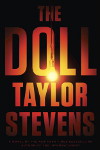
A race against time and death.
Publisher: Crown (Random House)
Pages: 335
Type: Fiction
Age: Adult
ISBN: 978-0-307-88878-5
First Published: 4th June 2013
Date Reviewed: 15th July 2013
Rating: 5/5
Please note that this reviewer has read the first book in the series but not the second, so any confusion discussed may or may not be the result of not having read the second book.
Vanessa Michael Munroe was enjoying a respite with Miles Bradford when she was whisked to hospital following a blackout. Bradford saw it happen but it’s not obvious at first what truly happened. Together with this a rising star of the screen has disappeared, and no one knows where she is either. Are they connected, and if so why would the same group wanting a young girl want Munroe as well?
The Doll is the fantastic third book in Stevens’s Munroe series. A book with no slowing of pace, no fillers, and a constant awareness of reader intelligence, The Doll is a triumphant example of the thriller genre at its best.
Munroe is the same tortured soul as before, but Stevens has again created a good balance, allowing the darkness to make its mark but never letting Munroe really succumb to weakness. Munroe can be harsh at times but her strength and belief makes her easy to love as a character, especially in a time when so many books have weak heroes; and the word ‘heroes’ is not a spelling mistake. Here again we have Munroe posing as both genders and the affects such a lifestyle has had on her is portrayed, subtlety in her words and movements. She has the respect of a man and never needs to do anything to prove herself in that vein.
Stevens has also put a lot of work into the book’s particular other main character, the celebrity. You would expect that (assumable if you consider each book has its own criminal storyline) Neeva wouldn’t be fleshed out as much, but Stevens has created in her the most memorable character.
The ongoing relationship between Bradford and Munroe follows the same pattern. The love is obvious, but you could never assign the label ‘romance’ as a theme. Even the strong love Munroe has for others have their limits on her character.
The awareness of intelligence is one of the most intriguing aspects of the book, because Stevens never makes concepts or plot points unnecessarily obvious. She gives you the basics – all you need to work it out – and then the rest is up to you. This means that sometimes the book is confusing, but it also adds longevity to the plot. In addition, the book is not predictable and barring Munroe’s almost reluctant humanity, which ‘had’ to occur sometime, anything could happen. And it does. Stevens never promises a smooth ride, beginning, middle, or end.
The pacing is just something else. From start to finish you’re speeding 100 miles per hour and even the chapter breaks leave no time to catch your breath.
A book with such a poignant subject had to be treated carefully and Stevens has done that. She gives you as much as is needed to feel entertained by a novel and then goes all out to show how awful it is. She doesn’t just use the situation and create a happy ever after, she brings the reality of the situation into it. Of course there is a measure of apology from the criminals but it’s clearly definable as something to help the story and not suggested as realistic. The horror is never glossed over.
Stevens has bypassed the description of ‘promising’. It would be impossible to say that this book holds promise for the future because Stevens is already beyond promise. The Doll is a masterpiece and one of the best books of this year.
I received this book for review from Crown Publishers.
Related Books

Eloisa James – Desperate Duchesses
Posted 17th July 2013
Category: Reviews Genres: 2000s, Comedy, Domestic, Historical, Romance, Social
3 Comments

Love and loyalty amongst lust and infidelity.
Publisher: Avon (HarperCollins)
Pages: 382
Type: Fiction
Age: Adult
ISBN: 978-0-060-78193-4
First Published: 2007
Date Reviewed: 4th March 2013
Rating: 5/5
Roberta needs to find a husband. Realising her problems lie in living with her eccentric father – a bad poet with an inclination towards melodrama – she decides to leave for London to stay with family. Her hope is that cousin Jemma will help her make a stunning entrance into Georgian life and improve on the reputation her father has ruined. It was love at first sight when Roberta careened into Villiers, but Villiers doesn’t favour marriage. When Jemma is asked to exact revenge on Villiers by another woman, the plans to shame him as well as marry him to Roberta come together – but then there’s Jemma’s brother Damon who does favour marriage and wants Roberta for himself.
Desperate Duchesses is a surprisingly funny novel with all the basics of a good romance. Set in Georgian England, there is plenty of time for James to poke a little fun at costumes, and opportunities to take advantage of the daring and stereotypically sexy idea of a man who refuses to wear a wig. And there is time for explorations of society to be presented with aplomb.
Roberta is the sort of character that, apart from her era-specific interests, would fit any time period. She worries about how her father’s behaviour will affect her future, she is sexually naïve but not at all reserved, and her propensity to correct the hero’s son’s grammar, though bordering on obsessive, will resonate with readers. She knows what she wants and will strive until she gets it, and her belief that she is in love with Villiers is funny rather than annoying. James never suggests that you ought to believe she is in love and truly it is a case of her believing without knowing what love is. She may not be as compelling as Jemma, who is more aware and gets to show off her intelligence due to her role, but she is a person you can root for – and you’ll be rooting for her to make that crucial realisation about her choices before long. Whether she is likeable is another question, however.
As said, Jemma is rather smart. She is also rather scandalous and the source of a lot of the comedy. Her ideas, such as having a naked woman as a table centre-piece, speak just as much of modern liberation than debauchery. In fact, despite the wide tendency of all to sleep with everyone but their spouses, the book is lacking in the sort of discomfort and lust (without love) that might put you off. It is this aspect that is one of the greatest elements of the book.
Because if the book is character-driven (and it must be said that Damon is just as wonderful a character as his sister and Roberta), then James has made a big effort to bring history into it in a way that won’t alienate. If a romance with infidelity is off-putting, then James has made sure to keep the infidelity confined to the other characters and referred to far more often than shown. Despite Damon’s prior mistresses and illegitimate child, and despite Roberta’s decision to throw caution to the wind, you will not find a faithless couple here. Whilst it might strike you as unbelievable given the setting and other characters, it is understandable and acceptable that James has left out infidelity from the development of the romantic thread.
The book asks, to some extent, what love is. Roberta wants to marry Villiers and believes she loves him. From the text it seems possible that she does indeed love him, but when Damon makes his move she finds what is obviously ‘purer’ than lust, and it is on the part of the reader to see what Roberta does not.
Bringing in something completely unrelated to sexuality is chess. Or rather chess is generally unrelated but of course James uses terminology for innuendo and suggestions. There is a great deal of information and playing of chess in the book, to the extent that a person who hates it will likely find the book boring. Most of the characters practically breathe chess and it forms the basis for other plot points, too. Indeed anyone who enjoys the game or wants to learn more about it may see its potential as a tips and trick book – there really is that much in there.
As supposed for a book where the heroine has been brought up in a house of literature, the book prizes the written word and good English. What errors there are are editing errors and James employs a believable mixture of historical and modern language. One of the characters even makes fun of the language of his ancestors.
As for the romance? Damon wants Roberta and does make decisions without her, but his weakness around her takes away any feeling of inequality and possession. You have a heroine who has learned a lot from her father’s lovers and isn’t shocked by impropriety but has no knowledge of the actual experience; therefore some of the sex scenes are lessons of sorts. There is no colourful language and the relationship begins and ends (as far as the book is concerned) with love. If not quite on Roberta’s side.
Desperate Duchesses sees a situation where the daughter of a man who adopts peculiar pets, runs to the house of her cousins who aren’t cousins, in order to get married to a man who thought she was a servant. It sees a situation where well-dressed people decide to start playing at discus with cow pats, and hilariously bad seamstresses are employed to make ball gowns for the gentry.
It’s silly, it’s stereotypical, and it’s an absolute riot.
Related Books


Anna Belfrage – The Prodigal Son
Posted 28th June 2013
Category: Reviews Genres: 2010s, Domestic, Fantasy, Historical, Political, Romance, Social, Theological
2 Comments
You can definitely have too much of a good thing, and it’s intended that this sentence refers to sex.
Publisher: (self-published)
Pages: 368
Type: Fiction
Age: Adult
ISBN: 978-1-780-88574-2
First Published: 1st June 2013
Date Reviewed: 27th June 2013
Rating: 3/5
Alex and Matthew are back at Hillview but as the family grows and tries to enjoy life, soldiers keep visiting to investigate Matthew’s aiding of Presbyterian ministers. It’s true that Matthew is helping, but he cannot give up his faith and friends, no matter what Alex says. And with his son/nephew Ian spending much of his time at Hillview, issues with Luke might come to a head again.
The Prodigal Son is the third book in the Graham saga, but whereas Like Chaff In The Wind was rather good and suggested that this goodness would only get better, a backwards step has been taken. Whilst both the previous books (A Rip In The Veil was the first) suffered from editing errors, a lot of violence, and a bad use of language, unfortunately here these issues have doubled.
The most obvious of these is the writing. There are many editing errors, but more to the point the language Belfrage uses darts back and forth between an over-the-top Scottish dialect, historical language, some sort of nineteenth-century speech, and 21st century phrasing. Whilst the 21st century phrasing works, because Alex is from our present day – and the phrasing works for the children, too, as children emulate their parents – the rest makes the book disjointed. There is also a continual issue with people being relegated to things by the usage of the word ‘that’ when referring to them, in the particular way that absolutely needs to be ‘who’ in order for the sentence to work. Though the good thing is that there are very few questions ending in ‘no?’ this time around.
Undeniably, considering it forms the book’s basis, the best aspect of the previous books was the time travelling, the scene change between Stuart Scotland and 21st century Britain. There is no time travelling in this book and it is a shame because it was the most compelling aspect of the series. In relation to this there is but one short instance of Alex remembering her fatherless son, Issac, who decided to remain in the 21st century, and despite the fact that Alex doesn’t love Issac as much as she ‘should’, it is hard to accept that she wouldn’t be thinking of him, especially considering she often brings her father, Magnus, into conversations. There is a particular episode in this book that unfortunately underlines just how important to its success it is for Alex to remember Issac, as Alex becomes incredibly emotional towards another of her children. Alex may not have had the best ‘start’ with Issac, may even have resented his existence, but she would remember him from time to time.
The episode that causes intense emotion may divide readers. Just as it seems something very interesting is about to happen Belfrage makes a decision that can only be called convenient.
And it is convenient due to the next point that needs to be made. There is no true plot to this book. It is repetitious from start to finish – soldiers come to interrogate, Alex and Matthew have sex, Alex stops talking to Matthew, over and over again. The final resolution is minor. It’s nice that the story stays on the farm and that the family isn’t apart for any length of time, because the previous books already covered separation, but there is really not much going on apart from what has just been listed. If not for the repetition the state of the plot wouldn’t be so bad because of the character development (to be discussed shortly).
Sex scenes can be a wonderful addition to a book, they can contribute to character development and signify the love the couple shares, but here there are far too many of them. The scenes are all very similar, down to the phrasing. It’s wonderful to know that after nine years Alex and Matthew are still in love and lust but Belfrage infers that perfectly well in the dialogue, having the curtains open every night lessens the impact.
Again there is a lot of violence. In some ways just as extreme as before, in some ways less, but it’s the number of scenes that makes it difficult. Indeed it’s realistic, the law and justice were not at all like they are today, but when blended with the rest of the repetition it just becomes another filler element.
Thankfully the book has great characters, good enough to rise above the dialogue. Naturally, considering the amount of sex and the absence of contraception (and Belfrage does make the necessary point that the couple wants each other so much that timing sex would never happen) there are a lot of children in the book. Each child is very different and flourishes whenever the focus is upon them. And Belfrage continues to develop the historical characters in the manner you would expect considering their exposure to a time traveller. This is where the 21st century language comes into its own, where ‘okay’, Matthew’s understanding of the concept of reality TV, and children saying “so, too!” are brilliant additions. The family is a lot of fun and Ian’s story a fine idea.
Included in this time travelling influence is the strict level of hygiene Alex employs that works well except in times when people with or exposed to consumption are around and the woman doesn’t bat an eyelid. Baths are taken, vegetables are eaten, and people survive what are now easily fixable ailments thanks to her knowledge. And Alex’s education is in full swing here, the knowledge Belfrage referred to before is displayed in its glory.
And it must be said that Belfrage has made good use of the history. That she has researched her book is obvious, anyone familiar with the history will be delighted with the references, and those who aren’t familiar can rest assured that they can believe the information Belfrage gives them.
The Prodigal Son does not keep the promise made at the end of Like Chaff In The Wind, could do with another edit, and its filler-like feel is further cemented by the intriguing premise of the next book (suggested by the last pages). However the character development is good, the history fine, and it is hard not to like the set-up. If you have been enjoying the series you will likely want to read it, though it wouldn’t be too detrimental to skip it in favour of the fourth.
I received this book for review from the author for Historical Fiction Virtual Author Tours.
Related Books
Kate Atkinson – Life After Life
Posted 19th June 2013
Category: Reviews Genres: 2010s, Angst, Domestic, Fantasy, Historical, Political, Social
6 Comments

Over and over again.
Publisher: Doubleday (Random House)
Pages: 465
Type: Fiction
Age: Adult
ISBN: 978-0-385-61867-0
First Published: 14th March 2013
Date Reviewed: 30th May 2013
Rating: 4/5
Dying just after her birth, Ursula gets the chance to live again, and when she dies a little later in this second life, she is reincarnated a third time. Living many variations, covering many possibilities, Ursula slowly learns from the mistakes previously made.
Life After Life is a book that goes round in literal circles and has no end. Unlike similar though more specific stories – that of the film Groundhog Day and the Young Adult novel Before I Fall – Life After Life makes little note of the actual process, leading readers to work out the majority for themselves. This is both a positive and negative.
The only way, for most of the book, that the reader can know for certain why what happens happens, is through the book’s blurb. The book is structured so that Ursula constantly goes back in time, leaving out the sections she got ‘right’. It therefore does become difficult, on occasion, to know which version of events you’re reading at a particular time when there are multiple possibilities.
Atkinson deals with the deaths and rebirths in a swift manner, sometimes so swift the occasion doesn’t even get a full sentence. It is darkness and then birth, with very little wondering on what is happening and exactly why. If one considers other books that deal with a similar idea then one can assume Ursula has to get her life perfect in order to move on. Ursula makes a great many of the same mistakes each time, which adds to the confusion, and due to the way that the supposed goal is not reached, it does become difficult not to wonder whether Atkinson had any big plan for Ursula other than as a tool to present different periods and issues.
It may be, of course, that the structure of the book suggests that Ursula may never get it ‘right’ and that there are many more aspects to her life than the reader is privy to.
The book is understandably repetitious, and perhaps most interesting during times when Ursula experiences her so-thought deja vu. There is a lot of repetition about Ursula’s role as a warden during the blitz – it feels particularly repetitious but given that that was life, it is a fair shock about the reality of war, the gruesome details rarely displayed so much in other works.
This brings us on to the grittiness of the book. As well as the obvious idea, present from the start, that Atkinson wants to explore what might have happened had Hitler not existed or had been killed early on, there is also a great deal of feminism and sexism to be studied. There is one life in particular where Atkinson exposes the reader’s possible bias – you’ve been presented with a certain view of the family, got to know them, and then Atkinson provides a very different tale. This tale will likely colour the rest of your reading, quite rightly, and it packs quite a punch.
Because Atkinson highlights the way sexual education, when kept hidden from girls (her focus of course being early 20th century) can have dire effects. She shows how even after such effects girls still were not informed, and she displays the awful hatred of a parent who hasn’t bothered to teach her child anything but will curse them when a terrible event happens. This is perhaps far worse, in the context of the book, than the blitz. Atkinson successfully makes you love, makes you hate, and then she provides that necessary triumph of adversary in the next life that is so sorely needed. Her handling of every issue in the book is masterful, and due to Ursula’s constant reincarnation it allows for a particular modernity to grace the book. Being given many chances enables Ursula to be, if not a feminist, then pretty near one, and similarly she becomes a supporter or dissenter of other ideas, too. Having the hindsight everyone craves makes her, obviously, knowledgeable.
So then to the characters. Ursula is of course difficult to write about as her development is very different to your average person. She is likeable most of the time, and the rest of the time hard to understand. Given her vast experience, and the way it seems she needs to live correctly, it would be hard for her to be bad, though she does often make the same bad choices again and again. A lot of the other characters change depending on the life Ursula is currently living. There is a general focus on Teddy and Ursula’s other siblings, as well as many different versions of Izzie, who is another focus for issues.
In a book like this it’s difficult to find plot holes besides the end of the book, but given the way Atkinson rarely refers to the other lives a few things do feel amiss, for example at one time Ursula has a baby – assuming Ursula has a goal to work towards and there is thus some kind of Heaven or Nirvana in the future, where would the baby be every other time? All the other major and secondary characters are accounted for. And what exactly is the reasoning behind Ursula’s reincarnation? The blurb may suggest it, but considering that one ought to be able to read a book without the blurb, the book feels unfinished. Of course, again, that may be the point.
Life After Life is good, but it is repetitious in a way it needn’t have been, there is a great deal left unsaid, and the suggestion of intrigue at the beginning is nowhere to be found. Not explaining everything may work aesthetically, but it can leave you with a lot to think about and no way of being able to suppose correctly. At the same time the details are compelling and given the sheer number of lives, you do not end the book feeling dismayed that you’ll no longer know about the characters, because you’ve read so much about them already and truly do know them inside out, having had the opportunity to witness every part of their natures.
Ursula likely won’t mind if you like it or not. She’s already on to the next life.
Related Books


